

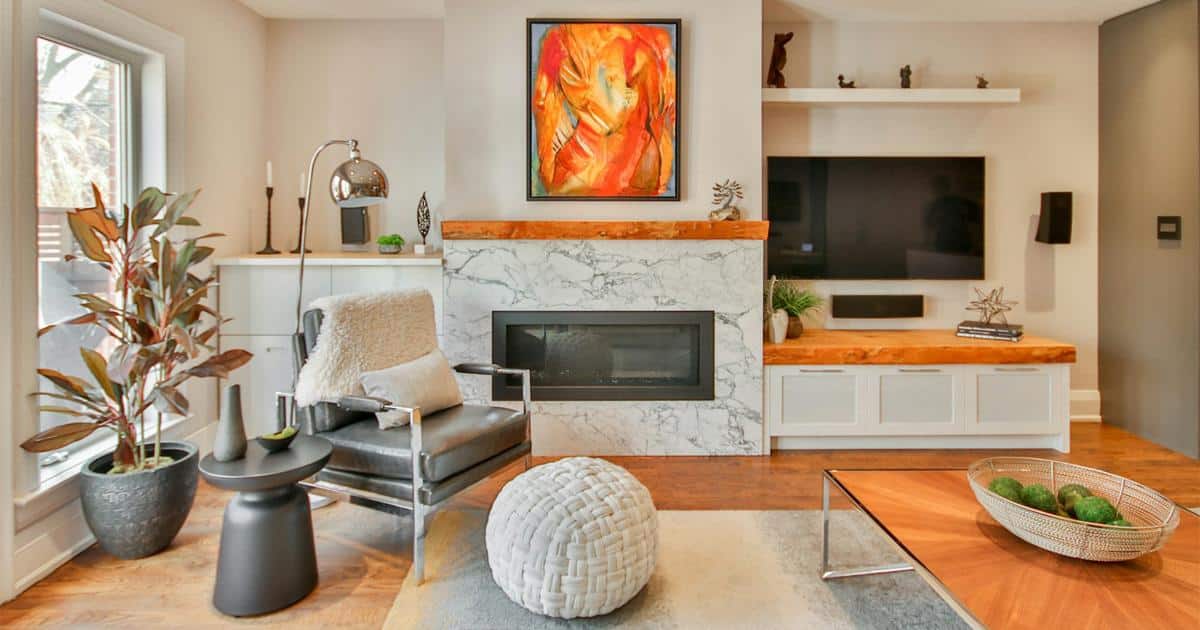
You painted everything greige because it looked calm on a mood board. Two years later, the living room feels less like a spa and more like a dentist’s waiting room, and you can’t quite put your finger on why. The lack of color is why.
That quiet fatigue with all-beige everything is exactly what pushed dopamine decor into the spotlight. The idea is simple: decorate for how a room makes you feel, not how neutral it photographs. Color comes back. So does texture, along with the objects that actually mean something, the ones minimalism told you to box away. Less staged-for-resale, more this-is-where-I-live.
Better still, you don’t have to gut the room or repaint a single wall to get there. A beige base is forgiving, matches almost anything, and works as a soft backdrop for color to stand against. These ten dopamine decor ideas add color and joy to beige rooms without asking you to start over.
1. Start With One Honest Color
Beige rooms usually fall flat for one reason: nothing in them has made a decision. Dopamine decor starts by picking a single color you love and letting it lead. Not a timid “pop of color” in one throw pillow, an actual commitment. Terracotta, deep teal, mustard, and cobalt all read as rich and grown-up against a neutral base, so they lift a room without turning it into a toy box.
Paint a door, the back of a bookshelf, or the inside of an alcove if a full wall feels like too much. One confident color does more for a beige room than ten cautious accessories fighting for attention.
2. Let a Custom Neon Sign Do the Talking
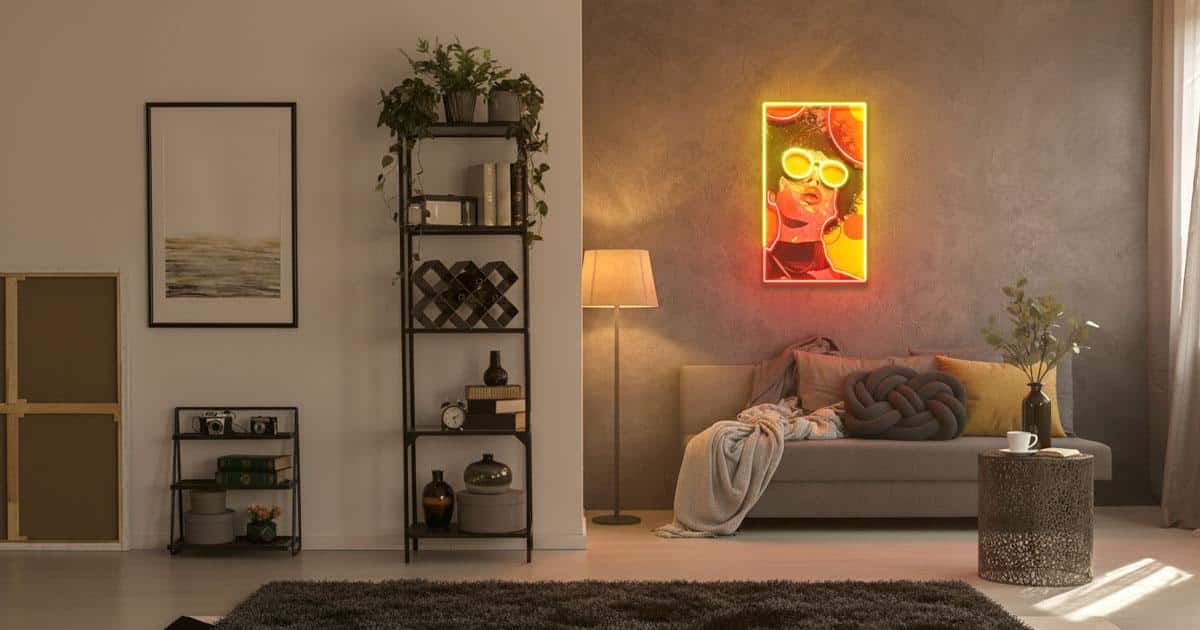
Nothing wakes up a beige wall faster than a warm line of glowing color you can switch on. Custom neon signs pull double duty as dopamine decor: the light drops a hit of saturated color into the room, and the words or shape make the piece unmistakably yours.
A coral script that reads your favorite phrase, a hot-pink outline of your pet, a single word that makes you smile- all of it turns a blank wall into the first thing your eye lands on.
The tech is friendlier than the old glass tubes, too. Modern signs use LED neon flex, so they stay cool to the touch, sip very little power, and usually come with a dimmer for lower-key evenings. (Renters, take note: they hang like a framed print, no rewiring required.)
- Warm tones like peach and coral feel cozy; cool blues and greens feel more energizing
- Keep the text short and personal, since a name or two words beats a full sentence
- Hang it at eye level over a sofa, bed, or desk, so it anchors the space
3. Pile On Textures You Want to Touch
Color is only half of what makes this look work. The other half is texture, and beige rooms tend to be starved of it. Flat walls, smooth sofa, one type of fabric everywhere. Break the sameness with things that beg to be touched: a bouclé cushion, a chunky knit throw, a tufted stool, a bit of rattan or velvet.
Texture catches light and shadow, so even in a neutral palette a room feels layered instead of laminated. It photographs beautifully, if that’s your thing. The trick is variety, because three or four different textures in one corner do more than a matching set ever will.
4. Show Off the Things You Actually Love

Minimalism told everyone to hide their stuff. Dopamine decor says put it back out. The mug collection, the concert stubs, the weird ceramic frog from a holiday you loved- these are the objects that make a space feel like a person lives there. Group them on a shelf or a tray so they read as a curated moment rather than clutter.
There’s a real difference between a surface covered in random things and five meaningful objects arranged with a bit of care. Your beige room doesn’t need more matching decor. It needs proof that you exist.
5. Roll Out a Rug With Some Movement
A patterned rug is the quickest way to drop color and energy onto a beige floor without touching the walls. Abstract shapes, a vintage Persian, bold stripes- anything with movement stops the eye from sliding across a flat neutral room. Rugs also do the quiet job of tying a color scheme together.
Pull one or two shades from the rug into your cushions or art, and the whole room suddenly looks intentional. If you have hard floors, a rug warms them up, both literally and visually. Go bigger than feels natural, because a rug that’s too small makes everything around it look adrift.
6. Let Plants Bring the Color In
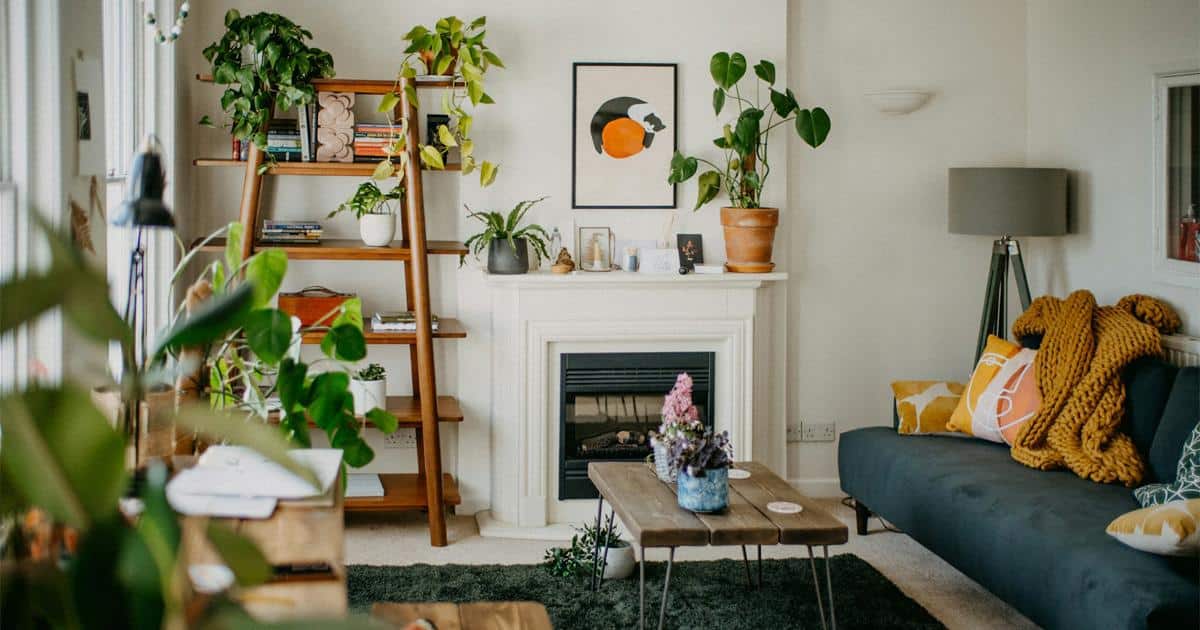
Greenery is the easiest, cheapest hit of dopamine most rooms can get. Plants add living color, soften hard corners, and bring a bit of movement that static decor can’t. You don’t need a jungle. A single large statement plant (a fiddle-leaf fig, a monstera, or a snake plant if you tend to kill everything) changes the whole feel of a beige corner.
Colorful pots double the effect, so skip the plain terracotta and go for something glazed and bright. Plants also quietly signal that a room is cared for, which is half of what makes a space feel good to sit in.
7. Swap Cold Bulbs for Warm, Colorful Light
Lighting decides the mood of every beige room, and most default to a single harsh ceiling bulb that flattens everything. The fix leans into lamps instead: a table lamp with a colored shade, a floor lamp in a warm corner, a string of soft bulbs along a shelf.
The color temperature matters more than people expect.
- Warm bulbs (look for 2700K or lower) make beige read creamy and inviting
- Cooler, brighter bulbs push a room toward cold and clinical, so save those for task areas
- Layer two or three light sources at different heights instead of one bright overhead
Light is decor you can feel before you can name it.
8. Build a Gallery Wall That Isn’t Beige
A blank beige wall is an invitation; instead of one lonely canvas, group a cluster of prints, photos, and art in colors that clash on purpose with the neutral around them. Bold abstracts, vintage posters, a bright print you found at a market- the mix matters more than the matching.
Keep the frames varied but the spacing tight so it reads as one confident block rather than scattered afterthoughts. A gallery wall gives a beige room a focal point and a personality in one move, and it’s endlessly editable when your taste shifts (which it will).
9. Break the Beige With Textiles
Cushions, throws, curtains. That’s the low-commitment way to inject color, and the first thing most people underuse. A beige sofa comes alive with three or four cushions in clashing-but-considered shades. Swap sheer beige curtains for something with depth, like rust, forest green, or deep blue.
Textiles are also the easiest thing to change with the seasons, so you get to redecorate on a whim without spending much. If you’re nervous about color, this is where to practice. Cushions are cheap, and nobody ever regretted a room being a little bolder.
10. Give One Piece of Furniture a Color Glow-Up
Sometimes the beige problem is the furniture itself. One tired piece, a plain dresser, a dull side table, a builder-beige chair, makes a perfect candidate for a color transformation. A tin of paint turns a boring dresser into the best thing in the room. Or bring in one saturated accent chair in mustard or emerald and let it be the star.
The point of dopamine decor isn’t to color every surface. It’s to give the eye somewhere joyful to land. One bold piece of furniture, done well, carries a whole beige room.
The Beige Stays, the Boredom Goes
None of this asks you to hate beige. A neutral base is easy to shop for and a patient backdrop for color to shine against. The shift is about letting a room feel like something again instead of quietly apologizing for existing.
Start with one idea, whether it’s the color anchor, the glowing LED neon sign, or the plant you keep meaning to buy, and watch how the whole space lifts. This whole approach rewards the brave and the slightly impatient. Your beige room has been waiting for permission to have a little fun.