

You don’t need to learn how to braise, sear, and make a pan sauce for keto meal planning. You can do it for months without ever trying to cook, as long as you remember that meal prep isn’t a cooking endeavor; it’s an assembly.
Here are the most effective tactics: foods that need no heat at all, one short cooking session per week, and store-bought shortcuts used without apology. The plan below focuses on those habits and keeps your daily net carb intake within the 20-30 grams that most keto plans recommend.
Build Your Week Around No-Cook Foods
The simplest keto meal is one you don’t have to prepare! It’s surprising how many high-fat, low-carb foods are ready to eat right out of the box, and if they make up half your meals, you’ll save a lot of time. Consider these as your staple plates, onto which you add cooked food only if you want to.
Stock your fridge and pantry with:
- Rotisserie chicken (approx. 0 carbs per serving)
- Oily canned tuna, sardines and salmon
- Hard cheeses like cheddar, parmesan and gouda
- Sliced turkey, salami and prosciutto (check labels for added sugar)
- Avocados, which carry roughly 2 to 3 g net carbs per half
- Small quantities of bagged salad greens, cucumbers and cherry tomatoes
- Full-fat Greek yogurt, olives, and mixed nuts
A lunch of tuna mixed with mayonnaise, half an avocado, and a handful of greens takes four minutes. A snack plate of salami, cheddar and olives takes two. You will want to create these combinations by putting them together on Sunday in labeled containers, so weekday decisions are already made for you.
Cook Once, Eat Four Times
When you do turn the oven, use it to its fullest. You can cover protein for 4 or 5 days in one 45-minute weekend session, spending most of the time waiting while the oven works. The sheet pan is the ideal choice: it needs almost no attention, and you only have one pan to wash afterward.
A Basic Sheet Pan Formula
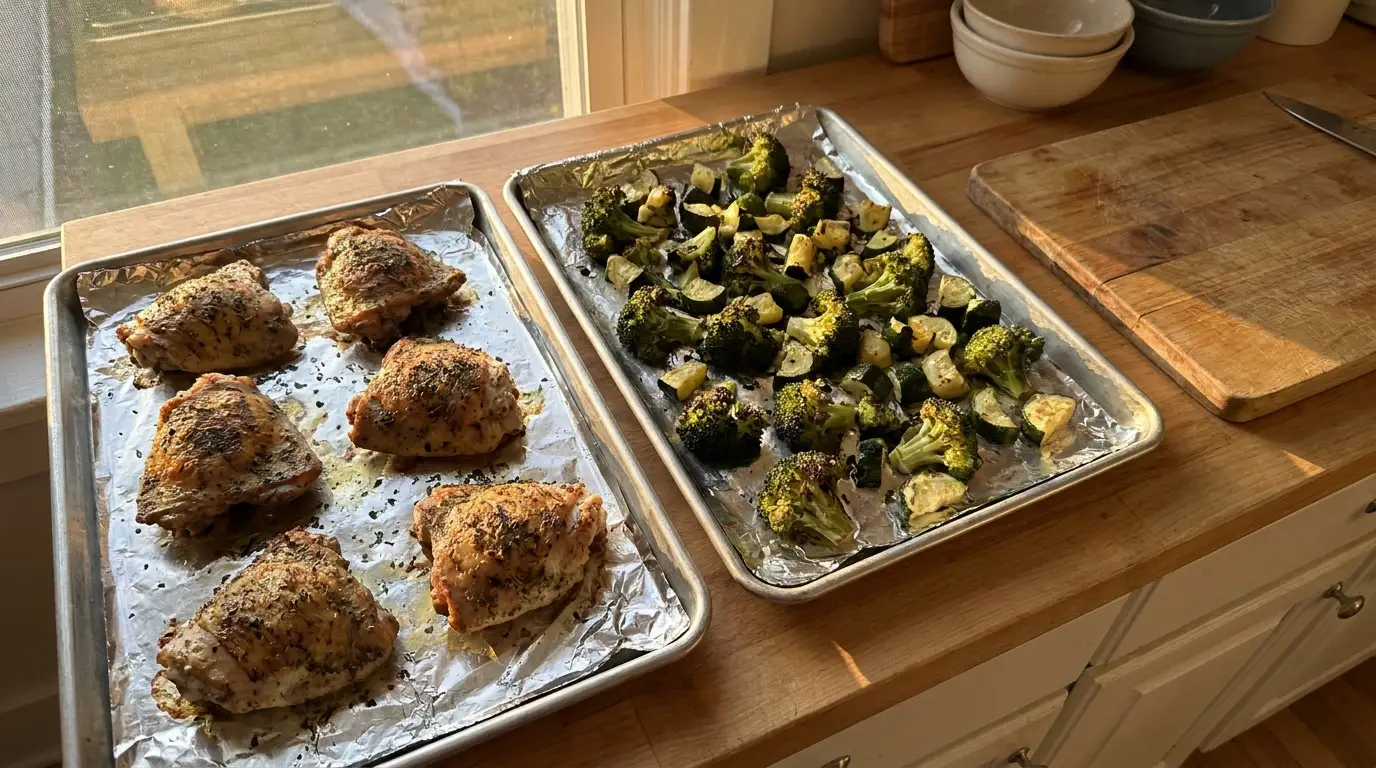
Preheat the oven to 425°F and line two sheet pans with foil; on one, add 2 pounds of bone-in chicken thighs, rubbed with olive oil, salt, pepper, and garlic powder. On the other one, toss 1 pound of broccoli florets and 1 pound of zucchini chunks with oil and salt. The vegetables will take about 20 to 25 minutes, and the thighs will take about 35 to 40 minutes, or until a food thermometer reads 165°F in the thickest part of the thigh.
This one session provides about 8 servings of protein and 6 servings of vegetables. Keto chicken thighs are recommended over chicken breasts, as they are more fatty than the latter and tend to be less dry after reheating. If you get bored by Wednesday, change the seasoning rather than the recipe: smoked paprika one week, Italian herbs the next, bagel seasoning the following week.
Hard-Boiled Eggs Count as Cooking
While the sheet pans roast, boil a dozen eggs. Add them to a pot, cover with cold water, bring to a boil, turn off the heat, cover for 12 minutes, then cool in ice water. You can store them in the fridge for a week, peeled or unpeeled.
Eggs take up space that other foods leave. 2 eggs and a slice of cheese make breakfast. Egg salad made with chopped eggs, mayonnaise, and mustard makes a delicious lunch wrap.
Buy the Shortcuts and Skip the Guilt
Some pre-cut, pre-cooked, and frozen products may cost more per pound, but they eliminate what you may find the worst part of cooking: chopping, peeling, and cleanup. Frozen riced cauliflower is an example. A 12-ounce bag cooks in about 5 minutes in the microwave and can substitute for rice, with net carbs around 3 per cup.
Other more expensive shortcuts include frozen grilled chicken strips, shredded cheese, pre-made pesto or Caesar dressing, spiralized zucchini, or pre-cooked bacon. Check the label on sauces, as many contain thickeners like sugar or starch. If the dressing has over 2g of carbohydrates per tablespoon, it will deplete your carb limit quicker than you might think.
Let Meal Delivery Cover Your Hardest Days
Some weeks, even assembly feels like too much. Late shifts, travel, and sick kids can wreck the best Sunday plan, and that is usually when keto falls apart and a pizza gets ordered. With a few meals already planned and prepped, that slide can be prevented.
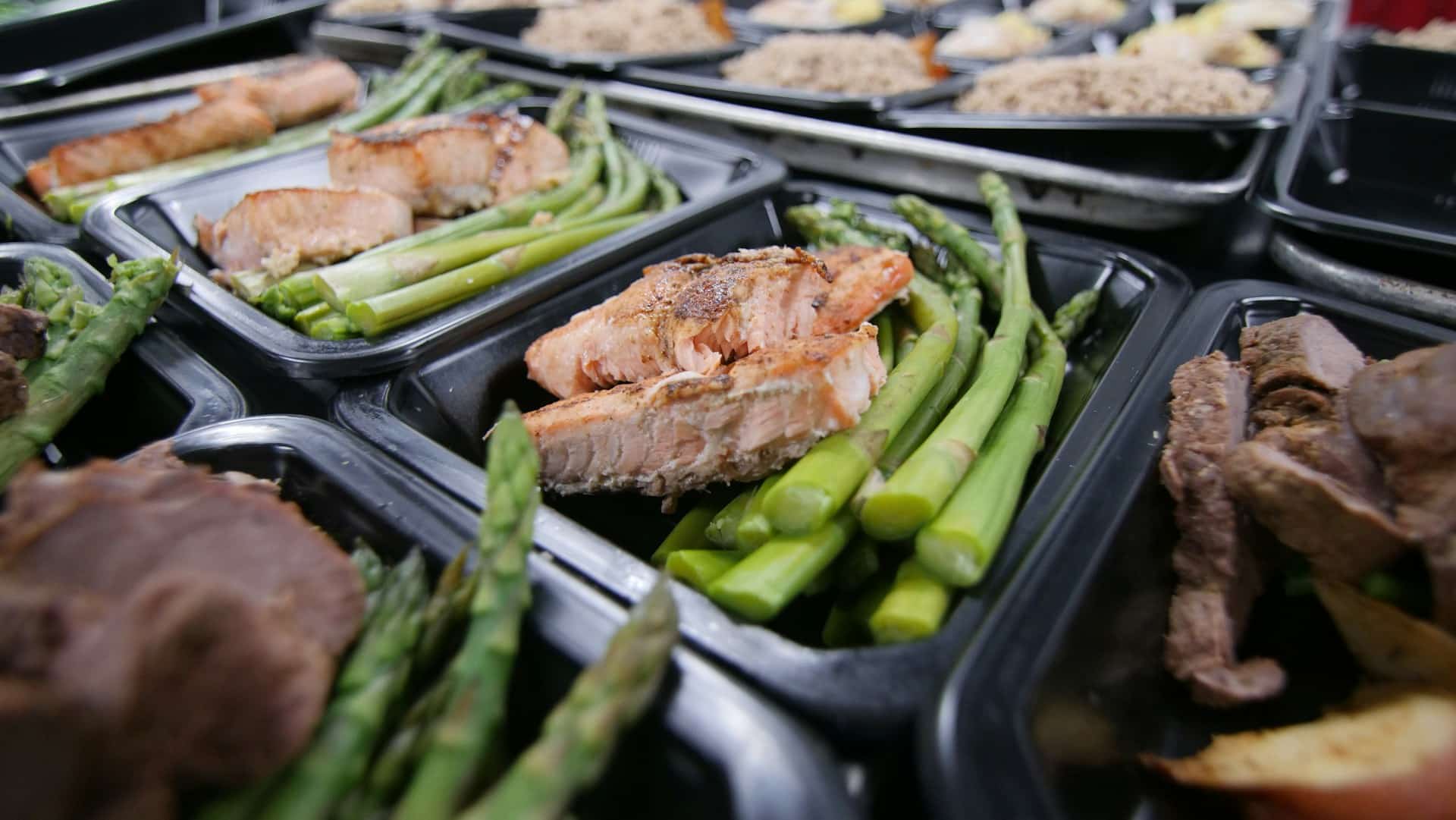
Ordering keto meal delivery is the best choice for those days. Meals arrive cooked, portioned, and labeled with macros, so you can see what you’re eating without weighing anything. You can use delivery for the entire week, or you can get four or five meals for dinners that you know will be rushed. Many people find the best approach is a mix: self-prepared breakfasts and lunches, with delivered dinners on the two to three busiest nights.
Store Food So It Stays Safe
Prepped food is a use-it-or-lose-it proposition if it will not be safe to eat by Friday. The USDA recommends consuming cooked chicken and other leftovers within 3-4 days in the fridge. This means that, in the most realistic way, you will cover Sunday prep until Wednesday or Thursday.
Anything not to be eaten by day three should be frozen. Cooked chicken thighs can be stored in the freezer for up to 2-3 months. Divide them into individual servings, freeze them, then thaw one in the fridge overnight. Glass containers with snap lids are a worthwhile investment because they reheat evenly, don’t absorb odors, and let you see what is inside without opening.
A Realistic Low-Effort Week
This is what this would look like in real life. Total active time will be approximately 1 hour on Sunday, and 5 minutes or less on weekdays.
- Breakfast: Two sandwiches with hard-boiled eggs, cheese, and a few slices of bacon
- Lunch: tuna or rotisserie chicken salad with avocado and greens
- Dinner: sheet-pan chicken thighs with roasted veggies or cauliflower rice, plus delivered keto meals on your busiest nights
- Snacks: olives, nuts, salami, or Greek yogurt
There are no recipes required for anything on that menu. The variety comes from changing seasonings and proteins, while the structure stays the same every week, making planning even quicker the longer you go.
Conclusion
Keto meal prep is best for people who don’t like to cook when you treat it as a shopping and storage job, not a cooking one. Have no-cook meals all week, make one sheet pan meal, pay for the shortcuts, and have the delivered meals available for the days you cannot face the kitchen. Do that for two or three weeks and the routine will take less effort than deciding what to order for takeout.