
Returning to work while breastfeeding takes planning. Between pumping breaks, carrying equipment, and cleaning parts, your pump needs to fit into a busy day. Choosing the right breast pump for working moms starts with your schedule, workplace facilities, and comfort. The most useful features are those that make your routine easier to manage consistently.
Start With Your Workday and Pumping Needs
Before choosing a breast pump for work, think through a typical workday:
- Time away from your baby: How many pumping sessions will you need during work and your commute?
- Available facilities: Under the federal PUMP Act, most employers must provide reasonable break time and a private space other than a bathroom for pumping, for up to one year after your baby’s birth. Ask where that space is, and whether it has power outlets, a nearby sink, and somewhere to store milk.
- Working conditions: Will you usually sit in one place, move between locations, or work shifts?
- The pump’s role: Will this be your main pump or an additional option for work?
These answers help you focus on features you will actually use. Battery power may matter more when outlets are difficult to access, while straightforward assembly can help when breaks are short. Remember to account for setup and cleanup time alongside pumping itself.
Choose the Pump Type That Fits Your Routine
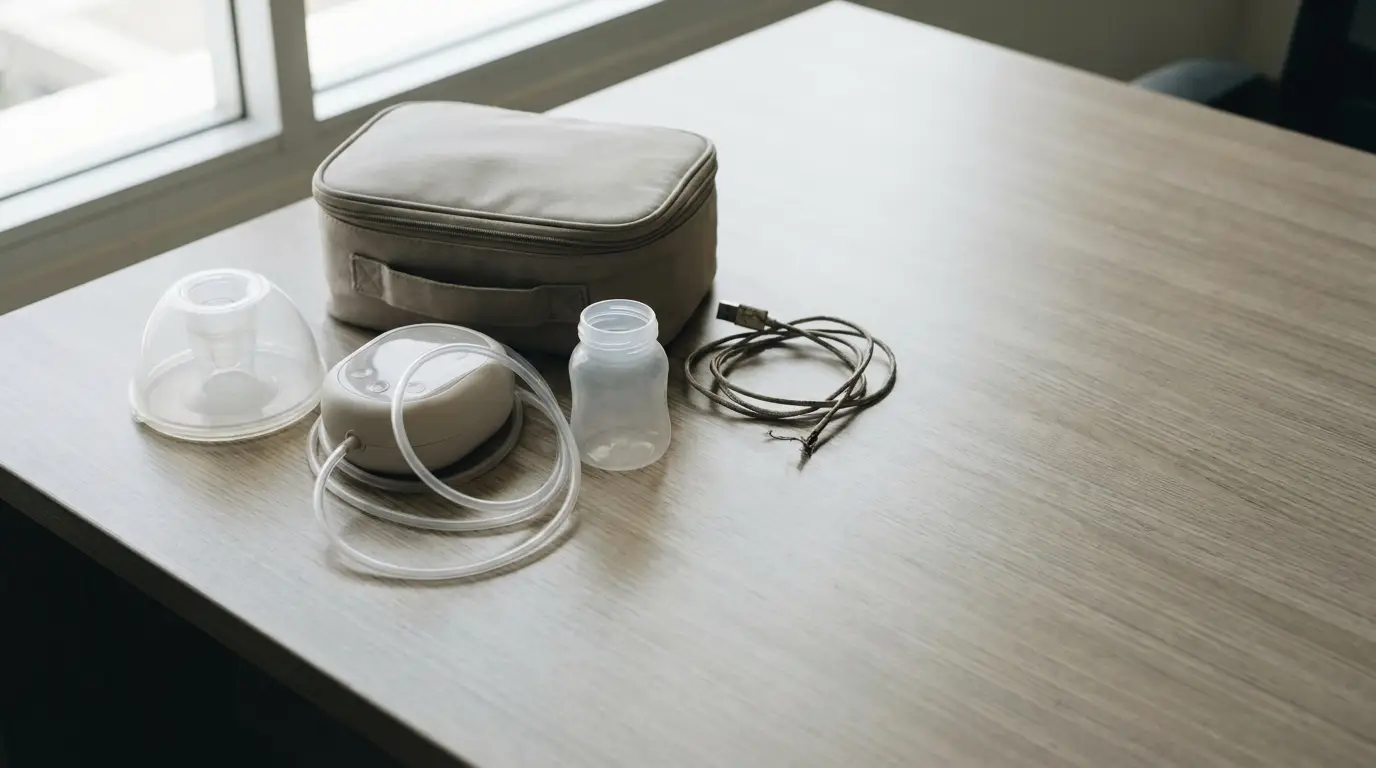
Each pump type offers a different balance of mobility, equipment, and convenience, so consider how the complete setup would work during your day.
Traditional Double Electric Breast Pumps
Double electric pumps let you express milk from both breasts simultaneously. They can suit a regular pumping routine in a dedicated space.
Check the power supply before buying. Some models require an outlet, while others have rechargeable batteries. Consider how much space the pump, bottles, and tubing will take in your bag and whether the controls are easy to reach.
Portable Electric Breast Pumps
Portable pumps use a compact motor connected by tubing to flanges and bottles or collection cups. Depending on the design, the motor may clip onto clothing or fit in a pocket.
Compare the complete setup rather than the motor alone. Tubing placement, collection containers, and charging accessories all affect how convenient the pump is to carry and use.
Wearable Breast Pumps
Many wearable breast pumps combine the motor and collection cup inside your bra, reducing external equipment. They can offer more flexibility during suitable light activities.
Bra fit, visibility under clothing, and movement restrictions vary by model. Try the pump before returning to work to check comfort, positioning, and your individual response. Consider how easily you can remove the cups and pour milk into storage containers.
Compare the Features That Matter at Work
Once you have narrowed down the pump type, compare the details that affect comfort, reliability, and the effort required between sessions.
Comfortable Fit and Adjustable Settings
Look for suitable flange sizes, a stable fit, and settings you can adjust comfortably. Stronger suction is not automatically better, and pumping should not require you to tolerate pain.
A breastfeeding resource center can help you find educational support. For individual fitting or persistent discomfort, seek guidance from a qualified lactation professional.
Battery Life, Noise and Portability
Check whether the battery can support your planned sessions, allowing for your commute and a reserve. Confirm charging times and whether the manufacturer supports charging with a power bank.
Consider noise and packed weight, too. A compact pump may still require a larger bag once you add spare parts and milk storage supplies.
Cleaning and Replacement Parts
Review how many milk-contact parts need washing, how easily they come apart, and the manufacturer’s cleaning instructions.
Spare collection kits may help with logistics, but you still need a suitable cleaning and drying plan. Check that compatible replacement valves, seals, and other parts are readily available, especially if you depend on the pump daily.
Total Cost and Everyday Practicality
Budget for more than the pump itself. Additional flange sizes, spare components, and storage or transport supplies can increase the total cost if you pay out of pocket. If you use insurance, plans subject to the ACA generally cover pump parts and milk storage supplies, though quantities and replacement schedules vary—ask what your plan includes.
If you are using insurance, confirm the covered model, approved supplier, and any upgrade fees before ordering. Compare what comes in each package so that a lower initial price does not hide essential extras.
Test Your Setup Before Returning to Work
Practice a complete session at home: assemble the pump, position it, adjust the settings, transfer the milk, and clean the parts. Note how long the full process takes.
Then pack everything you expect to carry and check your charging, cleaning, and milk transport arrangements. Before your first day back, let your employer know you will need pump breaks, and confirm where the lactation space is and how break times will work with your schedule.
A trial gives you time to address an uncomfortable fit, awkward controls, or missing accessories. It also helps you decide whether you need spare parts or a backup option.
Conclusion
The right breast pump should suit your working conditions and feel comfortable to use regularly. Start with your daily needs, compare the complete setup, and account for cleaning and ongoing costs. Testing your routine before returning to work can make those first days easier to manage.