Ever bought a cozy sweater, only to find it pills, itches, or falls apart after a few washes? The fabric matters more than most people think.
If you’ve ever asked what acrylic fabric is, its nothing new. It’s one of the most widely used synthetic fibers in the world, yet most buyers know very little about it.
Acrylic is affordable, warm, and surprisingly versatile. It’s found in everything from winter knitwear to outdoor furniture covers.
By the end of this post, you’ll know exactly how acrylic fabric is made, its types and uses, how it compares to other fabrics, and how to care for it properly.
What Is Acrylic Fabric?
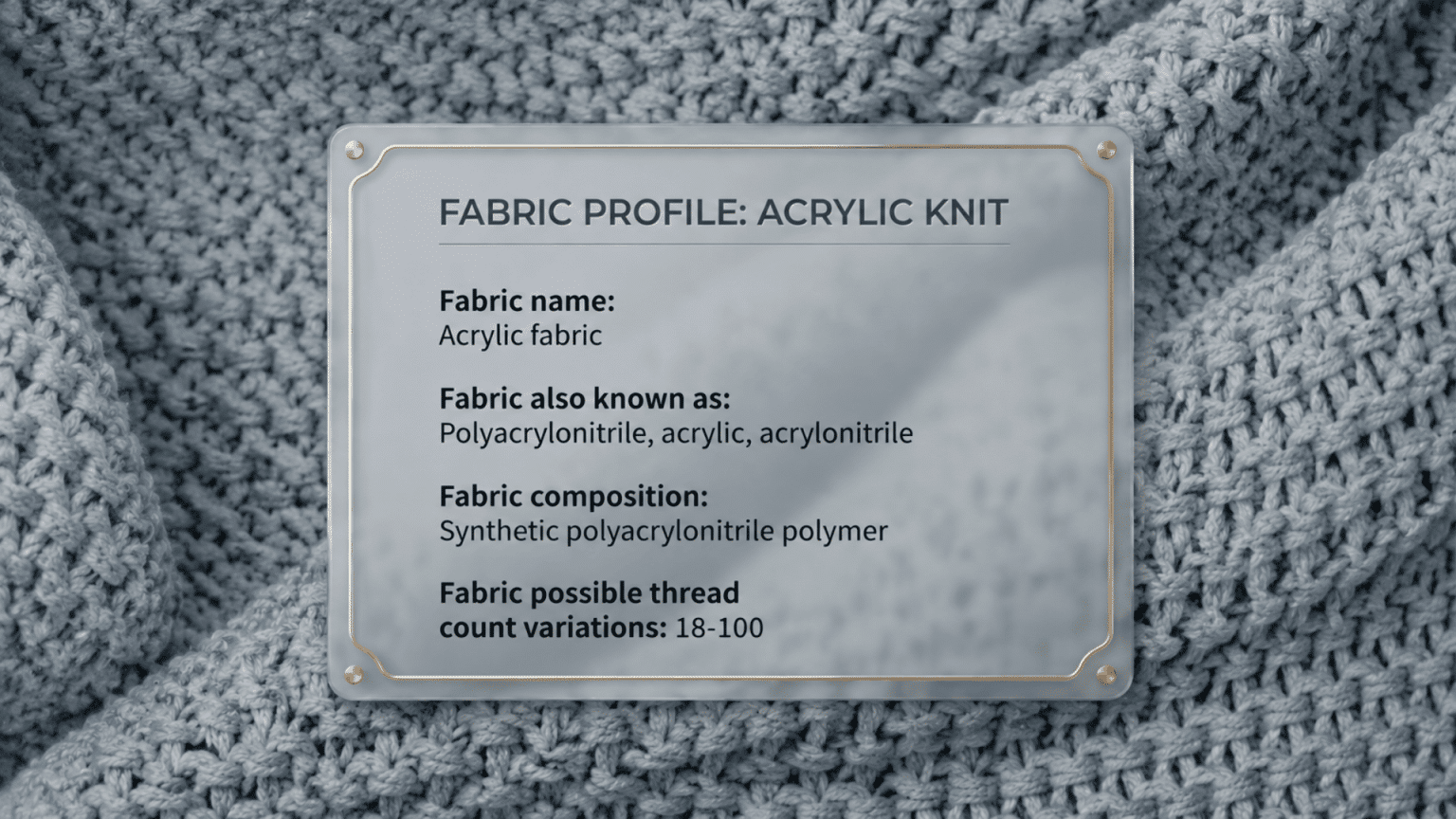
Acrylic fabric is a synthetic textile made from polyacrylonitrile, a polymer derived from acrylonitrile, a chemical compound sourced from petroleum or coal, making it a fossil fuel-based fiber.
To be classified as authentic acrylic, the fabric must contain at least 85% acrylonitrile, with the remaining compounds influencing the final fabric’s characteristics and performance.
Compared to natural fibers, acrylic is relatively low in breathability, which makes it well-suited for heat-retention applications such as hoodies, tracksuits, and athletic pants.
Acrylonitrile is a possible carcinogen, but the risk is mainly from workplace exposure during production, not from wearing finished fabrics, which are generally considered safe.
|
History of Acrylic Fabric Acrylic fiber was developed by DuPont in the 1940s, the company already known for nylon and polyester. It didn’t gain widespread popularity until the 1950s. Throughout the 1960s, acrylic grew steadily, but concerns over flammability, toxicity, and carcinogenicity began to limit its appeal. By the 1970s, the environmental movement further damaged its reputation in Western markets. |
Today’s Leading Producers of Acrylic Fabric
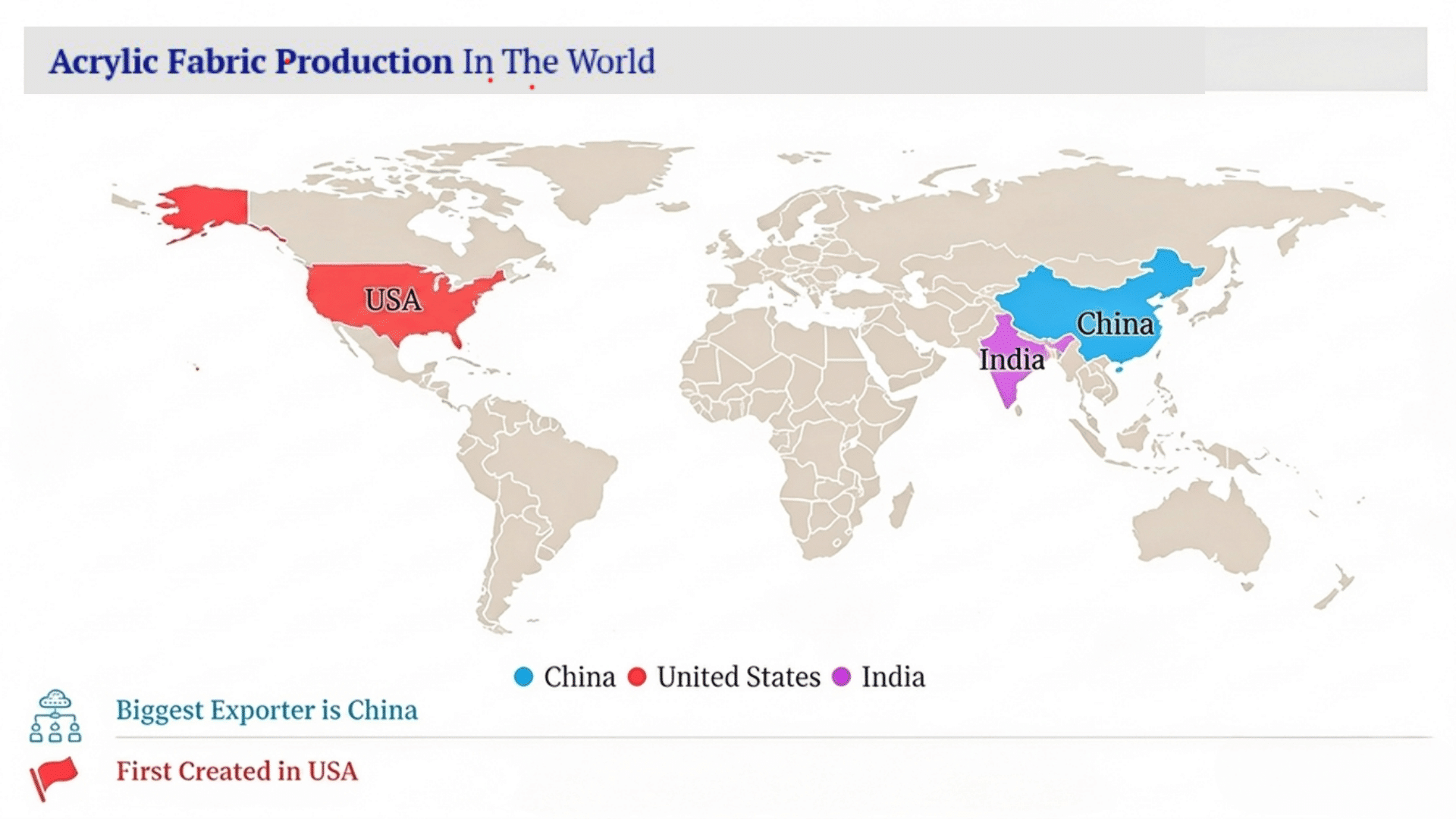
China dominates global acrylic fabric production, accounting for more than 30% of the world’s output while also holding the largest consumer market for acrylic clothing.
Meanwhile, South America stands as the world’s fastest-growing acrylic marketplace, and ASEAN nations like India and Indonesia continue to expand their consumption and production steadily.
Despite China’s dominance in overall production, the title of the largest acrylic fiber producer belongs to the Indian firm Aksa Akrilik Kimya Sanayii AŞ, with another Indian company in second place and China’s Dralon in third.
How Is Acrylic Fabric Made?
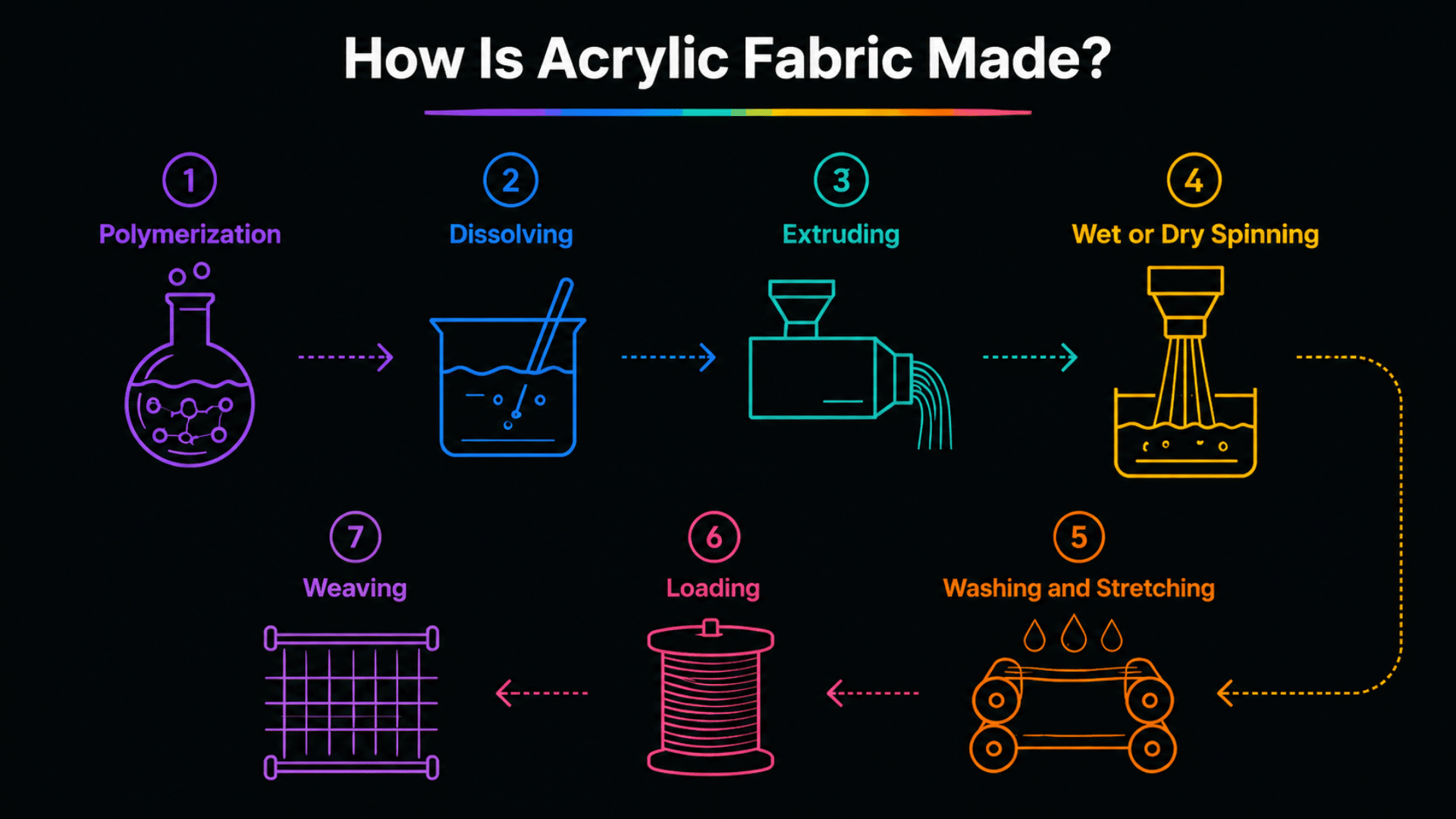
Acrylic fabric is produced through a multi-step chemical and mechanical process that transforms raw acrylonitrile into a versatile textile fiber.
- Step 1: Polymerization- Acrylonitrile is reacted in a water-based solution via free radical polymerization to form polyacrylonitrile.
- Step 2: Dissolving- The polymer is dissolved in a chemical solvent to produce a gel-like material.
- Step 3: Spinning- The gel is extruded through a spinneret using wet or dry spinning methods.
- Step 4: Washing and Stretching- Fibers are washed, stretched, and crimped into long, thin filaments.
- Step 5: Yarn Formation- Filaments are spun into yarn and wound onto bobbins for shipping.
- Step 6: Weaving- Yarn is woven into apparel, carpeting, or sold directly as knitting yarn.
- Step 7: Dyeing and Treatment- Fibers are treated with dyes and flame retardants for safe consumer use.
💡 Pro Tip: When buying acrylic fabric, check the label for flame retardant treatment. Untreated acrylic is highly flammable, so ensuring the fabric has been properly finished is essential for safety.
Different Types of Acrylic Fabric
There are four main types of acrylic fabric:
1. Acrylic
To be considered authentic acrylic fabric, the fiber must contain at least 85% pure acrylonitrile. This high acrylonitrile content gives acrylic its characteristic warmth and wool-like texture.
It is the most common form of acrylic fiber and is widely used in apparel, home textiles, and knitting yarn. Its affordability and versatility have made it one of the most produced synthetic fibers globally.
Fact Check: The 85% acrylonitrile threshold is accurate and verified by the U.S. Federal Trade Commission (FTC) fiber classification standards.
2. Modacrylic
Modacrylic is a variant of acrylic fiber that blends acrylonitrile with other polymers, including vinylidene chloride. This composition gives it better drapability, wrinkle-resistance, and durability than standard acrylic.
Unlike regular acrylic, modacrylic is naturally flame-resistant and more resistant to pilling and abrasion. It also holds its shape better, making it a superior choice for many apparel and upholstery applications.
3. Nytril
Nytril differs from standard acrylic in that it is primarily composed of vinylidene dinitrile rather than acrylonitrile. While still produced in some Asian markets, it has not been manufactured in the United States since the 1960s.
Its difficulty in dyeing has significantly limited its commercial appeal and widespread adoption. As a result, nytril remains one of the least-produced acrylic fiber variants in the world.
Fact Check: Nytril’s discontinuation in the U.S. is accurate. Its poor dyeability is the primary reason it never gained mainstream traction despite its other functional properties.
4. Lastrile
Lastrile is an elastic form of acrylic made by combining acrylonitrile with a chemical called a diene. This blend gives it greater stretch and flexibility compared to standard acrylic fabric.
It is used in similar applications to regular acrylic wherever enhanced elasticity is required. Its unique composition makes it suitable for fitted garments and products that demand greater shape retention.
Where Is Acrylic Fabric Used?
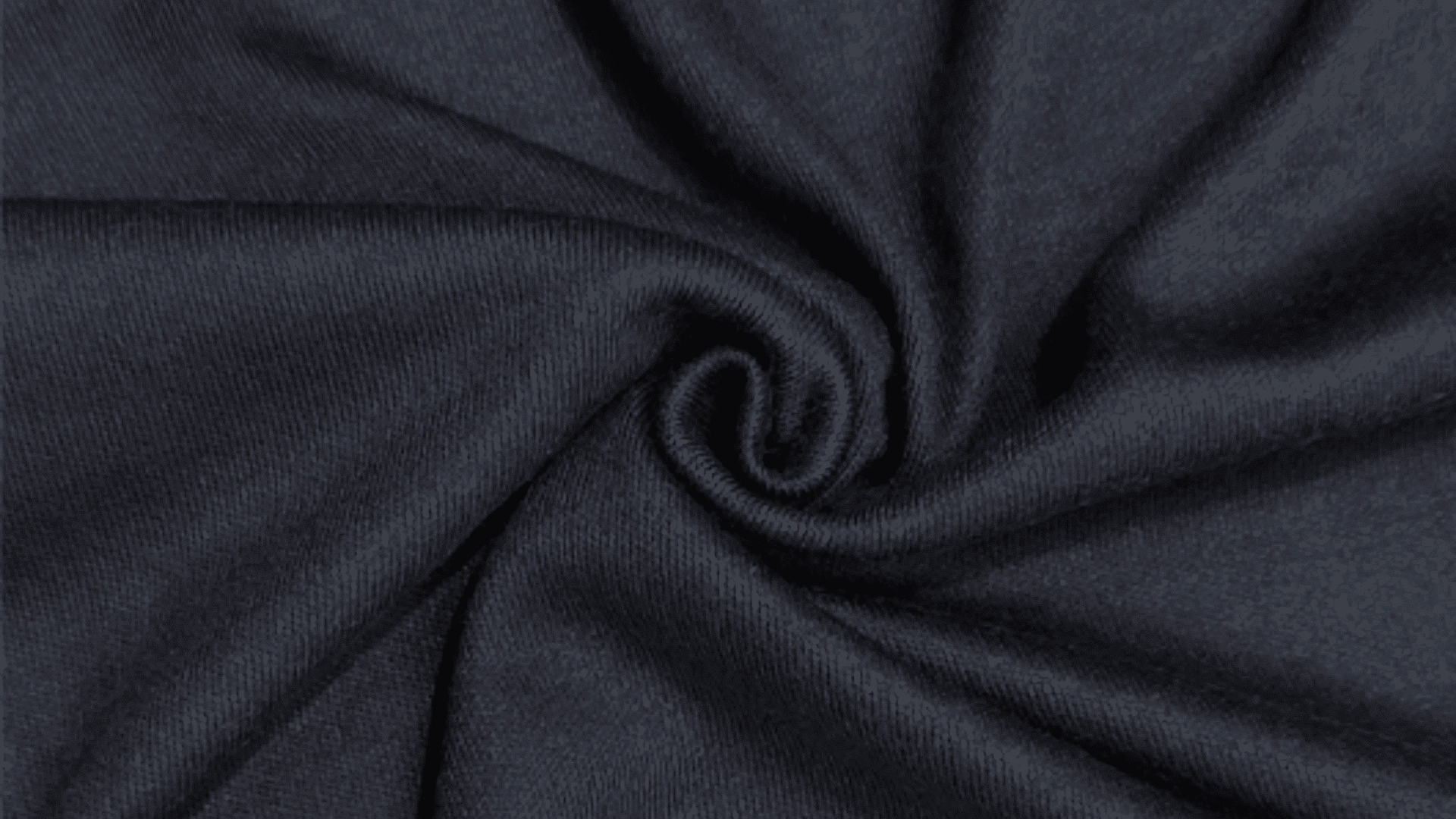
Acrylic is a versatile synthetic fiber designed to mimic wool, used across apparel, homeware, and select industrial applications.
- Athletic Wear: Blended with other fibers in tracksuits and athletic pants to enhance flexibility, durability, and heat retention.
- Faux Fur and Fleece: Can be spun to mimic natural fur or fleece, making it useful for costumes, props, and low-maintenance fashion.
- Home Textiles: A popular choice for blankets, throws, carpeting, upholstery, curtains, and rugs due to its fade resistance and durability.
- Outdoor Applications: Highly resistant to UV rays, moisture, and mildew, making it ideal for outdoor furniture covers, awnings, and marine fabrics.
- Workwear and Protective Clothing: Often blended with other fibers to create fire-resistant or high-durability garments for industrial environments.
- Carbon Fiber Production: Serves as a key precursor in carbon fiber manufacturing, giving it an important role in high-demand industrial applications.
- Knitting Yarn: Widely used as an affordable, beginner-friendly yarn with good color retention and minimal care requirements.
Acrylic’s ability to replicate wool at a lower cost has secured its place in fashion, home décor, and hobby markets.
Acrylic vs. Other Fabrics
Understanding how acrylic compares to other commonly used fabrics helps highlight its strengths and limitations across key performance properties.
| Property | Acrylic | Wool | Polyester | Cotton |
|---|---|---|---|---|
| Softness | Soft, wool-like | Natural softness | Slightly rougher | Soft but varies |
| Warmth | High insulation | Excellent insulation | Moderate | Breathable, not insulating |
| Moisture Resistance | High | Absorbs moisture | High | Absorbs moisture |
| Durability | Strong and lightweight | Can shrink and wear out | Strong and wrinkle-resistant | Moderate |
| UV Resistance | High | Low | Very high | Low |
| Maintenance | Easy to wash, quick-drying | Requires special care | Easy care, wrinkle-resistant | May shrink and wrinkle |
How Does Acrylic Fabric Impact the Environment?
Acrylic fabric is not biodegradable, so it stays in the environment for a long time. Its production also uses toxic chemicals that can harm air, water, and nearby ecosystems if not properly controlled.
Manufacturing can release harmful gases and pollutants if safety systems fail. These chemicals may affect workers, wildlife, and surrounding communities.
Acrylic cannot be easily recycled, so most waste ends up in landfills. It also sheds microfibers during washing, which pollute rivers and oceans.
Since it is made from fossil fuels, acrylic production increases non-renewable resource use and adds to overall environmental pollution.
Health Risks of Acrylic Fabric
Acrylic Fabric Health Notes look best when understood in the context of basic safety. A few simple points help explain the risks.
- Residual monomers are mainly a concern during manufacturing, not normal daily wear.
- Most finished acrylic fabrics are tested and regulated for consumer safety.
- Acrylic fabric can be flammable, but many products are treated to reduce this risk.
- Some flame retardants may be used in textiles, and their use is controlled by safety standards.
- Current evidence does not show that wearing synthetic fabrics directly causes cancer.
- Some people may experience mild skin irritation depending on sensitivity.
Buying Tips for Acrylic FabricsWhen shopping for acrylic fabric, whether you’re a sewist or a fashion brand, keep the following in mind:
|
Acrylic Fabric Wash & Care Tips
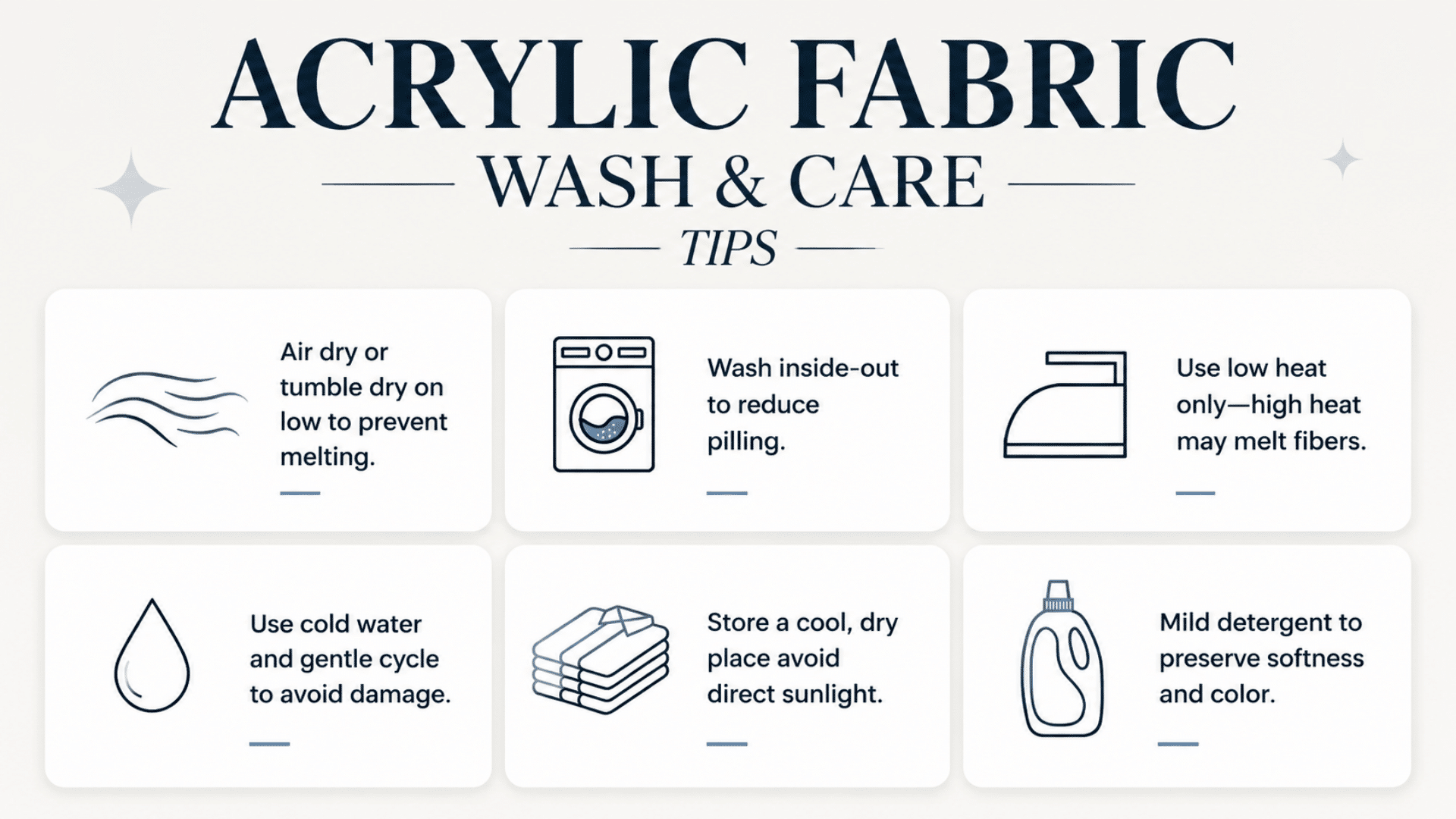
Proper care extends the life of acrylic fabric and helps maintain its softness, color, and shape over time.
| Care Step | Tip | Reason |
|---|---|---|
| Drying | Air dry or tumble dry on low | Prevents the melting of fibers |
| Washing | Wash inside-out on gentle cycle with cold water | Reduces pilling and damage |
| Heat | Use low heat only when ironing | High heat may melt fibers |
| Detergent | Use mild detergent | Preserve softness and color |
| Storage | Store in a cool, dry place | Avoids direct sunlight damage |
Final Thoughts
Acrylic fabric continues to prove its worth as a budget-friendly, durable, and versatile textile. It delivers warmth, color retention, and easy maintenance across a wide range of everyday products.
Now that you understand what is acrylic fabric, you can make smarter choices if you’re shopping for winter wear, home textiles, or knitting supplies.
Always check fabric labels, opt for flame-retardant treated options, and follow care instructions to get the most out of your purchase.
If you found this guide helpful, share it with someone who loves fashion or home décor.
Ready to shop smarter? Start by checking the fabric label on your next purchase.
Have questions or personal experience with acrylic fabric? Drop them in the comments below; we’d love to hear from you!
Frequently Asked Questions
What Are the Disadvantages of Acrylic Fabric?
It can pill over time, lacks breathability, and can melt under high heat. It’s not biodegradable and may not be ideal for eco-conscious shoppers.
Does Acrylic Fabric Stretch Over Time, and How Can you Restore Its Shape?
Acrylic can lose its shape with repeated wear and washing, especially when exposed to heat. Dampen the garment, reshape by hand, and lay flat to air dry to restore its form.
Is Acrylic Fabric Safe for Skin?
Acrylic is generally safe, but some people with sensitive skin may experience irritation. Blended fabrics or lining can help reduce this.