

Your gel manicure looked perfect until your fingers started itching for no reason. That itch, redness, or swelling might mean more than sensitive skin. It could be an allergic reaction to gel polish.
It’s easy to assume gel polish is safe since it’s used in salons everywhere. But your skin can react even when everything is done correctly.
This reaction can show up even if you have worn gel polish safely for years without issues. The causes behind these reactions, common symptoms to watch for, and why they suddenly appear come next.
Simple ways to treat a reaction, prevent future flare-ups, and know exactly when to see a dermatologist are covered too.
What Is an Allergic Reaction to Gel Polish?
An allergic reaction to gel polish happens when the immune system treats certain chemicals as harmful, unlike simple irritation from friction or dryness.
Allergic contact dermatitis is the most common reaction associated with gel polish, typically developing after repeated exposure to a sensitizing ingredient.
Symptoms usually appear around the nails, fingertips, and nearby skin folds, the areas with the most direct contact during wear.
An immune reaction differs from simple skin sensitivity, and repeated exposure to the same ingredients raises the risk of a true allergy forming over time.
Symptoms of an Allergic Reaction to Gel Polish
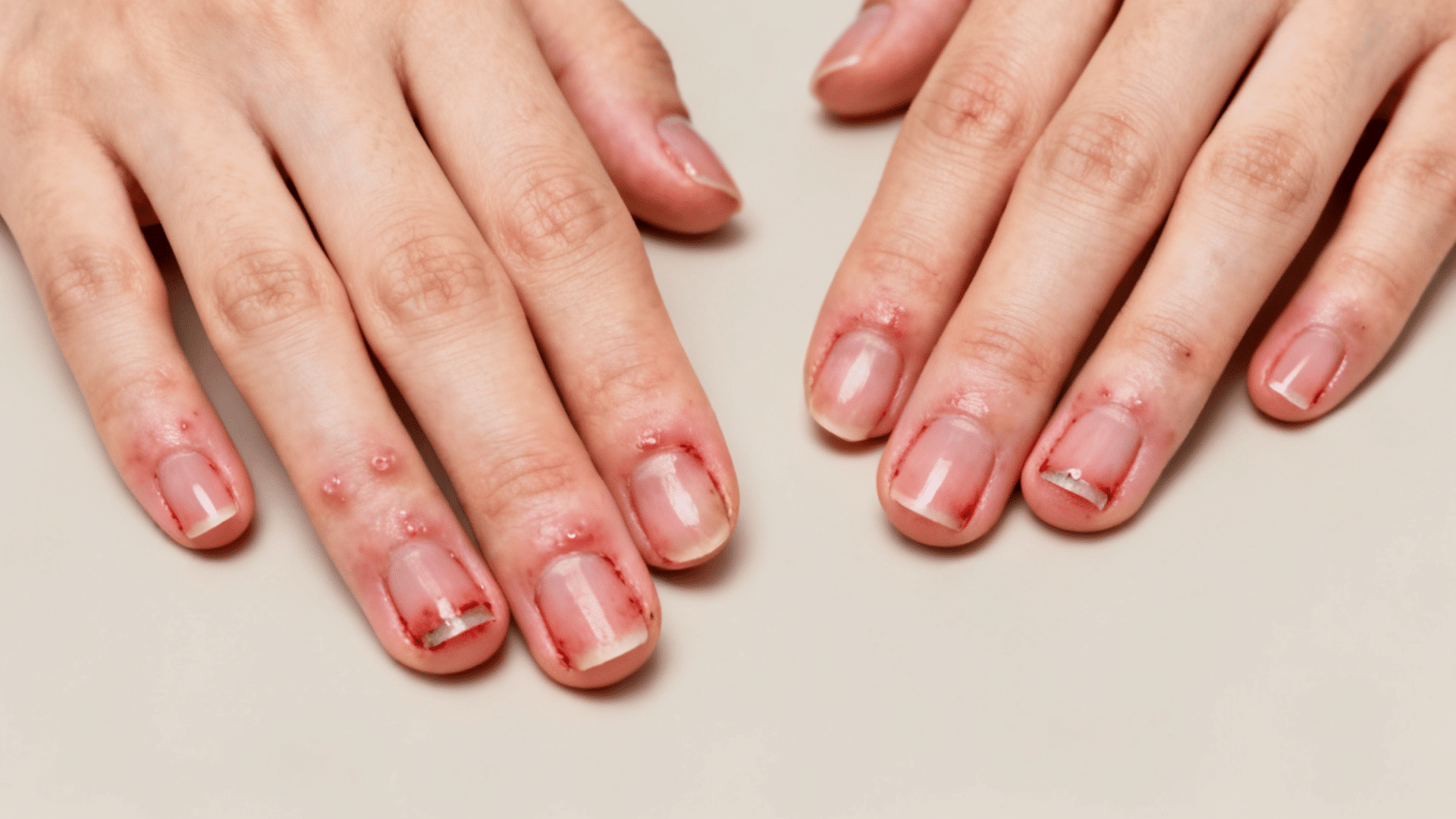
Symptoms of an allergic reaction to gel polish can appear within hours or take several days after a manicure.
- Itching and Redness Around the Nails: Persistent itching around the cuticles and fingertips is often the first sign, followed by skin turning red or becoming irritated soon after application.
- Swelling, Rash, or Blisters: Stronger reactions can bring visible swelling, a rash, or small blisters, with inflammation spreading beyond the nail area to nearby skin.
- Nail Changes After a Gel Polish Allergy: The nail plate may lift away from the underlying skin, and the nails may become weak or brittle near the nail bed over time.
- Skin Reactions Away From the Nails: Reactions can appear on the eyelids, face, or neck when skin is touched after handling gel polish.
Even small, invisible traces of the product left on fingers can trigger symptoms in other sensitive areas of skin.
| Advice: Symptoms usually improve within one to two weeks after removal, though full healing can take longer if the nail bed is affected. |
Why Can You Suddenly Develop an Allergy to Gel Polish?
Someone can use gel polish safely for months or even years before symptoms suddenly appear without warning.
The immune system can become sensitized after repeated exposure, meaning it starts reacting to an ingredient it once tolerated well.
Repeated Exposure Can Trigger Sensitization
- Frequent Manicures Add Up: Regular gel sessions increase the frequency with which skin comes into contact with certain allergens in the product.
- Past Safety Is No Guarantee: Sensitization can build up quietly over time, so previous safe use does not prevent future reactions.
Gel Polish Ingredients That May Cause Allergic Reactions
- HEMA (Hydroxyethyl Methacrylate): One of the most common triggers behind an allergic reaction to gel polish.
- Acrylates and Methacrylates: These bonding agents are widely used in gel formulas and are known skin sensitizers.
- Other Chemical Additives: Pigments, solvents, and stabilizers in gel systems can also influence reactions.
- Uncured Product Risk: Ingredients that are not fully hardened under a lamp remain reactive, increasing the risk of skin exposure.
Improper Application or Curing Issues
- Skin Contact During Application: Gel polish touching the skin around the nail raises the chance of a reaction.
- Under-Curing Leaves Residue: Gel that is not properly cured leaves reactive chemicals sitting on the skin.
- Lamp and DIY Risks: Incorrect lamp wattage or careless at-home application can worsen curing problems and allergy risk.
Paying attention to ingredients, proper curing, and application habits can lower the risk even for long-time gel polish users.
How Do You Treat an Allergic Reaction to Gel Polish?
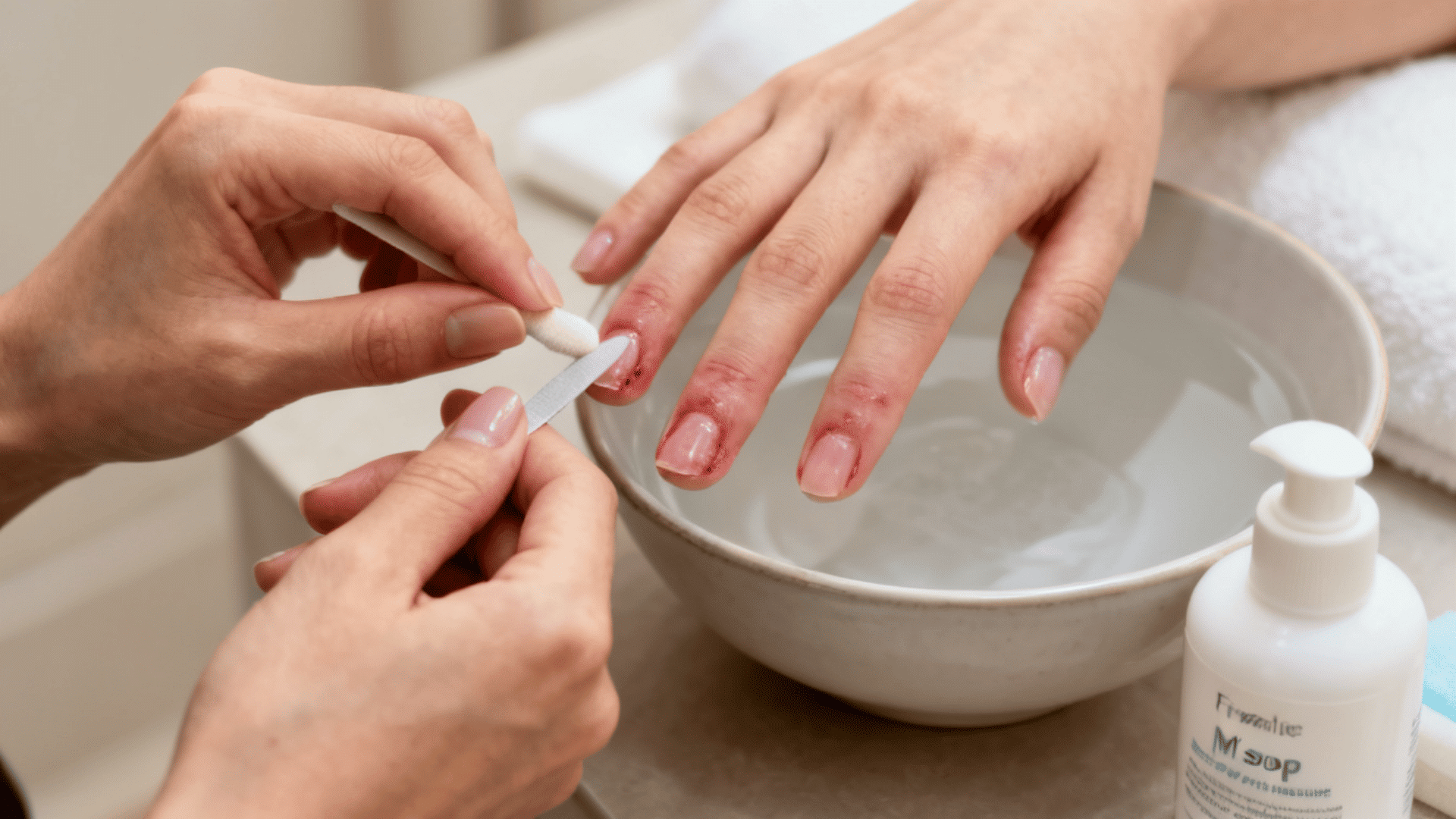
Treating an allergic reaction to gel polish starts with acting quickly once symptoms appear, rather than waiting to see if they fade on their own.
Here are the steps to follow after noticing symptoms:
Step 1: Stop Wearing the Product: Remove the gel polish as soon as possible instead of leaving it on the nails.
Step 2: Wash the Area Gently: Clean hands with mild soap and lukewarm water to remove any leftover residue.
Step 3: Avoid Further Contact: Skip further gel applications until the skin fully settles and heals completely.
Step 4: Soothe the Skin: Apply a fragrance-free moisturizer or a mild cream to calm redness and dryness.
Step 5: Monitor the Symptoms: Keep an eye on the skin over the next few days for any improvement or worsening.
| Advise: Acting early and giving the skin time to recover can prevent a mild reaction from turning into a more lasting problem |
Discussions and Forums
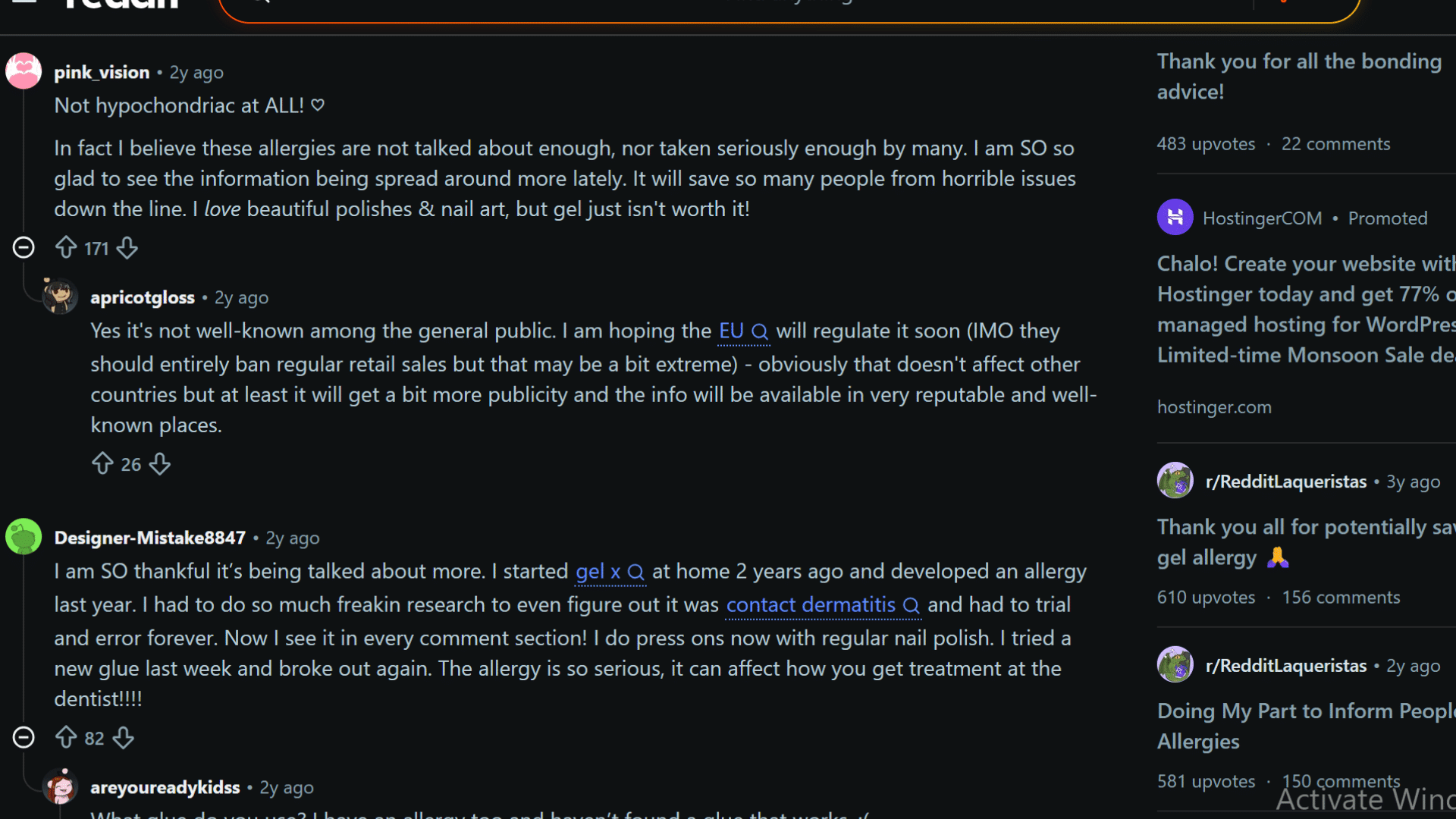
People are talking openly about an allergic reaction to gel polish on platforms like Reddit, sharing real experiences instead of just clinical advice.
In one thread, a user thanked the community for warning her before she invested in an at-home gel setup, saying she had no idea skin contact could cause lasting harm.
Others shared personal stories of sudden reactions after months of safe use, including itching, blistering, and nail lifting that took months to heal.
Several commenters pointed out that even professional manicures do not eliminate the risk, and that switching to press-ons or regular polish helped them recover.
These conversations show how common and underreported this allergy still is, making community threads like this one on Reddit a valuable resource for real experiences.
How to Prevent an Allergic Reaction to Gel Polish?
Preventing an allergic reaction to gel polish gets easier once you know which habits lower the risk.
- Keep Polish Off Skin: Skin absorbs chemicals more quickly than nails, so contact with polish increases the risk of allergies.
- Use Properly Cured Gel: Fully cured gel leaves fewer reactive chemicals behind.
- Follow Lamp Instructions: Use the correct wattage and timing to ensure each layer hardens fully.
- Check Ingredient Lists: Helps spot common allergens, such as HEMA, before application.
- Avoid Known Allergens: Repeat exposure often makes future reactions worse.
None of these steps guarantees that a reaction will never happen, but together they significantly reduce the risk and support healthier, safer nails.
When to Seek Care for Nails?
Most mild symptoms settle on their own, but certain signs mean it’s time to see a doctor rather than wait it out.
- Pus, increasing pain, or fever around the nail area; signs of infection that need prompt attention
- Symptoms that stay the same or worsen after 1 to 3 days off the product
- Redness or rashes that spread to the hands, arms, face, or neck beyond the fingertips
- Difficulty breathing, hives, or swelling beyond the hands; systemic symptoms needing urgent care
Knowing these warning signs helps you act at the right time, not too early or too late. A quick checkup can prevent a small issue from becoming a bigger one.
Final Thoughts
If any of these signs appear, a dermatologist can run a patch test to identify the exact ingredient causing the allergic reaction to gel polish.
Nail reactions can catch anyone off guard, even after years of trouble-free manicures, so paying attention to early signs helps skin recover faster.
If itching or redness appears, stop wearing the gel and let your skin rest. Proper curing and label checking can reduce future risk.
Your nails go through a lot, so treat them with a little extra care. If something feels off after a manicure, trust that instinct and act on it early.
Got a question or a story of your own? Drop it in the comments below.
Frequently Asked Questions
Can Gel Polish Allergies Spread to Other Parts of The Body?
Yes, an allergic reaction to gel polish can spread beyond the nails if traces of the product come into contact with other areas of the skin, such as the eyelids, face, or neck.
Can Wearing Gloves During a Manicure Help Prevent an Allergic Reaction?
Nitrile gloves with fingertip holes reduce skin contact during application, thereby lowering exposure to allergens such as HEMA.
Can You be Allergic to Gel Polish but Not Regular Nail Polish?
Gel polish contains bonding agents such as HEMA and acrylates that regular polish does not contain. Someone can tolerate regular polish while still reacting to gel formulas.