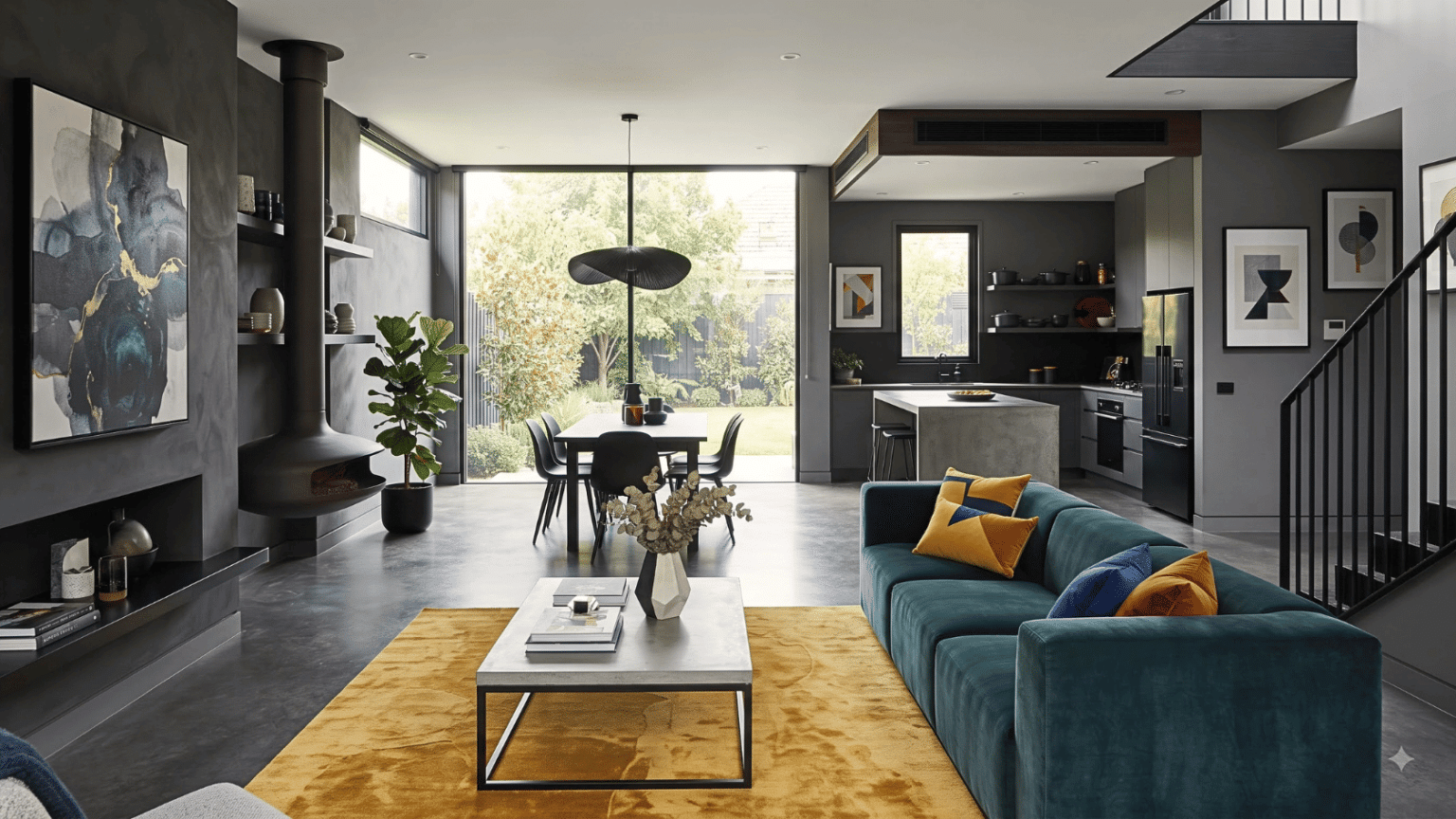
Walk into two homes with the same floor plan, and they can feel like entirely different worlds. That difference almost always comes down to interior design style.
Modern interior design styles range from clean, minimal spaces to bold, pattern-heavy rooms, and each one carries its own colors, materials, and personality. Some styles trace back to a specific decade, while others shift with whatever feels current.
Placing them side by side makes the differences easier to spot, whether the goal is a calm bedroom, a livable kitchen, or a living room that mixes a few looks at once.
I enjoy working through these categories, since matching a style to a real home matters most in everyday living.
What Are Modern Interior Design Styles?
Modern interior design style refers to a group of aesthetics rooted in the early- to mid-20th-century aesthetics movement that favored clean lines, minimal ornamentation, and functional form over decorative excess.
This umbrella includes Mid-Century Modern, Scandinavian, and Postmodern, each sharing neutral color palettes, natural materials like wood and leather, and open, uncluttered layouts.
Key elements of modern interior design styles include:
- Neutral Color Schemes: Soft shades like white, beige, gray, and earthy tones create a calm atmosphere.
- Simple Furniture Forms: Streamlined shapes and practical designs reduce visual clutter.
- Natural Materials: Wood, leather, metal, and glass add warmth and structure.
- Ornamentation Level: Traditional interiors feature decorative details, whereas modern and minimalist spaces avoid excess adornments.
- Spatial Layout Approach: Open floor plans suit modern design, while traditional styles favor separated rooms.
These core elements work together to shape how a room feels and functions across every interior design style available today, creating harmonious and inviting living spaces for all.
What Are the Main Types of Interior Design?
Modern interior design has many categories, each shaped by its own materials, colors, and structural details.
This table lists seven common styles side by side, showing what sets each one apart at a glance:
| Style | Defining Features | Colors and Materials | Furniture and Details |
|---|---|---|---|
| Modern | Clean, straight lines, minimal clutter | Black, white, and gray tones | Glass, steel, and chrome pieces built for function |
| Traditional | Classic symmetry and formal order | Warm, muted tones with rich wood finishes | Walnut and cherry furniture, ornate detailing, velvet and brocade fabrics |
| Industrial | Raw, unfinished surfaces, open floor plans | Exposed brick, pipes, and concrete | Metal fixtures, reclaimed wood, high ceilings |
| Mid-Century Modern | Retro look rooted in the 1950s and 1960s | Warm natural wood tones with bold accent colors | Organic shapes, curved silhouettes, function-first pieces |
| Scandinavian | Bright, airy, cozy atmosphere | Pale woods, soft neutral palette | Simple furnishings, wool, sheepskin, and linen textiles |
| Transitional | Balance of traditional and modern elements | Neutral, soothing color schemes | Comfortable furniture with subtle texture, minimal ornamentation |
| Bohemian | Free-spirited, relaxed layout | Layered textiles, vibrant patterns | Global and vintage accents, abundant plants and natural elements |
Tip: Testing fabric swatches and paint samples in daylight helps avoid costly mistakes when rearranging rooms. Colors and textures can look different indoors, so checking beforehand is practical
How to Choose the Right Interior Design Style for Your Home
Choosing among the many types of modern interior design styles comes down to matching a style to practical factors specific to a home and its occupants.
- Match Your Personal Style: Select colors, textures, and moods that reflect what feels comfortable and appealing to you.
- Consider Your Home Architecture: Choose styles that complement your home’s structure, such as traditional or farmhouse designs for older homes.
- Set a Realistic Budget: Pick a style that fits your furnishing budget, as minimalist designs may cost less than heavily layered interiors.
- Plan Furniture Sourcing: Consider how easy it is to find furniture pieces, especially for styles like industrial or mid-century modern.
- Think About Long-Term Appeal: Select adaptable styles that can stay fresh and functional as trends change.
- Account for Household Needs: Choose durable materials and practical fabrics if you have children, pets, or high-traffic spaces.
Balancing personal taste with practical factors like budget, sourcing, and household needs makes choosing the right interior design style far less overwhelming.
True Historical Modern Styles
True historical modern styles belong together because they honor clean lines, uncluttered spaces, and the form-follows-function rule established decades ago.
Each style below traces back to a specific design movement, favoring natural materials, restrained color, and open layouts over heavy ornamentation.
1. Mid-Century Modern
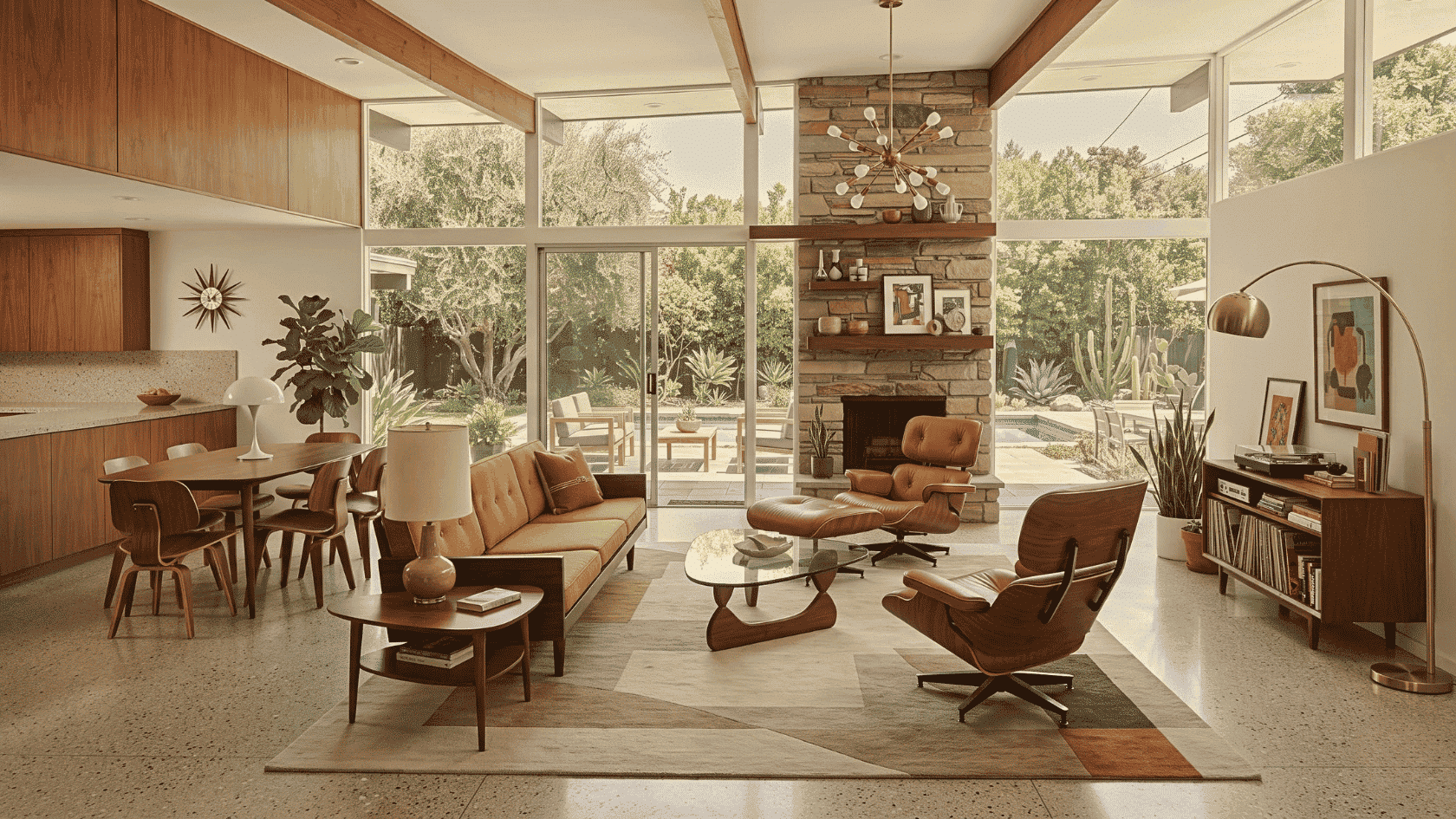
Mid-century modern design reflects the retro aesthetic of the 1950s and 1960s, favoring clean, organic shapes and low-profile wooden furniture throughout the home.
This design emphasizes connection to the outdoors through large windows and abundant natural light, creating an open, inviting atmosphere.
- Key Traits: Clean organic shapes, low-profile wooden furniture, subtle retro pops of mustard or olive
- Color Accents: Walnut brown, mustard yellow, olive green, and burnt orange
2. Scandinavian Modern
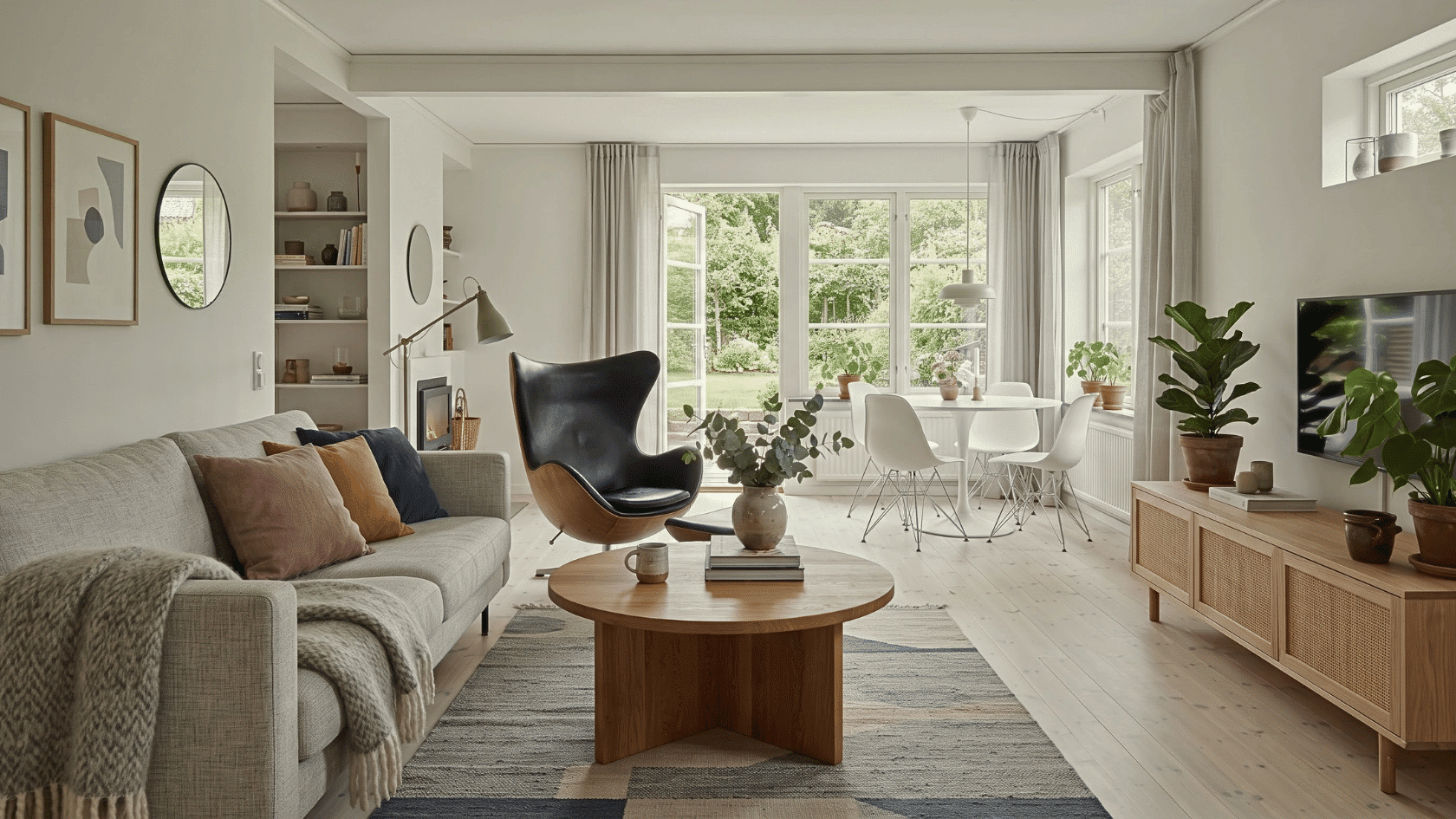
Scandinavian design originates from the Nordic countries and pairs functionality with simple, inviting comfort, often described through the idea of hygge and everyday ease.
The focus of this design is on warmth and comfort, keeping rooms feeling calm, bright, and welcoming without heavy or ornate detailing.
- Key Traits: Airy white or pale gray foundations, light wood floors, cozy textiles
- Color Accents: Soft white, pale gray, blush pink, and light natural wood tones
3. Minimalist Modern
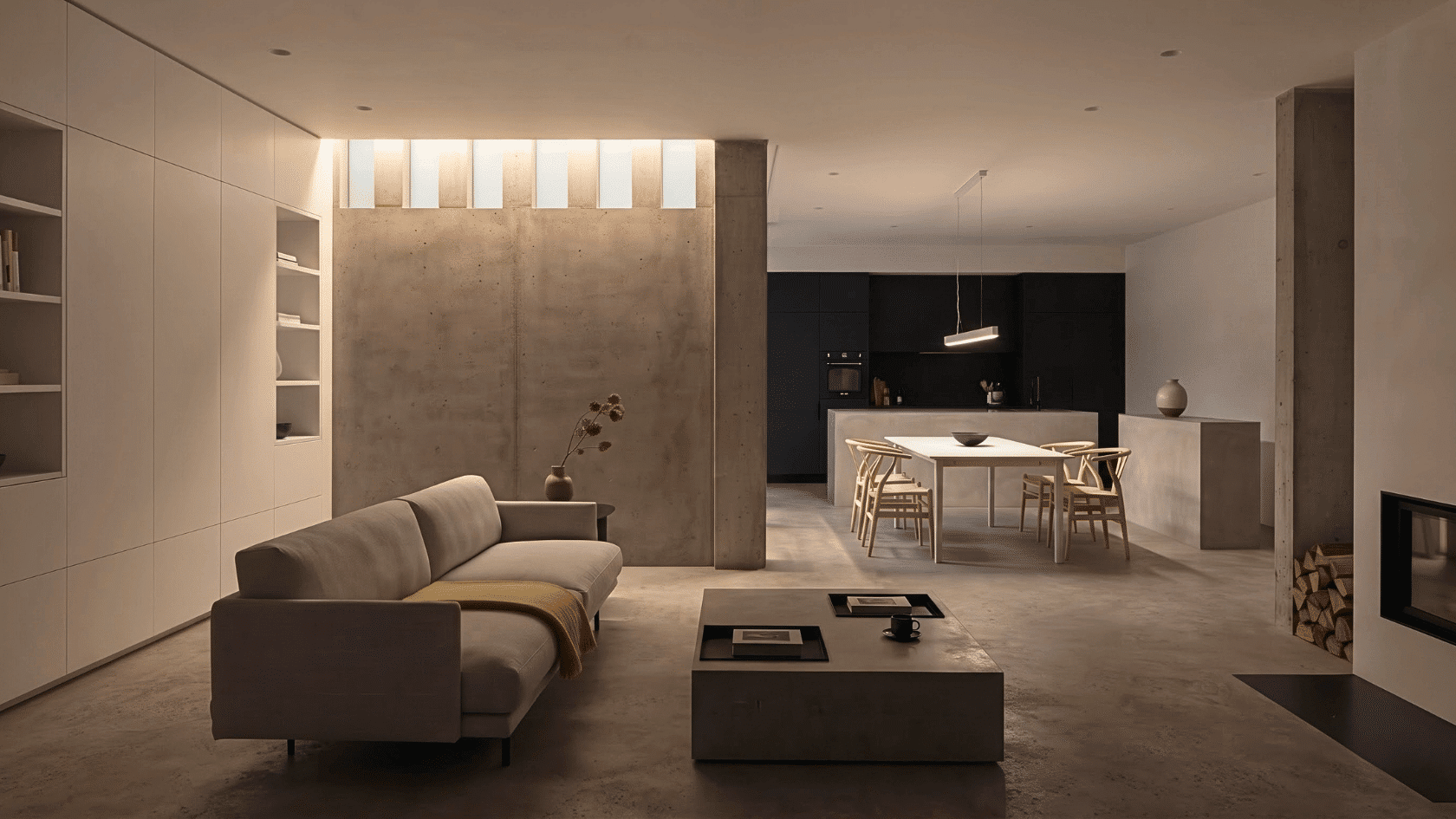
Minimalist design centers on a radical reduction of clutter, stripping rooms down to what serves a clear purpose and essential function.
The focus stays on creating calm through wide-open, uncrowded space, letting each remaining object stand out without competition from unnecessary decoration.
- Key Traits: Monochromatic palettes in black, white, and gray, concealed storage, bare structural elements
- Color Accents: Pure white, charcoal black, and soft gray with no bold color
4. Industrial Modern
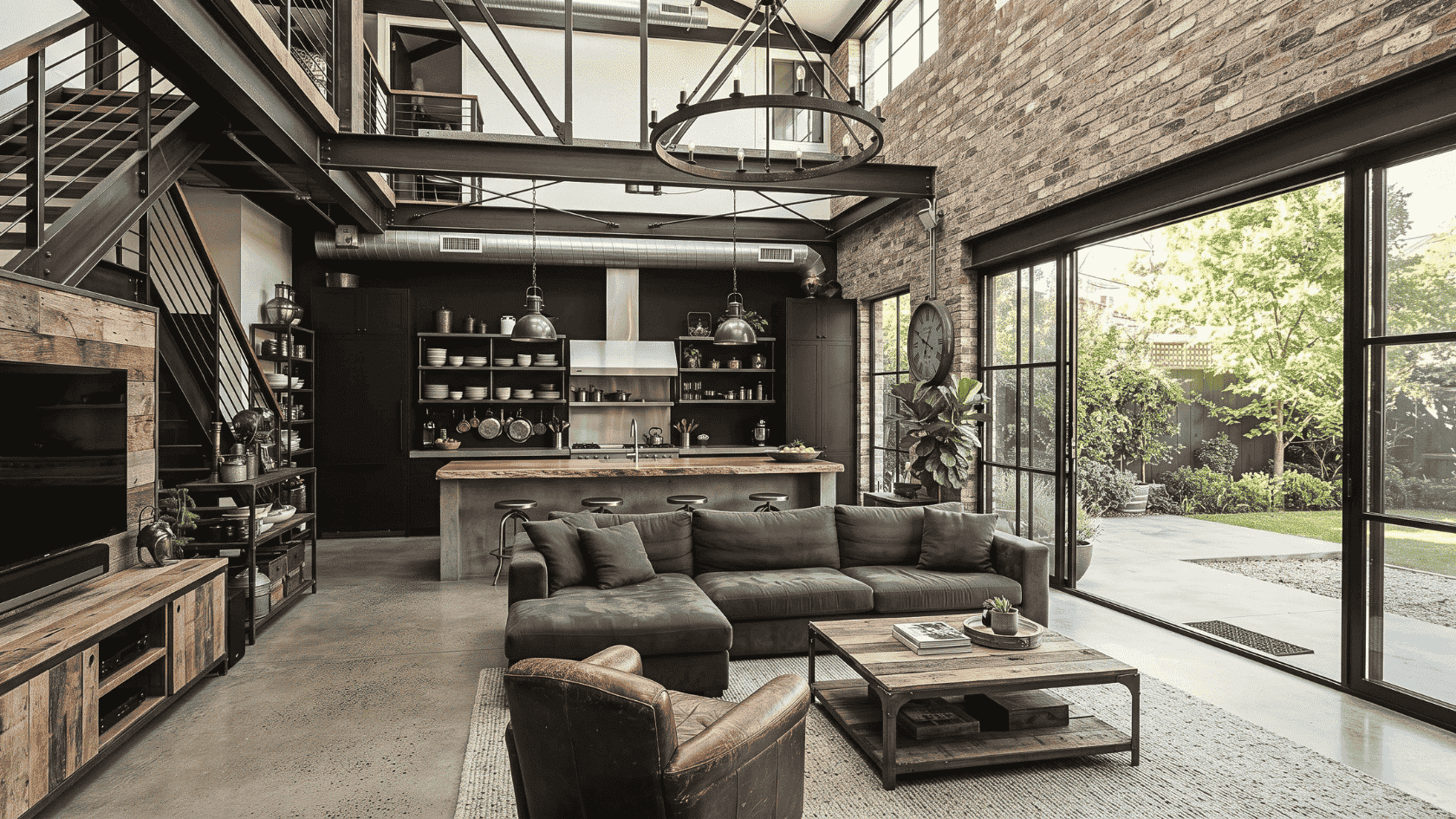
Industrial design draws inspiration from converted urban lofts and old factory buildings, keeping raw structural elements fully visible rather than hidden behind finishes or drywall throughout the home.
The entire space continues to emphasize celebrating raw materials and visible architecture thoughtfully, creating a striking, memorable environment.
- Key Traits: Exposed brick walls, raw metal pipes, concrete floors, distressed leather
- Color Accents: Charcoal gray, rust brown, aged black metal, and warm brick red
5. Japandi
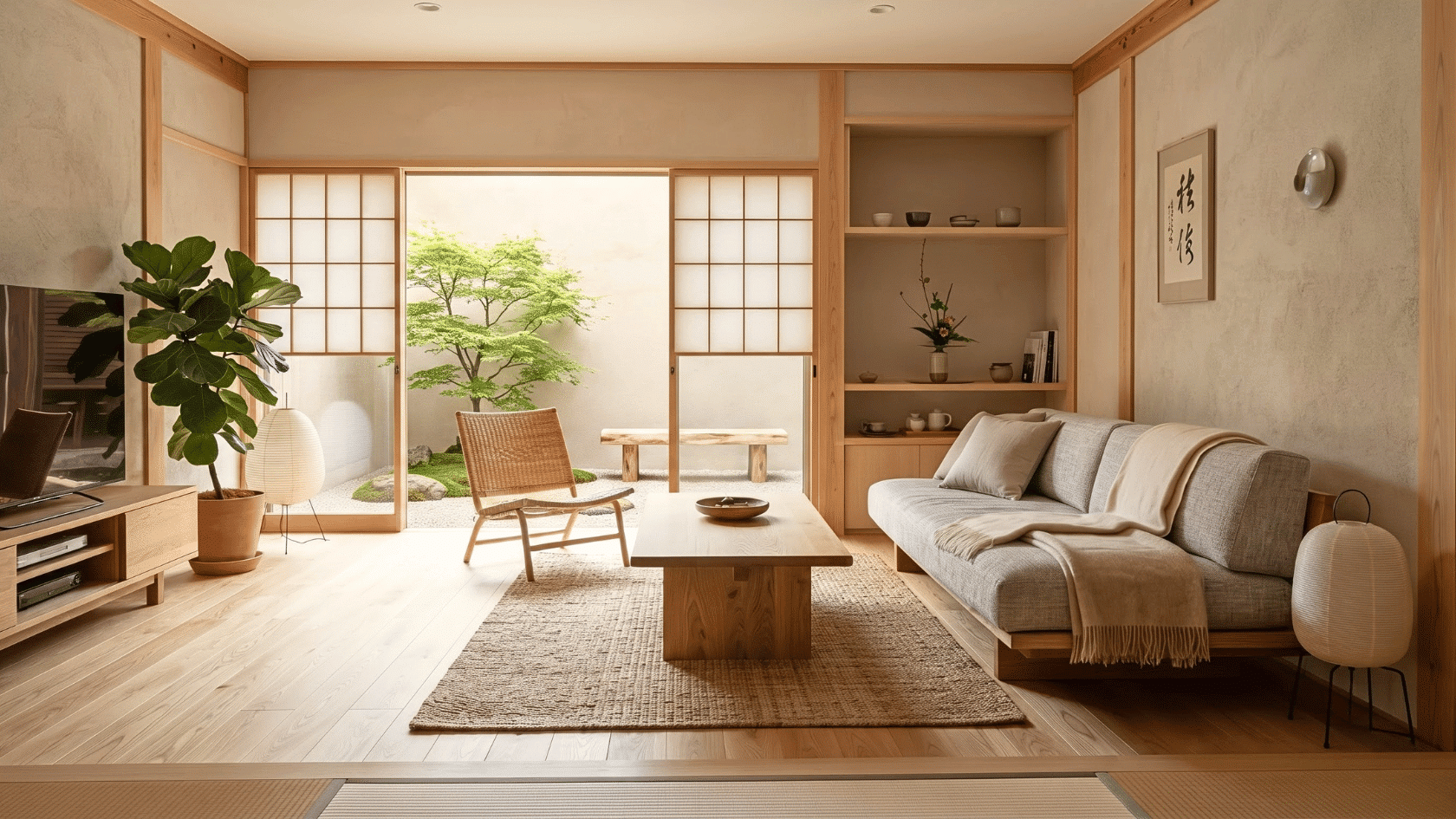
Japandi blends Japanese functional minimalism with Scandinavian coziness, creating a fusion that feels both restrained and inviting at once throughout the entire living space and home together as one.
The focus consistently remains on peaceful, wabi-sabi imperfection and serene balance throughout the entire room.
- Key Traits: Muted earth tones, slatted wood screens, low seating, handcrafted ceramics
- Color Accents: Warm taupe, soft charcoal, muted clay, and natural bamboo tones
6. Organic Modern
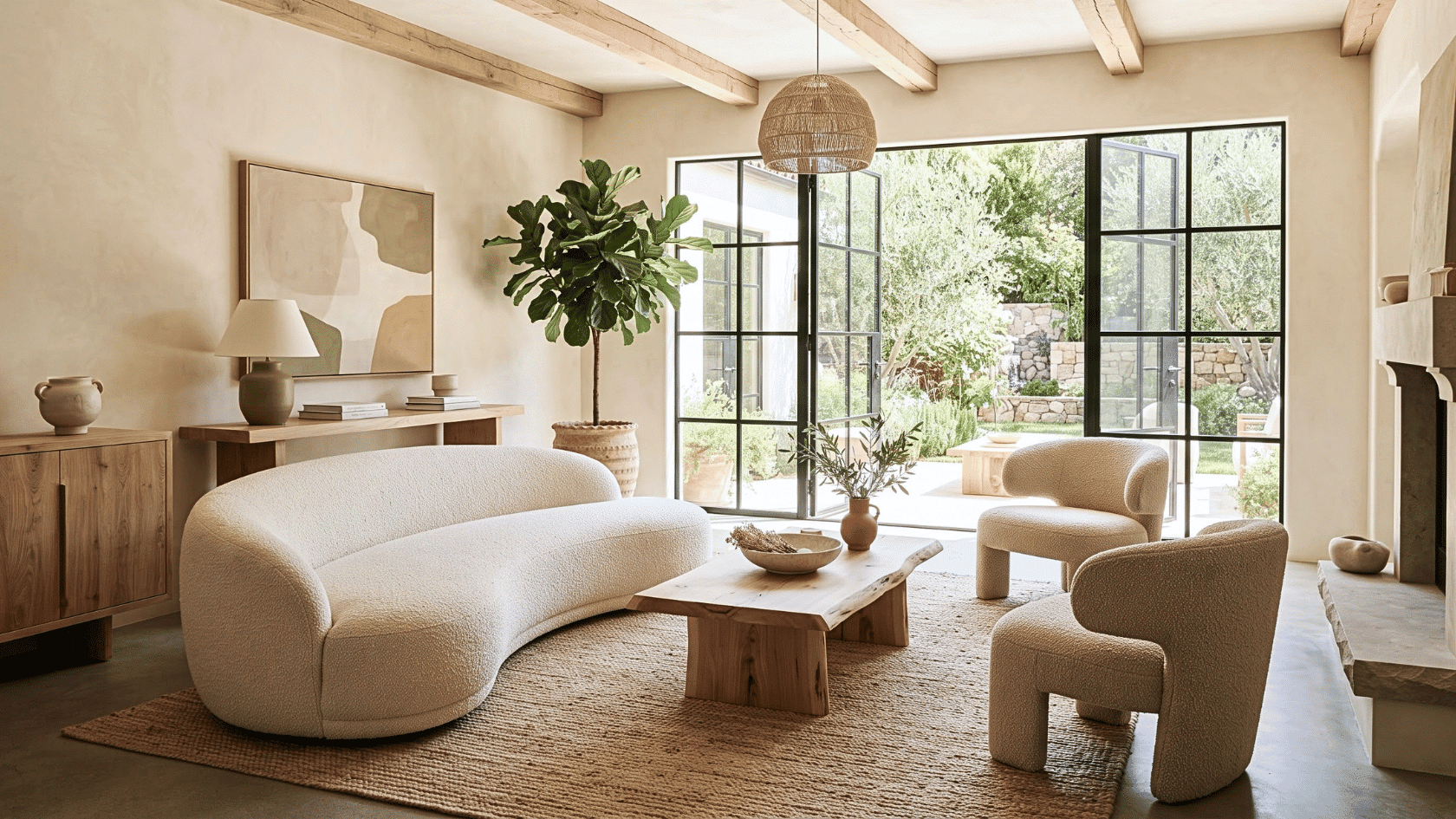
Organic modern design softens stark modern lines with raw, tactile elements pulled directly from nature throughout the entire room and living space.
The emphasis remains on cultivating a warm, peaceful, and Zen-inspired atmosphere that truly bonds with the natural surroundings.
- Key Traits: Curved sofas, limewash or plaster walls, neutral boucle fabrics, raw-edge wood furniture
- Color Accents: Warm creams, soft olive, desert sand, and muted clay tones
7. Desert Modern
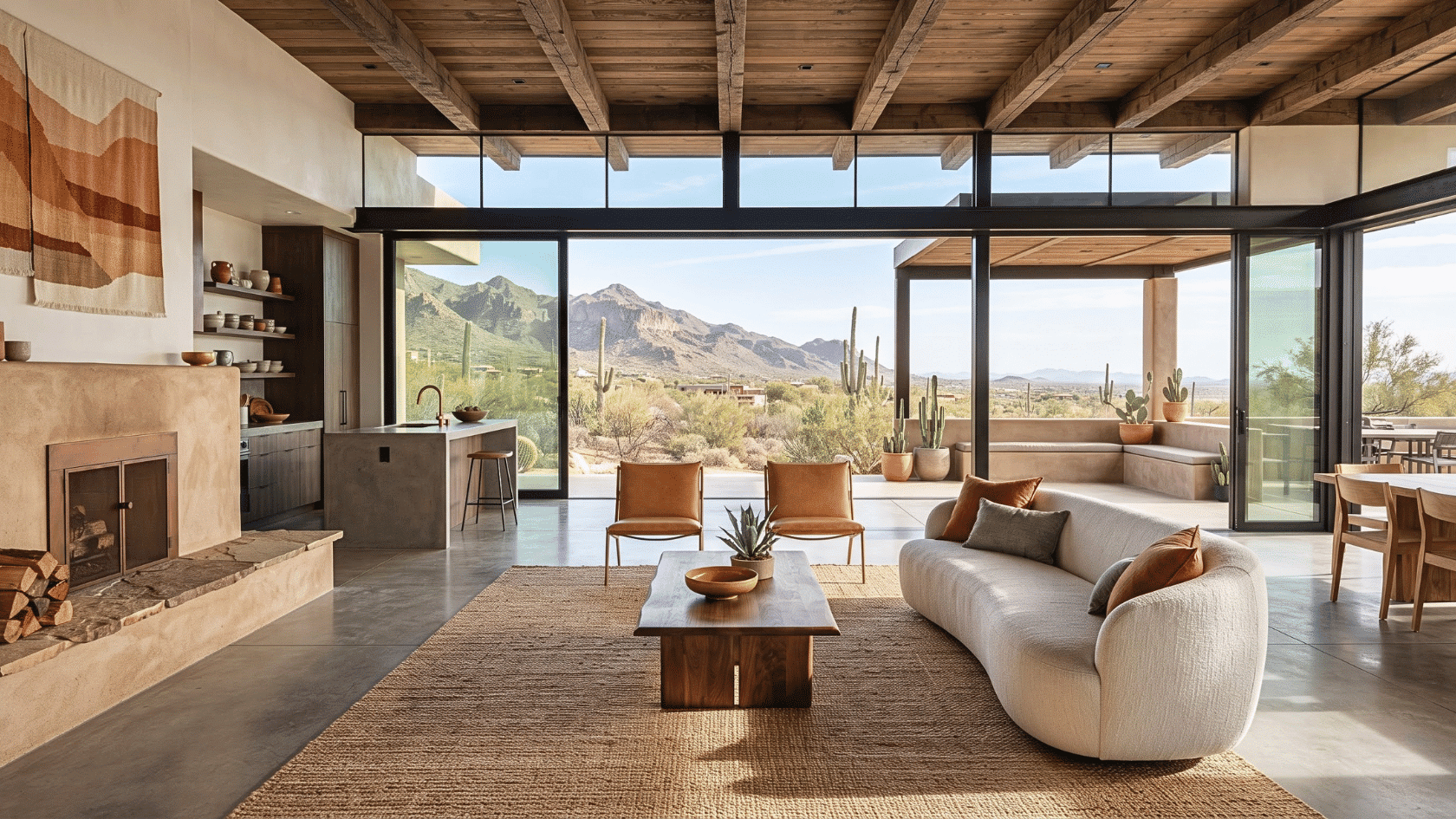
Desert modern design pairs vast desert landscape minimalism with sleek, architectural luxury, favoring low, grounded forms throughout the entire home and outdoor living space.
The focus stays on creating a sun-baked, tranquil oasis that blurs the line between indoor living and open desert.
- Key Traits: Low-slung furniture, concrete or tile floors, exposed wood beams, massive glass walls
- Color Accents: Terracotta, sagebrush green, copper rust, and mustard over sand and stucco
These seven styles share the same design bones even though each one carries its own regional and material personality. This shared foundation makes it easier to recognize true modern influence in any room, regardless of the specific variation it reflects.
Contemporary & Evolving Present Trends
Contemporary and evolving present trends stay fluid and constantly change based on whatever feels current right now, rather than sticking to one fixed set of rules.
These styles are often confused with modern design, but they represent something distinct, shifting alongside culture, technology, and shared taste over time.
8. Contemporary
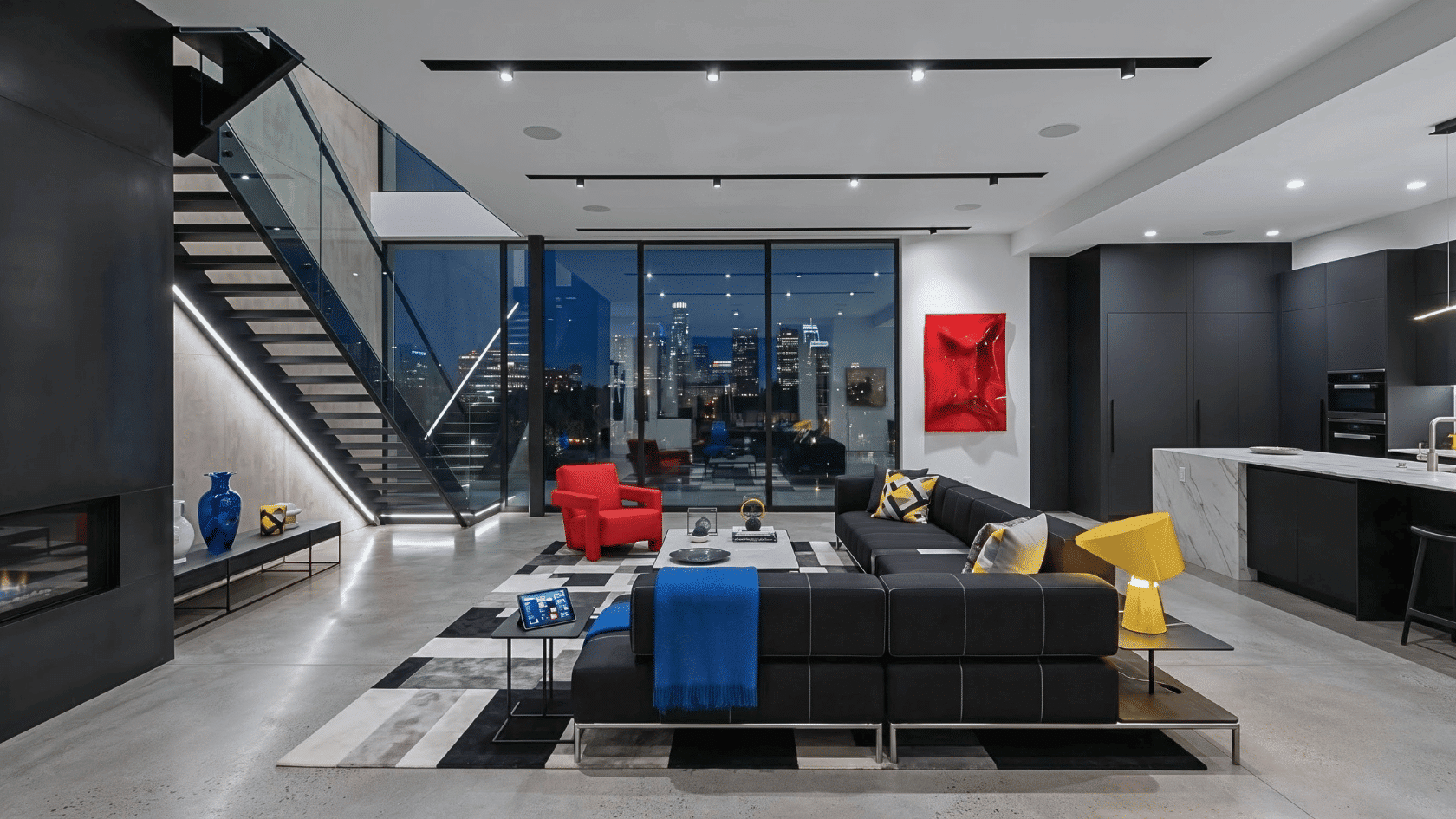
Contemporary design brings cutting-edge modern trends together with fluid, ever-evolving functionality that shifts with current tastes rather than staying fixed to one era.
The emphasis remains on the current moment, highlighting open space, natural light, and seamless technology integration across the room.
- Key Traits: Smart lighting, polished surfaces, geometric lines, glass and steel materials
- Color Accents: Primary red, electric blue, or canary yellow against black and white
9. Urban Modern
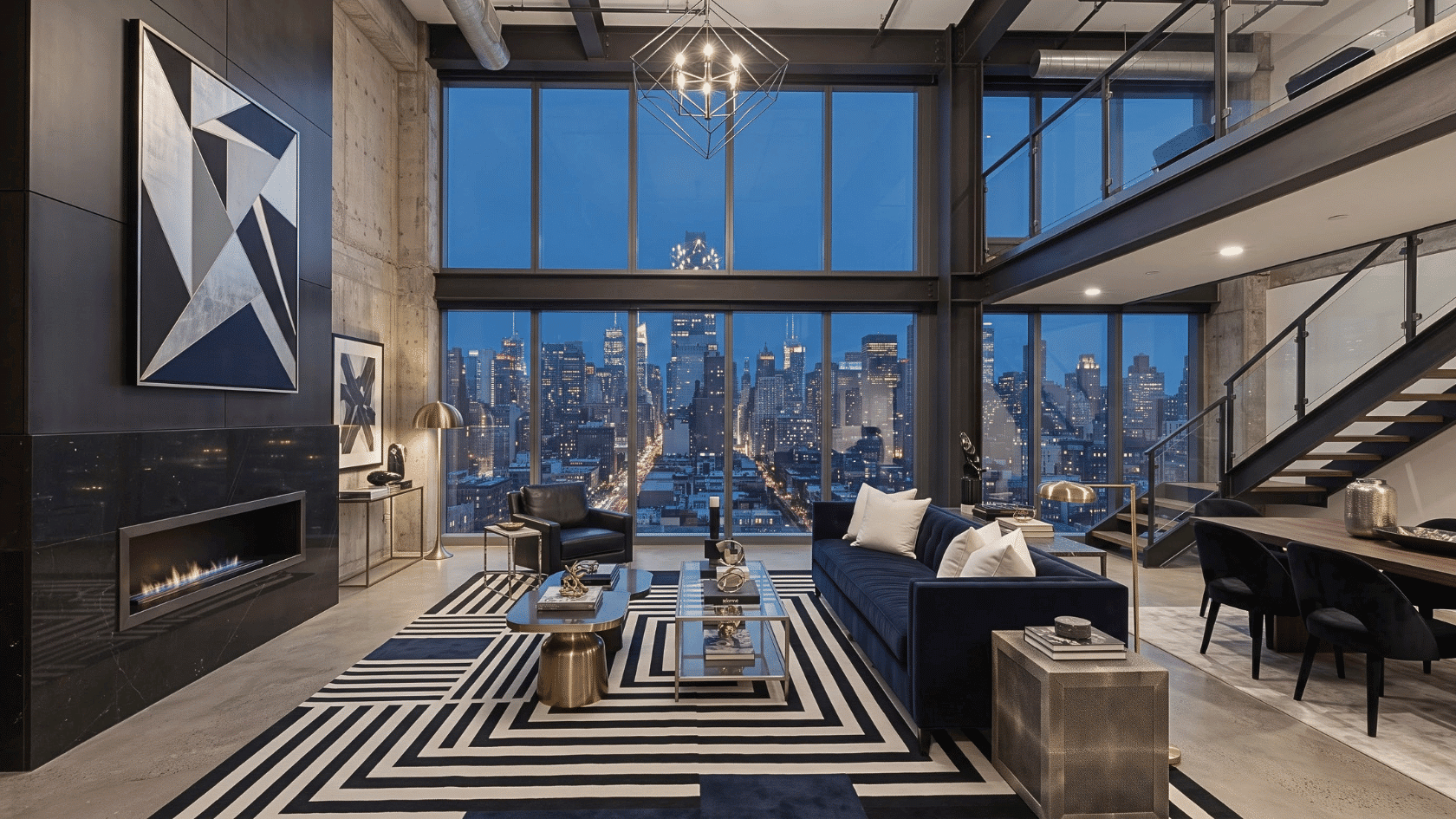
Urban modern design refines edgy metropolitan loft living with upscale, glamorous comfort that still feels grounded and livable day to day.
The focus remains on creating a sophisticated, lively city atmosphere that feels welcoming rather than chilly throughout the home.
- Key Traits: Massive windows, high ceilings, geometric rug designs, black metal frameworks, polished stone
- Color Accents: Black and white pairings punctuated by silver, brass, or deep navy blue
10. Biophilic
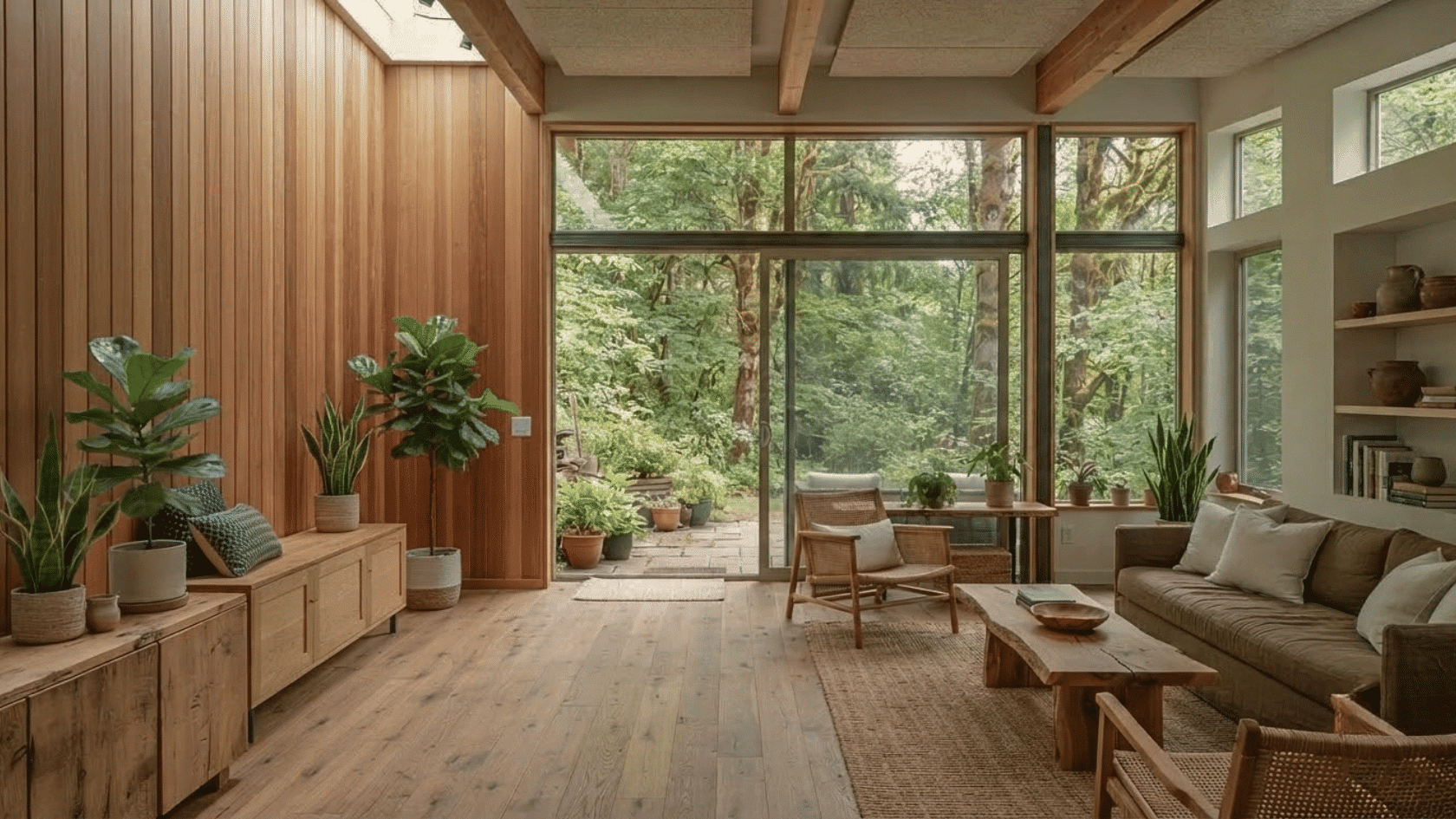
Biophilic design centers on a direct connection to nature, using plant walls, natural light, and recycled materials throughout the home.
The focus stays on large windows and greenery that keep interiors feeling calm, healthy, and connected to the outdoors throughout the room.
Key Traits: Living plant walls, abundant natural light, recycled or natural materials, indoor-outdoor connection
Color Accents: Leaf green, earthy brown, soft white, and natural wood tone
11. Gustavian
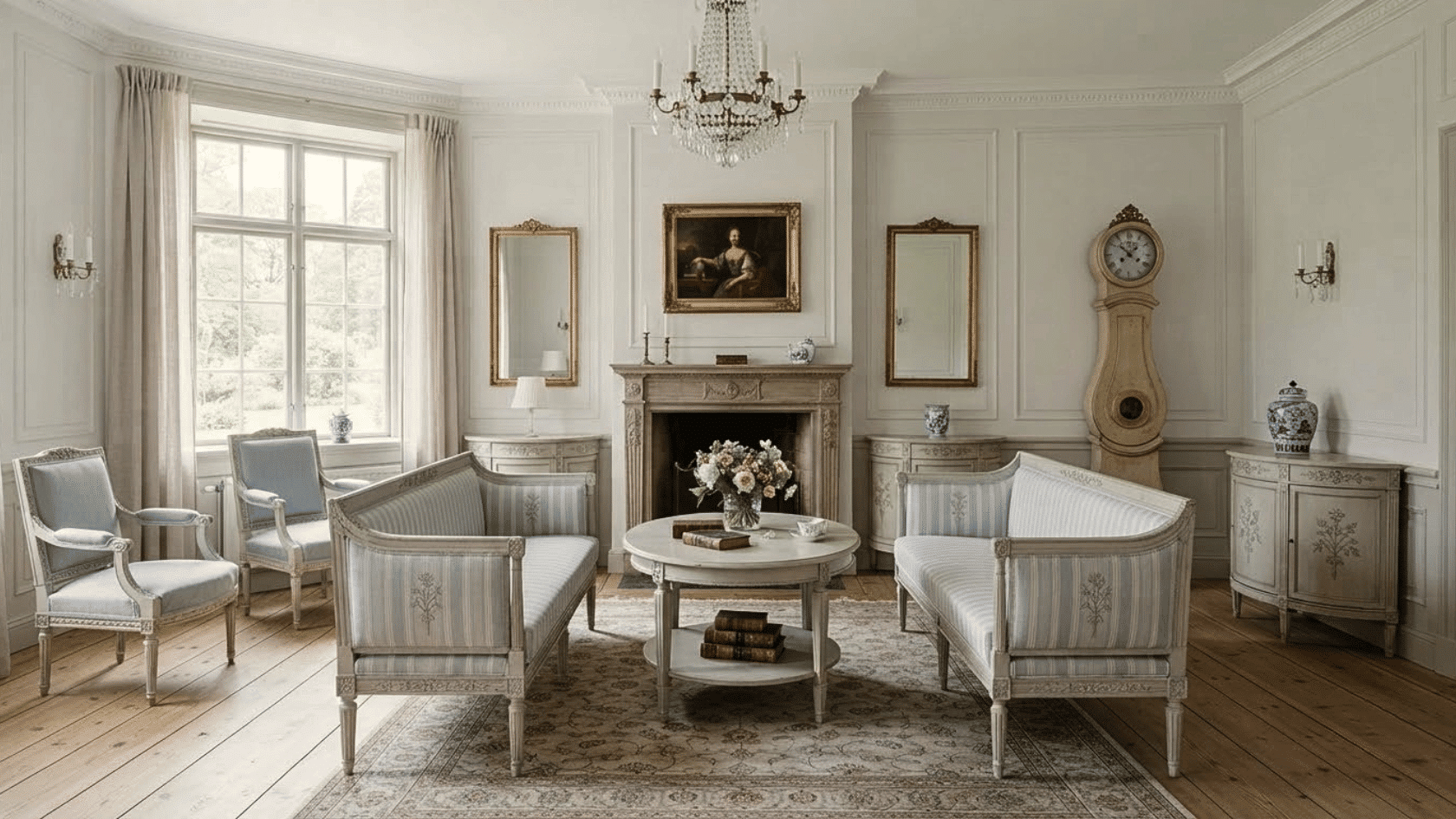
Gustavian design traces back to 18th-century Sweden, pairing French neoclassical influence with a restrained, Nordic sensibility throughout the room.
The focus stays on symmetry, tapered furniture legs, and pale painted wood that keep interiors feeling calm and airy throughout the home.
Key Traits: Symmetrical layouts, tapered furniture legs, painted wood finishes, carved floral details
Color Accents: Soft white, pale gray, light blue, and muted straw yellow
12. French Country
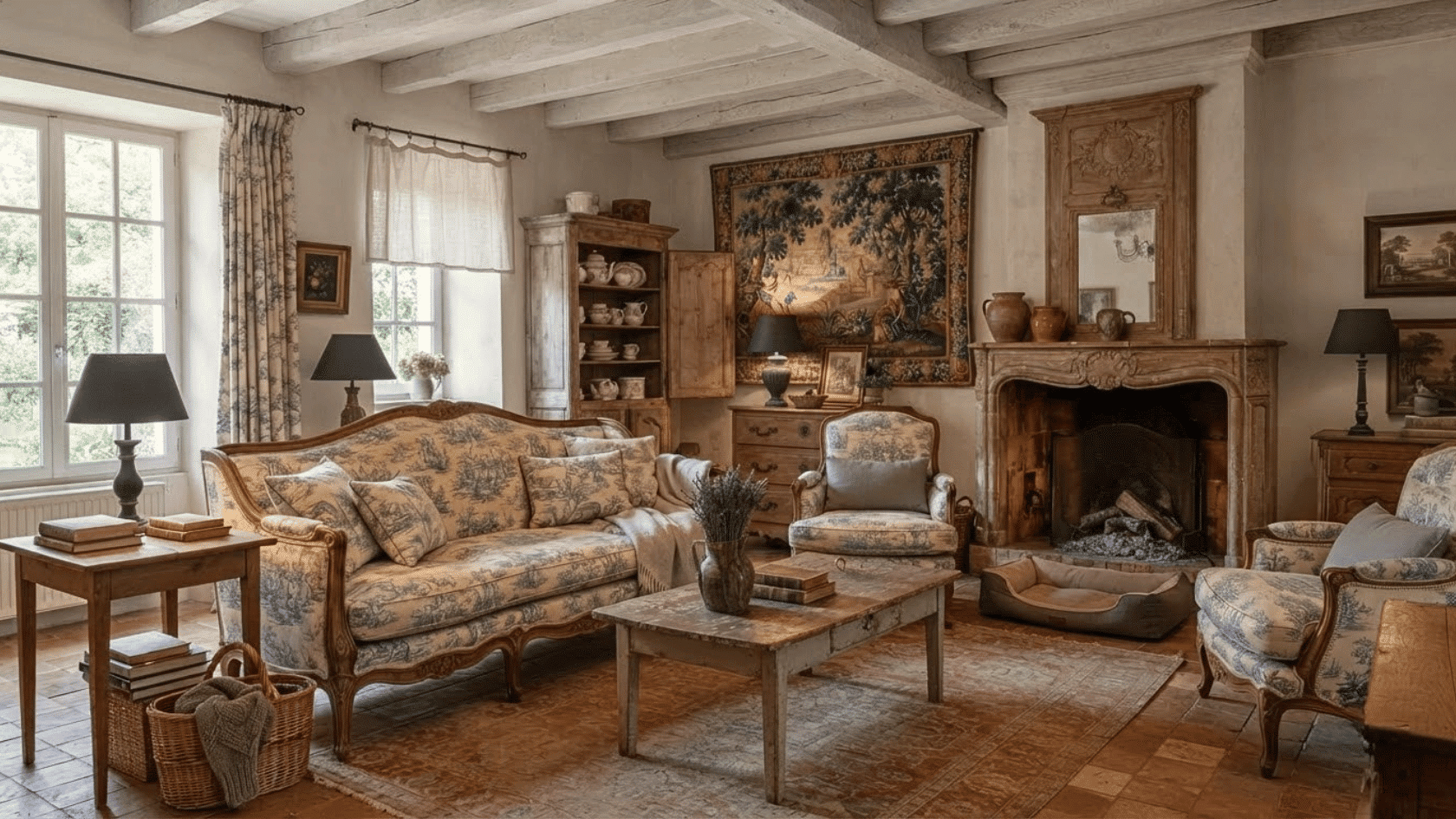
French Country design combines natural materials with muted paint colors, toile fabrics, and rustic wood furniture throughout the home.
The focus stays on antiques and woven tapestries paired with warm lighting that keeps rooms feeling welcoming and casual throughout the room.
Key Traits: Toile fabrics, antique furniture, woven tapestries, rustic wood finishes
Color Accents: Soft cream, muted blue, warm gold, and terracotta
Maximalist & Nostalgic Styles
Maximalist and nostalgic styles, including the nineties revival often called daggy chic, completely break away from the rules of modernism found elsewhere.
Instead of sleek minimalism, these styles celebrate clutter, layered textures, and cozy patterns, treating personality and warmth as more important than restraint or open space.
13. Maximalist Modern / Dopamine Decor
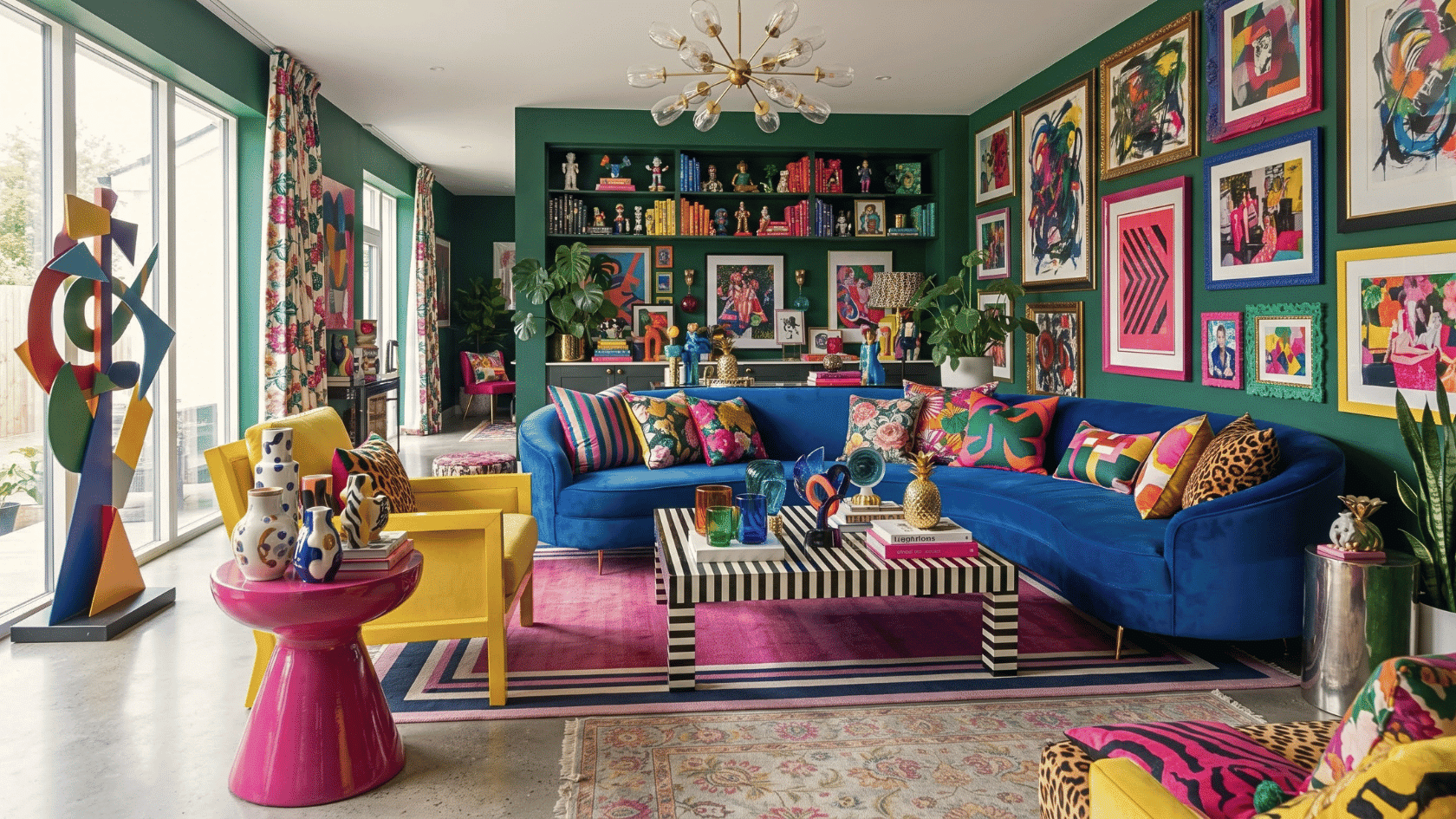
Maximalist modern design injects structured modern layouts with bold, unapologetic self-expression, layering pattern and color within an otherwise clean overall framework throughout the room.
The emphasis remains on fostering a lively, joyful atmosphere where abundance is celebrated, all while maintaining sleek, modern design lines.
- Key Traits: Pattern-stacking, oversized sculptural art, lacquered glossy finishes, crowded curated collections
- Color Accents: Electric blue, fuchsia, bright emerald, and canary yellow
14. Traditional
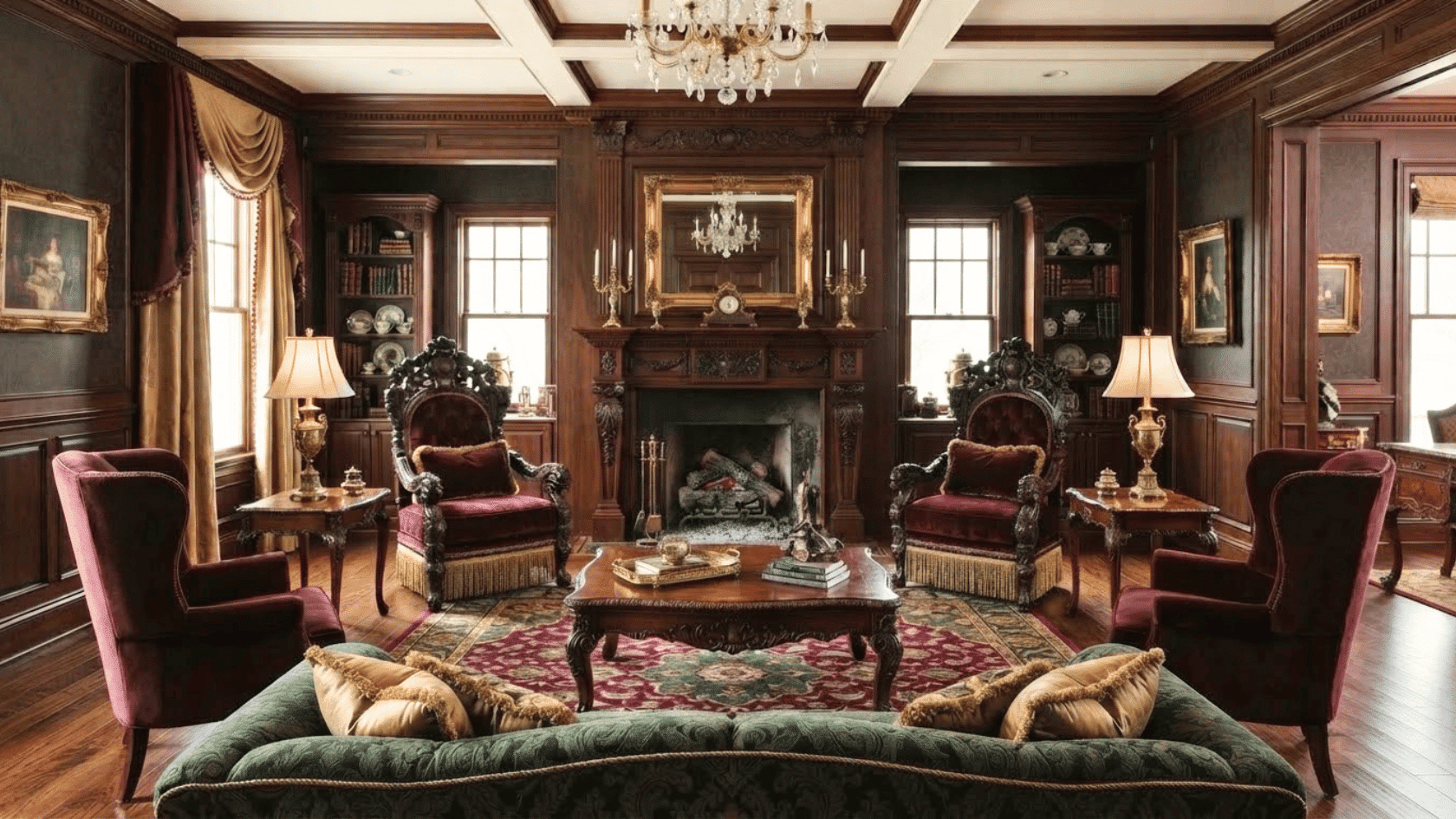
Traditional design pairs classic symmetry with rich, dark wood furniture, favoring formal order and ornate detailing throughout the room.
The focus stays on plush fabrics and warm, muted tones that keep the space feeling grounded and formal throughout the home.
Key Traits: Formal symmetry, dark wood furniture, carved ornate details, plush upholstery
Color Accents: Deep burgundy, forest green, warm walnut brown, and gold trim
15. Southern Traditional
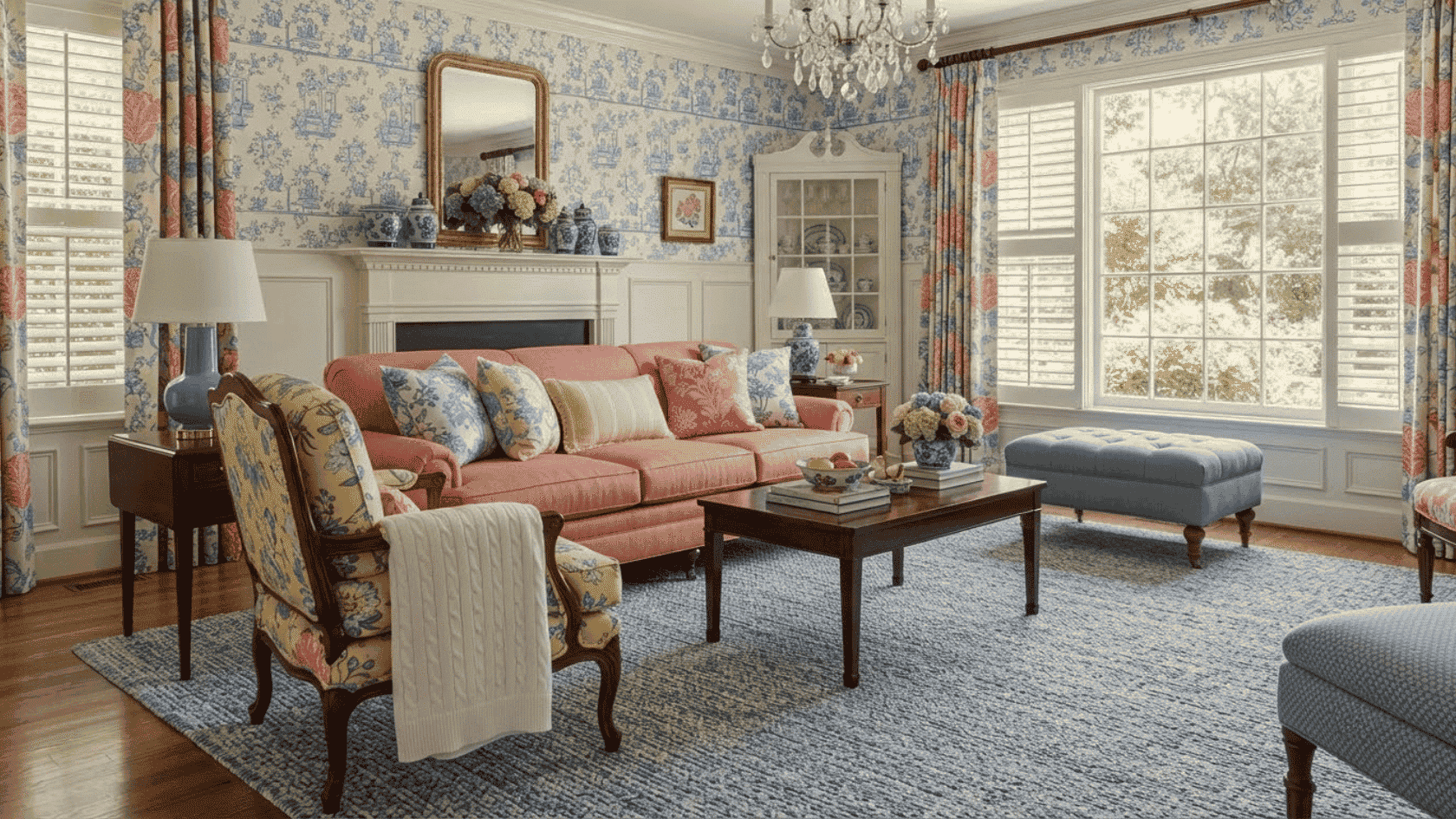
Southern Traditional design softens formal Traditional structure with brighter colors and playful pattern mixing throughout the room.
The focus stays on monograms, wallpaper, and cheerful accents that keep formal rooms feeling warm and inviting throughout the home.
Key Traits: Pattern mixing, monogrammed linens, wallpaper accents, classic furniture silhouettes
Color Accents: Coral pink, soft yellow, sky blue, and crisp white
16. Americana
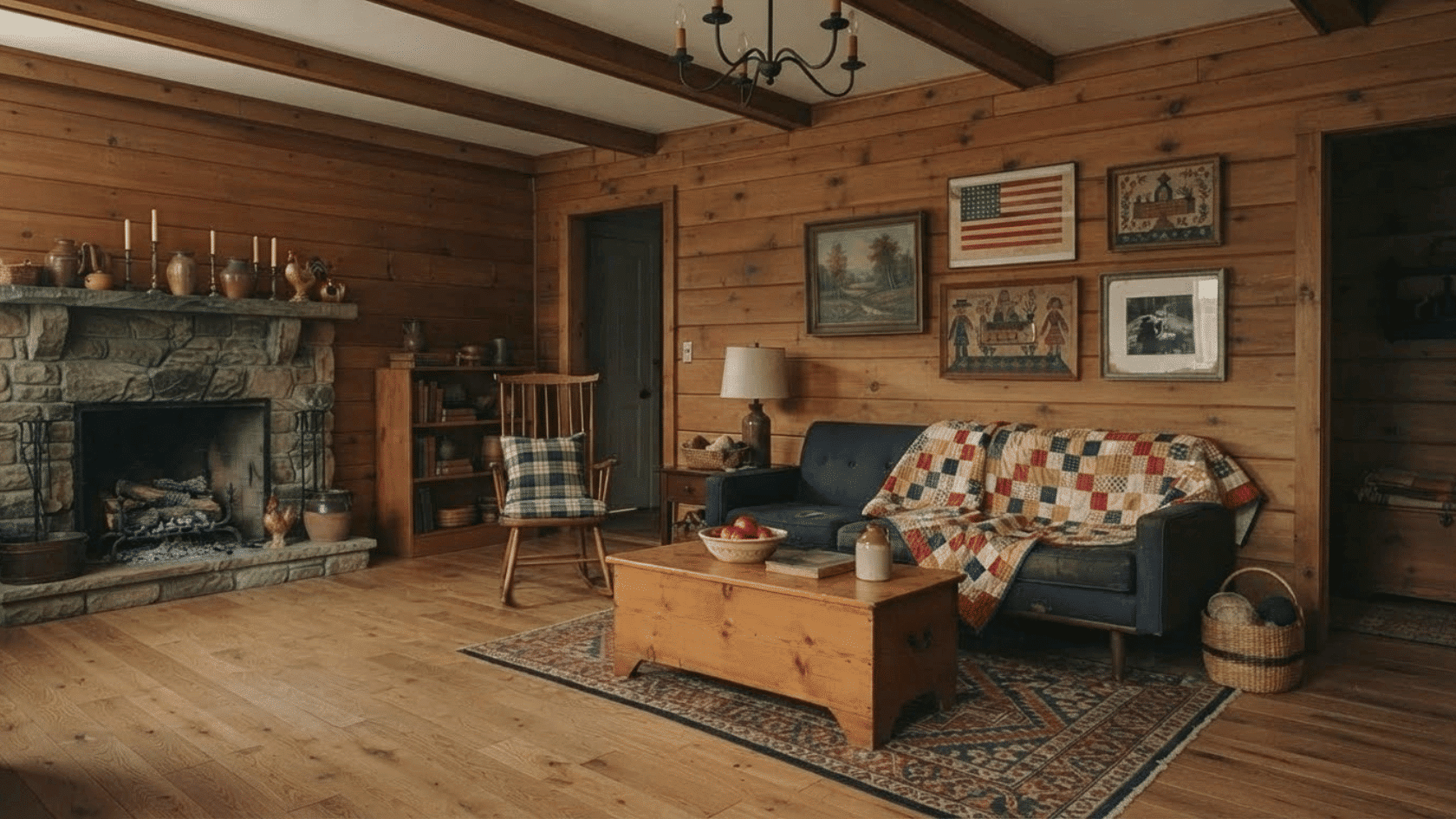
Americana design blends Farmhouse charm with midcentury details, mixing vintage artwork and functional finishes throughout the home.
The focus stays on checkerboard prints, patchwork quilts, and solid wood furniture that keep rooms feeling nostalgic and lived-in.
Key Traits: Wood paneling, vintage artwork, patchwork quilts, solid wood furniture
Color Accents: Barn red, navy blue, mustard yellow, and cream white
17. Modern Traditional / Modern Heritage
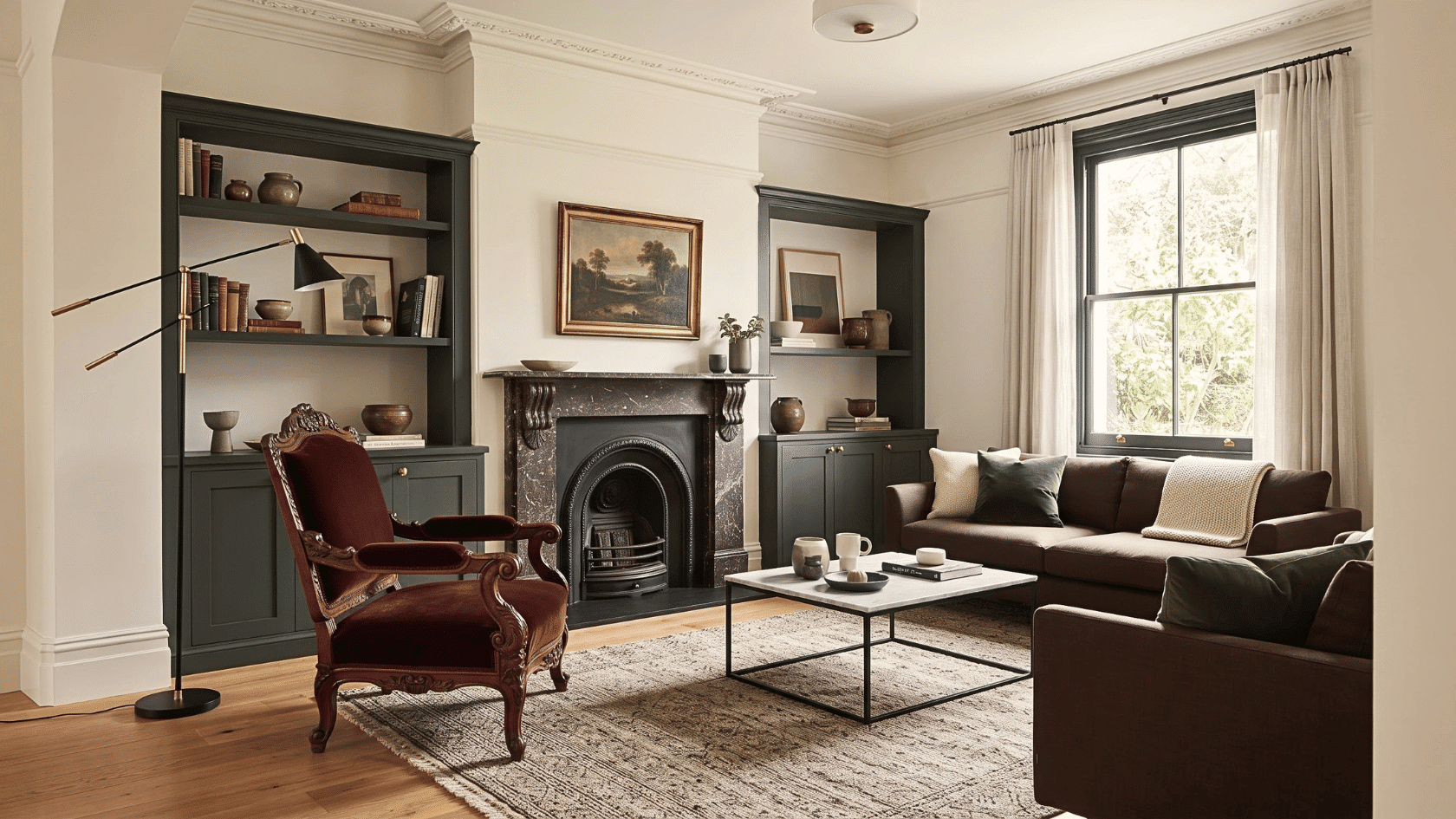
Modern heritage design updates historical architectural soul for highly functional modern living, blending vintage character with newer structural simplicity throughout the entire home.
The focus remains on celebrating nostalgia without making the home feel dark, outdated, or resembling a museum.
- Key Traits: Classic crown moldings, minimalist lighting, inset cabinetry, antique statement furniture
- Color Accents: Chocolate brown, burgundy, and forest green mixed with alabaster white
18. Eclectic
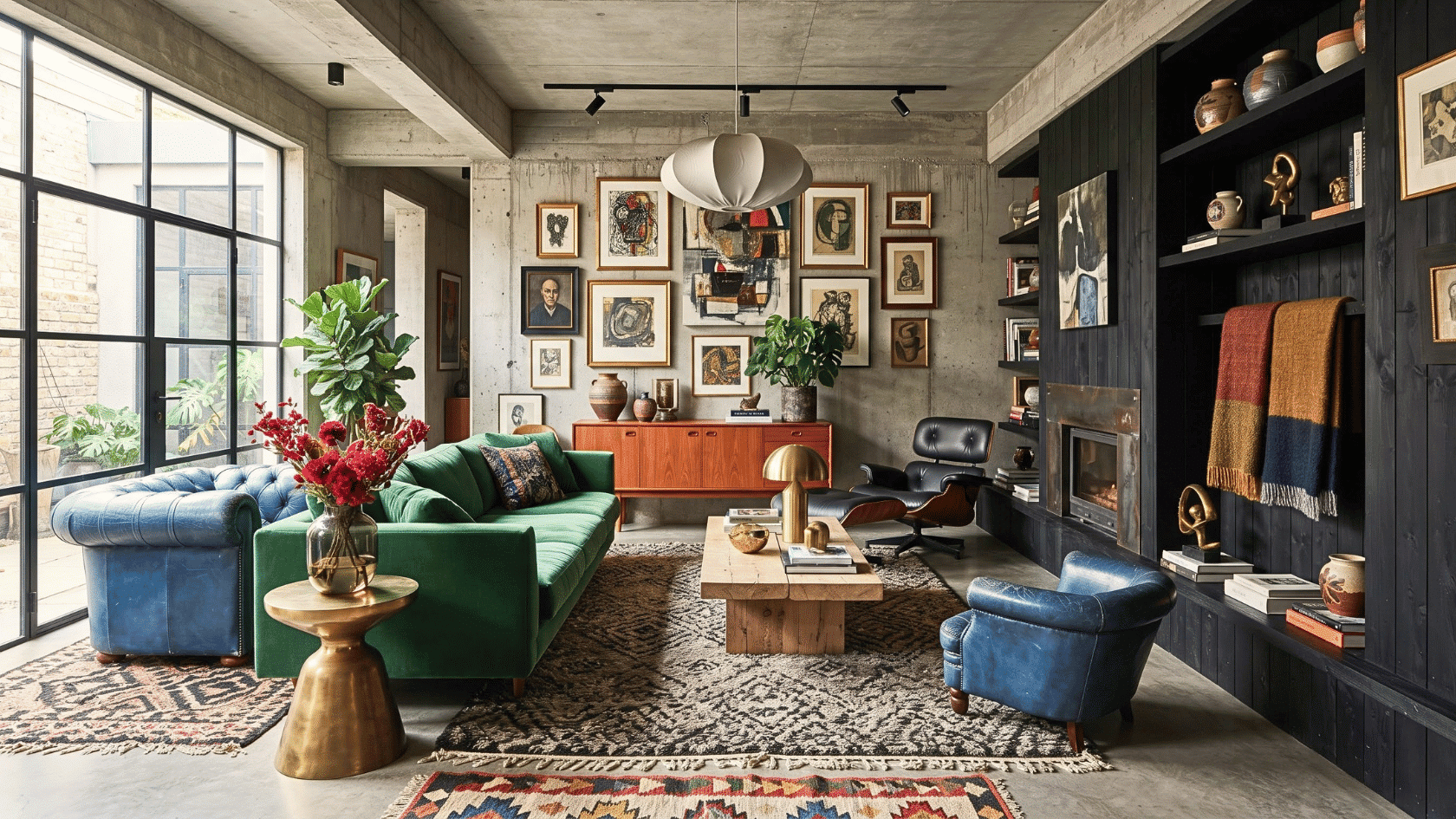
Eclectic design pairs controlled maximalism with curated, highly personalized storytelling, mixing furniture from different eras into one cohesive room without feeling chaotic or random.
The focus stays on unifying mismatched pieces through careful composition and thoughtful scale throughout the space.
- Key Traits: Layered textures, mixed eras, bold pattern combinations, contrasting design periods
- Color Accents: Emerald green, sapphire blue, and ruby contrasting with black and gold
19. Bohemian (Boho)
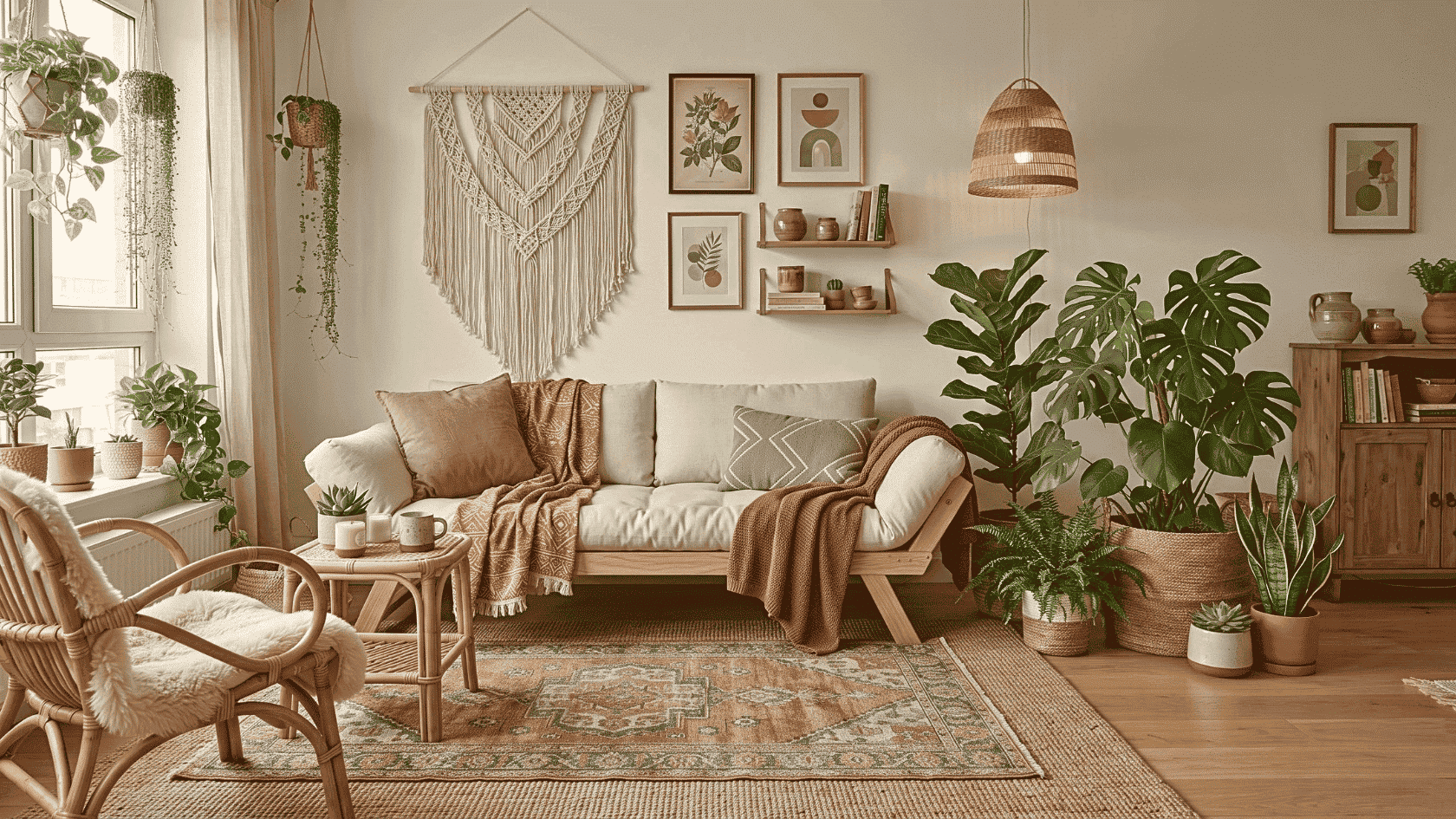
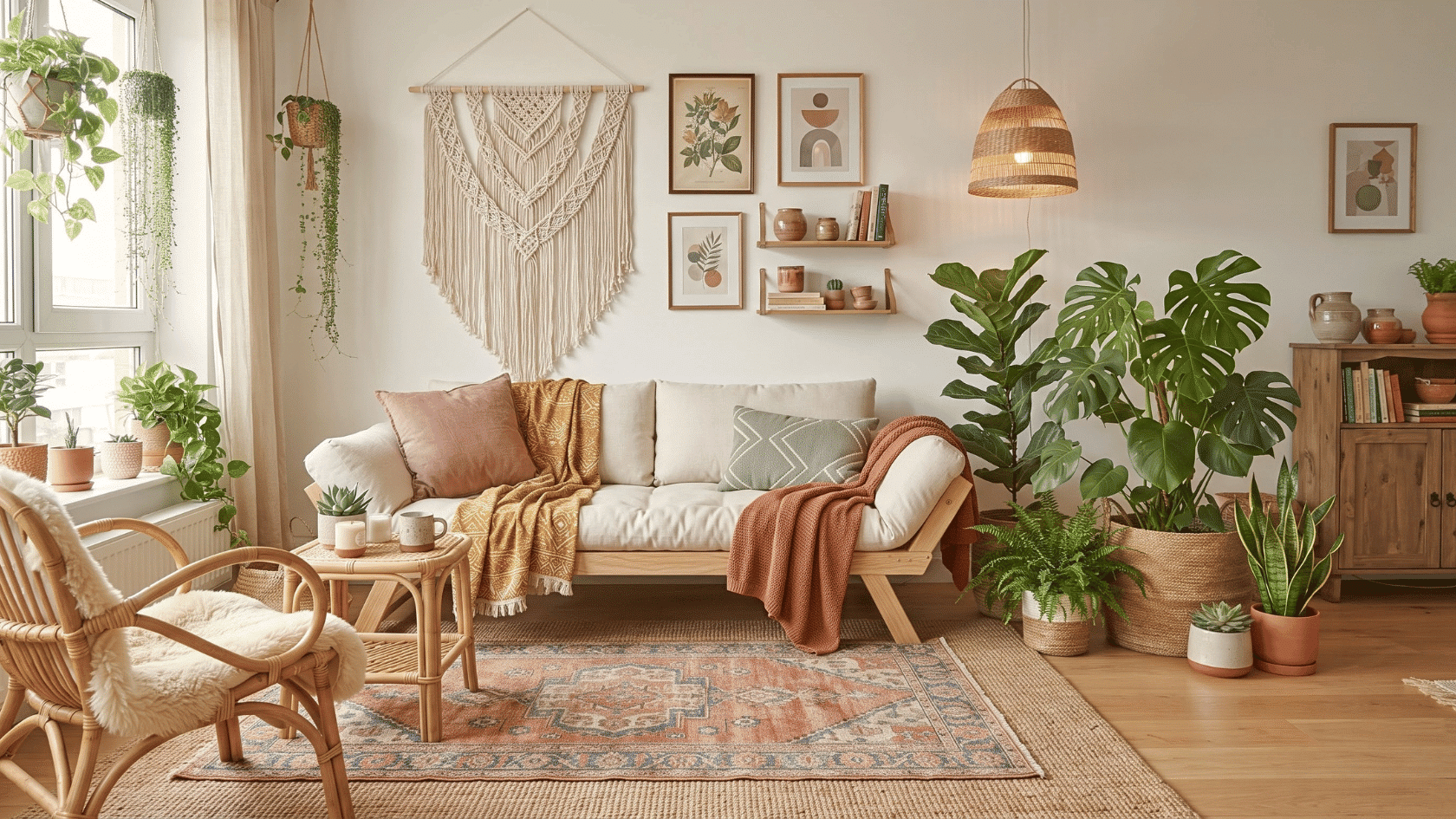
Bohemian design pairs free-spirited artistry with a relaxed, global-traveler sensibility, layering objects gathered from different cultures and eras within the same room.
The emphasis remains on creating a relaxed, unconventional environment that values comfort and individual expression over formal rules.
- Key Traits: Rattan furniture, woven macrame hanging decor, layered patterned rugs, dense indoor plants
- Color Accents: Terracotta, mustard yellow, dusty rose, and sage green on cream
20. Art Deco
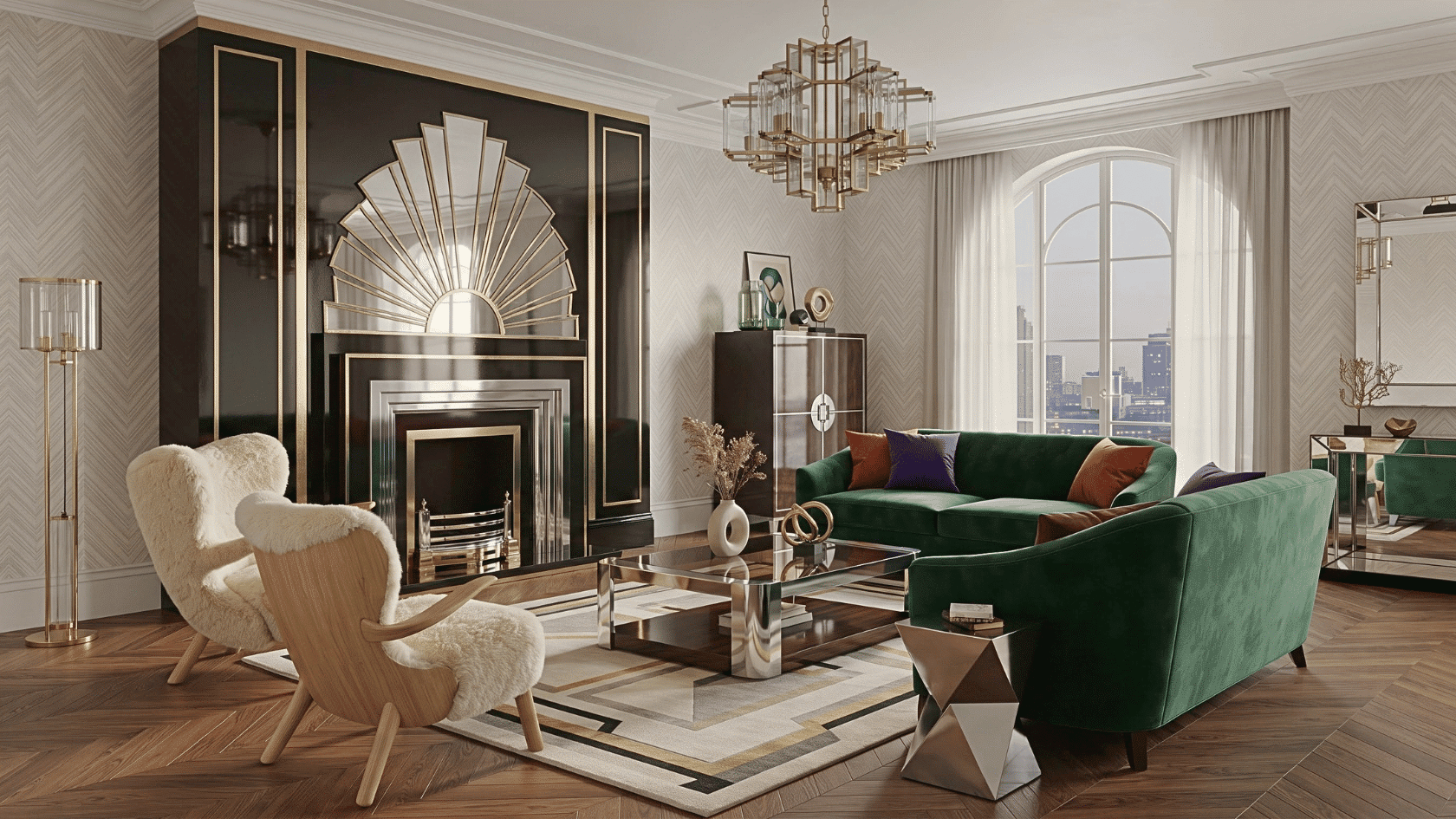
Art Deco design channels 1920s high-society glamor through sleek, machine-age geometric symmetry that feels bold rather than understated throughout every single room in the home.
The focus stays on exuding luxury, opulence, and dramatic visual impact in every corner of the entire home and living space.
- Key Traits: High-gloss lacquered wood, zig-zag chevron patterns, mirrored surfaces, sunburst motifs
- Color Accents: Black, deep emerald, royal purple, and polished chrome or gold
What ties these five styles together is a shared willingness to embrace pattern, history, and personality over restraint. Rooms built around these styles feel collected and lived-in rather than curated toward emptiness.
Structural & Regional Styles
Structural and regional styles stand apart as design philosophies shaped by architecture, nature, or specific cultural traditions rather than any single decorative trend.
They can be styled to look modern when needed, but each one carries its own history, materials, and regional identity underneath.
21. Brutalism
Brutalism pairs structural raw honesty with bold, sculptural geometry, favoring heavy forms that feel intentional rather than accidental in their overall weight and presence.
The focus stays on celebrating pure building materials without decorative masks or covers hiding the structure.
- Key Traits: Exposed concrete walls, massive stone blocks, heavy forms, sharp angular shapes
- Color Accents: Deep charcoal, burnt orange, rusted copper, and dull brass against gray
22. Transitional
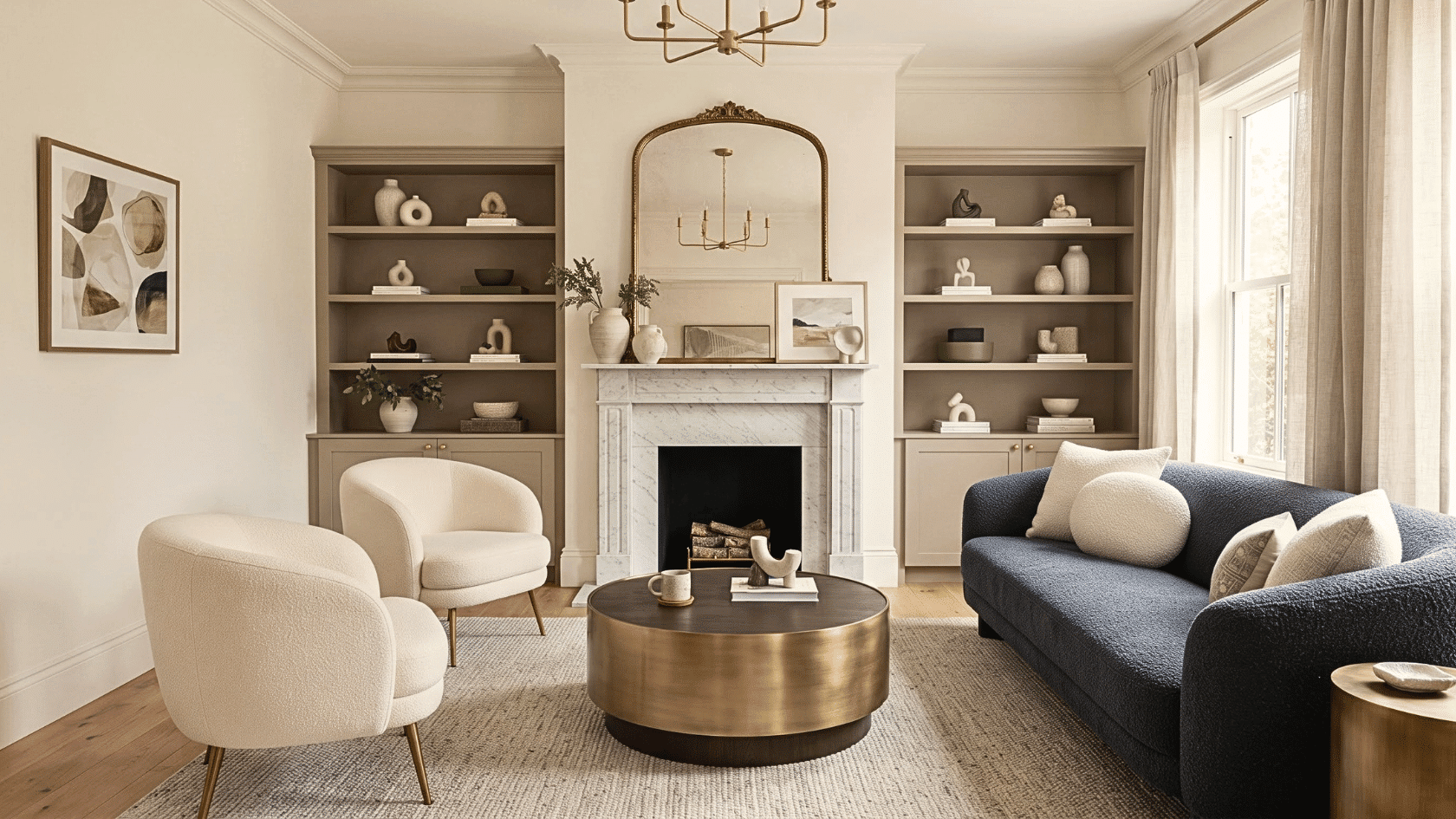
Transitional design merges classic traditional elegance with clean, updated contemporary lines, softening formal furniture shapes with a more relaxed overall structure throughout the room.
The focus stays on delivering a timeless look that feels neither too cold nor too ornate for everyday comfortable living.
- Key Traits: Rounded furniture profiles, subtle crown molding, statement mirrors, symmetrical layouts
- Color Accents: Navy blue, soft taupe, muted olive, and warm metallic gold
23. Coastal
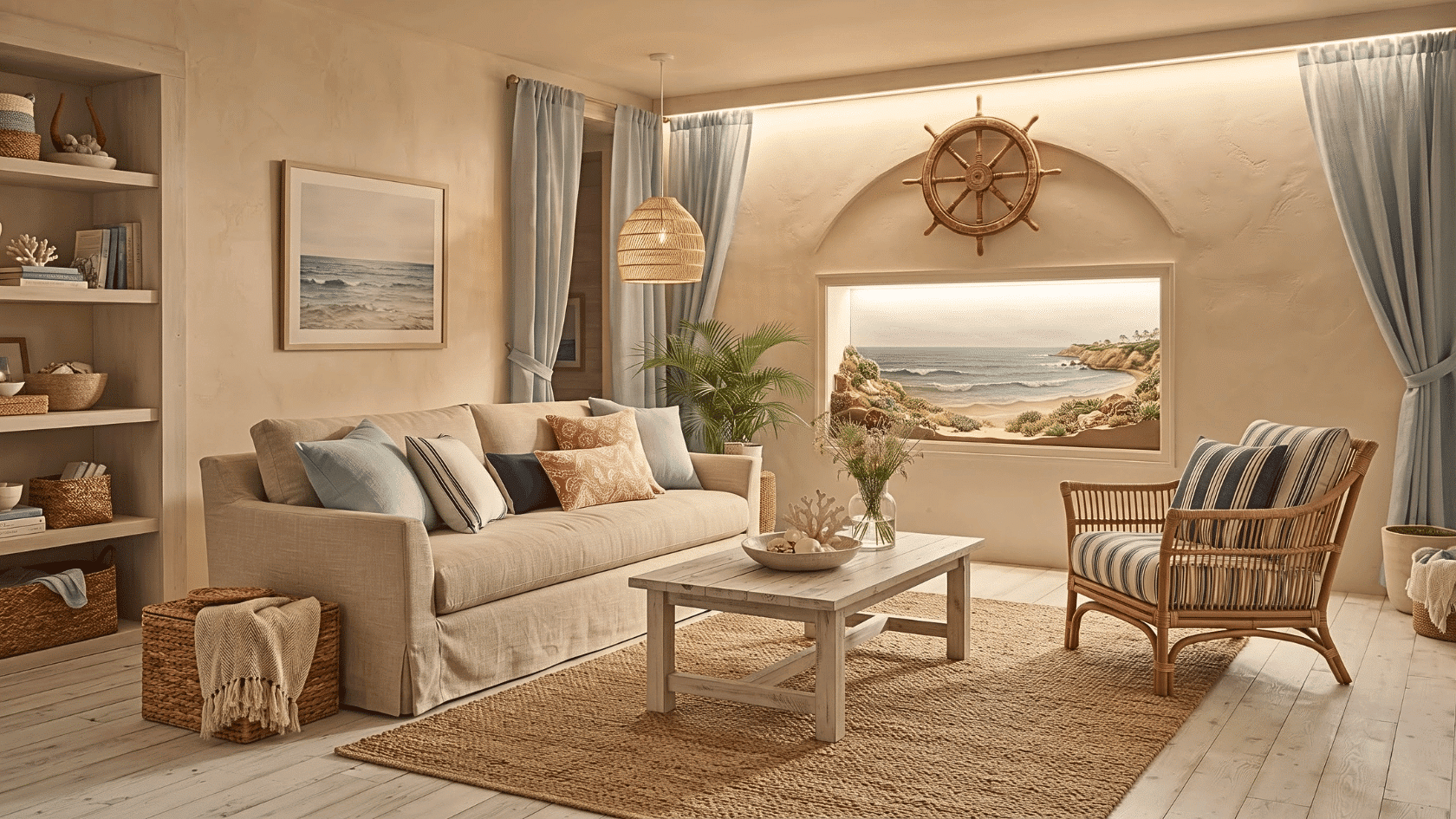
Coastal design channels sun-bleached ocean shores through a relaxed, breezy approach to indoor living that feels light on its feet at every turn.
The emphasis continues on creating a bright, airy environment that resembles an endless seaside retreat, promoting ongoing relaxation and tranquility.
- Key Traits: Light linen fabrics, whitewashed wood boards, woven sea-grass baskets, wide glass windows
- Color Accents: Sky blue, crisp navy, sandy beige, and coral pink
24. California Coastal
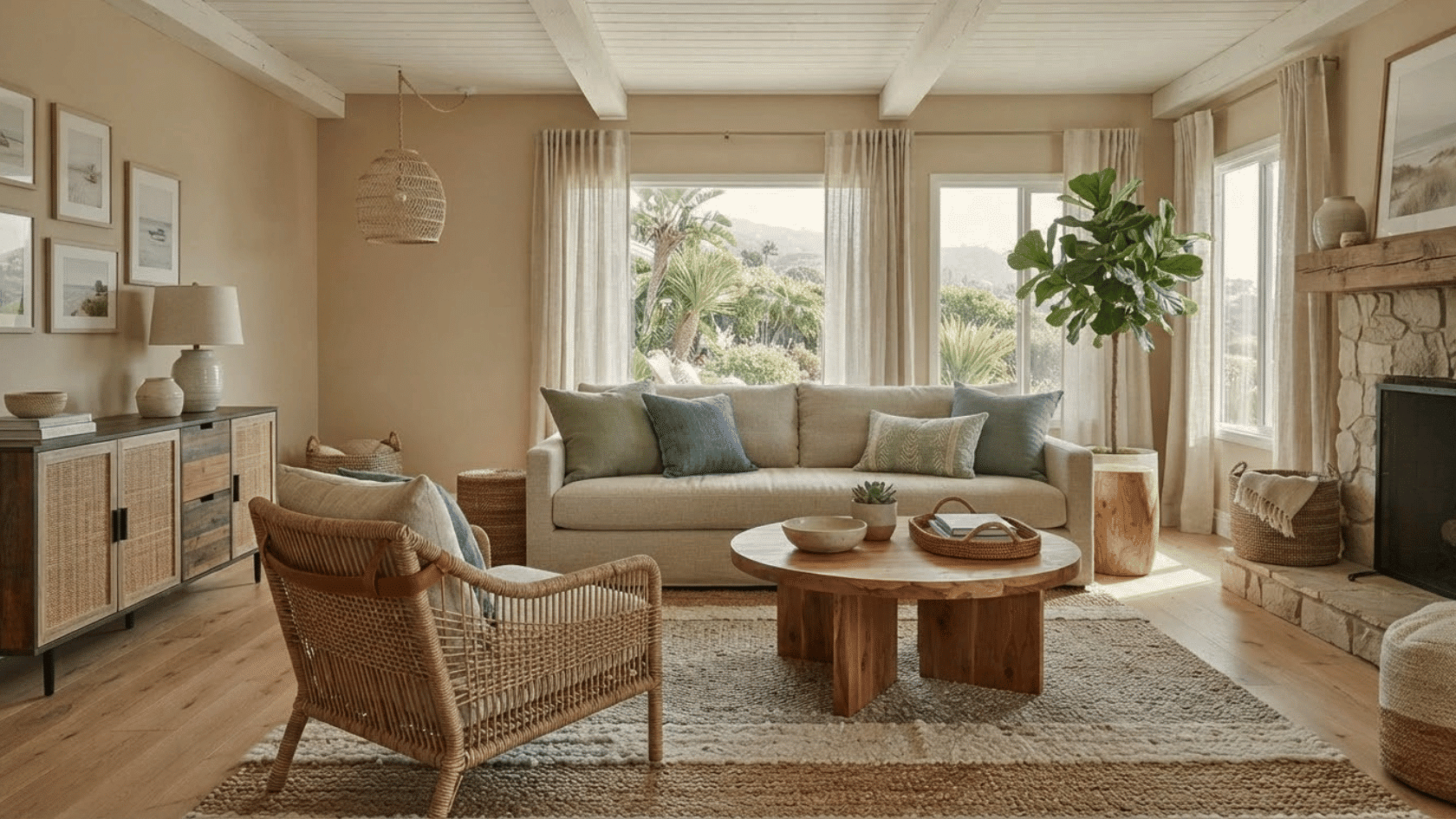
California Coastal design softens traditional coastal style with natural textures and a relaxed, casual layout throughout the home.
The focus stays on neutral, green, and blue tones paired with wood, rattan, leather, and linen throughout the room.
- Key Traits: Natural textures, casual layouts, mixed materials, relaxed furniture silhouettes
- Color Accents: Sandy neutral, sage green, ocean blue, and warm wood tone
25. Palm Beach
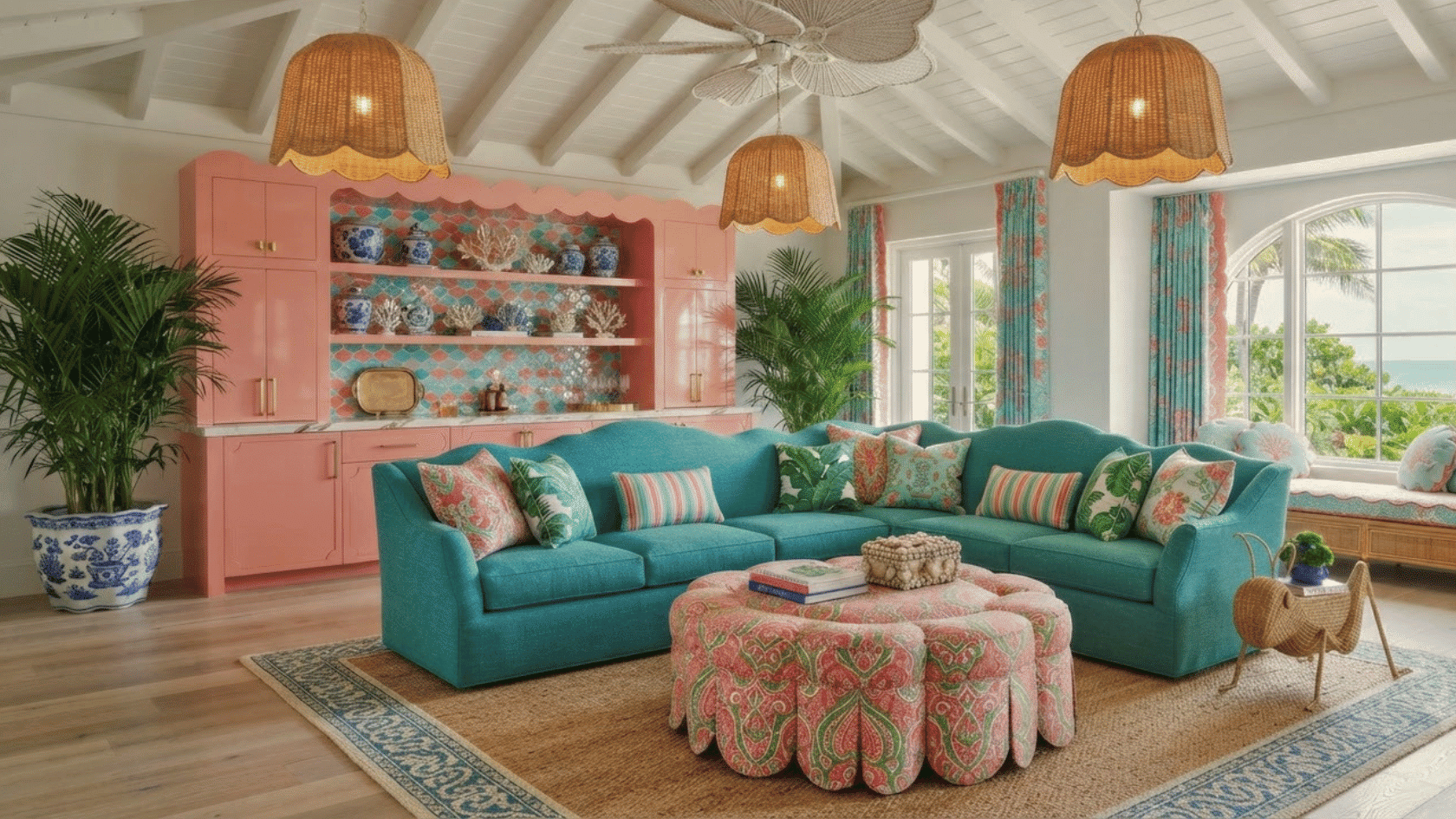
Palm Beach design pairs sea-inspired colors with playful furniture silhouettes and preppy pattern choices throughout the room.
The focus stays on scalloped details and woven textures that keep formal rooms feeling bright and lively throughout the home.
- Key Traits: Scalloped furniture, woven textures, colorful prints, playful silhouettes
- Color Accents: Turquoise, coral pink, kelly green, and crisp white
26. Mediterranean
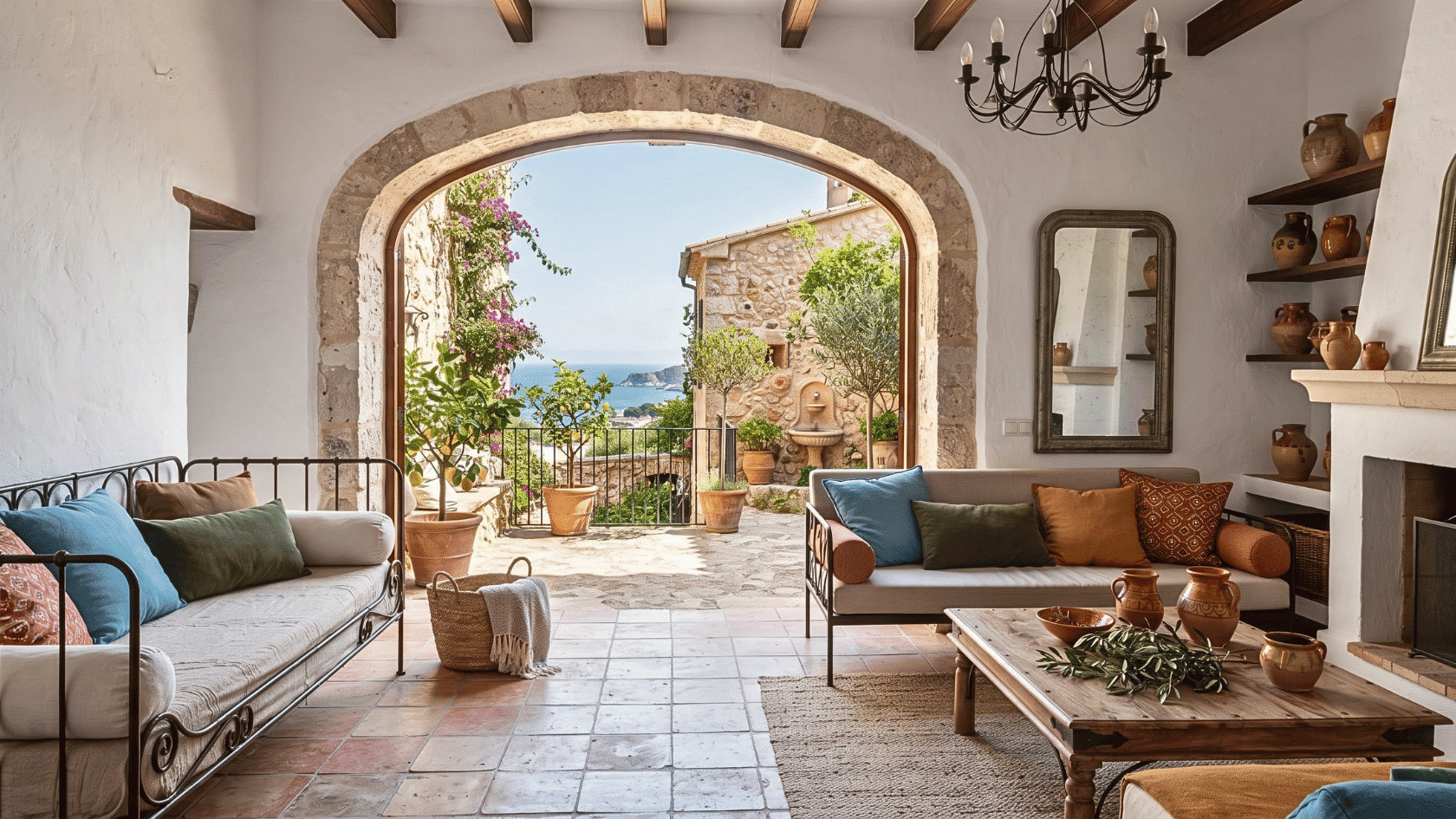
Mediterranean design combines sun-drenched coastal ease with old-world European romance, drawing heavily from Italian, Spanish, and Greek architectural traditions throughout the entire home.
The focus stays on creating a breezy, indoor-outdoor lifestyle that feels naturally tied to the surrounding earth and landscape.
- Key Traits: White-washed stucco walls, terracotta floor tiles, arched doorways, wrought-iron details
- Color Accents: Azure blue, deep olive green, rich ochre, and warm terracotta
27. Rustic
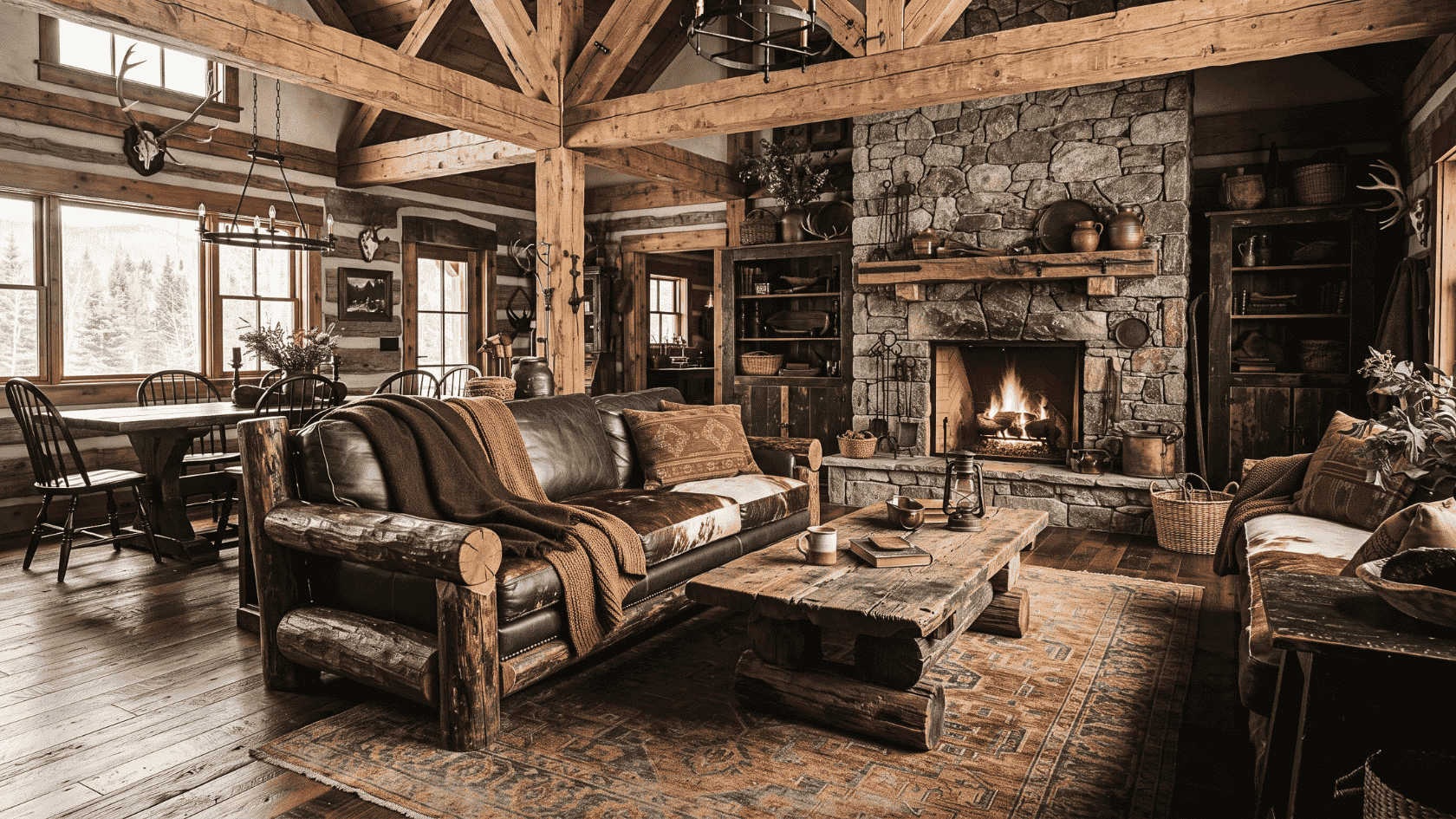
Rustic design pairs unrefined natural beauty with rugged, time-worn comfort, favoring materials that show age and character rather than polish or shine.
The design consistently highlights the natural, weathered imperfections of nature, creating a warm and welcoming atmosphere throughout the home.
- Key Traits: Rough-hewn wooden beams, stacked natural stone, distressed finishes, handmade furniture
- Color Accents: Forest green, chocolate brown, warm amber, and muted brick red
28. Modern Farmhouse
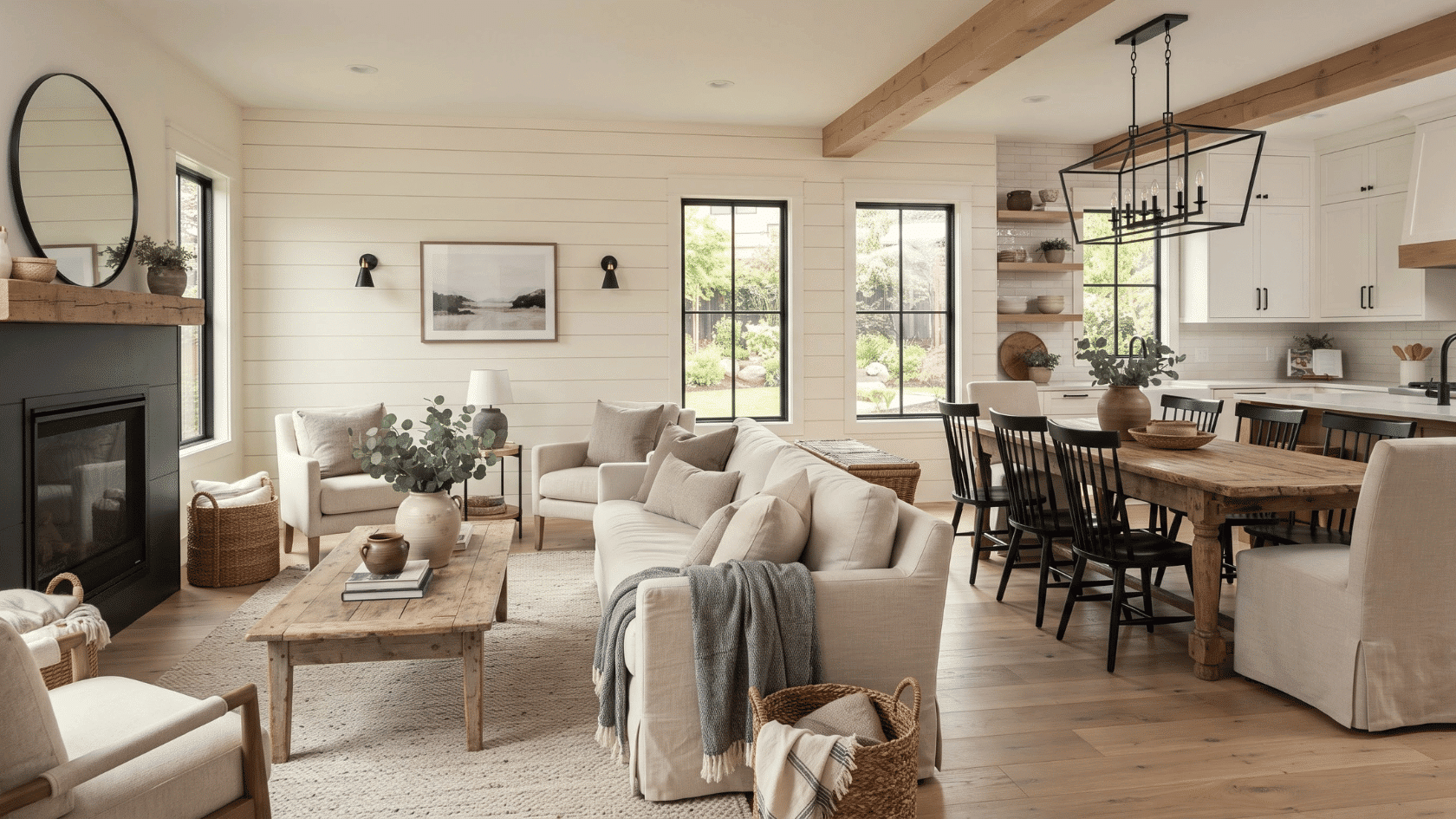
Farmhouse design blends rural warmth with sleek city styling, mixing practical materials with a softer, welcoming character throughout the entire home and living space year-round.
The emphasis remains on creating a casual, family-friendly, and cozy home atmosphere that everyone can comfortably enjoy.
- Key Traits: Shiplap accent walls, modern black hardware, neutral paint, vintage wood tables
- Color Accents: Soft white, warm beige, matte black, and weathered wood brown
29. Alpine Chic
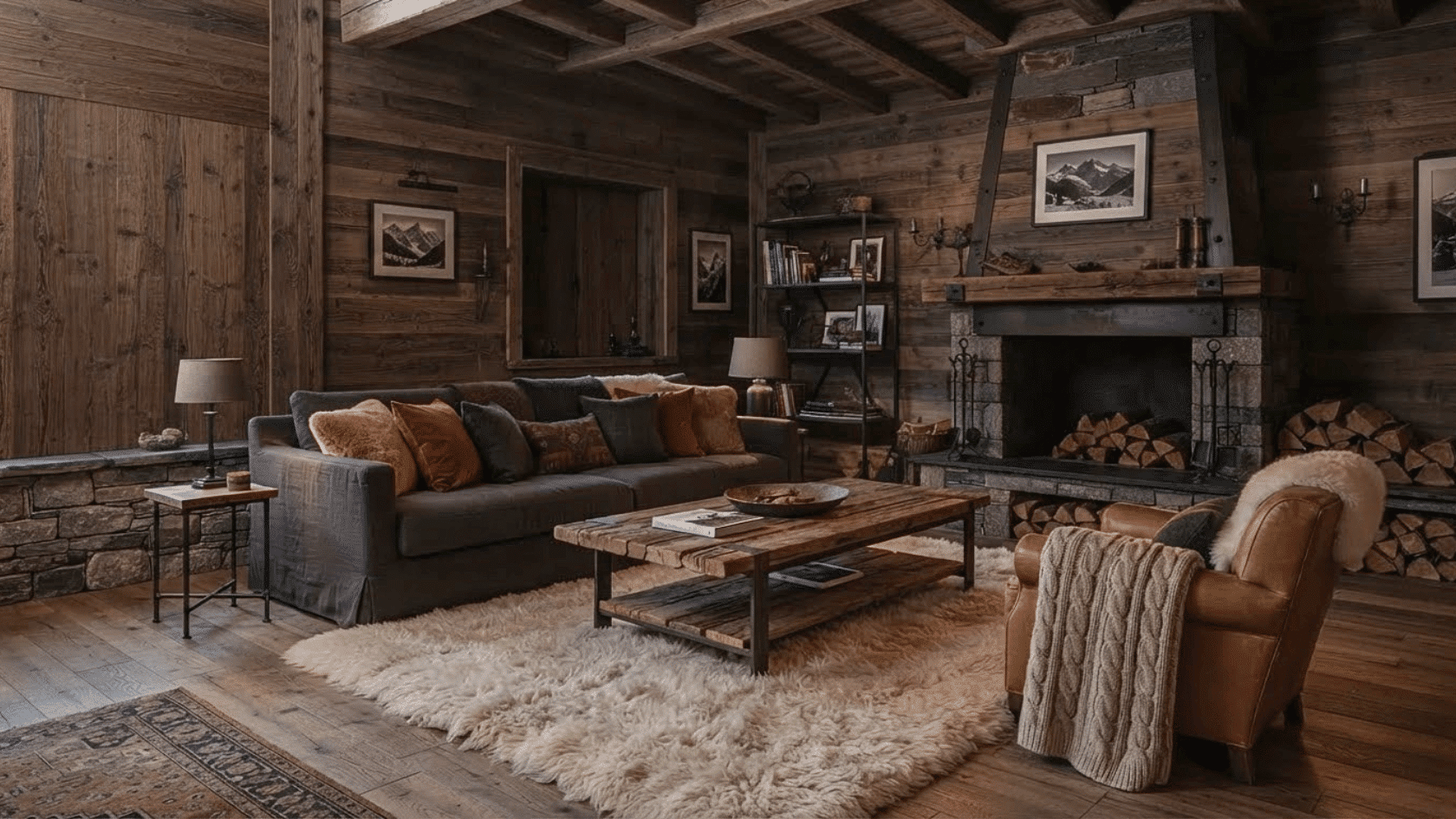
Alpine Chic design pairs cozy mountain living with raw materials like reclaimed wood, stone, and iron throughout the home.
The focus stays on layered, high-pile textiles such as shearling, wool, and velvet that keep rooms feeling warm through cold seasons.
Key Traits: Reclaimed wood, stone and iron accents, high-pile textiles, layered textures
Color Accents: Charcoal gray, deep forest green, warm camel, and burnt orange
|
Design Tip: Mix interior styles thoughtfully by selecting one dominant theme, repeating key colors and materials, balancing different textures, and keeping furniture proportions consistent. Limiting the number of styles helps create a cohesive, stylish, and balanced living space. |
What are the Three F’s of Interior Design?
The three F’s of interior design stand for function, flow, and feel. Some designers apply these three F’s differently during structural planning, using floor plan, finishes, and fixtures instead.
Function means a room supports daily tasks and practical needs, such as enough counter space in a kitchen or comfortable seating in a living room.
Flow refers to how people move through a space, making sure furniture placement allows easy movement without blockages or awkward paths.
Feel covers the mood and atmosphere a room creates, shaped by lighting, color choices, textures, and personal touches that combine to form an emotional response.
Depending on the designer you ask, another popular variation focuses on the physical components of a project: Floor plan, Finishes, and Fixtures.
Modern Interior Design Styles vs. Contemporary Design
Modern design refers to a fixed historical style from the early to mid-1900s, while contemporary design reflects whatever feels current today, shifting constantly with present-day trends and materials.
| Category | Modern Design | Contemporary Design |
|---|---|---|
| Timeline | Early 20th-century style linked to Bauhaus and Mid-Century Modern | Late 20th century to present, shaped by current trends |
| Materials | Natural wood, leather, stone, and chrome metals | Concrete, glass, engineered stone, and modern fabrics |
| Colors | Warm neutrals like cream, brown, and olive with subtle accents | High-contrast shades like white, black, gray, and bold tones |
| Shapes | Straight lines, geometric forms, and functional low-profile furniture | Curved forms, fluid shapes, and varied scales |
| Shared Features | Open layouts, minimal clutter, and spacious interiors | Open layouts, minimal clutter, and spacious interiors |
Both styles value clean spaces and thoughtful design, but their materials, colors, and forms reflect different time periods.
Though rooted in different timelines, both styles share open floor plans and clutter-free spaces. Comparing their materials, colors, and shapes side by side makes the distinction clear and practical.
Mix the Right Interior Design Style for Your Home
Combining two design styles in one room can look chaotic without a clear plan. The 80/20 rule gives every room a simple ratio for lasting balance and personality.
- Dominant Style Foundation: Give one style 80 percent of walls, flooring, and large furniture choices.
- Large Scale Anchor Pieces: Choose a sofa, rug, or cabinetry that reflects your main style.
- Secondary Accent Layer: Bring the second style through lighting, side tables, pillows, and wall art.
- Contrasting Statement Piece: Add one bold accent, like an industrial table, inside a softer style.
- Shared Color Palette: Repeat one color across furniture, walls, and accessories to connect both styles.
- Matching Material Finish: Use the same wood tone or metal finish across pieces from each style.
Applying this ratio turns a mixed room into a considered space rather than a random collection of furniture. A shared color or material keeps both styles connected and truly comfortable.
Final Takeaway
Modern Interior design styles offer a wide range of directions, from clean modern spaces to warm farmhouse rooms and bold Art Deco interiors.
Each style carries its own colors, materials, and furniture choices, and none of them require strict rules once you understand the basics.
Comparing a few options side by side, based on lighting, maintenance, and personal taste, makes choosing much easier than picking based on trends alone.
I would still recommend mixing styles carefully, always keeping one look as your base and layering in accents thoughtfully and with intention.
Have a style element that caught your eye? Comment below with your favorite inspiration and the room you’d love to redesign first.
Frequently Asked Questions
What Interior Design Style Is Trending Now?
Maximalism and eclecticism lead as the most requested modern interior design styles in 2026, paired with warm materials, chocolate brown tones, and layered, personal, lived-in spaces.
Which Interior Design Styles Work Best for Small Spaces?
Minimalist and Scandinavian styles tend to work best for small spaces, since they rely on light colors, simple furniture, and open layouts that make rooms feel larger.
What Is the 3-5-7 Rule in Interior Design?
The 3-5-7 rule groups decor items in odd numbers, three, five, or seven, since odd groupings create more natural visual balance than symmetrical, even-numbered arrangements.