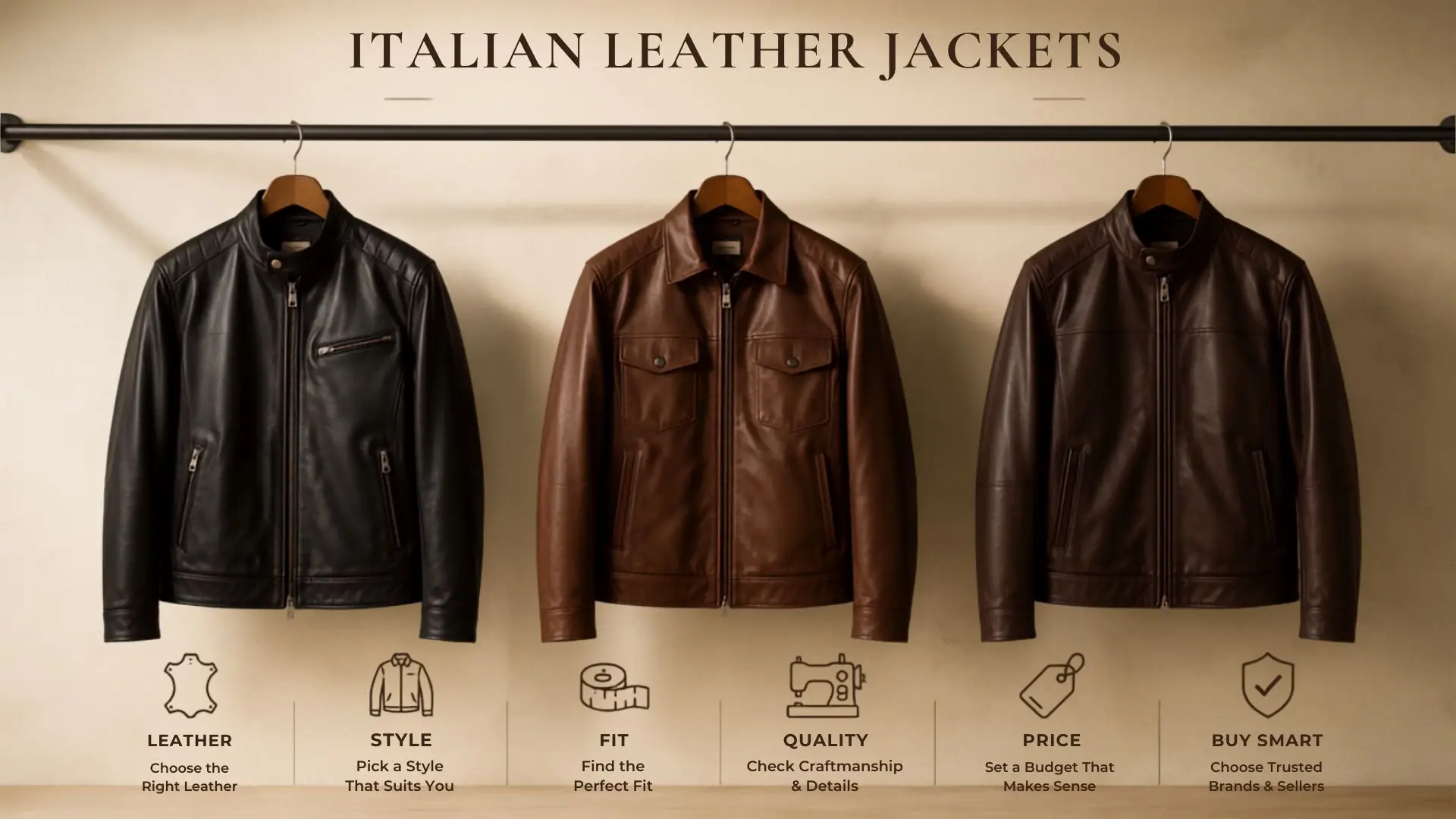
An Italian leather jacket has long been seen as a symbol of craftsmanship, quality, and timeless style.
From Milan’s fashion houses to Florence’s tanneries, Italy has built a reputation for producing some of the finest leather outerwear in the world, including versatile reversible leather jackets styles that offer two looks in one piece.
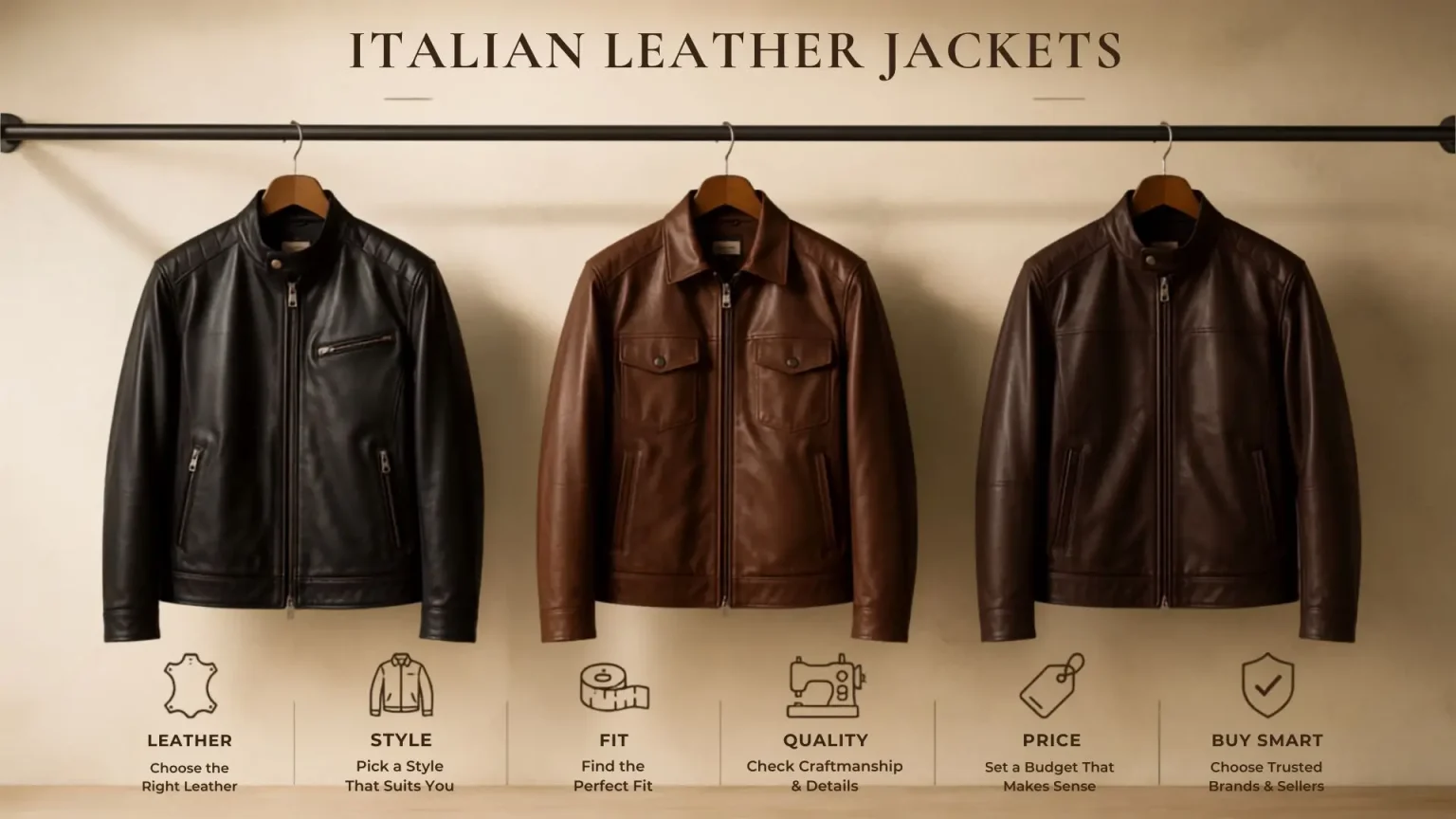
Choosing the best Italian leather jacket means looking past the label and evaluating what actually matters: the leather, the construction, the fit, the style, the brand, and the price.
What Makes Italian Leather Jackets Special?
Before comparing leather types or brands, it helps to know where Italy’s reputation for leather jackets actually comes from, and where the label can mislead buyers.
Italy’s leatherworking tradition runs deep, and it shows in the small details most buyers never think to check.
Here is what actually shapes that reputation:
- Tradition: Rooted in regions like Tuscany and Florence, where tanneries still rely on techniques passed down through generations.
- Craftsmanship: Italian workers are known for hand-finishing details, precise stitching, and a clear sense of how leather should move and age on the body.
- Leather Finishing: Careful tanning and finishing methods give Italian jackets their soft hand-feel and deep, even color.
- Construction: Close attention to build quality adds long-lasting durability, not just good looks.
- Reputation: This combination of skill and material is what built Italian leather’s strong reputation worldwide.
- Italian Leather vs Made in Italy: A jacket can use Italian-tanned hide but be sewn elsewhere, while a true Made in Italy piece is sourced and built in the country, which usually costs more.
What Leather Is Best for an Italian Leather Jacket?
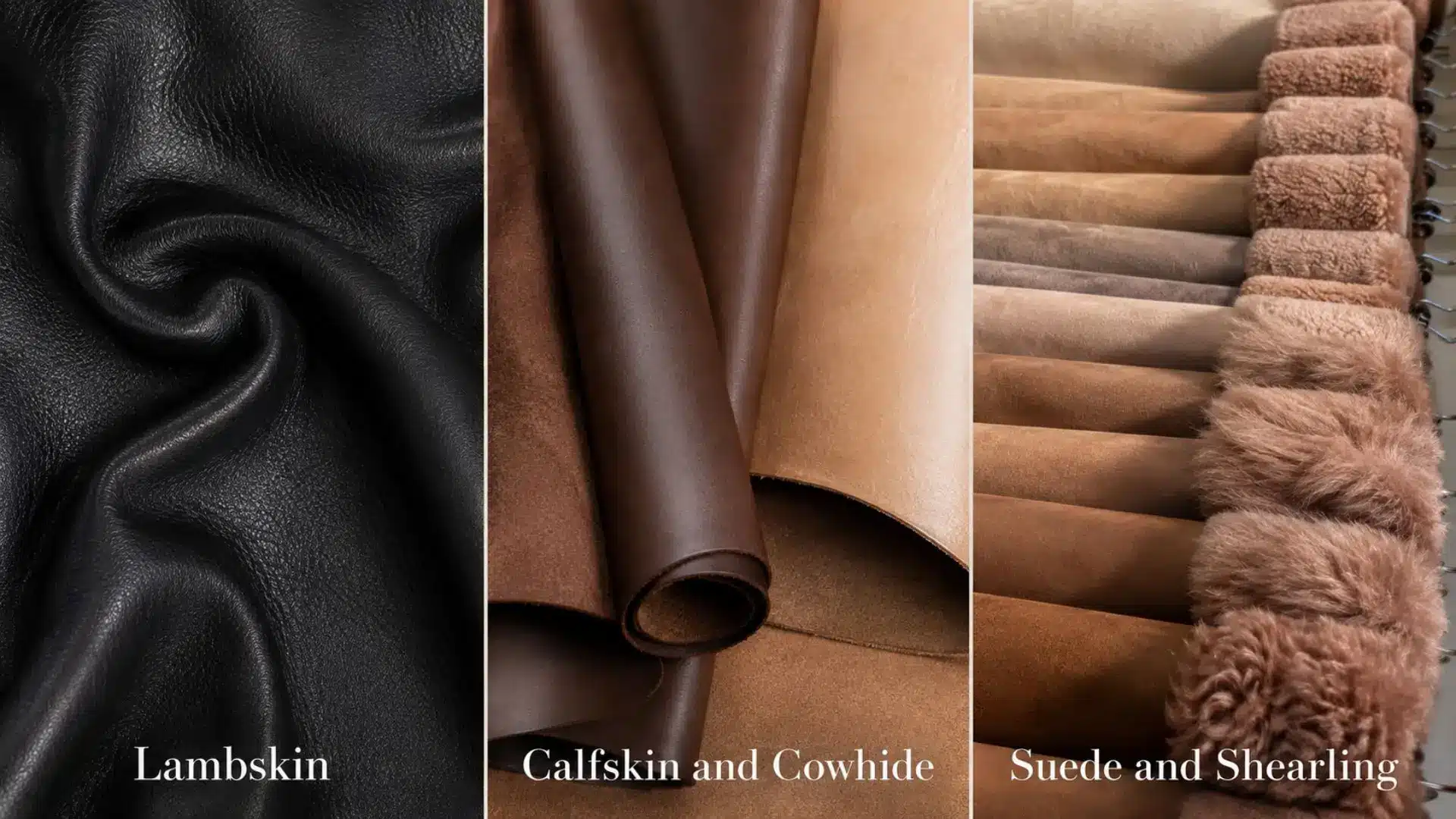
Not every hide behaves the same way. Weight, texture, and cost vary widely, so picking the right leather often matters more than picking a specific brand name.
Lambskin
Lambskin is prized for exceptional softness and a lightweight feel, making it a favorite for luxury Italian leather jacket designs.
It drapes elegantly rather than holding a stiff shape, giving it a refined, almost fabric-like movement. Because it is thinner than other hides, lambskin suits fashion-forward jackets, blazers, and mild-weather wear rather than heavy-duty use like motorcycling or daily rough handling.
Calfskin and Cowhide
Calfskin, often called vitellino in Italy, offers a smooth surface with more structure than lambskin while still staying supple.
Cowhide is thicker and more rugged, valued for durability and abrasion resistance. Both are common in biker jackets and everyday leather outerwear meant to handle regular use.
If you want a jacket that holds its shape for years, calfskin or cowhide is the stronger pick.
Suede and Shearling
Suede offers a soft, textured, matte finish that adds variety to a leather wardrobe, though it needs careful maintenance since it stains and absorbs moisture easily.
Shearling, leather lined with natural wool, delivers serious warmth for cold climates. Both materials need extra care compared to smooth leather, but that upkeep pays off with unique texture and comfort.
Tip: As a simple rule, choose lambskin for style and comfort, calfskin or cowhide for durability and daily wear, and shearling for cold weather protection.
Popular Italian Leather Jacket Styles
Italian jackets come in a handful of recognizable shapes, and each one suits a different kind of person and occasion. Here is who each style actually fits.
- Biker/Moto: Rugged, close-fitting, and loaded with hardware, best for riders or anyone who wants a bold, structured look.
- Bomber/Aviator: Casual and easy to layer, ideal for everyday wear across most seasons.
- Leather Blazer: Structured and sharp, suited to those who want to wear leather at work or to evening events.
- Shearling: Heavy and warm, best for cold climates and serious winter wear.
- Vintage/Casual: Relaxed, worn-in look, good for people who want a low-effort wardrobe staple.
- Reversible Leather Jackets: Two looks in one piece, practical for travelers or anyone who wants variety without buying more jackets.
With a style in mind, the real work starts: checking fit, construction, and price so the jacket you choose actually earns its cost.
How to Choose the Right Italian Leather Jacket
This is the part that actually matters at checkout. Run through these steps in order before you commit to any Italian leather jacket:
- Decide the intended use, whether riding, daily wear, or occasion dressing
- Select the leather type based on the durability and feel you want
- Pick a style that matches your lifestyle and wardrobe
- Check fit and measurements carefully, since leather does not stretch like fabric
- Examine construction quality, including stitching, seams, and hardware
- Set a realistic budget and understand what that price should include
- Verify the seller and origin claims before purchasing
- Check the return policy and shipping terms, especially for online or international orders
How to Care for an Italian Leather Jacket
Good leather rewards basic upkeep. A few simple habits, followed consistently, will keep an Italian leather jacket looking right for many years.
An Italian leather jacket stays in good shape if you keep up with:
- Proper storage on a padded hanger, away from direct sunlight and excess humidity
- Regular conditioning every few months to keep the hide supple and prevent cracking
- Care around water and rain, blotting moisture gently instead of rubbing it in
- Prompt cleaning of spills with a leather-safe cleaner made for the material
- Suede care using a soft brush to lift dirt without damaging the nap
- Distance from heat sources, which dry out leather and cause warping over time
None of these steps take much time, but skipping them speeds up wear and fading. Stick to this routine and an Italian leather jacket will age well instead of breaking down early.
How to Tell if an Italian Leather Jacket Is High Quality
Price tags do not always tell the truth. These physical details reveal whether a jacket was actually built well, regardless of what the label claims.
Check the Leather Quality
Look for leather that feels soft yet substantial in your hands, never stiff or plastic-like. Quality hides have a natural give and a slightly uneven surface. Cheap leather often feels thin, overly smooth, or coated, which signals a lower grade material underneath the finish.
Look for a Consistent Leather Grain Pattern
A well-made hide shows even grain patterns across the entire jacket, from the sleeves to the back panel. Watch for odd patches, sudden texture changes, or areas that look noticeably different, since these often point to mixed-quality leather stitched together to cut costs.
Inspect the Stitching Quality on a Leather Jacket
Stitches should sit tight, even, and straight along every seam, with no loose threads or skipped spacing. Uneven or sloppy stitching often shows up first at stress points like the underarms and cuffs, and it usually predicts how the jacket will hold up over time.
Check the Seams for Smooth, Flat Construction
Seams should lie flat and smooth against the body, never puckered, bunched, or pulling at the edges. Run your hand along each seam to check for lumps or thread that catches. Flat, reinforced seams handle daily movement far better than loosely joined panels.
Test the Zippers and Hardware Quality
Hardware from trusted makers, similar to what you find in leather outerwear made in Florence, points to real craftsmanship. Quality zippers glide smoothly without snagging and feel solid rather than light or hollow. Cheap hardware tends to stick, rust quickly, or break within a year or two.
Jacket Lining Material and Breathability
A breathable lining made from cotton, cupro, or silk blends outperforms cheap polyester in comfort and durability. Natural linings let the jacket breathe, reduce sweat buildup, and slide on smoothly over other layers. Synthetic linings tend to tear faster and trap heat uncomfortably.
Review the Overall Jacket Construction
Panels should align correctly, with reinforced stitching at the shoulders, cuffs, and pockets where stress builds up most. Check that the collar sits evenly and the sleeves match in length. Small construction errors here usually point to rushed manufacturing rather than careful craftsmanship.
Verify the Leather Origin and Labeling
Clear tags stating where the leather was tanned and where the jacket was assembled help confirm origin claims. Genuine Italian pieces typically list specific sourcing details rather than vague phrases like simply “Italian leather” with nothing else.
Ask for Seller Transparency
A seller who answers sourcing and construction questions openly is more likely selling a genuine, well-made jacket. Reputable sellers share details about the tannery, hide type, and manufacturing process without hesitation, while vague or dismissive answers are often a warning sign worth taking seriously.
Once you own a well-made jacket, keeping it that way depends on how you store, clean, and handle it over time.
Are Italian Leather Jackets Worth It?
Yes, an Italian leather jacket is worth buying if you value craftsmanship, material quality, long-term durability, proper fit, and a design that stays relevant for years.
These jackets earn their price when the leather is high grade, the construction is hand-finished, and the fit actually suits your body and how you plan to wear it.
A well-made piece can last for years rather than a single season, which makes the higher cost easier to justify over time.
That said, not every jacket labeled Italian leather earns a high price. Some brands rely on the word “Italian” alone, without matching it with real quality or construction, so check each piece on its own before you buy.
These same questions come up again and again from buyers, so here are direct answers to the ones asked most often.
Final Takeaway
Picking an Italian leather jacket comes down to a short list of checks: the leather type, the stitching, the fit, the hardware, and whether the price actually matches what you are holding.
Lambskin, calfskin, cowhide, and shearling each serve a different purpose, so match the hide to how you actually plan to wear the jacket.
Look closely at seams, zippers, and lining before you pay, and confirm what the seller means by “Italian” before you trust the tag. Do this, and an Italian leather jacket can last well beyond the trend it started with.
Have you bought an Italian leather jacket before, or are you shopping for your first one? Drop a comment and share what worked for you, or ask a question below.
Frequently Asked Questions
What Are the Best Italian Leather Jacket Brands?
Jennifer Tattanelli is known for strong Italian leather craftsmanship, offering solid construction, quality hides, and designs that hold up for years of wear offering quality at an affordable price compared to high end brands.
How Much Should an Italian Leather Jacket Cost?
Quality Italian leather jackets typically start around nine hundred dollars and can exceed twenty four hundred, depending on the leather type, brand reputation, and overall construction quality of the piece.
Is Italian Leather Better?
Italian leather is often praised for strong tanning and finishing methods, but quality varies by producer, so craftsmanship matters more than the country label alone when comparing jackets.
What Is the Best Leather for a Jacket?
It depends on use: lambskin suits style and comfort, calfskin and cowhide suit durability and daily wear, and shearling suits cold weather protection and added warmth.
Are Italian Leather Jackets Made in Italy?
True Made in Italy jackets are sourced and built entirely within Italy, which usually costs more.
How Long Do Italian Leather Jackets Last?
Well-made Italian leather jackets can last decades with proper care, often improving in texture and color as the leather ages naturally through regular use.
Are Italian Leather Jackets Worth the Money?
Yes, for buyers who prioritize craftsmanship, durability, and lasting style, though quality varies widely, so checking construction and materials matters more than trusting labels alone.