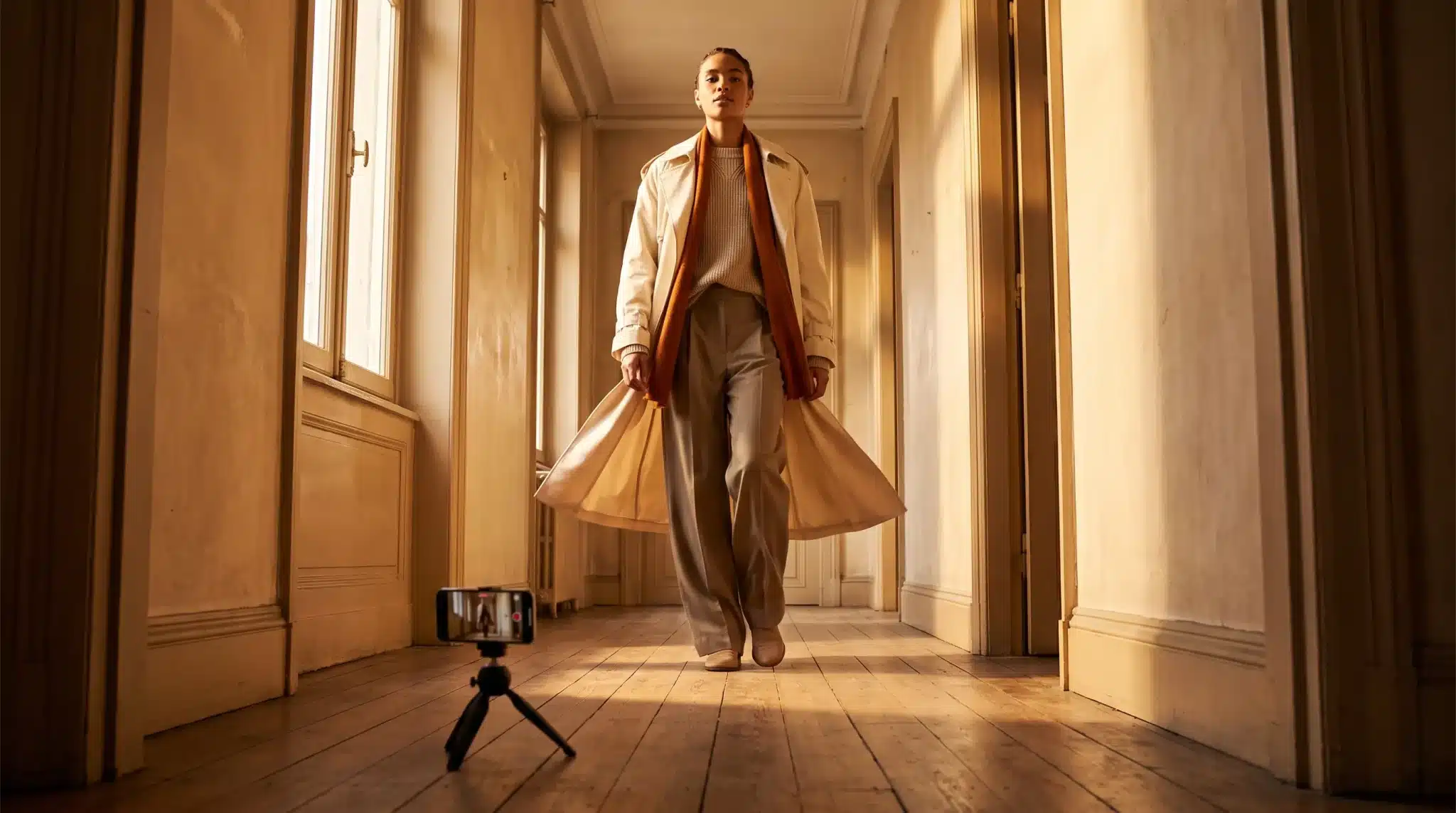
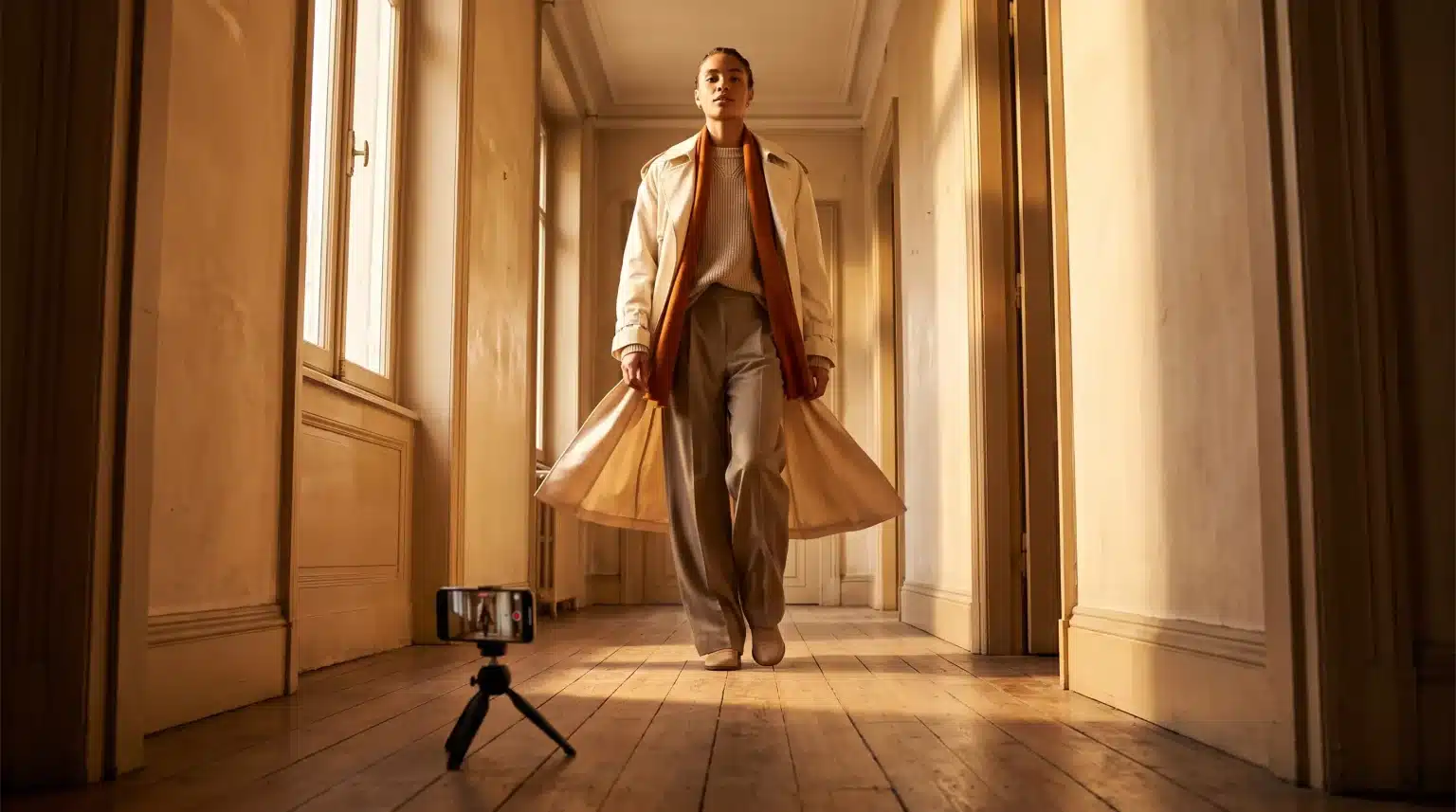
Scroll through any style-focused feed lately and you’ll notice something that wasn’t nearly as common two years ago: outfits aren’t just being photographed anymore, they’re being performed. A quick spin in front of a mirror, a walk down a hallway that doubles as a runway, a slow pan from shoes to jacket set to a trending sound.
Fashion accounts that used to post a single flat-lay or a still portrait are now leaning hard into short clips, and the ones getting the most attention have figured out how to create video content that feels less like a product photo and more like a tiny fashion film. The shift says a lot about where personal style content is heading, and it’s worth understanding if you want your own outfit posts to stop blending into the background.
Stillness Used to Be Enough. Now It Isn’t.
A well-lit photo can show fabric, fit, and color accurately, but it can’t show how a coat moves when someone turns, how a pleated skirt catches air on a windy street, or how a chunky boot actually sounds against pavement. Video adds the physical dimension that fashion has always relied on in real life, the swish, the drape, the way an outfit reads in motion rather than frozen at one angle. Runway shows have understood this for decades, which is partly why so many personal style creators are now borrowing runway logic for their own content: walk, turn, pause, walk again.
There’s also a simple algorithmic reason behind the shift. Short-form video tends to get pushed further by most platforms than static images, so creators who want their outfit ideas to actually reach people beyond their existing followers have strong incentive to film rather than photograph. Style has always been about being seen. Video is currently the fastest way to be seen by more people at once.
What Separates a Good Style Video From an Awkward One
Not every attempt at fashion video works. The ones that feel clumsy tend to share the same problems: shaky footage, outfits shown from a single flat angle, or clips that go on far too long before the point lands. The accounts that consistently look polished tend to follow a few unspoken rules.
- They keep it short. Most successful outfit clips run somewhere between five and fifteen seconds. Long enough to show the full look, short enough that nobody scrolls away halfway through.
- They show movement on purpose. A slow turn, a step forward, a hand brushing through hair. These small actions do more to sell an outfit than a static pose ever could.
- They pick one location and stick with it. A hallway, a doorway, a single spot on a sidewalk with good light. Consistency in setting makes a feed feel intentional rather than scattered.
- They edit with restraint. A clean cut, a well-timed beat drop, maybe one text overlay naming the brand or the price point. Overloaded effects tend to distract from the clothes themselves, which are supposed to be the actual subject.
Turning Everyday Outfits Into Something Worth Watching
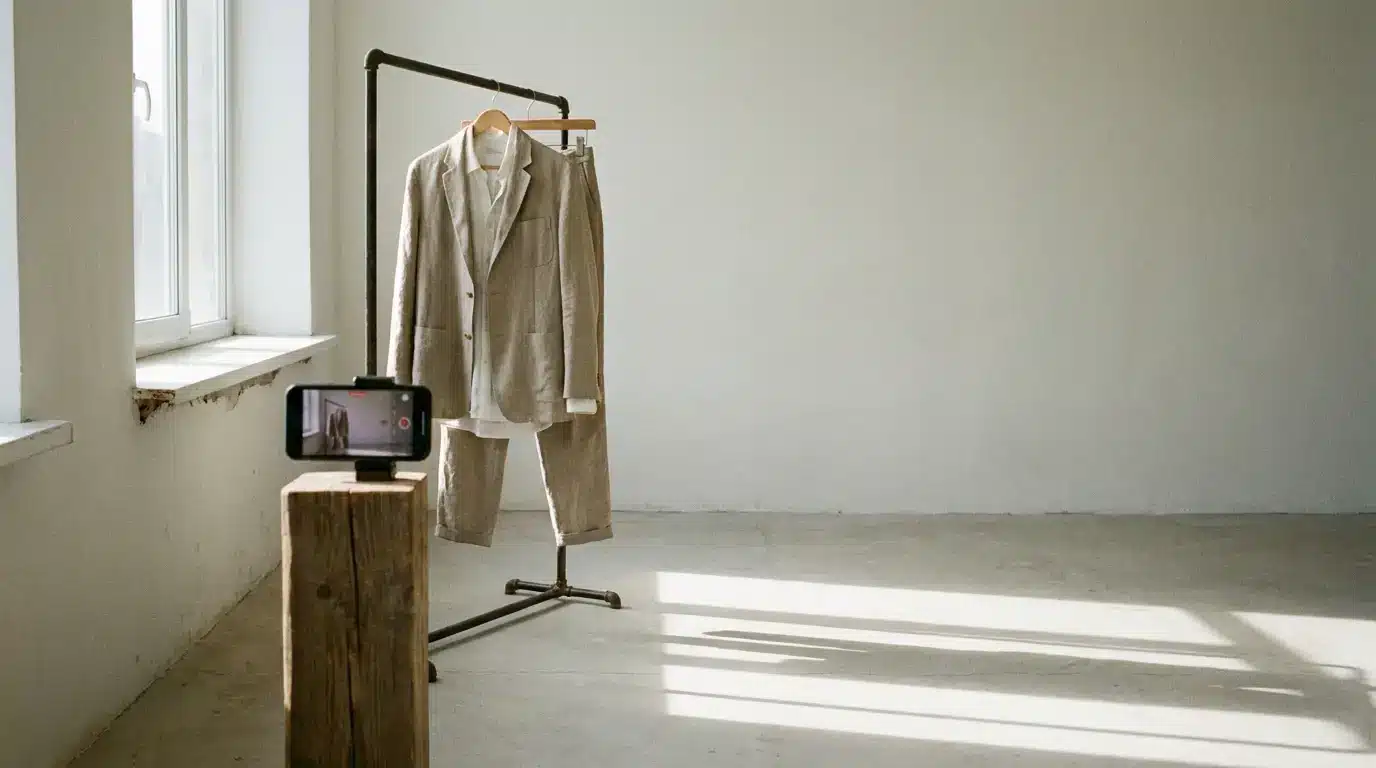
The good news for anyone intimidated by the idea of filming themselves is that this trend rewards simplicity far more than production value. A phone propped against a stack of books, natural window light, and one good outfit is genuinely enough to start. What tends to matter more than equipment is a willingness to experiment with small variations: filming the same outfit from a different angle on a second try, adjusting the walking pace, trying a jump cut between two poses instead of one continuous shot.
Editing has also become far less of a barrier than it used to be. A few years ago, turning raw phone footage into something polished required either real editing skill or a willingness to sit through a steep learning curve. Now, a browser tab and fifteen free minutes are usually enough to trim clips, add captions, sync a transition to music, and export something ready to post. That accessibility is a big part of why so many personal style accounts, not just professional fashion brands, have started producing content that looks noticeably more considered than it did even a year ago.
Fashion Video Isn’t Replacing the Photo, It’s Sitting Next to It
None of this means the still outfit photo is disappearing. A crisp, well-composed photo still does something video can’t: it freezes a look at its most flattering angle and holds it there for as long as someone wants to study the details, the stitching, the exact shade of a color that never quite translates the same way on video. What’s changed is that photos are no longer expected to carry a fashion post alone. The strongest style accounts now treat video as the hook that gets someone to stop scrolling, with the photo serving as the closer that lets the outfit be appreciated properly once attention has already been earned.
For anyone building a personal style presence, or even just documenting outfits for their own record, the practical takeaway is simple: film a little more than feels necessary, keep the clips short and purposeful, and don’t be afraid of using the same hallway or the same patch of sidewalk over and over. Consistency reads as intention, and intention is exactly what separates a fashion account people remember from one that gets scrolled past.
A Trend Worth Watching Rather Than Chasing
Trends in fashion move fast, and video formats will keep shifting alongside them, walking clips today, something else in eighteen months. What seems unlikely to change is the underlying idea: clothes were always meant to be seen in motion, on real bodies, doing real things. Photography captured a version of that for a long time out of necessity, but now that filming and editing a short clip takes barely more effort than snapping a photo, it makes sense that so much of personal style content has started moving in that direction. The accounts figuring this out earliest aren’t necessarily the ones with the biggest budgets. They’re the ones willing to press record a few extra times until a walk down a hallway starts to look effortless.