
When homeowners think about security, the front door is often reduced to a single component: the lock. Deadbolts, smart locks, and reinforced cylinders tend to dominate the conversation. Yet in practice, the security of a home depends far less on the lock alone and far more on how the entire door system is designed, installed, and supported.
This distinction is crucial in Canada, where residential construction must account for seasonal temperature swings, moisture exposure, and long-term material fatigue. In these conditions, a front door that looks secure on paper may underperform if its structure, frame, or installation quality is overlooked. Understanding how these elements work together helps explain why some doors fail under pressure while others remain reliable for decades.
Security Starts With the Door Itself
A lock can only perform as well as the surface it is mounted to. When force is applied during a break-in attempt, the door slab absorbs the initial impact long before the lock mechanism is tested. Doors with hollow or lightweight construction are far more likely to flex, crack, or split, reducing the effectiveness of even high-grade hardware.
Solid-core doors behave very differently under stress. Their internal structure distributes force across a wider area, making it harder to concentrate pressure at a single point. In colder climates, material stability becomes just as important as strength. Doors that warp, swell, or shrink over time can loosen within the frame, creating gaps that compromise both security and insulation.
The Often-Ignored Importance of the Frame
While homeowners may carefully compare door materials, the surrounding frame frequently receives little attention. From a security perspective, this is a critical mistake. Many forced entries do not occur because the door breaks, but because the frame gives way.
A reinforced door installed in a weak or poorly anchored frame remains vulnerable. The frame must be properly secured to the structural wall, not just to finished trim, to resist impact. This is where installation quality becomes inseparable from product quality.
As noted by Bob Vila, even high-security doors can fail if the frame, hinges, and strike plate are not securely installed and reinforced. Without proper anchoring into wall studs, the strongest door can still be forced open with relative ease.
Hardware Is Only as Strong as Its Support
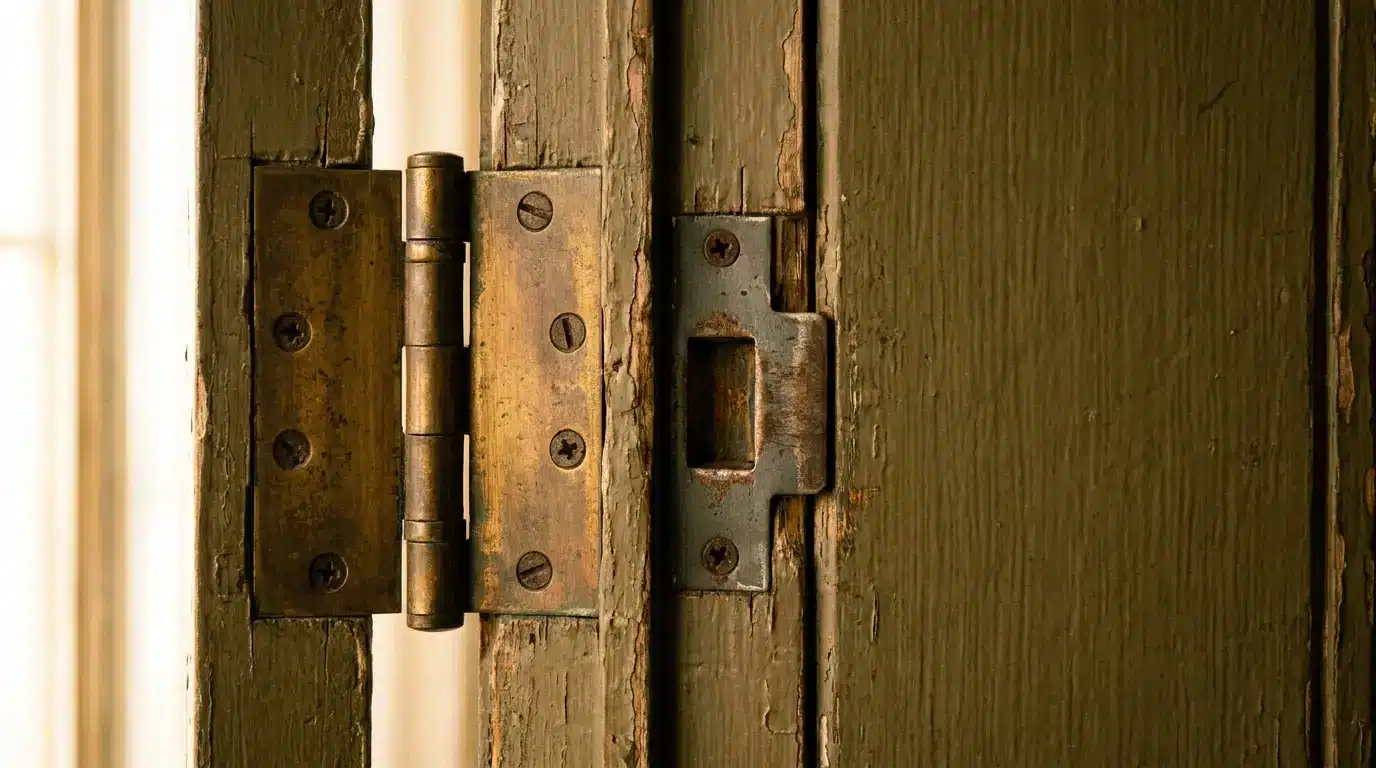
Hinges and strike plates play a decisive role in door security, even though they are rarely discussed. Hinges carry the full weight of the door and absorb stress every time it opens and closes. Over time, inadequate hardware or poor alignment can cause the door to sag, shifting pressure away from the lock and creating vulnerabilities along the frame.
The same principle applies to the strike plate. If it is fastened only to the door jamb rather than the underlying structure, force from an impact is concentrated in a small area instead of being distributed into the framing behind it. These details are not visible after installation, but they often determine how a door performs during testing.
Installation Quality as a Security Variable
Even well-engineered doors can underperform if installation is rushed or handled without attention to alignment and load distribution. Frames that are not square, doors that rely on trim to conceal gaps, or assemblies that are inadequately insulated all introduce weaknesses that become more pronounced over time.
This is why homeowners planning door replacement often benefit from thinking in terms of a complete entry system rather than an isolated slab. The way a front door is specified, reinforced, and integrated with its frame directly impacts how it performs under stress, regardless of how advanced the lock itself may be.
Glass Elements and Perceived Risk
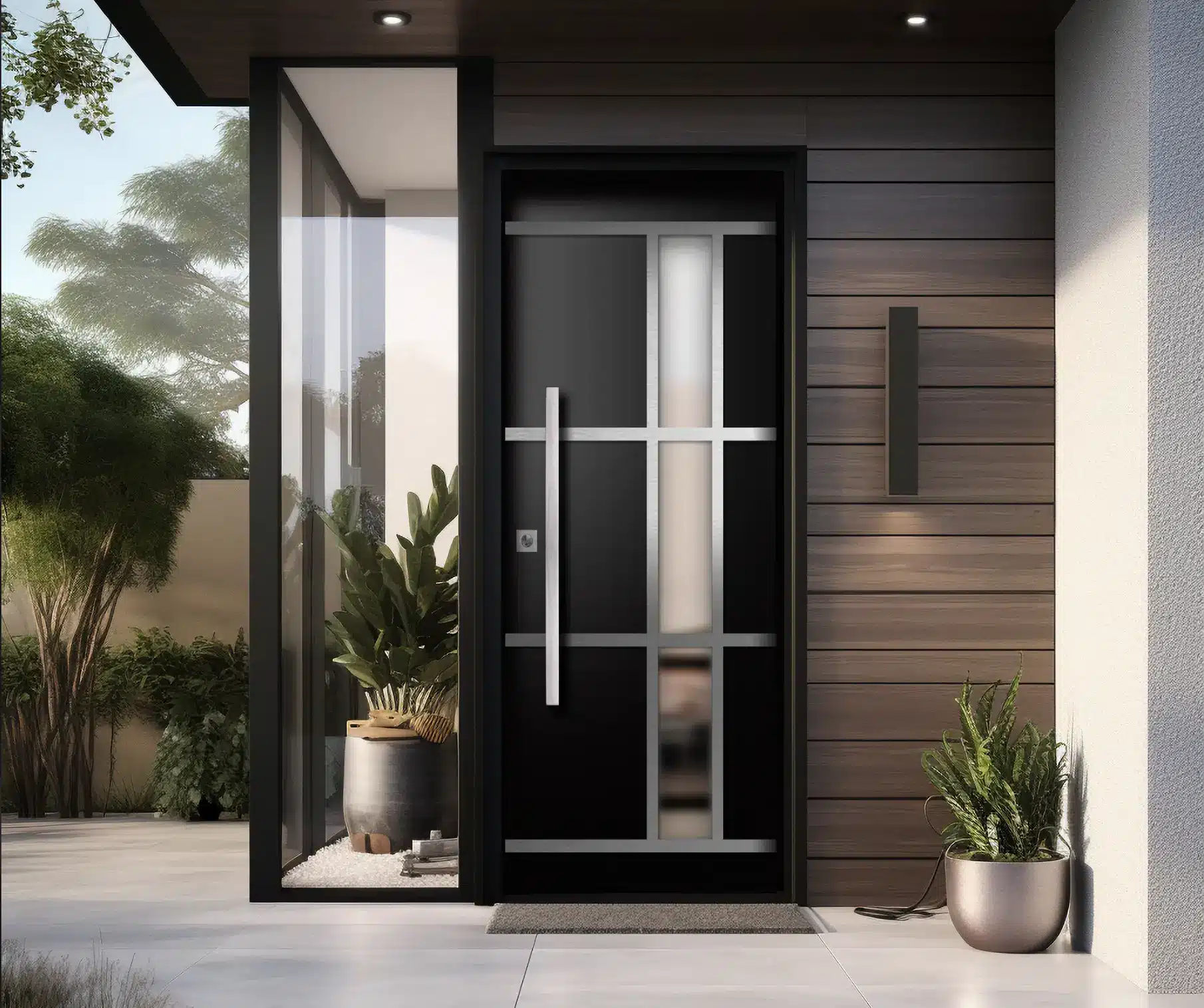
Glass inserts in front doors are often assumed to weaken security, but modern designs have changed that assumption. Laminated and tempered safety glass resists shattering and maintains integrity even when cracked, making it far more difficult to breach than traditional panes.
When combined with thoughtful placement and proper reinforcement, glass elements do not automatically reduce security. In many cases, they improve visibility at the entry point, which can deter attempts that rely on concealment.
The Front Door Within the Larger Security Picture
A front door does not function in isolation. Intruders typically assess multiple access points before acting, including windows and exterior sliding doors. The weakest element often determines where an attempt occurs.
Homes that approach security as a coordinated system, aligning door strength with window construction, lighting, and sightlines, tend to be more resilient overall. Consistency across windows and doors matters more than maximizing any single component.
Resistance, Not Invulnerability
No residential entry system is completely impenetrable. Effective security is about resistance rather than perfection. A well-designed door assembly increases the time, effort, and visibility required to gain entry, which significantly reduces the likelihood of a successful attempt.
By looking beyond the lock and understanding how materials, frames, hardware, and installation interact, homeowners gain a clearer picture of what truly makes a front door secure. That broader perspective is where meaningful, lasting security improvements begin.