

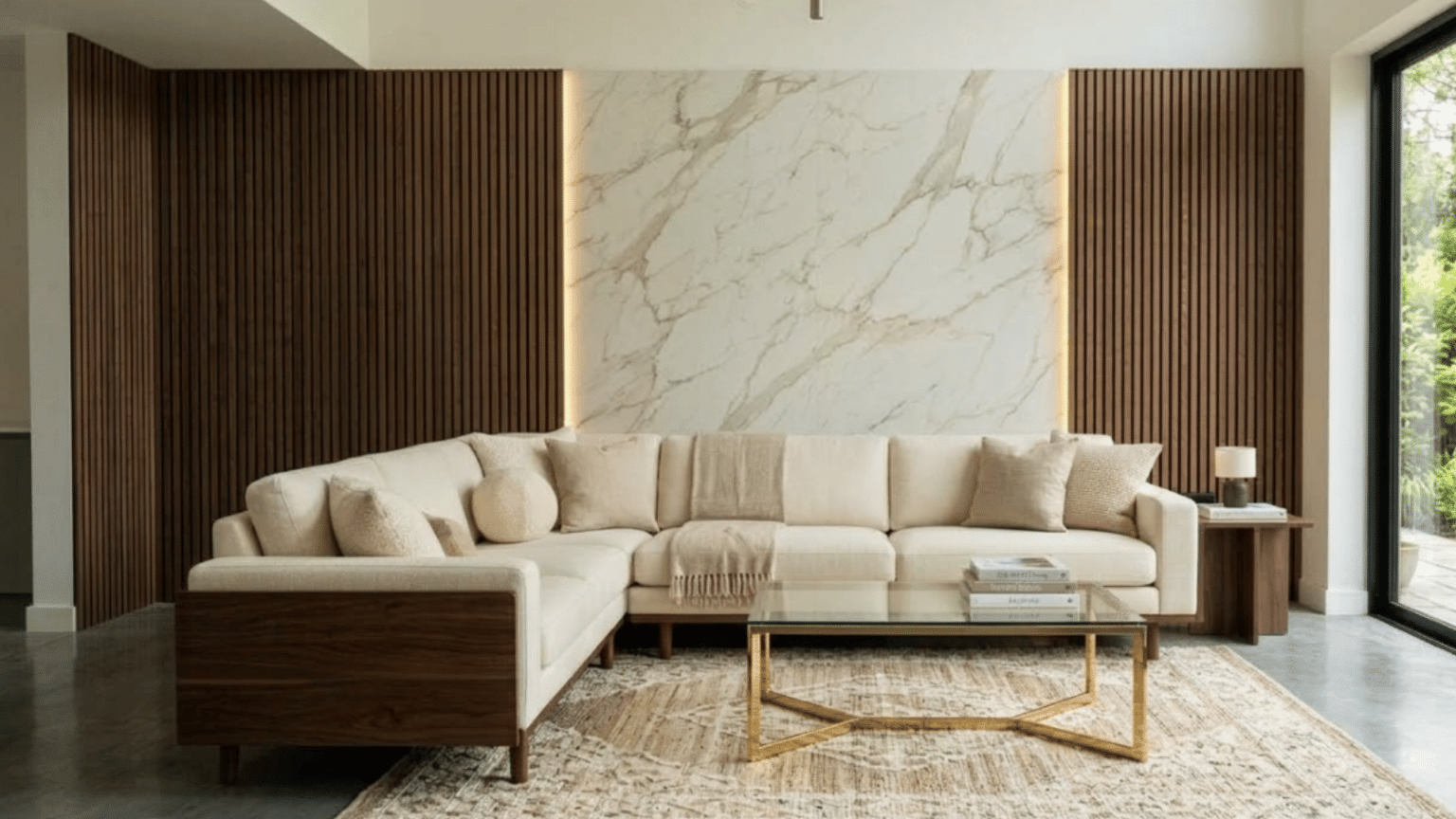
A cramped living room turns furniture shopping into a headache. Every couch feels too bulky, too fixed, or too hard to fit through the door.
That frustration points straight to what is a modular sofa: a couch made from sections that connect and rearrange as needed.
Layouts shift with the room instead of forcing the room to shift. Pieces move easily, expand with a growing household, and fit almost any space.
Small apartments and open living rooms both benefit from that flexibility. This covers how modular sofas work, their pros and cons, common configurations, and practical tips for choosing the right one.
What Is Modular Furniture?
Modular furniture is made from individual pieces that work together as a complete setup, and these pieces can be rearranged, added, removed, or customized over time.
Common examples include modular sofas, storage systems, shelving units, office desks, and wardrobes. Each fits changing lifestyles and works especially well in smaller spaces.
Modular furniture lets homeowners customize a layout instead of replacing an entire piece. A modular sofa is a clear example: it uses separate components to build a flexible seating arrangement, which answers what modular furniture is in practical terms.
What Is a Modular Sofa?
A modular sofa is made from individual sections called modules, and each one can be a seat, corner piece, chaise, ottoman, or arm section. These pieces connect together to form one complete sofa.
Sections can be rearranged into different layouts, including straight sofas, L-shaped sofas, U-shaped sofas, and even separate seating areas. This is the core idea behind what is a modular sofa as a furniture category.
Modular furniture follows the same principle. Individual pieces combine to create a flexible setup, and a couch is simply one common example of that approach.
How Does a Modular Sofa Work?
-
Individual sofa modules: Common pieces include armless seats, corner units, chaises, ottomans, and arm sections, each serving a distinct seating role.
-
Connection system: Clips or connectors lock sections together, and quality connectors keep pieces from shifting in high-traffic rooms.
-
Customization: Buyers can choose seat count, fabric, configuration, and extra modules, a flexibility that drives interest in what is a modular sofa.
Modular Sofa vs Sectional Sofa: What Is the Difference?
A sectional can also include multiple sections, but the main difference is flexibility. Modular pieces move, expand, and rearrange far more easily.
|
Feature |
Modular Sofa |
Sectional Sofa |
|---|---|---|
|
Structure |
Separate interchangeable pieces |
Usually fixed connected shape |
|
Flexibility |
High, pieces can move or expand |
Limited |
|
Best for |
Changing layouts, movers, growing families |
Permanent room layouts |
|
Customization |
More options |
Fewer options |
Sectionals work well for households that settle on one permanent layout, while modular sofas suit anyone likely to rearrange a room or add seating over time.
How to Choose the Right Modular Sofa
Measuring the space, matching a configuration, checking construction quality, and reading reviews are the core steps behind any confident buying decision.
1. Measure Your Space
Room dimensions, doorway width, and walking paths all affect which modules will actually fit once delivered. Skipping this step often leads to returns or awkward layouts.
Measure ceiling-to-floor clearance for stairwells too, since some modules ship pre-assembled and need extra room to maneuver around tight corners.
2. Choose the Right Configuration
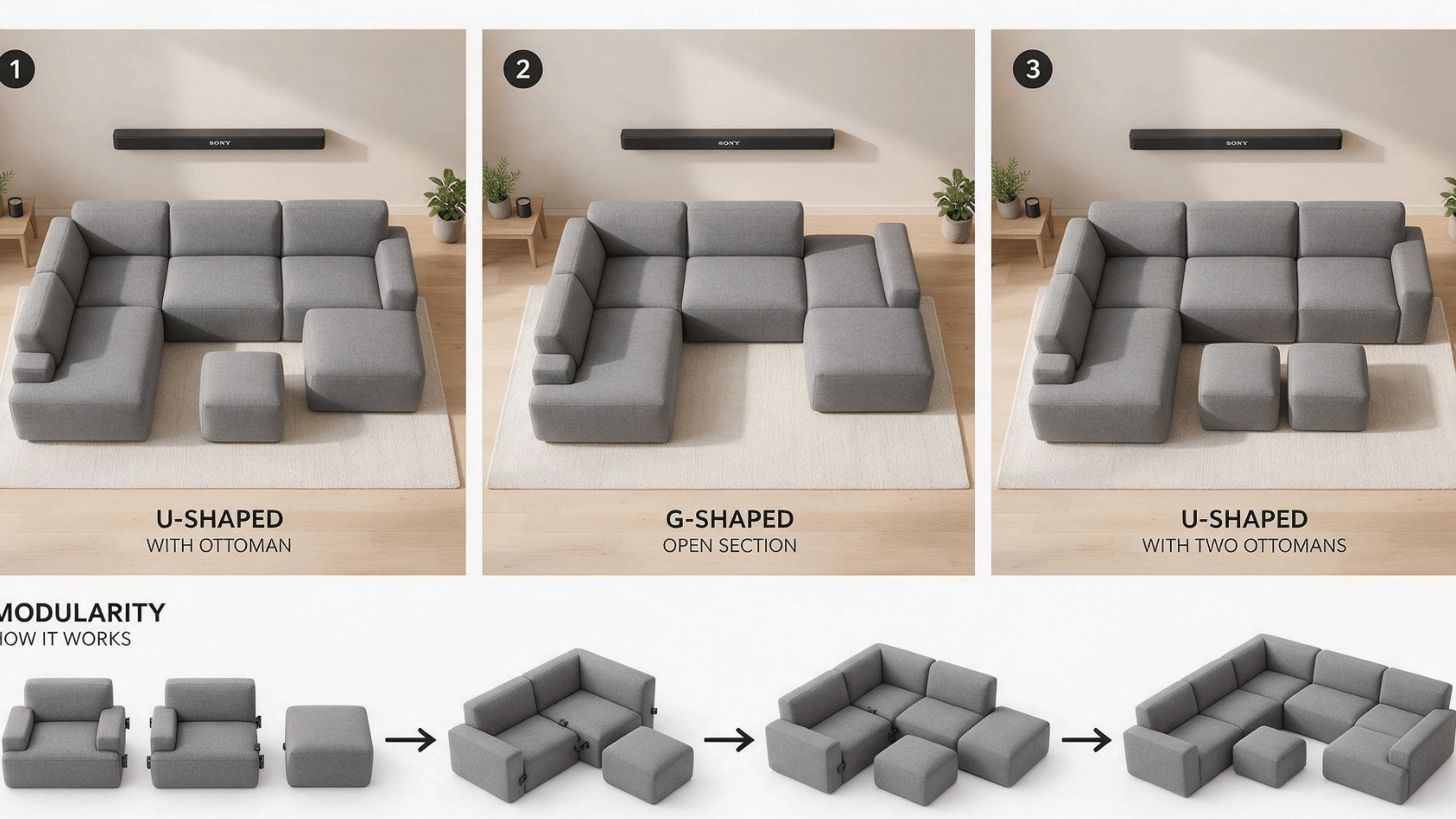
Apartments generally suit compact layouts, family rooms suit L-shapes, and large rooms suit U-shaped setups with several modules working together.
Matching the configuration to daily habits and home aesthetics, not just square footage, keeps the sofa functional instead of just visually filling the room.
3. Check Materials and Construction
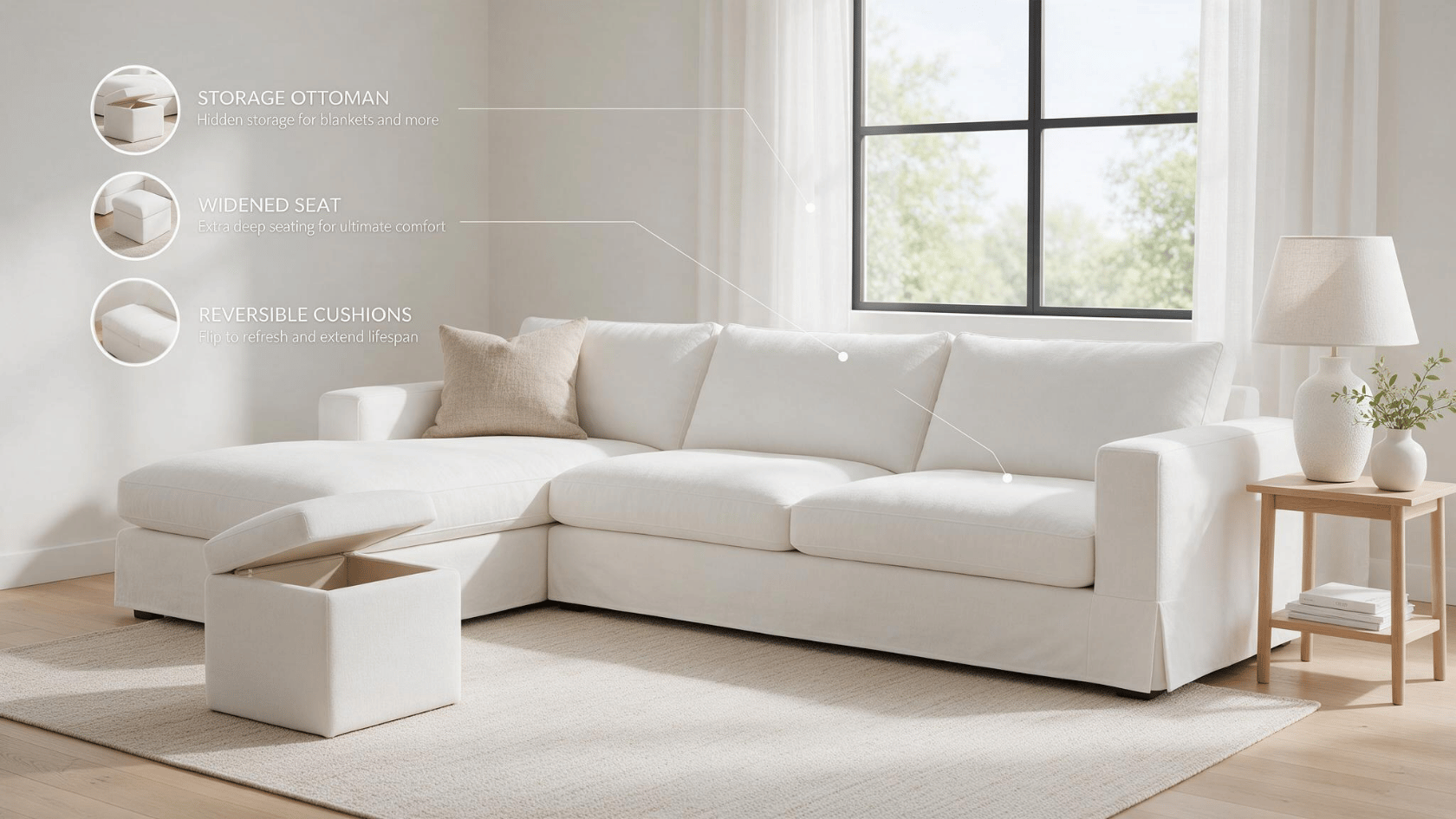
Frame quality, cushion filling, fabric durability, and connector strength all affect how long a modular sofa holds up under daily use.
Hardwood or steel frames tend to outlast particleboard, and high-density foam cushions hold their shape far longer than softer fillings.
4. Read Reviews Before Buying
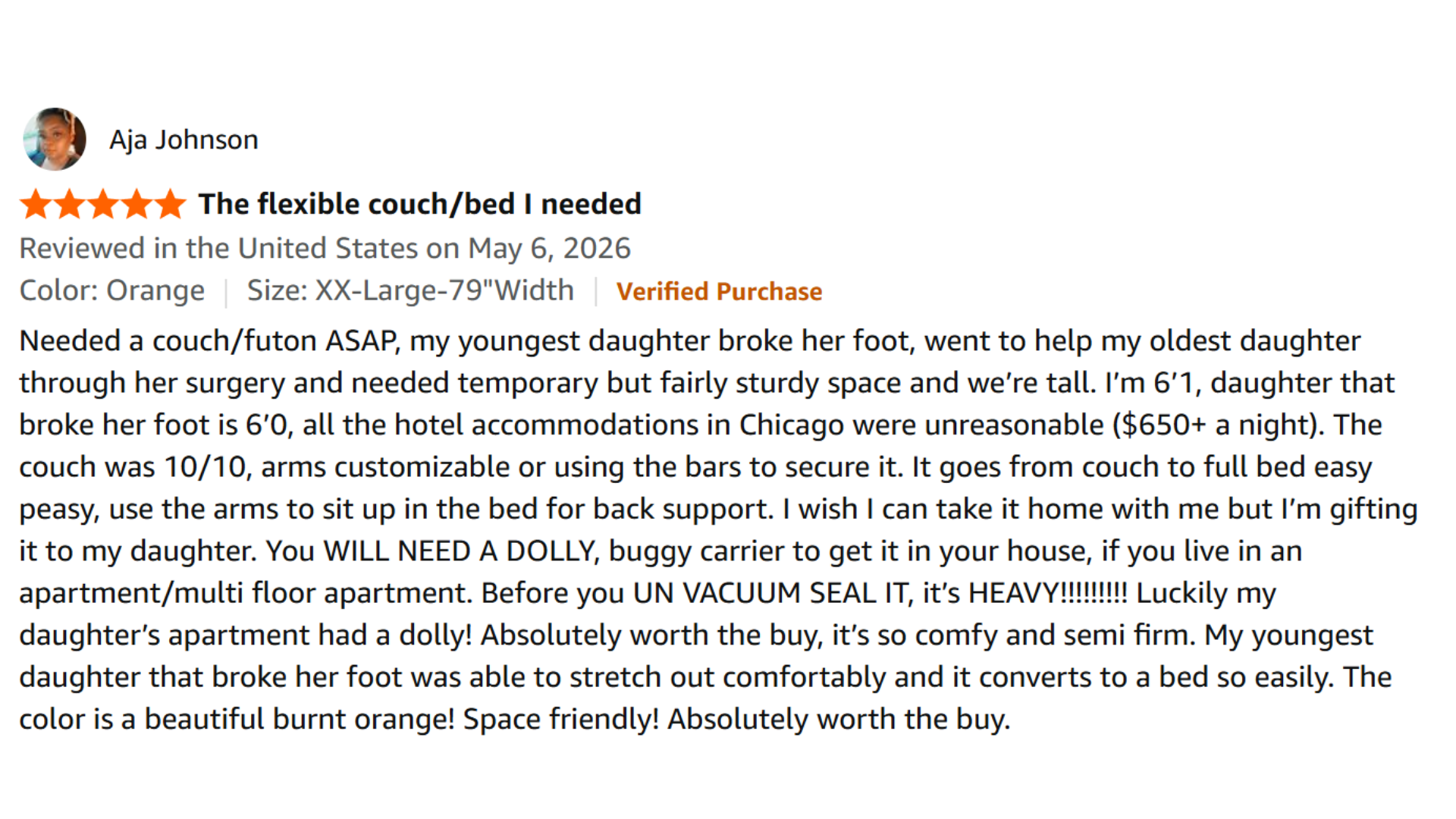
Source: Amazon
Comfort feedback, long-term durability, ease of assembly, and real customer experiences offer buying guidance that product photos alone cannot provide.
Looking for patterns across multiple reviews, rather than one glowing or one negative post, gives a more accurate picture of quality.
Pros and Cons of a Modular Sofa
Modular sofas offer real flexibility, but that flexibility comes with trade-offs worth weighing before buying. Comparing both sides side by side makes the decision far easier.
|
Pros |
Cons |
|---|---|
|
Flexible layouts that rearrange, switch chaise sides, or create new seating arrangements |
Higher upfront cost from extra hardware and durable construction |
|
Easier moving, since smaller pieces fit through narrow hallways, elevators, and doorways |
Sections may shift apart if connectors are low quality |
|
Expands or shrinks with a household, adding or removing seats as needed |
More decisions to make around configuration, fabric, and module count |
None of these trade-offs are dealbreakers on their own. The right pick comes down to matching the pros and cons against how a household actually uses its living space.
Best Modular Sofa Configurations for Different Spaces
Room size plays a major role in choosing the right modular setup, from compact apartments to large open-concept living rooms.
-
Small apartments: A 2- to 3-piece modular sofa or compact chaise configuration works best, leaving enough walking space without crowding the room.
-
Medium living rooms: L-shaped modular sofas with 4 to 5 modules suit families and everyday lounging, balancing comfortable seating with reasonable floor space usage.
-
Large or open rooms: U-shaped layouts and larger sectional-style modular sofas work well for entertaining, movie nights, and large families needing extra seating.
Are Modular Sofas Worth It?
A modular sofa is worth considering for anyone who moves often, likes rearranging furniture, or needs seating that adapts as life changes.
It may not suit buyers who prefer a fixed layout, rarely change their space, or want to keep upfront costs low.
Budget and lifestyle usually settle the decision faster than style alone, since the right fit depends on how a household actually lives day to day.
Final Thoughts
A modular sofa answers the idea behind what is a modular sofa with one simple promise: seating that moves, expands, and adapts with a room instead of locking into one fixed shape.
Weighing configurations, materials, and reviews side by side makes it far easier to land on a layout that fits both the space and the budget.
Ready to swap a bulky, fixed couch for something more flexible? Compare a few modular options today and pick the layout that matches the room.
What configuration would work best in your space? Drop a comment below.
Frequently Asked Questions
Can Pieces from Different Modular Sofa Collections Be Mixed Together?
Mixing collections rarely works cleanly, since connector systems, cushion heights, and fabric finishes vary by manufacturer. Sticking to one collection keeps the seating height and connection points consistent throughout the setup.
Do Modular Sofas Require Tools to Assemble?
Most modular sofas snap or clip together without tools, since connectors are built for quick setup. Some larger frames may need a few bolts, but full assembly rarely takes more than an hour to finish.
Are Modular Sofas a Good Choice for Homes with Kids and Pets?
Modular sofas hold up well with kids and pets when fabric is stain-resistant, and connectors are sturdy enough. Removable, washable covers make cleanup noticeably easier than a traditional one-piece sofa.