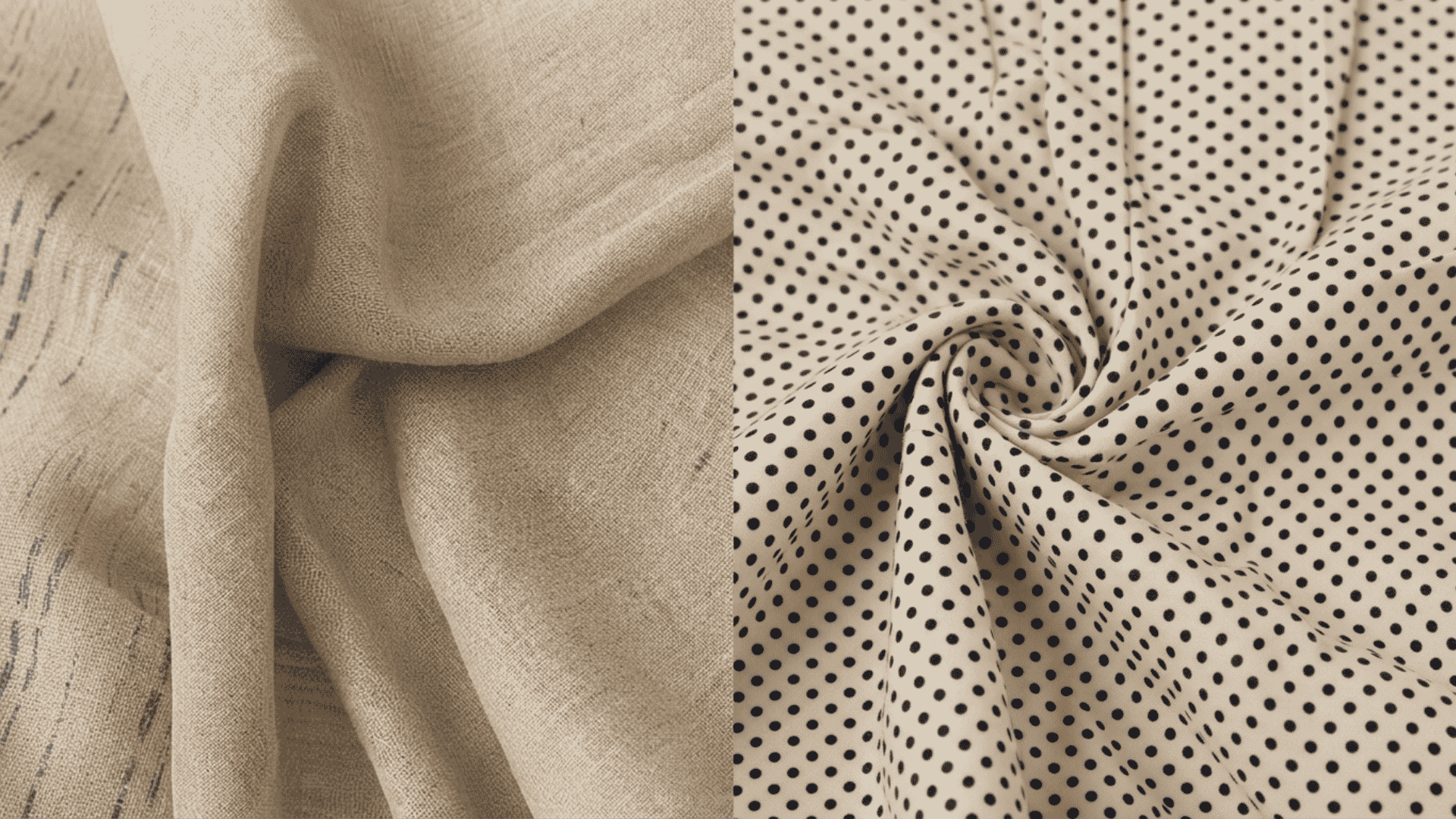

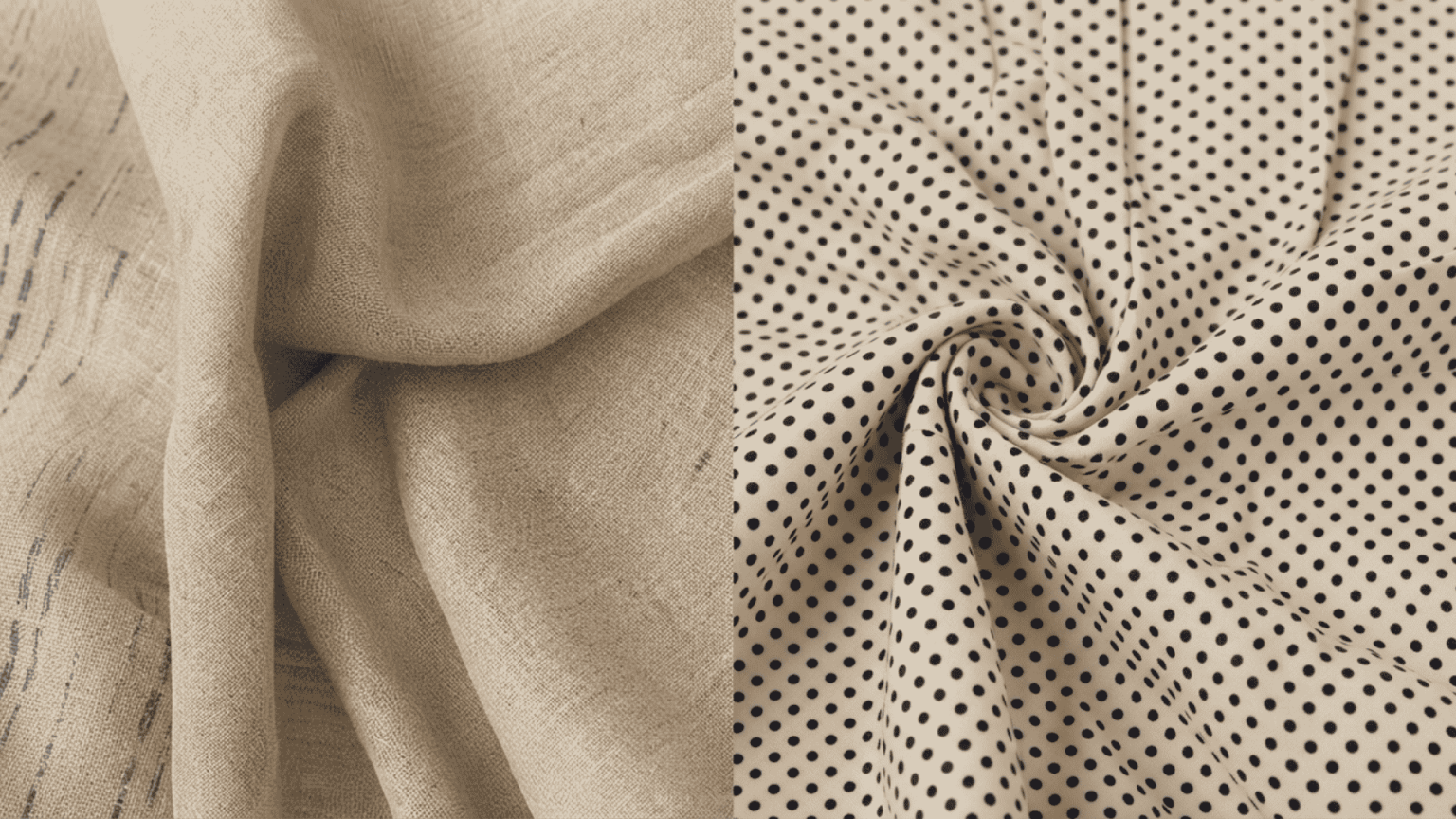
Ever picked up two sets of sheets, one cotton and one linen, and struggled to see why one costs twice as much? The gap between them is bigger than the price tag suggests.
Cotton and linen look similar, feel similar at a glance, and both promise comfort.
But they behave very differently once they are on your bed or your body.
The whole cotton vs linen question really comes down to a few key traits: how they feel, how they breathe, how long they last, and how much fuss they need.
In this post, you will learn what each fabric is, how they compare on feel, breathability, durability, care, and price, the real benefits of linen sheets, and exactly when to pick one over the other. By the end, the choice will feel easy.
What is Cotton?
Cotton is a soft, natural fabric made from the fluffy fibers of the cotton plant. Those fibers grow in a protective case called a boll, then get spun into thread and woven into cloth.
Cotton is one of the most widely used fabrics in the world, and for good reason. It is soft right out of the packet, gentle on skin, and easy to wash.
It comes in many grades, from standard cotton to finer long-staple types like Egyptian and Pima, which feel smoother and last longer.
It is affordable, versatile, and comfortable, which is why it remains the default choice for everyday wear and home textiles across the globe.
What is Linen?
Linen is a natural fabric made from the fibers of the flax plant. It is one of the oldest textiles known, with a history stretching back thousands of years.
Making linen takes more work than cotton, since flax fibers must be harvested, soaked, dried, and carefully woven.
That effort shows in the result. Linen has a distinctive textured, slightly crisp feel when new, and it softens beautifully with every wash.
It is prized for being cool, breathable, and strong. The word “linens” for household items like sheets and tablecloths comes from this fabric, even though many so-called linens are now made of cotton.
Linen is common in warm-weather clothing, bedding, curtains, and table settings, wherever you want a breezy, relaxed, durable material.
Cotton vs Linen: The Key Differences
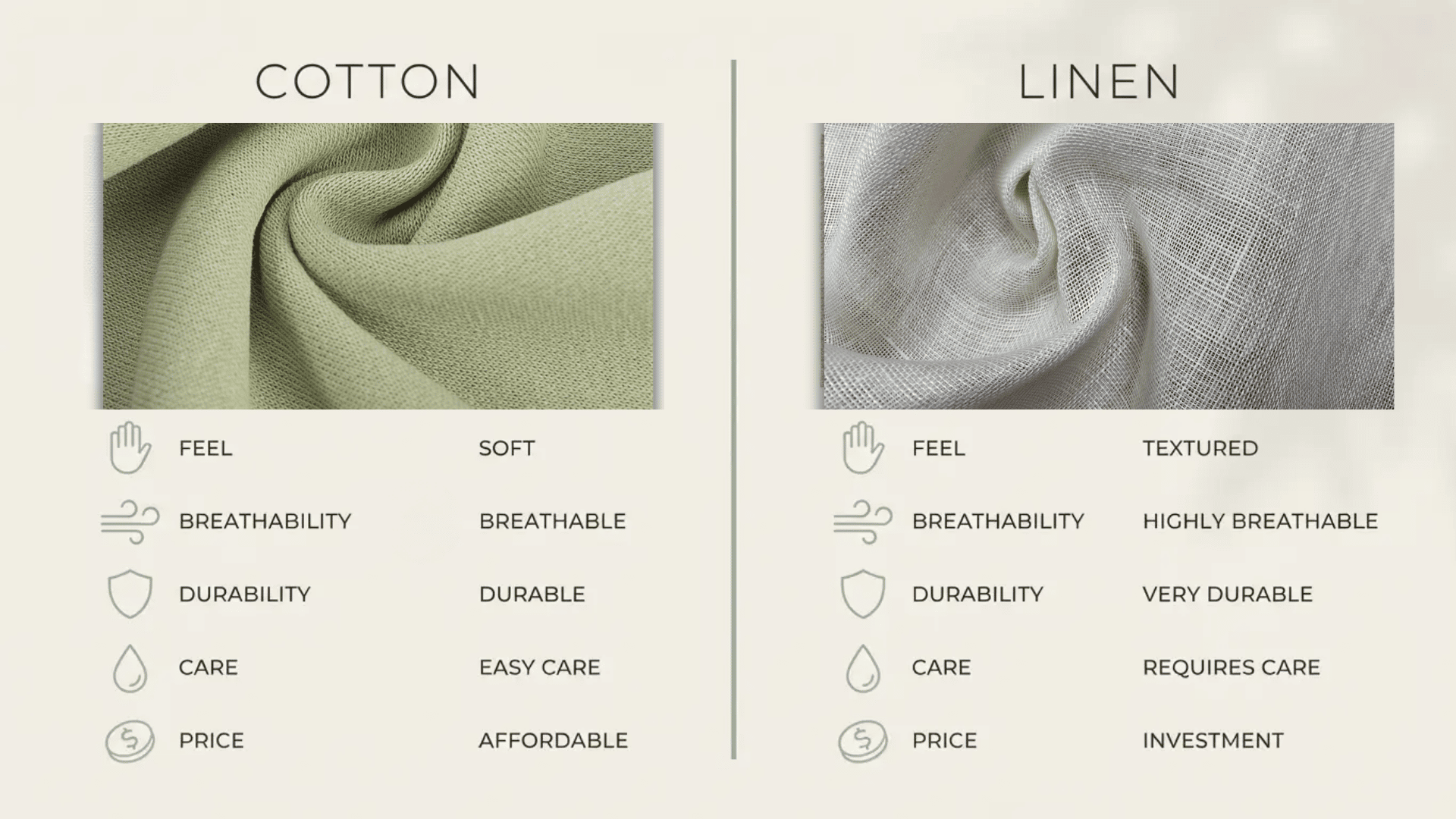
Both fabrics are natural and breathable, but they differ in ways that matter day to day. Here is how they stack up across the traits that count most.
1. Feel and Texture
Cotton wins on instant softness. It feels smooth and cozy straight out of the packaging, which is why it suits T-shirts, baby clothes, and anyone who wants comfort right away.
Linen starts out crisp and textured, with a natural, slightly rough hand. It is not as soft at first, but it relaxes and softens with every wash.
Over months of use, linen develops a lived-in, luxurious feel that many people grow to love.
2. Breathability and Cooling
Linen is the clear winner for staying cool. Its loose weave and hollow flax fibers let air flow freely and pull moisture away from the skin, which makes it ideal for hot, humid weather.
Cotton is breathable too, but it absorbs more moisture and holds onto it longer, so it can feel heavier and damp when the temperature climbs.
For hot sleepers and sweaty summer days, linen keeps the body cooler and drier for longer.
3. Durability and Lifespan
Linen is one of the strongest natural fabrics, and it holds up impressively over time. Quality linen sheets can last many years, and the fabric actually gets softer, not weaker, with age.
Cotton is durable but wears out faster, especially with frequent washing, and it tends to thin and pill over the years.
Standard cotton sheets often last around two to five years, while good linen can outlast them comfortably.
4. Care and Maintenance
Cotton is the easier fabric to live with. It resists wrinkles better, handles machine washing well, and needs little special attention. Linen is more high-maintenance.
It wrinkles easily and creases with use, which is part of its relaxed charm but a drawback for anyone who likes a crisp, ironed look.
Both are machine washable, though linen prefers gentle washing and air drying to keep its shape and strength.
5. Price and Availability
Cotton is cheaper and easier to find. It is produced on a massive scale worldwide, so it comes in countless styles, colors, and price points.
Linen costs more because flax is harder to grow and process, and the weaving takes more effort.
That higher price often pays off in longevity, but cotton remains the budget-friendly, widely available option for most shoppers and most uses.
Cotton vs Linen at a Glance
|
Feature |
Cotton |
Linen |
|---|---|---|
|
Feel |
Soft from the start |
Crisp at first, softens over time |
|
Breathability |
Good |
Excellent |
|
Cooling |
Moderate |
Superior in heat |
|
Durability |
2 to 5 years typical |
Often lasts much longer |
|
Care |
Easy, wrinkle-resistant |
Wrinkles easily, gentler care |
|
Price |
Affordable |
Higher |
|
Sustainability |
Higher water and pesticide use |
Less water and fewer chemicals |
|
Best for |
Everyday wear, softness, budget |
Hot climates, bedding, longevity |
Which is More Sustainable: Cotton vs Linen?
Linen is usually the more sustainable fabric, though both are natural and biodegradable. Flax, the plant linen comes from, needs far less water than cotton, which is a thirsty crop that often relies on heavy irrigation.
Flax is also naturally pest-resistant, so it uses fewer pesticides and fertilizers, and almost every part of the plant gets used with little waste.
Linen also lasts longer, which means less frequent replacement over time.
Both fabrics break down naturally, but untreated linen and organic cotton are the cleanest options.
The catch is processing: heavy chemical treatments and dyes can undo these benefits, so certified organic versions of either fabric are the greenest choice available.
Benefits of Linen Sheets
Linen has become a bedding favorite for good reason. Here are the main benefits of linen sheets that make them worth considering.
-
Stays cool: Linen sheets are highly breathable and wick moisture, helping hot sleepers stay comfortable through the night.
-
Softens with age: Unlike cotton, linen gets softer and more comfortable with every wash instead of wearing thin.
-
Long-lasting: Quality linen bedding can last for many years, making it a smart long-term investment.
-
Thermoregulating: Linen helps keep the body cool in summer and cozy in cooler months, so it works year-round.
-
Gentle on skin: Linen is naturally hypoallergenic and breathable, which suits sensitive skin and allergy-prone sleepers.
-
Low-effort look: The relaxed, lived-in wrinkle of linen means no ironing needed for a stylish bed.
Best Linen Sheets to Consider
I have slept on a lot of linen over the years, and most of it blurs together. These three are the sets I keep coming back to. They sleep cool, feel great after a few washes, and still look good years later.
-
Brooklinen Washed European Linen Sheet Set: My top overall pick, soft yet sturdy OEKO-TEX certified European flax with a great color range.
-
Parachute Linen Sheet Set: The one I recommend for extra softness and that relaxed, lived-in drape.
-
Quince European Linen Sheet Set: My value pick, real European flax at a factory-direct price, often under $200 for a queen.
Whatever you choose, I always say check for European flax and OEKO-TEX certification. To me, those two marks are the clearest sign of quality fibers that stay soft and last.
How Do Cotton and Linen Compare to Viscose, Modal, and Acrylic?
|
Fabric |
Origin |
Feel |
Breathability |
Durability |
Best For |
|---|---|---|---|---|---|
|
Cotton |
Natural (cotton plant) |
Soft, cozy |
Good |
Moderate |
Everyday wear, budget bedding |
|
Linen |
Natural (flax plant) |
Crisp, softens over time |
Excellent |
High |
Hot climates, long-term bedding |
|
Semi-synthetic (wood pulp) |
Silky, smooth |
Moderate |
Low, weakens when wet |
Drapey clothing, linings |
|
|
Semi-synthetic (beech pulp) |
Soft, slightly stretchy |
Good |
Moderate |
Loungewear, soft basics |
|
|
Fully synthetic (petroleum-based) |
Warm, slightly rough |
Poor |
High, resists wear |
Sweaters, budget knitwear |
The biggest difference comes down to origin. Cotton and linen are grown and woven from plant fibers, so they breathe naturally and age well with care.
Viscose and modal are made from wood pulp, giving them a soft drape but less strength, especially when wet. Acrylic skips plant material entirely, trading breathability for warmth and low cost, which is why it shows up more in sweaters than sheets.
Tips for Choosing Between Cotton and Linen
Neither fabric is better overall, so the right pick depends on the situation. These quick tips make the choice easier.
-
Everyday softness: Cotton feels cozy immediately, which is ideal for T-shirts, baby items, and instant comfort.
-
Hot weather: Linen’s superior breathability keeps you cool in summer and humid climates.
-
Long-lasting bedding: Linen sheets last longer and improve with age, making a bigger upfront spend worthwhile.
-
Easy care: Cotton wrinkles less and handles frequent washing, which suits busy, low-maintenance routines.
-
Tight budget: Cotton is cheaper and comes in more colors, styles, and price points.
-
Best of both: A cotton-linen blend offers linen’s airflow with cotton’s softness and easier upkeep.
Conclusion
So which fabric deserves a spot in your closet or on your bed?
It really comes down to what matters most to you. If you want instant softness, easy care, and a friendly price, cotton is a dependable pick.
If you sleep hot, care about longevity, and love a relaxed, breezy feel, linen earns its higher cost over time.
When it comes to cotton vs. linen, there is no single winner, only the fabric that fits your lifestyle, climate, and budget best. And if you cannot decide, a cotton-linen blend gives you a little of both.
Which one are you leaning toward for your next sheets or summer outfit? Let us know in the comments below.
Frequently Asked Questions
Is Cotton or Linen Better for Sensitive Skin?
Both are good choices. Cotton is soft and non-irritating, making it gentle for everyday sensitive skin. Linen is naturally hypoallergenic and breathable, which helps with allergies and eczema. For very reactive skin, undyed organic versions of either fabric are safest.
What is a Cotton-Linen Blend, and is It Worth It?
A cotton-linen blend mixes both fibers into one fabric. It combines linen’s breathability and texture with cotton’s softness and easier care. The result is lighter and less wrinkle-prone than pure linen, making it a great middle-ground choice for clothing and bedding.
Which Shrinks More, Cotton or Linen?
Linen tends to shrink slightly more than cotton, especially on the first hot-water wash. Both can shrink if overheated. Washing in cool or lukewarm water and air-drying keeps shrinkage minimal for either fabric.