
Fabric names on clothing tags describe origin, not behavior. Modal fabric is a clear example of that gap.
The word appears on everything from budget basics to premium loungewear, yet the wearing experience can differ considerably.
In practice, a 140 GSM pure modal garment and a low-percentage blend with heavy finishing treatments share almost nothing except a label.
The fiber has real strengths: moisture absorption, surface smoothness that holds through washing, and a drape that cotton rarely matches.
Those qualities depend on grade, weight, and blend. The difference starts with the fiber itself.
What Kind of Fabric is Modal?
Modal is a type of rayon, a semi-synthetic fiber made from plant cellulose that has been dissolved and reformed through controlled manufacturing. The fiber does not exist in nature in its finished form, but it starts from a natural raw material.
This places it between cotton (fully plant-based, minimally processed) and polyester (entirely petroleum-derived). It shares some characteristics of each without being either.
Different Types of Modal Fabric:
- Pure Modal: 100% modal fiber, valued for maximum softness and drape
- Micro Modal: finer, thinner filaments for an even smoother, lighter fabric
- Modal Cotton Blend: combines cotton’s structure with modal’s smooth surface
- Modal Spandex Blend: adds stretch, common in activewear and fitted basics
- Branded or Certified Modal: trademarked versions such as Lenzing Modal or TENCEL Modal, produced under stricter quality and traceability standards
Quick History: Modal was developed in Japan in 1951. Austrian company Lenzing AG commercialized it in the 1960s, using European beechwood sourced from five countries as its raw material.
Characteristics of Modal Fabric
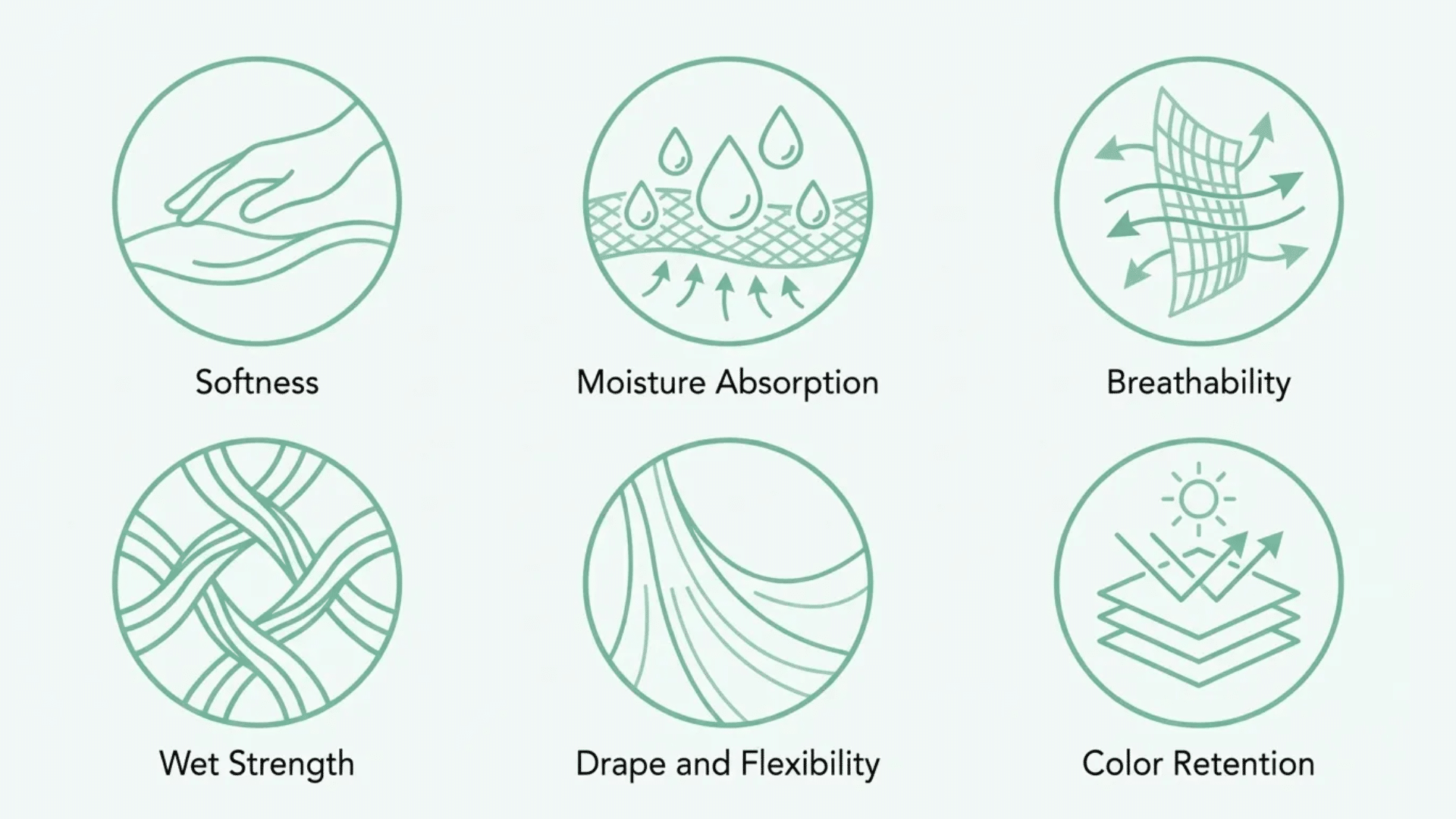
Modal’s properties are easier to judge when they are grouped by what you can actually see, feel, or test before buying.
- Texture: Fine, closely packed fibers give modal a smooth, cool touch that remains soft after repeated washing, resembling silk more closely.
- Drape: Modal falls fluidly and naturally instead of holding a stiff shape, making it suitable for fitted layers and flowing garments.
- Moisture Behavior: Modal draws moisture into its fibers, helping delay visible sweat compared with cotton or some synthetic fabric blends during wear.
- Color Retention: Deep dye bonding within modal’s cellulose fibers helps garments maintain color intensity through repeated washing better than cotton generally.
- Cotton Blending Behavior: Modal adds softness and smoothness to cotton, while cotton provides structure; higher modal content creates a softer, fluid feel.
- Machine Wash Friendliness: Modal handles cold or cool machine washing well, and like sustainable linen care, avoiding high-heat drying helps prevent shrinkage and roughness.
Pros and Cons of Modal Fabric
Every fabric trades one property for another, and modal is no exception. Its benefits explain its popularity in intimate wear, but the same manufacturing process behind its softness creates limitations worth planning around.
| Advantages | Disadvantages |
| Extremely soft, silky texture against the skin | Sensitive to heat; can shrink or lose shape in hot water or high dryer heat |
| Absorbs roughly 50% more moisture than cotton and dries efficiently | Generally priced higher than basic cotton or polyester |
| Resists shrinking, fading, and pilling better than standard rayon | Relies on chemical processing, including carbon disulfide, even when managed in closed-loop systems |
| Holds its stretch and drape well over repeated wear | Can stretch out of shape if hung or wrung while wet |
| Made from renewable beech trees and biodegradable in its pure form | Lacks the crispness needed for structured or tailored garments |
| Fluid, elegant drape suited to both fitted and loose silhouettes | Limited insulation, so it performs poorly as standalone cold-weather wear |
None of these drawbacks disqualify modal from everyday wear. They mainly explain why care labels matter more with this fabric than with cotton, and why blend ratio changes performance more than most buyers expect.
Is Modal Fabric Sustainable? Environmental Impact Explained
Modal is a partially sustainable fabric. It comes from a renewable, low-water raw material, but the chemical process that turns wood into fiber creates real trade-offs, ranging from certified low-impact mills to unregulated producers that pollute local water systems.
Environmental Benefits:
- Beech trees are water-efficient, requiring less water than cotton and typically no artificial irrigation.
- A renewable source comes from sustainably managed beech forests that are replanted after harvesting.
- Pure modal is biodegradable and breaks down more readily than synthetic fibers such as polyester.
- Efficient dyeing methods can significantly reduce water, energy, and chemical consumption during production.
Environmental Challenges:
- Chemical use includes carbon disulfide, which helps dissolve wood pulp but requires careful handling.
- Wastewater risks increase when processing chemicals are released without effective closed-loop recycling systems.
- Inconsistent industry standards mean some producers may create greater pollution or contribute to deforestation.
How Modal Is Made: Step-By-Step
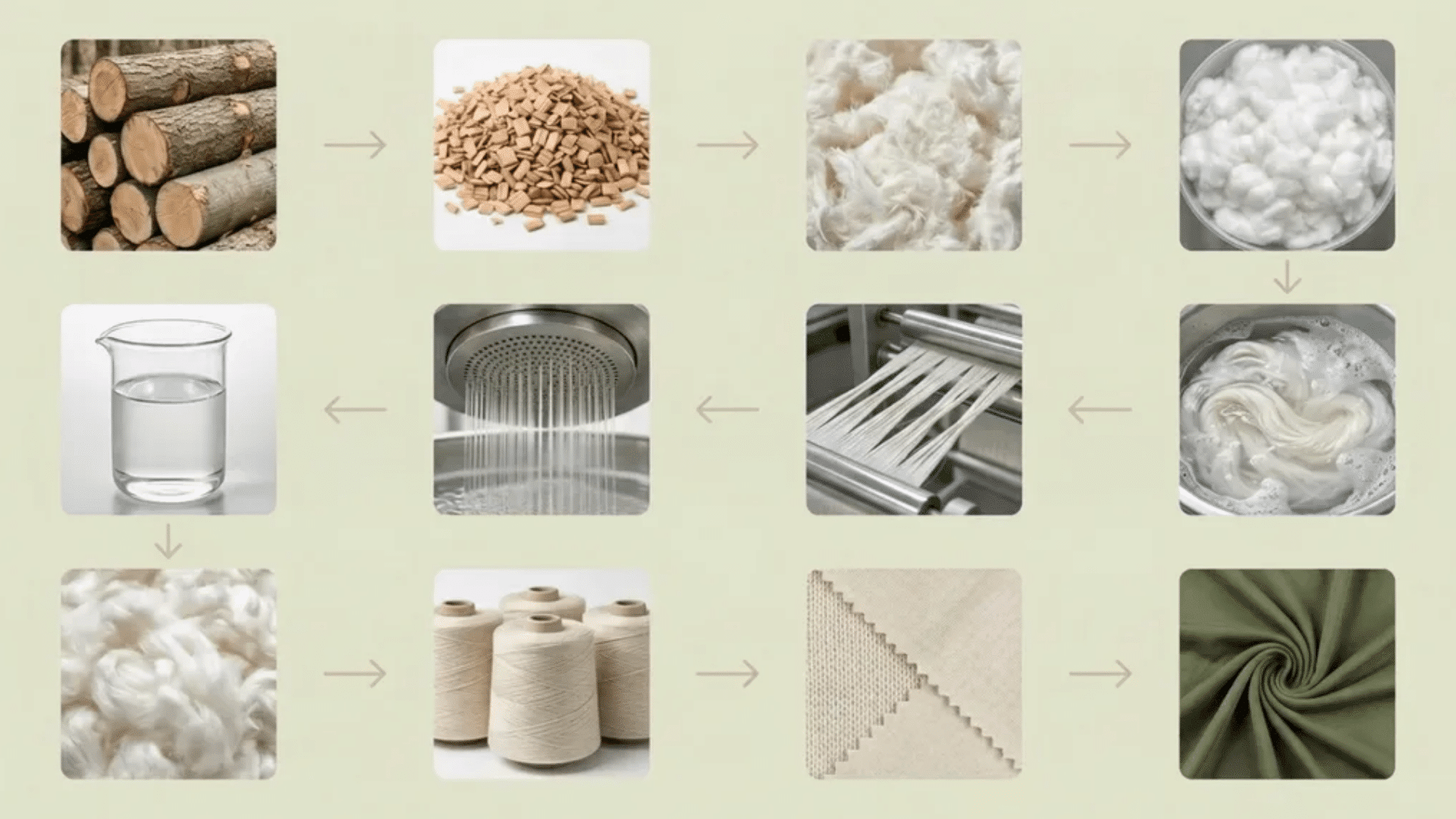
Modal production turns beechwood into a soft textile fiber. Below is a clear and simple breakdown of each stage.
Step 1: Wood Harvesting and Chipping
Beechwood trees are harvested and cut into small chips. Beech is preferred because it grows quickly, regenerates from its own stumps, and needs no irrigation or pesticides.
The chipping process makes it easier to extract cellulose in the next stage. Smaller chips allow chemicals to penetrate the wood more evenly, which improves the quality of the pulp produced.
Step 2: Pulp Extraction
Wood chips are cooked with sodium hydroxide, also called caustic soda, to break down lignin and separate the cellulose. The result is a pale, wet pulp similar in consistency to damp paper.
This stage removes everything except the cellulose. The quality of pulp produced here directly affects how smooth and strong the final fiber turns out.
Step 3: Cellulose Purification
The raw pulp is cleaned and pressed into sheets of purified cellulose. Any leftover lignin is removed at this stage because it would make the final fabric stiff and rough.
These cellulose sheets are then soaked in a sodium hydroxide solution to prepare them for the dissolving stage. This step is what separates modal from lower-quality viscose production.
Step 4: Dissolving the Cellulose
The cellulose sheets are broken into crumbs and treated with carbon disulfide to create a thick, syrup-like liquid. The consistency of this liquid directly affects the texture of the finished fiber.
This chemical reaction produces a compound called sodium cellulose xanthate. It is then mixed with more sodium hydroxide to form the viscous spinning solution used in the next step.
Step 5: Fiber Formation Through Spinning
The liquid cellulose is pushed through tiny holes called spinnerets. As it passes through, it enters a chemical bath that solidifies it into long, continuous filaments.
The size of the spinneret holes controls the fineness of the fiber. Finer holes produce thinner fibers, which is what gives modal its smooth, lightweight feel against the skin.
You can usually tell spinneret quality by touch alone. A fabric that feels cool and almost liquid in the hand, rather than just soft, is a sign the fiber was spun fine and even.
Step 6: Stretching for Strength
The newly formed filaments are mechanically stretched before they fully set. This stretching aligns the cellulose molecules along the fiber length, which increases tensile strength and durability.
It also helps the fabric hold its shape through repeated washing. This step is one of the key differences between modal and standard viscose, which skips or reduces stretching.
This is the step I check for indirectly when I’m shopping. If a modal tee still looks crisp on the hanger after several washes, that stretching stage was done properly.
Step 7: Washing and Chemical Recovery
The fibers are thoroughly washed to remove any remaining processing chemicals. In modern facilities like Lenzing’s plant in Austria, over 99% of solvents and water are recovered and reused.
This closed-loop system significantly reduces waste compared to older viscose production. It is also one of the main reasons certified modal carries a lower environmental impact rating than conventional rayon.
Step 8: Drying
After washing, the fibers are dried under controlled temperature and airflow conditions. Too much heat at this stage can cause shrinkage or create uneven texture in the final yarn.
Proper drying preserves the fiber structure built up in earlier steps. Mills monitor this stage closely because inconsistencies here are difficult to correct once the fiber moves to spinning.
Step 9: Spinning Into Yarn
The dried fibers are cut to a set length and spun into yarn. The thickness of the yarn is adjusted at this stage to suit different fabric weights and end uses.
Finer yarn produces lightweight fabrics suited for T-shirts and underwear. Heavier yarn produces denser fabric used in sleepwear, loungewear, and structured garments.
Step 10: Weaving or Knitting
The yarn is either woven or knitted into fabric depending on the intended product. Knitted modal produces a stretchy structure well suited for fitted garments and underwear.
Woven modal produces a flatter, more stable fabric used in shirts, dresses, and bedding. The construction method chosen here affects drape, stretch, and how the finished garment fits.
Step 11: Dyeing and Finishing
The fabric is dyed using processes that allow color to bond deeply with the cellulose structure. This is why modal holds color more reliably than cotton over repeated washes.
Finishing treatments are applied last to improve softness, reduce creasing, or add moisture-wicking properties. Some treatments also add wrinkle resistance without significantly changing how the fabric feels.
Modal vs. Cotton vs. Silk
Modal, cotton, and silk each behave differently in wear, washing, and cost. The table below shows where each fabric stands across the properties that matter most.
| Property | Modal | Cotton | Silk |
|---|---|---|---|
| Surface feel | Smooth, fine texture | Soft but coarser | Exceptionally smooth |
| Moisture absorption | ~50% higher than cotton | Good | Low |
| Breathability | Good | Good | Moderate |
| Wash durability | Holds shape well | Shrinks at high heat | Requires hand washing |
| Stretch | Slight (more with spandex blend) | Minimal | Minimal |
| Price per yard | Mid-range ($8–$25) | Low to mid | High |
| Environmental footprint | Lower if certified | High water use | Resource-intensive |
Modal’s clearest advantages over cotton are moisture absorption and long-term surface smoothness. Against silk, it wins on price and washability, and against synthetic fabrics, it wins on breathability and skin feel.
Practical Uses of Modal Fabric
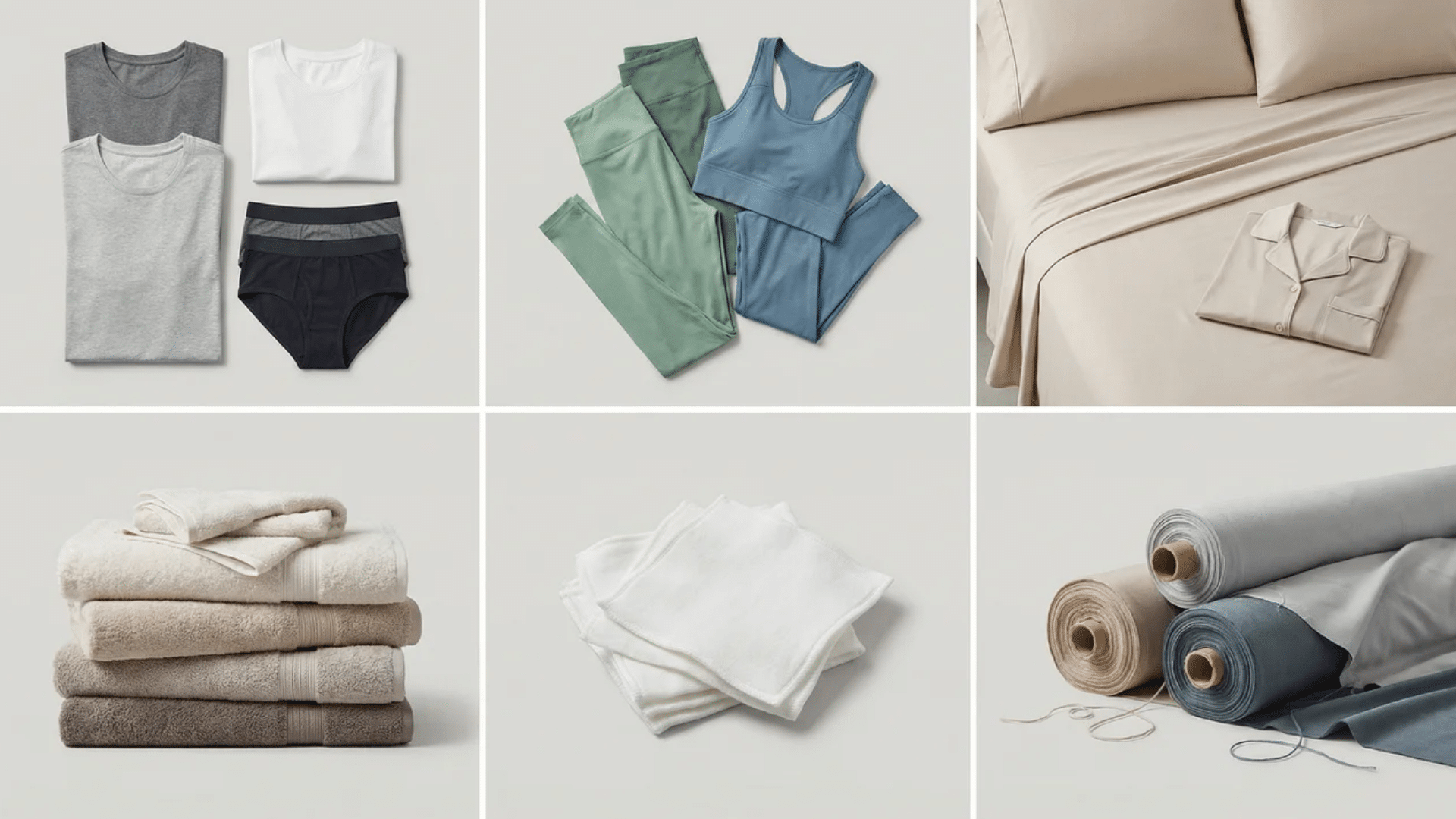
- Underwear and Intimates: Modal fits closely to the skin without irritation. It is soft, breathable, and stays smooth under tight clothes.
- Sleepwear and Loungewear: Pajamas and robes made of modal feel light and cool. They drape well and help control body temperature during sleep.
- Everyday Apparel: T-shirts, tank tops, and casual dresses use modal for its smooth texture, stretch, and wrinkle resistance, often paired with a boho chic style for an easy, relaxed look.
- Activewear and Base Layers: Because it absorbs 50% more moisture than cotton, modal keeps athletes cool and dry, making it a smart pick for outdoor gear on long days.
- Bed Linens: High-thread-count modal sheets resist pilling and feel cool, making them a luxury choice for bed sheets and pillowcases.
What all have in common: Every major use of modal involves direct skin contact. Its absorbency and smooth surface make it a practical choice wherever comfort against the body matters.
Is Modal Fabric Expensive?
No, not excessively, though it costs more than basic cotton.
Pure modal typically runs $8 to $18 per yard. Blended modal, where the fiber is mixed with cotton or spandex, usually falls between $6 and $14 per yard.
Certified or branded modal, such as fabric carrying Lenzing’s trademark, can reach $12 to $25 per yard.
For comparison, basic cotton generally sits lower, while silk runs well above modal at most quality tiers. Finished garments cost more than raw fabric in every category, since cutting, sewing, and finishing add to the base material price.
Tips to Buy Modal Fabric
Not all modal is created equal. Before buying, check these details, since they reveal more about how a garment will actually perform than the word “modal” ever will on its own, the same way garment storage affects how long delicate pieces last.
- Fabric Weight (GSM): 120-160 GSM suits tees and underwear, 160-220 GSM suits loungewear, 220+ GSM suits pants.
- Blend Ratio: Modal-cotton adds structure, modal-spandex adds stretch, and higher modal content feels noticeably softer.
- Certifications to Check: Look for FSC, OEKO-TEX Standard 100, GOTS, and Lenzing™ Certification for safety and traceability.
Wrapping Up
Modal fabric is more than just a soft material. Understanding what goes into it helps you choose garments that actually perform, hold their shape, and last through regular use.
The grade, weight, and certifications matter far more than the tag. A low-percentage modal mix and a certified Lenzing piece carry the same label but deliver very different results.
Now you know what separates quality modal from average fabric. That knowledge cuts through marketing language and points you toward products that are actually worth the price.
Have you used modal fabric before? Drop your experience in the comments or tell us which type has worked best for you.
Frequently Asked Questions
Is Modal Fabric Good for Sensitive Skin?
Certified modal is generally well tolerated by sensitive skin. Reactions, when they occur, are usually caused by dyes or finishing chemicals rather than the fiber itself.
Is Modal Fabric Plastic?
No. Modal starts as natural wood cellulose. It undergoes chemical processing to become a fiber, but it is plant-derived, not petroleum-based like polyester or nylon.
Is Modal Fabric Toxic?
The finished, washed fabric is not considered toxic to wear. The chemical of concern, carbon disulfide, is a manufacturing input that poses a risk mainly to factory workers and local water systems when not properly contained.