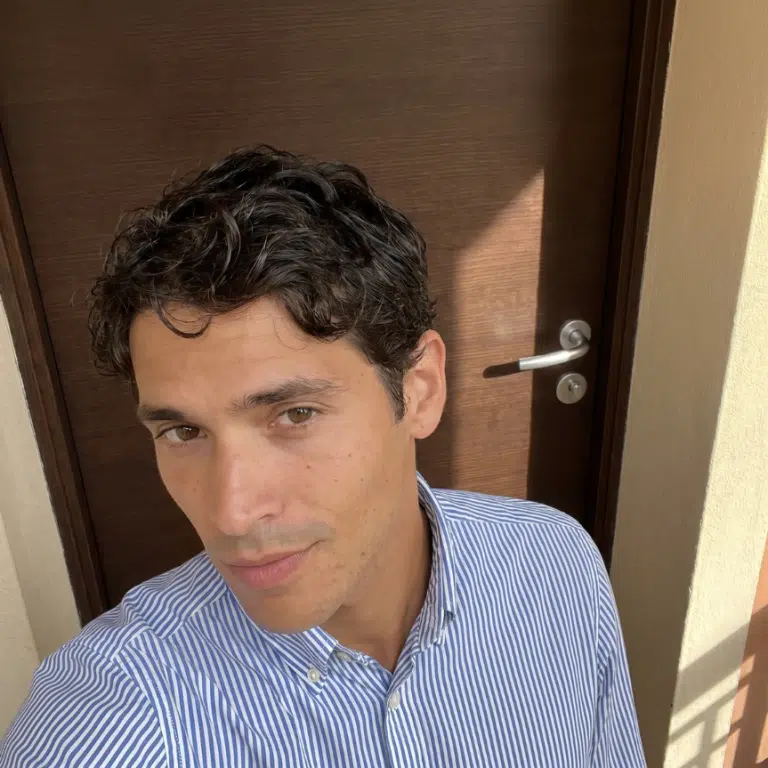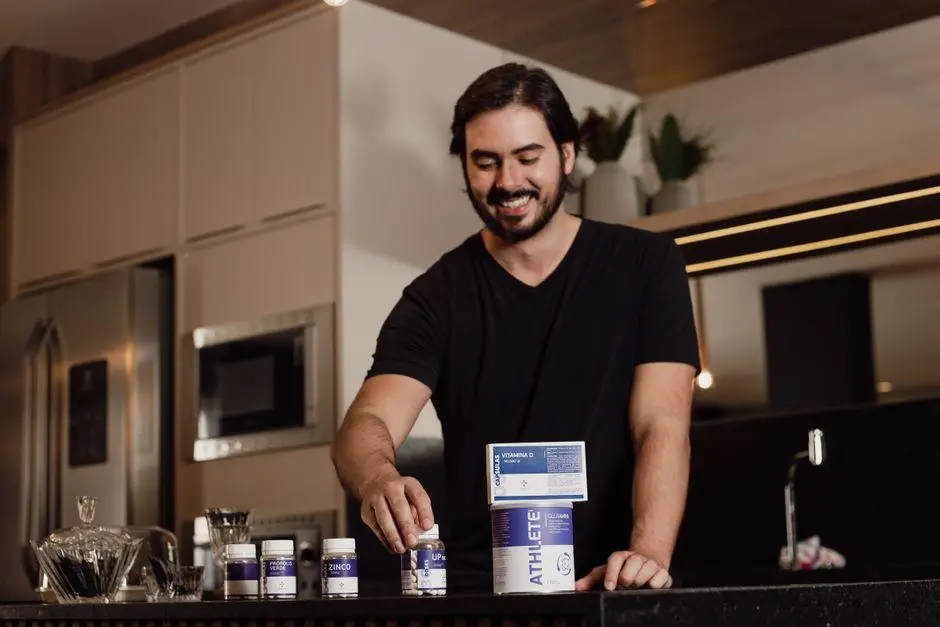

A man is leaning against a white wall in Lisbon. Good linen shirt. Good teeth. Sunset at exactly the flattering angle.
Next photo: hiking.
Next: black-tie wedding.
Then a prompt about stealing fries.
You know this profile. You may have seen twelve versions of it before lunch.
Nothing is wrong with any single part. That is almost the problem.
Dating profiles have become easier to clean up. A phone can erase somebody from the background of a photograph. AI can turn a flat bio into three lines of competent flirting. An app can suggest which photo belongs first. The final result may be sharper than anything the person would have written or chosen alone.
And now sharpness carries less information.
In 2026, a small mistake can sometimes tell you more.
A Good Profile Needs One Thing an Algorithm Would Probably Remove
Consider two bios.
The first says the person loves travel, food, live music and “making memories.”
The second says he once took a six-hour train to Marseille because he had become obsessed with one bakery’s pistachio flan.
One sounds normal. The other gives you a question.
That distinction matters because the basic job of a dating profile is not to make its owner look broadly acceptable. It is to give one particular stranger a reason to stop.
AI is quite good at broad acceptability.
Give a writing assistant a clumsy paragraph and it will usually remove repetition, shorten the dull bits and tidy the grammar. Useful. Give the same tool thousands of bios and ask it to make all of them “confident, warm and witty,” and another problem appears. Everybody starts sounding as if they were edited by the same charming HR manager.
Photos have the same weakness.
The obvious temptation is to choose the six in which you look best. But “best” can become oddly repetitive: clean headshot, holiday, gym, restaurant, dog, formal clothes.
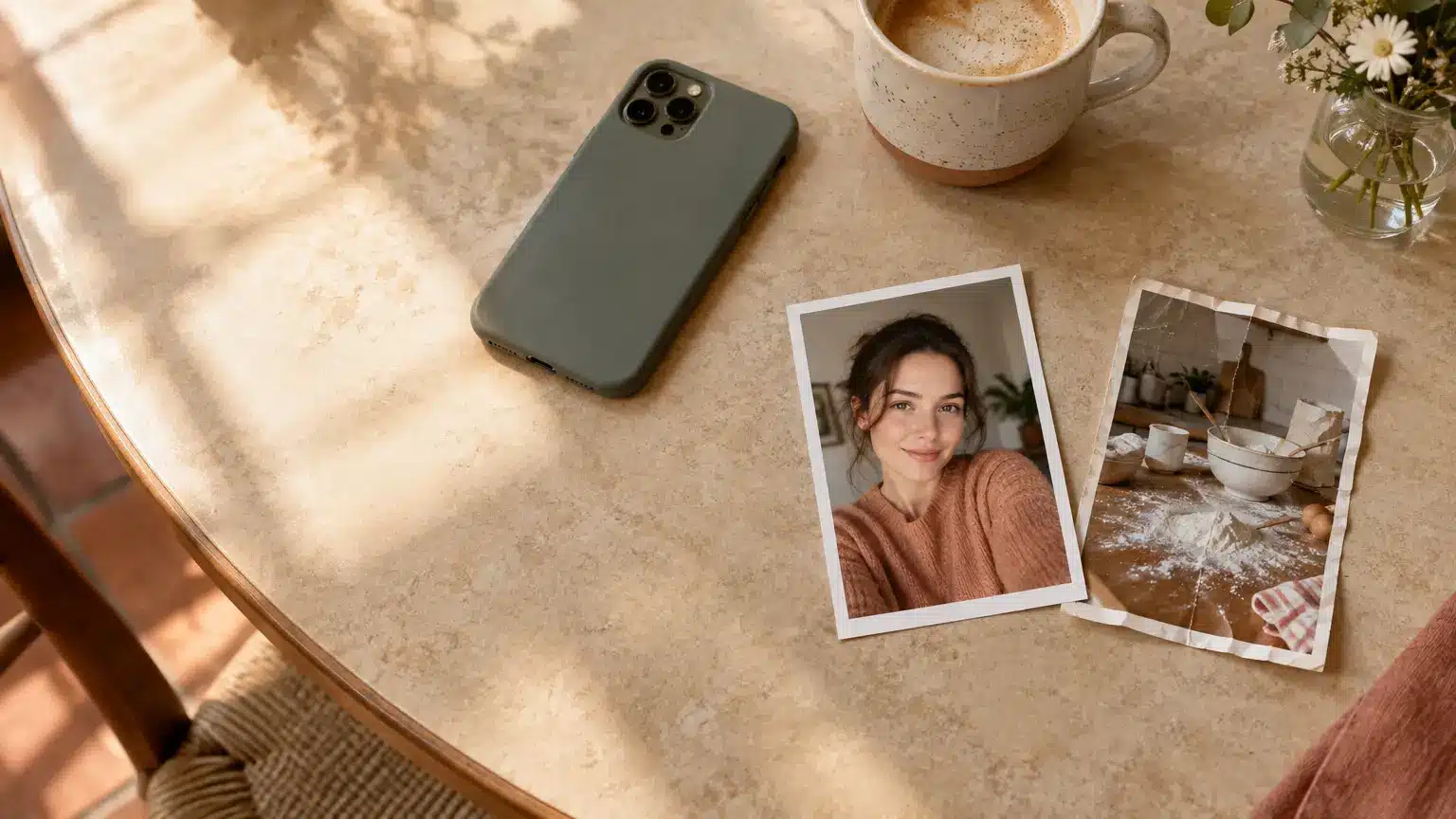
One photo with a battered camping stove or a kitchen full of flour may do more work because it contains evidence. There is a life outside the frame.
Obvious Mag’s piece on dating and grooming tips for older men gets at the offline half of this problem. Clothes, hair, teeth and grooming affect an actual first impression. Fine. But a dating profile has another task before the restaurant reservation ever exists. It needs to make somebody curious enough to get there.
A perfectly lit face cannot do all of that.
The New Problem Is Proving the Face Belongs to Somebody
There is a darker reason polished profiles feel different now.
A convincing fake no longer needs a stolen Facebook picture and broken English.
Generated photographs are better. Scam scripts are better. Voice cloning exists. One operator can maintain a believable character through a long conversation without improvising every message from scratch.
Dating apps have reacted by treating “real human” as something that increasingly needs technical proof.
In September 2026, WIRED reported on the spread of facial-recognition and biometric checks across dating apps. Tinder told the magazine that 98% of its content-moderation actions in 2025 were aimed at fake accounts, scams and spam.
That number changes the meaning of a blue tick.
Verification used to feel like an optional bit of profile furniture. Now it is moving closer to basic housekeeping.
There is an obvious privacy argument against handing facial data to another private company. A user may reasonably dislike the choice between “scan your face” and “look less trustworthy.”
Still, apps have a practical problem. They need to answer a question users cannot reliably solve from six photographs anymore.
Is there an actual person here?
Match Group said in August 2026 that Hinge’s global monthly active users were up 13% year over year in the second quarter, while its revenue increased 22%. Tinder’s daily active users were down 4% year over year, although Match called that Tinder’s best result in ten quarters.
Those figures do not prove that people prefer one profile format over another. They do show that dating apps are not all moving in the same direction.
The product matters.
So does the type of person it encourages you to become on screen.
People Now Check the App Before They Check the Matches

Before opening an account, plenty of users do something very unromantic.
They research the software.
They search the app name with “reviews.” They look for complaints about billing. They watch somebody click through the interface. They check whether cancellation requires three menus and a minor archaeological expedition.
Someone considering Dating.com, for instance, may watch dating.com reviews before deciding whether it is worth setting up a profile.
That little piece of homework makes sense.
A dating platform gets unusual access to your life. Your face. Your age. Who you talk to. What you say when you think nobody else is reading. In some cases, your location and card details.
Choosing one because its advert had attractive people laughing over cocktails is not much of a screening process.
There is another reason to look around first: different apps reward different kinds of presentation.
A photo-heavy app puts more pressure on the first image. A prompt-heavy app gives a funny writer more room. A smaller community built around a specific interest may make a detail that looks odd elsewhere immediately useful.
Put “I spend weekends painting Napoleonic miniatures” on a broad dating profile and you may lose half the room.
Put it in the right room and you have just saved everybody time.
This is why the idea of a universally “good profile” is becoming less useful. Good for whom? On which app? Looking for what?
A person who wants a serious relationship should probably not build the same profile as somebody looking for casual dates during a two-month stay in Berlin. Same face. Different information.
Please Do Not Outsource Your Flirting Personality
There is a perfectly reasonable role for AI here.
Use it to spot a typo.
Ask which of two opening photos is clearer.
Let it tell you that your bio contains the word “adventure” four times and still does not reveal what you do on Saturday.
That is editing.
Then there is the other version.
AI writes the bio. AI suggests the joke. AI writes the opener. AI supplies the follow-up when the other person replies.
At that point, the person on the receiving end is effectively flirting with a ghostwriter.
This may work remarkably well until two people meet.
Then somebody who appeared quick, dry and confident in chat spends eight minutes discussing parking and cannot remember the joke that supposedly started the conversation.
The problem is not morality. It is continuity.
A profile creates an expectation. The date has to be cash it.
We accept plenty of cosmetic editing before a first meeting. People choose flattering photos. They wear a jacket they would not wear to buy toothpaste. They tell the funny version of a holiday story and quietly remove twenty minutes of airport logistics.
Normal.
But there is a difference between presenting yourself well and hiring software to invent the entertaining person another human thinks they are meeting.
That difference becomes obvious surprisingly fast over a drink.
The Strange Photo May Now Be Doing You a Favour
There is a photograph people often remove from dating profiles because it is not “good enough.”
Maybe the light is yellow. Maybe the coat is ugly. Perhaps three friends are half visible at the edge and somebody has left a pint glass directly in front of the camera.
Keep looking at it.
What is happening?
If the answer is that you look unmistakably happy, it may deserve its place.
Generated content has made clean images cheap. The polished headshot no longer proves effort because effort may have consisted of pressing a button. Small, inconvenient details have acquired new value because they are harder to manufacture without looking manufactured.
A scuffed pair of boots.
A ridiculous birthday cake.
The actual dog, refusing to face the camera.
A jacket you clearly chose yourself rather than one selected to signal “dateable adult.”
None of these things is automatically authentic. People can stage mess just as carefully as perfection.
But they give another person material.
That is still the useful test.
Can someone look at your profile and ask a question that could only reasonably be asked of you?
If yes, the profile is doing its job.
If the only available question is “Where was that beach photo taken?”, perhaps the sunset in Lisbon is not earning its space.