
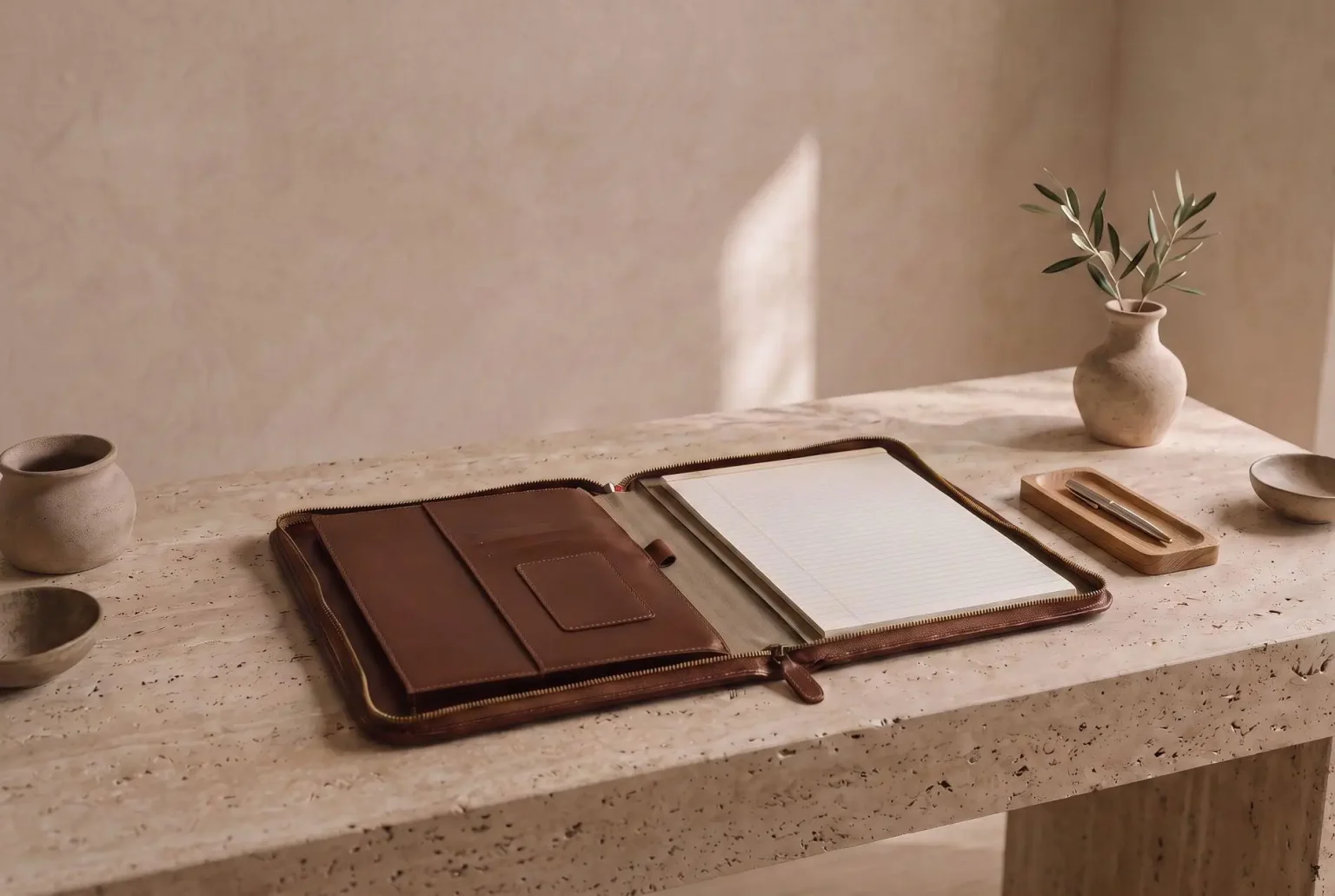
There’s a particular moment in a meeting when someone reaches for something to write on. Often it’s a phone. Sometimes it’s a notebook pulled from a bag, dog-eared and loose at the spine. Occasionally it’s a leather portfolio, opened flat on the table, and the difference registers before anyone has said a word about it.
That’s the honest case for owning a good one. It isn’t that a portfolio makes you better at your job. It’s that it signals a certain seriousness about preparation, and it keeps the things you actually need in one place rather than distributed across a bag’s various pockets.
Choosing one well takes a bit more thought than most people give it. Here’s what actually matters.
Then Look at the Construction
Good leather poorly assembled still fails. A few things to examine:
Stitching should be even, tight, and consistent along its whole run. Look particularly at corners and stress points, where cheaper manufacturing shows first. Loose or wandering stitches on a new item won’t improve.
Edges reveal a great deal. A quality portfolio has edges that are either folded and stitched or painted and burnished smooth. Raw, fuzzy edges indicate the manufacturer stopped caring at the point where most customers stop looking.
Hardware zippers in particular are where portfolios most often fail. A zip that catches slightly in the shop will catch considerably more after a year of daily use. Run it fully open and closed a few times before committing.
Lining matters more than it seems. A fabric or leather lining protects the interior and keeps documents from catching. An unlined interior will show wear faster.
Decide What You Actually Carry
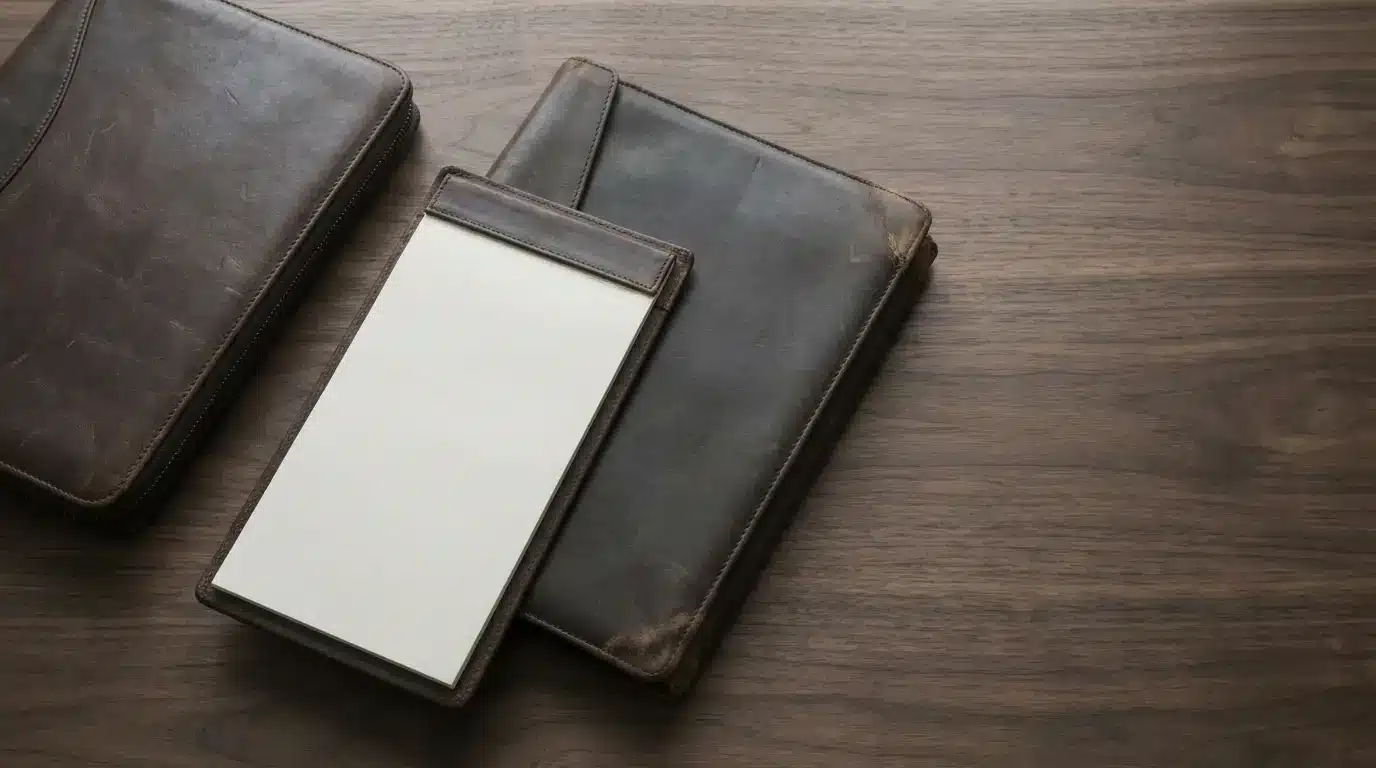
This is where people most often buy the wrong thing, usually by purchasing something more elaborate than their working life requires.
Be honest about the week ahead. If you take handwritten notes in most meetings, a padfolio with a secure notepad holder is the right form. If you mainly carry printed documents, contracts, or presentation materials, a document holder with expandable capacity serves better. If you need a tablet alongside paper, confirm the sleeve dimensions rather than assuming.
Consider also whether you want a zip closure or an open folio. Zipped designs protect contents and suit anyone who moves between sites or travels with the portfolio in a bag. Open folios are faster to use and lie flatter on a table, which matters if you’re opening it several times a day.
Browsing a focused range of leather portfolio options rather than a vast one tends to make this clearer, because the distinctions between a padfolio, a portfolio, and a document holder become visible when they’re presented side by side rather than described in isolation.
Interior Organisation: Enough, Not Maximum
There’s a temptation toward portfolios with the most pockets. Resist it.
Every additional slot adds bulk, and most go unused. What genuinely earns its place: a secure notepad retainer, a pen loop that holds the pen you actually own, two or three card slots, and one document pocket deep enough that papers don’t slide out when the portfolio is tilted.
Anything beyond that is usually weight you carry without benefit.
Size and Proportion
Most professional portfolios are built around either A4 or US Letter dimensions. Check which, particularly if you’re buying from a manufacturer in a different region; the difference is small but enough to make documents sit awkwardly.
Beyond the paper size, consider the external proportions. A portfolio that’s notably thick will look bulky under an arm and fit poorly in a slim bag. Slimmer profiles generally read as more considered, provided they still hold what you need.
Colour and Finish
Black remains the safest choice for formal environments and legal or financial settings. Dark brown and tan are warmer and age more visibly, which is an advantage if you like patina and a drawback if you want something that looks identical in year three.
Navy and deeper tones have become more common and work well in less conservative industries. Whatever the colour, matte and lightly textured finishes tend to wear better than high-gloss surfaces, which show scratches readily.
On Price and Where It Goes
Expect meaningful quality to start somewhere around the $100 to $200 range for a genuinely well-made full-grain portfolio, with handcrafted pieces and larger document holders sitting higher.
What that money buys is mostly material and labour. Maruse, for instance, is an Italian manufacturer producing portfolios, padfolios, and document holders by hand from full-grain leather- the kind of operation where the cost structure reflects artisan assembly rather than volume production. Several makers work this way, and the common thread is that the price difference against mass-produced alternatives is largely explained by the two factors covered above: grade of hide, and who assembled it.
If you’re considering personalisation, which many makers offer, decide before ordering. Embossing is generally permanent.
A Simple Test
If you’re uncertain between options, apply one question: will this look better or worse in three years?
Top-grain leather, clean stitching, finished edges, and reliable hardware all point toward better. Corrected surfaces, exposed edges, and hardware that already feels slightly stiff point the other way.
A portfolio chosen on that basis tends to be the last one you need to buy for a long while, which is rather the point of spending properly on it in the first place.