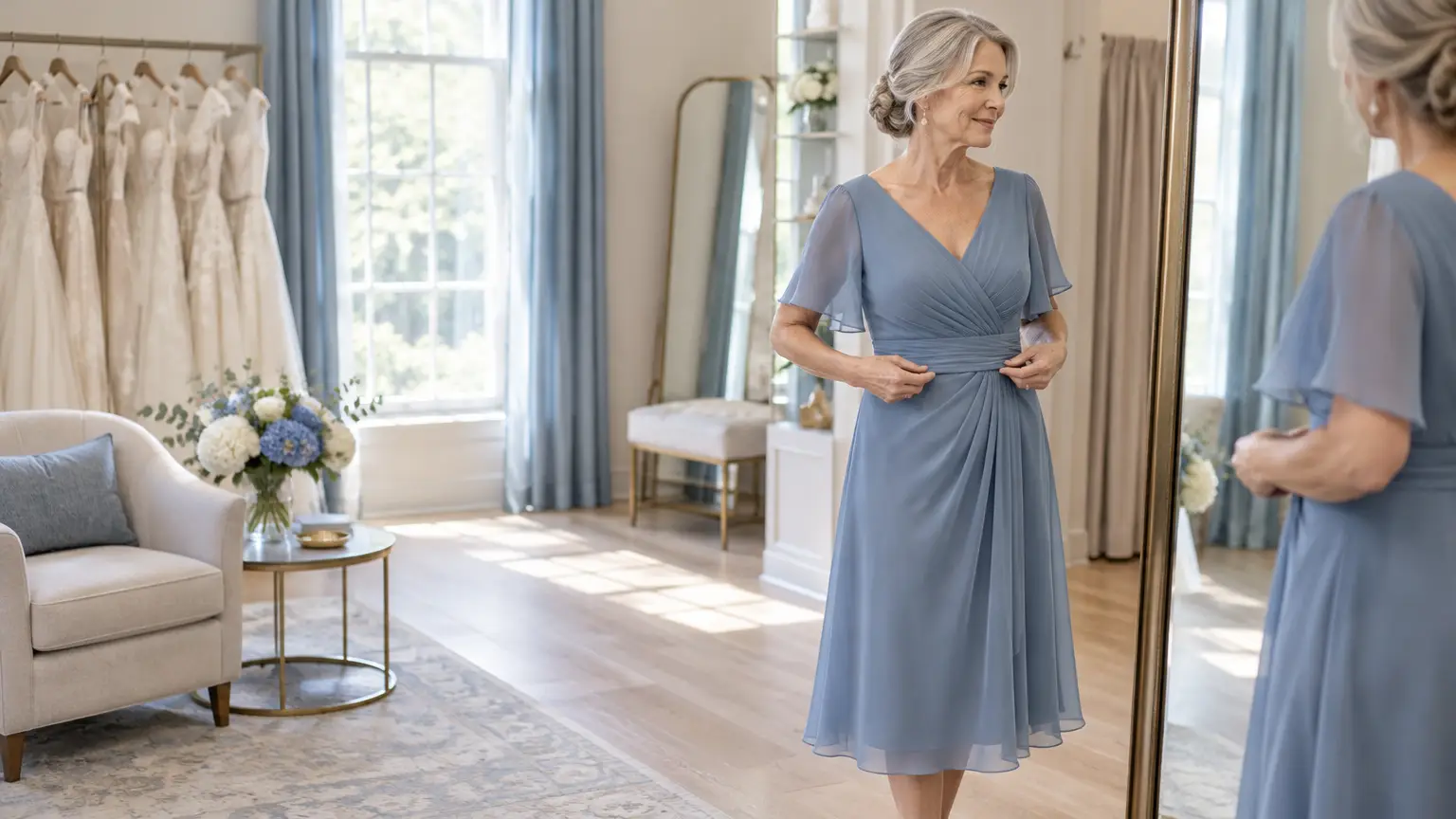
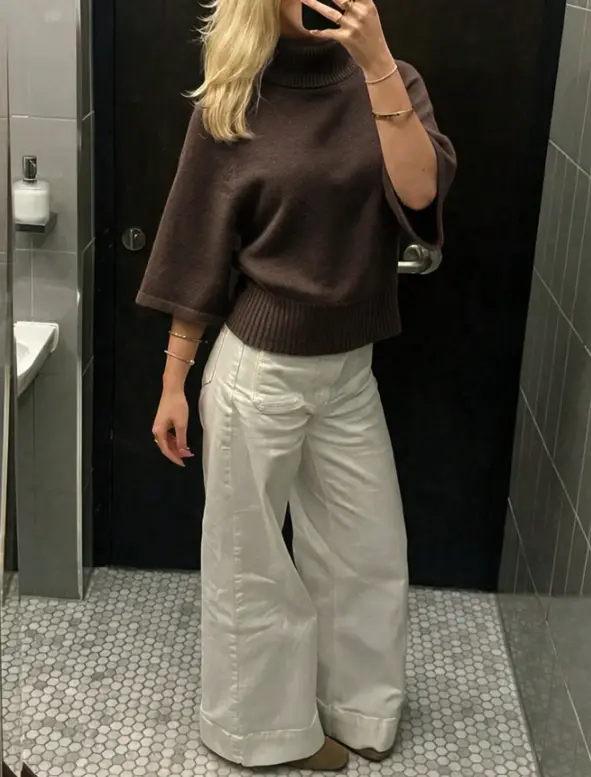
You bought a soft, flowy top. Three washes later, it is misshapen and half the size it used to be.
The label said viscose. You had no idea that mattered.
Understanding what viscose fabric is helps you buy smarter, care for your clothes correctly, and make more informed choices about sustainability.
It feels like silk, costs less than cotton, and shows up on more labels than most shoppers realize.
Here you will find out exactly what viscose is, how it is made, how it performs, and whether it is actually as eco-friendly as brands claim.
What Is Viscose Fabric?
Viscose is a semi-synthetic fabric made from regenerated cellulose, most commonly wood pulp from beech, pine, or eucalyptus trees.
It is neither fully natural nor fully synthetic: its source is organic, but the production process uses sodium hydroxide and carbon disulfide to chemically break it down.
Developed in the late 19th century as an affordable silk alternative, viscose is soft, smooth, and cool against the skin with a fluid drape that closely mimics silk.
Viscose vs. Rayon: Are They the Same Thing?
Yes, Viscose is the most common type of rayon. All viscose is rayon, but not all rayon is viscose. Rayon is the broader category; viscose, modal, and lyocell are all process variants within it.
| Properties | Viscose | Rayon |
|---|---|---|
| What it is | A specific type of rayon made via the viscose process | The umbrella term for all regenerated cellulose fibers |
| Common label regions | UK, Europe, and most international markets | United States |
| Same fabric? | Yes. Viscose and rayon on a label mean the same thing | Yes. Rayon and viscose on a label mean the same thing |
| Care instructions | Cold wash, no dryer, handle gently when wet | Identical. The name on the label does not change the care rules |
| Includes modal and lyocell? | No. Viscose is one specific process variant | Yes. Modal and lyocell are also types of rayon |
If a label says rayon, viscose, or viscose rayon, the fabric behavior and care requirements are identical.
How Is Viscose Fabric Made?
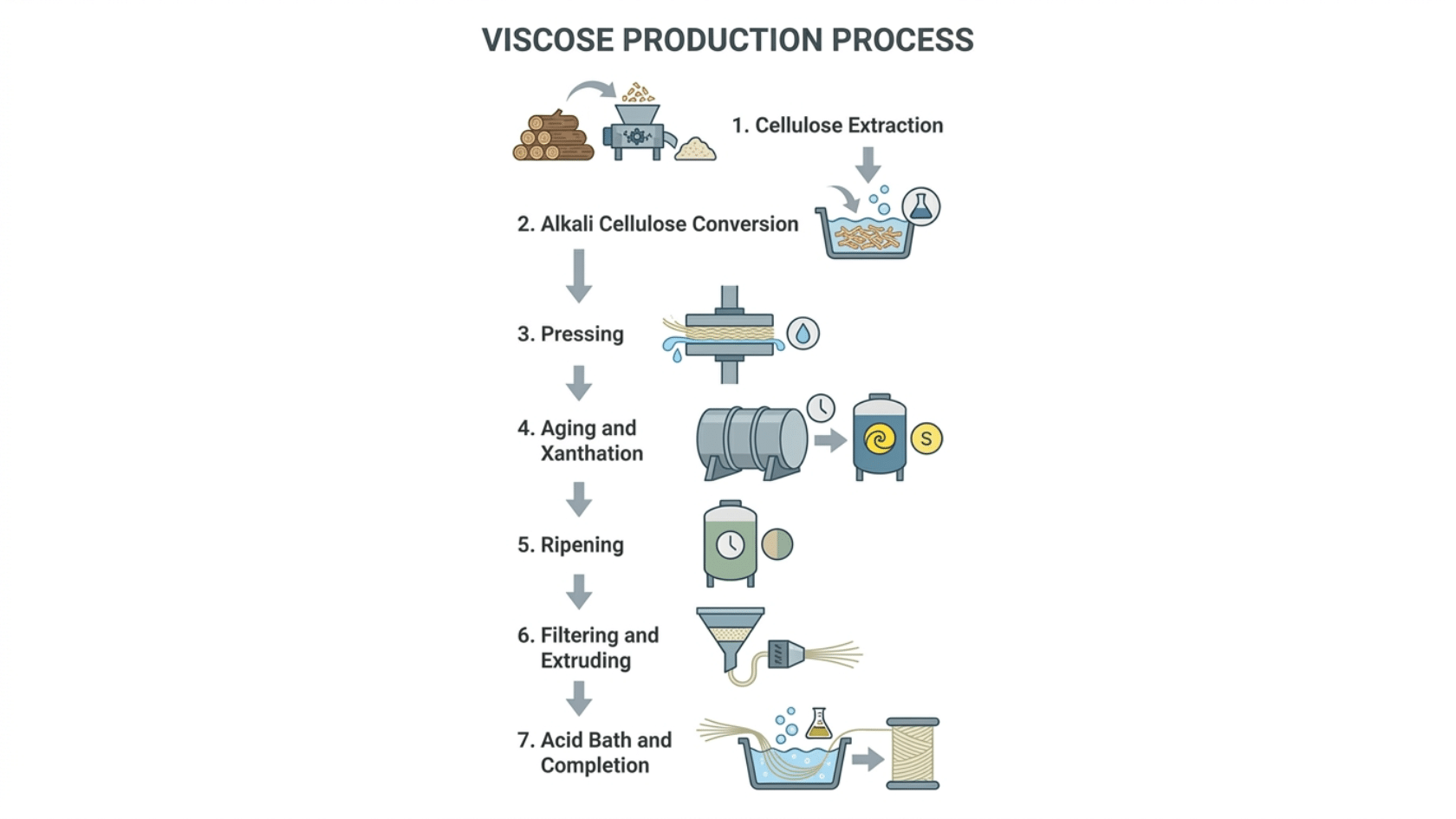
Viscose starts as wood and arrives as fabric through a series of industrial chemical transformations. The source is organic; the process is not. Each step alters the material’s molecular structure.
Step 1: Cellulose Extraction
Wood from fast-growing trees such as beech, pine, or eucalyptus is broken down into purified pulp.
Step 2: Alkali Cellulose Conversion
The pulp is dissolved in caustic soda (sodium hydroxide), which removes impurities and begins to restructure the cellulose at the molecular level.
Step 3: Pressing
The treated cellulose is pressed to remove excess liquid, then shredded into a dry, crumbled substance called white crumb.
Step 4: Aging and Xanthation
White crumb is aged in oxygen and exposed to carbon disulfide, producing a thick, honey-like liquid called yellow crumb.
Step 5: Ripening
The liquid is dissolved in dilute sodium hydroxide and left to rest for several hours to allow the chemical reaction to fully stabilize.
Step 6: Filtering and Extruding
The ripened liquid is filtered and forced through a spinneret.
Step 7: Acid Bath and Completion
Filaments pass through a sulfuric acid bath to solidify into rayon fibers, then are washed, drawn, and spun into finished fabric.
Pro Tip: When shopping for viscose, look for lyocell or Tencel on the label, which use a closed-loop process that recovers and reuses chemical solvents.
What Are the Different Types of Viscose Fabric?
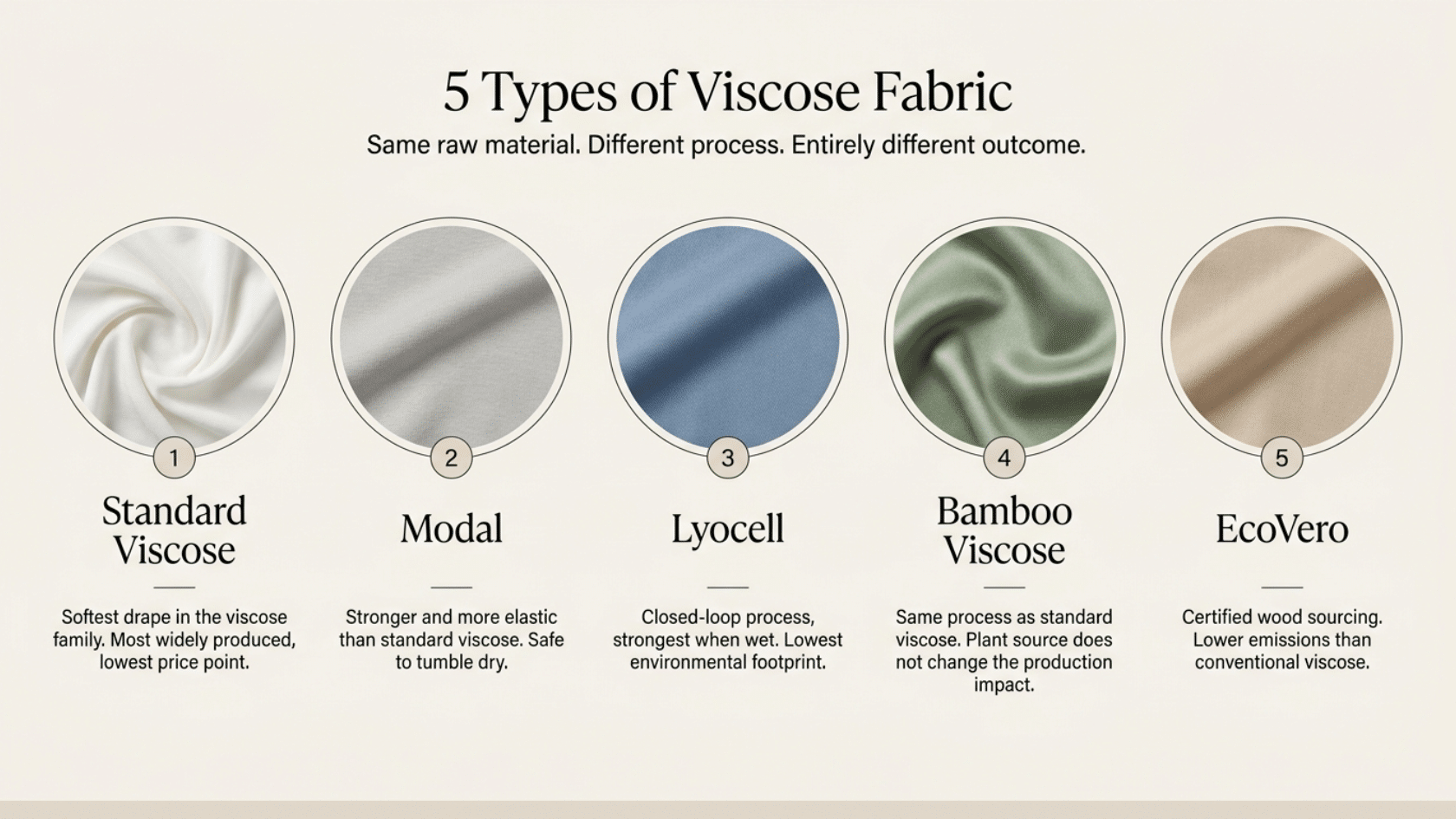
There are five main types of viscose fabric:
1. Standard Viscose
Standard viscose is the conventional form of the fabric, made by dissolving wood pulp cellulose through sodium hydroxide and carbon disulfide before extruding it into fibers.
It is the most widely produced variant and the one most commonly found on clothing labels worldwide. It weakens significantly when wet, requires careful hand washing, and is not safe for tumble drying.
Key Strength: Softest drape in the viscose family at the lowest price point.
2. Modal
Modal is made from beech tree cellulose and wet-spun at higher tension than standard viscose, producing a stronger, more elastic fiber.
This difference in process, not material, is what makes modal more durable and resistant to shrinkage than regular viscose. It is commonly used in underwear, activewear, and bedsheets after blending with cotton.
Key Strength: Safe to tumble dry and holds shape better than standard viscose over time.
3. Lyocell / Tencel
Lyocell uses a closed-loop process in which the solvent is reused rather than released as waste, making it cleaner than viscose and modal.
It is stronger when wet and more durable, with a lower environmental impact. Tencel is the brand name for lyocell, and it is often the most recommended option in the viscose family.
Key Strength: Strongest of all viscose types when wet, with the lowest chemical production footprint.
4. Bamboo Viscose
Bamboo viscose is made using the same chemical process as standard viscose, with bamboo as the starting source of cellulose instead of wood.
Labels like “bamboo fabric” or “bamboo viscose” do not guarantee better sustainability. The environmental impact depends on the production process, not the plant source.
Key Strength: Grows faster and requires less land than wood-based viscose sources.
5. EcoVero
EcoVero is Lenzing’s viscose variant made from certified wood sources, using a cleaner process that reduces water use and emissions compared to standard viscose. It has a similar feel and drape but better traceability.
It is not a closed-loop system like lyocell; it still uses chemical processing but has a lower environmental impact than conventional viscose.
Key Strength: Certified wood sourcing with a more traceable supply chain than conventional viscose.
Properties of Viscose Fabric
Viscose’s properties are a direct result of its open, loosely bonded cellulose structure. It is the same characteristic that makes it soft and breathable also makes it fragile under specific conditions.
- Fluid drape: falls smoothly against the body, mimicking the movement of silk
- Breathability: open fiber structure releases body heat rather than trapping it
- Moisture absorption: draws sweat away from the skin readily
- Softness: smooth, cool hand feel without the coarseness of natural fibers
- Dye retention: open molecular structure allows deep, even color penetration
- Wet strength: loses tensile strength significantly when wet
- Wrinkle resistance: low, creases easily and holds them stubbornly
- Shrinkage: prone to permanent dimensional change under heat or agitation
- Abrasion resistance: low, wears thin at high-friction points over time
The wet strength property is the most important before buying. Viscose feels strong when dry but loses structural integrity when wet.
Is Viscose Fabric Sustainable?
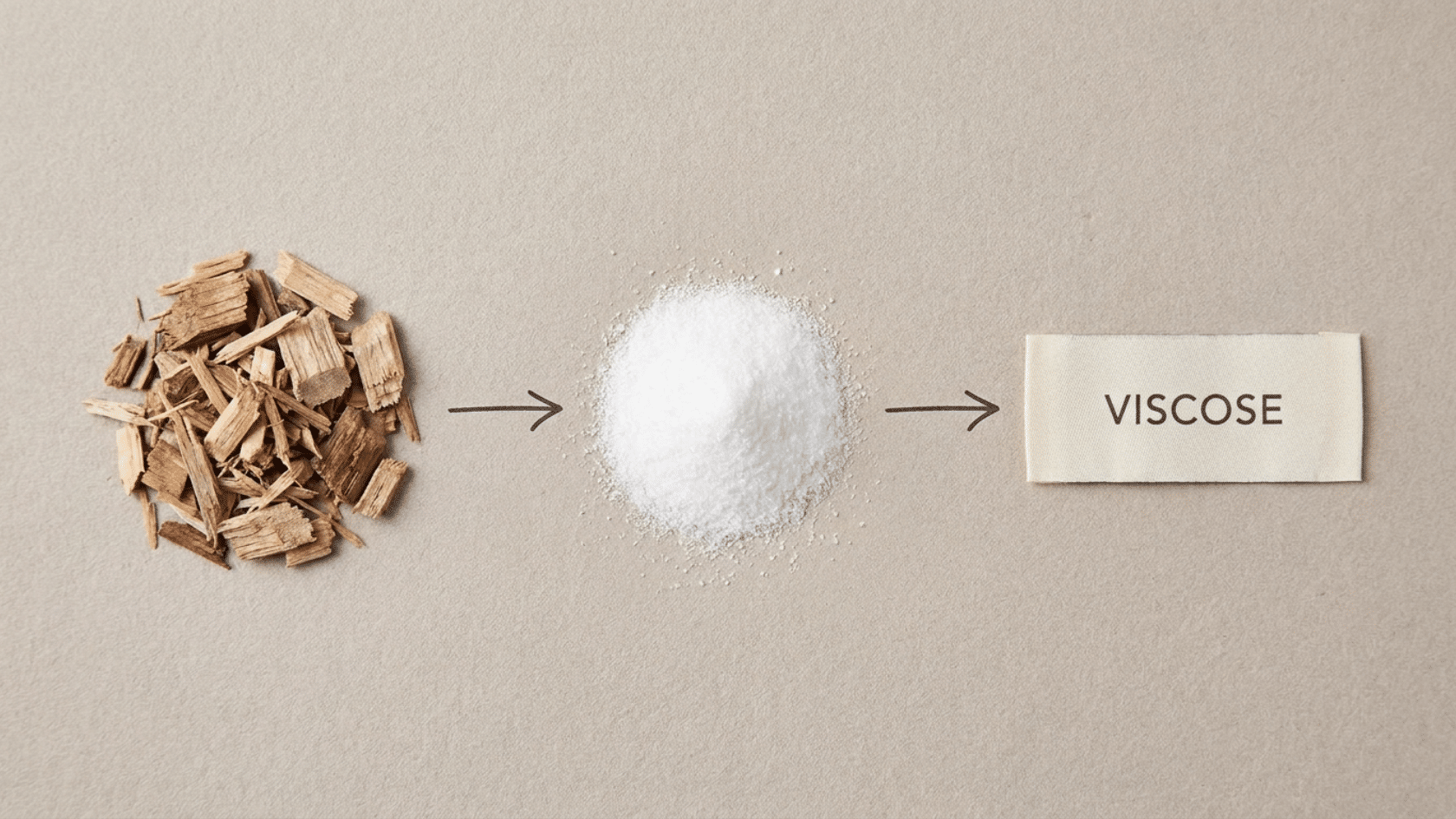
Viscose comes from trees, trees are renewable, so viscose must be sustainable. That logic is wrong.
The chemical process that converts wood pulp into wearable fiber using sodium hydroxide and carbon disulfide generates toxic waste that the source material’s plant origin cannot offset.
Viscose is not worse than polyester, but it is not cleaner by default. Both have significant footprints through different pathways.
1. More Sustainable Alternatives Within the Viscose Family
Same raw material. Different process. Entirely different outcome.
| Variant | Environmental Profile |
|---|---|
| Standard Viscose | Highest impact. Open-loop, toxic solvent release |
| Bamboo Viscose | No advantage over standard viscose despite the plant-based claim |
| Modal | Marginally better sourcing, still not closed-loop |
| EcoVero | Improved emissions and water use, not fully closed-loop |
| Lyocell / Tencel | Lowest impact. Closed-loop solvent recovery |
2. Sustainable Viscose Brands You Can Shop From
If you want the feel of viscose without the conventional production footprint, these brands use Tencel, lyocell, or EcoVero. Same drape and softness, more traceable process.
- Whimsy+Row: Best for womenswear, menswear and kidswear.
- Quince: Best for budget-friendly everyday Tencel staples
- Baukjen: Best for women’s responsible fashion
- ARMEDANGELS: Best for kidswear and menswear
- tentree: Best for eco-focused essentials for men and women
Before You Buy: A label that says “viscose” or “bamboo fabric” without certification means nothing. Look for Tencel, EcoVero, FSC, or Oeko-Tex 100 before trusting any sustainability claim.
Caring for Viscose Fabric
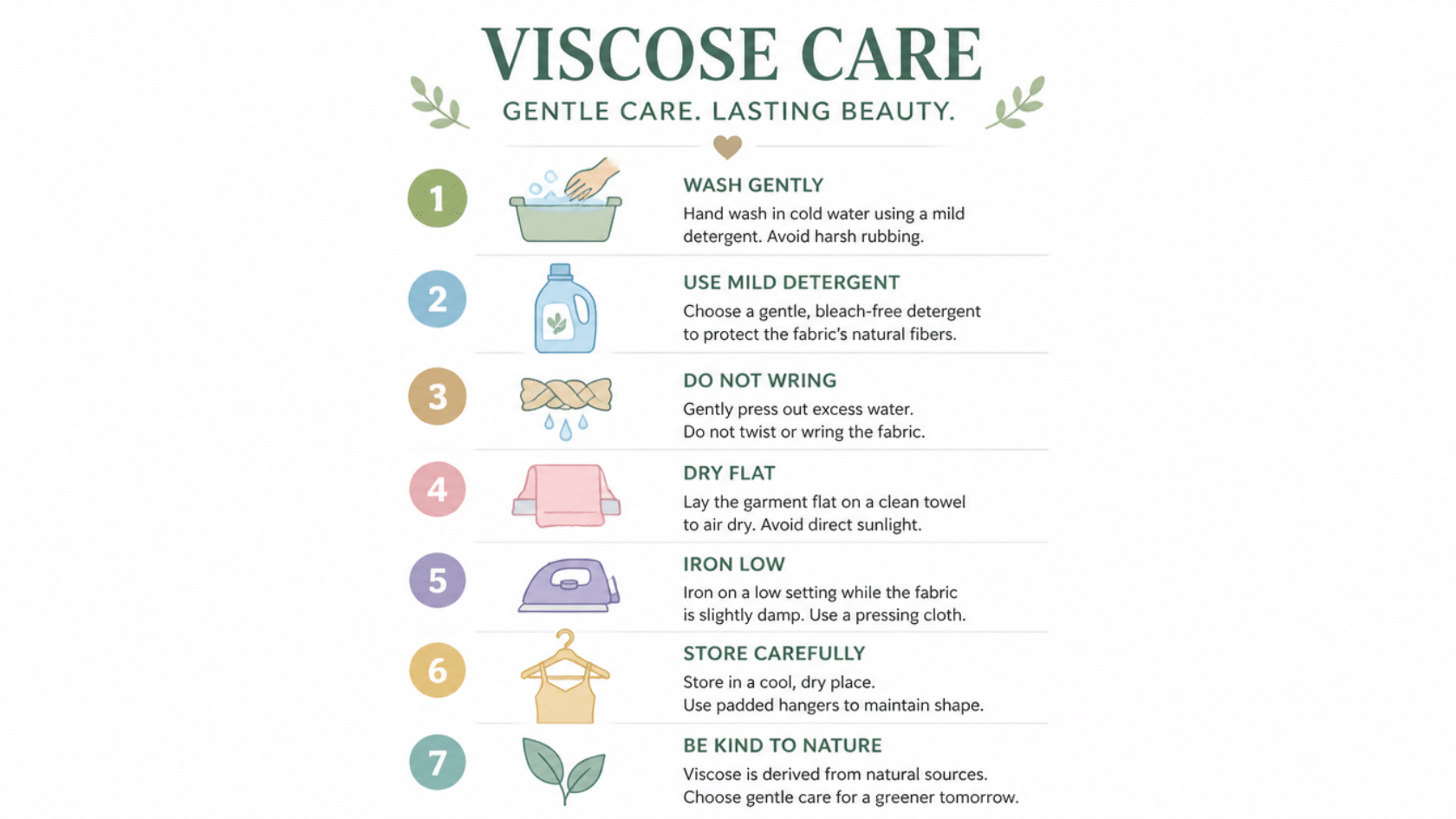
Every care rule exists because water disrupts the hydrogen bonds between viscose fiber chains, significantly reducing tensile strength.
These are not conservative precautions. They are the minimum required to protect a fiber that loses structural integrity when wet.
| Care Step | What To Do | Why It Matters |
|---|---|---|
| Washing | Cold water only | Heat accelerates hydrogen bond disruption |
| When Wet | Never wring, twist, or rub | Wet tensile strength is at its lowest point |
| Drying | No dryer. Reshape gently when wet and lay flat or hang to air dry | High heat and tumble-drying cause shrinkage. |
| Ironing | Low heat with steam, always iron inside out | The fiber surface is heat-sensitive. |
| Detergent | Mild detergent only | Harsh detergents break down the cellulose fiber structure. |
| Dry Cleaning | Follow the label. Some viscose garments require it | Dry cleaning uses solvent rather than water. |
| Storage | Hang where possible. Avoid tight folding | Viscose holds creases stubbornly; pressure folds set permanently and do not wash out easily |
Pro Tip: If machine washing is unavoidable, place the garment in a mesh laundry bag, select the coldest and gentlest cycle available, and remove it immediately when the cycle ends.
Wrapping Up
Viscose is not a fabric you can treat like cotton and expect the same results.
Now that you understand what viscose fabric is, where it comes from, how the chemistry works, and why the care rules are not optional, you are equipped to buy it with intention and keep it longer.
Check the label before you buy. Look for Tencel, EcoVero, or FSC certification if sustainability matters to you. And when you get it home, cold wash, no dryer, hang to dry.
One informed decision at the label saves you from a ruined garment later. Found this useful? Share it with someone who has ever shrunk a favorite top.
Ready to shop smarter? Use this guide as your label checklist before your next purchase.
Have a viscose care tip or a brand worth knowing? Drop it in the comments. We read everyone.
Frequently Asked Questions
Can You Stretch Viscose Back Into Shape After Washing?
Sometimes, if caught early while still damp, gentle hand reshaping can partially restore the original dimensions. Once fully dried in a distorted shape, the change is usually permanent.
Does Viscose Fabric Smell When Wet?
Some viscose garments release a faint odor when wet due to residual production chemicals. This typically fades after a few washes and is not a defect.
Is Viscose Fabric Suitable for People With Sensitive Skin?
Viscose is generally well-tolerated due to its smooth surface and absence of coarse fibers. For chemical sensitivities, look for Oeko-Tex certified viscose.