
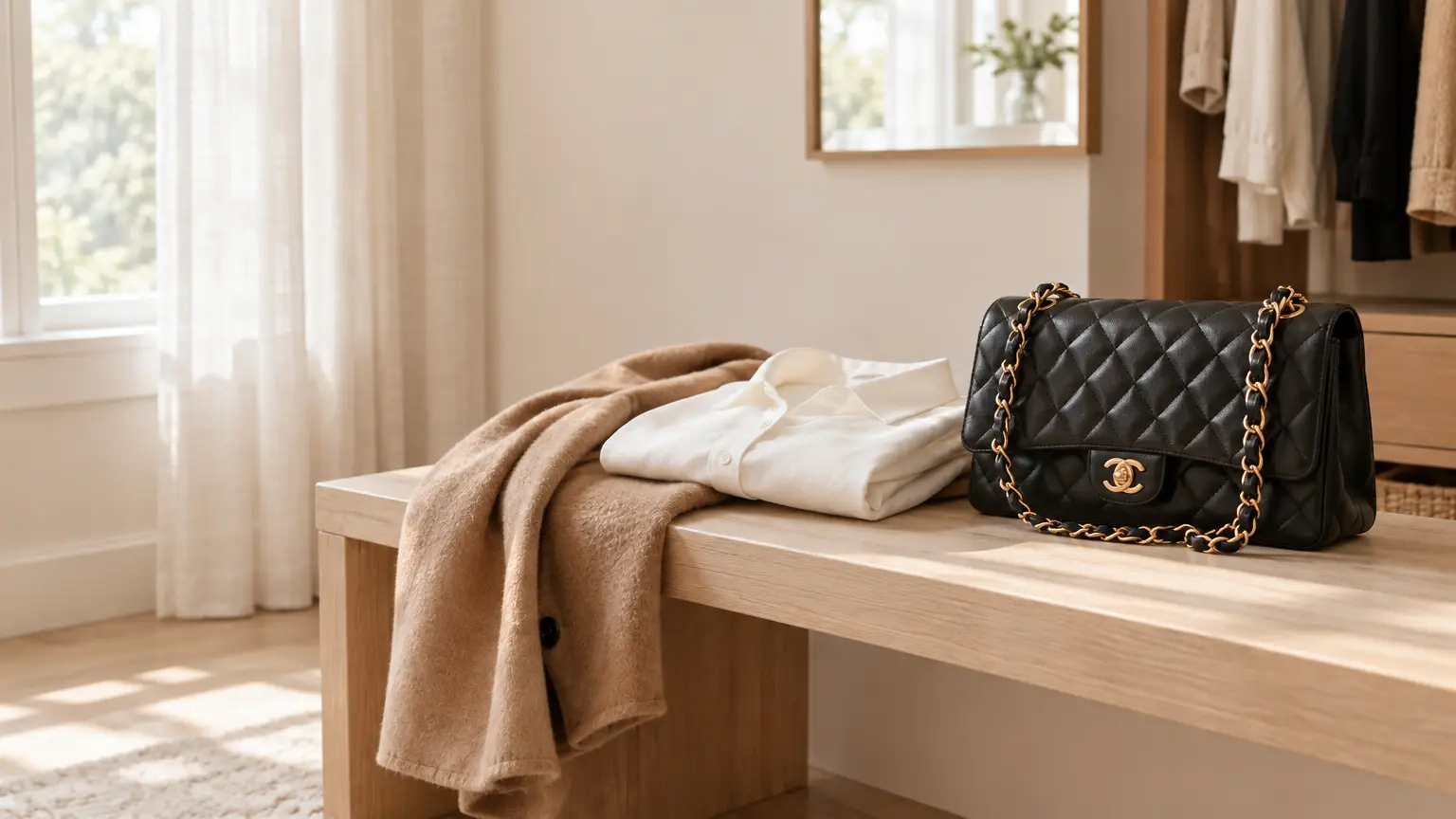
A favorite handbag rarely earns that place on appearance alone. It becomes familiar through ordinary use, resting beside a restaurant chair, accompanying a morning commute, or holding the same small essentials each weekend. Over time, its appeal becomes personal.
A Chanel bag with a previous owner brings another dimension to that relationship. Its leather has already been handled. Its shape belongs to a design chosen before the current season arrived. For someone building a wardrobe around fewer meaningful pieces, that history offers a starting point. These eight considerations explore how an older bag fits into a quieter, more deliberate approach to getting dressed.
1. Begin With Confidence in the Bag’s History
The appeal of used Chanel bags starts with design, but a considered purchase requires clear information. A beautiful photograph reveals little about a bag’s previous repairs, interior condition, or the process used to establish authenticity.
Browsing authenticated pre-owned Chanel bags provides a starting point for comparing styles, materials, and condition descriptions. The next step is to understand what the seller means by authentication, what documentation accompanies the purchase, and what recourse exists if a concern arises.
A bag’s past does not need to include a remarkable story. Straightforward disclosures about wear and restoration are more useful than romantic descriptions.
Buyers should also distinguish authentication from condition assessment. An authentic bag still needs careful inspection for damage and suitability. Confidence comes from understanding both what the piece is and how it has been treated. That clarity makes it easier to enjoy the purchase without unresolved questions following it home.
2. Define What Quiet Luxury Looks Like Personally
Chanel is recognizable, and many of its bags carry visible branding. Describing every style as understated overlooks the differences between individual designs. Quiet luxury, in this context, depends on the specific bag and the way it is worn.
A restrained outfit gives texture and proportion room to register. A softly structured bag beside a cotton shirt and straight trousers feels different from the same piece surrounded by statement accessories.
Color matters, although restraint does not require an entirely beige wardrobe. Navy, burgundy, brown, and black each offer possibilities, depending on the clothing already in rotation.
The useful test is familiarity. A bag should belong with the owner’s usual coat, preferred shoes, and everyday jewelry. When getting dressed requires little rearranging around one accessory, the purchase begins to feel like part of a personal style.
3. Look Closely at Craftsmanship Beyond the Label
Craftsmanship becomes easier to appreciate when attention moves toward the details that affect use. The way a flap closes, the feel of a chain, and the construction of an interior pocket all deserve consideration.
Among used Chanel bags, different leathers also create different experiences. Lambskin has a smooth, supple feel, while caviar leather has a pebbled surface. The retailer’s collection guidance describes caviar as more resistant to scratches and lambskin as requiring gentler handling. Neither texture removes the need to assess the individual bag.
Close photographs should show stitching, edges, corners, and attachment points. Those views help buyers evaluate wear, although photographs alone do not establish authenticity.
A bag should feel satisfying in ordinary moments, including opening it with one hand or reaching for a wallet. Appreciation grows through those small interactions. Decorative appeal matters, but practical construction helps explain whether a beautiful object will become a regularly used possession.
4. Separate Appealing Character From Unwanted Damage
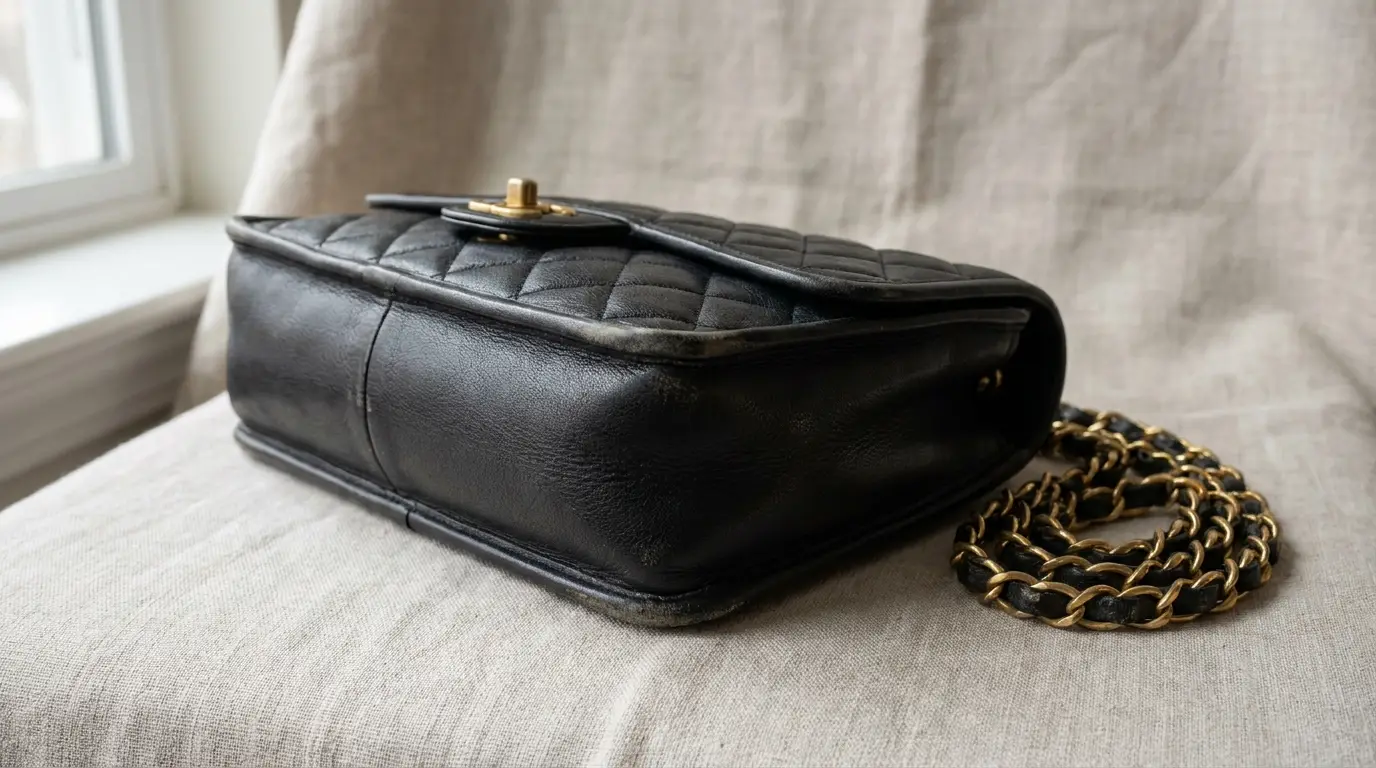
There is room for gentle wear in a thoughtful wardrobe. A softened surface or a few light marks need not disqualify a bag that otherwise suits its next owner. The important distinction is between wear someone accepts and problems someone feels pressured to overlook.
An attractive price loses its appeal when undisclosed damage requires immediate attention. Useful details to review include:
- Corner photographs showing rubbing, exposed material, or changes in color.
- Interior images revealing stains, peeling, or damaged pockets.
- Descriptions of odors, repairs, recoloring, and replaced components.
- Close views of the closure, chain, and strap attachment points.
Broad condition labels need supporting explanations. One seller’s “very good” does not automatically describe the same level of wear as another’s.
A buyer who dislikes visible scratches should honor that preference. Choosing an older piece does not require developing an affection for every sign of age. Satisfaction depends on accepting the actual bag, including its imperfections.
5. Choose a Size for Ordinary Life
A handbag earns regular use by carrying what its owner actually needs. That sounds obvious until a photograph makes a tiny evening bag appear suitable for an entire day.
Measurements deserve as much attention as styling images. Exterior dimensions do not fully describe usable space, especially when compartments divide the interior. A structured bag also offers less flexibility than its outline suggests. Before choosing, a buyer should account for:
- A phone, including its protective case.
- Keys, a wallet, and any essential medication.
- Glasses or sunglasses in their usual case.
- The preferred strap position over everyday clothing.
For someone comparing used Chanel bags, a simple paper mockup of the listed dimensions helps put size into perspective. Strap drop measurements are equally useful.
Weight matters, too. A chain that looks appealing in a photograph becomes part of the carrying experience. An accessory intended for frequent use should work during a grocery stop as comfortably as it does at dinner.
6. Build Around Clothes Already Worth Keeping
Buying fewer pieces begins with recognizing what already works. A wardrobe usually contains clues: the jacket worn repeatedly, the trousers that fit without adjustment, and the knitwear reached for whenever the weather changes. A considered handbag purchase supports those habits.
Before buying, someone can assemble three outfits from existing clothes and picture the bag with each. One outfit should reflect an ordinary weekday. Another should suit a relaxed occasion. The third can represent a dinner or gathering that genuinely occurs in that person’s life.
This exercise exposes purchases that depend on an imaginary wardrobe. If a bag requires new shoes, a different coat, and several additional accessories, its place deserves reconsideration.
Repetition also allows a distinctive piece to become familiar. Wearing the same bag regularly gives it a consistent role in personal style. The aim is a wardrobe whose contents make sense together, with enough flexibility for actual plans and changing moods.
7. Make Care Part of the Ownership Decision
Longevity involves the habits that follow a purchase. Even a carefully constructed bag needs suitable storage and handling.
Chanel’s care guidance recommends avoiding overfilling, protecting bags from prolonged sunlight, and storing them upright in their pouches. It also advises wrapping straps or chains in tissue paper to prevent marks on the leather. These are practical routines to consider before bringing a bag home.
Care should match the specific material. General household cleaners and improvised treatments introduce unnecessary uncertainty, especially when a bag’s restoration history is unknown. Stains and repairs deserve advice from an appropriate specialist.
Storage space is part of the decision as well. A crowded shelf that compresses the bag works against careful ownership. Someone choosing a delicate finish should be comfortable with the attention it requires. A piece feels easier to live with when its care needs fit naturally into the owner’s routines.
8. Measure Value Through Use and Enjoyment
The price of used Chanel bags deserves consideration alongside condition, practicality, and personal preference. A lower asking price offers little satisfaction if the bag remains in its pouch because its size or appearance feels wrong.
A useful budget includes the purchase price, applicable taxes, delivery costs, and any known care needs. Return terms also deserve a careful reading before payment. Future resale proceeds should not be necessary to justify the purchase. A bag is easier to enjoy when its cost makes sense for the buyer’s present circumstances.
There is also value in waiting. Comparing several examples helps someone recognize which details matter and which compromises will become irritating. The right purchase supports an existing life, whether that means frequent dinners, busy workdays, or unhurried weekends with only a few essentials.
A Familiar Place in the Wardrobe
A Chanel bag with a past becomes meaningful through the life that follows its purchase. Its appeal rests in the details its owner enjoys, the usefulness of its shape, and the willingness to care for it. Quiet luxury takes a practical form here: choosing thoughtfully, wearing something often, and allowing a familiar possession to remain part of the wardrobe for years.