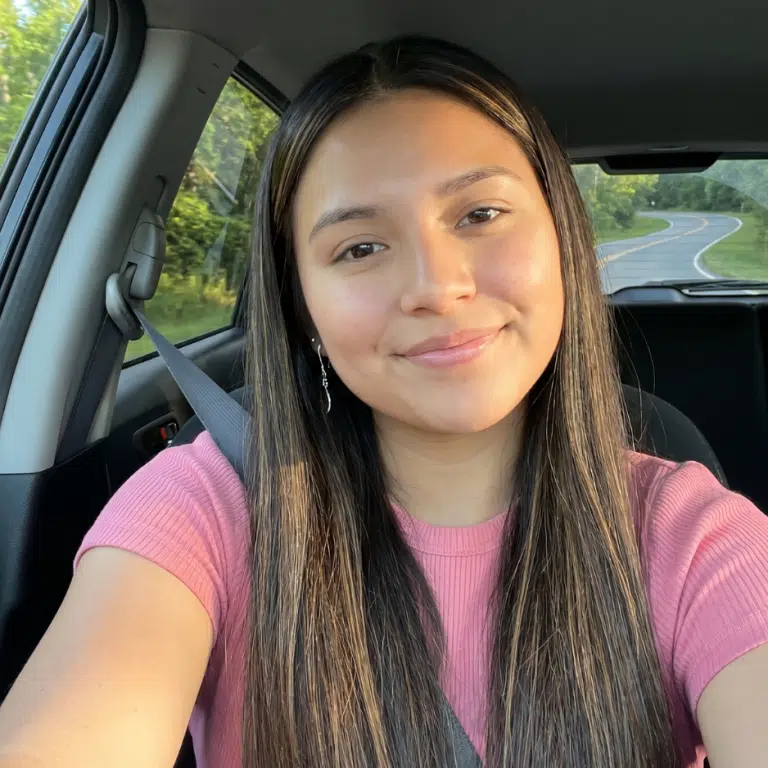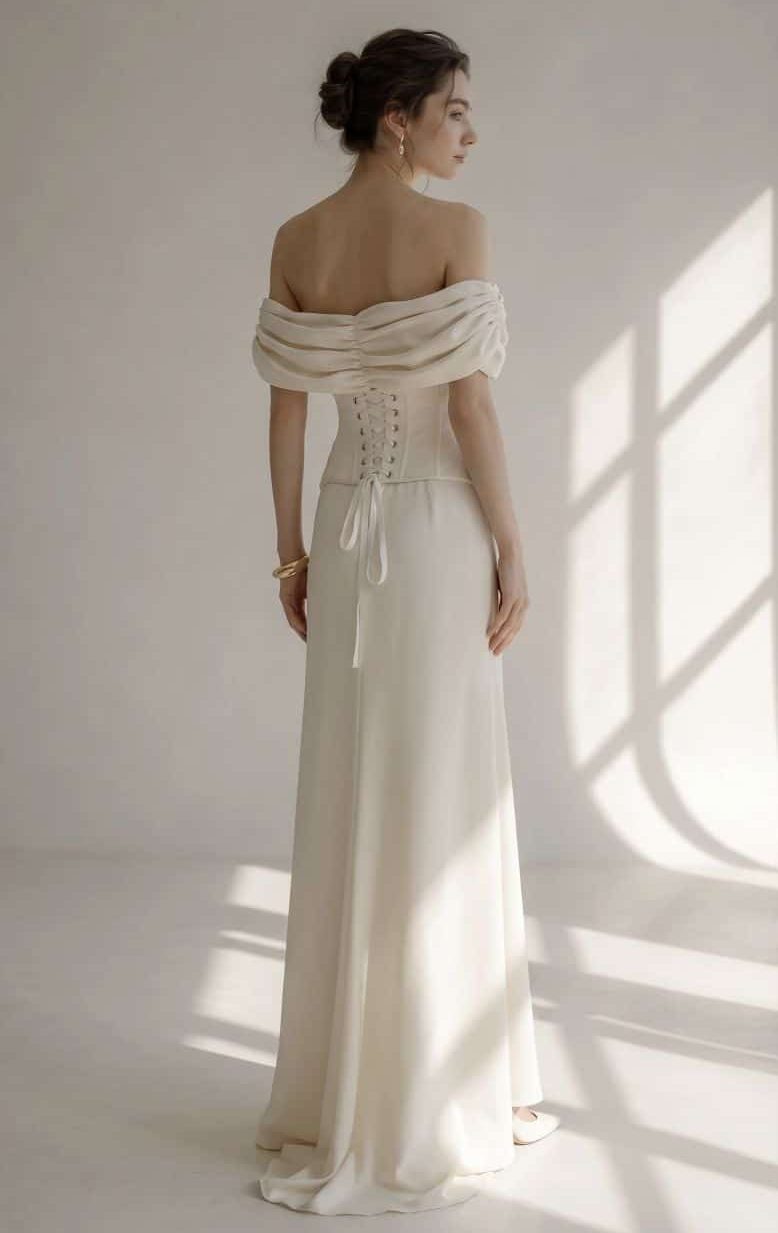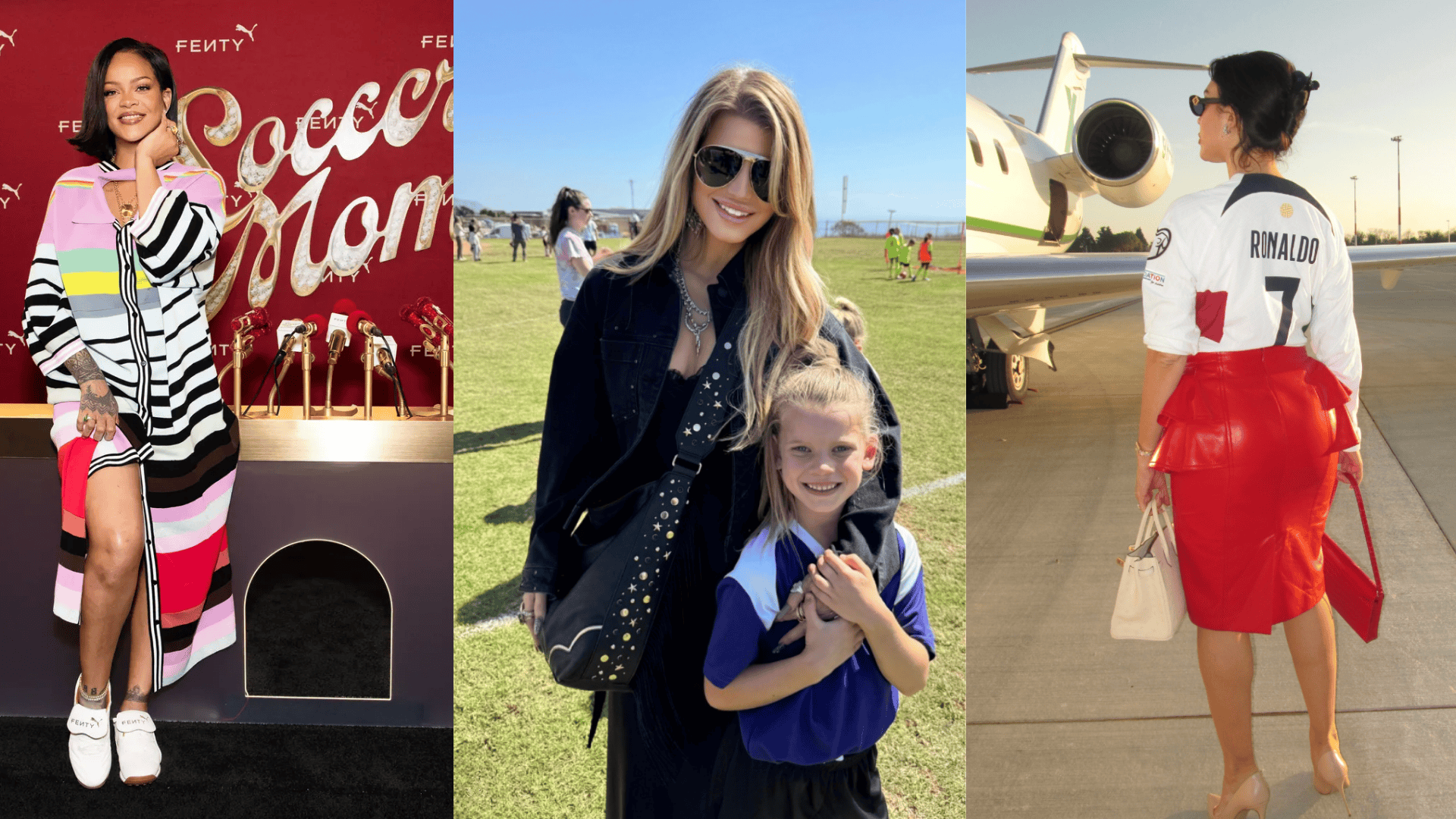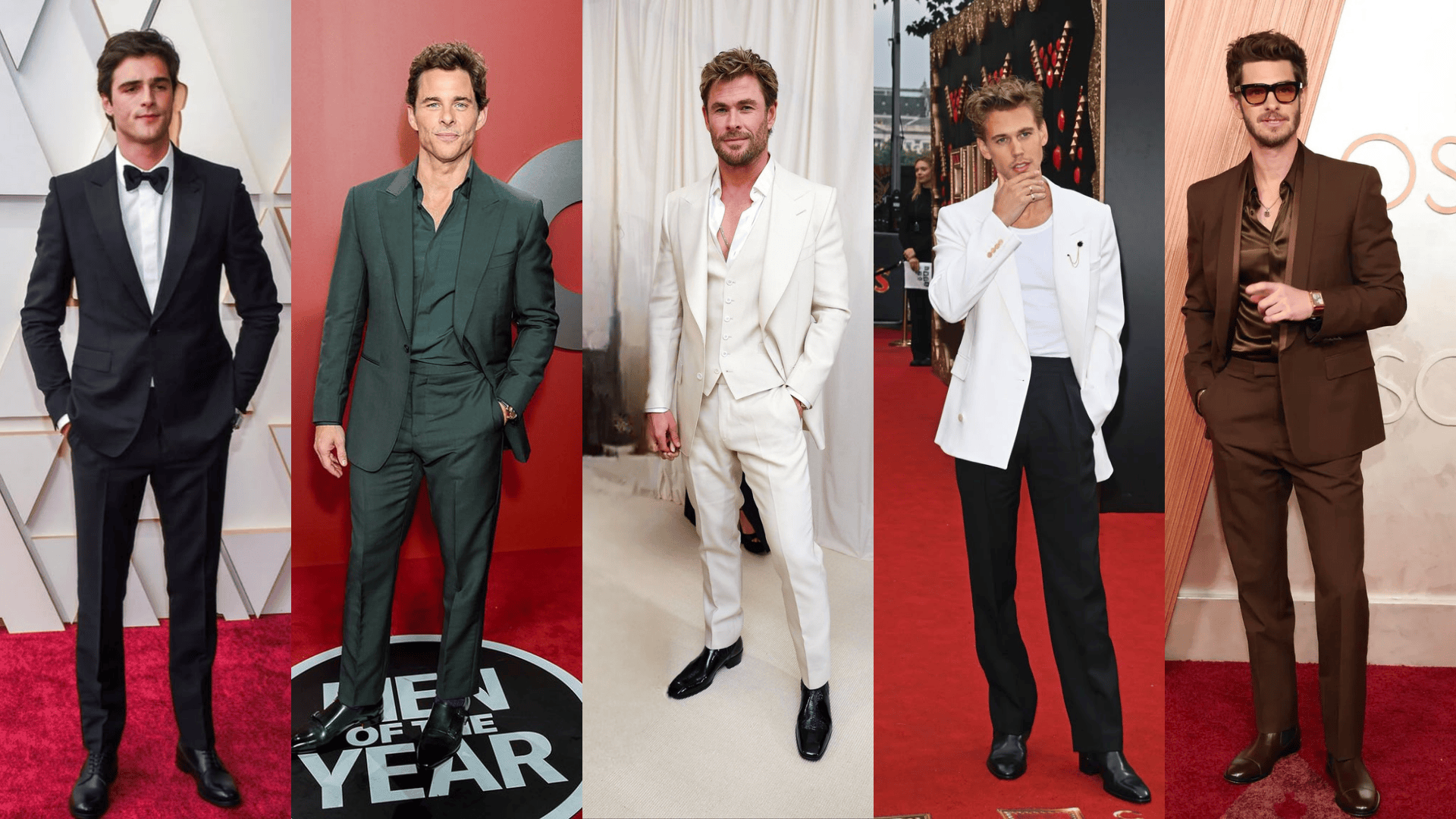

The model is standing beneath a violet sky in a dress that appears to be made from liquid chrome. Her eyebrows are bleached. Her boots would be difficult to walk in and probably impossible to manufacture. There is no studio, no stylist waiting just outside the frame and no dress hanging on a rail.
None of it exists.
Yet the image does what fashion imagery has always tried to do. It makes us stop. It creates a mood before we have time to ask practical questions. For a few seconds, we want to know who this woman is and where she might be going dressed like that.
AI-generated characters have become remarkably good at producing that moment of curiosity. They are appearing in mood boards, concept campaigns, music visuals and personal social feeds. Some look almost photographic. Others are proudly artificial, with impossible proportions, exaggerated makeup or skin in colours never found at a beauty counter.
The technology is not merely creating pictures of people. It is expanding the space in which people can experiment with identity.
That sounds liberating. Sometimes it is. It can also reproduce every narrow beauty standard the fashion industry has spent years claiming it wants to leave behind.
The interesting part lies between those two possibilities.
The Changing Room Without Walls
Clothing has always allowed people to rehearse versions of themselves.
A severe black suit can provide authority before an intimidating meeting. A pair of glittering boots can bring a little nightclub confidence into an ordinary Tuesday. Hair colour, jewellery and makeup let us adjust the story before we say a word.
AI character creation takes that familiar impulse and removes most physical limits.
A user can build an avatar with a shaved head, elaborate tattoos and a wardrobe that would bankrupt a couture house. They can play with gender expression, body shape or an aesthetic they admire but would not yet feel comfortable wearing in public. There is no fitting-room mirror, sales assistant or stranger waiting to offer an opinion.
For some people, the result is simply fantasy. For others, it may reveal something worth carrying back into daily life. Perhaps the dramatic coat will become a real purchase. Maybe the avatar’s sharp eyeliner encourages an experiment before a party. A person who has always dressed to disappear might discover that they enjoy taking up visual space.
This is where digital identity becomes more than a profile picture. The character acts as a private rehearsal.
Fashion has always been borrowed from fantasy. Editorial shoots place ordinary clothes in castles, deserts and dreamlike studios because the purpose is not only to show a garment. It is to show who the wearer might become. AI compresses that process into a screen and hands some of the creative control to the audience.
Beauty Without a Casting Director
Traditional fashion imagery depends on access. Someone chooses the model, photographer, stylist, location and final photographs. Even a rebellious editorial still passes through a series of gates.
A character generator can bypass many of them.
Someone who rarely sees their features reflected in mainstream campaigns can create a digital figure with their skin tone, body type, hair texture or cultural references. A small designer can visualise a collection on several fictional models before paying for samples and a shoot. A young stylist can build an ambitious portfolio without waiting for permission from an agency.
That freedom matters. It can widen the visual vocabulary of fashion and allow more people to participate in image-making.
It can also create a false impression of diversity.
A brand may fill a synthetic campaign with every imaginable face while employing very few real people from those communities. Inclusion becomes easy when the models have no salaries, working conditions or opinions. A company can appear progressive without changing who has power behind the image.
Representation is not only about what appears in the frame. It is also about who is paid to create it.
The most credible uses of AI will therefore add new possibilities rather than use digital diversity as camouflage. There is room for virtual models, but there must still be room for photographers, makeup artists, stylists, set builders and human models whose lived experience gives an image depth.
Perfect Is Beginning to Look Suspicious
Generative beauty has certain habits.
Skin tends to glow without pores. Bodies often arrive already shaped by familiar commercial ideals. Faces are symmetrical enough to feel faintly unreal, even when the viewer cannot identify why. Give the system a vague instruction such as “beautiful fashion model,” and it may return an old idea of beauty wearing new technology.
That happens because AI does not invent from an empty room. It learns patterns from existing images, including decades of advertising, celebrity photography and filtered social posts. If the visual culture feeding the machine favours youth, thinness and conventional attractiveness, the outputs may repeat those preferences at extraordinary speed.
The solution is not another lecture telling people to love every flaw. It is a better creative direction.
Ask for age. Ask for texture. Include scars, wrinkles, asymmetry and bodies that occupy space differently. Describe posture, personality and movement rather than relying on one empty word: beautiful.
Better still, allow the character to look specific. The gap between generic perfection and memorable style is often a crooked smile, an unusual haircut or a nose a conventional beauty campaign might once have tried to hide.
Fashion becomes interesting when a face gives the clothes something to argue with.
Desire Enters the Design Process
Not every AI character is created for public display. Plenty are built for private roleplay, romantic storytelling or adult fantasy.
That side of the technology is often treated as an embarrassing footnote, but it belongs to the same larger conversation about identity. People have always imagined characters they find attractive. They have filled novels, films, comics and sketchbooks with them. The difference now is that the imagined figure can be customised and can sometimes respond.
Platforms such as JOI push character creation beyond the polished avatars used in corporate campaigns, giving adults more freedom to experiment with appearance, personality and private fantasy.
“Unfiltered,” however, should never mean without boundaries.
A fictional adult character created for personal use is not the same as taking the face of a real person and placing it into sexualised material without permission. The technology may make that misuse easy, but ease does not produce consent. An ex-partner, colleague, model or celebrity retains a right to their identity even when the resulting image is synthetic.
Adult platforms also need genuine age controls, clear privacy settings and understandable policies about uploaded photographs. Users should know whether their prompts and images are retained, who can access them and how to delete them.
Creative freedom survives rules. Other people’s autonomy depends on them.
What Happens to the Human Model?
The most dramatic predictions usually miss what fashion actually values.
If a campaign only needs a generic person wearing an imaginary outfit, AI may be quicker and cheaper than assembling a team. Some routine commercial work will almost certainly change. Brands will use generated models for early concepts, product variations and content that once required a modest studio shoot.
Fashion editorials are not memorable because a body happens to be wearing clothes, though.
A human model brings movement, mood and small acts of interpretation. One person wears a jacket defensively; another makes it look relaxed. A photographer notices the shift. The stylist changes a sleeve. The model turns between frames and, for half a second, creates the photograph nobody planned.
AI can imitate accidents, but it does not experience them.
That distinction may push real fashion photography toward work that feels more obviously human. We may see greater interest in documentary textures, unusual casting and locations that cannot be reduced to a smooth synthetic background. The fingerprint, the crease and the imperfect gesture become valuable precisely because digital perfection is plentiful.
The future campaign may also mix both worlds. A real model could appear inside a generated landscape. A designer might test a concept with virtual characters and then build the final shoot around people. An AI image might function as a sketch rather than the finished editorial.
The tool changes the workflow. It does not automatically decide the outcome.
Disclosure Is Becoming Part of Style
When an image looks photographic, viewers deserve to know whether a person actually stood before a camera.
This is not because synthetic artwork is inherently dishonest. Illustration, collage and retouching have always transformed reality. The problem appears when an artificial model is presented as a real human being or when a product is shown doing something it cannot do.
A small “AI-generated” credit does not ruin the illusion. Photography credits do not destroy a photograph. Styling credits do not make a dress less desirable. Disclosure simply identifies the craft behind the picture.
It can even become part of the aesthetic. A fashion story might openly introduce its fictional cast, explain how each character was designed and show the strange early drafts that led to the final images. Instead of pretending the technology was invisible, the publication can make the process interesting.
Readers are sophisticated enough to enjoy fantasy and understand how it was made.
The Avatar Eventually Points Back at Us
AI characters may look like other people, but they often reveal their creators.
The traits someone selects repeatedly say something. So do the traits they remove. An avatar can expose a private beauty standard, an unrealised style ambition or a version of confidence the user wants to borrow.
That does not mean every generated face requires psychological interpretation. Sometimes silver hair is just silver hair. Fashion is allowed to be playful.
Still, there is value in occasionally asking why a certain body, face or personality keeps appearing. Did we choose it freely, or did an algorithm return the same familiar ideal until it began to feel like our taste?
The most promising future for AI character design is not one in which everyone creates a flawless digital twin. It is one in which people discover new ways to be specific.
Fashion does not need more perfect faces. It needs personalities, contradictions and people—or characters—who appear to have arrived from somewhere.
The woman beneath the violet sky may never step off the screen. Her chrome dress will never reach a store. Yet she can still challenge the person looking at her to imagine a bolder colour, a stranger silhouette or a version of themselves they have not met.
That has always been fashion’s favourite trick: showing us something impossible, then persuading us to carry a small piece of it into real life.