
Maybe nursing wasn’t the career you pictured when you started your first degree. Years later, though, you might find yourself thinking about patient care, meaningful work, or a change that feels right for this stage of life.
Going back to college can seem like a big step, especially if you assume you’ll need to start a four-year degree from the beginning. An Accelerated Bachelor of Science in Nursing, or ABSN, offers another option for people who already have a bachelor’s degree in a different field. It can shorten the path into nursing, but the work remains demanding. You’ll learn a lot, and much of it happens face to face.
A New Route Into Nursing: Rethinking the Traditional Degree Timeline
A four-year nursing degree isn’t the only way to become an RN. Traditional BSN programs usually take about four years, but accelerated programs are built for students who have already completed a bachelor’s or graduate degree in another subject.
Your earlier college work may cover some general requirements, so you can focus more time on nursing. However, a degree in another field won’t necessarily include the science courses you need. Depending on the school, you may have to complete prerequisites such as anatomy and physiology, microbiology, nutrition or statistics before you can begin.
The word “accelerated” can sound exciting, but it also indicates the pace. Classes, exams, lab work, and clinical shifts can come one after another. There may not be much breathing room between them.
When several parts of the program demand your attention at once, staying organized will help you keep everything on track.
That can be tough when you’re also working, raising a family, or dealing with other commitments. It helps to map out what an ordinary week might look like before you apply. Ask about class times, study hours, and clinical schedules. A program can look good on paper but still be hard to manage in real life.

Inside the Online ABSN Experience: What Students Can Expect From Flexible Study
Online classes can save you a commute and give you some choice about when you do your coursework. You might watch recorded lessons at home, read course material between other commitments, or join a live session with an instructor and classmates. That flexibility can be especially helpful when you’re changing careers and managing a busy household.
But online doesn’t mean you can study whenever you like. Some classes have set meeting times, assignments have deadlines, and you’ll need to set aside regular hours to keep up. Nursing courses also involve more than watching lectures. You’ll be reading, studying for exams, preparing for skills sessions and, later, getting ready for clinical placements.
Rockhurst University’s online ABSN program is an example: coursework is online, but students also attend a 10-day campus residency and complete in-person clinical rotations. This shows how a program can combine remote study with face-to-face training; other schools may organise their programs differently.
Clinical hours can be especially hard to fit around work. Placement sites set their own schedules, so you may need to travel or attend at times that don’t suit you.
Beyond the Screen: Why Hands-On Clinical Learning Still Matters
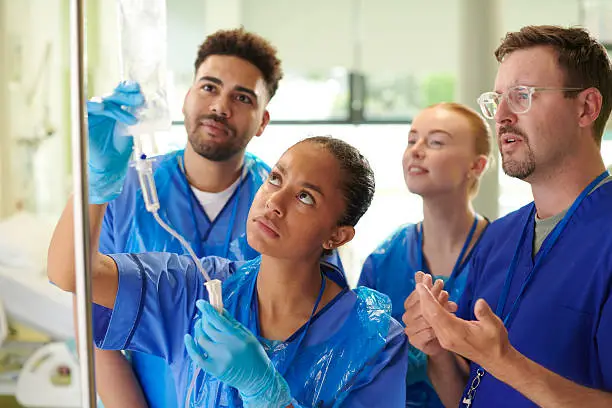
Watching someone demonstrate a skill can help you understand it. Practising the skill yourself feels different. Skills labs give nursing students time to practise tasks like taking vital signs, communicating with patients, and carrying out procedures, with an instructor guiding them.
Simulation lets you respond to a realistic situation in a supervised setting. You might need to recognise a change in a patient’s condition, decide what to do next, and explain your reasoning. Afterwards, an instructor can help you talk through what happened.
Placements take that learning into healthcare settings. You’ll spend time with patients and care teams while experienced nurses supervise your work. You can practise connecting what you’ve studied with what’s happening in front of you: listening carefully, noticing changes, asking questions and explaining information clearly.
Those experiences can feel unfamiliar at first, particularly if you’re new to healthcare. That’s part of the learning. You won’t be expected to know everything on day one, but you will need to take feedback seriously and build your confidence over time.
Turning a Career Change Into a Nursing Future Through Accelerated Education
A career change can bring useful experience. Maybe you’ve spent years helping customers, supporting a team, solving problems, or keeping complicated work on track. Those skills may serve you well in nursing. They won’t replace clinical knowledge, though, and you’ll still be learning a new profession with its own standards and responsibilities.
Before you apply, try to get a plain, practical picture of the program.
Ask:
- Which prerequisites do you need, and when must you finish them?
- How many hours a week should you set aside for study and clinical work?
- Where are placements, and how will you travel to them?
- Does the program meet licensure requirements in your state?
- What academic and NCLEX preparation support can students get?
Talking with an adviser or a current student can make the schedule easier to picture. Ask what a typical week is actually like, including the parts that tend to catch students by surprise. You don’t need to have every detail figured out, but you do need a realistic plan for making time to study.
An accelerated nursing program gives professionals with a previous degree another way into healthcare. It can build on your earlier education and shorten the path to an RN career, while still requiring serious study and hands-on practice.
Before you choose a program, look closely at the schedule, prerequisites, clinical placements, and state requirements. Then, consider what you’d need to rearrange in your life to make the work manageable.