Three rugs in four years. That was my record on one New Braunfels living room before I finally admitted the obvious: the problem was never the rug.
Here’s what I’ve learned doing this work around the Hill Country. Most rooms that feel flat, cold, or weirdly unfinished aren’t suffering from bad taste. They’re suffering from room failure, and the causes sort into five checks. Run them in order and you’ll usually find the culprit in under an hour, which is about the cost of one more throw pillow you don’t need.
I’ll walk you through all five. And I’ll say up front what most decor blogs won’t: two of them have nothing to do with decorating at all. They’re about how the room behaves, not how it looks, which is exactly the stuff a good insulation contractor in new Braunfels spends their day on and most design clients don’t think to check first.
Check 1: Does the Room Hold Still Air?
Walk into the room, close the door, and stand there for thirty seconds. If you feel a faint moving-air sensation on your arms or ankles, stop decorating. Nothing you hang on a wall will survive that sensation. It drains a room the way a slow leak drains a pool, and no one ever blames the leak, they blame the tile.
Windows and doors are the obvious suspects. Sliding glass doors along a west-facing wall are the sneaky ones. New Braunfels sits where the Hill Country heat and the coastal humidity argue with each other, and that argument plays out in the rooms facing the weather. You usually don’t need a professional to find the leak itself, just a lit incense stick on a windy day and a slow walk around each frame. Where the smoke goes sideways is where you start.
If the smoke test comes up clean and the room still feels drafty, the air is likely going somewhere you cannot see, and that’s a job for someone with a door blower.
Check 2: Where Does Your Floor Actually End?
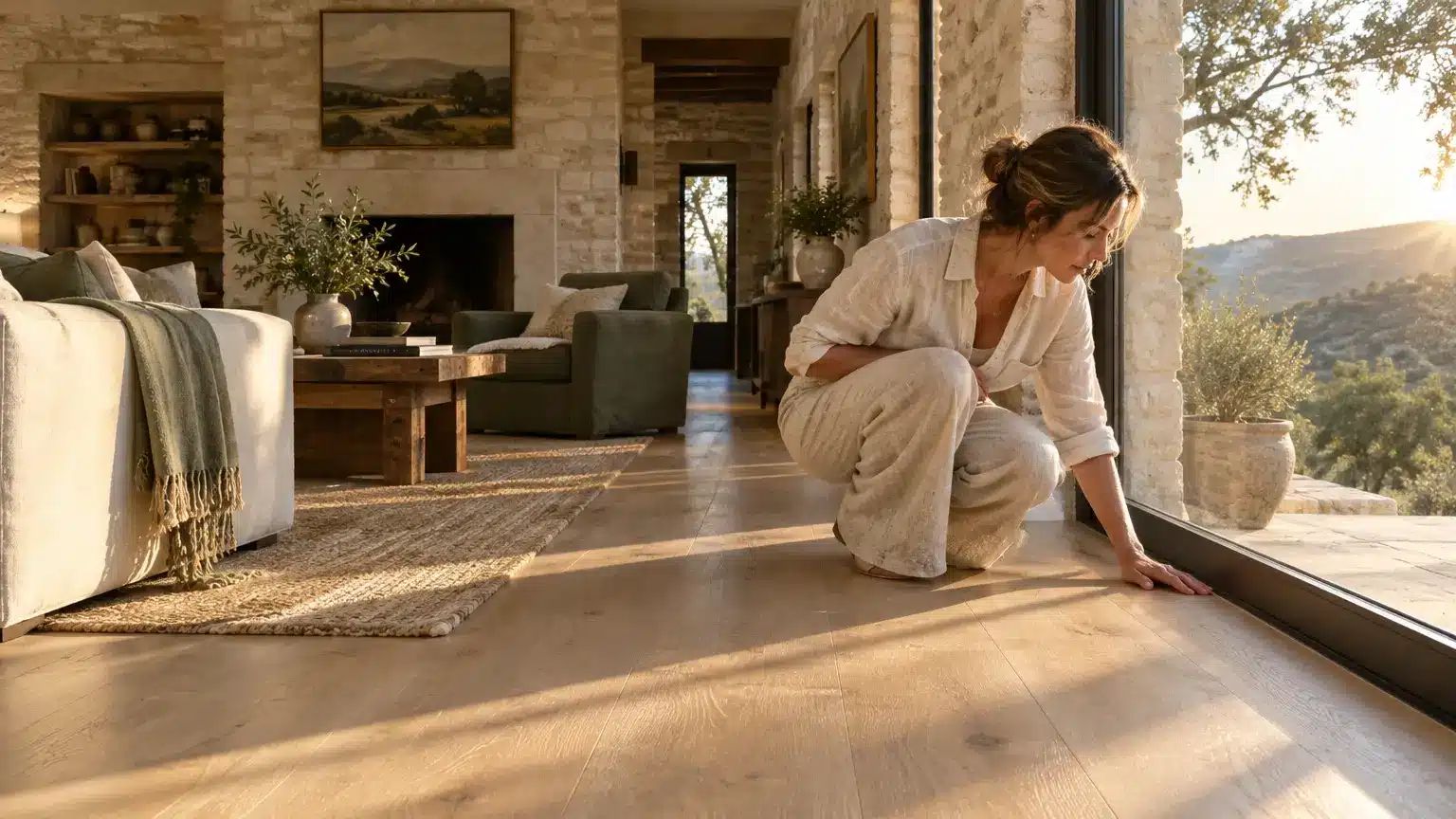
Stand at the doorway and look across the room in a low crouch, the way you’d sight a putt. What you’re hunting for is the floor line. If it visibly stops at one wall, or if the flooring runs hot underfoot in a strip near the rear of the room, the room is losing heat through that boundary, and your feet register it before your eyes do.
This is the second non-decorating check, and it’s the one that ruins more design plans than bad paint colors. Concrete slabs in this region sit on top of fill that drains unevenly, which is why the back corner of a Hill Country bonus room can feel like a different climate than the front. According to the Department of Energy, air sealing and insulation together are among the most cost-effective upgrades a homeowner can make, and the reason sits in your feet, not in a brochure.
Practical routing: if one section of your floor reads cold or hot while the rest behaves, plan the flooring replacement after the boundary issue gets addressed. Installing tile or engineered wood first means ripping it out later, which is a bill nobody enjoys paying twice.
Check 3: Is the Light Fighting the Furniture?
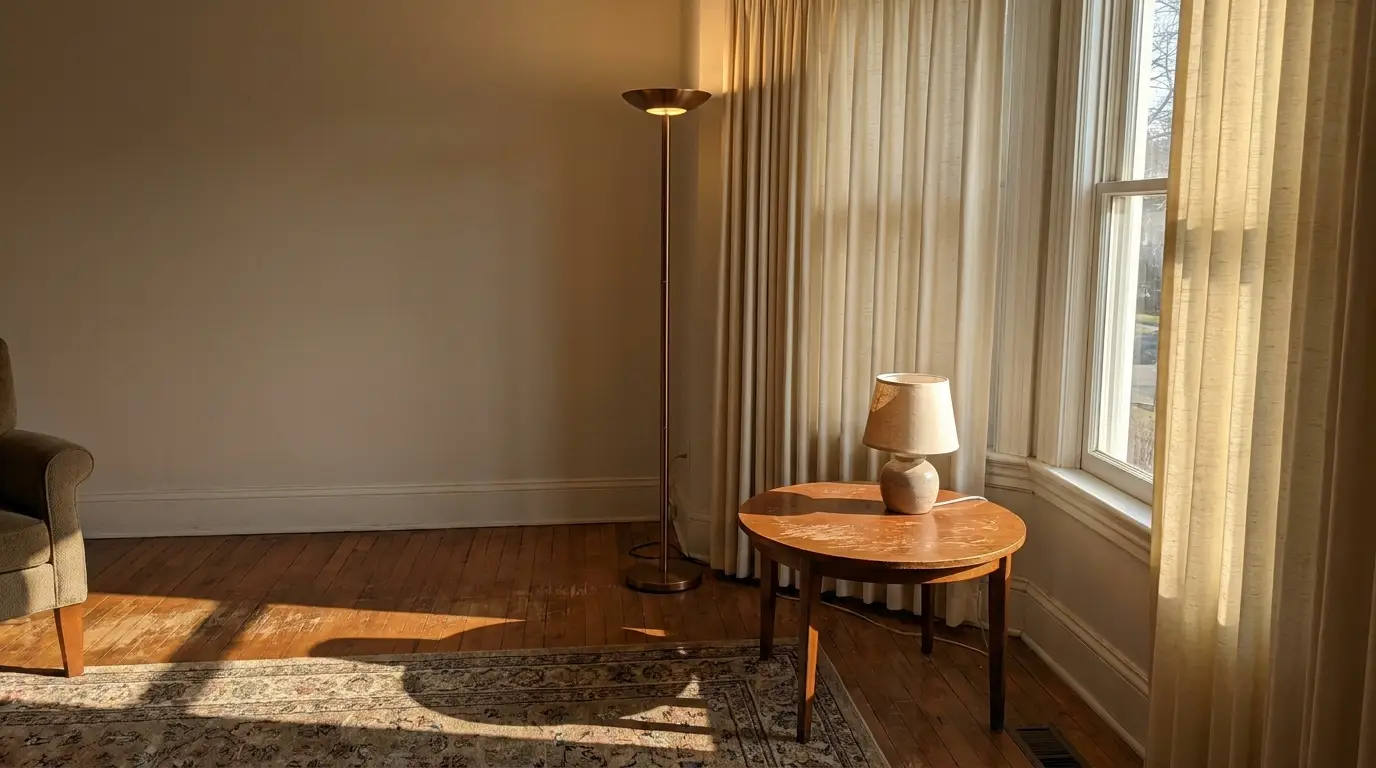
Now we finally get to decorating. Sit where you normally sit and look at what faces you. Almost every “off” room I visit has one of two light faults.
The first is a single-source problem: one overhead fixture doing all the work. It creates cave lighting, bright in the middle, gloomy at the edges, and it flattens everything you own into the same dull tone. Three sources at different heights fixes it, and they don’t have to match. A floor lamp, a table lamp, and one small sconce will beat a chandelier every single time.
The second fault is direction. West-facing Hill Country windows throw a hard, warm light across the floor in the late afternoon. That light is gorgeous for two hours and punishing the rest of the day. If your art looks washed out or your sofa looks like a different color at 4 p.m. than it does at noon, this is why. Sheers won’t fix it. A properly lined curtain will.
Designers get blamed for room failures that were actually building failures. The honest move is to say so out loud and let the client save their budget for the fix that matters.
Check 4: What Is the Room’s One Job?
Most rooms that feel off are trying to do too much. The guest room that’s also an office that’s also where the dog sleeps. The formal dining room used twice a year. The living room that has to be a playroom until the kids are older.
Pick the job the room does most often, and let the design serve that job only. The office-guest room keeps a desk and a comfortable pullout, and it drops the decorative shelving. The dining room that only hosts holidays gets a table that seats eight and nothing else, no sideboard, no bar cart, no hutch. A room with one job reads as calm, and calm is 80 percent of what people mean when they call a room beautiful.
If you’re not sure which job wins, tally how the room was used over the last thirty days. Your calendar already decided for you.
Check 5: Where Does the Eye Stop?
Look at the far wall. If your gaze lands on a blank expanse of drywall, the room will feel unfinished no matter what else you do. A room needs one landmark, and it can be anything: art, a mirror, a tall plant, a floor lamp, a section of paneling.
The Department of Housing and Urban Development tracks how American housing stock gets used over time, and the pattern that shows up is simple: people update finishes far more often than they update structure. Which means most of the visual problems you’re staring at will outlive five rounds of paint. Fix the walls, then landscape them.
One more thing that surprised me. A 2024 survey from the Environmental Protection Agency found that Americans who work from home spend much more time in the rooms they decorate. That single shift explains why the bar for “feels right” has moved. You are not just looking at this room on weekends anymore. You are living in it.
A Practical Order of Operations
Run the checks in this sequence. Airflow first, then floor boundary, then lighting, then the room’s job, then the far wall. Resist the urge to jump to furniture. You’ll save money and avoid buying things twice.
- Week 1: incense test around windows and doors, note any draft
- Week 1: crouch check on the floor line, mark cold or hot zones
- Week 2: count light sources in the room, add one if the number is under three
- Week 2: name the room’s single job, remove one thing that contradicts it
- Week 3: hang or lean one landmark on the far wall, then stop decorating for two weeks
The two-week pause is the part most people skip. It lets the room settle and lets you notice what’s still wrong before you buy anything else. Ten to one, nothing will be.
What to Do with What You Find
If checks one and two came up clean, you have a decorating problem and the rest of this list solves it. If they came up dirty, you have a behavior problem, and no amount of styling will cover it. I’d rather tell a client to postpone a rug purchase and spend the money on sealing a window frame than watch them buy a fourth rug. Decor is the reward for a room that behaves. Behavior comes first.
So here’s your question. Walk into the room that bugs you most, do the crouch, and look at the floor line. What did you see?