
Working from home sounds like it should be easier to concentrate. No commute, no open-plan office, no one hovering at your desk. Yet focus often slips faster at home than at work. The reasons are mostly fixable, and almost none of them are about willpower. They are about the space you are trying to work in and the habits around it. Here is what actually helps.
Why Your Focus Keeps Slipping
Start with the real culprit, because it is usually not the one people blame.
It is rarely sheer laziness or a lack of discipline. It is interruption, and specifically the kind you can understand. Your brain can tune out steady background noise, but it cannot ignore a voice it can follow, which is why a conversation in the next room or a show playing down the hall pulls your attention far harder than traffic outside ever would. Add the phone buzzing within reach, and sustained concentration becomes the exception rather than the rule.
Home makes it worse in another way, too: the line between work and everything else is thin. The laundry, the fridge, and the sofa are all a few steps away, each quietly competing for the attention the task needs.
So the fix is not to try harder. It is to remove what keeps interrupting you.
Protect Your Attention, Not Just Your Time
Most focus advice stops at “block time in your calendar.” Useful, but incomplete, because a protected hour in an unprotected space still gets interrupted.
Guard both. Pick the stretch of the day when you think best and defend it. Put the phone in another room, not just face down, because reaching for it is half the problem. Mute the notifications you do not truly need, and tell anyone else at home what a closed door, or a pair of headphones, means. Small signals, agreed once, save a dozen interruptions a day.
Build a Spot That Helps You Concentrate
Where you work shapes how well you work, more than any productivity app.
- Pick a spot away from the busiest parts of the home, not the kitchen or the hallway.
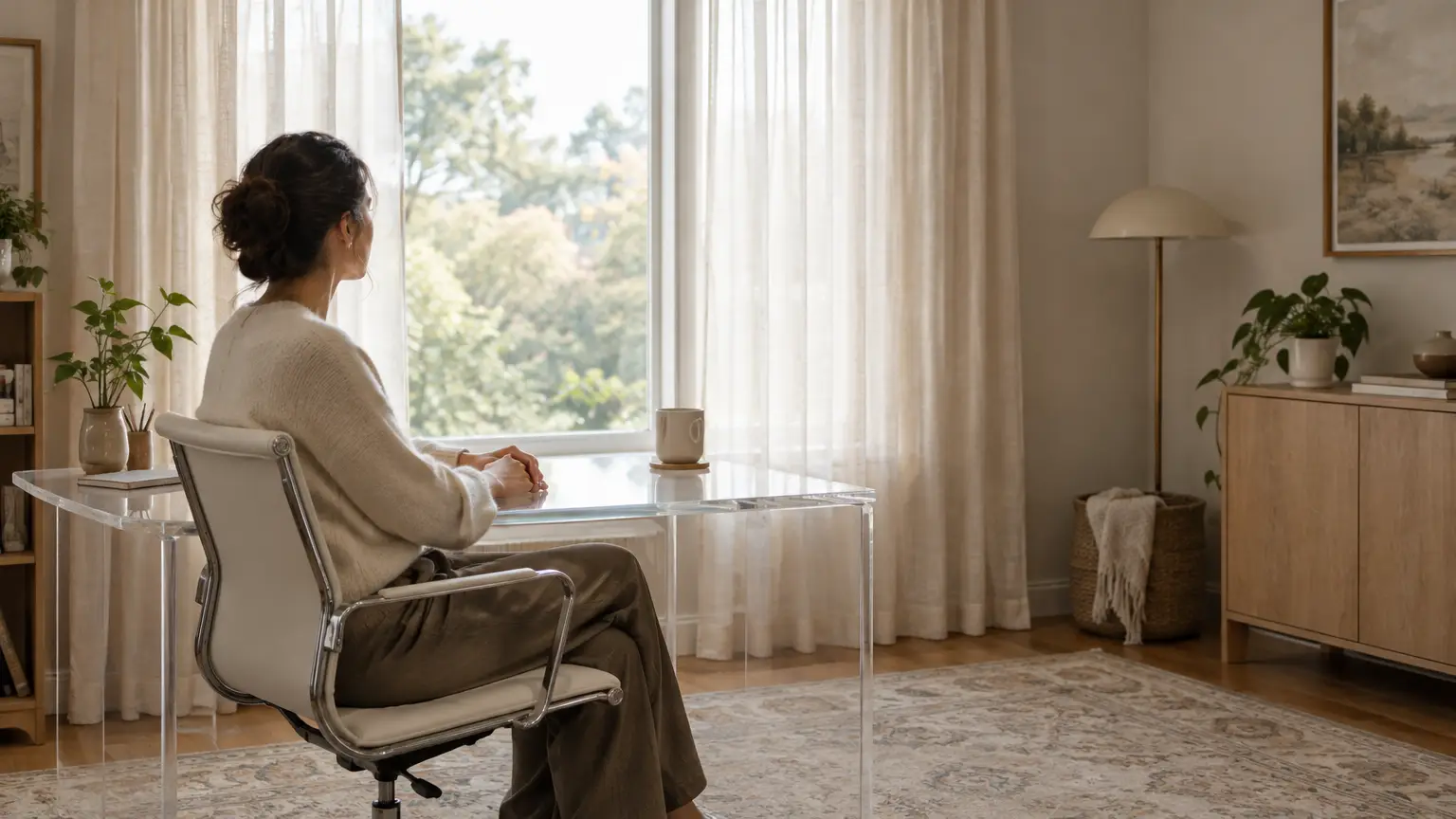
- Face a wall or a window rather than the room, so movement behind you stays out of view.
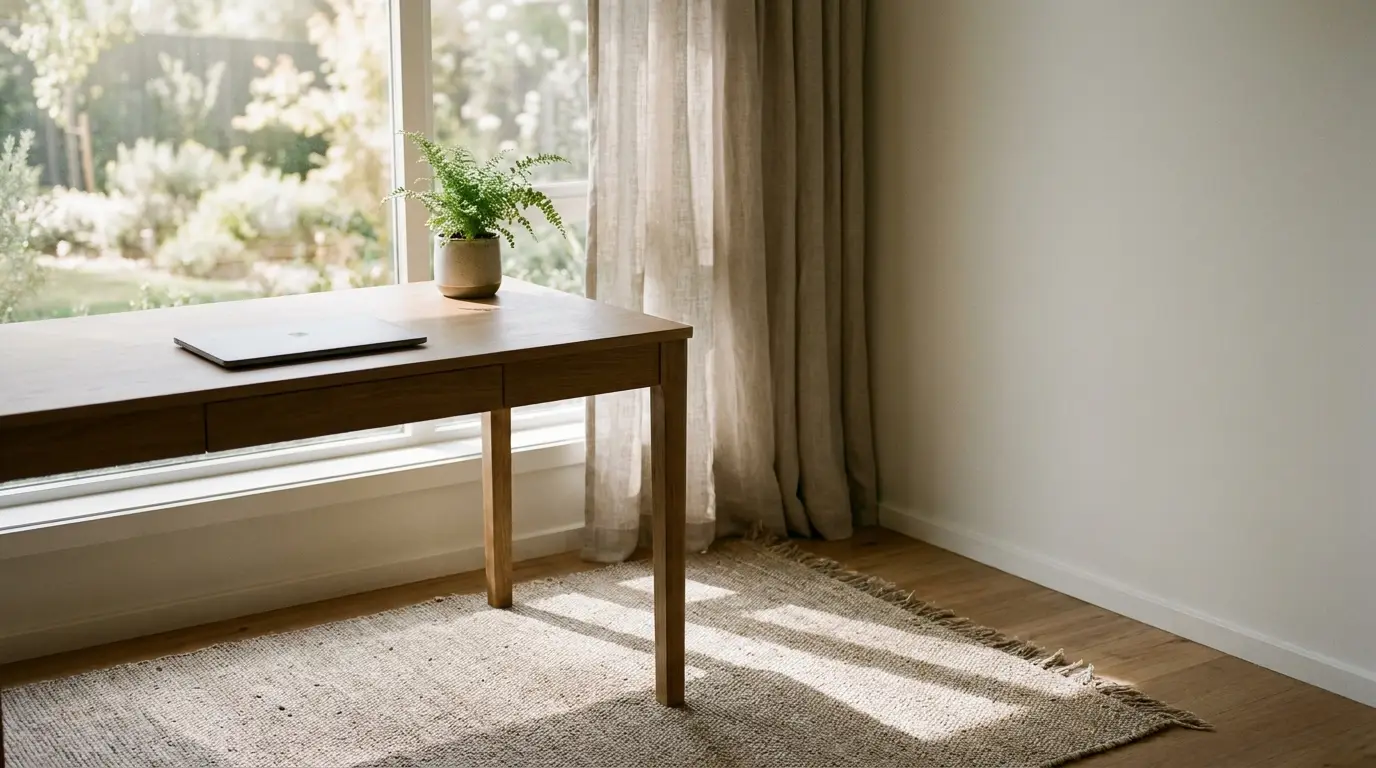
- Soften the space with a rug, curtains, or a bookshelf, which cut the echo that makes a room feel chaotic.
- Keep the surface clear, because visible clutter is its own quiet distraction.
None of this is expensive. It is mostly about deciding, once, where and how you work instead of drifting to wherever is free. Treat it as a real workspace, even if it is only a corner, and your brain starts to link that spot with focus the way it once linked the office.
Work With Your Energy
Focus is not flat across the day, so stop treating it as if it were.
Put the hard, thinking-heavy work in your sharpest window, usually the morning for most people, and save email, admin, and calls for the dips. Take real breaks away from the screen, because attention recovers when you let it, not when you grind through. And be honest about multitasking: switching between tasks feels productive and quietly wrecks concentration.
What Does Not Really Work
A few popular fixes feel productive and mostly are not.
Noise-cancelling headphones are great against steady hum and weak against someone actually speaking to you. White noise apps just layer more sound on top. And the heroic 5am start works right up until the day you cannot sustain it. Each one manages the symptom without touching the cause, which is a space that lets the interruptions in. Fix the space, and you stop needing the workarounds.
When the Home Just Will Not Go Quiet
Sometimes none of the habits are enough. Shared apartments, thin walls, a partner on their own calls, a house full of family. If the space itself carries sound, you can do everything right and still lose the afternoon.
That is where a self-contained acoustic pod comes in. It is a small, sealed booth you set up in a room and step into for calls and focused work, giving you a genuinely quiet spot without any building. If you are out of options but need somewhere to concentrate, an acoustic pod from SoundBox Store is worth a look, and a guide to soundproof office pods shows how they compare on size and how much sound they keep out.
The Honest Takeaway
If focus keeps slipping at home, stop blaming your discipline. Remove the interruptions instead. Protect your attention as well as your time, set up a spot that works with you rather than against you, match the hard work to your sharpest hours, and where the home simply will not go quiet, add a space that will. Do that, and concentrating at home stops being a daily battle and starts being the default.