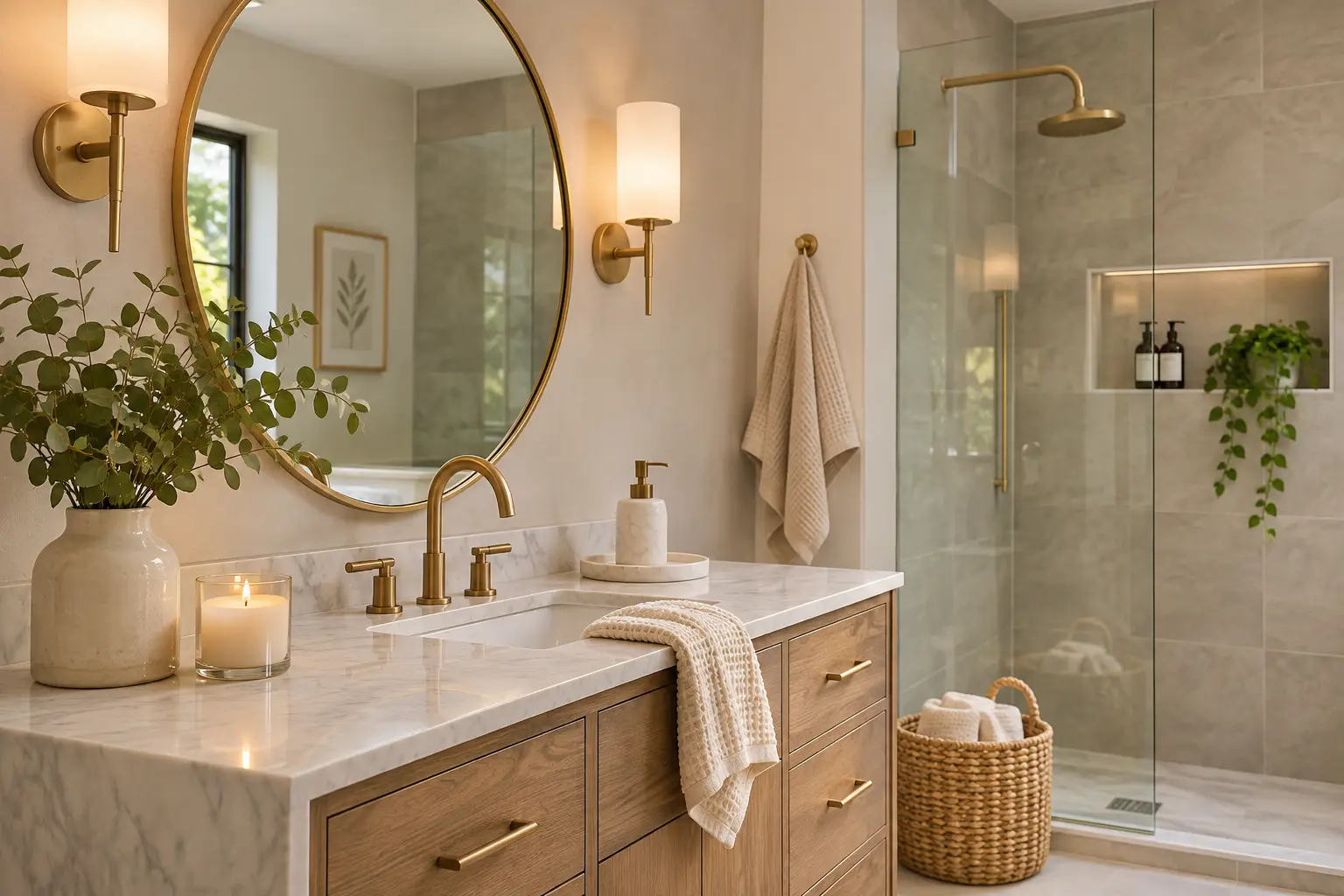
There’s something about a beautifully designed bathroom that makes an ordinary morning feel a little more luxurious. Maybe it’s the soft lighting, the elegant fixtures, or simply the absence of mismatched bottles scattered around the sink. Whatever the secret, expensive bathrooms share one thing: everything looks intentional.
The good news is that creating this effect doesn’t necessarily require marble walls, a freestanding bathtub, or an extensive renovation budget. Some of the most convincing transformations come from modest changes, as long as you choose them with care.
If your bathroom is starting to feel dated, these seven ideas can help you give it a more refined look without spending a fortune.
1. Choose a Color Palette That Feels Calm and Cohesive
Luxury bathrooms rarely need a dozen competing colors to make an impression. In fact, some of the most elegant spaces stick to just two or three shades, allowing the materials and textures to do the talking. Think warm whites, soft taupes, muted greens, or earthy beige tones that feel inviting rather than clinical.
Darker colors can be equally sophisticated, especially charcoal or deep olive paired with lighter surfaces. The trick is to work with what you already have. That gorgeous warm beige you spotted on Pinterest might look completely different next to your existing cool gray tiles, so test a few samples before committing. And don’t just check them in daylight; artificial bathroom lighting has a habit of making perfectly lovely colors look rather strange.
The good news? You don’t have to repaint the entire room to make a difference. Sometimes a fresh color above the tiles is all it takes to give an otherwise dated bathroom a more polished, contemporary feel.
2. Give Your Bathroom Fixtures More Attention
A bathroom can have beautiful tiles and a perfectly functional vanity but still look dated because of its fixtures. Faucets, shower fittings, and cabinet handles may seem like minor details, yet replacing an old, bulky faucet with a sleeker design can instantly make the space feel more polished.
For a timeless look, chrome and brushed nickel are reliable choices, while brushed brass adds warmth and matte black suits more contemporary interiors. You don’t need every metal surface to match perfectly, but sticking to one dominant finish helps tie everything together.
If you’re already working with a contractor or interior designer, discuss fixture sourcing before purchasing anything. Trade professionals often have access to a wider selection of products through wholesale suppliers, including discount bathroom faucets in various styles and finishes.
This approach can be particularly useful when renovating several bathrooms or coordinating faucets with other fittings. Just remember to check compatibility with your existing sink, plumbing configuration, and installation requirements before making a final choice.
3. Rethink the Lighting Before Replacing Everything Else
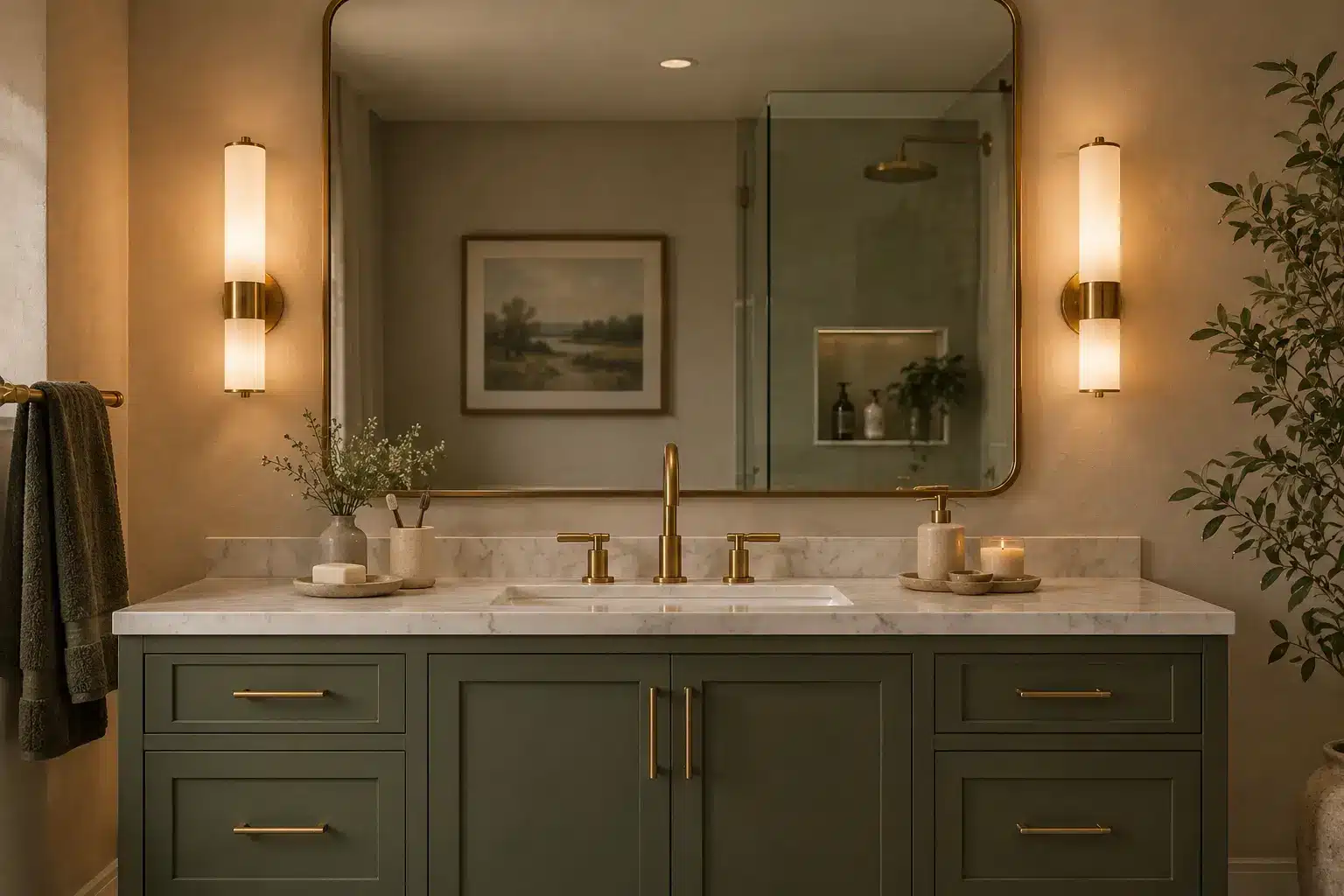
Lighting can completely change the way a bathroom looks and feels, sometimes more than expensive tiles or a new vanity. Harsh overhead lights tend to cast unflattering shadows, while softer, layered lighting can make even an ordinary space feel warm and inviting.
Wall sconces beside the mirror provide more flattering illumination, while a backlit mirror adds a subtle touch of hotel-style luxury. The US Department of Energy’s residential lighting guide also recommends lighting the face from the sides and above to minimize shadows. If rewiring isn’t an option, even changing an outdated fixture or choosing better bulbs can make a difference.
Color temperature matters, too. Very cool lighting can feel clinical, while overly warm bulbs may distort colors, so aim for a comfortable middle ground. In smaller bathrooms, a well-placed mirror can help spread the light and make the room feel more spacious. Just remember to choose fixtures suitable for the bathroom’s moisture conditions.
4. Make Existing Tiles Work Harder
It’s tempting to assume that an expensive-looking bathroom needs brand-new tiles. In reality, replacing perfectly serviceable surfaces can eat up a large portion of the renovation budget without delivering the biggest visual improvement.
Start by examining what’s already there.
Discolored grout, damaged silicone, and mineral deposits can make otherwise attractive tiles look neglected. Deep cleaning, repairing damaged grout, and refreshing old sealant may dramatically improve their appearance.
If you are planning to replace some surfaces, consider limiting new tiles to one focal area rather than covering every wall.
A simple shower niche, a textured backsplash behind the vanity, or a carefully chosen accent wall can introduce interest without the expense of a complete redesign. Larger-format tiles may also create a calmer appearance by reducing the number of visible grout lines.
Material selection is another area where smart decisions matter. Porcelain tiles that resemble natural stone can offer a similar visual character to marble while generally requiring less maintenance.
Rather than spending heavily on every surface, choose one area where texture or pattern will have the greatest impact and keep the surrounding finishes understated.
5. Upgrade the Mirror and Vanity Details
A mirror can completely change a bathroom’s character without a major renovation. An oversized round design softens sharp lines, while a slim rectangular mirror creates a cleaner, more modern look. Even the frame matters: metal adds definition, while wood brings warmth.
The same goes for your vanity. If it’s still in good condition, a fresh coat of paint, new handles, or a few well-chosen accessories may be all it needs. For inspiration, ObviousMag’s guide to interior design styles explores how different materials, colors, and details can work together.
Just avoid mixing too many styles in one small space. A vintage mirror and modern faucet can look beautiful together, but adding ornate handles and industrial lighting might be pushing it.
6. Introduce Texture Through Simple Accessories
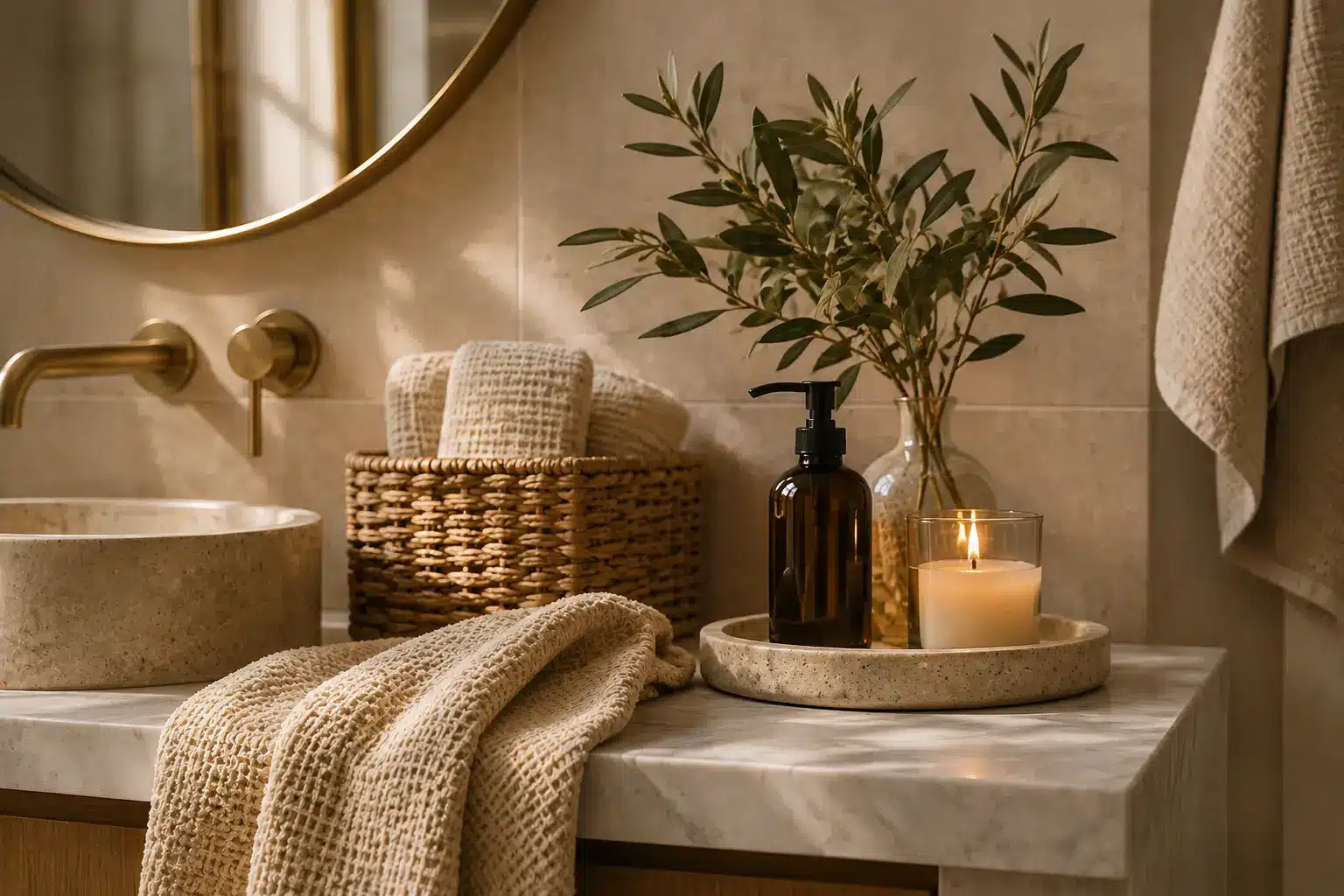
Not every upgrade needs to involve tools, plumbing, or a contractor. In fact, finishing touches often make a bathroom feel closer to a boutique hotel than a purely functional space.
Start with towels. A coordinated set in white, oatmeal, charcoal, or another color that complements the room can instantly make open shelves and towel rails look more organized. Choose materials that feel pleasant to use, not just look good.
A simple bath mat, a ceramic soap dispenser, and a small wooden tray can add texture without creating visual clutter.
Natural materials are especially effective in bathrooms with predominantly hard surfaces. Wood, woven baskets, and stone accessories help soften the appearance of porcelain, glass, and metal.
This principle extends well beyond bathrooms. In its article about what makes a room feel visually balanced, ObviousMag explores why the relationship between different elements matters more than any single decorative purchase.
Plants can also work, as long as the room offers suitable light and ventilation. If it doesn’t, a small arrangement of dried branches or another moisture-appropriate decorative element may be more practical.
The goal isn’t to fill every available surface. Leave enough empty space for the accessories you choose to stand out.
7. Spend Where Quality Will Actually Make a Difference
A limited budget doesn’t mean choosing the cheapest option every time. Some things are worth investing in, especially those you use daily or can’t easily replace, like faucets, shower fittings, and properly installed plumbing. Decorative accessories, on the other hand, you can update whenever you want to change the look.
Water efficiency is worth considering, too. According to the US Environmental Protection Agency, WaterSense-labeled bathroom faucets can reduce water flow by at least 30% without sacrificing performance, making them a practical long-term choice.
Finally, leave some room in your budget for installation and unexpected repairs. If you’re working with a contractor or designer, discuss your priorities early. They may know where it’s worth spending a little more and where you can achieve a similar look for less.
A Beautiful Bathroom Is About the Details
The difference between an ordinary bathroom and one that feels luxurious isn’t always how much you spend.
Start with the details that bother you most, whether that’s an outdated faucet, poor lighting, or a vanity that has seen better days. Improving one area at a time can make the process more manageable, and you’ll have a clearer sense of which changes are genuinely worth making.
After all, a bathroom should feel good to spend time in, not just look impressive in photographs.