

Choosing the right window blinds can affect how much natural light enters your home, how comfortable your rooms feel and how much privacy you enjoy throughout the day. While roller blinds and Venetian blinds are both popular window coverings, they offer different levels of light control, maintenance requirements and visual appeal.
Roller blinds feature a single piece of fabric that moves up and down, creating a clean and simple appearance. Venetian blinds use horizontal slats that tilt to control sunlight and visibility, allowing more flexibility without raising the entire blind.
For Sydney homeowners, the decision can also depend on room orientation, window size, humidity and the amount of direct sunlight entering the property.
A blind that works well in a bedroom may not be the most practical choice for a kitchen, home office or street-facing living room.
This guide compares roller blinds and Venetian blinds across privacy, light control, insulation, durability, maintenance, cost and design. It also explains which option works best in different rooms so you can choose window coverings that suit your home and everyday needs.
What Is the Difference Between Roller Blinds and Venetian Blinds?
The main difference between roller blinds and Venetian blinds is how they operate and control natural light.
Roller blinds use a continuous fabric panel that rolls around a tube positioned above the window. Venetian blinds use horizontal slats that can be tilted, raised or lowered.
Both options can provide privacy and manage sunlight, but their features make them suitable for different applications.
How Do Roller Blinds Work?
Roller blinds operate by raising or lowering a fabric panel using a manual or motorised mechanism.
The fabric rolls around a tube mounted above the window, allowing the blind to be lowered for coverage or raised to expose the glazing.
Depending on the fabric, roller blinds can provide different levels of light filtration.
Common options include blockout, light-filtering and sunscreen fabrics.
Blockout fabrics are designed to prevent light from passing through the material, while light-filtering fabrics soften incoming daylight.
Sunscreen fabrics allow some outward visibility during daylight while reducing glare and solar exposure.
Homeowners comparing blinds in Sydney can explore different styles and fabric options suited to residential windows.
How Do Venetian Blinds Work?
Venetian blinds consist of horizontal slats connected by a lifting and tilting mechanism.
The slats can be rotated to change the amount and direction of light entering the room.
When the slats are open, daylight and visibility increase. Tilting them reduces direct sunlight and can limit views into the room.
The entire blind can also be raised when an unobstructed window is preferred.
Venetian blinds are available in materials such as aluminium, timber and PVC, depending on the product range.
Each material offers different characteristics relating to appearance, moisture resistance and maintenance.
Roller Blinds vs Venetian Blinds: Quick Comparison
|
Feature |
Roller Blinds |
Venetian Blinds |
|
Design |
Single fabric panel | Horizontal adjustable slats |
|
Light control |
Raise or lower fabric | Tilt slats or raise the blind |
|
Privacy |
Depends on fabric and coverage | Depends on slat angle and closure |
|
Blockout options |
Available with blockout fabrics |
Generally allows light through slat gaps |
| Appearance | Simple and streamlined |
Structured and decorative |
| Maintenance | Fabric cleaning according to product instructions |
Regular slat dusting |
|
Materials |
Various fabric types | Aluminium, timber, PVC and other materials |
| Moisture resistance |
Depends on fabric and components |
Depends on slat material |
| Motorisation | Available on compatible systems |
Available on selected systems |
| Installation cost | Varies by fabric and mechanism |
Varies by material and configuration |
| Best applications | Bedrooms, living rooms and large windows |
Home offices, kitchens and rooms needing adjustable daylight |
The better choice depends on whether you prioritise simple operation, flexible light control, privacy or a particular interior appearance.
Why Choose Blinds in Sydney Based on Your Room’s Needs?
Window coverings should match how each room is used rather than relying on one blind style throughout the entire home.
A bedroom may require stronger light blocking, while a home office may benefit from adjustable sunlight control throughout the working day.
For Sydney properties, window orientation can also influence the decision. West-facing rooms often receive strong afternoon sunlight, while other spaces may need window coverings that preserve daylight without sacrificing privacy.
Roller Blinds for Simple Window Coverage
Roller blinds are a practical choice when homeowners want a neat window covering that is easy to operate.
The fabric can be raised to expose the window or lowered to provide coverage.
Their straightforward appearance makes them suitable for contemporary interiors, smaller rooms and spaces where decorative details are kept minimal.
Roller blinds can also suit larger windows, although fabric width, roller size and mounting requirements must be checked.
Venetian Blinds for Adjustable Sunlight
Venetian blinds provide greater control over the angle of incoming light.
Instead of raising the entire blind, homeowners can tilt the slats to adjust sunlight and visibility.
This can be useful in rooms where lighting requirements change during the day.
For example, a home office may need daylight in the morning but reduced screen glare during the afternoon.
Venetian blinds allow these adjustments without fully exposing the window.
Combining Blinds With Curtains
Some rooms benefit from combining blinds with another window furnishing.
For example, a light-filtering blind may provide daytime coverage, while curtains add softness and an additional layer of privacy.
Homeowners exploring curtains in Sydney can compare fabric styles and window furnishing combinations that complement roller or Venetian blinds.
The combination should account for available mounting space, window operation and the desired appearance.
Roller Blinds vs Venetian Blinds: Which Provides Better Light Control?
Light control is one of the most noticeable differences between these two window coverings.
Roller blinds manage light through the fabric selected and how far the blind is lowered.
Venetian blinds manage light through the angle of their slats, allowing more precise adjustment during the day.
The best choice depends on whether you want to filter daylight, reduce glare or darken a room.
Light Control With Roller Blinds
Roller blinds offer different light-control options depending on the fabric.
Blockout roller blinds are designed to prevent light passing through the fabric, making them useful for bedrooms and media rooms.
However, light can still enter around the edges unless the installation includes suitable side channels or other light-management features.
Light-filtering roller blinds soften incoming daylight while maintaining some natural brightness.
Sunscreen roller blinds reduce glare and allow varying levels of outward visibility, depending on the fabric’s openness and lighting conditions.
Selecting the correct fabric is more important than choosing a roller blind based on colour alone.
Light Control With Venetian Blinds
Venetian blinds allow the slats to be adjusted without raising the entire blind.
This makes them useful when the direction of sunlight changes throughout the day.
Tilting the slats can reduce direct glare while allowing some daylight into the room.
However, Venetian blinds generally do not provide complete darkness.
Light may enter between the slats and around the edges of the blind.
Which Is Better for Bedrooms?
Blockout roller blinds are generally the more suitable option when reducing incoming light is a priority.
They can be particularly useful for bedrooms occupied by shift workers or people who prefer a darker sleeping environment.
Venetian blinds may still suit bedrooms where adjustable daylight and decorative appearance are more important than strong room darkening.
For greater light control, the blind’s mounting position and edge gaps should also be reviewed.
Which Blinds Provide Better Privacy?
Privacy requirements vary according to window position, neighbouring buildings and room use.
Street-facing living rooms and bedrooms may need more coverage than windows overlooking private gardens.
Both roller and Venetian blinds can improve privacy, but they do so differently.
Privacy With Roller Blinds
Roller blinds provide coverage across the window when fully lowered.
Blockout and suitable opaque fabrics can prevent direct visibility through the material.
Light-filtering and sunscreen fabrics offer varying privacy levels.
However, sunscreen fabrics that provide daytime privacy may allow people outside to see into an illuminated room at night.
Homeowners should check the fabric’s privacy characteristics under both daytime and evening lighting.
Privacy With Venetian Blinds
Venetian blinds provide adjustable privacy through the angle of their slats.
Tilting the slats can restrict direct views while allowing some daylight to enter.
However, privacy depends on viewing angles, window height and the position of people inside and outside.
Slats that appear closed from one position may still allow visibility from another angle.
Which Is Better for Street-Facing Windows?
Both styles can work for street-facing windows.
An opaque roller blind is useful when full fabric coverage is preferred.
Venetian blinds may be more practical when homeowners want to maintain daylight while limiting visibility from the street.
The decision should reflect how close the window is to neighbouring properties and whether privacy is needed throughout the day or mainly at night.
Roller vs Venetian Blinds: Which Offers Better Insulation?
Window coverings can influence indoor comfort by reducing direct sunlight and creating additional layers near the glazing.
However, their thermal performance depends on the material, installation method, fit and existing window system.
Neither style should be assumed to provide a specific level of insulation without product information.
Thermal Performance of Roller Blinds
Roller blinds can reduce direct solar exposure when the fabric is lowered.
Certain fabrics are designed to reflect or reduce incoming solar energy.
Blockout and other tightly woven materials may also influence heat transfer near the window.
However, gaps around the blind can reduce the overall effect.
The fabric specification and mounting arrangement should be reviewed when thermal performance is a priority.
Thermal Performance of Venetian Blinds
Venetian blinds can help manage solar heat by changing the slat angle.
This allows homeowners to reduce direct sunlight without completely blocking daylight.
However, the gaps between the slats can allow air movement and light transmission.
The thermal benefit depends on the slat material, position and window arrangement.
Which Is Better for Sydney Summers?
For rooms receiving strong afternoon sunlight, a suitable solar-control or blockout roller blind may provide useful overhead and window coverage.
Venetian blinds offer flexibility when homeowners want to manage glare while retaining some natural light.
For the greatest improvement in solar heat control, external shading and suitable glazing may be more effective than relying on internal blinds alone.
Which Blind Style Is Easier to Clean and Maintain?
Maintenance is another practical difference between roller and Venetian blinds.
Roller blinds have a continuous fabric surface, while Venetian blinds contain multiple slats that can collect dust.
The amount of cleaning required depends on the material, room conditions and frequency of use.
Cleaning Roller Blinds
Roller blinds generally require periodic dusting or gentle cleaning.
Some fabrics can be wiped with a lightly dampened cloth, while others require dry cleaning methods or specialist care.
Always follow the manufacturer’s instructions.
Excessive moisture, harsh chemicals or vigorous scrubbing may damage coatings, fabrics or mechanisms.
The roller tube and operating system should also be checked for smooth movement.
Cleaning Venetian Blinds
Venetian blinds can require more detailed cleaning because dust accumulates on individual slats.
Regular dusting with a soft cloth or suitable blind-cleaning tool can help maintain their appearance.
Aluminium and suitable PVC slats may tolerate gentle damp cleaning, depending on the product.
Timber blinds generally require greater care around moisture.
Avoid bending slats or applying excessive force to cords and operating components.
Maintenance Comparison
|
Maintenance Task |
Roller Blinds | Venetian Blinds |
|
Dusting |
Regular light cleaning | Individual slats need attention |
|
Damp cleaning |
Depends on fabric | Depends on slat material |
|
Stain removal |
Fabric-specific method |
Material-specific method |
| Operating mechanism | Inspect roller and controls |
Inspect tilt and lifting mechanisms |
| Moisture sensitivity | Fabric-dependent |
Material-dependent |
| Cleaning difficulty | Generally straightforward |
Can require more time |
For busy households, low-maintenance window coverings may be a priority.
However, material quality and installation conditions should also influence the decision.
Which Blinds Are Better for Kitchens and Bathrooms?
Kitchens, bathrooms and laundries have different environmental conditions from bedrooms and living rooms.
Humidity, condensation, grease and frequent cleaning can affect some window furnishings.
Choosing a suitable material can help prevent premature deterioration.
Roller Blinds in Kitchens
Roller blinds can work well in kitchens when the selected fabric and components are suitable for the environment.
Fabrics designed for easier cleaning may be practical near food preparation areas.
However, blinds should not be positioned where they may contact open flames, hot cooking equipment or excessive steam.
Window access and ventilation should also be considered.
Venetian Blinds in Kitchens
Aluminium or suitable PVC Venetian blinds may be practical for kitchens because their surfaces can often be wiped clean.
The adjustable slats also provide control over sunlight and privacy.
However, grease can accumulate on the slats, particularly near cooking areas.
Regular cleaning may be required.
Roller vs Venetian Blinds in Bathrooms
Bathrooms require materials that can tolerate humid conditions.
Suitable moisture-resistant roller blind fabrics may work well when correctly specified.
Aluminium or PVC Venetian blinds may also be appropriate, depending on the complete product and hardware.
Natural timber Venetian blinds are generally less suitable for areas with persistent moisture unless the manufacturer specifically approves the product for that environment.
How Do Roller and Venetian Blinds Compare for Appearance?
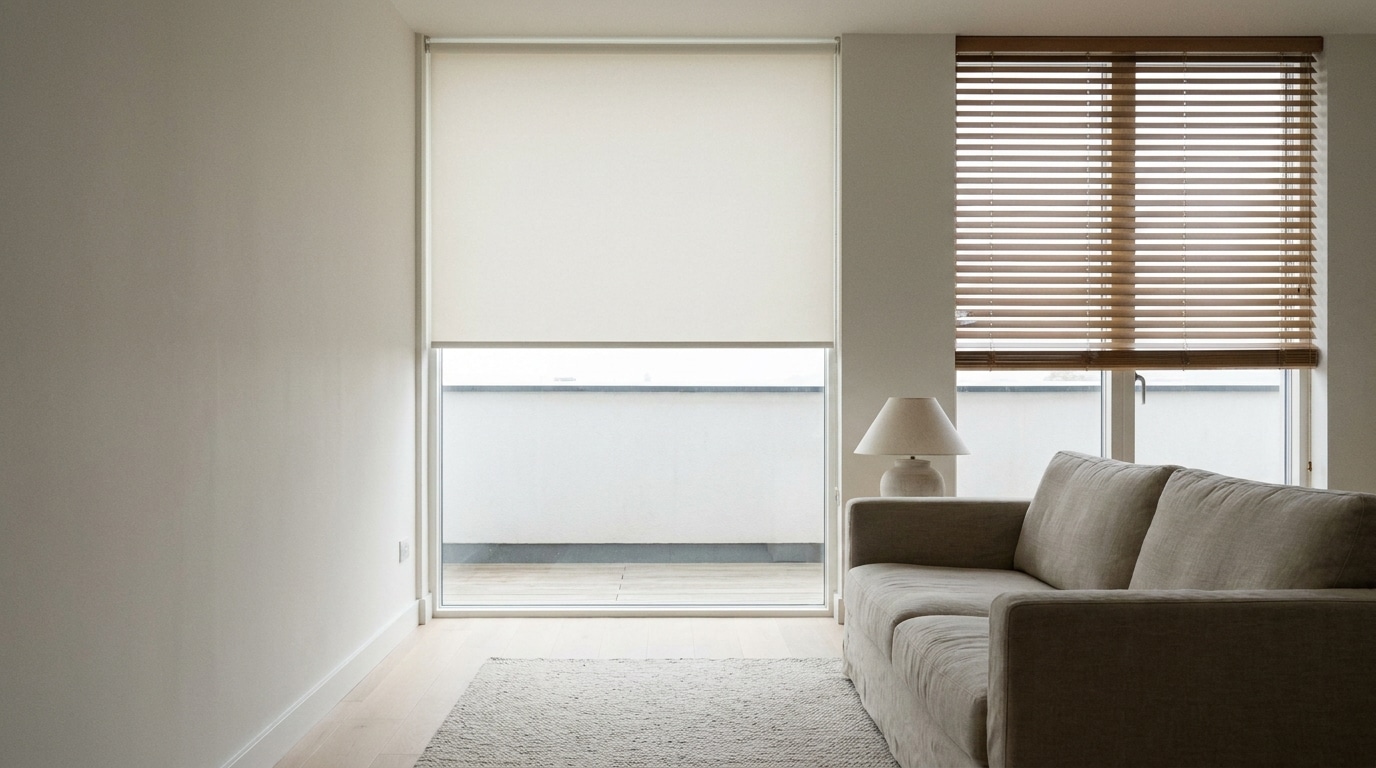
Window furnishings influence the overall design of a room.
Roller blinds provide a simple fabric surface, while Venetian blinds add horizontal lines and a more structured appearance.
Neither is inherently more stylish. The better option depends on the existing interior design and personal preference.
Roller Blinds for Contemporary Interiors
Roller blinds often suit minimalist and modern rooms.
When raised, the fabric rolls neatly around the tube, leaving much of the window visible.
When lowered, the fabric creates a consistent surface that can complement walls, furniture and flooring.
Neutral fabrics can provide a subtle appearance, while textured materials may add visual interest.
Venetian Blinds for Structured Window Styling
Venetian blinds introduce a repeating horizontal pattern.
Timber-look finishes may complement traditional interiors, while aluminium slats can suit contemporary spaces.
The slat width, colour and finish influence the overall appearance.
Wider slats may create a different visual effect from narrower designs.
Which Style Makes a Small Room Look Bigger?
Roller blinds can help create a less visually busy appearance because they use a single fabric panel.
This may suit compact bedrooms or living areas where homeowners prefer simple detailing.
Venetian blinds can also work well in smaller rooms, especially when selected in colours that coordinate with surrounding surfaces.
Window proportions, mounting position and available daylight may have a greater visual impact than the blind style alone.
Are Roller Blinds or Venetian Blinds More Durable?
Durability depends on the materials, manufacturing quality, installation and frequency of use.
Both roller and Venetian blinds can provide years of service when selected for suitable environments and maintained correctly.
The operating components and material characteristics influence long-term performance.
Roller Blind Durability
Roller blind durability depends on fabric quality, roller construction and the operating mechanism.
Poor handling can contribute to uneven rolling, fabric damage or operating problems.
Frequent exposure to strong sunlight may affect certain fabrics over time.
The manufacturer’s product specifications and warranty can help identify the intended application.
Venetian Blind Durability
Venetian blinds depend on the strength of their slats, lifting system and tilt mechanism.
Thin slats may bend if handled roughly.
Timber products can respond to changes in humidity, while unsuitable metal components may experience corrosion in demanding environments.
Correct installation and gentle operation can help reduce wear.
Which Is Better for Busy Households?
For households seeking simple operation and minimal handling of individual components, roller blinds may be preferable.
Venetian blinds offer greater adjustment flexibility but contain more slats and mechanical elements that require care.
The best choice also depends on who uses the room and how frequently the window covering is adjusted.
Can Roller and Venetian Blinds Be Motorised?
Motorisation can make window coverings more convenient to operate.
It may be particularly useful for large windows, hard-to-reach locations or households that regularly adjust several blinds.
However, motorisation is product-specific and may not be available for every blind system.
Motorised Roller Blinds
Motorised roller blinds use an electric drive system to raise or lower the fabric.
Depending on the product, controls may include a remote, wall switch or compatible smart home system.
Some systems use rechargeable batteries, while others require a suitable electrical connection.
Motorisation can reduce the need for manual operating chains.
Motorised Venetian Blinds
Selected Venetian blind systems may also support motorisation.
Depending on the product, this may control slat tilting, raising and lowering, or a combination of functions.
The available features vary by manufacturer.
Motorised Venetian blinds may involve more complex mechanisms than standard roller systems.
What Should You Check Before Choosing Motorisation?
Ask about the power supply, control options, installation requirements and maintenance procedures.
Confirm whether the system supports the desired functions.
Also review how the blinds can be operated during a power interruption, where relevant.
The motor should be specified for the size and weight of the selected window furnishing.
How Much Do Roller Blinds and Venetian Blinds Cost in Sydney?
The price of blinds in Sydney varies depending on window dimensions, materials, operating mechanisms and installation requirements.
Roller blinds are often a cost-effective option for straightforward window coverings, while Venetian blind prices depend heavily on the slat material and construction.
However, premium roller fabrics and motorised systems may cost more than basic Venetian blinds.
Factors Affecting Roller Blind Prices
Roller blind costs may depend on:
- Window width and drop
- Blockout, sunscreen or light-filtering fabric
- Fabric colour, texture and performance features
- Manual or motorised operation
- Mounting brackets and accessories
- Installation complexity
- Custom sizing requirements
Additional features such as side channels or dual roller systems may increase the price.
Factors Affecting Venetian Blind Prices
Venetian blind costs are influenced by the slat material and configuration.
Timber blinds may involve different manufacturing costs from aluminium or PVC products.
Other factors include slat width, window dimensions, finishes and operating mechanisms.
Custom-shaped windows or specialist installation requirements may increase the total price.
Compare the Total Installed Cost
Rather than comparing blinds based only on the advertised price, request quotes that identify the complete scope of work.
Check whether measuring, hardware, installation and adjustments are included.
For motorised systems, confirm the power supply and control components.
Warranty coverage and replacement part availability should also form part of the comparison.
Which Blinds Are Best for Different Rooms?
The most suitable window covering often depends on the room’s purpose.
Some areas need strong light blocking, while others benefit from adjustable privacy or easy cleaning.
A room-by-room selection can provide better results than using the same blinds throughout the entire property.
Bedrooms
Blockout roller blinds are often preferred for bedrooms where room darkening is a priority.
They can provide a simple appearance and strong fabric coverage.
Venetian blinds may suit bedrooms where adjustable daylight is more important.
However, light can enter through the slat gaps, making them less suitable for homeowners who require a darker sleeping environment.
Living Rooms
Both styles work well in living rooms.
Light-filtering roller blinds can soften incoming sunlight while maintaining a bright atmosphere.
Venetian blinds allow homeowners to change the direction of daylight and manage privacy throughout the day.
The decision may depend on window orientation and interior styling.
Home Offices
Venetian blinds can be useful for home offices because the slats allow more precise control over direct sunlight.
This may help reduce glare on computer screens while retaining some natural light.
Sunscreen roller blinds are another option where reducing glare without fully darkening the room is preferred.
Kitchens and Laundries
Moisture-resistant materials and easy cleaning are important in kitchens and laundries.
Suitable roller fabrics can provide straightforward coverage.
Aluminium or PVC Venetian blinds may also work well where adjustable airflow and light control are priorities.
Bathrooms
Bathroom blinds should be selected for humidity resistance and privacy.
Suitable moisture-resistant roller blinds or Venetian blinds may be appropriate.
Check the manufacturer’s recommendations before installing any fabric, timber or operating system in a humid environment.
Large Windows and Sliding Doors
Roller blinds can create a clean appearance across large openings.
However, very wide windows may require multiple blinds or a specially engineered system.
Venetian blinds may also be suitable, but the weight, lifting mechanism and access requirements should be reviewed.
The final selection should allow doors and windows to operate freely.
What Are the Common Disadvantages of Roller and Venetian Blinds?
Both window furnishing styles have limitations.
Understanding these before purchasing can help prevent problems with privacy, cleaning and everyday operation.
The best option is one whose limitations are manageable for the intended room.
Disadvantages of Roller Blinds
Roller blinds provide limited light adjustment compared with tilting slats.
To allow more direct daylight, the blind usually needs to be raised.
Certain fabrics may also provide limited privacy at night.
Other potential drawbacks include:
- Light gaps around the edges
- Fabric staining or damage
- Limited ventilation through lowered fabric
- Restrictions on maximum fabric width
- Possible operating problems if the blind is misaligned
The severity of these limitations depends on the selected system.
Disadvantages of Venetian Blinds
Venetian blinds can require more cleaning because of their individual slats.
They may also allow light through gaps even when closed.
Slats can bend or become damaged if handled roughly.
Some systems may also be less suitable for very large openings or environments with persistent moisture.
Material selection and installation quality can reduce some of these concerns.
What Should You Check Before Installing Window Blinds?
Accurate measurements and correct installation help ensure blinds operate properly.
Even a suitable product can cause problems when the window dimensions, mounting position or surrounding obstacles are overlooked.
Professional measuring may be especially useful for large, irregular or difficult-to-access windows.
Inside Mount vs Outside Mount
An inside-mounted blind sits within the window recess.
This can create a neat, integrated appearance.
However, sufficient recess depth and clearance are required.
An outside-mounted blind is installed beyond the window opening and may provide greater coverage around the edges.
The most suitable method depends on the window design and desired light control.
Window Handles and Clearance
Check whether the blind will interfere with window handles, locks or opening sashes.
Nearby furniture, benches and doors may also affect operation.
For Venetian blinds, allow suitable clearance for raising and tilting the slats.
For roller blinds, check the position of the roller tube and fabric drop.
Child Safety Requirements
Internal window coverings with accessible cords or chains can create serious strangulation hazards for young children.
Australian mandatory safety standards apply to corded internal window coverings, including requirements relating to warnings, installation and securing devices.
Corded systems must be installed with compliant safety devices and according to applicable instructions.
Keep furniture and climbing objects away from cords.
Cordless and suitable motorised systems may reduce certain cord-related risks.
Professional Installation
Professional installation may be helpful for large windows, motorised systems or complex mounting arrangements.
The installer should confirm appropriate fixing methods for the wall or window frame.
Correct mounting helps support smooth operation and long-term performance.
Roller Blinds vs Venetian Blinds: Which Should You Choose?
The best blind style depends on how you use the room and the level of light control, privacy and maintenance you prefer.
Roller blinds generally suit homeowners seeking simple operation, fabric choices and a streamlined appearance.
Venetian blinds may be more suitable when adjustable daylight and privacy are important.
Window Blind Selection Guide
|
Your Main Priority |
Option Worth Exploring | Main Reason |
|
Strong room darkening |
Blockout roller blinds | Opaque fabric coverage |
|
Adjustable daylight |
Venetian blinds | Tilting slats |
|
Minimalist appearance |
Roller blinds | Simple fabric panel |
|
Traditional styling |
Timber Venetian blinds | Warm, structured appearance |
| Easy routine cleaning | Suitable roller blinds |
Fewer individual surfaces |
| Home office glare control | Venetian or sunscreen roller blinds |
Adjustable or filtered sunlight |
| Bathroom window | Moisture-suitable roller or Venetian blinds |
Depends on material specification |
|
Large windows |
Suitable roller system |
Clean appearance and available motorisation |
| Daytime privacy with outward visibility | Sunscreen roller blinds |
Fabric-dependent visibility |
| Frequent light adjustments | Venetian blinds |
Slat angle control |
These recommendations are general.
The final selection should reflect the specific window and the product’s performance characteristics.
Questions to Ask Before Buying
Before choosing roller or Venetian blinds, ask:
- How much natural light should enter the room?
- Is strong room darkening required?
- Does the window face a busy street or neighbouring property?
- Will the blinds be exposed to moisture?
- How often will they need cleaning?
- Is motorised operation preferred?
- Are there children who could access operating cords?
- Will the blinds interfere with windows or doors?
- What materials and colours complement the room?
- What does the installation quote include?
Answering these questions can help identify a suitable window furnishing that works well in everyday use.
Choose Window Blinds That Suit Your Home
Roller and Venetian blinds both provide practical ways to manage sunlight, privacy and interior appearance.
Roller blinds are often preferred for their simple design, fabric versatility and room-darkening options. Venetian blinds offer adjustable slats that provide greater control over the direction of incoming light.
Neither style is automatically better for every Sydney property.
The right choice depends on the room, window dimensions, sunlight exposure, privacy requirements and preferred maintenance routine.
Before making a final decision, compare fabric or slat materials, operating mechanisms, installation methods and available finishes.
If you’re planning to update your window furnishings, contact Blind Inspiration to discuss roller and Venetian blind options for your Sydney home. A professional measure and consultation can help identify a practical design suited to your windows, interior style and everyday requirements.
Frequently Asked Questions
Are Roller Blinds or Venetian Blinds Better for Homes in Sydney?
Roller blinds and Venetian blinds can both be suitable for Sydney homes, but they serve different priorities. Roller blinds provide simple window coverage and are available in blockout, light-filtering and sunscreen fabrics. Venetian blinds allow homeowners to adjust horizontal slats for more flexible sunlight and privacy control. The better choice depends on the room’s orientation, window dimensions, cleaning requirements and desired appearance. Bedrooms may benefit from blockout roller blinds, while living rooms and home offices may suit adjustable Venetian blinds.
Which Blinds in Sydney Are Better for Blocking Sunlight?
Blockout roller blinds are generally the better option when strong light blocking is required. Their opaque fabric prevents sunlight from passing through the material, although light may still enter around the edges. Venetian blinds can reduce direct sunlight by tilting the slats, but gaps between the slats usually allow some light through. For bedrooms or media rooms, a properly fitted blockout roller system may provide better room darkening. Window size, mounting position and installation details also affect performance.
Are Venetian Blinds More Expensive Than Roller Blinds in Sydney?
Venetian blinds are not automatically more expensive than roller blinds. Prices depend on materials, dimensions, finishes and operating mechanisms. Basic aluminium Venetian blinds may cost less than premium motorised roller blinds, while timber Venetian blinds may involve higher material and manufacturing costs. Custom sizes and installation complexity can affect either option. When comparing prices, request itemised quotes that include measuring, hardware, installation and any motorisation features. Product quality and warranty coverage should also influence the decision.
Which Blinds in Sydney Are Easiest to Maintain?
Roller blinds are often easier to maintain because they have a single fabric surface rather than multiple horizontal slats. However, cleaning requirements depend on the fabric, and some materials require specialised care. Venetian blinds can collect dust along individual slats, making regular cleaning more time-consuming. Aluminium and suitable PVC slats may tolerate gentle damp cleaning, while timber requires greater care around moisture. Following the manufacturer’s instructions helps prevent damage and maintain the appearance of either window covering.
Can Roller and Venetian Blinds Be Installed on Large Windows?
Both roller and Venetian blinds can be installed on large windows when the selected system is suitable for the opening dimensions. Wide roller blinds may require reinforced components, multiple fabric panels or a compatible motorised system. Venetian blinds may also need specialised lifting mechanisms or multiple sections to manage weight and operation. The best arrangement depends on the window width, drop, available mounting space and intended use. Professional measurement can help identify a practical configuration that operates smoothly and provides appropriate coverage.