
Choosing the right shutters can make a noticeable difference to your home’s appearance, privacy, ventilation and comfort. However, shutters designed for indoor windows are not always suitable for outdoor areas, and selecting the wrong type can lead to unnecessary maintenance, poor performance or premature deterioration.
Indoor shutters are generally designed to manage natural light, privacy and interior appearance. Outdoor shutters are built for external applications, where they may need to withstand sunlight, moisture, wind and changing weather conditions.
For Australian homeowners, understanding these differences is particularly useful when upgrading windows, enclosing a patio or improving an outdoor entertaining area.
Material selection also matters. Timber, PVC, composite and aluminium shutters have different characteristics, and not every product is suitable for every installation environment.
The right choice depends on where the shutters will be installed, how they will be used and what level of protection or control is required.
This guide compares indoor and outdoor shutters, explains their materials and features, and outlines the practical factors that can help you choose a suitable option for your home.
What Is the Difference Between Indoor and Outdoor Shutters?
The main difference between indoor and outdoor shutters is their intended installation environment.
Indoor shutters are fitted inside a home, typically around windows or selected internal openings. They are primarily used to manage privacy, sunlight and interior styling.
Outdoor shutters are designed for exterior applications such as patios, balconies, verandahs and external windows. Depending on the product, they may help manage sunlight, airflow, privacy and exposure to outdoor conditions.
Both types can feature adjustable louvres, but their materials, hardware, fixing systems and performance requirements can be different.
How Do Indoor Shutters Work?
Indoor shutters generally consist of framed panels fitted with fixed or adjustable louvres.
Adjustable louvres rotate to control the direction and amount of natural light entering a room.
The panels may also open on hinges or operate through another system, allowing access to the window.
Indoor plantation shutters are commonly used in bedrooms, living rooms, kitchens and home offices.
Their appearance can be coordinated with interior furniture, wall colours and other window furnishings.
How Do Outdoor Shutters Work?
Outdoor shutters may use adjustable louvres, fixed blades, hinged panels, sliding tracks or other operating configurations.
Their main purpose depends on the application.
For example, external aluminium shutters may provide adjustable privacy and shade around a patio, while a different shutter system may be designed for external window coverage.
Outdoor products require materials and components suitable for their exposure conditions.
Homeowners comparing shutters in Australia can explore different shutter styles for residential windows and outdoor living areas.
The complete shutter system should be selected according to the intended location and manufacturer’s specifications.
Indoor vs Outdoor Shutters: Quick Comparison
|
Feature |
Indoor Shutters | Outdoor Shutters |
|
Installation location |
Inside windows and interior openings | External windows, patios, balconies and outdoor spaces |
|
Main purpose |
Light control, privacy and interior styling | Shade, airflow, privacy and external coverage |
|
Common materials |
Timber, PVC, composite and aluminium | Exterior-grade aluminium and other suitable materials |
|
Weather exposure |
Usually limited | Exposure varies by installation |
|
Moisture resistance |
Depends on the material |
Requires materials suited to external conditions |
| Maintenance | Dusting and suitable surface cleaning |
Cleaning, hardware checks and weather-related inspections |
| Light control | Adjustable louvres on applicable designs |
Adjustable or fixed coverage, depending on the system |
| Thermal benefits | May help manage sunlight and window heat transfer |
Can reduce solar exposure before sunlight reaches glazing |
| Structural requirements | Suitable internal fixings |
May require engineered external fixings and wind-load assessment |
| Best applications | Bedrooms, living rooms and other interior spaces |
Patios, balconies, verandahs and external openings |
The better option depends on the location and the performance you expect from the shutters.
Why Choose Shutters Australia Solutions for Your Home?
Shutters provide a flexible way to manage privacy, daylight and the appearance of residential spaces.
Unlike some window coverings that must be completely raised or lowered, adjustable shutters allow homeowners to change the position of the louvres while keeping the panels in place.
This can be useful for Australian homes that experience changing sunlight throughout the day.
Control Natural Light
Adjustable shutters allow you to change how much direct sunlight enters a room or covered outdoor area.
When the blades are open, more daylight can pass through.
Tilting them can reduce glare and direct sunlight without completely closing the opening.
This may be useful for living rooms, home offices and patios exposed to strong afternoon sun.
However, the amount of light control depends on louvre size, blade angle, panel fit and the surrounding environment.
Improve Privacy
Shutters can help limit direct views into a property.
Indoor shutters are particularly useful for street-facing windows, bedrooms and living areas.
Outdoor shutters can provide additional screening around balconies, patios and other exposed spaces.
Adjustable louvres allow users to balance privacy with visibility and airflow.
However, shutters are not necessarily completely private at every viewing angle.
Complement Different Home Designs
Shutters are available in styles that can complement contemporary and traditional Australian homes.
Indoor timber shutters may provide a warm, natural appearance.
White or neutral plantation shutters can create a clean finish around windows.
Exterior aluminium shutters often suit modern patios, balconies and outdoor entertaining spaces.
The frame design, colour and blade dimensions influence how the finished installation looks.
Manage Ventilation
Adjustable louvres can allow air to move through an opening while reducing direct sunlight.
This can be useful for outdoor areas where a fully enclosed screen would restrict airflow.
Indoor shutters may also allow ventilation when the window itself is open.
However, airflow depends on the blade position, surrounding openings and wind conditions.
Shutters should not be treated as a substitute for suitable building ventilation.
What Are the Benefits of Indoor Shutters?
Indoor shutters are popular because they combine practical window coverage with a structured decorative appearance.
They can suit different rooms and may be manufactured in several materials and finishes.
The right product depends on the room’s moisture conditions, privacy needs and desired appearance.
Adjustable Privacy and Light Control
Indoor plantation shutters allow homeowners to adjust the louvres without opening the entire panel.
For example, a street-facing living room may need privacy during the day while still allowing natural light indoors.
Tilting the louvres can help achieve this balance.
For bedrooms, closing the shutters can reduce incoming light, although gaps around the panels and blades may remain.
Interior Design Versatility
Indoor shutters can complement timber flooring, painted walls and different furniture styles.
Timber shutters provide natural grain and texture.
PVC and composite products may offer a more uniform appearance.
The available colours and finishes depend on the manufacturer.
Custom sizing can also help shutters suit different window dimensions and configurations.
Easy Access to Windows
Many indoor shutter systems use hinged panels that can be opened for cleaning or window access.
This can make it easier to reach window handles and maintain the glazing.
However, the panel configuration must be planned carefully.
Furniture, benchtops and nearby walls can interfere with the opening movement if clearance is inadequate.
Potential Thermal Benefits
Indoor shutters can provide an additional layer between a room and its windows.
Closing the louvres may help reduce direct sunlight and influence heat transfer near the glazing.
However, thermal performance varies according to material, panel fit and the existing window system.
Product-specific performance information is more reliable than general claims that all plantation shutters provide the same insulation benefits.
What Are the Advantages of Outdoor Shutters?
Outdoor shutters are designed for applications where external sunlight, privacy and environmental exposure affect the usability of a space.
They can be particularly useful for patios, balconies and outdoor entertaining areas.
However, not all outdoor shutters provide the same weather resistance or security features.
External Sun Protection
Outdoor shutters can help reduce direct sunlight before it reaches a window or seating area.
This may be beneficial for west-facing patios and other areas exposed to afternoon sun.
Adjustable louvres provide additional control over the direction of sunlight.
The effectiveness depends on the shutter’s position, blade design and the sun’s angle.
Privacy for Outdoor Living Areas
Balconies and patios can be exposed to neighbouring properties or nearby streets.
Outdoor shutters can create a more private environment without necessarily enclosing the space completely.
Sliding or adjustable systems may allow homeowners to change the amount of screening throughout the day.
The final privacy level depends on the configuration and surrounding sightlines.
Materials Designed for Outdoor Exposure
Exterior-grade aluminium shutters can provide strong resistance to moisture-related swelling and warping.
Suitable powder-coated finishes can also offer surface protection.
However, metal components still require maintenance, especially in coastal environments.
Hardware, tracks and fixings should be selected for the property’s exposure conditions.
Flexible Outdoor Space Design
Outdoor shutters can help define an entertaining area or create separation between different parts of a patio.
They may also be used around outdoor dining areas, covered decks and verandahs.
Their design should allow suitable ventilation, access and safe operation.
External installations must be assessed for relevant structural and wind requirements.
Indoor vs Outdoor Shutters: Which Materials Are Best?
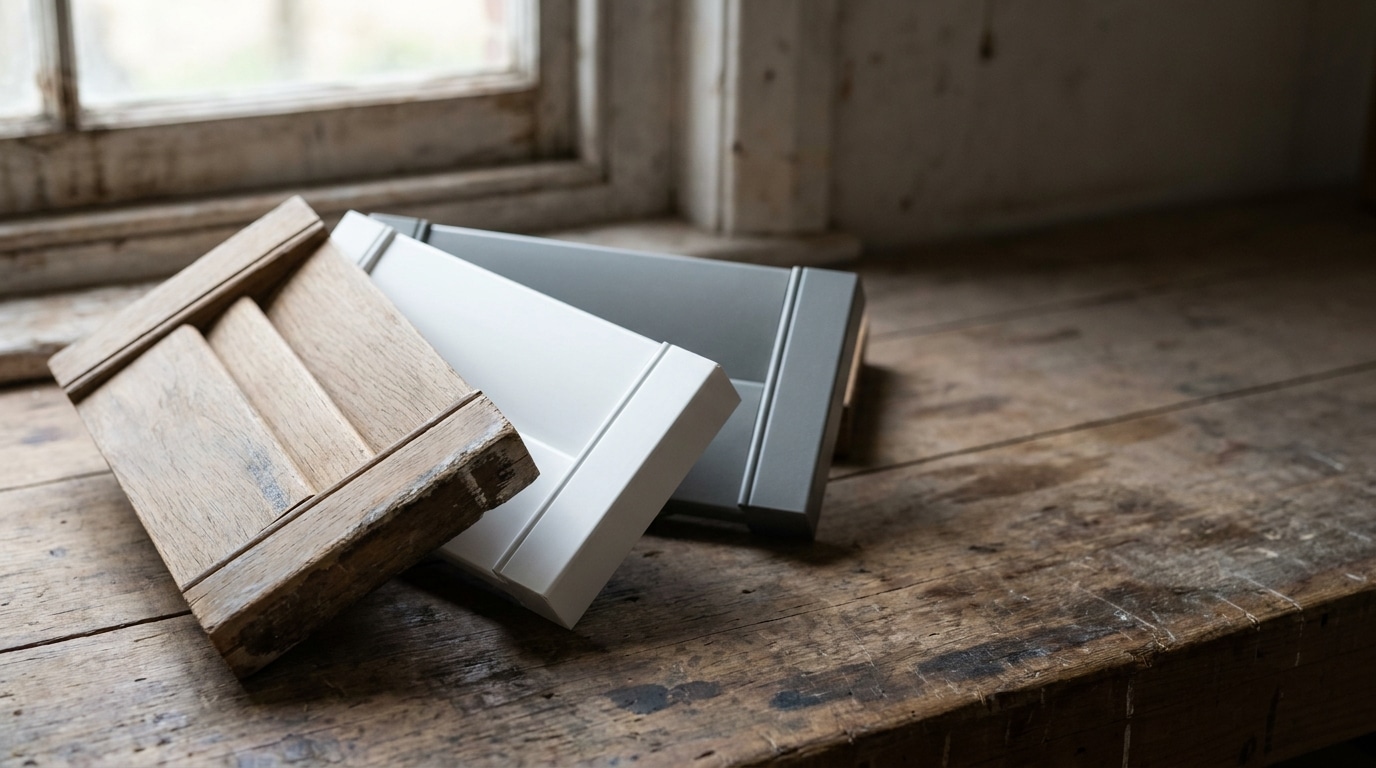
Material selection affects appearance, durability, maintenance and suitability for different environments.
A material that performs well inside a bedroom may not tolerate regular rainfall or coastal exposure.
Always confirm whether the complete product is intended for indoor or outdoor installation.
Timber Shutters
Timber shutters are commonly selected for their natural appearance.
They can complement traditional interiors, contemporary homes and rooms featuring timber finishes.
However, natural timber responds to changes in temperature and moisture.
Standard interior timber shutters may swell, shrink or experience finish deterioration in unsuitable environments.
Exterior use requires a timber product specifically designed and maintained for outdoor exposure.
PVC Shutters
PVC shutters are commonly used for interior applications.
Depending on the product, they may offer good moisture resistance and straightforward cleaning.
This can make suitable PVC systems useful in bathrooms, laundries and kitchens.
However, PVC products vary in construction, heat tolerance and size limitations.
Not every PVC shutter is suitable for external installation or prolonged direct sunlight.
Composite Shutters
Composite shutters use manufactured materials designed to achieve particular performance characteristics.
Their composition varies between products.
Some incorporate wood-based components, polymers or other materials.
Moisture resistance, structural strength and maintenance requirements depend on the specific product.
Check the manufacturer’s intended application before selecting composite shutters for humid or exposed locations.
Aluminium Shutters
Aluminium is commonly used for exterior shutter systems because it provides strength and does not absorb water like timber.
Powder-coated aluminium can offer a durable decorative finish when correctly specified.
It may also suit contemporary indoor applications.
However, aluminium products still require suitable hardware and coating protection.
For coastal installations, corrosion resistance and maintenance requirements deserve particular attention.
Material Comparison
|
Material |
Common Application | Main Advantage | Main Limitation |
|
Timber |
Indoor shutters | Natural warmth and grain | Can be affected by moisture |
| PVC | Suitable indoor applications | Often straightforward to clean |
Product-specific heat and size limitations |
| Composite | Indoor and selected specialised uses | Manufactured for particular performance needs |
Characteristics vary by formulation |
| Aluminium | Outdoor and selected indoor applications | Strength and resistance to moisture-related warping |
Requires suitable coatings and hardware |
No material is automatically suitable for every window or outdoor structure.
Which Shutters Provide Better Temperature Control?
Indoor and outdoor shutters can both influence thermal comfort, but they work in different ways.
Indoor shutters primarily manage sunlight and conditions near the inside of a window.
Outdoor shutters can reduce solar exposure before sunlight reaches the glazing, depending on their design and position.
Temperature Control With Indoor Shutters
Closing indoor shutters can reduce direct sunlight entering a room.
This may help manage glare and some solar heat gain.
However, sunlight may still heat the glazing before the shutters block it.
The amount of thermal benefit depends on the complete window and shutter arrangement.
Temperature Control With Outdoor Shutters
External shutters can intercept sunlight before it reaches the window.
This can provide an advantage for managing solar heat gain, particularly on windows exposed to strong sunlight.
Adjustable blades may also allow homeowners to retain some daylight while reducing direct exposure.
However, performance depends on coverage, blade angle and installation position.
Which Is Better for Australian Summers?
For windows receiving intense afternoon sunlight, suitable external shading may provide stronger solar protection than relying on indoor coverings alone.
Indoor shutters can still be practical for privacy and everyday light control.
For some properties, combining external shading with suitable internal window furnishings may improve comfort.
Which Shutters Are Better for Privacy and Security?
Privacy and security are related but different requirements.
Shutters can limit visibility into a property, but not every shutter system is designed to resist forced entry.
The manufacturer’s performance specifications should guide claims about security.
Indoor Shutters for Privacy
Indoor shutters can help prevent direct views through windows when their louvres are appropriately positioned.
They are useful for bedrooms, bathrooms and street-facing living areas.
However, gaps between the blades and around the panels may allow some visibility.
Lighting conditions can also affect privacy.
Outdoor Shutters for Privacy
Outdoor shutters can provide screening around balconies, patios and external windows.
Depending on the design, they may create a stronger visual barrier between the home and neighbouring properties.
Adjustable blades can provide flexibility without requiring complete enclosure.
Are Outdoor Shutters More Secure?
Some external shutter systems are specifically engineered and tested for security applications.
However, ordinary decorative aluminium louvred shutters should not automatically be described as security shutters.
Security performance depends on the frame, locking system, fixings and tested construction.
If security is a priority, request verified product information before purchasing.
Indoor vs Outdoor Shutters: Which Requires More Maintenance?
Both shutter types need regular cleaning and periodic inspections.
Outdoor shutters usually experience greater environmental exposure, which may increase their maintenance requirements.
However, the actual cleaning schedule depends on the material, location and frequency of use.
Maintaining Indoor Shutters
Indoor shutters generally need regular dusting.
A soft cloth or suitable duster can help remove dirt from the louvres and frames.
Some materials may be cleaned with a lightly dampened cloth, provided the manufacturer permits it.
Timber finishes require greater care around moisture.
Operating mechanisms should also be checked for smooth movement.
Maintaining Outdoor Shutters
Outdoor shutters may accumulate dust, salt deposits, pollen and other environmental debris.
Regular cleaning helps protect surface finishes and keeps tracks or moving components clear.
Inspect fixings, hinges and locks for damage or unusual movement.
Coastal homes may need more frequent cleaning because of salt exposure.
Avoid abrasive chemicals that could damage powder-coated surfaces.
Maintenance Comparison
|
Maintenance Task |
Indoor Shutters | Outdoor Shutters |
|
Dust removal |
Regular cleaning | Regular cleaning |
|
Moisture exposure |
Usually limited | Depends on weather exposure |
|
Hardware checks |
Hinges and operating components |
Hinges, tracks, locks and external fixings |
| Surface inspection | Wear and finish condition |
Coating damage and corrosion |
| Cleaning frequency | Depends on household conditions |
May increase in coastal or exposed locations |
| Professional repairs | When components fail |
When structural or operating components are damaged |
Following the manufacturer’s instructions can help preserve the appearance and performance of either system.
How Do Indoor and Outdoor Shutter Costs Compare?
The cost of shutters varies according to material, dimensions, configuration and installation requirements.
Outdoor shutters may involve additional expenses because of external hardware, weather-resistant materials and structural fixing requirements.
However, premium indoor shutters can also be expensive, especially for large or custom-shaped windows.
Factors Affecting Indoor Shutter Prices
Indoor shutter costs may depend on:
- Window width and height
- Timber, PVC, composite or aluminium construction
- Louvre dimensions
- Frame style and finish
- Hinged, sliding or other panel configurations
- Custom sizing
- Installation complexity
Unusual window shapes and large openings may increase manufacturing and installation costs.
Factors Affecting Outdoor Shutter Prices
Outdoor shutter prices may depend on:
- Exterior-grade material specifications
- Panel dimensions and number of sections
- Fixed, hinged, sliding or bi-fold operation
- Tracks, locks and other hardware
- Wind-load requirements
- Coating and corrosion-resistance specifications
- Structural support and fixing requirements
- Site access and installation labour
A large outdoor shutter system may require engineering advice or additional support.
Compare the Total Installed Cost
Rather than comparing the initial purchase price alone, review the full installation scope.
Ask whether the quote includes measuring, materials, hardware, structural work and installation.
Warranty conditions should also be checked.
For outdoor shutters, clarify whether the product warranty applies to the property’s exposure conditions.
Which Shutters Are Best for Different Areas of the Home?
The installation location is one of the most useful factors when selecting shutters.
A bedroom has different requirements from a patio, while a bathroom may need greater moisture resistance than a living room.
Choosing the correct product for each space can reduce maintenance and improve everyday usability.
Living Rooms
Indoor plantation shutters can provide adjustable light control and privacy.
Timber, PVC, composite or aluminium products may suit different interior styles.
The best choice depends on the desired appearance, window dimensions and sunlight exposure.
Bedrooms
Indoor shutters can help reduce direct sunlight and limit visibility into bedrooms.
However, plantation shutters are not generally completely blockout.
Homeowners requiring a very dark sleeping environment may need additional window furnishings.
Kitchens and Bathrooms
Moisture-resistant materials can be useful in kitchens, bathrooms and laundries.
Suitable PVC, composite or aluminium shutters may be practical.
Timber products should only be used where their specifications and environmental conditions are appropriate.
Patios and Outdoor Entertaining Areas
Exterior-grade shutters can help manage sunlight, airflow and privacy.
Adjustable aluminium louvres may suit covered patios and entertaining spaces.
The system must be designed for its exposure conditions and securely installed.
Balconies and Verandahs
Outdoor shutters can provide screening around balconies and verandahs.
Depending on the configuration, they may offer adjustable privacy while maintaining airflow.
However, structural requirements and wind exposure should be reviewed.
External Windows
External shutters can be installed around certain residential windows for shading or other purposes.
Their suitability depends on available space, mounting surfaces and operational requirements.
Where bushfire, security or other performance requirements apply, the selected system must meet the relevant specifications.
What Should You Check Before Installing Outdoor Shutters?
Outdoor shutters require additional planning because they may be exposed to wind, sunlight and moisture.
The supporting structure must be suitable for the intended shutter system.
A professional assessment can help identify installation requirements before manufacturing begins.
Structural Support and Fixings
Outdoor shutter panels can experience wind loads.
Their frames, tracks and fixings must be suitable for the installation location.
Mounting surfaces should be checked before installation.
An existing patio post or lightweight wall should not automatically be assumed capable of supporting a large shutter system.
Weather Exposure
Consider whether the shutters will be installed beneath a covered roof or directly exposed to rain.
The amount of sunlight, wind and coastal salt exposure can also affect material selection.
Choose a complete system designed for the expected conditions.
Council and Strata Requirements
Some external shutter installations may require planning approval, building approval or permission from a strata owners corporation.
Requirements depend on the property, local rules and proposed changes.
External alterations to apartments may be subject to additional strata restrictions.
Confirm the applicable requirements before ordering.
Access and Operation
Check how the shutters will open, slide or fold.
The selected configuration should not obstruct doorways, emergency exits or other necessary access routes.
Tracks and panels must also be positioned to avoid interfering with nearby furniture or building features.
Common Mistakes to Avoid When Choosing Shutters
Choosing shutters based only on appearance can lead to poor performance.
Material suitability, environmental exposure and installation quality should be reviewed before purchase.
The following mistakes are especially relevant for homeowners comparing indoor and outdoor systems.
Installing Indoor Shutters Outdoors
Standard indoor shutters may not be designed for rainfall, wind or prolonged UV exposure.
Even moisture-resistant interior products may be unsuitable for direct external installation.
Use shutters specifically rated for the intended environment.
Ignoring Window Orientation
Windows facing strong afternoon sunlight may require greater solar protection.
The ideal shutter configuration depends on the direction of sunlight and surrounding shade.
Review how the room or outdoor area is used throughout the day.
Choosing the Wrong Material
Natural timber may not be suitable for persistently damp environments.
Similarly, an aluminium shutter system designed for indoor use may not have the hardware required for an exposed balcony.
Choose materials and components according to the manufacturer’s specifications.
Overlooking Panel Clearance
Shutters need enough space to operate.
Hinged panels may interfere with furniture, while sliding shutters require suitable track and stacking space.
Check the available clearance before finalising dimensions.
Assuming All Shutters Provide Security
Decorative shutters are not automatically security-rated.
If protection against forced entry is required, select a system with appropriate verified performance.
How to Choose Between Indoor and Outdoor Shutters
The best shutters depend on the installation location and your main priorities.
Indoor shutters are generally suitable for privacy, light control and decorative window coverage.
Outdoor shutters are more appropriate for external shading and screening when the system is designed for the relevant environmental exposure.
Shutter Selection Guide
|
Your Main Priority |
Option Worth Exploring | Main Reason |
|
Bedroom privacy |
Indoor shutters | Adjustable window coverage |
|
Living room light control |
Indoor plantation shutters | Flexible louvre adjustment |
|
Patio shade |
Outdoor shutters | External sunlight management |
|
Balcony privacy |
Outdoor shutters | Screening for exposed spaces |
|
Natural timber appearance |
Suitable indoor timber shutters |
Warm decorative finish |
| Moisture resistance | Suitable PVC, composite or aluminium |
Depends on product specification |
| Coastal outdoor installation | Appropriately specified aluminium shutters |
Can suit demanding conditions with proper maintenance |
| External window shading | Outdoor shutters |
Can reduce direct sunlight before glazing |
| Interior styling | Indoor shutters |
Wide range of decorative finishes |
| Verified security protection | Purpose-designed security-rated shutters |
Requires appropriate testing and construction |
These recommendations should be checked against the specific product and property conditions.
Questions to Ask Before Purchasing
Before selecting shutters, ask:
- Will the shutters be installed indoors or outdoors?
- How much sunlight and moisture will they experience?
- Is privacy, shade or appearance the main priority?
- What material best suits the installation environment?
- Will the shutters interfere with windows, doors or furniture?
- Are structural fixings or additional supports required?
- What maintenance will be necessary?
- Do planning or strata requirements apply?
- Does the product have verified performance information?
- What is included in the installation quote?
These questions can help identify a suitable system without relying on appearance or price alone.
Choose Shutters That Suit Your Home and Lifestyle
Indoor and outdoor shutters provide different benefits, and choosing the right type begins with understanding where the shutters will be installed.
Indoor shutters are generally designed for privacy, sunlight control and interior styling. Outdoor shutters are intended for external applications where shade, airflow, privacy and environmental durability are important.
Materials, operating mechanisms and installation requirements should all influence the final decision.
For Sydney homeowners, selecting shutters according to the property’s exposure conditions can help improve functionality and reduce avoidable maintenance issues.
If you’re planning to install new shutters, contact Shutters Australia to discuss suitable styles, materials and configurations for your windows or outdoor living area. A professional measure and assessment can help identify a practical solution for your property.
Frequently Asked Questions
What Is the Difference Between Indoor and Outdoor Shutters in Australia?
Indoor shutters are generally installed inside homes to manage privacy, sunlight and interior appearance. Outdoor shutters are designed for external applications such as patios, balconies and windows exposed to outdoor conditions. The main differences involve material specifications, hardware, weather resistance and structural fixing requirements. Indoor shutters commonly use timber, PVC or composite materials, while exterior-grade aluminium is often used outdoors. The correct choice depends on the installation environment and the performance required from the complete shutter system.
Are Aluminium Shutters Better for Outdoor Use in Australia?
Aluminium shutters can be a practical option for outdoor use because the material does not absorb moisture or experience timber-style swelling. However, the complete shutter system must be designed for external installation. Suitable coatings, corrosion-resistant hardware, secure fixings and appropriate structural support are necessary. Coastal conditions may require additional maintenance. Not every aluminium shutter is suitable for exposed outdoor locations, so homeowners should confirm the manufacturer’s intended application, environmental limitations and warranty requirements before purchasing.
Can Indoor Plantation Shutters Be Installed Outside?
Standard indoor plantation shutters should not be installed outdoors unless the manufacturer specifically approves them for the intended conditions. Interior products may not have suitable coatings, hardware or structural fixings for exposure to rainfall, wind and prolonged sunlight. Even moisture-resistant indoor shutters may be unsuitable for an external balcony or patio. Homeowners should select a purpose-designed outdoor shutter system and confirm that the supporting structure can accommodate the installation. Professional advice is recommended for exposed locations.
Do Outdoor Shutters Help Keep Australian Homes Cooler?
Outdoor shutters can help reduce solar heat entering a home by shading windows before direct sunlight reaches the glazing. This may be particularly useful for windows exposed to strong afternoon sun. However, the thermal benefit depends on shutter coverage, blade angle, material and installation position. Indoor shutters can also help manage sunlight, but they operate on the room side of the glazing. Homeowners should review product-specific performance information rather than assuming all shutters provide the same level of heat reduction.
How Much Do Indoor and Outdoor Shutters Cost in Australia?
Indoor and outdoor shutter prices vary according to materials, dimensions, finishes, operating mechanisms and installation requirements. Outdoor systems may involve additional costs for weather-resistant components, tracks and structural fixings. Indoor shutters can also vary considerably in price, especially when custom sizes or premium timber finishes are selected. For an accurate comparison, homeowners should request itemised quotes covering measuring, materials, hardware and installation. Maintenance requirements, warranty coverage and environmental suitability should also be included when comparing long-term value.