
Choosing the right grass for a commercial property can affect maintenance costs, safety, appearance and how people use the space every day. A lawn that looks attractive when first installed may struggle under constant foot traffic, limited sunlight or changing weather conditions.
For business owners, property managers and commercial developers, the choice between natural and synthetic grass involves more than deciding which surface looks better.
Natural grass provides a living landscape that supports soil health, natural cooling and biodiversity. However, it requires regular watering, mowing and ongoing care to maintain its condition.
Synthetic grass offers a consistent green appearance without mowing or routine irrigation. It can be useful for high-traffic areas, rooftop terraces and spaces where natural grass struggles to grow. However, it can become hot in direct sunlight, requires cleaning and eventually needs replacement.
The right choice depends on how the area will be used, the property’s environmental conditions and the level of maintenance available.
This guide compares natural and synthetic grass for commercial spaces, covering durability, costs, maintenance, safety, environmental impacts and installation requirements. It also explains how to select a suitable surface for different commercial applications.
What Is the Difference Between Natural and Synthetic Grass?
The main difference between natural and synthetic grass is that natural turf is a living plant system, while synthetic turf is a manufactured surface designed to resemble grass.
Natural grass grows in soil and depends on water, nutrients, sunlight and ongoing maintenance. Synthetic grass uses manufactured fibres attached to a backing system, typically installed over a prepared base with suitable drainage.
Both surfaces can create attractive green spaces, but they perform differently under heavy use, direct sunlight and changing weather conditions.
How Natural Grass Works in Commercial Landscapes
Natural grass uses living plants to create a vegetated surface.
Common warm-season turf varieties used in Australian landscapes include couch, buffalo and kikuyu, although suitability depends on climate, sunlight, soil conditions and expected use.
A healthy natural lawn can provide a softer landscape appearance and contribute to cooling through shading and evapotranspiration.
It also supports biological activity within the soil.
However, natural turf requires suitable growing conditions. Heavy foot traffic can compact the soil, damage the grass and create bare areas that need repair.
For commercial properties, maintaining a consistent lawn may require scheduled irrigation, mowing, fertilisation, weed management and periodic restoration.
How Synthetic Grass Works in Commercial Spaces
Synthetic grass uses manufactured fibres, commonly made from materials such as polyethylene or polypropylene, attached to a backing system.
The turf is installed over a prepared surface that provides stability and drainage.
Depending on the application, the system may include an aggregate base, drainage layer, shock-absorbing underlay or infill material.
Commercial installations require products suited to the expected traffic, exposure and intended use.
Businesses exploring commercial synthetic grass can compare solutions for retail areas, hospitality venues, offices, rooftop terraces and other commercial environments.
The quality of the finished surface depends on the turf specification, preparation work, installation method and ongoing maintenance.
Natural vs Synthetic Grass: Quick Comparison
|
Feature |
Natural Grass | Synthetic Grass |
|
Material |
Living grass plants | Manufactured turf fibres |
|
Appearance |
Changes with seasons and growing conditions | Maintains a consistent manufactured appearance |
|
Water requirements |
Usually needs irrigation during dry periods | Usually needs no routine irrigation |
|
Mowing |
Regular mowing required | No mowing required |
|
Foot traffic |
Can become worn or compacted | Can suit frequent use with the correct product |
|
Heat performance |
Provides natural cooling, particularly when healthy and irrigated |
Can become very hot in direct sunlight |
| Drainage | Depends on soil and ground conditions |
Depends on base design and drainage system |
| Maintenance | Mowing, watering, fertilising and repairs |
Cleaning, brushing and inspections |
| Environmental impact | Supports living soil and ecological functions |
Uses manufactured materials and requires end-of-life management |
| Initial cost | Varies with establishment and site preparation |
Often higher where extensive preparation is needed |
| Long-term cost | Ongoing landscape maintenance |
Cleaning, repairs and eventual replacement |
| Best applications | Landscaped gardens, shaded relaxation areas and suitable open spaces |
High-use decorative areas, rooftops and difficult growing locations |
Neither option is suitable for every commercial property.
The correct selection depends on the surface’s intended purpose and the conditions it will experience.
Why Choose Commercial Synthetic Grass for Business Properties?
Synthetic grass can be a practical alternative when natural turf struggles to maintain an attractive appearance.
Commercial properties often experience concentrated pedestrian traffic, limited maintenance access and areas where soil or sunlight conditions are unsuitable for healthy grass growth.
Synthetic turf can help maintain a consistent visual presentation in these environments, provided the selected product and installation system match the intended application.
Consistent Appearance Throughout the Year
One of the main advantages of synthetic grass is its ability to maintain a green appearance without depending on active plant growth.
Natural lawns may develop dry patches, thinning or uneven growth during periods of stress.
Synthetic grass avoids these particular problems because its fibres do not grow or require watering to remain green.
This can be useful for hotels, retail properties and corporate spaces where presentation is a regular priority.
However, synthetic grass still requires cleaning and care to prevent staining, debris accumulation and flattened fibres.
Suitable for High-Traffic Areas
Frequent pedestrian use can damage natural grass, particularly when the soil becomes compacted or wet.
Commercial-grade synthetic turf can be designed to tolerate repeated foot traffic.
It may be suitable for walkways, hospitality areas, display spaces and other locations where maintaining natural turf would be difficult.
The correct product should be selected according to traffic intensity, pile construction, backing strength and installation requirements.
High-use areas may still experience fibre flattening and wear over time.
Reduced Routine Landscape Maintenance
Synthetic grass eliminates several maintenance tasks associated with living lawns.
There is no need for mowing, fertilising to support growth or routine irrigation.
This may reduce some ongoing maintenance expenses, particularly for properties that rely on contracted lawn care.
However, synthetic grass is not maintenance-free.
Commercial surfaces may require regular debris removal, washing, brushing, stain treatment and inspections.
Areas exposed to food spills, pet waste or heavy pedestrian use may need more frequent attention.
Flexible Commercial Applications
Synthetic grass can be used in locations where natural turf may be difficult to establish.
Potential applications include rooftop terraces, balconies, covered courtyards, indoor displays and decorative landscaping.
For properties with smaller landscaped areas or mixed commercial and residential use, residential synthetic grass options may also provide useful product comparisons.
However, the intended setting matters. Turf developed for a residential garden may not have the same wear characteristics, installation requirements or performance specifications as a commercial product.
What Are the Advantages of Natural Grass for Commercial Properties?
Natural grass remains an effective landscaping option for many commercial environments.
Its main advantages include natural cooling, ecological benefits and the ability to regenerate through healthy growth.
For properties with suitable soil, sunlight, water access and maintenance resources, natural grass can provide an attractive and functional surface.
Natural Cooling and Temperature Regulation
Living grass can help reduce surface temperatures through evapotranspiration.
Healthy, irrigated turf generally remains cooler than synthetic turf exposed to strong sunlight.
This can be beneficial for outdoor spaces used during warm weather.
For example, a landscaped courtyard with natural grass and shade trees may provide a more comfortable environment than an exposed synthetic surface.
The cooling benefit depends on grass health, available moisture and surrounding conditions.
Environmental and Ecological Benefits
Natural grass contributes to a living landscape.
When appropriately managed, it can support soil organisms, water infiltration and local ecological functions.
Natural turf can also be integrated with trees, garden beds and other vegetation to improve the quality of commercial outdoor spaces.
However, environmental performance depends on maintenance practices.
Excessive irrigation, fertiliser use and fuel-powered mowing can create environmental impacts.
A well-designed landscape should balance plant selection, water use and maintenance requirements.
Ability to Recover From Wear
Natural grass can recover from moderate damage when growing conditions are suitable.
Healthy turf can spread and regenerate, depending on the grass species and level of wear.
This can be useful for larger landscaped areas where occasional repairs are manageable.
However, severe soil compaction, persistent shade or continuous pedestrian use may prevent recovery.
Damaged sections may require aeration, soil improvement, turf replacement or temporary access restrictions.
Natural Appearance and Texture
Natural grass provides variations in colour, texture and growth that manufactured surfaces cannot reproduce exactly.
It can complement gardens, trees and other planted landscape features.
For commercial properties designed around outdoor relaxation, gardens and natural surroundings, this appearance may be an important part of the overall experience.
Which Grass Performs Better Under Heavy Foot Traffic?
Foot traffic is one of the main factors affecting commercial lawn performance.
Retail spaces, office courtyards, hospitality venues and public access areas can experience concentrated use throughout the day.
The ability of a surface to withstand wear depends on its construction, maintenance and underlying ground conditions.
Natural Grass Under Frequent Use
Natural grass can tolerate regular use when the correct species is selected and the lawn is properly maintained.
However, concentrated traffic can compact soil and damage the grass plants.
Wet conditions can make the problem worse by increasing the likelihood of surface damage and muddy areas.
Natural grass may need rest periods or repairs to recover from heavy use.
For venues with constant pedestrian traffic, this can create operational challenges.
Synthetic Grass Under Frequent Use
Commercial synthetic turf can provide a stable, consistent surface when installed over a suitable base.
It does not develop bare patches caused by plant death.
However, frequent use can flatten the fibres, affect infill distribution and increase wear around entrances or concentrated pathways.
The product’s pile density, fibre resilience, backing construction and installation quality influence how well it performs.
A decorative turf product may not be suitable for an area receiving constant pedestrian traffic.
Which Is Better for Busy Commercial Areas?
Synthetic grass is often the more practical option for decorative spaces where heavy use makes natural grass difficult to maintain.
Natural grass may remain suitable for larger outdoor areas where growing conditions are favourable and the landscape can recover between periods of use.
For heavily trafficked walkways, other surfaces such as paving may be more appropriate than either grass option.
The decision should account for pedestrian volume, accessibility, drainage and maintenance expectations.
Natural vs Synthetic Grass: Which Is More Cost-Effective?
The cost of commercial grass installation depends on the site, chosen materials and long-term maintenance requirements.
Synthetic grass often involves greater initial installation work, particularly where excavation, drainage and a compacted base are required.
Natural grass installation may cost less initially on suitable prepared soil, but ongoing maintenance expenses can accumulate over time.
A fair comparison should examine the total cost of ownership rather than installation cost alone.
Initial Installation Costs
Natural grass installation may involve soil preparation, turf supply, irrigation and establishment work.
Costs increase when the site requires significant soil improvement, grading or drainage modifications.
Synthetic grass installation typically includes site preparation, base construction, turf supply, cutting, joining, securing and finishing.
Additional components may be required for high-traffic areas, rooftops or specialised applications.
The existing surface and accessibility can strongly influence the final price.
Ongoing Maintenance Costs
Natural grass maintenance may include:
- Mowing and edging
- Irrigation and water charges
- Fertiliser and soil treatments
- Weed and pest management
- Aeration and soil improvement
- Repairs or replacement of damaged turf
Synthetic grass avoids routine mowing and fertilising but still involves cleaning, brushing and inspections.
Both surfaces may also require drainage maintenance.
Replacement and Long-Term Expenses
Synthetic turf has a finite service life.
Its replacement schedule depends on product quality, UV exposure, traffic, maintenance and installation conditions.
When replacement becomes necessary, removal, disposal and new installation expenses should be included in the budget.
Natural grass may require ongoing repairs, but it can also regenerate when growing conditions are suitable.
A life-cycle comparison should include installation, maintenance, water use, repairs and eventual replacement.
Cost Comparison
|
Cost Category |
Natural Grass | Synthetic Grass |
|
Site preparation |
Soil improvement, levelling and possible drainage | Excavation, base preparation and drainage |
|
Material installation |
Turf establishment | Manufactured turf installation |
|
Water use |
Ongoing irrigation may be required | Usually little or no routine irrigation |
| Mowing | Regular expense |
Not required |
| Cleaning | General landscape maintenance |
Debris removal, washing and brushing |
| Repairs | Re-turfing, soil restoration and lawn recovery |
Joint, edge and damaged-section repairs |
| Replacement | Periodic restoration may be necessary |
Full or partial replacement at end of service life |
The most economical option depends on the property’s conditions and expected period of use.
How Do Natural and Synthetic Grass Compare for Safety?
Safety should be a major part of selecting commercial landscaping surfaces.
Both natural and synthetic grass can create hazards when installed incorrectly, poorly maintained or used for purposes beyond their intended design.
Surface temperature, slip resistance, accessibility and impact performance should all be reviewed.
Surface Temperature and Heat Exposure
Synthetic grass can become considerably hotter than natural grass when exposed to direct sunlight.
This is particularly relevant during Australian summer conditions.
Exposed synthetic turf may become uncomfortable for people walking, sitting or playing on it.
Shade structures, surrounding vegetation and suitable surface selection may help manage heat exposure, although they do not eliminate the issue.
For areas frequently used by children, outdoor workers or visitors during hot weather, surface temperature deserves particular attention.
Slip and Trip Hazards
Both surfaces can create slip or trip hazards under certain conditions.
Natural grass can become slippery when wet, particularly on slopes or muddy ground.
Synthetic grass may become hazardous if the base is uneven, edges lift or drainage is inadequate.
Commercial installations should include suitable edge detailing and surface levels.
Where slip resistance is a requirement, request relevant testing information for the proposed system.
Accessibility Requirements
Commercial outdoor areas may need to meet accessibility requirements under applicable building and access standards.
Grass surfaces are not automatically suitable for accessible routes.
Wheelchair mobility, surface firmness, stability and changes in level must be addressed.
For primary accessible paths, a properly designed hard surface may be more appropriate.
A qualified designer or access consultant should review the requirements for public-facing developments.
Sports and Play Areas
Sports surfaces and playground areas require application-specific design.
Synthetic turf alone should not be assumed to provide suitable impact protection for playground equipment.
Where fall attenuation is required, the complete surfacing system must be designed and tested for the intended use.
Natural grass may also become unsuitable when heavily worn or when the underlying ground is hard.
Surface selection should reflect the relevant safety standards and the activities planned for the area.
Which Grass Is Better for Drainage and Wet Weather?
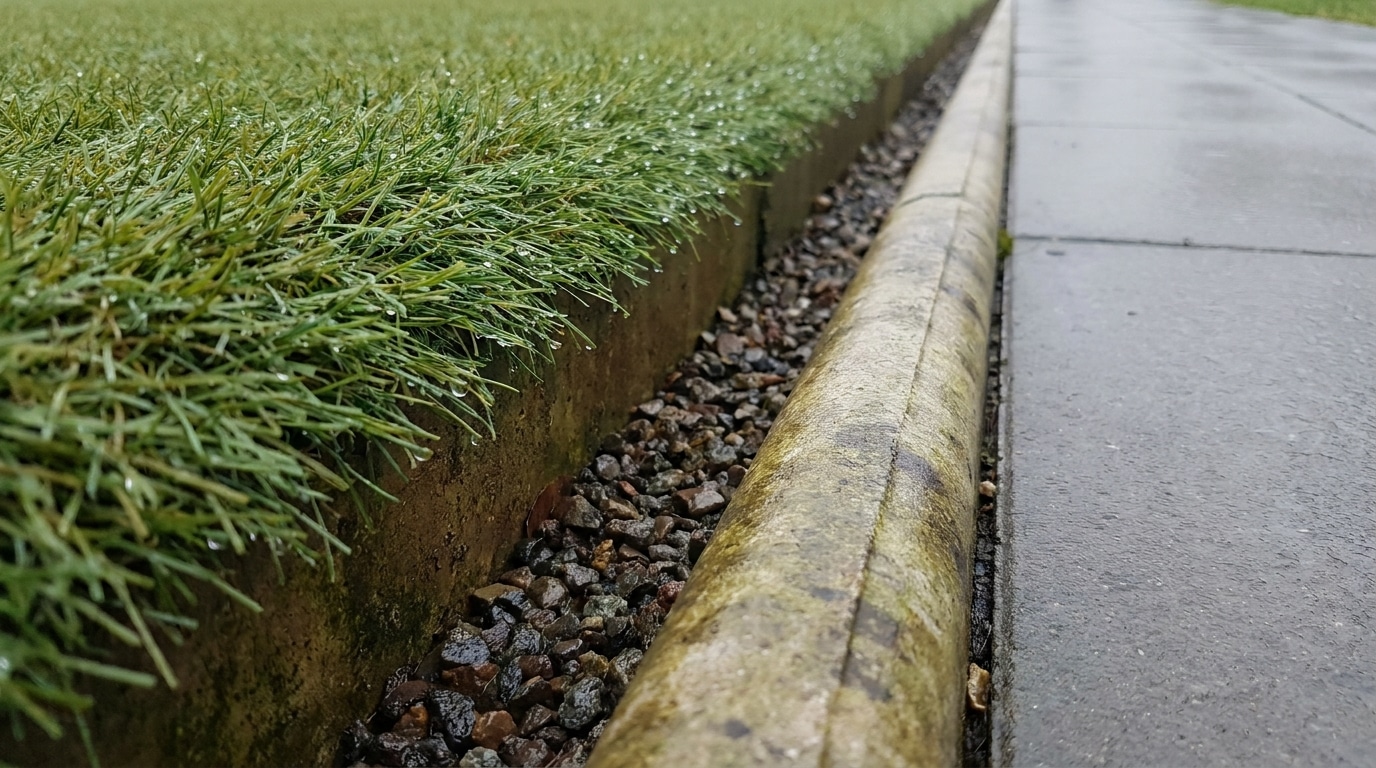
Drainage affects the appearance, safety and usability of commercial landscapes.
Poor drainage can create pooling, slippery conditions and damage to surrounding structures.
Neither natural nor synthetic grass guarantees effective drainage without suitable ground preparation.
Drainage With Natural Grass
Healthy soil can absorb and transmit rainfall, depending on soil structure and moisture conditions.
Natural grass roots can help maintain soil structure and reduce erosion in suitable environments.
However, compacted soils, clay-heavy ground and poor site grading may limit water infiltration.
Heavy rain can create waterlogged areas that remain unusable until the ground dries.
Soil improvement and properly designed drainage may be necessary.
Drainage With Synthetic Grass
Many synthetic turf products use permeable backing that allows water to move through the surface.
However, the backing is only one part of the drainage system.
The underlying base, site falls and discharge arrangements must also allow water to move away.
Installing permeable turf over an unsuitable or poorly drained surface can still result in pooling.
Commercial projects should include drainage planning based on the site’s existing conditions.
Which Is Better During Wet Weather?
A properly installed synthetic surface may remain more visually consistent during wet periods because it does not develop muddy grass patches.
However, standing water, saturated infill or poor drainage can still make the area unsuitable for use.
Natural turf may recover well after rainfall when soil conditions and drainage are favourable.
The quality of the drainage design often matters more than the surface material alone.
What Are the Environmental Impacts of Natural and Synthetic Grass?
The environmental comparison between natural and synthetic grass involves several factors.
Natural grass requires resources to grow and maintain, while synthetic turf involves manufactured materials, production processes and end-of-life disposal.
Neither option should automatically be described as environmentally superior in every situation.
The better environmental outcome depends on the site, installation method, water availability, material selection and expected service life.
Water Consumption
Natural grass may require regular irrigation, particularly during hot or dry weather.
Water requirements depend on grass species, soil conditions, rainfall and maintenance practices.
Synthetic grass generally does not require irrigation to maintain its appearance.
However, some synthetic installations may need occasional washing or cooling, depending on their use.
Plastic Materials and Microplastic Release
Synthetic turf is commonly manufactured from plastic-based materials.
Over time, wear, weathering and maintenance activities can release small plastic particles.
Certain systems also use infill materials that may migrate beyond the installed area.
These issues can affect surrounding soil, drainage systems and waterways.
Product selection, suitable containment measures and responsible maintenance can help manage some risks.
Biodiversity and Soil Health
Natural grass supports a living soil system and can contribute to local ecological functions.
However, a closely mown lawn generally provides fewer habitat opportunities than a diverse landscape with native plants, shrubs and trees.
Synthetic turf does not provide the same biological functions as living vegetation.
For commercial developments seeking stronger ecological outcomes, incorporating planting beds, trees and other vegetation may be more beneficial than relying entirely on either lawn type.
Waste and End-of-Life Management
Natural grass can regenerate, although damaged lawns may require replacement and disposal of organic material.
Synthetic turf eventually needs replacement.
Disposal options depend on the materials used and the availability of suitable recycling or recovery facilities.
Before selecting synthetic turf, commercial property managers should ask about product composition, replacement procedures and available end-of-life arrangements.
Where Does Synthetic Grass Work Best in Commercial Properties?
Synthetic grass is most useful where its consistent appearance and reduced routine lawn maintenance provide practical advantages.
However, each commercial application has different requirements for durability, drainage, safety and appearance.
The selected turf should match the intended use rather than relying on one product across every area.
Retail Forecourts and Shopping Centres
Retail properties often prioritise a clean, presentable appearance.
Synthetic grass can provide decorative green spaces near entrances, display areas and seating zones.
It may be useful where natural grass would struggle under frequent pedestrian activity.
However, heavily trafficked access routes may still require paving or other surfaces designed for pedestrian movement.
Hotels and Hospitality Venues
Hotels, restaurants and resorts may use synthetic grass in courtyards, outdoor dining areas and decorative landscapes.
These locations often need surfaces that remain visually consistent during frequent use.
Maintenance planning should account for food spills, litter, cleaning products and furniture movement.
For uncovered areas, surface temperatures should also be reviewed.
Rooftop Terraces and Balconies
Synthetic grass may provide a green decorative finish where natural soil-based lawns are impractical.
However, rooftop installations require careful design.
Structural load capacity, waterproofing membranes, drainage and wind exposure must be reviewed.
The installation must not compromise roof waterproofing or obstruct drainage outlets.
Offices and Corporate Spaces
Office developments may use synthetic grass in outdoor breakout areas, courtyards and decorative zones.
The surface can help create a visually consistent landscape without routine lawn mowing.
However, shaded seating, accessible pathways and suitable drainage remain important.
A combination of synthetic turf, natural planting and hard landscaping may provide a more functional result.
Showrooms and Temporary Displays
Synthetic grass can be used for decorative installations, exhibitions and product displays.
Its appearance can help create an outdoor-inspired setting without installing living turf.
For indoor applications, material suitability, fire performance and applicable building requirements should be confirmed.
Temporary installations also need secure edges and safe pedestrian access.
When Is Natural Grass the Better Choice?
Natural grass can be preferable when a commercial property has suitable growing conditions and adequate maintenance resources.
It is particularly valuable where natural cooling, living landscapes and ecological functions are priorities.
For large open spaces, the ability of natural turf to recover through growth may also provide practical advantages.
Landscaped Gardens and Outdoor Relaxation Areas
Natural grass can complement garden beds, shade trees and other vegetation.
This may be appropriate for office gardens, accommodation properties and landscaped commercial grounds.
A well-designed natural landscape can provide attractive outdoor areas while supporting natural cooling.
The maintenance program should account for seasonal growth and changing weather conditions.
Large Open Spaces
Natural grass may be practical for extensive landscaped areas where irrigation and mowing are manageable.
The appropriate turf species should be selected according to sunlight, soil, climate and expected activity.
However, intensive use may require reinforced turf systems, rest periods or alternative surfaces.
Properties With Environmental Landscaping Goals
Businesses prioritising living landscapes may prefer natural grass as part of a broader planting strategy.
Trees, shrubs, garden beds and permeable surfaces can contribute additional environmental benefits.
A design focused only on lawn coverage may miss opportunities to support shade, biodiversity and stormwater management.
What Should You Check Before Installing Commercial Synthetic Grass?
Commercial synthetic grass installation requires more than laying turf over an existing surface.
Site conditions, traffic requirements, drainage, material suitability and maintenance access all affect long-term performance.
A professional site assessment can help identify the appropriate system and prevent problems after installation.
Check the Existing Surface
The installer should inspect the ground or existing substrate.
Uneven surfaces, unstable soil, poor drainage and damaged concrete may require preparation before turf installation.
For ground-level applications, a suitable compacted base is often necessary.
For rooftops or balconies, additional waterproofing and structural requirements may apply.
Choose the Right Turf Specification
Commercial turf products vary in pile height, fibre structure, density and backing construction.
A decorative feature area may need a different product from a frequently used walkway or recreational zone.
Ask for product specifications relevant to the intended application.
Where necessary, review information about UV resistance, durability, drainage and slip performance.
Review Drainage and Water Movement
Drainage should be planned before installation.
Water must be able to pass through or across the system and reach suitable outlets.
Poor drainage may create standing water, odours or damage to surrounding areas.
The drainage design should suit the underlying surface and local rainfall conditions.
Confirm Safety and Building Requirements
Commercial installations may be subject to planning, building, accessibility and safety requirements.
These can vary according to the location and intended use.
For indoor installations, fire performance may require particular attention.
For playgrounds, sports facilities and accessible routes, specialist surface requirements may apply.
Confirm the relevant obligations before installation.
Plan Maintenance Access
Synthetic turf requires cleaning and inspection throughout its service life.
The design should allow staff or contractors to remove debris, clean spills and inspect edges and drainage outlets.
Areas beneath furniture or near food service locations may require additional maintenance planning.
A surface that is difficult to access can become more expensive to maintain.
How to Maintain Synthetic Grass in Commercial Areas
Commercial synthetic grass needs regular maintenance to preserve its appearance and usability.
The appropriate schedule depends on pedestrian traffic, surrounding trees, food service activities and environmental exposure.
Routine care can also help identify damage before it becomes a larger repair problem.
Remove Debris Regularly
Leaves, litter and other debris should be removed before they accumulate.
Suitable equipment may include soft brushes, leaf blowers or manufacturer-approved cleaning tools.
Avoid equipment that could damage the turf fibres or disturb the installation.
High-traffic areas may require more frequent cleaning.
Clean Spills Promptly
Food, drinks and other substances should be cleaned according to the turf manufacturer’s instructions.
Allowing spills to remain may cause staining or unpleasant odours.
Use cleaning products suitable for the turf materials and surrounding drainage system.
Avoid harsh chemicals unless specifically approved.
Brush Flattened Fibres
Frequent use can cause synthetic grass fibres to flatten.
Brushing with suitable equipment may help maintain the intended appearance.
The required frequency depends on the turf specification and amount of traffic.
Some installations may require specialist maintenance equipment.
Inspect Edges, Joins and Drainage
Regular inspections should identify loose edges, damaged joins, uneven areas or drainage problems.
These issues can create trip hazards or allow further deterioration.
Repairs should be completed using methods suitable for the installed system.
Property managers should also monitor areas where furniture movement or concentrated pedestrian activity causes unusual wear.
Can You Combine Natural and Synthetic Grass in One Commercial Landscape?
Yes. Combining natural and synthetic grass can be an effective way to match different surfaces to their intended uses.
A commercial property does not need to use one material across every landscaped area.
A mixed design can preserve living vegetation while introducing synthetic turf in locations where natural grass would be difficult to maintain.
Use Synthetic Grass in High-Wear Decorative Zones
Synthetic turf may be suitable for selected courtyards, displays or areas receiving repeated pedestrian use.
This can help maintain a consistent appearance without extending manufactured turf across the entire property.
The selected zones should still receive appropriate drainage, cleaning and heat management.
Retain Natural Grass in Cooler Landscaped Areas
Natural grass may be retained in open spaces, shaded gardens and relaxation areas where growing conditions are suitable.
Trees and planting beds can provide additional ecological and cooling benefits.
This approach may reduce the total area of manufactured material while preserving usable green spaces.
Connect Different Surfaces Safely
Where natural grass, synthetic turf and paving meet, transitions between surfaces should be carefully detailed.
Edges should be secure, and level differences should not create trip hazards.
Drainage should also be coordinated so water does not collect at the boundaries between materials.
How to Choose Between Natural and Synthetic Grass for Your Business
The correct grass surface depends on the property’s purpose, environmental conditions and maintenance resources.
Before choosing, identify which areas will experience heavy use, which need natural cooling and which require a consistent decorative appearance.
A zone-by-zone approach can produce a better result than selecting one surface for the entire property.
Commercial Grass Selection Guide
|
Commercial Application |
Surface Worth Exploring | Main Reason |
|
Retail decorative area |
Synthetic grass | Consistent visual presentation |
|
Office garden |
Natural grass or mixed landscaping | Cooling and living landscape benefits |
|
Rooftop terrace |
Specialist synthetic turf or alternative landscaping | Can suit limited soil depth, subject to structural design |
|
Hotel courtyard |
Natural or synthetic grass | Depends on traffic, shade and maintenance |
|
Indoor display |
Suitable synthetic turf |
Does not require sunlight or soil |
| Large landscaped grounds | Natural grass |
Supports living vegetation and regeneration |
| High-traffic decorative zone | Commercial-grade synthetic turf |
Can tolerate repeated use |
| Children’s play area | Application-specific tested surface |
Safety and heat performance are priorities |
| Primary accessible walkway | Suitable firm, stable paving |
Accessibility and safe movement |
| Ecologically focused landscape | Natural grass with diverse planting |
Supports living landscape functions |
These recommendations should be checked against the actual site conditions.
Questions to Ask Before Making a Decision
Before installing natural or synthetic grass, ask:
- How many people will use the area each day?
- Does the site receive strong direct sunlight?
- Is the area shaded or exposed to frequent rainfall?
- What drainage conditions already exist?
- Will children, pets or people using mobility aids use the space?
- What maintenance resources are available?
- Is natural cooling a priority?
- What is the total installation and long-term maintenance budget?
- Are there building, safety or accessibility requirements?
- What will happen when the surface needs repair or replacement?
Answering these questions helps identify a suitable surface for the property’s actual needs.
Choosing the Right Grass for Your Commercial Property
Natural and synthetic grass offer different advantages for commercial environments.
Natural grass provides cooling, living vegetation and the ability to regenerate under suitable conditions. Synthetic grass offers a consistent appearance, avoids routine mowing and can be practical for selected high-use or difficult-growing areas.
However, synthetic turf still requires maintenance and careful planning around surface temperatures, drainage, accessibility and environmental impacts.
The best solution depends on how the space will be used and the long-term performance expected.
For businesses planning a synthetic grass installation, A1SGS offers commercial turf solutions for properties across Sydney, the Central Coast, Newcastle and surrounding NSW areas.
Arrange a site assessment and request an itemised quote to compare suitable turf products, drainage requirements, installation methods and maintenance needs for your commercial property.
Frequently Asked Questions
Is Commercial Synthetic Grass Better Than Natural Grass for Businesses?
Commercial synthetic grass can be better for businesses that need a consistent green appearance in high-use areas or locations where natural grass struggles to grow. It eliminates routine mowing and generally does not require irrigation. However, natural grass provides cooling, living soil and ecological benefits that synthetic turf cannot fully reproduce. The better option depends on pedestrian traffic, site conditions, maintenance resources and environmental priorities. Some commercial properties benefit from combining both surfaces in different landscaped zones.
How Long Does Commercial Synthetic Grass Last?
The lifespan of commercial synthetic grass depends on the turf specification, installation quality, UV exposure, pedestrian traffic and maintenance practices. High-use areas may experience faster fibre wear and flattening than decorative spaces with limited foot traffic. Drainage problems, damaged joins and unsuitable cleaning methods can also reduce service life. Rather than relying on a fixed lifespan, property managers should review the manufacturer’s warranty, expected use conditions and maintenance requirements when comparing products.
Does Commercial Synthetic Grass Require Maintenance?
Yes. Commercial synthetic grass requires regular maintenance even though it does not need mowing, fertilising or routine irrigation. Maintenance may include removing leaves and litter, cleaning spills, brushing flattened fibres and checking joins, edges and drainage outlets. High-traffic areas and hospitality spaces may need more frequent cleaning than decorative landscapes. The correct schedule depends on the turf product, environmental exposure and daily use. Following the manufacturer’s care instructions helps maintain appearance and identify problems early.
Is Commercial Synthetic Grass Suitable for Outdoor Areas in Australia?
Commercial synthetic grass can be suitable for outdoor areas in Australia when the product and installation system are designed for the intended conditions. UV exposure, rainfall, drainage, pedestrian traffic and surface temperature all influence suitability. Synthetic turf can become very hot in direct sunlight, making shade and heat management particularly important. For rooftops, balconies and public-facing spaces, structural, waterproofing, accessibility and safety requirements should also be reviewed before installation.
How Much Does Commercial Synthetic Grass Installation Cost in Australia?
Commercial synthetic grass installation costs vary according to the area size, product grade, existing surface, drainage requirements and site accessibility. Projects requiring excavation, extensive base preparation, specialised underlay or difficult access may cost more than straightforward installations. Additional expenses can include edging, removal of existing materials and future maintenance. Businesses should request an itemised quote that identifies turf specifications, preparation work, installation labour and drainage arrangements. Long-term cleaning, repairs and eventual replacement should also be included when comparing synthetic turf with natural grass.