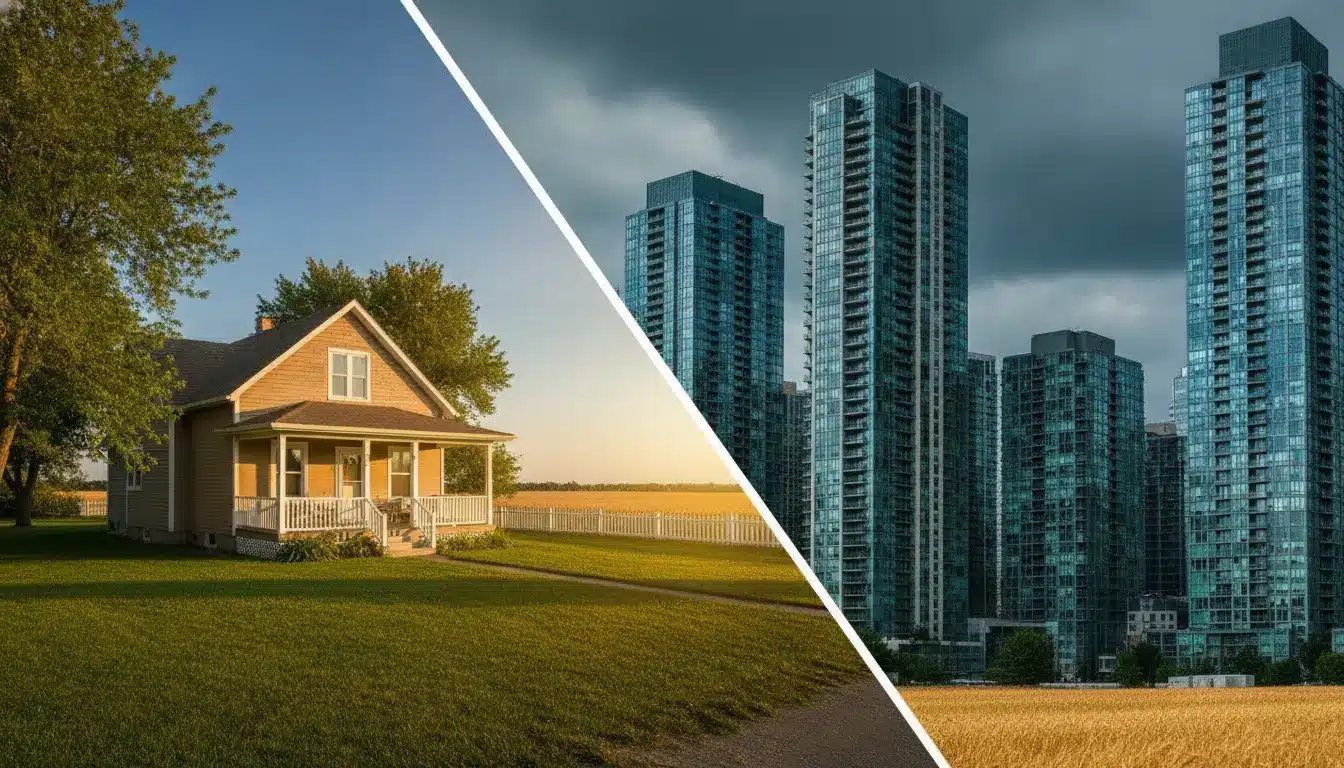
Two cities set the national conversation about housing prices, and both of them are outliers within their own country. Toronto averaged about $1,009,000 in 2026 and Vancouver about $1,206,000. Regina averaged $332,000 that year, which is a third of the Vancouver figure for a house in a provincial capital with a functioning economy. The country contains a dozen markets priced the way Regina is priced, and most national coverage treats them as a footnote to the two that are not.
Price-to-Income Ratios by City
The ratio between the median local home price and the median local income decides who can actually buy, and it separates Canadian markets far more sharply than the sticker price does.
Vancouver requires a price-to-income ratio of 14.2 and Toronto 12.2. Regina is at 3.8. Edmonton, Saskatoon and Trois-Rivières are all at 4.3. Those four cities are the only major urban areas left in Canada where a household on the median regional income can buy a median-priced home while keeping housing costs under 35% of pre-tax income. Every other large market in the country has moved past that line.
Those ratios are easier to read as years of income. A Vancouver household on the median local income needs 14.2 years of gross earnings to cover the median local price, and a Toronto household needs 12.2. Regina comes out at 3.8 years and Edmonton at 4.3. At 3.8 years a normal salary finances the purchase. At 14.2 years the purchase usually requires inherited money, a second earner in a senior role or an amortization stretched to its legal limit.
Prairie Prices in Mid-2026
Edmonton’s benchmark price was $429,100 in July 2026, unchanged year over year, with an average sale price of $475,079 that was up 2.6% from the previous July. Edmonton has been flat or slightly positive for several quarters while the two expensive markets declined.
Winnipeg detached homes averaged $483,910 in June 2026. Regina remains the cheapest of the major prairie markets at around $332,000 on average. Saskatoon prices are close to Edmonton’s and produce an identical 4.3 income ratio. None of these cities are small. Winnipeg and Edmonton are both larger than the city of Vancouver by population, and each has a full hospital system, a research university and an international airport with direct routes to Europe.
The size point matters because the standard objection to prairie prices is that the buyer gives up a real city to get them. Winnipeg is the eighth-largest metro area in the country and Edmonton the fifth-largest, so a move from Toronto or Vancouver to either one is not a retreat to a small town. Both moves cut the housing cost by more than half.
Edmonton Entry Points by Property Type
Apartment condominiums in Edmonton averaged $214,521 in July 2026 and townhouses $292,756. Buyers looking for homes in Edmonton can enter the market at roughly the size of a 20% down payment on an average Toronto property.
Detached houses averaged $585,726 that July and semi-detached $425,329. A buyer can cross the entire property ladder in Edmonton for about $371,000, which is less than half the price of one average Toronto property.
Value Outside the Prairies
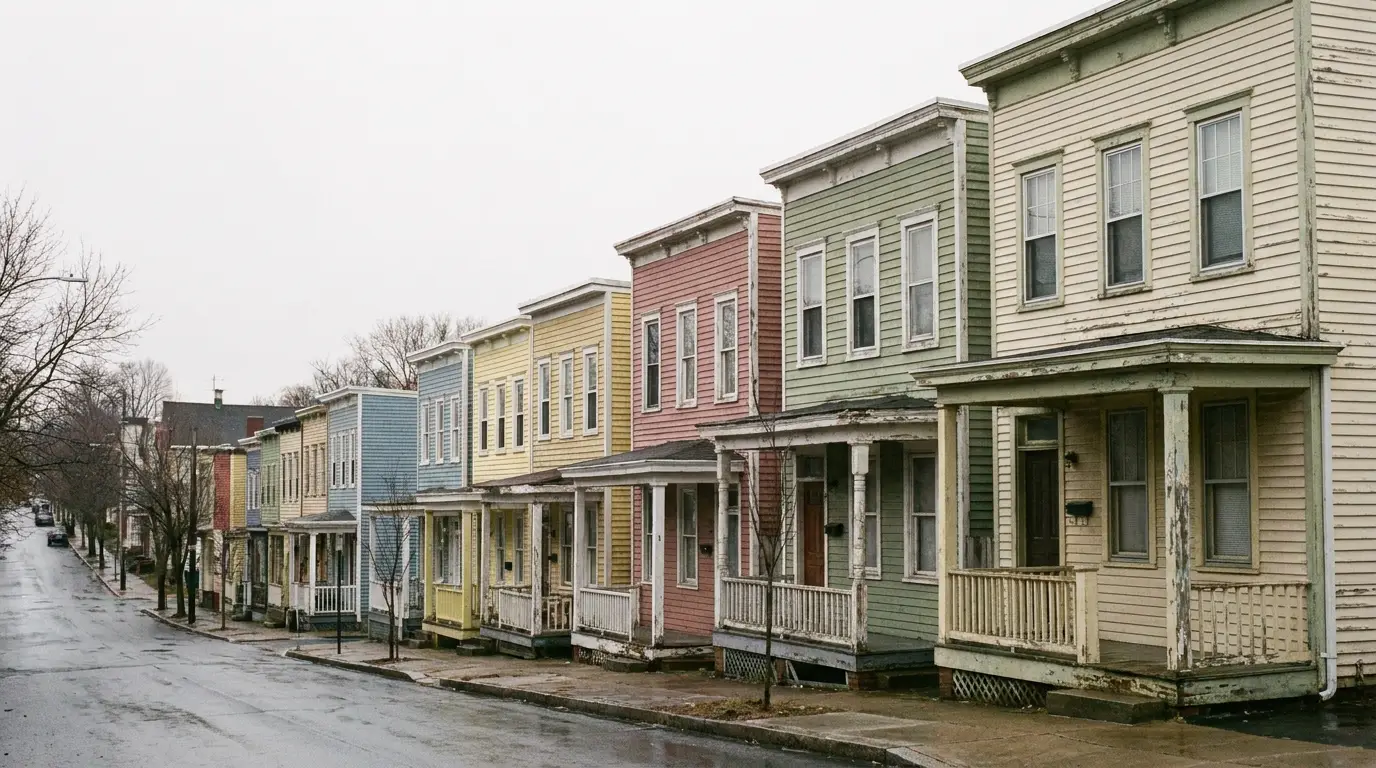
The prairie cities dominate any affordability ranking, though they are not the only option for a buyer priced out of the two big markets. Quebec City had a benchmark price of $415,800, within $15,000 of Edmonton’s, in a metro area of more than 800,000 people with its own labor market and no dependence on commodity cycles.
St. John’s, the provincial capital of Newfoundland and Labrador, is cheaper again. The benchmark there was $381,042, and the median sale price for a single detached house was $402,500 in the first quarter of 2026 after a 1.9% annual increase. Halifax is the exception in the east. Its benchmark reached $572,700 in May 2026 and its average sale price $629,270, which puts it above Edmonton and Winnipeg and well past every other Atlantic market. Halifax took a large share of the pandemic-era move out of Ontario, and prices there followed the arrivals.
Direction of Prices Through 2026
Where prices are headed matters as much to a buyer as where they are now, and the two groups of cities are moving in opposite directions.
Toronto prices are forecast to fall about 2% across 2026 and Vancouver about 3.5%. Edmonton and Regina are forecast to rise 4.0%, and Winnipeg 5%. A buyer choosing between markets on price alone is buying into a rising market in the affordable cities and a falling one in the expensive cities. The gap between them closes at a crawl on those numbers. A 4% increase on $429,100 is $17,164 and a 2% decline on $1,009,000 is $20,180, which leaves the two markets about $580,000 apart at the end of the year. Every quarter of delay raises the entry cost in the prairie cities by a few thousand dollars.
Local Economies Behind the Prices
A low price only counts as value when the local job market supports it, and the prairie cities hold up on that measure as well as on price.
Edmonton’s unemployment rate was 6.5% in March 2026, down from 7.4% a year earlier and below the national rate of 6.9% recorded that April. By June the local rate had moved back up to 7.2%, which happens when the labor force grows faster than the job count.
The capital projects are visible on the ground. The Valley Line West LRT is a 14 km extension from downtown to Lewis Farms with completion targeted for 2028, and the Capital Line South extension is under construction alongside it. Both add stations to residential districts that currently price as car-dependent suburbs, which imports the transit premium of the expensive markets into a cheap one.
Alberta also charges no provincial sales tax, so the 5% federal rate is the entire consumption tax on everything a household buys after the mortgage payment. In Ontario the combined rate is 13%.
A Method for Comparing Two Markets
Take the median household income for each city, divide the median home price by it, and rank the results. That single calculation reorders the map faster than any other comparison, and it puts Regina at 3.8 and Vancouver at 14.2 into separate categories of purchase.
Repeat the calculation on the property type you actually intend to buy, because the citywide median hides the range. An Edmonton apartment at $214,521 and a Halifax average at $629,270 are both described as affordable relative to Toronto, and only one of them is affordable on a median prairie income. Do the arithmetic on the specific property type in the specific city, then compare that number against what the same money buys in the market you are leaving.