

Uneven skin tone and dark spots creep up on most people eventually, and that’s perfectly normal. However, when you start looking for ways to deal with it, you might get lost in all the loud marketing and misleading labels. But what actually works and what doesn’t?
What Causes Dark Spots?
Dark sports usually appear on the skin when there is too much melanin, the natural pigment that gives your skin its colour. By far the most common cause for this is sun exposure, as the UV rays trigger skin cells to overproduce melanin. That’s why pigmentation spots often shop up on the forehead, cheeks, chest and back of hands first – the places that get exposed to the UV rays the most.
However, other reasons for dark spots could also include:
- Hormonal changes – such as pregnancy or contraceptive use.
- Skin inflammation – including acne scars.
- Certain medications – certain antibiotics, antipsychotics, antimalarials and chemotherapy agents.
- General ageing – as the skin ages, so does the recovery rate.
These marks are not dangerous by themselves, but they tend to bother a lot of people, understandably.
Not Every Mark Is the Same
Before we move on to getting rid of them, it’s important to note that not every brown mark is a dark spot, and you should know how to recognise it. A pigmentation mark should be a brownish patch that is completely flat to touch.
If you have a raised or textured mark, on the other hand, you’re more likely dealing with a beauty mark or mole. Their removal is very different and always done by professional dermatologists through lasers or surgical excision. A serum will not do anything here.
It’s best to see a dermatologist if a mark is:
- Red or unusual colour
- Uneven around the edges
- Sore or itchy
- Otherwise concerning looking
A dermatologist will be able to confirm whether it’s a pigmentation spot or anything more serious.
Ingredients That Actually Work
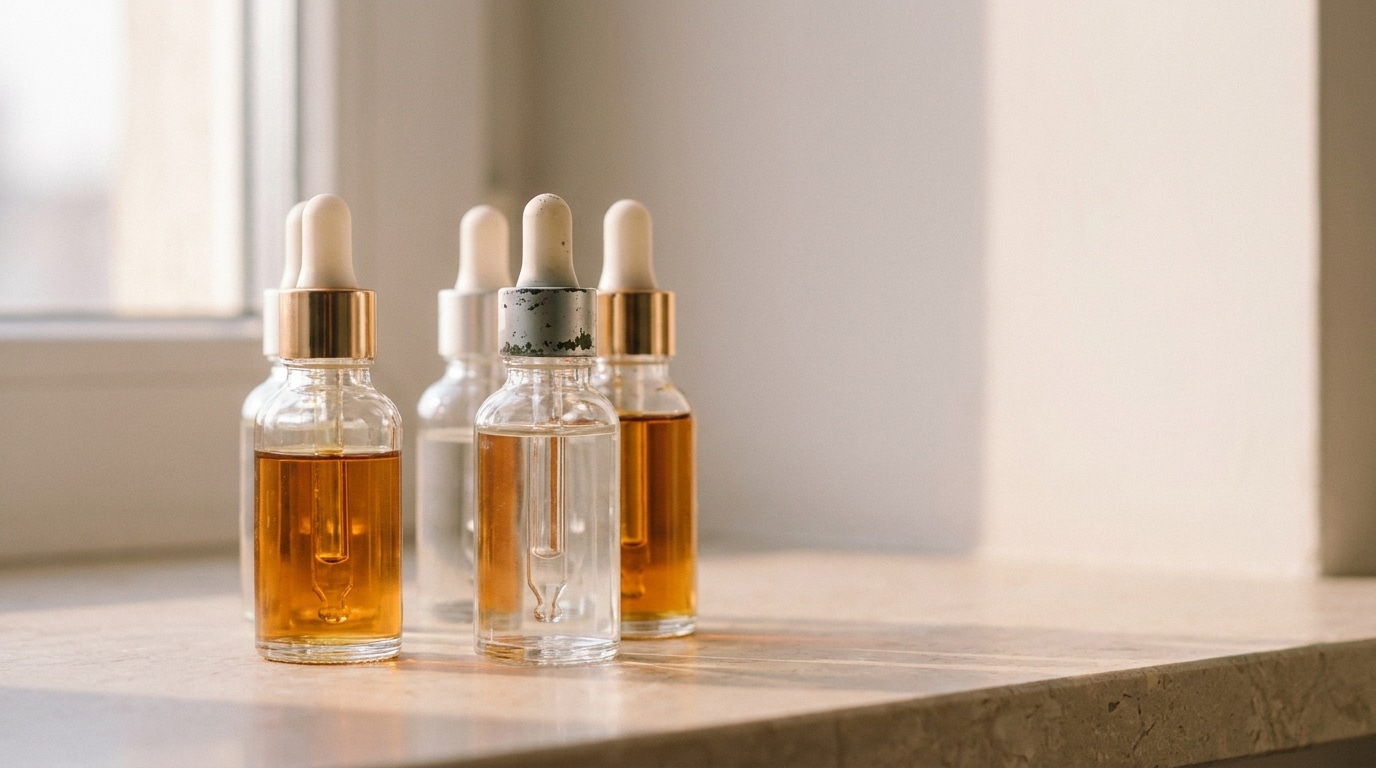
Just because a cream claims it’s “brightening”, doesn’t mean it will definitely work. The main thing to look out for is the active ingredients that have been researched and proven to genuinely improve pigmentation. Here are some of the most effective ingredients you may find in a dark spot serum:
|
Ingredient |
What is does |
|---|---|
|
Niacinamide |
Slows pigment transfer to skin’s surface. |
|
Vitamin C |
Brightens the skin tone and adds antioxidant defence. |
|
Viniferine |
A gentler alternative to Vitamin C, regulates and prevents pigmentation. |
|
Glycolic acid |
Exfoliates the top layer of dead, discoloured skin. |
|
Retinol |
Speeds up skin turnover, shedding hyperpigmented cells. |
|
Tranexamic acid |
Targets stubborn, patchy pigmentation. |
You certainly do not need to use all of these, but rather pick one or a few most suitable active ingredients for your skin, and use them consistently. It’s always best to introduce them into your routine slowly and build it over time.
Prevention Comes First
Most of these ingredients are used to deal with existing pigmentation marks, while others help prevent them. However, the most effective way to protect your skin against the development of new dark spots is by using a sun cream (SPF30 or higher) every day, especially during long exposures to the UV rays.
Patience Is a Virtue
Dark spots do not disappear overnight. In fact, it usually takes anywhere between 4 to 12 weeks and longer before you start seeing noticeable improvements. But, the right active ingredients and a little bit of patience will get you a long way!