


A $60 bottle of mushroom drops for your dog should do more than look good on the counter. When I started digging into the shelf, I found products that tasted like woody tea, products that tasted like nothing at all, and one bottle whose ingredient list named a part of the mushroom most harvesters throw away. The gap between the marketing and the liquid inside is wider than most pet parents realize. Here’s what actually matters, plus a five-minute test you can run before you buy.
Mushrooms have a real history in animal wellness, and the FDA holds any supplement that claims to treat or prevent a disease to drug standards, which is worth knowing before you trust a bold label. If you’ve already started narrowing the field, a good Best Mushroom Supplement for Dogs should tell you the mushroom species, the part used, and the extraction method without you having to email customer service. Those three facts separate a serious product from a pretty jar.
Here’s the part that surprises most owners: the dog doesn’t care about the brand story. Your dog cares whether the powder disappears into dinner and whether the result shows up in how they move, rest, and greet you at the door.
Why the Mushroom, Not the Bottle, Is the First Question
There are thousands of mushroom species, and only a slice of them have a documented place in pet nutrition. Reishi, lion’s mane, turkey tail, cordyceps, chaga, maitake, and shiitake show up again and again because each has a different profile. Reishi tends toward calm and long-term support. Lion’s mane is the cognition one. Turkey tail is the immune one people ask about first. Cordyceps gets attention for stamina and older dogs who used to sprint.
So a product that lists “mushroom blend” as one line on the back is telling you almost nothing. I’d take a single-species bottle with a clear label over a seven-mushroom proprietary blend every time, because you can actually observe what changes. The Merck Veterinary Manual is the resource I keep open when I want to understand how any supplement or botanical fits into a dog’s body, and it’s a good reminder that “natural” has never meant “no interaction.”
One judgment call I’ll make for you: avoid blends until you’ve tested one mushroom on its own for a month. You can’t tell what worked if five things went in at once.
Fruiting Body Vs. Mycelium: The Label Detail That Changes Everything
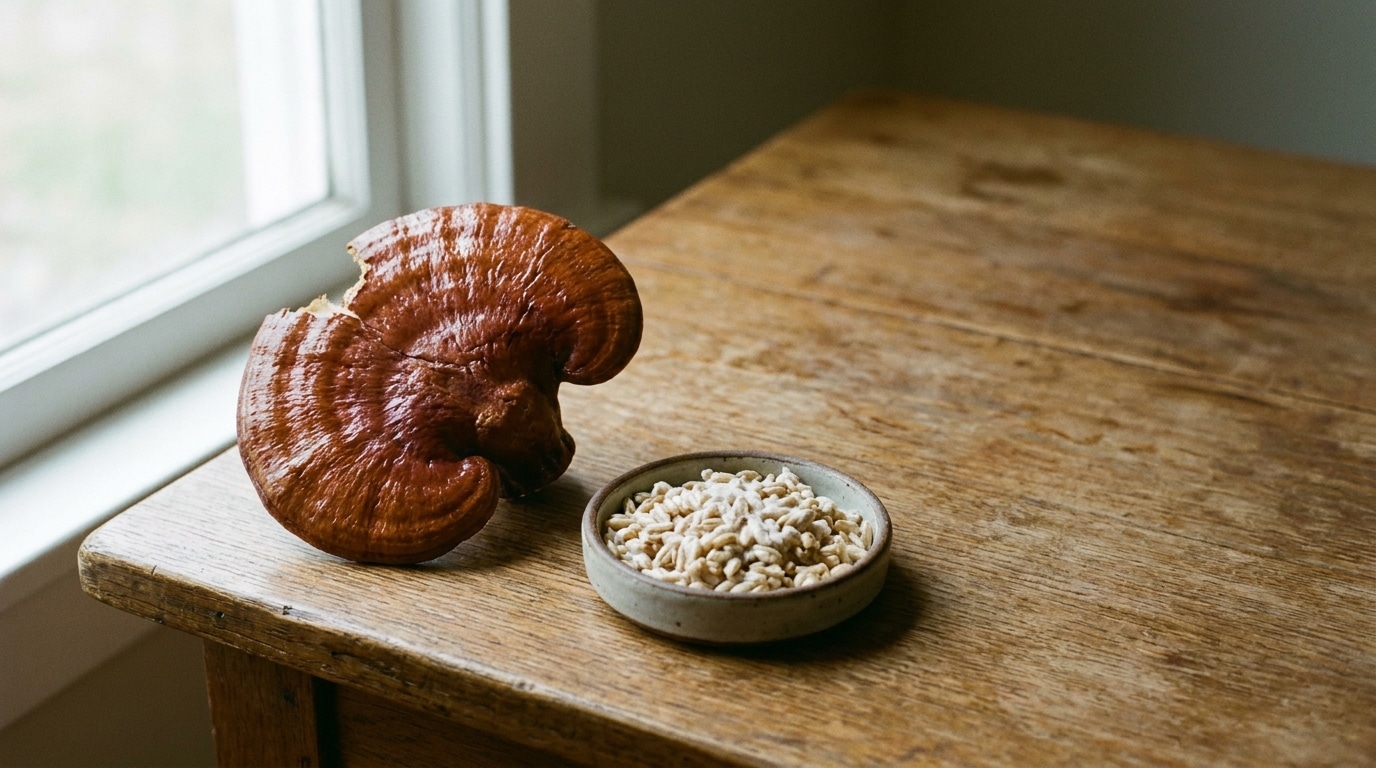
Here’s a piece of mushroom biology most shoppers never hear. The fruiting body is the above-ground mushroom you’d recognize in the woods. Mycelium is the root-like network it grows from, and plenty of cheap products are mostly mycelium grown on grain. That grain ends up in the bag, so a “mushroom powder” can be a fair percentage of oats or rice by weight.
You don’t need a lab kit to catch this. Flip the package and look for the words “fruiting body.” If the first ingredient is myceliated grain, or the label brags about “full-spectrum mycelium,” you’re paying mushroom prices for a grain filler. MycoDog leans hard on fruiting bodies and dual extraction, and that’s the right instinct regardless of who makes the tincture.
- Fruiting body: the actual mushroom, usually what you want.
- Mycelium on grain: cheaper, often cut with the growing substrate.
- Extract ratio: a number like 10:1 tells you how concentrated the starting material was.
- Dual extraction: uses both water and alcohol to pull different compounds out.
Dual extraction isn’t marketing fluff, by the way. Some compounds dissolve in water and some in alcohol, so a single-method tincture leaves material on the table. If a brand can’t tell you how it was extracted, assume it did the cheapest thing.
How to Test a Bottle Before Your Dog Does
You can size up most mushroom supplements in the aisle, no phone search required. I call it the Weekend Inventory Test, and it takes about five minutes per bottle.
- Read the first three ingredients. If grain leads the list, put it back.
- Find the species name. “Mushroom extract” alone is a red flag. It should say Reishi, or Ganoderma lucidum, or both.
- Check the part used. Fruiting body, not “mycelium and substrate.”
- Look for a dose. A number of drops or milligrams per weight of dog, not “add to food as desired.”
- Smell it. A real tincture smells earthy and slightly bitter. A sweet, fruity one is probably a treat in disguise.
The American Kennel Club keeps a useful overview of how supplements fit into a dog’s routine, and their consistent message is to talk to your vet before adding anything, especially if your dog takes medication. I’d go further. Bring the bottle to your next appointment and ask the tech to note it in the chart. It costs nothing and it tells your vet what’s actually in the house.
What Two Weeks Should Look Like
Supplement marketing promises transformation, but real changes show up small. A concrete scenario: my neighbor’s eleven-year-old lab mix started a lion’s mane tincture on a Monday. By the second Saturday, the dog was meeting her at the door again after a few months of staying on the bed. Nothing dramatic. No miracle. Just a dog who seemed a little more present. That’s what “working” tends to look like in older animals.
Start with one species, dose on the low end of the label, and keep a three-line note each week. Energy, appetite, sleep. If nothing shifts after four to six weeks, stop. You’ll save the next $60.
|
What you want |
Mushroom to look for |
What to watch |
|---|---|---|
|
Calm behavior |
Reishi |
Sleep and settling at night |
|
Focus in older dogs |
Lion’s mane |
Greeting you, finding toys |
|
Immune baseline |
Turkey tail |
General energy, coat |
|
Stamina |
Cordyceps |
Walks and stairs |
The Real Mushroom Checklist for Busy Owners
If you only remember one thing, remember this: the species, the part, and the extract. A strong mushroom supplement for dogs names all three, and a weak one hides at least one. The bottle should feel like a spec sheet, not a bedtime story.
Buy from a company that publishes its sourcing, answers a dosing question in plain English, and offers a real return window. If customer service can’t explain dual extraction, that’s your answer. I’d rather pay more for clarity than gamble on a mystery blend that smells like syrup.
Your dog can’t read a label. You can. That’s the whole job, and it takes one weekend to do it right.