
Loose diamonds continue to attract buyers who want flexibility, transparency, and control over jewelry selection. Instead of purchasing a finished ring or necklace with a pre-set stone, many shoppers prefer selecting a loose diamond first and then deciding how it should be mounted. This approach allows buyers to focus on cut quality, clarity, color, and carat weight before choosing the final design.
The growing interest in customization has also changed how consumers evaluate diamond retailers and online suppliers. Buyers now spend more time learning about grading reports, diamond shapes, light performance, and ethical sourcing practices before making a purchase. Within this broader market, many people explore collections such as Aura Diamonds loose diamonds to compare stone quality, pricing structures, and available options.
Why Loose Diamonds Continue to Gain Attention
Loose diamonds provide a level of transparency that many buyers appreciate. When a diamond is not already mounted in jewelry, it becomes easier to inspect its shape, measurements, grading details, and overall appearance. Consumers can compare several stones side by side while focusing on specific qualities that matter most to them.
Some buyers prioritize maximum sparkle, while others care more about size or clarity. A person shopping for an engagement ring may want a round brilliant diamond with high light return, while another may prefer an elongated oval shape for finger coverage. Loose diamonds make those choices easier because the stone itself becomes the center of the buying process.
Another reason loose diamonds remain popular is long-term flexibility. A loose diamond can later be placed into a different setting if styles change over time. Some families also pass loose diamonds between generations, resetting them into modern designs while preserving sentimental value.
Understanding the Four Cs
The Four Cs remain one of the most recognized systems for evaluating diamonds. These standards help buyers compare stones in a structured and measurable way.
Cut
Cut quality strongly influences how much sparkle a diamond produces. Even a diamond with excellent clarity and color may appear dull if it is poorly cut. A well-cut diamond reflects light efficiently and creates brilliance, fire, and scintillation.
Round brilliant diamonds are often associated with the highest level of sparkle because their facet arrangement is designed for maximum light return. Fancy shapes such as pear, emerald, marquise, and cushion cuts can also appear beautiful, though their visual effects differ.
Shoppers frequently compare cut grades from respected laboratories such as the Gemological Institute of America (GIA) and the International Gemological Institute (IGI). Excellent and Ideal cut grades usually receive stronger interest because of their light performance.
Color
Diamond color grading measures the absence of visible color in white diamonds. The standard scale ranges from D to Z. D-grade diamonds are considered colorless, while lower grades may display faint yellow or brown tones.
Many buyers discover that diamonds within the near-colorless range, such as G through J, can still appear bright and attractive in everyday wear. The choice often depends on budget, setting style, and personal preference.
Yellow gold settings may mask slight warmth in a diamond, while platinum and white gold settings can emphasize whiteness. Because of this, buyers often evaluate color together with the final jewelry design.
Clarity
Clarity refers to internal inclusions and external blemishes. Most diamonds contain natural characteristics formed during their creation process deep within the earth.
Flawless diamonds are extremely rare, though many buyers choose stones in the VS or SI clarity range because inclusions are often invisible without magnification. Eye-clean diamonds remain popular since they balance appearance and price efficiently.
Clarity preferences may also depend on diamond shape. Step-cut diamonds such as emerald cuts tend to reveal inclusions more easily because of their larger open facets, while brilliant cuts can hide small imperfections more effectively.
Carat Weight
Carat weight measures a diamond’s size, though visual appearance also depends on shape and cut proportions. Two diamonds with the same carat weight can appear different in dimensions depending on how they are cut.
Larger diamonds usually command higher prices because bigger rough stones are rarer. Buyers often search for balance between visible size and overall quality. Some people choose diamonds slightly below milestone weights such as 1.00 or 2.00 carats because pricing can rise sharply at those thresholds.
Popular Diamond Shapes and Their Characteristics
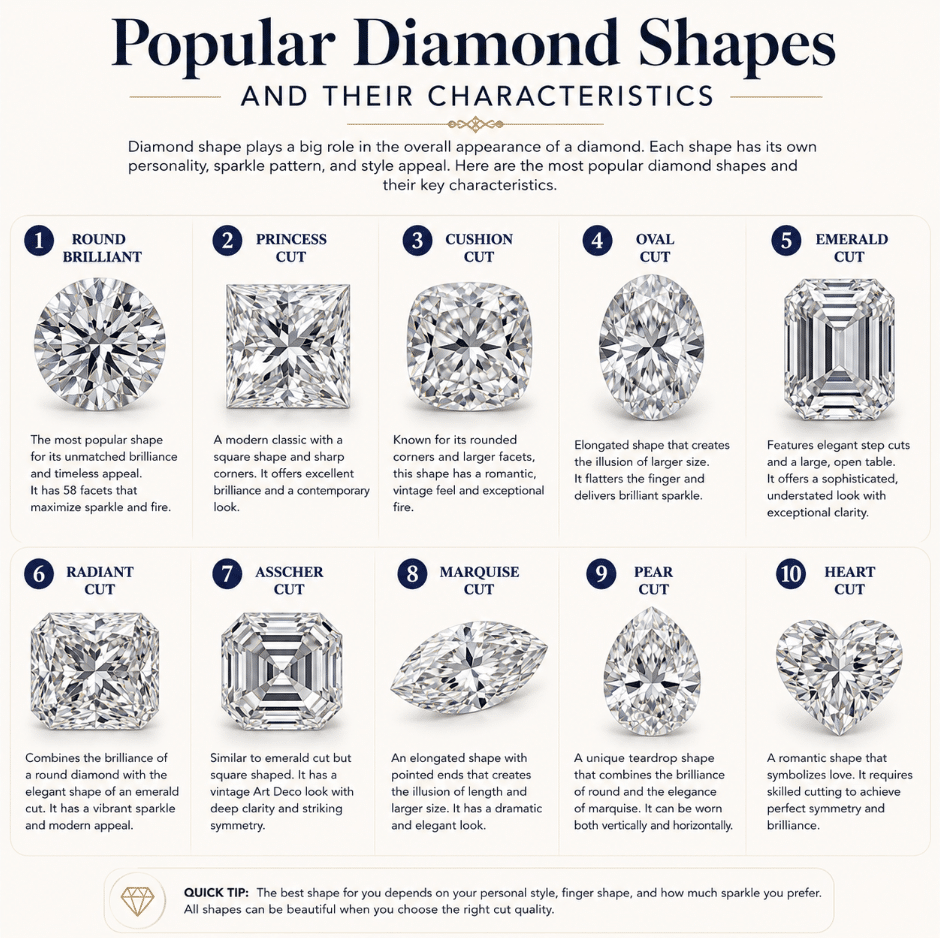
Diamond shape influences overall style and visual impact. Each shape carries distinct characteristics that appeal to different tastes.
Round Brilliant
Round brilliant diamonds remain the most widely purchased shape. Their facet pattern is designed for strong brilliance and balanced sparkle. Buyers looking for maximum light return often gravitate toward round stones.
Oval
Oval diamonds create an elongated appearance that can make fingers appear slimmer and longer. They also tend to look larger than round diamonds of equal carat weight because of their surface area.
Cushion Cut
Cushion-cut diamonds combine soft corners with a pillow-like outline. Some cushion cuts display a crushed-ice appearance, while others feature larger facets that create broader flashes of light.
Emerald Cut
Emerald-cut diamonds stand apart because of their step-cut facets and clean geometric lines. Instead of intense sparkle, they produce a hall-of-mirrors effect that emphasizes clarity and elegance.
Pear and Marquise
Pear and marquise diamonds offer elongated silhouettes with dramatic visual presence. These shapes are often selected by buyers seeking distinctive engagement ring styles.
The Role of Diamond Certification
Diamond certification plays a major role in modern jewelry purchasing. Independent grading reports provide objective analysis of a diamond’s characteristics, helping consumers make informed comparisons.
Laboratories such as GIA and IGI evaluate diamonds according to standardized grading methods. Reports usually include measurements, cut information, fluorescence, clarity plotting, and other technical details.
Consumers often prefer certified diamonds because the documentation creates additional transparency. Certification also supports resale and insurance processes by establishing recognized grading records.
When comparing loose diamonds online, many buyers review grading reports alongside magnified images and videos. This combination allows for closer inspection before purchase.
Online Diamond Shopping and Consumer Behavior
Online diamond shopping has expanded significantly during the last decade. Improved photography, high-resolution videos, and virtual inspection tools have made remote buying more accessible.
Buyers can now compare hundreds of loose diamonds across different shapes, carat ranges, and price categories within minutes. This access encourages deeper research and more informed purchasing decisions.
Modern consumers also pay closer attention to policies surrounding shipping, returns, resizing, and customer support. Since diamonds represent a major financial purchase for many households, trust and transparency remain central factors.
Education has become another major influence on buying behavior. Many shoppers spend weeks studying cut grades, fluorescence, depth percentages, and table measurements before selecting a stone.
Ethical Sourcing and Lab-Grown Alternatives
Interest in diamond sourcing has increased as consumers ask more questions about environmental and labor practices. Many buyers want reassurance that diamonds are sourced through channels aligned with international regulations and responsible trade standards.
The Kimberley Process was introduced to reduce the trade of conflict diamonds, though discussions surrounding ethical sourcing continue across the jewelry industry.
Lab-grown diamonds have also expanded rapidly in popularity. These diamonds possess the same chemical composition as natural diamonds but are created in controlled laboratory environments.
Some buyers choose lab-grown diamonds because they offer larger carat sizes at lower price points. Others still prefer natural diamonds because of rarity and geological history.
Both categories now occupy a strong position in the jewelry market, and consumer preferences continue to evolve.
Price Factors Beyond the Four Cs
While the Four Cs provide the foundation of diamond pricing, several additional details can influence value.
Fluorescence
Some diamonds emit a soft glow under ultraviolet light. In certain cases, fluorescence can slightly affect appearance and pricing.
Symmetry and Polish
High symmetry and polish grades may improve a diamond’s visual appeal. These factors contribute to overall finishing quality.
Shape Demand
Round brilliant diamonds often carry higher prices because demand remains consistently strong. Fancy shapes may offer better value per carat in some situations.
Market Conditions
Diamond prices can fluctuate based on global supply, mining production, and consumer demand patterns. Economic conditions also influence luxury purchasing behavior.
Matching Loose Diamonds With Jewelry Settings
Once buyers select a loose diamond, they often choose a setting that complements the stone’s appearance.
Solitaire settings remain one of the most popular choices because they place full attention on the center diamond. Halo settings surround the main stone with smaller accent diamonds, creating additional sparkle and visual size.
Three-stone rings carry symbolic meaning for many couples and can combine different diamond shapes for contrast. Vintage-inspired settings continue to attract buyers who appreciate intricate metalwork and detailed craftsmanship.
Metal choice also affects overall appearance. Platinum offers durability and a bright white finish, while yellow gold creates warmer contrast. Rose gold has gained popularity because of its softer tone.
Comparing Different Retail Approaches
The diamond industry includes a wide range of retailers, from local jewelers to online-only platforms. Some companies focus heavily on customization, while others emphasize inventory size or educational tools.
Consumers frequently compare inventory quality, certification standards, imaging technology, and return policies before purchasing. Some buyers also review collections from names such as Bova Diamonds, Shira Diamonds, and Diamonds Direct while evaluating available options across the market.
The availability of online comparison tools has increased pricing transparency. Buyers can review stones with similar specifications and identify differences in cut quality, fluorescence, or certification.
Why Research Matters Before Purchasing
Diamonds often represent emotionally significant purchases tied to engagements, anniversaries, family milestones, and long-term investments. Because of this, many consumers spend considerable time researching before making a final decision.
Reviewing certification reports, studying diamond proportions, and comparing images from multiple angles can help buyers avoid common mistakes. Some shoppers also consult gemologists or experienced jewelers for additional guidance.
Budget planning remains another important part of the process. Buyers frequently establish priorities before shopping, deciding whether sparkle, size, or clarity matters most to them.
Understanding trade-offs within the Four Cs allows consumers to make more balanced decisions. A slightly lower color grade with an exceptional cut may appear more attractive than a larger diamond with weaker brilliance.
The Continuing Appeal of Loose Diamonds
Loose diamonds continue to attract attention because they provide flexibility, transparency, and customization opportunities that many buyers value. From engagement rings to heirloom redesigns, loose stones allow consumers to shape jewelry around personal preferences rather than selecting a pre-made piece.
As online research tools become more advanced, buyers now have greater access to grading reports, high-definition imagery, and educational resources than ever before. This shift has encouraged more informed purchasing behavior throughout the diamond industry.
Whether someone prioritizes brilliance, rarity, shape, or long-term value, the process of selecting a loose diamond often begins with understanding quality standards and comparing available options carefully. Thoughtful research, attention to certification, and awareness of pricing factors can help buyers navigate the market with greater confidence.