
Nine out of ten guest rooms have the same problem: they feel like storage units with a bed in them. The door stays shut for months, the air runs cold and stale, and when someone finally sleeps over, they get a space that feels like a waiting room. A fireplace fixes that in one afternoon of installing and thirty seconds of clicking a remote.
I get it if you are skeptical. A stove in a spare room sounds expensive and fussy. But the math and comfort argument is stronger than most homeowners assume, especially if your guest room sits over a garage or at the far end of the house where the furnace gives up. If you are picturing the upgrade, a sleek modern gas fireplace stove for any room like the kind sold by Utah installers is a good starting point, because modern units run on existing gas lines and need far less clearance than the cast-iron monsters from the 1980s. Here is how to decide whether one belongs in your spare bedroom, and how to do it without turning the space into a dated cabin.
Guest Rooms Are the Coldest Rooms in The House for A Reason
Think about how your home actually works. Guest bedrooms usually sit at the end of a duct run, above a crawlspace, or over an uninsulated garage ceiling. They get the leftover air from a central system sized for the living area. Nobody notices this until a guest spends a night shivering under two blankets and politely says nothing.
A gas stove solves the heat problem at the source. Freestanding units radiate warmth from multiple sides, so the whole room gets comfortable instead of one overblown corner. You turn it on when someone arrives, and off when they leave. No zone heating gymnastics, no running the furnace all night for one person.
That is also a decent argument for efficiency. Gas stoves convert a high share of their fuel into room heat, and according to the Environmental Protection Agency, natural gas and efficiency discussions matter for both cost and indoor comfort, which is why matching output to room size beats buying the biggest unit on the showroom floor. A compact stove rated for a few hundred square feet is the right answer for most spare bedrooms.
Design Choices that Keep a Modern Stove Looking Intentional
Here is where most people go wrong. They buy a beautiful contemporary unit with a big glass window and matte black frame, then decorate around it as if it were a wood stove from 1970. The result looks confused.
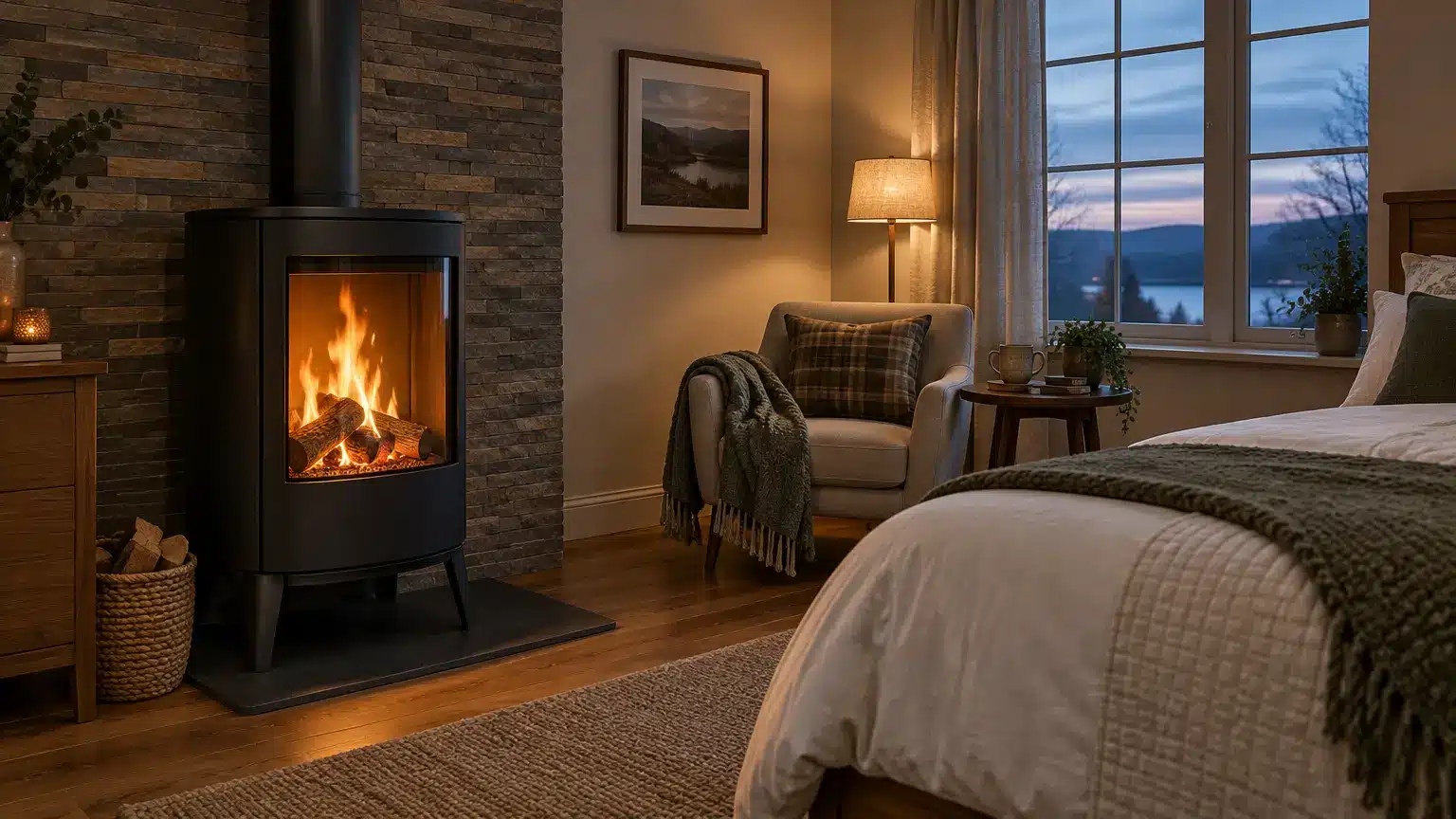
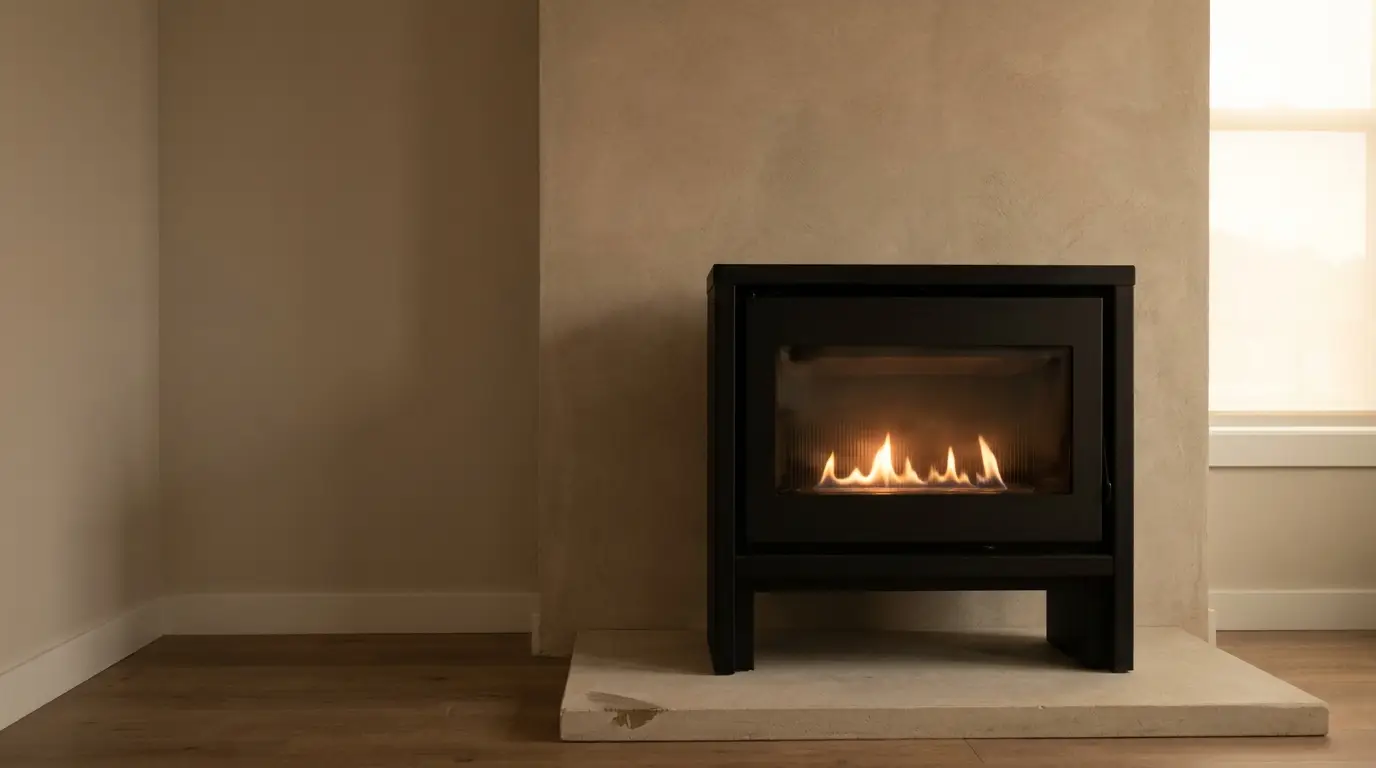
Match the room, not the fantasy cabin. A modern gas fireplace stove works because the flame becomes the focal point and the frame nearly disappears. In a guest room, that means a couple of decisions:
- Set the stove against a feature wall in a matte finish, and skip the stone surround unless the whole room leans rustic.
- Choose a model with a linear glass panel to keep sightlines open in small rooms.
- Add a simple hearth pad in a neutral material; you can swap it later without touching the unit.
- Plan seating you would actually use, such as a small reading chair or a bench at the foot of the bed.
- Keep the thermostat and remote somewhere a guest can find them without asking.
I would put a modern unit in a guest room over a faux electric insert every single time. The flame in an electric fireplace looks the same in every photo and flat in person, and it adds nothing to the room beyond a heater. A gas stove gives you real fire and a real heat source.
What a Guest Room Stove Actually Costs You in Effort
Less than you think, and more than a space heater. Any gas appliance install involves a licensed trade, a gas line run, and venting, and freestanding units need space around them for clearance and airflow. The National Fire Protection Association sets the baseline fire and safety practices that local codes build on, so treat clearance specs as non-negotiable even when a unit looks like it fits tighter.
The good news is that most of the work happens once. After installation, you have a remote or thermostat, a pilot light or electronic ignition, and nothing else to manage. No logs to haul, no ash, no chimney cleaning marathon every fall.
If your guest room is small and your budget is tight, a high output unit is wasted. A compact stove plus a good throw blanket beats a huge stove that heats a bedroom to eighty degrees in ten minutes.
A Simple Decision Framework: The Three Night Test
Before you spend anything, run what I call the Three Night Test. Imagine a friend staying for three nights in the room during the coldest week of the year. Walk through the space and score each question honestly.
|
Question |
If yes |
If no |
|---|---|---|
|
Does the room feel noticeably colder than the rest of the house? |
A stove is worth pricing |
Consider a smaller space heater or a fan first |
|
Can a vent and gas line reach an exterior wall or rooftop path? |
Installation gets straightforward |
Get a site quote before falling in love with a model |
|
Is there at least a couple of feet of clear floor space on the stove side? |
Freestanding works well |
A built-in or compact unit may fit better |
|
Would you use the room more if it felt warmer and cozier? |
The upgrade pays you back daily |
Fix the bigger layout problem first |
That last row is the one people skip. If the guest room is a catch-all for luggage and boxes, a fireplace will not fix the clutter. Clear the room, paint it, and then decide.
Small Details that Make a Guest Actually Relax
Flame alone does not make a room feel welcoming. Layering a few small things around it does far more than any single purchase.
Put a real chair near the stove with a lamp and a side table for a book and a phone charger. Add a basket of blankets within arm’s reach. Give guests a printed card with how to turn the stove on, the wifi password, and where the extra towels live, because nobody wants to text their host at midnight. And if you can, keep a small tray with water and a couple of snacks so a guest does not have to wander into your kitchen at 6 a.m.
Warmth is physical, but comfort is choreography. Think about the whole visit and you will end up with a room people want to return to, not a space they avoid.
What to Do Before You Buy
Start by measuring the room and writing down how cold it actually gets in January. Then look at two or three compact and modern gas stoves side by side and compare output, footprint, and finish. Get a quote on the gas line and vent path from a licensed installer who handles the full project, because a stove is only as good as its installation. And check the manufacturer spec sheets against the National Institute of Standards and Technology measurement conventions for ratings so you are comparing like for like instead of trusting a marketing badge. Once the unit is in, pick a rug, a chair, and one clean finish for the wall, then stop decorating. The flame is the design.
A guest bedroom with a working fireplace goes from a forgotten spare room to the best seat in the house. Guests sleep better, you use the room more, and your winter heating bill gets a little less dramatic. What’s stopping you from making that back bedroom the warmest corner in the house?