


A stiff neck by mid-afternoon and a head that juts forward in photos are signs plenty of desk workers know well.
That forward lean often creeps in slowly, from hours hunched over a screen or a phone held low in the lap.
Small, realistic habits beat intense one-time fixes for reversing this pattern. Simple exercises, daily habit shifts, and a realistic sense of progress are what make up how to fix forward head posture, one step at a time.
How to Tell If You Have Forward Head Posture
A side-view check is the easiest way to spot this pattern. Look for the ear sitting noticeably in front of the shoulder rather than lining up directly above it.
Rounded shoulders or a hunched upper back often show up alongside it. Tightness through the neck and shoulders may follow, though it does not appear for everyone with this posture pattern.
Try a simple wall test. Stand naturally with your back against a wall and notice whether the back of your head reaches it without straining or tilting.
A relaxed side-view photo taken today works well as a baseline. Comparing new photos against it later gives a clearer picture of progress than memory alone.
Important: It is worth noting that forward head posture does not automatically cause neck pain. Research on that link is mixed, and pain can show up for reasons unrelated to posture alone.
How to Fix Forward Head Posture
Stretching tight areas alone is usually not enough on its own. For lasting physical health, a well-rounded routine of forward head posture exercises should also build upper-back mobility and strengthen the muscles that support the neck and shoulder blades.
1. Chin Tucks
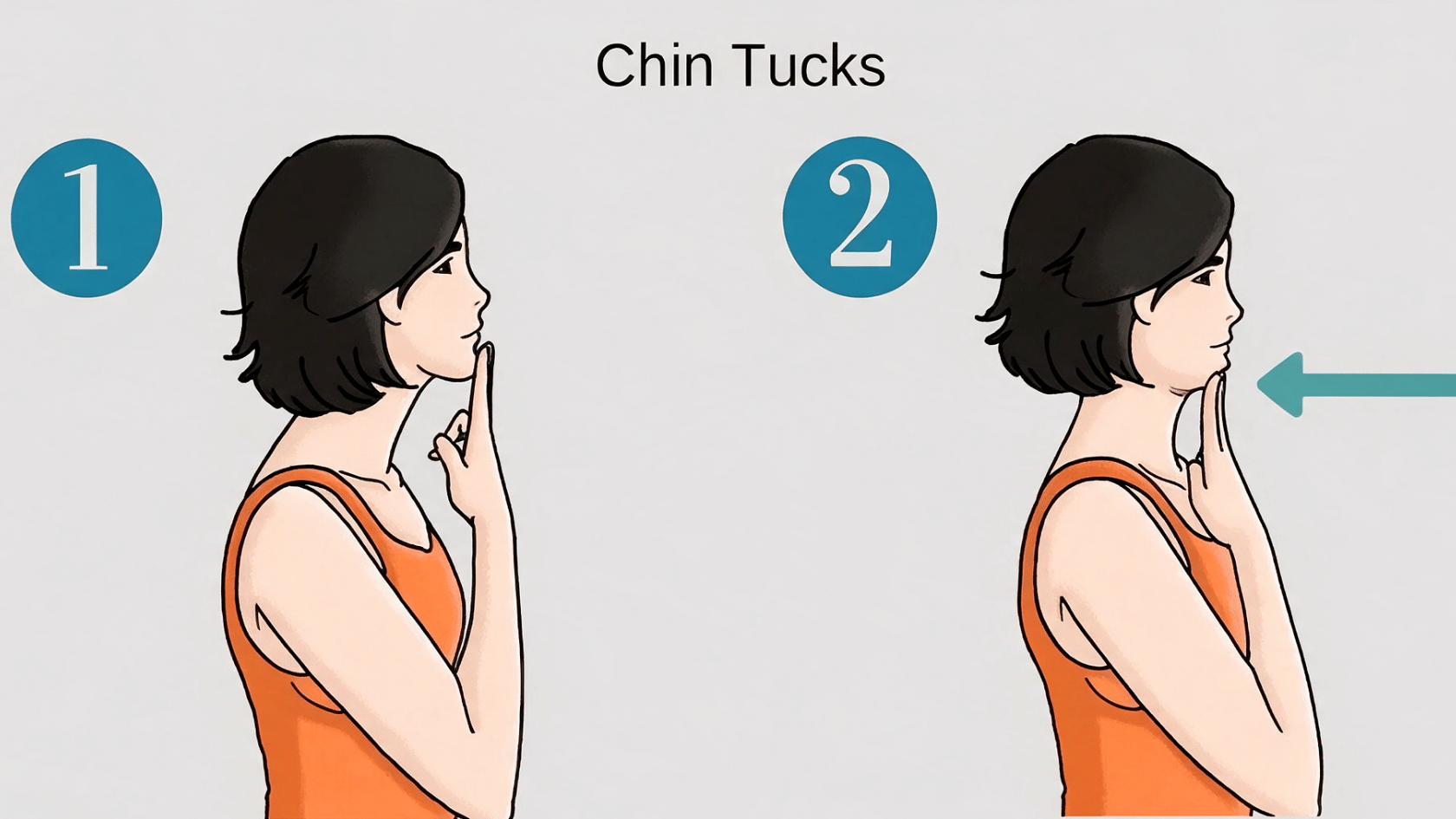
Sit or stand tall and look straight ahead. Slide the head straight backward as though making a double chin, keeping the chin level throughout the movement.
Avoid tilting the chin toward the chest. Hold briefly, then release slowly before repeating for two to three sets of ten repetitions daily.
Tip: I still use a mirror some mornings, since the double-chin cue took a few tries before it finally felt natural.
2. Doorway Chest Stretch
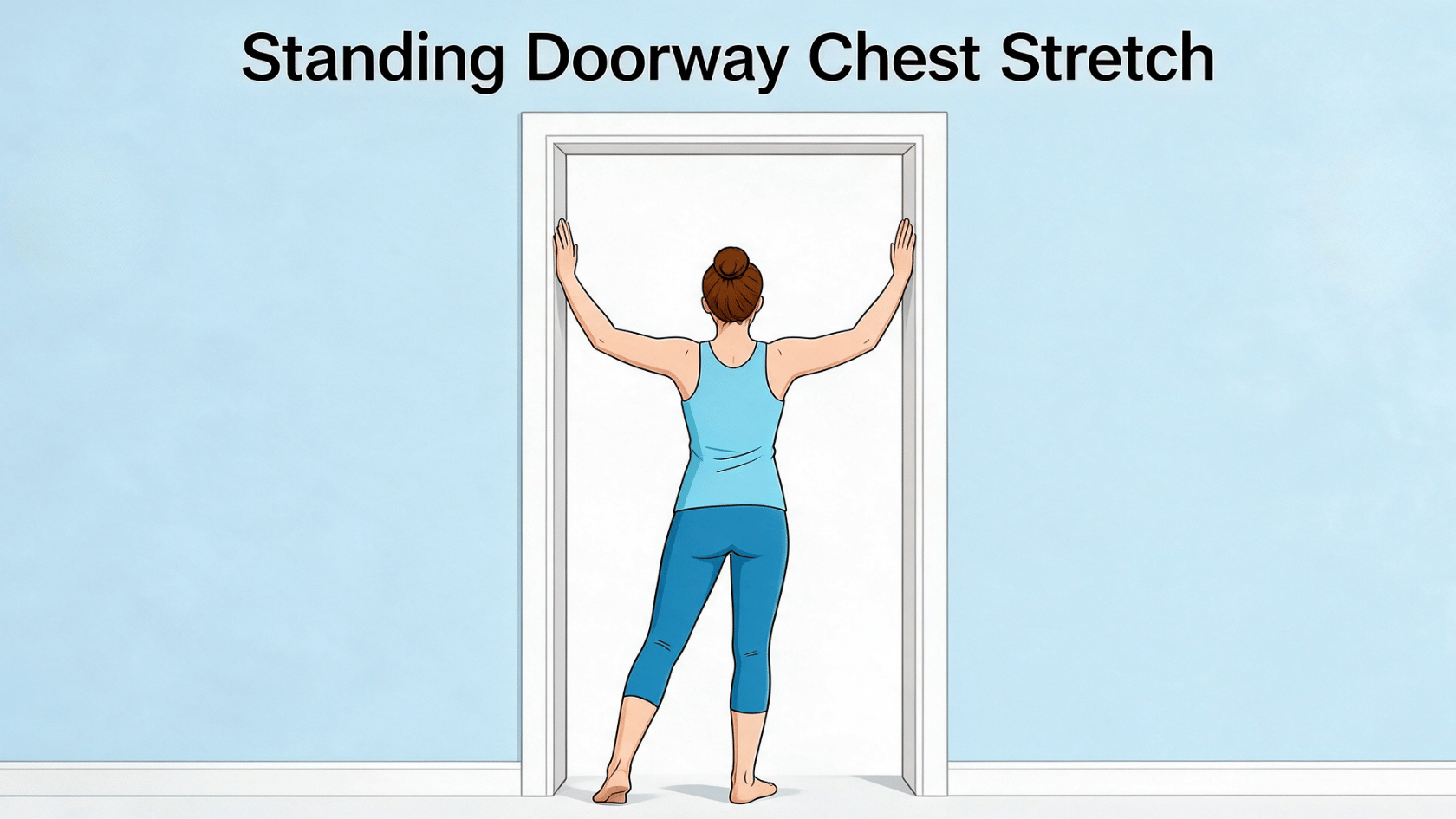
Place both forearms against a doorway frame at roughly shoulder height, keeping the body upright and the core gently engaged throughout.
Step or lean forward gently until you feel a light stretch across the chest, without forcing the shoulders back or shrugging upward.
Hold for 20 to 30 seconds and repeat 2 to 3 times per side, since tight chest muscles commonly accompany rounded, forward shoulders.
3. SCM Neck Stretch
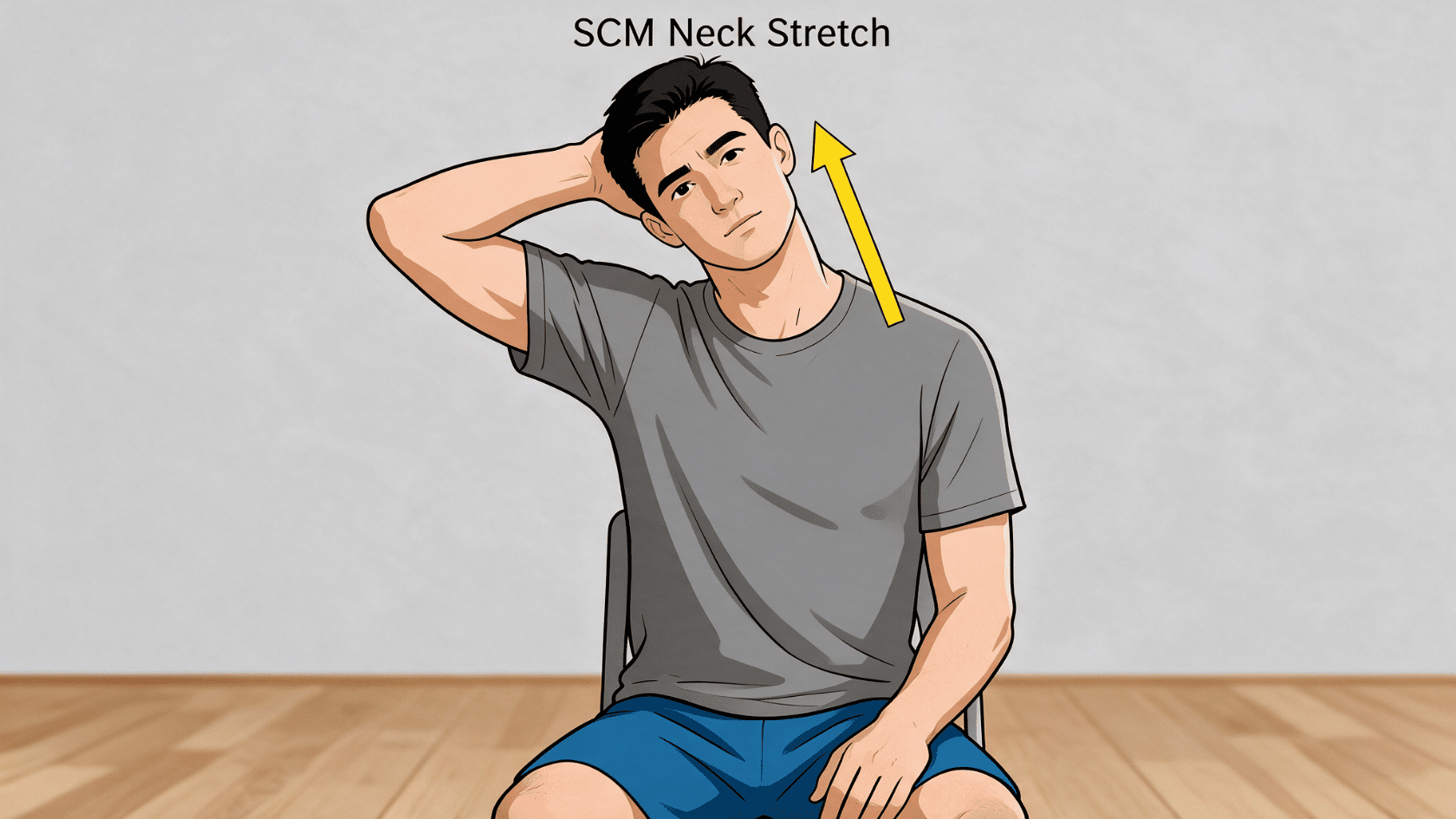
Gently tilt the head to one side while rotating slightly away from that same shoulder, keeping the movement slow and fully controlled.
The stretch should be felt along the side of the neck rather than sharply, and it should never be pushed into pain.
Hold for fifteen to twenty seconds per side and repeat two to three times, since a slow release works better than a quick pull.
4. Thoracic Extension With a Foam Roller
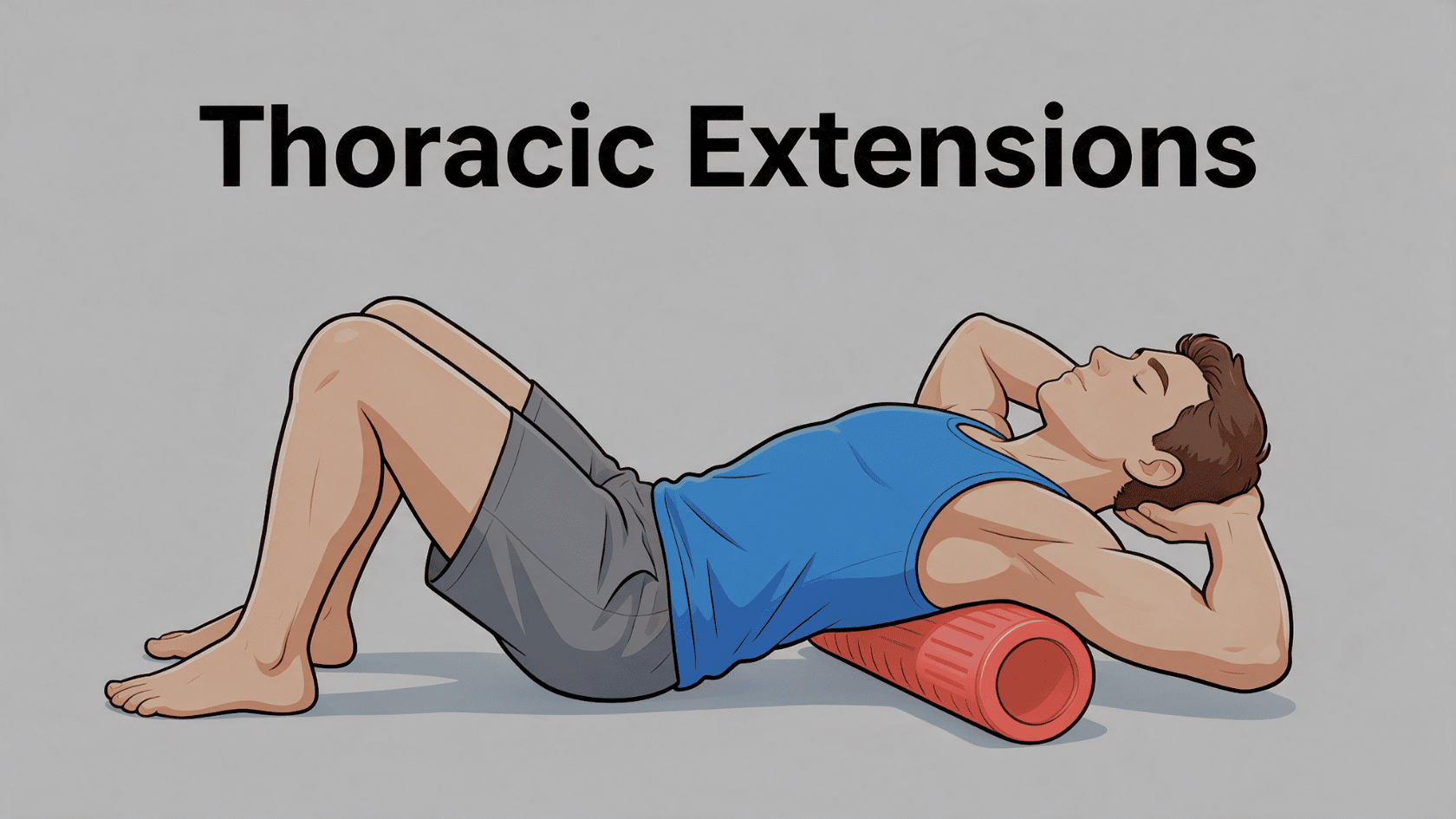
Place a foam roller across the upper or mid-back while supporting the head carefully with both hands behind it.
Gently extend backward over the roller, moving between two or three positions along the upper back slowly without rushing the movement.
A stiff upper back makes this harder at first, and I noticed real improvement only after sticking with it for a couple of weeks.
5. Wall Angels
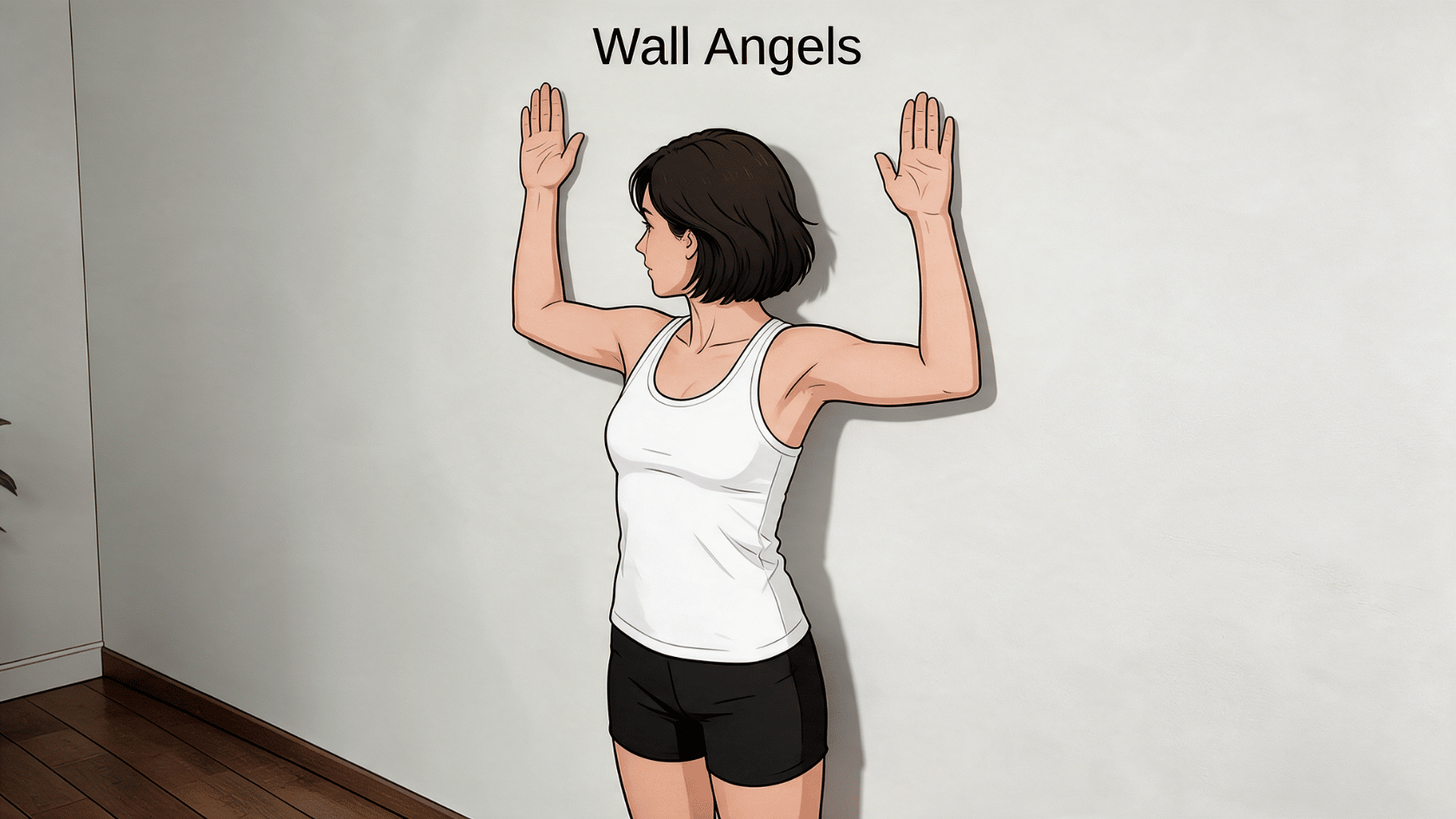
Stand with the back against a wall, keeping the head and torso comfortably aligned without forcing a flat position.
Position both arms in a goalpost shape against the wall, then slowly slide them upward and back down.
Do not force the shoulders or arms flat against the wall if that feels strained, since gradual range matters more than perfect form.
6. Shoulder Blade Squeezes
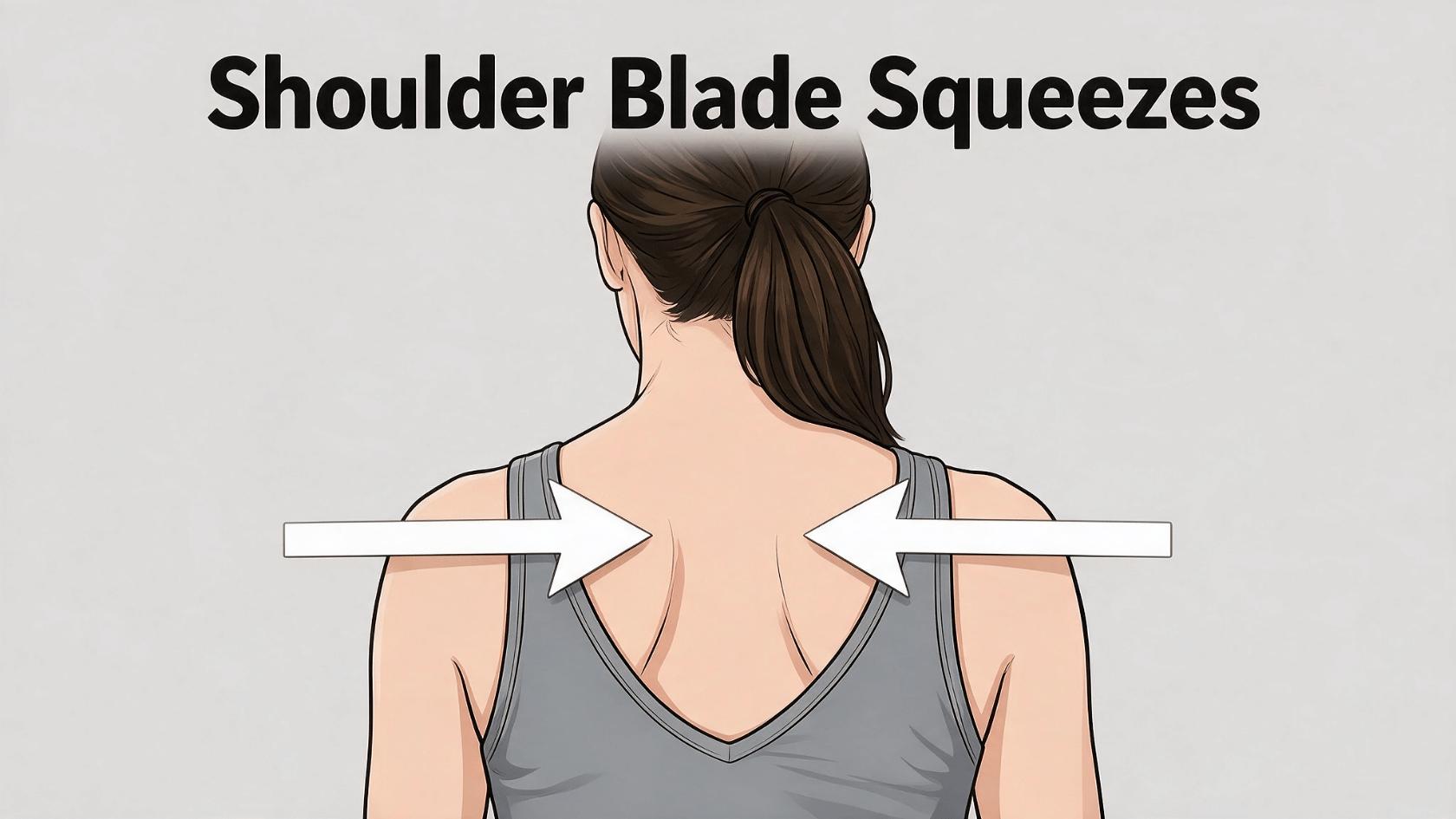
Gently pull the shoulder blades back and down without shrugging the shoulders upward toward the ears, keeping the neck relaxed throughout.
Hold the squeeze briefly before releasing slowly, repeating for two to three sets of twelve to fifteen controlled repetitions.
Tip: I like pairing this with a slow exhale on each squeeze, which makes the movement feel less rushed and much easier to control.
7. Resistance Band Rows
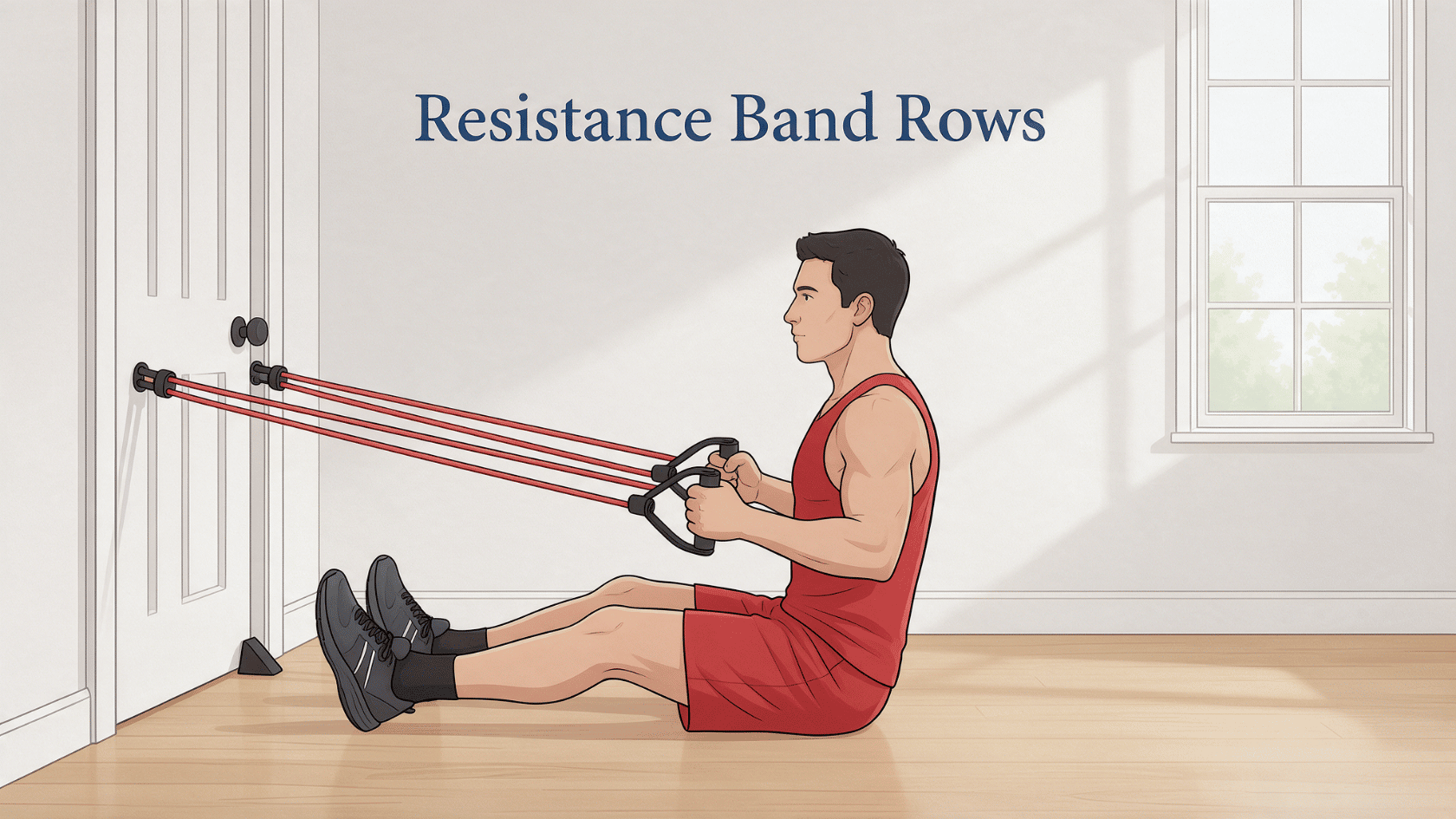
Anchor a light resistance band at chest height and hold one end in each hand, standing tall with relaxed, level shoulders and a neutral spine.
Pull both hands back toward the ribs, squeezing the shoulder blades together firmly without shrugging the shoulders or leaning backward.
Repeat for two to three sets of twelve reps, adding slightly more resistance once the movement feels controlled and fully comfortable.
8. Upper Trapezius Stretch
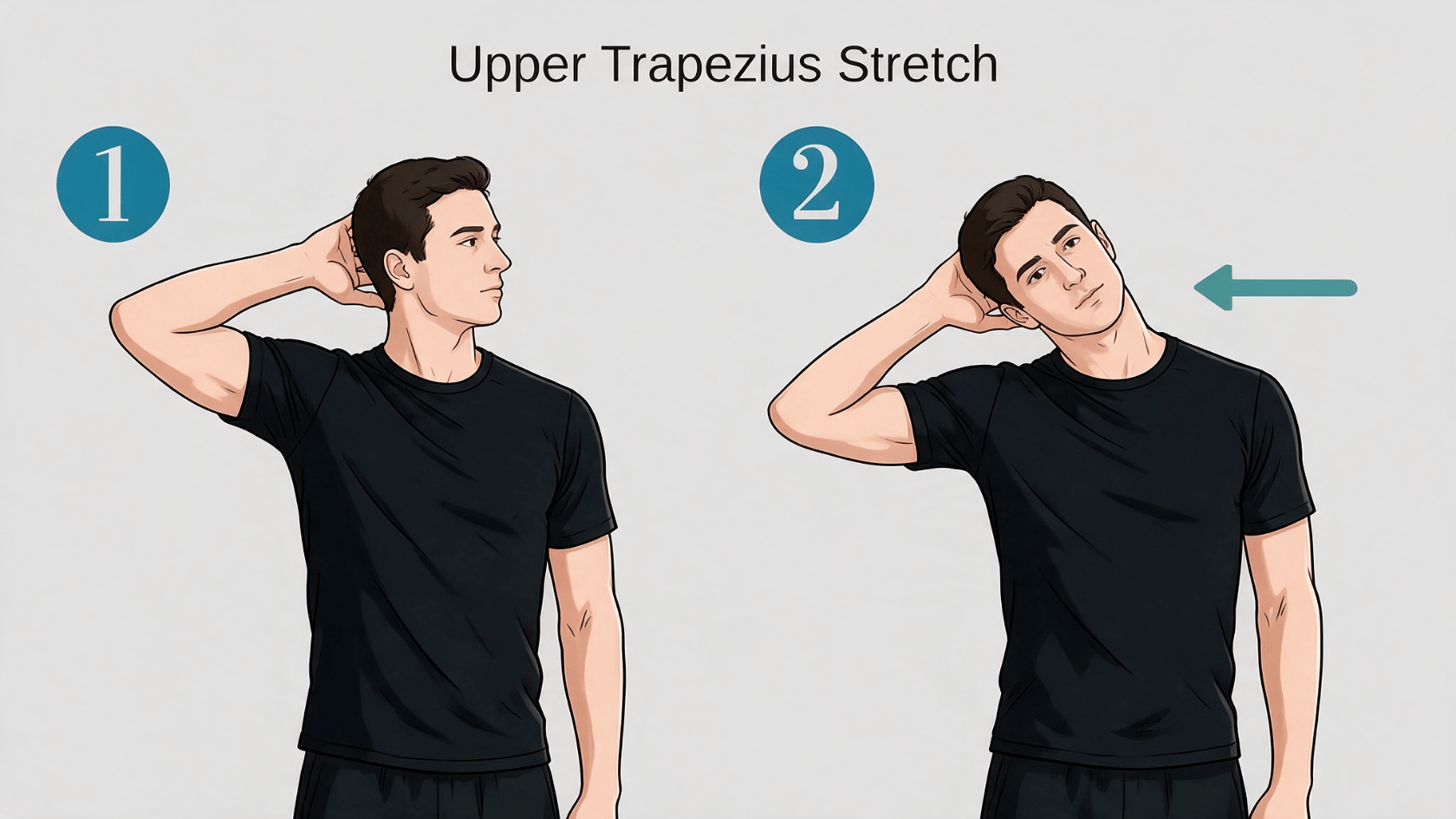
Sit tall and gently tilt the head to one side, bringing the ear toward the shoulder without lifting the shoulder itself or straining the jaw.
Use a light hand-assist on the head for a deeper stretch, keeping the movement slow and never forced into pain. This one became part of my evening wind-down, since it eases the tension that builds up from a full day at a desk.
A Simple Daily Routine for Forward Head Posture
Short, consistent sessions tend to work better than occasional long ones. A five- to ten-minute routine of forward head posture exercises built around a normal day looks something like this:
-
Morning: chin tucks, doorway chest stretch, thoracic extension.
-
During work: a quick posture reset, shoulder blade squeezes, and standing or walking every hour.
-
Evening: wall angels followed by a gentle neck or SCM stretch.
-
Example: Someone working eight hours at a computer might do chin tucks and a chest stretch before breakfast, a posture reset and shoulder squeeze during a mid-morning break, and wall angels while dinner cooks in the evening.
Building this kind of five-minute block into an already busy day has been one of the more practical pieces of advice. It sticks better than an occasional long session ever does.
Fix the Daily Habits Pulling Your Head Forward
Exercises alone rarely hold up against hours of screen and phone habits that pull the head forward again each day.
1. Raise Your Computer Screen
Position the top of the screen at eye level so the neck does not need to tilt downward. A laptop stand or external monitor helps when the built-in screen sits too low.
2. Bring Your Phone Up
Instead of dropping the head toward the lap, raise the phone closer to eye level when it is practical to do so. This single change reduces a major source of what is often called tech neck.
3. Set Up Your Chair Properly
Keep the back supported and feet planted flat on the floor. The seat height and keyboard position should let the arms rest without reaching forward toward the desk.
4. Take Movement Breaks
Changing position regularly works better than trying to hold one “perfect” posture all day. Standing, stretching, or walking briefly every hour keeps the muscles from locking into one pattern.
5. Check Your Sleeping Position and Pillow
Aim for comfortable, neutral neck support rather than chasing a specific product. No single pillow fixes forward head posture on its own, though adequate support does make a real difference overnight.
Is Forward Head Posture a Common Symptom of ADHD?
Forward head posture is not considered a common or defining symptom of ADHD. The two conditions are generally unrelated in clinical guidance.
Some research on neurodevelopmental conditions notes general postural differences, but these findings do not point to forward head posture specifically as an ADHD marker.
Forward head posture is driven mainly by daily habits like extended screen time, phone use, and desk setup, regardless of any attention-related condition.
If you’re concerned about overlapping focus and posture issues, consult a doctor, since ADHD and posture problems typically require separate evaluation and treatment.
How Long Does It Take to Fix Forward Head Posture?
There is no universal timeline for fixing forward head posture, since progress depends on the person doing the work. Mild tension often eases before any visible posture change appears.
Long-standing habits usually take consistent effort over weeks or months to shift meaningfully. Exercise frequency, workstation setup, strength, mobility, and any underlying conditions all affect how quickly things change.
Track progress with side-profile photos, how easily the head reaches a neutral position, neck comfort, and how well posture holds up during a normal workday. Avoid expecting a fixed number of weeks to guarantee results.
Can I Correct Years of Bad Posture?
Yes, even years of poor posture can improve, though it takes longer than fixing a recent habit.
Long-standing forward head posture means tighter muscles and more practiced movement patterns, so change happens gradually.
The body stays adaptable well beyond youth, and consistent stretching, strengthening, and small daily adjustments can meaningfully shift alignment over time.
Full correction isn’t guaranteed for everyone, but real, noticeable improvement usually is.
When to See a Physical Therapist or Doctor
Some symptoms call for professional evaluation rather than continuing exercises alone.
-
Persistent or worsening neck pain that does not ease with rest.
-
Pain traveling into the shoulder or arm.
-
Numbness, tingling, or noticeable weakness.
-
Significant dizziness triggered by neck movement.
-
Symptoms that began after an injury.
-
Exercises that consistently make symptoms worse instead of better.
-
No meaningful improvement despite weeks of consistent changes.
Disclaimer: This information is for general knowledge only and is not medical advice. Speak with a physical therapist or doctor for guidance specific to your own situation.
Final Thoughts
Small, consistent changes make the real difference when working through how to fix forward head posture, far more than any single stretch, expensive gadget, or short burst of effort.
Five focused minutes a day beats one long, ambitious session on a Sunday.
Pick two exercises from this routine and add them to tomorrow morning’s schedule. Small daily reps are what make lasting posture changes actually stick.
Save this routine and start with one exercise today. What part of your daily routine do you think is pulling your head forward the most? Share it in the comments below.
Frequently Asked Questions
Can Forward Head Posture Make Breathing Feel More Restricted?
A forward head position can compress the chest and reduce rib cage expansion, which sometimes makes breathing feel shallower. Improving posture and upper-back mobility often eases this restricted feeling over time.
Does Forward Head Posture Affect How Tall You Appear Standing?
Forward head posture can compress the spine’s natural alignment, which sometimes makes a person appear slightly shorter than their actual height. Correcting alignment can restore a small amount of visible height.
Can Children Develop Forward Head Posture from Tablets and Homework?
Yes, children can develop forward head posture, sometimes called tech neck, from long hours on tablets, phones, or hunched over homework. Encouraging screen breaks and proper height helps prevent the pattern early.