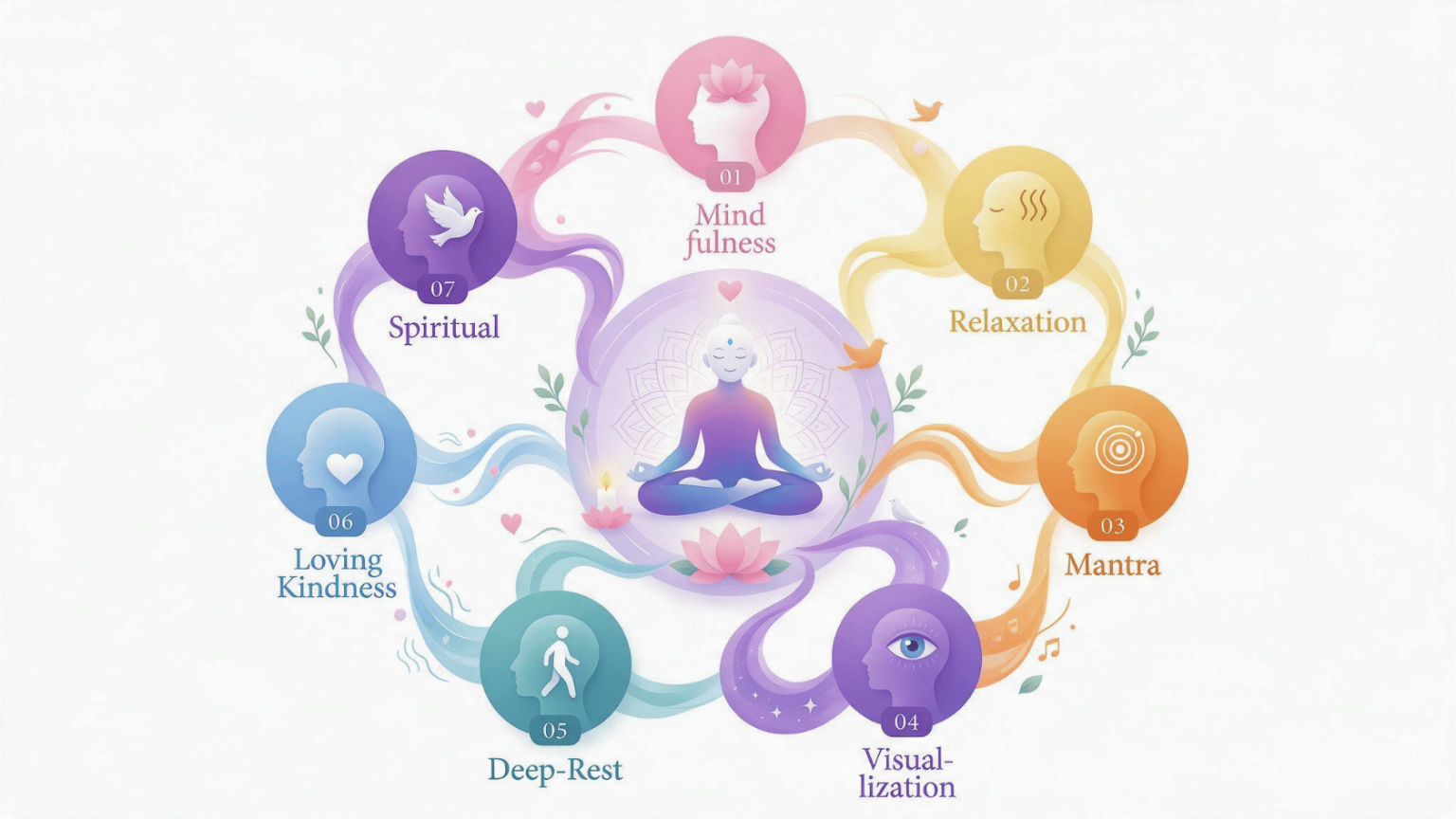
Sitting still and forcing your mind blank rarely works, and it often makes meditation feel harder than it should be.
The truth is, different types of meditation work in different ways, so the wrong method can easily feel like a chore instead of a relief.
Walking and simple breath work have been the easiest habits for me to keep going, more than any sitting practice ever was.
What follows breaks down styles by goal, personality, and comfort level, making it easy to choose one.
How Beginners Can Start Meditating
Beginners tend to succeed faster with small, realistic steps rather than an ambitious daily target set on day one.
-
Begin with 5 to 10 minutes per session. Even that short a window feels more doable than committing to a long one from the start.
-
Pick one simple style to begin with, such as breath or body scan meditation.
-
Use a guided session if staying focused is difficult on your own.
-
Sit or lie in whatever position feels comfortable, rather than forcing a formal pose.
-
Practice consistently for a couple of weeks before switching styles.
-
Move toward unguided or more advanced practices once confidence builds.
Which Meditation Style Is Right for You?
Choosing between different types of meditation according to your health and wellness gets easier once the goal is clear, since stress relief, focus, and better sleep all call for different techniques.
|
Your Goal or Preference |
Meditation Styles to Consider |
|---|---|
|
Stress and relaxation |
Breath, Body Scan, Progressive Relaxation, Yoga Nidra |
|
Better focus |
Focused Attention, Mantra, Trataka, Zen |
|
Greater self-awareness |
Mindfulness, Open Monitoring, Vipassana |
|
Compassion and emotional balance |
Loving-Kindness, Tonglen, Emotional Awareness |
|
Trouble sitting still |
Walking, Yoga, Qigong, Tai Chi |
|
Better sleep or deep rest |
Body Scan, Progressive Relaxation, Yoga Nidra |
|
Spiritual practice |
Zen, Vipassana, Vedic, TM, Chakra |
|
Completely new to meditation |
Breath, Mindfulness, Body Scan, Walking |
Before Choosing a Type, Know These Two Differences
Two labels apply across almost every meditation style. Being aware of them early makes the rest of this article easier to follow and apply.
Guided vs Unguided Meditation
Guided sessions involve a teacher, audio recording, video, or app leading the process from start to finish. This format tends to work well for beginners who find it hard to stay focused alone.
Unguided sessions happen independently, without instruction during the practice itself. Guided and unguided are not separate meditation styles; they describe delivery, and most methods can be practiced either way.
Calming vs Insight Meditation
Calming meditation builds concentration and mental quiet by settling the mind through steady focus on breath, sound, or another single point of attention.
Insight meditation develops awareness and understanding of thoughts, emotions, and experience over time. Many methods blend both calming and insight elements rather than fitting one category alone.
Each style includes a plain explanation, who it benefits most, and the experience level it suits, making different types of meditation easy to compare side by side.
Mindfulness and Awareness Meditation Styles

These styles center on noticing the present moment without trying to change it. Awareness stays open to thoughts, feelings, sensations, and surroundings as they naturally occur.
1. Mindfulness Meditation
Mindfulness meditation means observing the present moment without judgment, noticing thoughts, emotions, bodily sensations, and surroundings exactly as they occur. No effort goes into changing or resisting whatever shows up.
-
Best for: stress management, general awareness, and beginners.
-
Experience: Beginner.
2. Breath Meditation
Breath meditation uses natural breathing as the main anchor for attention, gently returning focus to the breath whenever the mind drifts to other thoughts or distractions.
-
Best for: calming the mind and building early concentration skills.
-
Experience: Beginner.
3. Focused Attention Meditation
Focused attention meditation holds attention steadily on one object, such as breath, sound, or a fixed visual point, and is also known as concentration or Samatha meditation in some traditions.
-
Best for: minds that wander frequently and need structure.
-
Experience: Beginner–Intermediate.
4. Open Monitoring Meditation
Open monitoring meditation allows thoughts, emotions, sounds, and sensations to be noticed as they appear and pass, without settling on any single object, sometimes described as a resting awareness practice.
-
Best for: experienced mindfulness practitioners.
-
Experience: Intermediate.
5. Body Scan Meditation
Body scan meditation moves attention slowly through the body, noticing tension, discomfort, or relaxation along the way. A slow scan right before bed often works better than one done earlier.
-
Best for: stress relief and unwinding before sleep.
-
Experience: Beginner.
6. Noting Meditation
Noting meditation involves briefly labeling thoughts, feelings, or distractions as they arise, a technique also referred to as thought awareness meditation, which builds distance from automatic thinking patterns over time.
-
Best for: overthinking and noticing mental habits.
-
Experience: Intermediate.
7. Mindful Eating Meditation
Mindful eating meditation involves paying close attention to taste, texture, smell, hunger, and the act of eating itself, turning an everyday routine into a genuine meditative practice without extra time.
-
Best for: bringing mindfulness into an everyday routine.
-
Experience: Beginner.
Meditation Styles for Relaxation and Emotional Well-Being
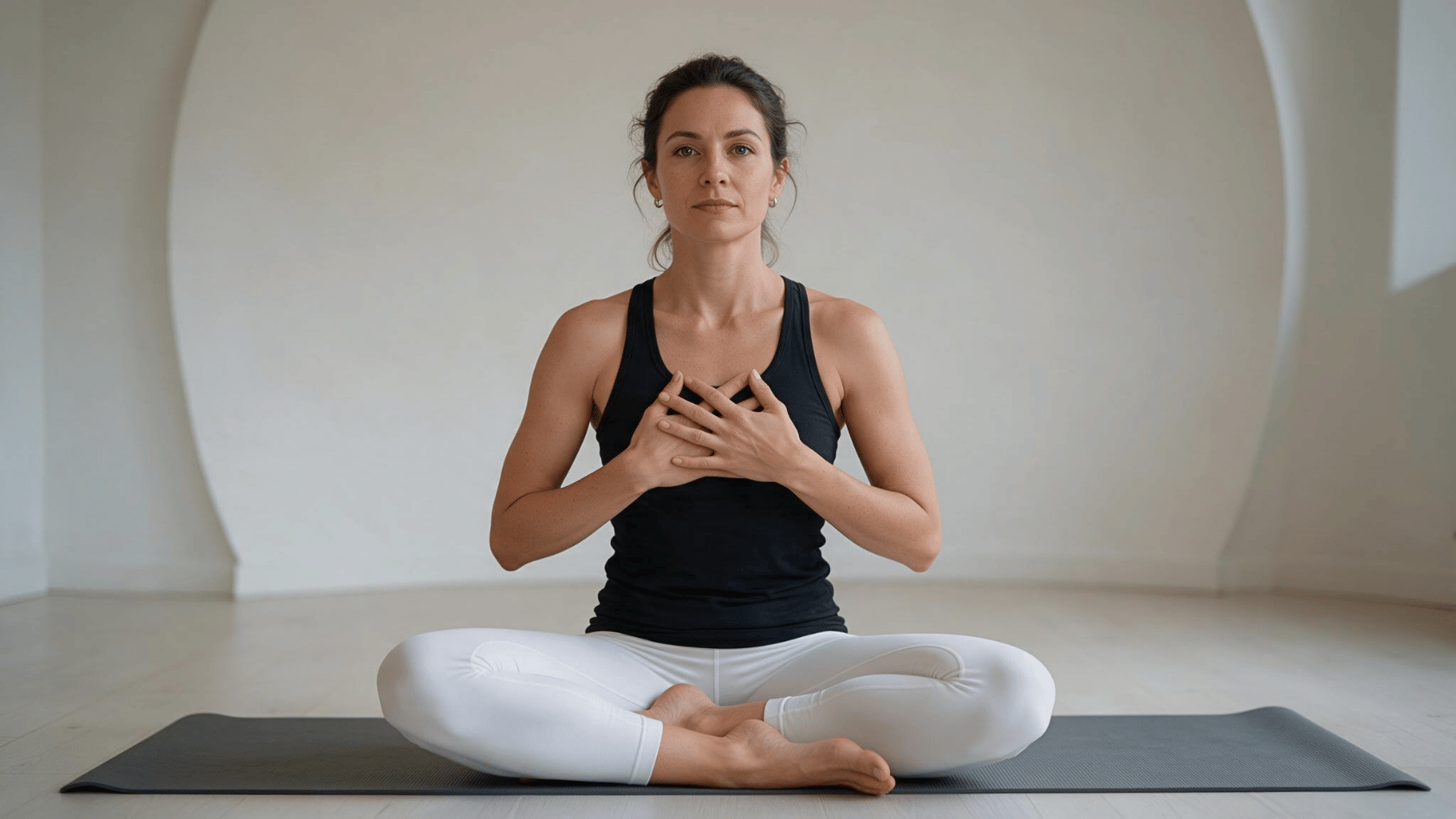
This group focuses on softening tension and easing difficult emotions rather than sharpening concentration. This category includes kindness, compassion, and physical relaxation techniques.
8. Loving-Kindness Meditation (Metta)
Loving-kindness meditation, or Metta, involves directing kind wishes toward yourself first, then gradually extending that same warmth and goodwill toward others, including people who are difficult to feel close to.
-
Best for: compassion, relationships, and self-criticism.
-
Experience: Beginner.
9. Compassion Meditation and Tonglen
Compassion meditation uses awareness of suffering to build care and empathy, while Tonglen specifically works with receiving suffering and offering relief in return, both aimed at strengthening connection to others.
-
Best for: empathy and emotional growth.
-
Experience: Intermediate.
10. Emotional Awareness Meditation
Emotional awareness meditation involves observing emotions and their physical sensations without reacting to them right away, creating space between a feeling and the automatic response that usually follows it.
-
Best for: emotional regulation and spotting recurring patterns.
-
Experience: Beginner–Intermediate.
11. Progressive Muscle Relaxation
Progressive muscle relaxation involves tightening and slowly releasing muscle groups in sequence. It overlaps with body-focused meditation but actively engages the muscles rather than simply observing sensations as they occur.
-
Best for: relieving tension and relaxing at bedtime.
-
Experience: Beginner.
Mantra, Visualization, and Sound Meditation Styles
These styles use a repeated word, mental image, or external sound as the main point of focus. Repetition and imagery often replace breath as the anchor for attention.
12. Mantra Meditation
Mantra meditation involves silently or audibly repeating a word, phrase, syllable, or sound throughout the session, giving the mind something steady and rhythmic to hold onto instead of the breath.
-
Best for: people who prefer repetition over breath focus.
-
Experience: Beginner.
13. Transcendental Meditation
Transcendental Meditation is a mantra-based practice associated with Maharishi Mahesh Yogi, typically done for around 20 minutes twice daily and taught only by trained, certified instructors following a set method.
-
Best for: those wanting a structured, formal routine.
-
Experience: Beginner–Intermediate.
14. Vedic Meditation
Vedic meditation is a silent, mantra-based practice rooted in India’s Vedic tradition, related to but distinct from trademarked Transcendental Meditation, often taught with a similarly structured, personalized approach.
-
Best for: mantra-based or spiritually oriented practice.
-
Experience: Beginner–Intermediate.
15. Visualization Meditation
Visualization meditation involves creating a detailed mental image of a place, person, outcome, or symbol during the session, using imagination as the main tool for relaxation and mental focus.
-
Best for: relaxation and creative thinkers.
-
Experience: Beginner.
16. Trataka (Gazing Meditation)
Trataka, or gazing meditation, involves maintaining visual attention on a single object, traditionally a candle flame, as a concentration-based practice rooted in classical yogic tradition and steady visual focus.
-
Best for: visual learners building concentration.
-
Experience: Intermediate.
17. Sound Bath Meditation
Sound bath meditation uses sounds from singing bowls, gongs, chimes, or similar instruments as the point of focus, letting the body and mind settle through vibration rather than silence.
-
Best for: relaxation and people who find silence difficult.
-
Experience: Beginner.
Movement and Deep-Rest Meditation Styles
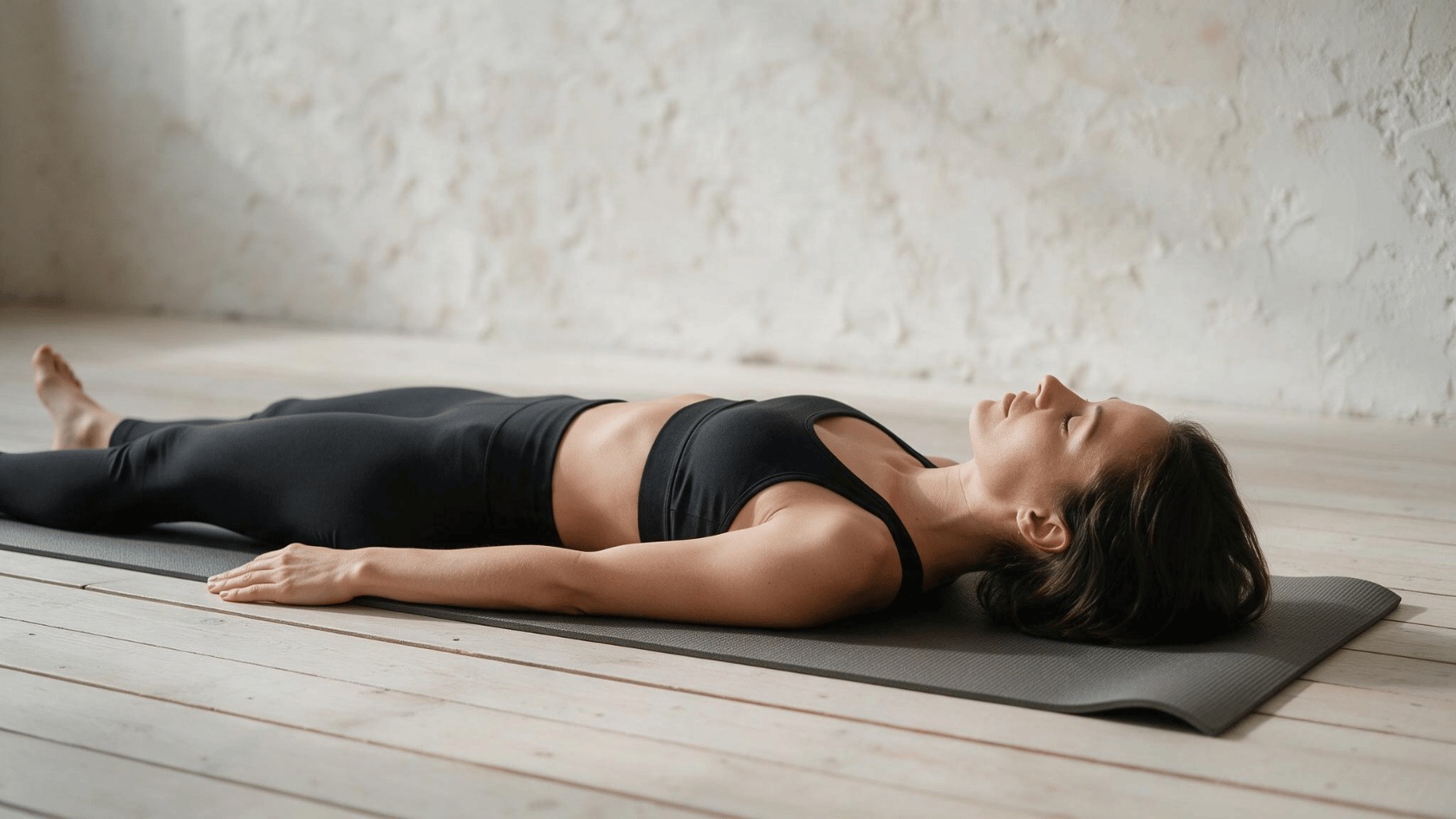
This category pairs meditation with physical movement or complete stillness rather than upright, silent sitting. It suits people who find longer seated sessions uncomfortable or restless.
18. Walking Meditation
Walking meditation brings full attention to each step, bodily movement, breathing, and surroundings while moving slowly. This has been my go-to on restless days when sitting still feels impossible.
-
Best for: restless beginners who dislike prolonged sitting.
-
Experience: Beginner.
19. Yoga Meditation
Yoga meditation combines mindful movement, breath, body awareness, and short periods of stillness within a single session, blending physical practice with meditative focus rather than separating the two entirely.
-
Best for: people who prefer physical movement over sitting.
-
Experience: Beginner–Intermediate.
20. Yoga Nidra
Yoga Nidra is a guided deep-relaxation practice, sometimes called yogic sleep, usually done lying down while staying quietly aware and guiding attention through the body and breath in stages.
-
Best for: deep rest and sleep difficulties.
-
Experience: Beginner.
21. Qigong Meditation
Qigong meditation combines slow movement, breathing, posture, and focused attention, rooted in Chinese tradition, and is often practiced as a gentle daily routine for both body and mind.
-
Best for: body awareness and movement preference.
-
Experience: Beginner–Intermediate.
22. Tai Chi Meditation
Tai Chi meditation uses slow, deliberate sequences coordinated with breathing and attention, functioning as a form of moving meditation that blends martial arts roots with calm, steady focus.
-
Best for: active practice paired with mind-body awareness.
-
Experience: Beginner.
Traditional and Spiritual Meditation Styles
These styles carry stronger ties to specific cultural or religious traditions than the more secular options covered earlier. Many call for deeper commitment or formal instruction over time.
23. Zen Meditation (Zazen)
Zen meditation, or Zazen, is a seated Zen Buddhist practice involving fixed posture, steady breathing, and quiet awareness, usually taught with little verbal instruction compared to more guided styles.
-
Best for: discipline and spiritual practice.
-
Experience: Intermediate–Advanced.
24. Vipassana (Insight Meditation)
Vipassana, or insight meditation, involves observing bodily sensations, thoughts, and emotions without attachment, closely tied to open monitoring practice and traditionally taught through extended, structured retreat settings.
-
Best for: deeper self-awareness over the long term.
-
Experience: Intermediate–Advanced.
25. Chakra Meditation
Chakra meditation focuses awareness on traditional chakra, or energy-center, concepts, sometimes combined with breath, visualization, sounds, or mantras. These ideas come from traditional spiritual systems rather than established medical science.
-
Best for: readers drawn to yogic or energy-based practice.
-
Experience: Beginner–Intermediate.
How to Choose the Best Meditation Style for You
Choosing a meditation style starts with a few honest questions about your goals, personality, and comfort level, rather than picking whatever trends you see online.
-
Start with your goal. Relaxation, concentration, sleep, compassion, movement, spirituality, and self-awareness each point toward different styles.
-
Consider your personality. Restless people often prefer walking or movement, while structured thinkers tend to favor mantra or focused attention.
-
Factor in experience. Beginners generally do better with simpler or guided options before moving into advanced practices.
-
Decide how spiritual you want it. Mindfulness, breath work, and body scans work well in a secular context, while Zen, Vipassana, Chakra, Vedic, and TM have stronger traditional roots.
-
Test instead of overthinking. Stick with one option for a couple of weeks before judging whether it fits.
Final Thoughts
Meditation works best when it matches real life, not a trend. Picking from the right types of meditation means choosing something that feels doable most days, not just on calm mornings.
The real benefit shows up in fewer racing thoughts, steadier sleep, and a calmer response to daily stress once you practice a style consistently. In my experience, two consistent weeks made a bigger difference than any single perfect session.
Choose your style today and make it a real part of your routine. Which meditation style are you drawn to? Share your pick in the comments below.
Frequently Asked Questions
What Types of Meditation Are Recognized in Psychology Research?
Psychology research generally groups meditation into three categories: focused attention, open monitoring, and automatic self-transcending. These labels describe how attention is used rather than naming a specific tradition.
What Types of Meditation Appear in Yoga Traditions?
Yoga traditions include several meditative styles, such as mantra chanting, breath-based pranayama practices, Yoga Nidra, and chakra-focused awareness, all woven into a broader physical and spiritual yoga practice rather than standing apart.
Are Certain Types of Meditation More Effective for Anxiety than Others?
Research suggests mindfulness-based and breath-focused practices are among the most studied options for anxiety, though calming and insight-based approaches can both offer meaningful relief depending on personal response and consistency.