
Ask ten new clothing founders what their first product will be, and most will say a t-shirt. It’s the obvious choice: cheap, familiar, and easy to print. It’s also the most crowded product in apparel, with the thinnest margins.
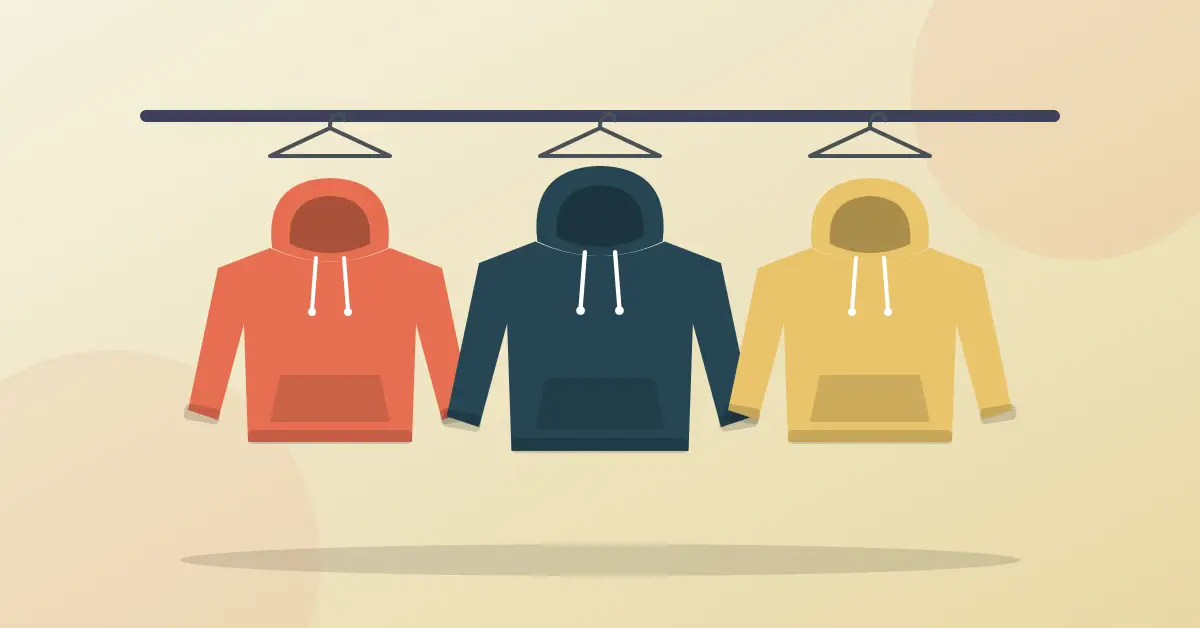
The hoodie is a quieter but often smarter starting point. It sells at a higher price, carries a brand more visibly, and has become one of the most worn garments in modern wardrobes. Here’s the case for leading with it, followed by a practical spec sheet for designing one that customers will keep.
The Numbers Behind the Hoodie
SNS Insider valued the global hoodies and sweatshirts market at roughly $242 billion in 2025 and projects it to nearly double, to about $479 billion, by 2035, a growth rate of around 7% a year.
A few details from that research are particularly relevant to new brands:
- Hoodies make up about 60% of the category, ahead of crewneck sweatshirts.
- Online retail is the largest sales channel, with more than 47% of the market.
- Oversized and unisex styles, driven largely by Gen Z, are named among the key trends.
- North America is the largest regional market, with the U.S. alone estimated at about $87.5 billion in 2025.
In other words, demand is large, growing, increasingly online, and moving toward exactly the relaxed silhouettes that independent brands do well.
Four Reasons the Hoodie Outperforms the Tee as A Launch Product
1. Better unit economics. Customers expect to pay more for a hoodie, so each sale produces more gross profit. When your advertising cost per customer is the same whichever item they buy, a higher-value first product makes paid acquisition far more sustainable.
2. More design real estate. Chest, full front, back, sleeves, hood, cuffs, and pocket: a hoodie offers far more placement options than a tee. Multi-placement designs look more considered and justify a premium price.
3. Longer life, more visibility. Hoodies are worn for years and often in public, which turns each one into a durable, walking advertisement for your brand.
4. Wider seasonality than people assume. Hoodies sell hardest in autumn and the holiday season, but lighter weights sell year-round for layering, travel, evenings, and air-conditioned spaces.
The Launch Advantage of Producing on Demand
The traditional obstacle to leading with hoodies was cash. They cost more to manufacture, so a bulk run ties up much more money than the equivalent tee order, and unsold heavyweight fleece is expensive dead stock.
Producing print on demand hoodies removes that obstacle. Each hoodie is made after the customer orders, so a founder can offer several colorways and a full size range on day one without forecasting quantities or paying for inventory upfront.
The Hoodie Spec Sheet
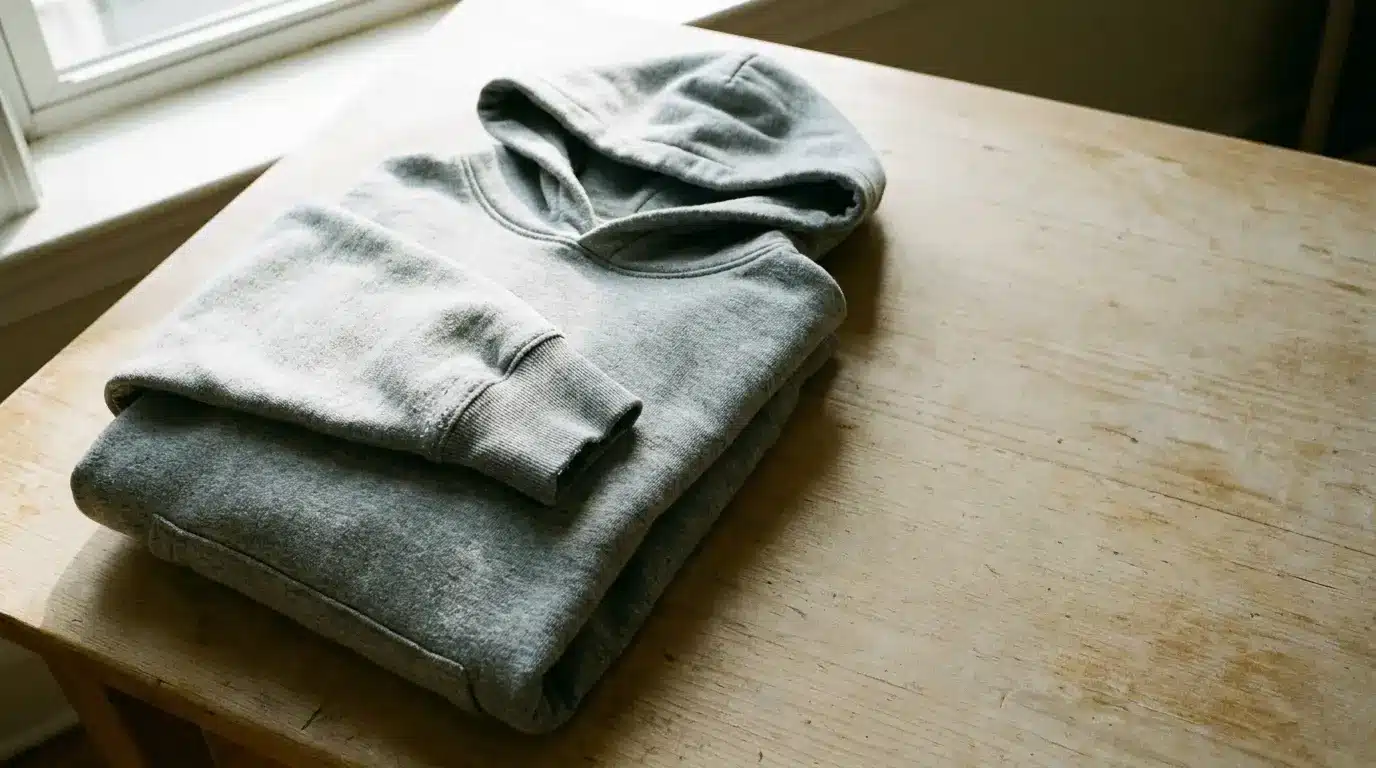
The difference between a hoodie customers love and one they return comes down to a handful of specifications. Decide on each deliberately.
| Spec | What to decide | Why it matters |
| Fabric weight | Midweight for layering and warmer climates; heavyweight (often 350+ GSM) for a premium feel | Weight is the first quality signal customers notice |
| Composition | Cotton-rich for a soft hand and DTG printing; blends for shrink resistance | Affects feel, durability, and print method |
| Fit | Classic, relaxed, oversized, or cropped | Oversized and boxy fits match current demand |
| Hood | Lined or single-layer; with or without drawcords | Lined hoods hold shape and feel more premium |
| Cuffs and hem | Ribbed width and recovery | Weak ribbing stretches out quickly |
| Print method | DTG for detailed art, DTF for blends and bold colors, embroidery for logos | Determines look and wash durability |
| Placements | Front, back, sleeve, hood, inside neck | More placements mean more perceived value |
| Branding | Neck label, inside print, hang tag | Turns a blank into your product |
Design Principles that Sell
- Balance a small front with a big back. A minimal chest logo paired with a large back graphic remains one of the most popular streetwear layouts.
- Use a curated color range. Black, heather grey, cream, washed neutrals, and one seasonal color are enough for a first collection.
- Design for the fit. Oversized garments need larger artwork, so scale designs to the silhouette.
- Provide high-resolution files. Large back prints expose low-quality artwork immediately.
Photograph the Details
Hoodie buyers want to see what they’re paying for: close-ups of fabric texture, ribbed cuffs, hood lining, stitching, and print quality, plus full-length shots on people of different builds.
Video is even better, because it shows how the fabric moves and drapes.
Mistakes that Cost New Hoodie Brands
- Choosing thin blanks to hit a lower price point
- Skipping wash tests on samples
- Offering eight colors before knowing which two sell
- Vague size charts with no fit guidance (“runs oversized, size down for a closer fit”)
- Pricing like fast fashion and leaving no margin for marketing
Common Questions About Launching with Hoodies
What fabric weight should a first hoodie collection use? For a premium or streetwear brand, heavyweight fleece usually makes the strongest first impression. If your customers live in warmer climates, a midweight option may sell better year-round. Many brands offer one of each.
How many designs should I launch with? Three to five strong designs in a curated color range is usually enough to learn what sells without diluting your marketing.
Is embroidery or printing better on hoodies? Embroidery suits small logos and minimalist designs and reads as premium. Printing is better for large, detailed artwork, especially on the back. Many successful hoodies combine both: an embroidered chest logo with a printed back graphic.
Do hoodies sell outside of winter? Yes, particularly lighter weights and zip-ups, which are worn for layering, travel, and cool evenings throughout the year.
The Bottom Line
The hoodie combines strong demand, healthy margins, design flexibility, and long-term brand visibility in a single product. Launch with a focused hoodie collection, invest in the specifications that customers can feel, and use on-demand production to test colors and designs without inventory risk. It’s one of the most reliable ways to give a new apparel brand a strong start.