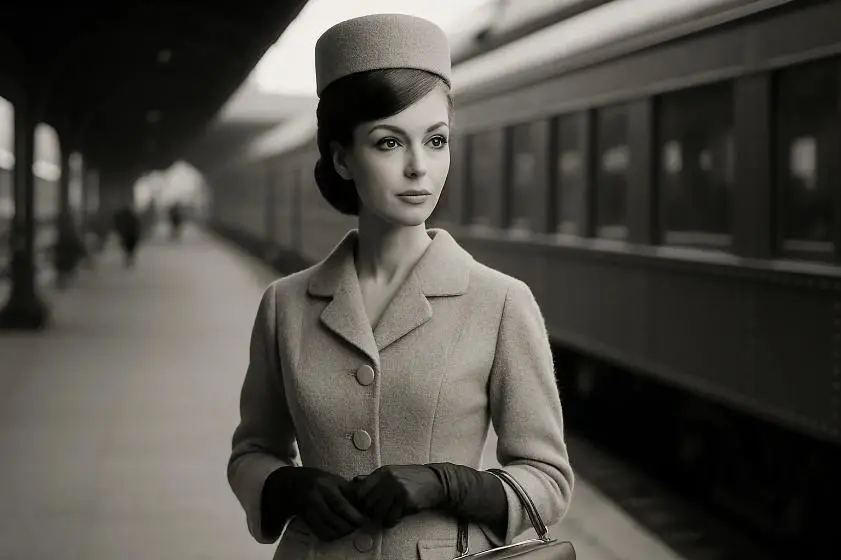
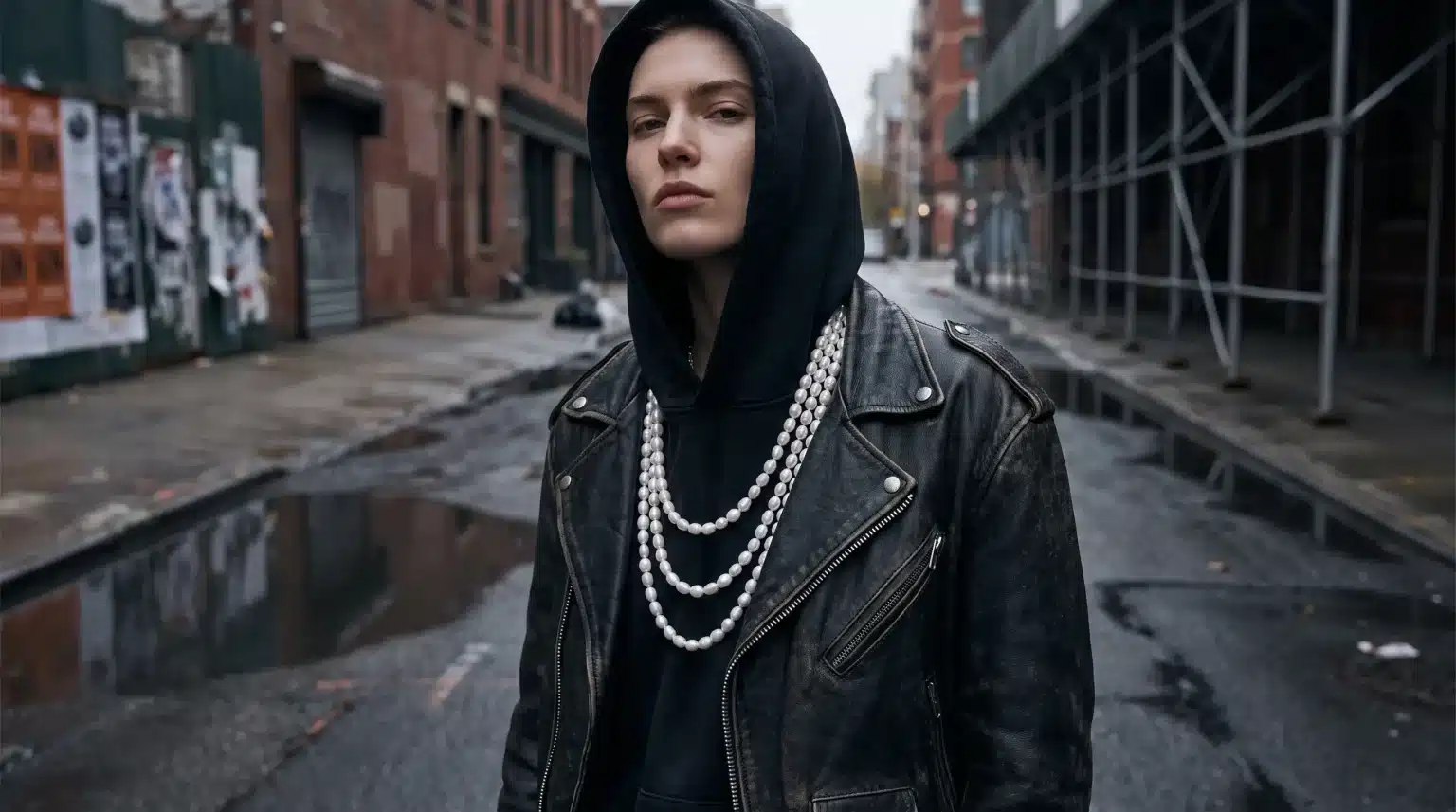
A strand of pearls used to arrive with an instruction manual nobody bothered to print, because everybody already knew it by heart. Twinset. Wedding. Back in the box until the next graduation. That script has quietly fallen apart over the past few years, and almost nobody has mourned it.
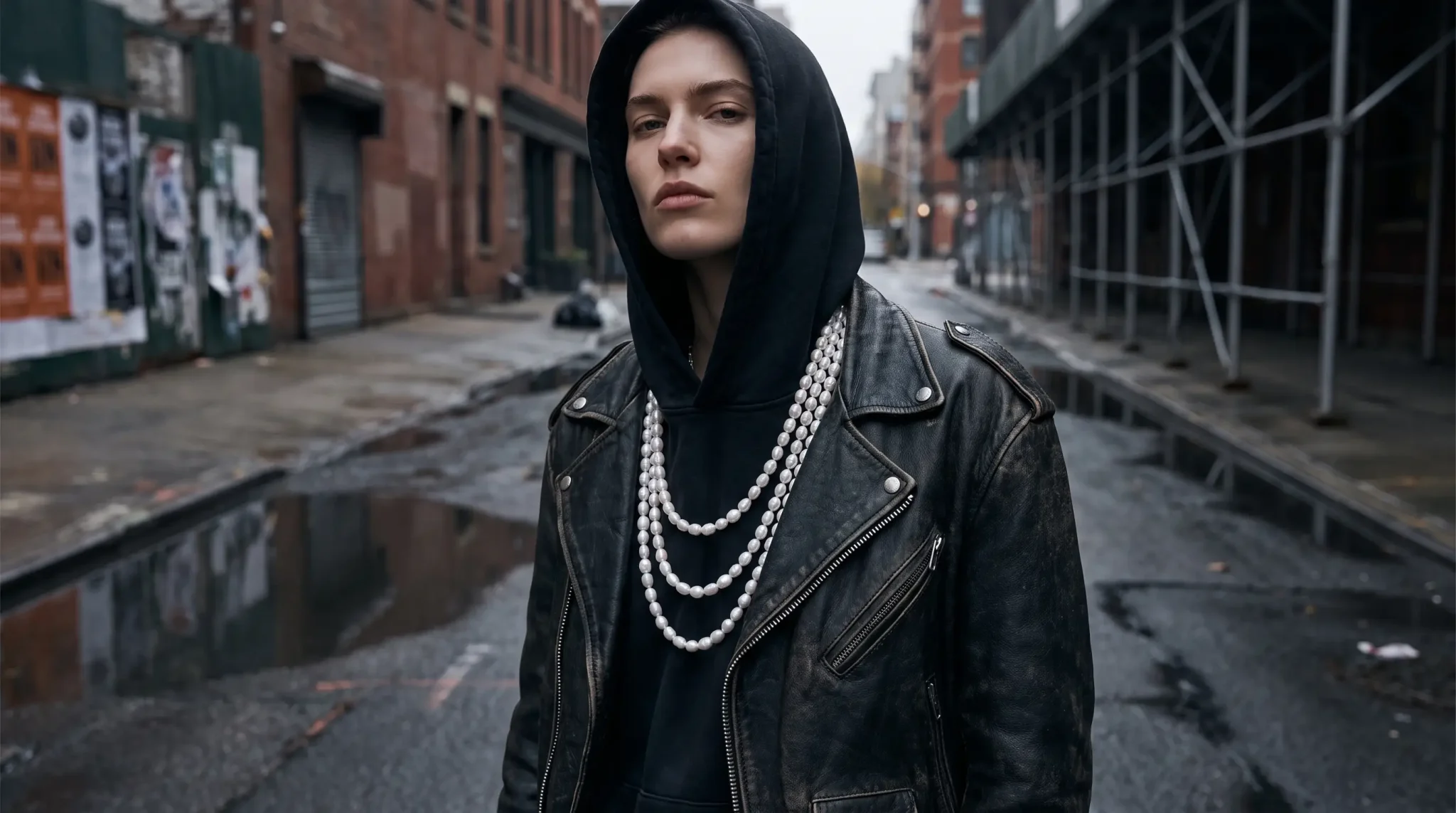
Walk a city block on a Saturday and the evidence piles up quickly. A graduated strand worn over a washed black hoodie. A knotted rope sitting on a leather jacket that has seen real weather. Someone in boxy, unstructured tailoring wearing the exact necklace their grandmother saved for church. None of it looks like costume now, and that is the genuinely new part.
The rules that replaced the old ones are looser, though they are not lawless. They have far more to do with proportion, light, and contrast than with who is wearing what. Below is how the current logic actually works, plus a small kit that holds up on a Tuesday morning and at midnight.
Fashion Has Been Blurring the Binary for a Century
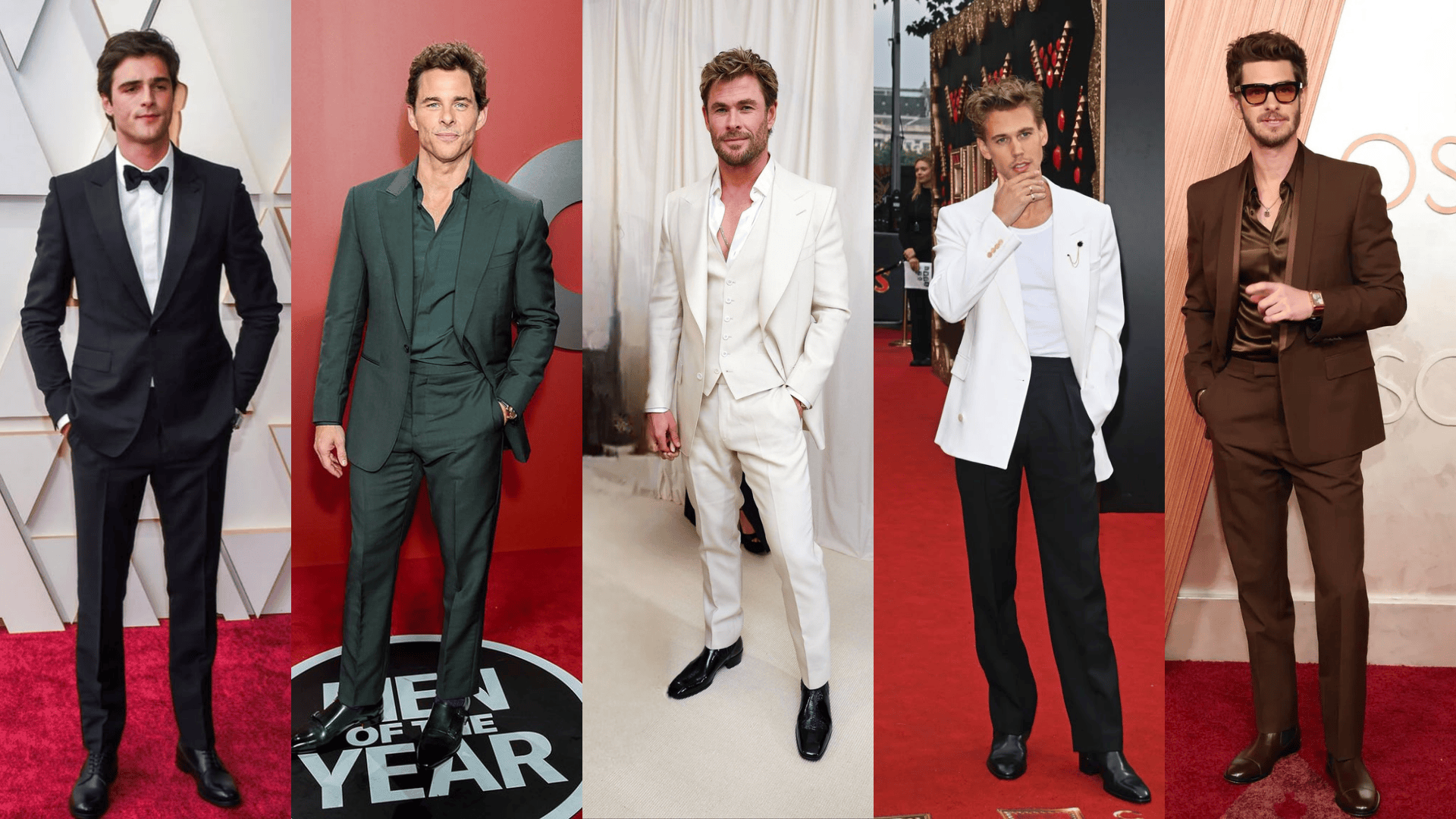
The gender-fluid moment looks sudden if you started paying attention around 2020, but the receipts run much deeper. The Museum of Fine Arts, Boston gathered more than sixty boundary-pushing designs for Gender Bending Fashion, setting contemporary work by Rei Kawakubo, Rad Hourani, and Palomo Spain against the garçonne look of the 1920s and the peacock revolution of the 1960s. Marlene Dietrich in a tuxedo was making an argument, and the kid in a pearl choker at a warehouse show is finishing it.
Jewelry carried the same history, usually more openly than clothing did. The V&A notes that pearls symbolized purity in medieval pieces, where gems were valued for size and lustrous color long before anyone thought to cut facets into them. Meaning traveled with the object, not with the gender of whoever fastened the clasp.
Why Luster Reads Differently Against Hard Tailoring
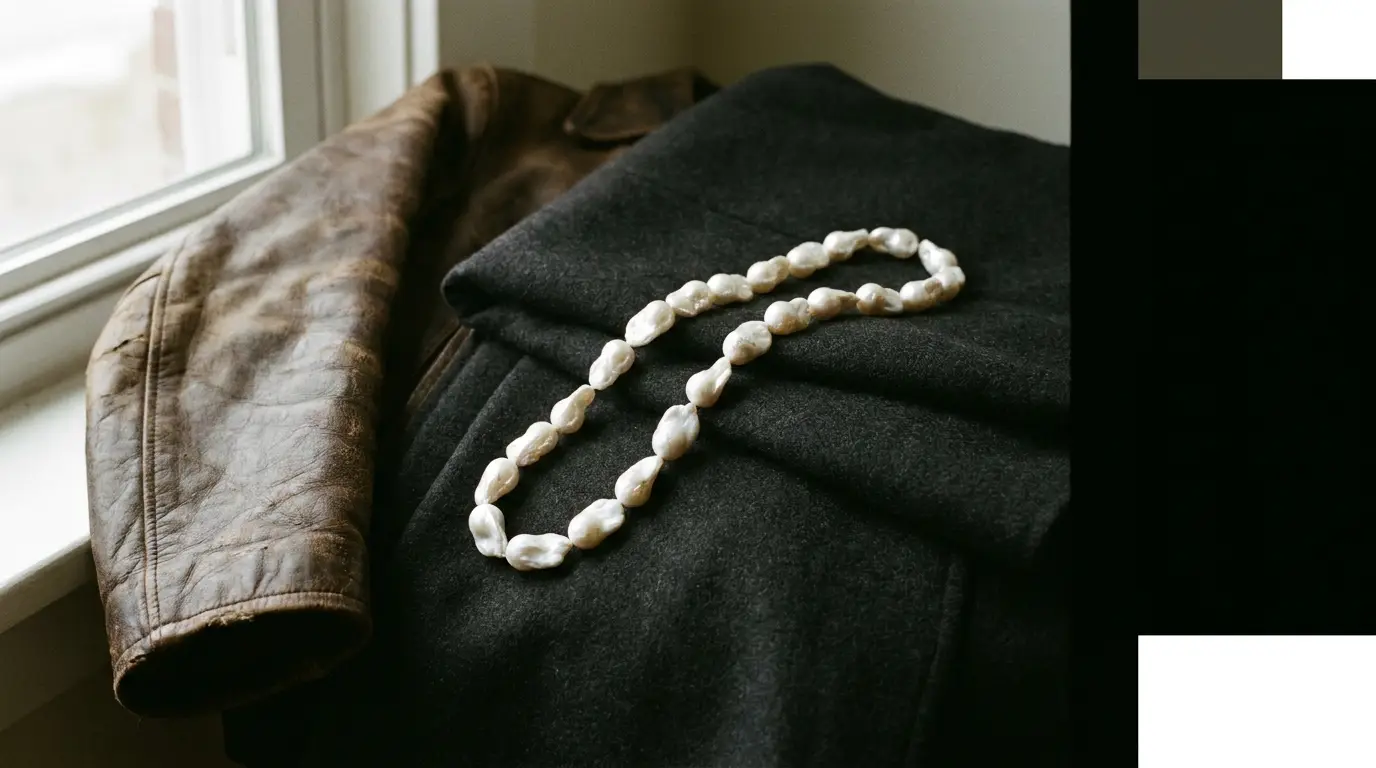
Faceted stones throw light back in quick, hard flashes. Nacre does the opposite, diffusing light across a curved surface so the glow seems to come from inside the bead. Put that against matte wool, oiled leather, or technical nylon and something useful happens: the outfit warms up without getting brighter.
That is why pearls have become the default counterweight in dark wardrobes. All-black dressing photographs flat and can feel flat in person too, so it needs one point of warmth to give the eye somewhere to land. A strand does the job better than a chain, because it softens the silhouette instead of adding another hard line to it.
Length Does the Heavy Lifting
Most styling mistakes are length mistakes. A choker of roughly fourteen to sixteen inches sits high on the collarbone and sharpens a crew neck or a bare throat. A princess length of seventeen to nineteen inches is the safest all-day option. Matinee lengths around twenty to twenty-four inches land mid-chest, which is where an oversized blazer or a heavy knit wants a break in the vertical.
Layering has one real rule. Separate your strands by at least two inches so they read as deliberate, then vary the texture rather than the color: one tight row of small round pearls, one looser rope of baroque or keshi shapes. Opera lengths near thirty inches can be worn long or doubled into two short rows, the most flexible option in the drawer.
The Numbers Behind the Shift
National Jeweler reported on a benchmark study of consumer pearl preferences, fielded by the Cultured Pearl Association of America and MVI Marketing among 1,012 US jewelry buyers, and the findings were blunt: 66 percent already own at least one pearl jewel, and 65 percent of those owners have an heirloom piece somewhere in the collection.
The generational split is where it gets interesting. Among men, 42 percent aged 25 to 35 and 47 percent aged 36 to 45 said they were embracing pearls to wear, against just 16 percent of men aged 46 to 55. A category that was written off as grandmother’s jewelry has been claimed by the youngest buyers in the room.
Building the Kit Without Overthinking It
Three pieces cover almost every situation. One short strand for sharp necklines, one matinee for layering over knitwear and outerwear, and one pair of studs or drops for the days you want the glow without the statement. Buy those well and you can skip almost everything else, because the pieces recombine instead of competing.
Comparison matters more than branding here, since overtone, size, and strand length change an outfit far more than a logo does. Specialist retailers such as purepearls.com let you line up layered strands and different lengths side by side, which is the only reliable way to see how a piece will sit before it arrives.
As for the styling itself, OBVIOUS made the case years ago in LITTLE MISS DRESS UP, an editorial built on the bold, the dark, and the classic with a twist. Dress up on purpose, and mix registers hard.
The Only Rule Left That Matters
The genderless turn in accessorizing did not abolish taste, it just moved the decision somewhere more interesting. Nobody is going to tell you a strand belongs to a particular body or a particular decade, so the useful question becomes whether the piece is doing something for the rest of the outfit.
Contrast is the whole game. Soft light against hard fabric, something organic against something engineered, a piece with history against a silhouette that has none. When a look feels slightly off balance in a way you cannot name, the fix is usually a change of length rather than a different necklace.
Start with one strand you like enough to wear on an ordinary weekday, then put it on with the least ceremonial thing you own. That single act tends to settle the question faster than any rulebook ever could.