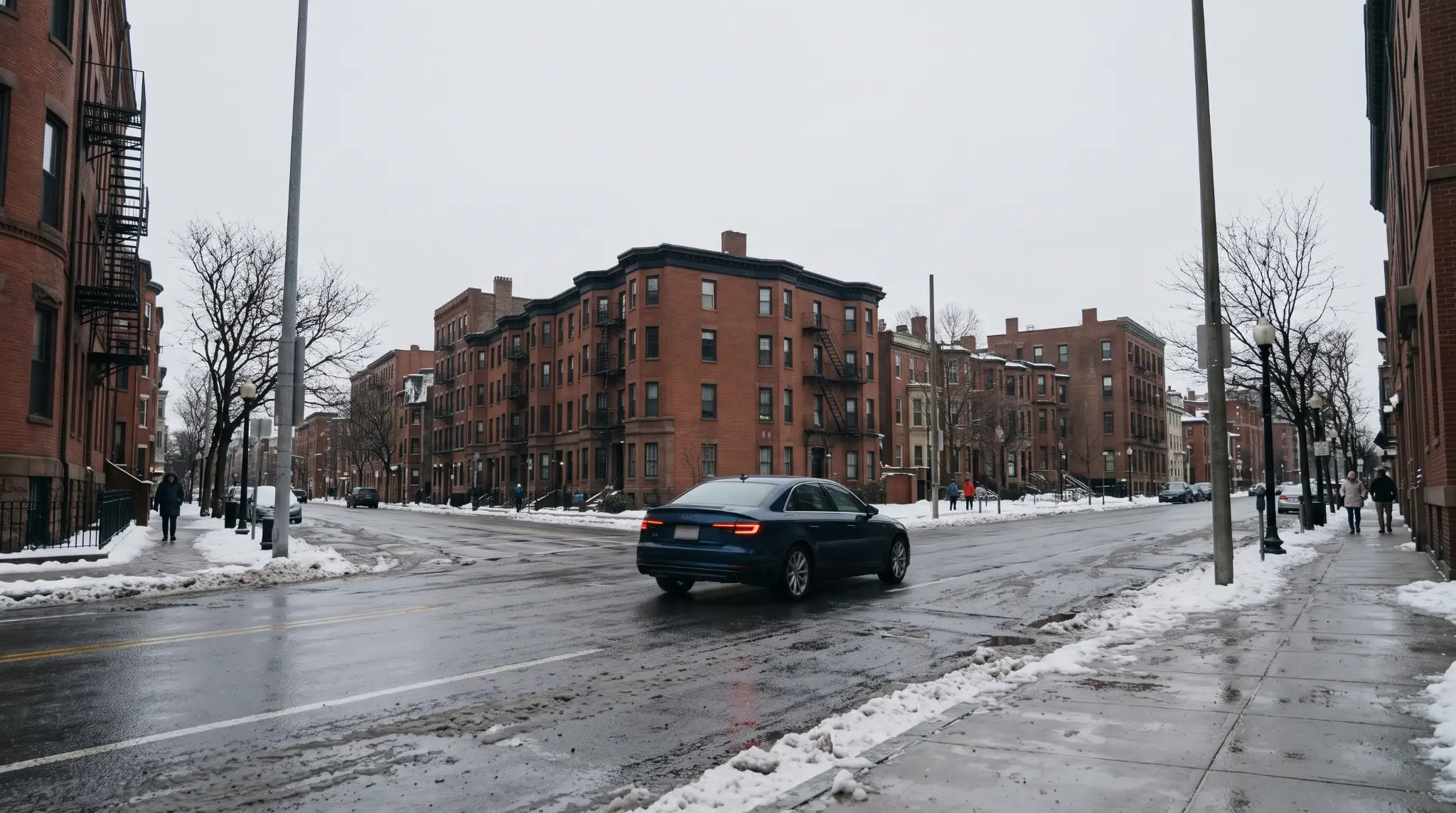


The first real storm of the season produces a predictable week. Everyone drives as though the road is dry, the city collects a few hundred collisions, and a large share of the people involved assume the weather settles the question of fault.
It does not. Weather changes what careful driving looks like. It does not change who is responsible for failing to do it.
Conditions Raise the Standard Rather Than Excusing It
The duty adjusts upward
A speed that is lawful and ordinary on a dry November afternoon can be careless on the same road in freezing drizzle. The obligation is to operate reasonably in the conditions actually present, which in practice means the worse the weather, the more a driver has to do to meet the same standard.
“I hit black ice” is an explanation, not an answer
It almost always invites the next question, which is why the vehicle was traveling at a speed where ice became unrecoverable. Nationally, adverse road weather is a large and well-documented contributor to crashes. Federal data on how weather events affect roads puts weather-related collisions at roughly twelve percent of all crashes, nearly 745,000 a year, with more than 3,800 people killed and over 268,000 injured annually.
Where conditions genuinely matter
They matter to the comparison between drivers. If one vehicle was traveling at a speed appropriate to packed snow and the other was not, the weather is what makes that difference visible and measurable.
What a Massachusetts Claim Actually Turns On
Two things decide most winter cases, and neither is the weather. The first is the comparison of what each driver did in conditions both were facing. The second is whether the injury clears the statutory gate that governs every motor vehicle claim in the state regardless of season.
According to personal injury lawyer Nicholas R. Thompson, Principal and Managing Partner at RTRLAW, winter claims are frequently conceded too early because the people involved treat the storm as the cause and stop asking questions, when the material that decides these matters is the speed, the following distance and the condition of the vehicle, all of which are documented somewhere. Drivers who have been told the weather was to blame are usually hearing an assumption rather than a finding, and legal help after a car crash in Boston can test whether it survives the evidence.
The threshold does not care that it snowed
Massachusetts limits recovery for pain and suffering in motor vehicle cases. Under the tort threshold statute, those damages are available only where reasonable and necessary medical expenses exceed two thousand dollars, or where the injury falls into specified categories including death and certain permanent losses. A storm does not lower that gate, which makes prompt and documented treatment a legal step rather than only a medical one.
Comparative fault is where winter cases are won
Fault is apportioned between drivers, and a percentage assigned to you reduces recovery proportionally. In winter that percentage usually turns on speed and distance, and on whether your own vehicle was in a condition to stop.
The Evidence Disappears Faster Than in Any Other Crash
The road surface is gone by afternoon
A pothole is still there in March. A sheet of refrozen melt at the bottom of an off-ramp exists for four hours. Whatever is not photographed at the scene is unprovable later, and this is the single biggest practical difference between a winter claim and any other.
Photograph the surface, not only the damage
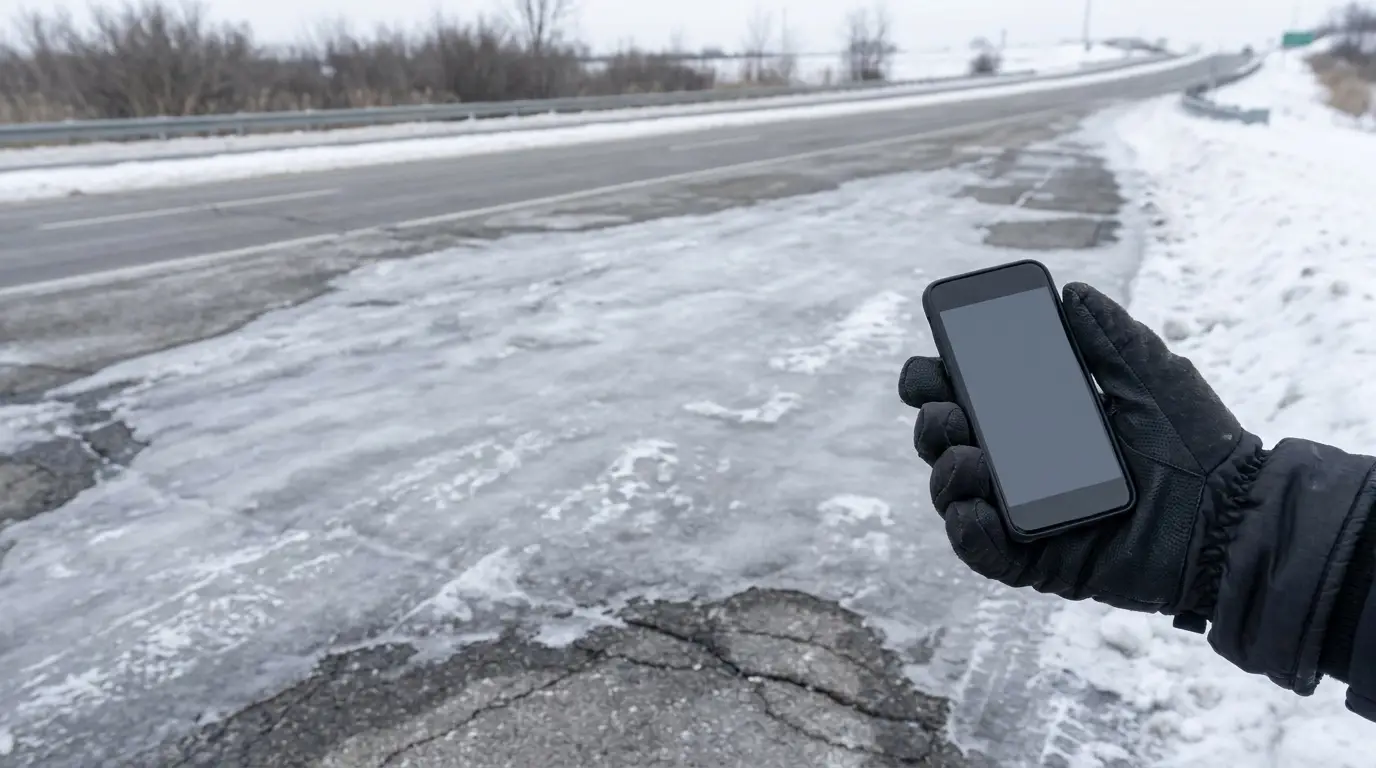
Get the pavement, the tire tracks, the condition of the lane markings, the snowbanks restricting sight lines, and the state of the treatment on the road. Then photograph the same things fifty feet back, because what the approach looked like matters more than what the point of impact looked like.
The weather record is retrievable
Observations and warnings are archived even when the pavement is not, and National Weather Service winter safety guidance describes the conditions these systems produce. Note the time of the collision precisely, because matching it against the observed conditions is what converts a description into a record.
Your Own Car Is Part of the Analysis
Massachusetts requires that a driver not permit anything on or in the vehicle that may interfere with or impede its proper operation, a rule set out in section 13 of chapter 90. Driving with a porthole scraped in the windshield and a roof full of snow is the version of this that everyone has seen in January.
Tires carry more weight than people expect
Tread depth determines stopping distance on snow far more than any driving technique. An insurer examining a winter collision will ask about the tires, and worn ones become an argument about the driver’s share of responsibility rather than a maintenance footnote.
Clear the whole vehicle, every time
Snow leaving a roof at speed is a hazard to the car behind you and a straightforward basis for responsibility if it causes a collision. The two minutes this takes is the cheapest risk reduction available all winter, and it removes an argument before anyone can make it.