Most people think a good workout has to leave them sweaty, breathless, or sore the next day. Yin Yoga challenges that idea by asking the body to slow down rather than push harder.
Yin Yoga benefits come from long, quiet holds that place gentle stress on fascia, ligaments, and joints rather than muscles alone. Many people are surprised by how difficult it feels to stay still in a pose for several minutes without adjusting or distracting the mind.
The practice can help with mobility, stiffness, and stress regulation, though it may not suit every body or injury history.
Understanding how Yin Yoga works makes the slower pace easier to appreciate.
What Is Yin Yoga?
Yin Yoga is a slower style of yoga built around holding passive poses for extended periods, anywhere from three to ten minutes.
The focus is on the deeper layers of the body: fascia, ligaments, and joints, rather than the muscles that more active practices work on.
Where Vinyasa or Hatha yoga keep you moving and engaged, Yin asks you to stop, settle, and stay. That quality of sustained stillness is what sets it apart.
It is a quieter practice, but that does not make it easy. Learning to sit with discomfort and direct your attention inward takes real effort.
What Are the Core Principles of Yin Yoga?
Yin Yoga centers around holding passive poses for longer durations to target connective tissues.
The main principles include:
- Passive holds: Poses are not forced. You find a degree of stretch you can sustain for several minutes and let gravity do the rest.
- Tissue depth: Muscles are elastic and respond well to short, dynamic stretches. Fascia and ligaments are denser and need longer, gentler loading to respond. Yin gives them that time.
- Breath: Slow, deliberate breathing runs through every pose. It keeps the nervous system calm and helps the body release rather than brace.
- Energy pathways: Drawing on Chinese medicine, Yin Yoga holds are thought to improve circulation through the body’s meridian lines, the channels associated with organ health and overall vitality.
How Does Yin Yoga Differ from Other Yoga Types?
Yin Yoga differs from more active yoga styles like Vinyasa or Hatha due to its emphasis on stillness and long-held poses.
While other yoga forms focus on movement and muscle strength, Yin Yoga primarily works on releasing tension in the body’s connective tissues.
- Vinyasa & Hatha: These styles are more active, focusing on movement and strength.
- Yin Yoga: Poses are held for 3–10 minutes, targeting deep tissues instead of muscles.
- Focus: Yin Yoga centers on stillness, relaxation, and deep stretching.
Yin Yoga is a slow, mindful practice aimed at deep relaxation through extended, passive poses.
It is different from more physically demanding forms of yoga and focuses on the body’s connective tissues.
What Does a Yin Yoga Practice Session Look Like?
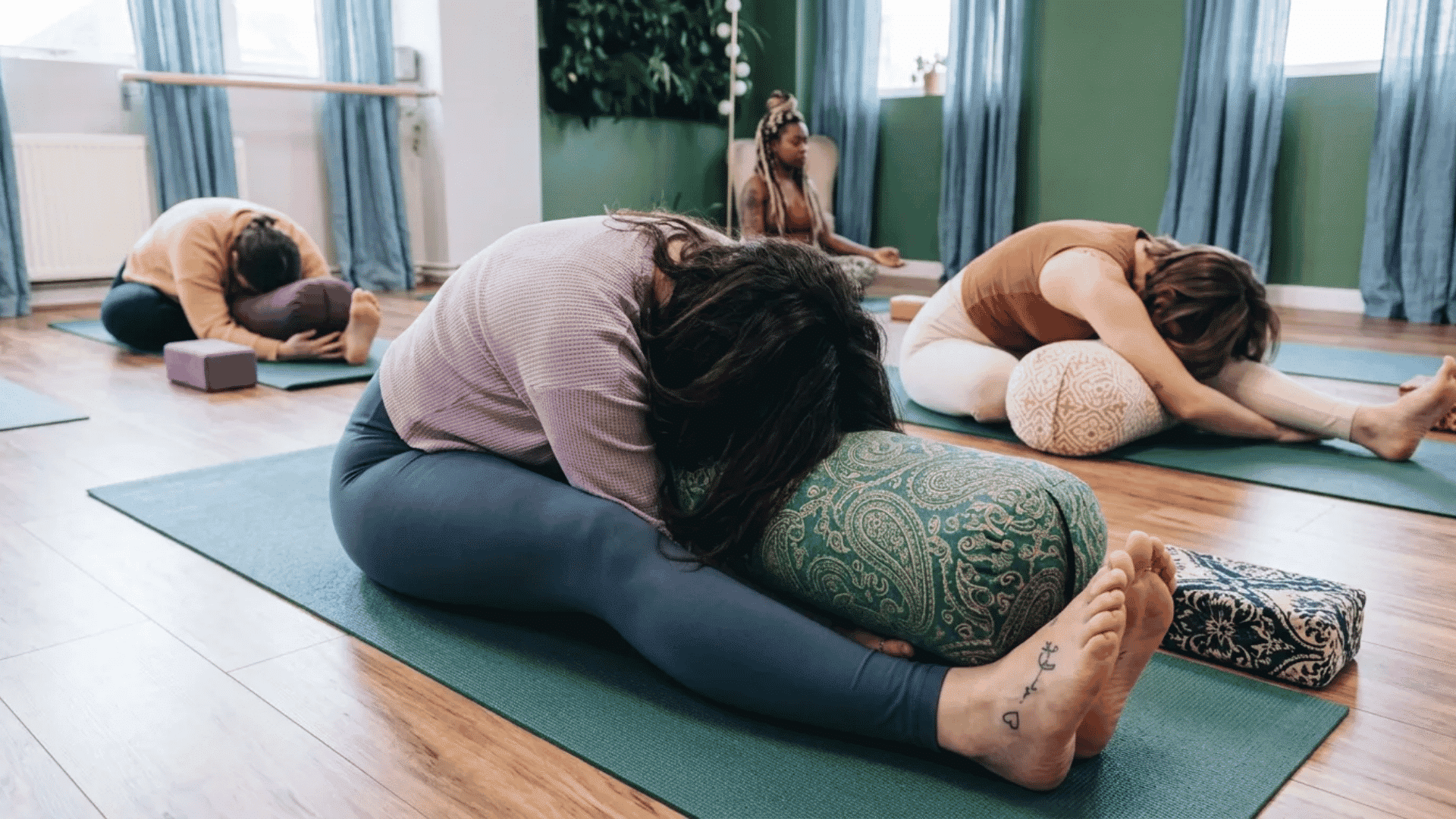
A typical Yin Yoga session is designed to promote deep relaxation and flexibility through long-held, passive poses. The practice is gentle yet effective in releasing tension and improving mobility.
Here’s an overview of what to expect during a Yin Yoga session:
- Start with Breathwork: Each session begins with focused breathing to calm the mind and prepare the body.
- Holding Poses: Poses are held for 3 to 10 minutes, allowing deep stretches in the connective tissues.
- Focus on the Lower Body: Poses mainly target the hips, thighs, and lower back, though the entire body is addressed.
- Use of Props: Blocks, cushions, or blankets are used to support the body and enhance comfort during the long-held stretches.
- Minimal Movement: After settling into a pose, there is little to no movement, allowing the body to fully relax into the stretch.
Fun Fact: Yin Yoga can be particularly helpful for athletes or anyone who wants to release tightness in areas like the hips and lower back from prolonged sitting or activity.
Physical Benefits of Yin Yoga
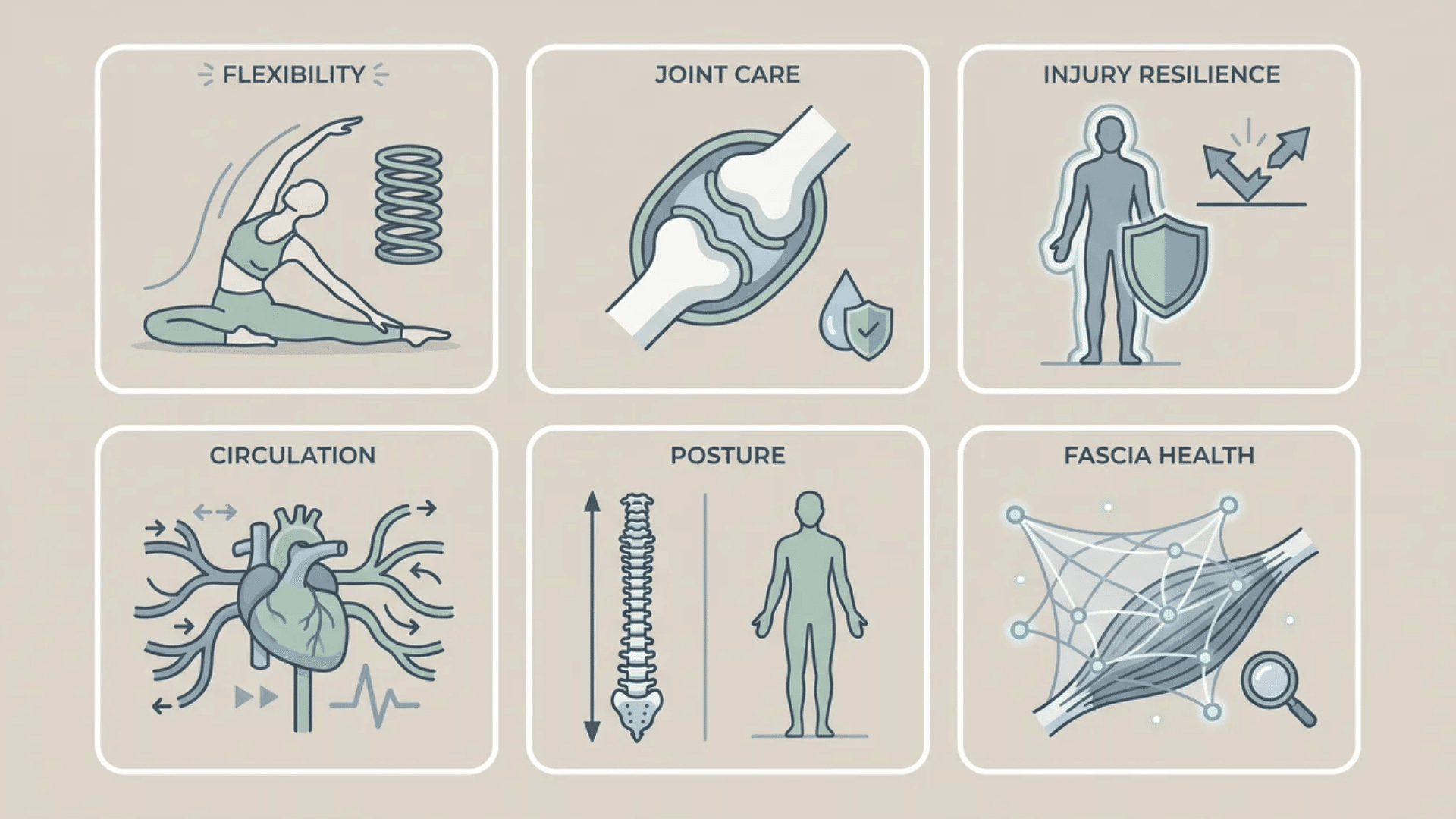
Yin Yoga helps improve flexibility, joint health, and circulation by focusing on deep-tissue work. Its long-held, passive stretches target the fascia and connective tissues, offering both physical and mobility benefits.
Here’s how Yin Yoga supports your body:
1. Flexibility
Yin’s long holds create a slow, sustained load on the fascia surrounding muscles and joints. Unlike dynamic stretching, this gentle and prolonged tension signals the connective tissue to gradually lengthen and adapt.
Over weeks of regular practice, this helps the tissue become more pliable, leading to a noticeable improvement in overall flexibility and range of motion.
2. Joint Care
Joints thrive on movement, and yin yoga delivers exactly that slowly and mindfully. Regular practice encourages improved synovial fluid circulation, which lubricates the joints and nourishes the cartilage.
Moving through the full range of motion in a sustained, low-load way helps keep joints healthy, resilient, and less prone to stiffness over time.
2. Injury Resilience
Connective tissue that gets regular loading becomes stronger and more resilient. For athletes whose training focuses heavily on muscles, Yin adds a layer of tissue conditioning that can reduce the risk of strains and sprains.
For people whose jobs keep them sedentary, it counteracts the tightening that builds up from hours of sustained posture.
3. Better Circulation and Mobility
The deep stretches improve blood flow to deeper tissues, nourishing them and aiding in repair.
Yin Yoga also releases blockages in energy pathways, enhancing overall body movement and reducing tension.
4. Posture and Spinal Health
Many Yin poses work directly on the spine, hips, and shoulders, which take the brunt of poor sitting habits.
With consistent practice, people often notice less discomfort from long days at a desk and a gradual improvement in how they carry themselves.
5. Fascia Health
Fascia tends to stiffen and form adhesions when it is not moved through its range.
Yin keeps it supple, which supports freer muscle movement and reduces the kind of general body stiffness that can creep in with age or inactivity.
Remember: Adding one or two Yin sessions per week can meaningfully change how your joints and fascia feel, especially if the rest of your training is high-intensity.
Mental and Emotional Benefits of Yin Yoga
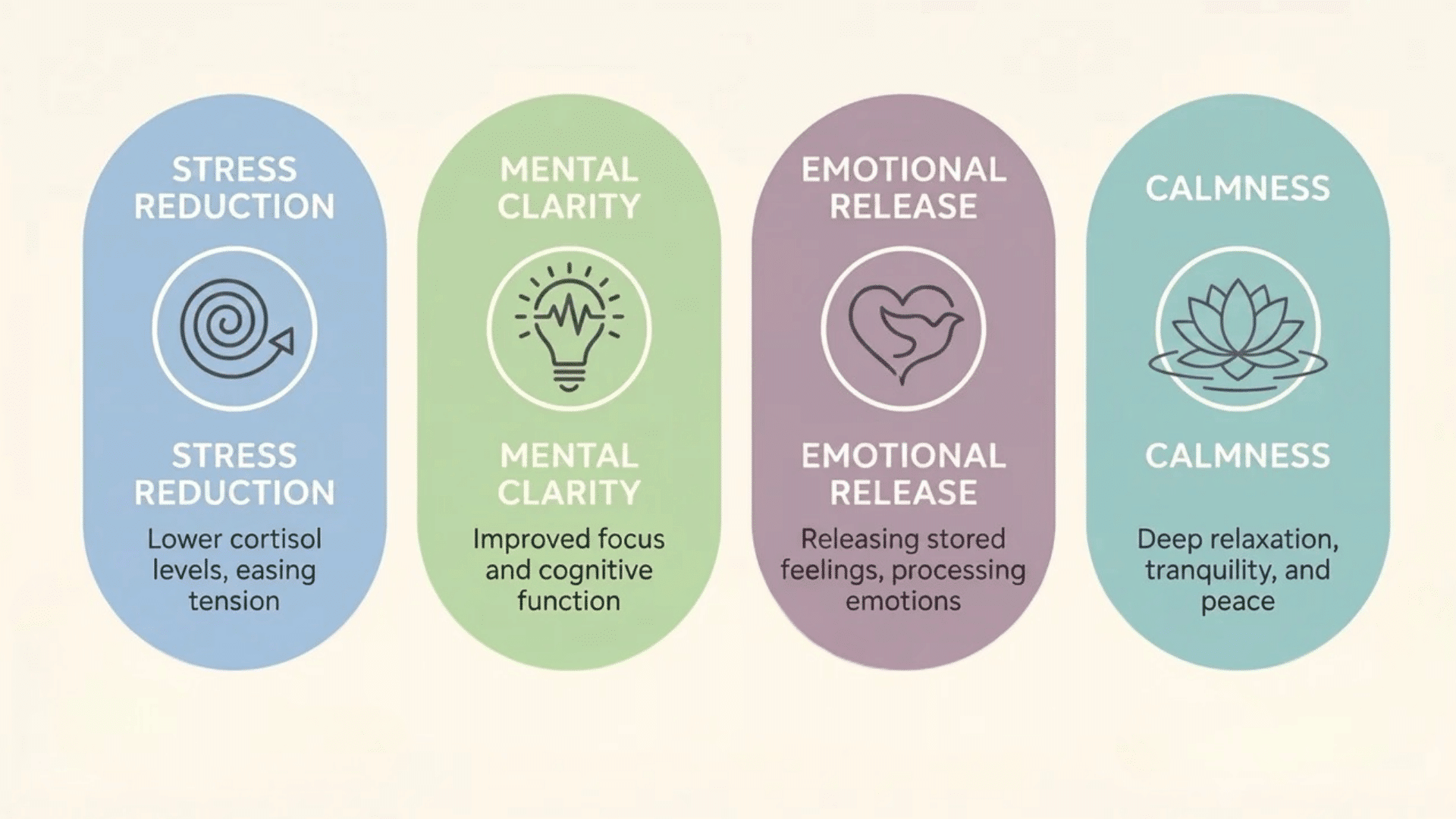
Yin Yoga offers more than just physical benefits; it also has a powerful impact on mental and emotional well-being. The practice activates the parasympathetic nervous system, which reduces stress and anxiety while promoting mindfulness and emotional release.
Here’s how Yin Yoga supports your mind and emotions:
1. Stress and The Nervous System
Holding a passive pose and breathing slowly shifts the body toward parasympathetic activity, the state associated with rest and recovery.
Cortisol drops. The background noise of daily stress quiets. Many people find a single session leaves them noticeably calmer for hours afterward.
2. Presence and Mental Clarity
Yin is not meditative in the sense that it asks you to empty your mind, but it does ask for sustained attention.
You notice the quality of your breath, the subtle changes in sensation as a pose deepens, the impulse to fidget, and the choice to stay. That practice of directed attention carries over into daily life as a kind of steadiness.
3. Emotional Release
The body holds stress physically, and the hip flexors, pelvis, and shoulders are common sites of storage. When the tissue in these areas releases, people sometimes experience an unexpected emotional shift, a sense of lightness, or emotions that surface briefly before settling.
This is not universal, but it is common enough that practitioners regularly discuss it.
4. Calm without Effort
The practice’s focus on deep breathing and stillness encourages a calm, peaceful state of mind. Yin Yoga can be particularly helpful for those who struggle with anxiety or overthinking, offering a safe space to relax and let go.
If you hold stress in areas like your hips or shoulders, Yin Yoga can help release that stored tension, leading to emotional clarity and a sense of calm.
Who Should Try Yin Yoga?
Yin Yoga can be a good fit for people who spend long hours sitting, train intensely, or deal with ongoing stiffness from repetitive movement. The slow holds give the hips, spine, and joints time to release tension that faster workouts often miss.
It may work well for:
- Desk workers with tight hips or lower back discomfort
- Athletes who want better mobility and recovery
- People dealing with stress or mental fatigue
- Beginners looking for a slower, low-impact yoga style
The pace can feel challenging at first, especially for people used to constant movement or high-intensity workouts.
Who Should Avoid Yin Yoga?
Yin Yoga is gentle in appearance, but the long holds can place steady pressure on joints and connective tissue. That makes it unsuitable for some people without proper guidance.
Extra caution is needed for people with:
- Joint hypermobility
- Osteoporosis or low bone density
- Recent ligament or soft-tissue injuries
- Pain that worsens with deep stretching
Props like bolsters and blocks can reduce strain and make poses more comfortable. Sharp pain is always a sign to back off instead of pushing deeper.
What Is the Best Time to Practice Yin Yoga?
Yin Yoga can fit into almost any part of the day, depending on how the body feels and what the practice is meant to support.
Many people prefer evening sessions because the slow pace and long holds help the body settle after hours of work, screens, or physical activity.
Morning practice can also work well for people who wake up stiff and want gentle movement before starting the day. Midday sessions may help break up long periods of sitting and reduce tension in the hips or lower back.
The main factor is consistency rather than timing. A short session done regularly often feels more useful than occasional long classes.
Final Thoughts
Yin Yoga asks for patience in a way many fitness routines do not. The changes are often subtle at first, easier movement in the hips, less tension after long sitting hours, or a quieter mental state at the end of the day.
Over time, those small shifts can make daily movement feel more comfortable and less restricted. The practice also creates space to slow down without completely disconnecting from the body.
Starting with one beginner-friendly class or a short guided session at home is usually enough to understand whether the pace and style feel supportive.
Small, steady practice tends to work better than trying to do too much too quickly.
Frequently Asked Questions
Can I Do Yin Yoga Every Day?
While not necessary, practicing Yin Yoga several times a week can significantly improve flexibility and joint mobility.
Can Beginners Do Yin Yoga?
Yes. Yin Yoga is beginner-friendly because the poses are simple and slow-paced. Props like cushions, blankets, and blocks can make the holds more comfortable during practice.
How Long Does a Yin Yoga Session Usually Last?
Most sessions last between 45 and 75 minutes, though shorter practices can still feel effective for beginners or busy schedules.