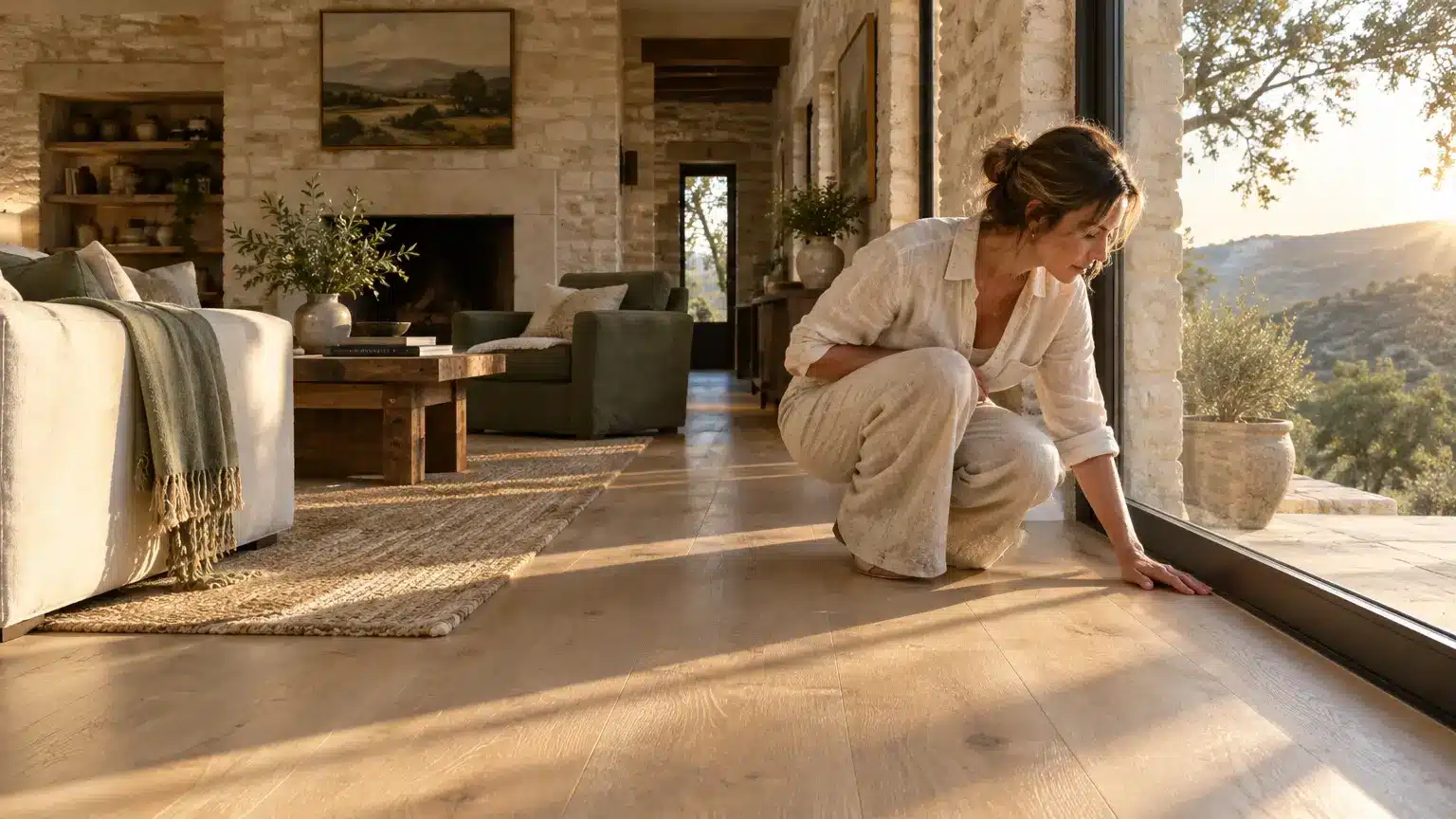


An unused attic room can feel dark, cramped, and difficult to decorate. Many homeowners struggle to turn sloped ceilings and limited space into a comfortable area.
A well-planned attic room can become a cozy bedroom, reading corner, office, or private retreat. Smart layouts, lighting choices, and storage ideas can completely change the space.
These attic bedroom ideas focus on practical designs that work for small areas and low ceilings. Realistic inspiration can help you create a room that feels open, functional, and inviting.
Whether you are renovating a forgotten loft or refreshing an existing space, the right approach matters. Start with your room’s structure and build a design that fits your lifestyle.
What Is Considered An Attic Room?
An attic room is a living space created within the roof area of a home, usually above the main floors. It features a sloped ceiling and may include windows, insulation, flooring, and proper ventilation to make it comfortable for daily use.
These rooms are different from unfinished attics because they are designed as functional areas such as bedrooms, offices, or guest spaces rather than storage zones.
A space can be considered an attic room when it has enough height, accessibility, and features required for regular occupancy. The exact requirements may vary based on local building codes and home design standards.
Many homeowners convert unused attic areas into practical rooms to increase living space and value.
Attic Bedroom Ideas
Attic bedrooms are among the most popular ways to use an unused upper floor. Sloped ceilings, natural light, and thoughtful furniture placement can create a private sleeping space with unique character.
1. Cozy Attic Bedroom
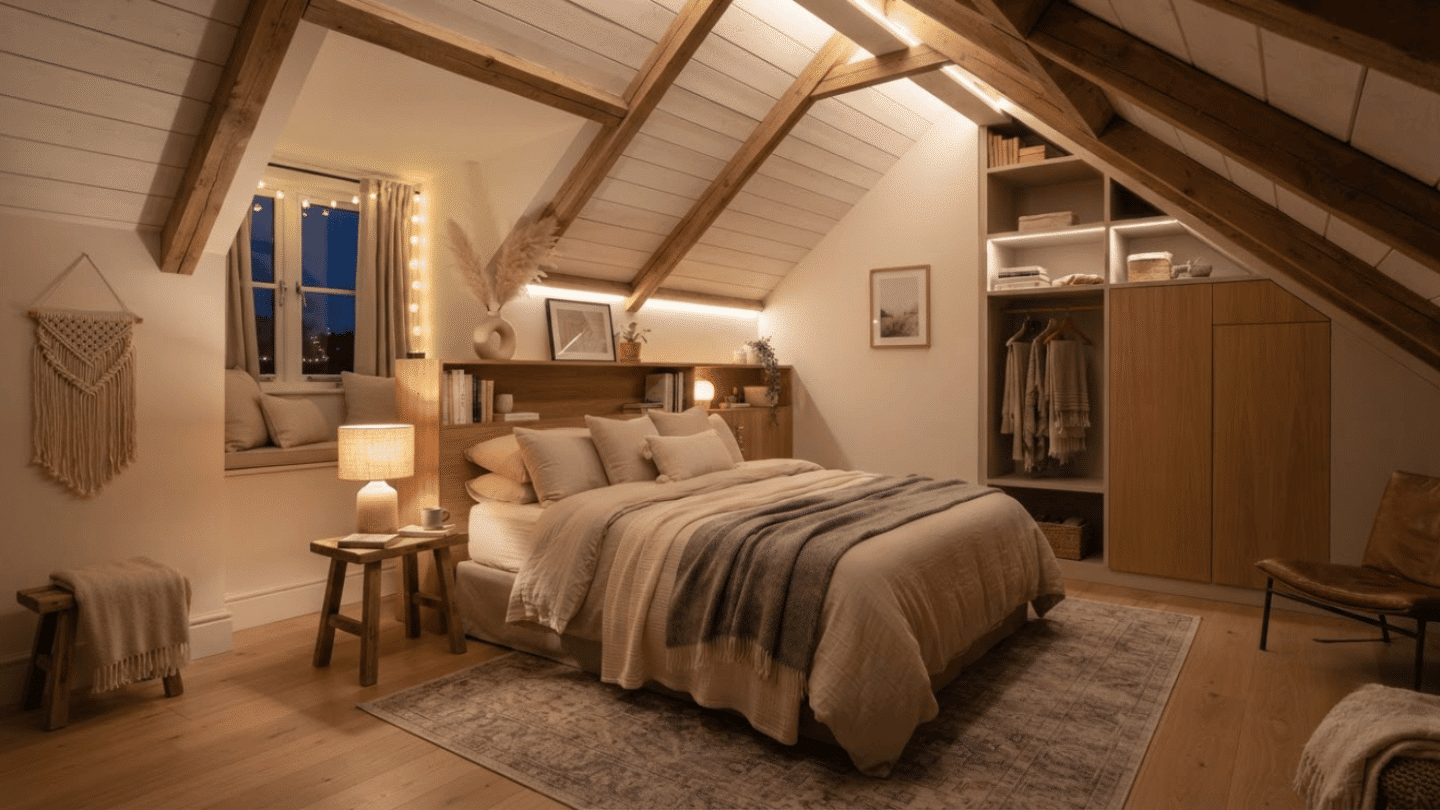
A cozy attic bedroom focuses on warmth, comfort, and smart use of limited space. Soft bedding, layered lighting, warm textures, and calming colors can make the room feel inviting while keeping the design practical.
Built-in storage, compact furniture, and personalized décor help keep the layout organized. Small additions like rugs, curtains, and bedside lighting can create a relaxing atmosphere without overwhelming the room.
Tip: Use warm LED lighting to make the attic feel more comfortable during evenings.
2. Luxury Attic Bedroom Suite
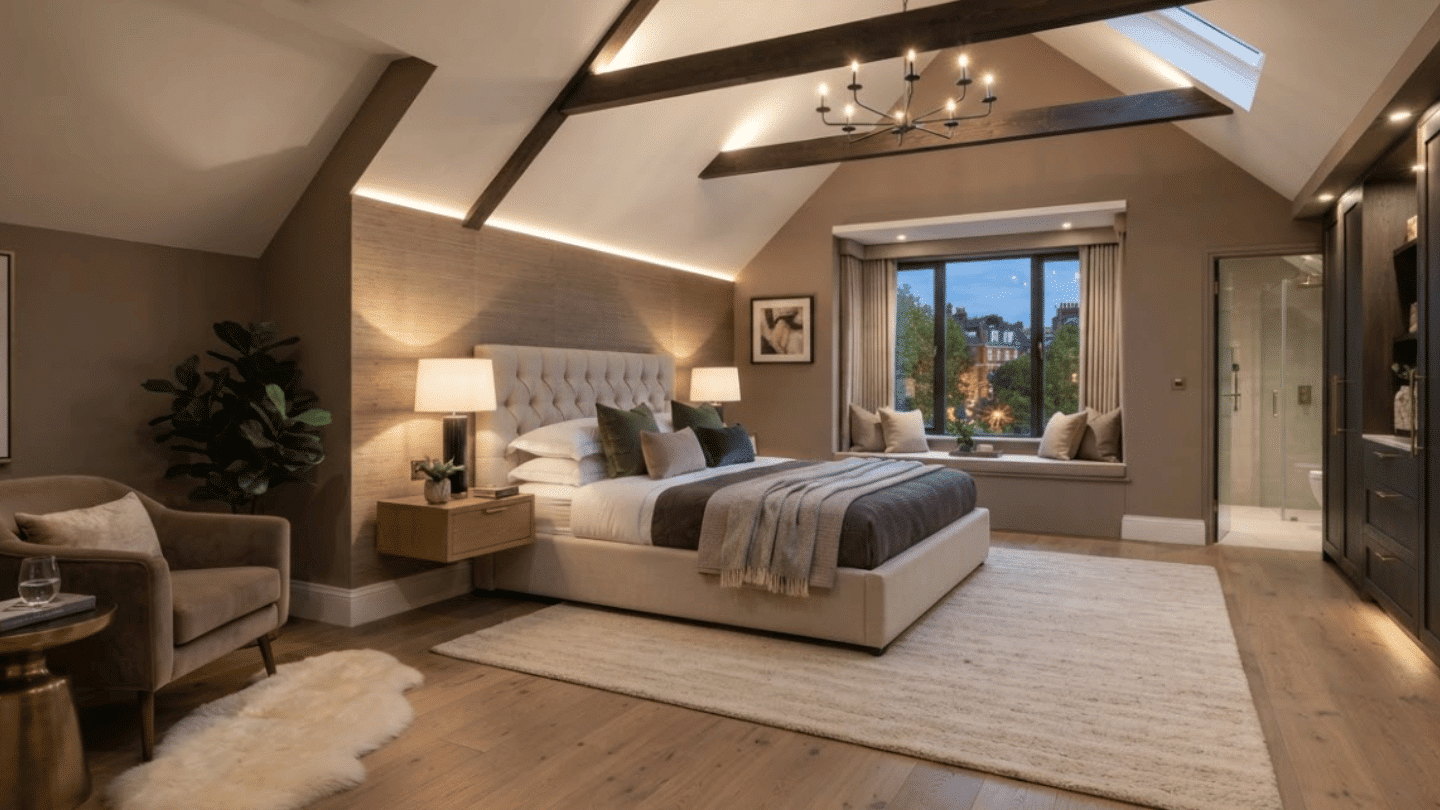
A luxury attic bedroom suite turns an upper-level space into a private retreat with premium finishes and thoughtful details. Comfortable furniture, elegant lighting, and high-quality materials can create a hotel-inspired feel.
Adding a seating corner, custom wardrobes, or an attached bathroom can increase both comfort and functionality. Proper insulation and ventilation are essential to maintain a pleasant environment throughout the year.
3. Scandinavian Attic Bedroom
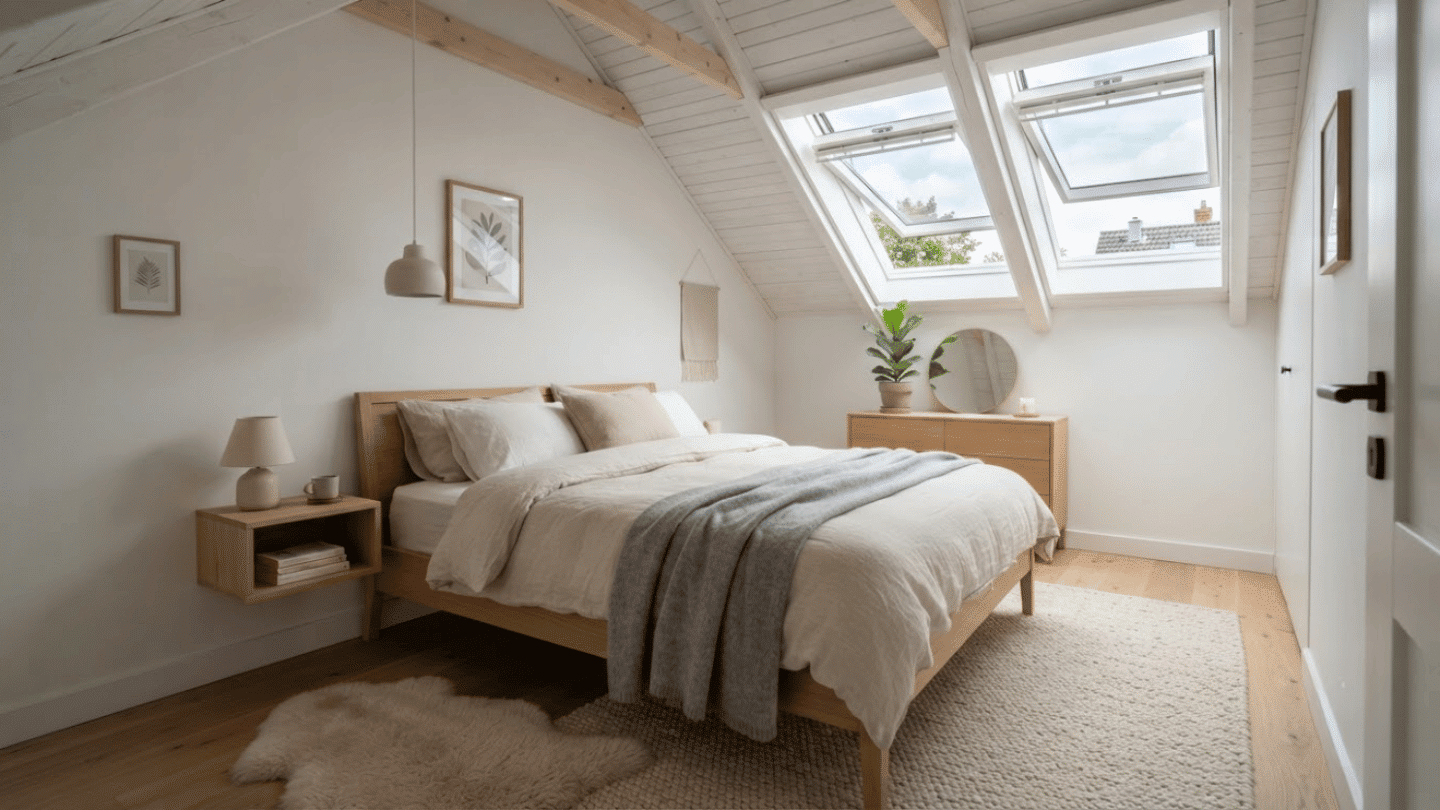
A Scandinavian attic bedroom uses simplicity, natural materials, and bright colors to create an open and peaceful atmosphere. Light wood furniture, neutral shades, and minimal décor work especially well in smaller attic spaces.
Large windows or skylights can enhance the airy feeling, while soft textiles add warmth. This style focuses on balance, making the room comfortable without unnecessary decoration.
Tip: Choose furniture with clean lines to maintain a spacious appearance.
4. Rustic Attic Bedroom
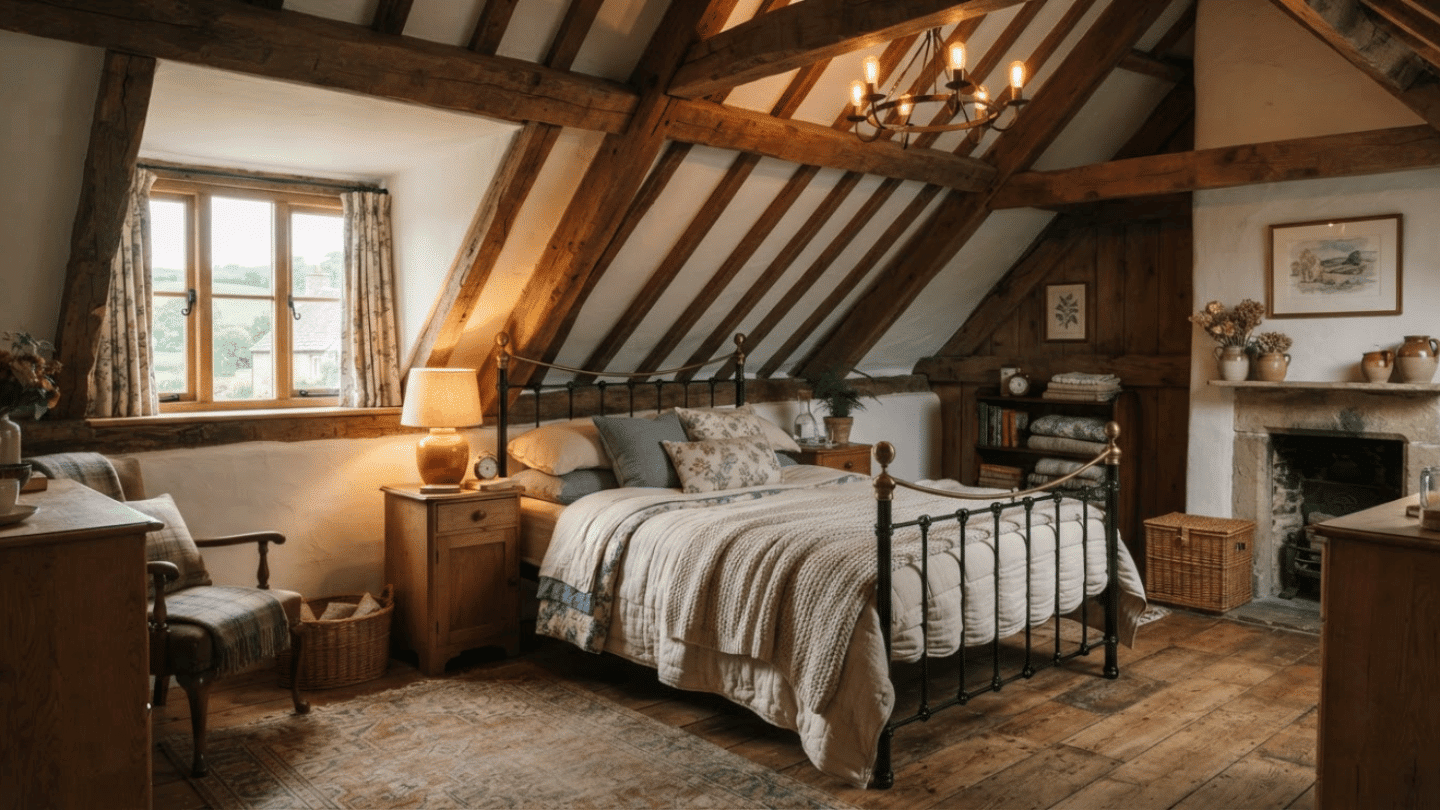
A rustic attic bedroom highlights natural textures and traditional charm. Exposed beams, wooden furniture, vintage details, and warm lighting can create a cozy countryside-inspired space.
This style works well in homes with original architectural features. Combining old elements with modern comforts, such as a comfortable mattress and efficient lighting, creates a balanced design.
5. Farmhouse Attic Bedroom
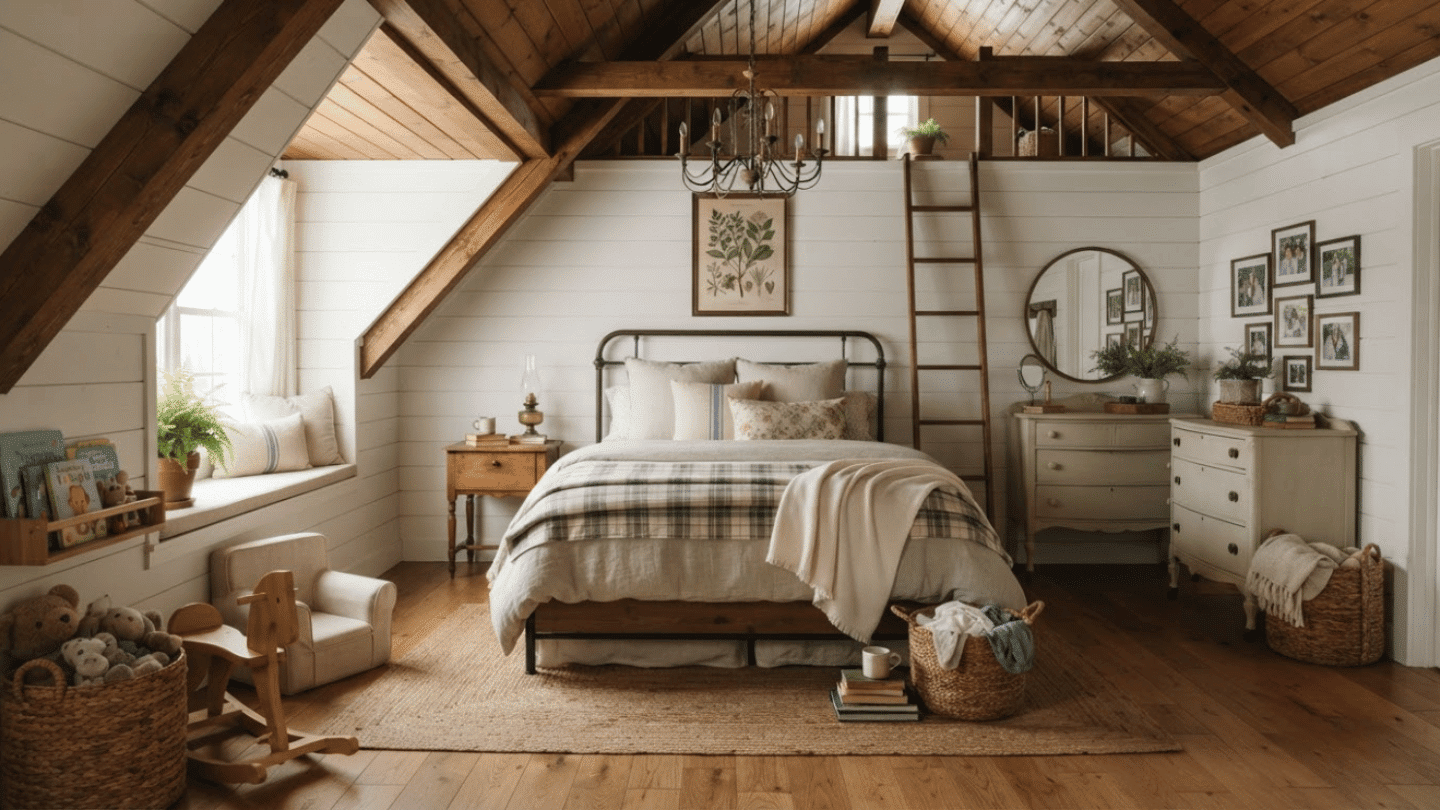
A farmhouse attic bedroom combines comfort with timeless design elements. Wooden accents, soft fabrics, neutral colors, and classic furniture pieces create a welcoming environment suitable for everyday living.
Decorative touches like woven baskets, handmade accessories, and vintage-inspired lighting add personality. The design works particularly well for homeowners who want a relaxed, family-friendly atmosphere.
6. Attic Kids’ Bedroom
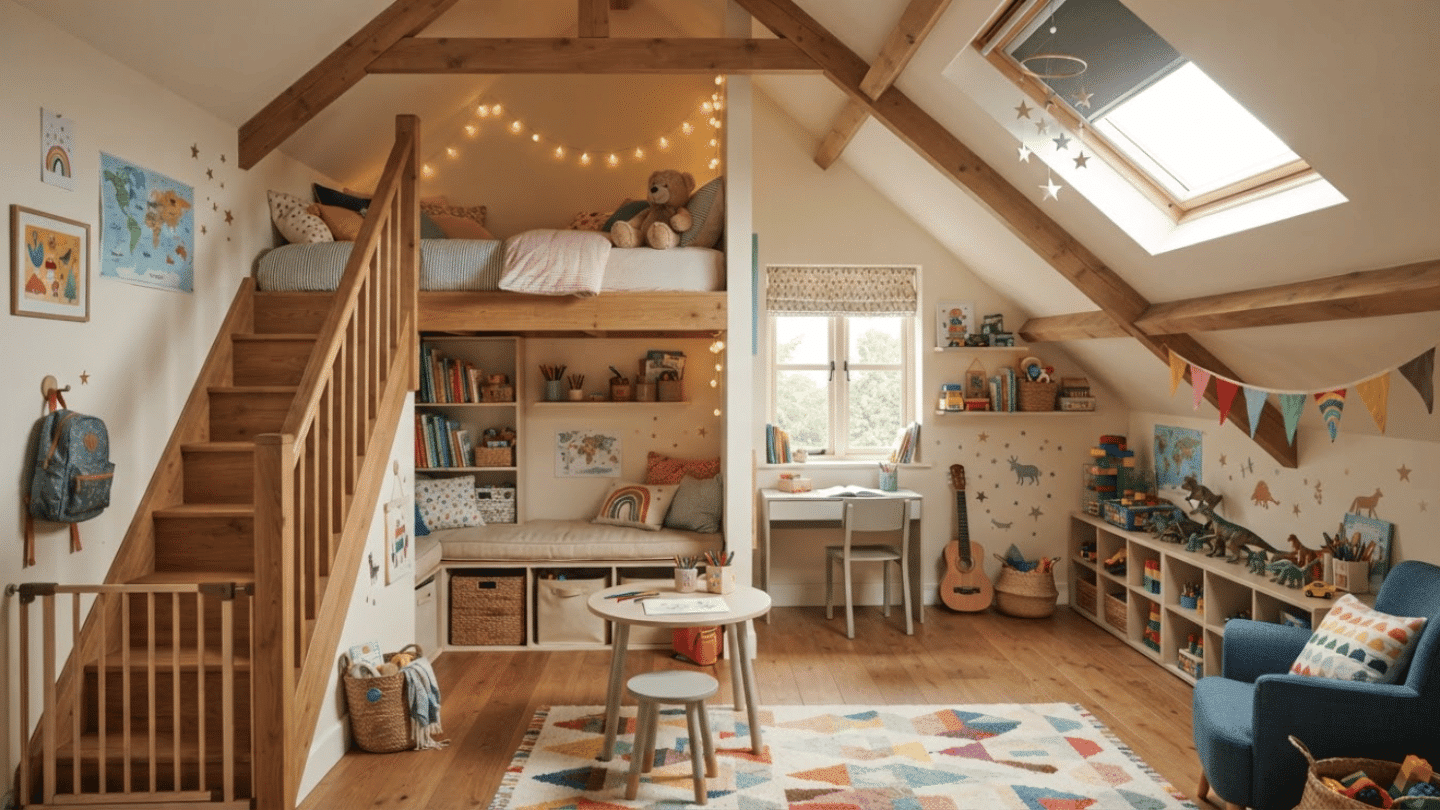
An attic kids’ bedroom can give children a private, creative space. Bright colors, playful décor, and clever storage solutions help make the room functional and enjoyable.
Safety should remain a priority when designing this type of attic room. Proper stair access, secure windows, and comfortable temperature control help create a suitable environment for children.
7. Teenager Attic Hangout Room
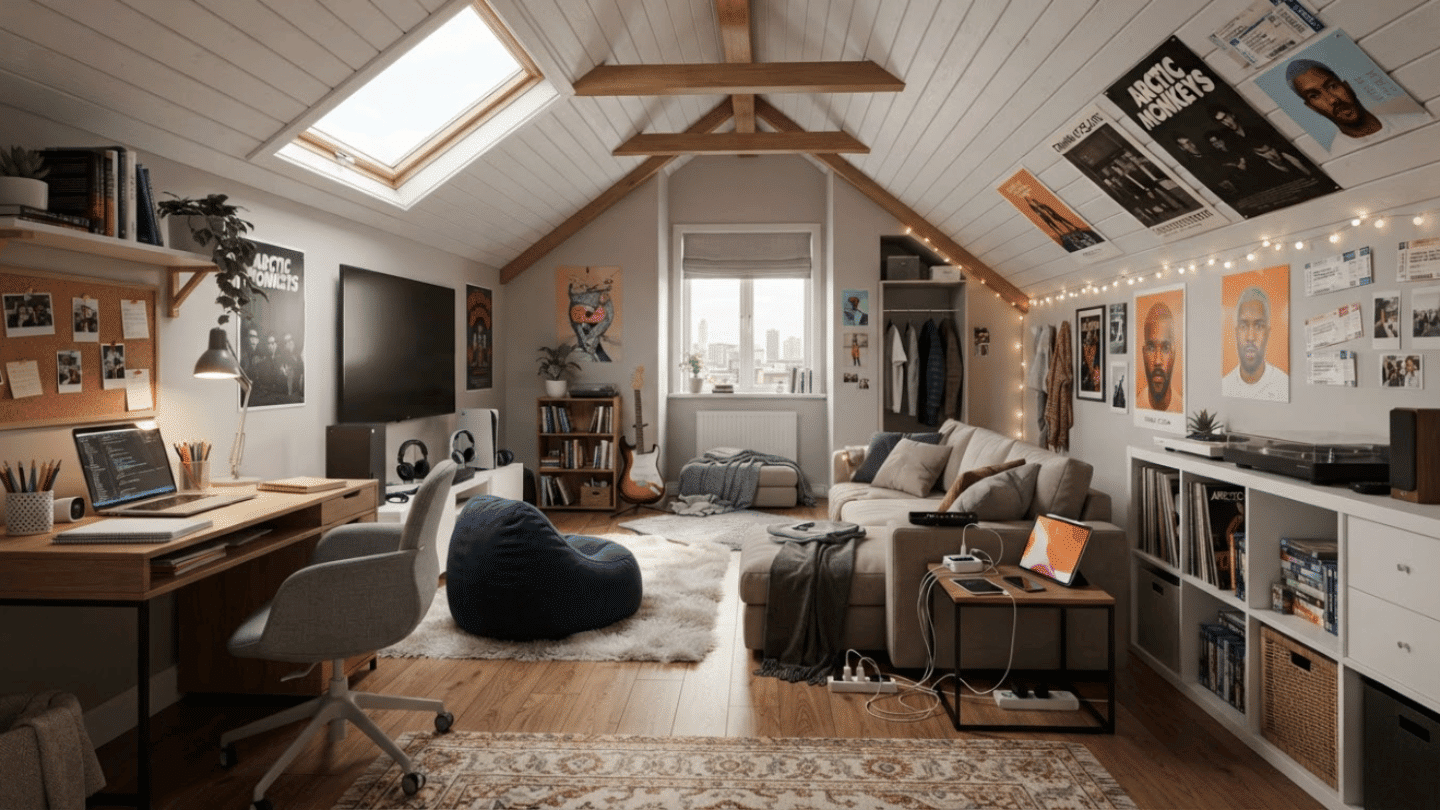
A teenager attic hangout room offers a personal area for studying, relaxing, and entertainment. A flexible layout with a desk, seating area, and storage can support different activities.
Personalized décor allows teenagers to express their style while keeping the room practical. Adding charging points, comfortable lighting, and organized storage improves everyday usability.
Tip: Include multifunctional furniture to adapt as their needs change.
Functional Attic Room Ideas
Functional attic rooms focus on creating useful spaces that support daily activities. With proper planning, an unused attic can become a productive workspace, creative zone, relaxation area, or personal retreat.
8. Attic Home Office
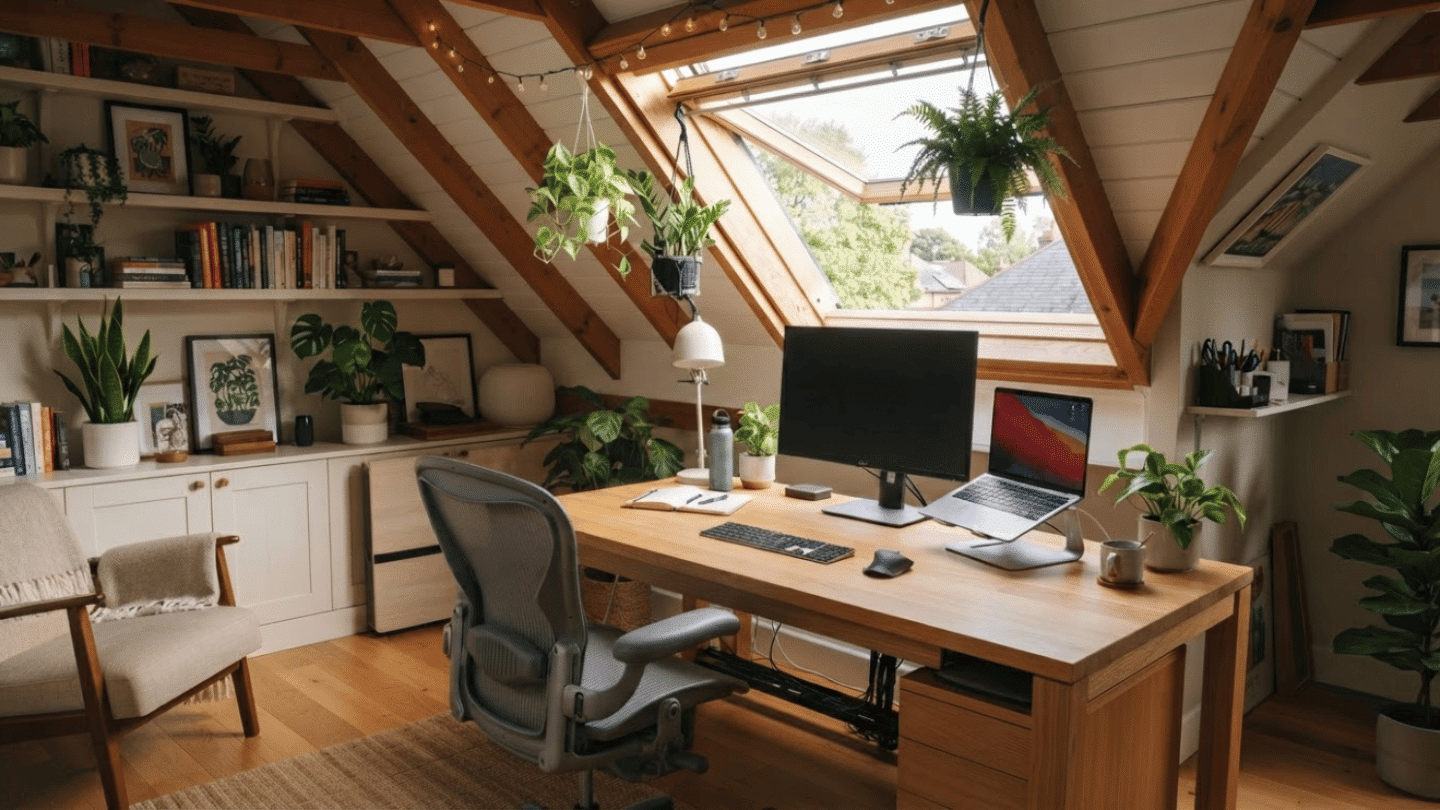
An attic home office creates a quiet workspace away from common household distractions. Positioning a desk near natural light, adding comfortable seating, and organizing cables properly can improve productivity.
Storage shelves, ergonomic furniture, and efficient lighting help create a professional work environment. A well-designed attic office can support remote work while making better use of unused space.
Tip: Place the desk near a window or skylight to reduce eye strain.
9. Compact Attic Workspace
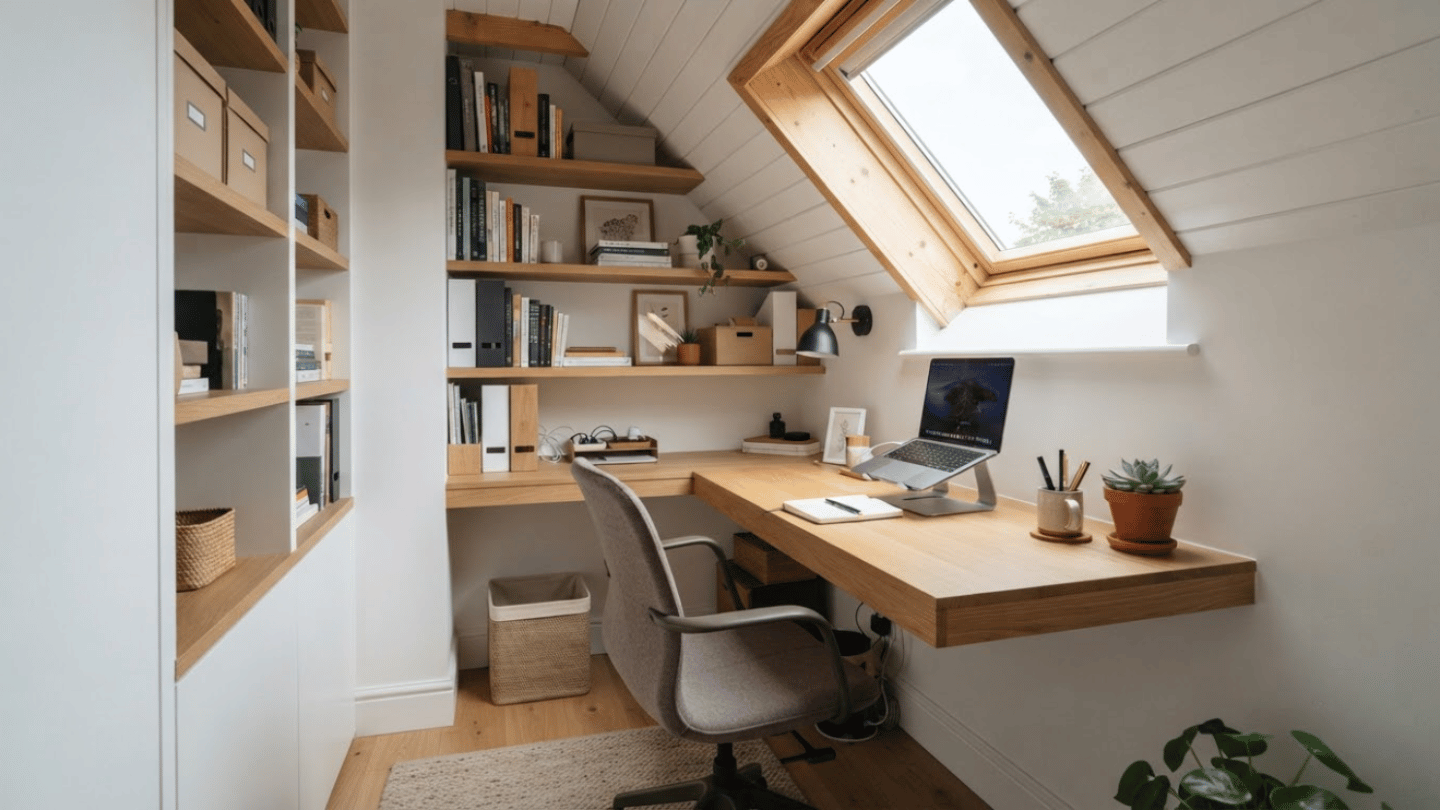
A compact attic workspace is ideal for homes with limited room availability. A small desk, wall-mounted shelves, and minimal furniture can create a practical area without making the space feel crowded.
Smart organization plays an important role in smaller attic designs. Vertical storage and multifunctional furniture help maintain a clean workspace while keeping essential items within reach.
10. Attic Reading Nook
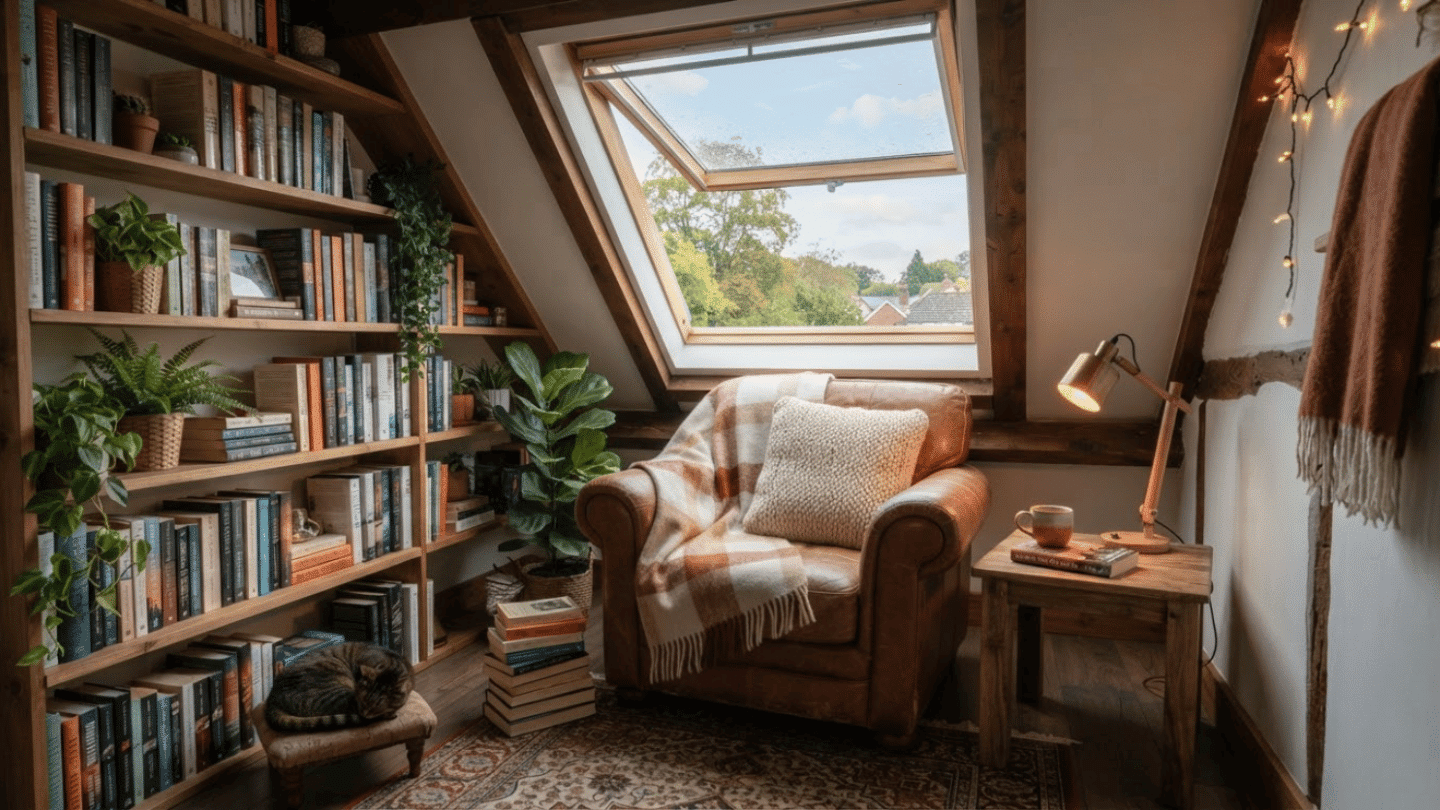
An attic reading nook turns a quiet corner into a comfortable place to relax. A cozy chair, soft lighting, bookshelves, and cushions can create a peaceful escape from busy routines.
Natural light from attic windows enhances the reading experience during the day. This setup works well in small spaces because it requires minimal furniture while adding significant comfort.
Tip: Add adjustable lighting for comfortable reading during evenings.
11. Attic Home Library
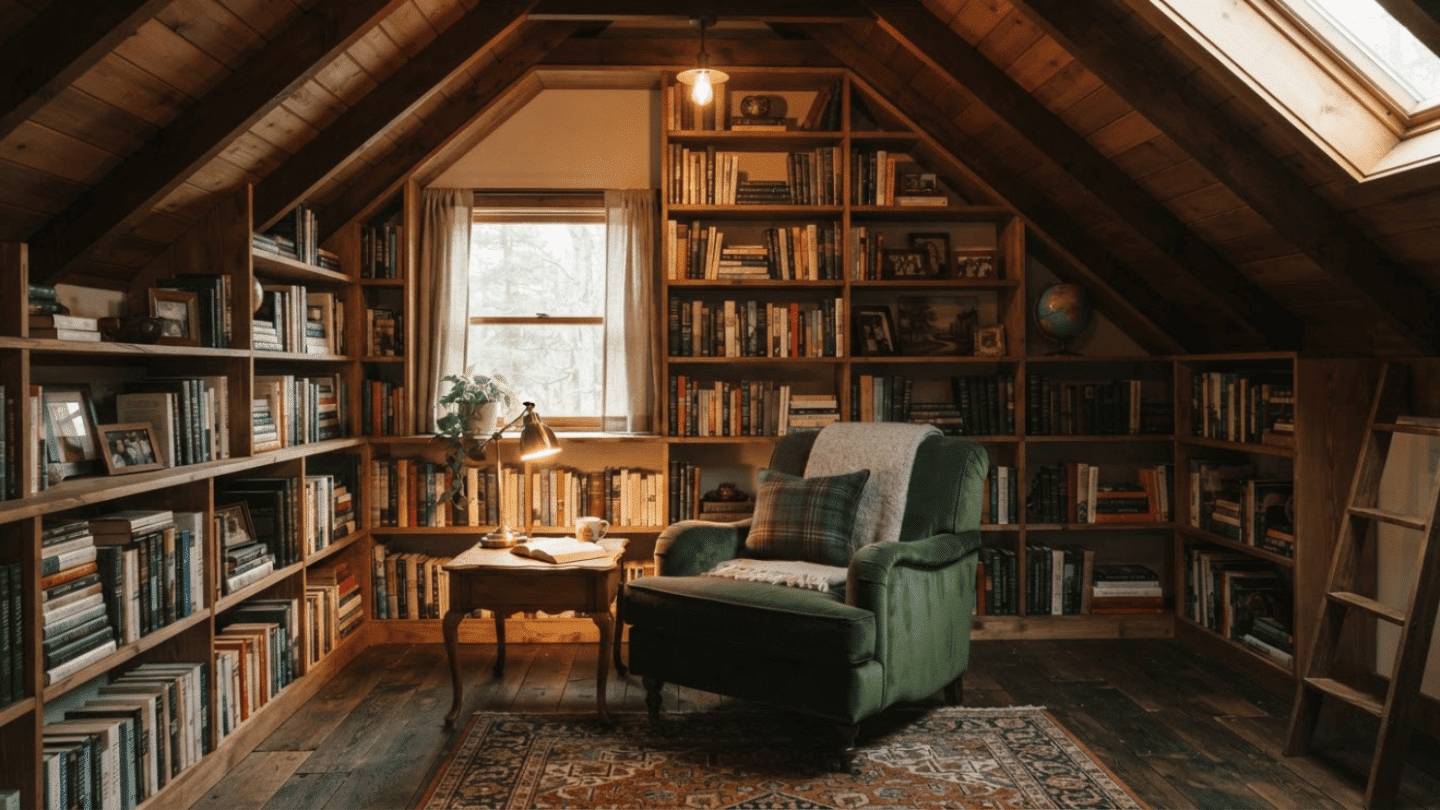
An attic home library makes excellent use of sloped walls and unused corners. Custom shelves, comfortable seating, and proper lighting can turn the area into a personal book collection space.
Built-in storage helps maximize available space while maintaining a neat appearance. Adding a small desk or reading chair can make the library suitable for both studying and leisure reading.
12. Attic Art Studio
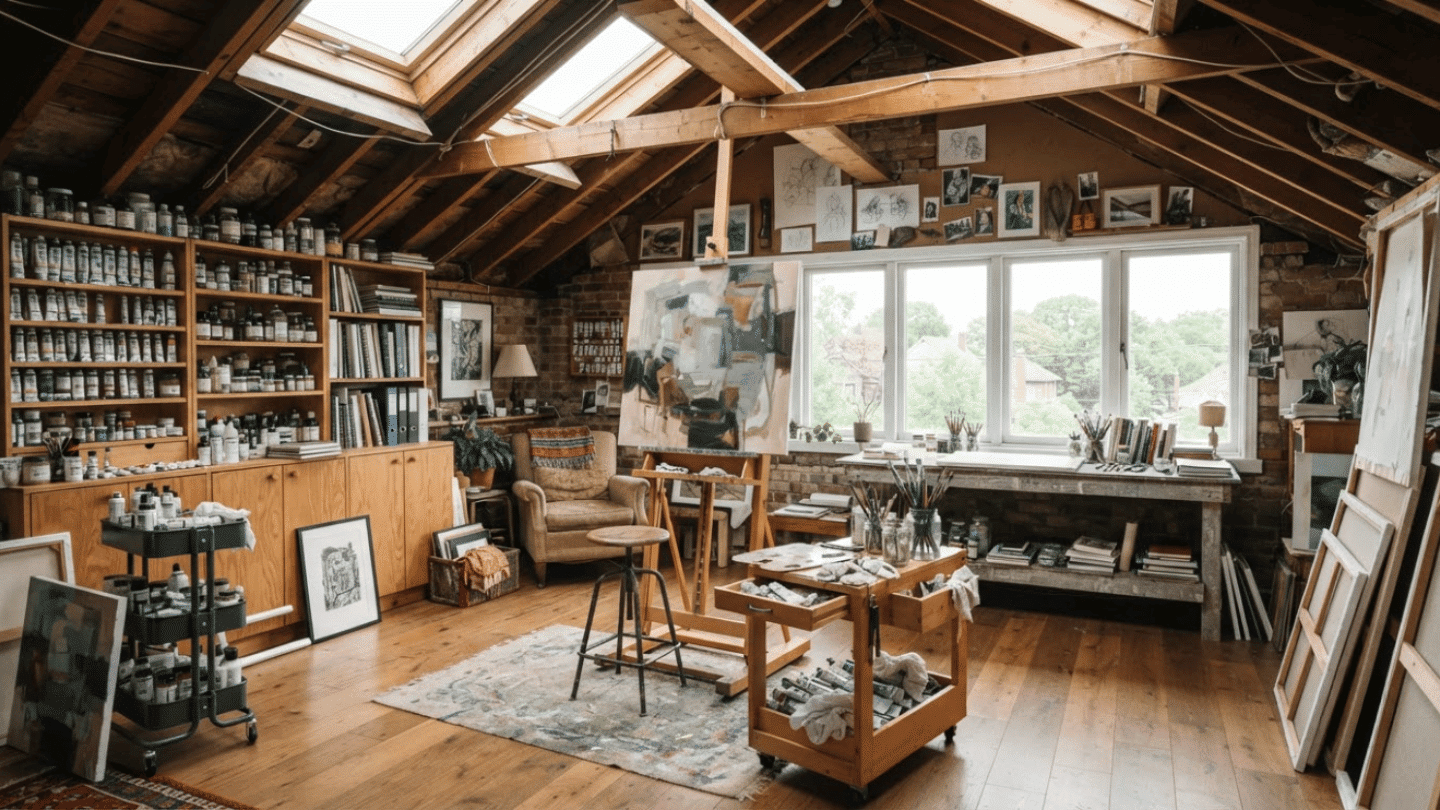
An attic art studio provides a private environment for creative projects. Large windows, flexible furniture, and organized storage areas can help artists work comfortably without interruptions.
Good lighting is especially important for painting, drawing, or crafting activities. Shelving units, supply cabinets, and durable flooring make the studio easier to maintain over time.
Tip: Use adjustable lamps when natural light changes throughout the day.
13. Attic Music Room
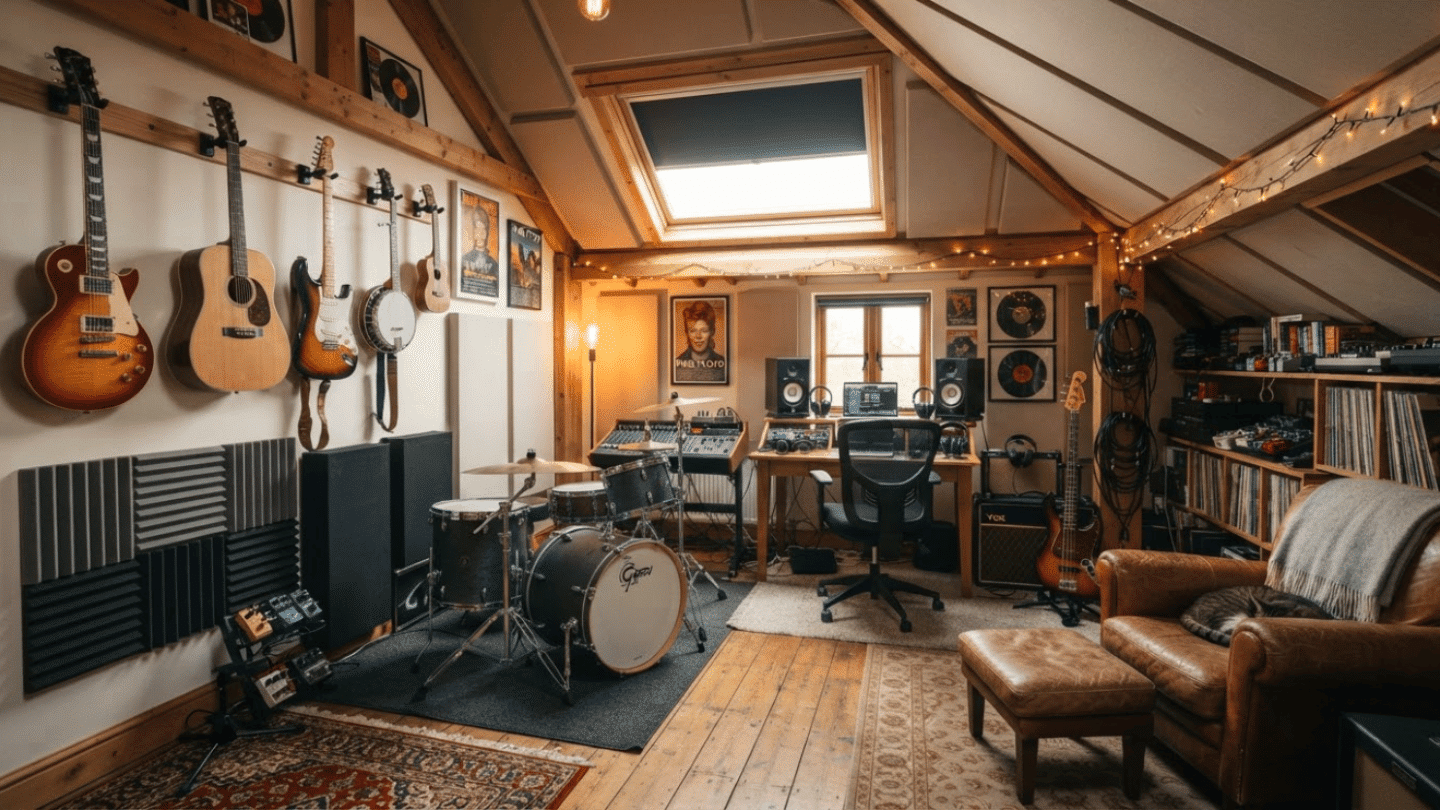
An attic music room creates a dedicated area for practicing instruments, recording, or enjoying music. Proper sound control, comfortable seating, and organized instrument storage improve the overall experience.
Acoustic panels and suitable insulation can help manage sound movement throughout the home. A thoughtful layout allows musicians to create a functional space without sacrificing comfort.
14. Attic Gym Room
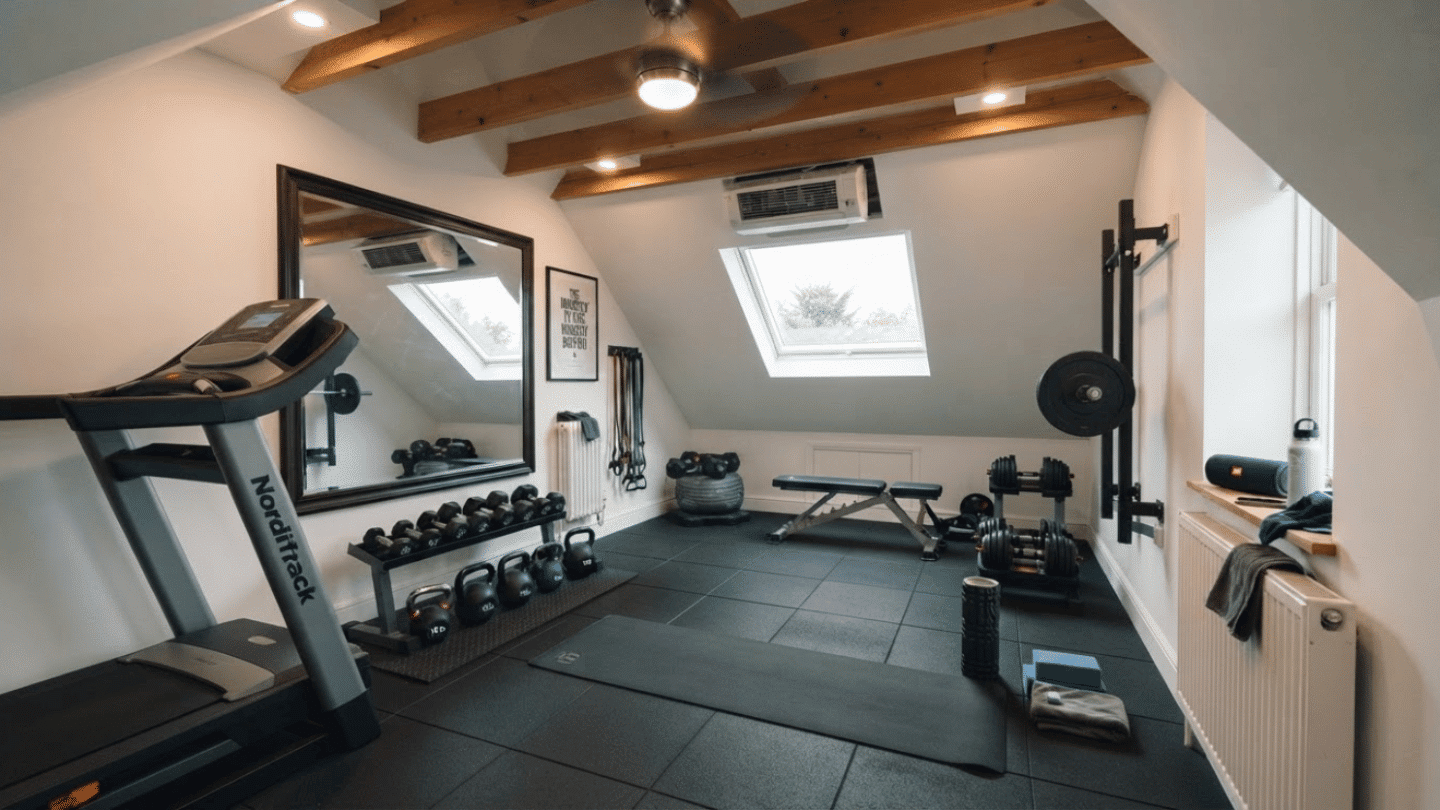
An attic gym room allows homeowners to create a convenient workout area without using another part of the house. Proper flooring, ventilation, and enough movement space are important for safe exercise.
Compact equipment such as adjustable weights, yoga mats, and resistance tools works well in attic environments. Mirrors and good lighting can also improve motivation and usability.
Tip: Check the attic floor strength before installing heavy fitness equipment.
15. Attic Meditation Room
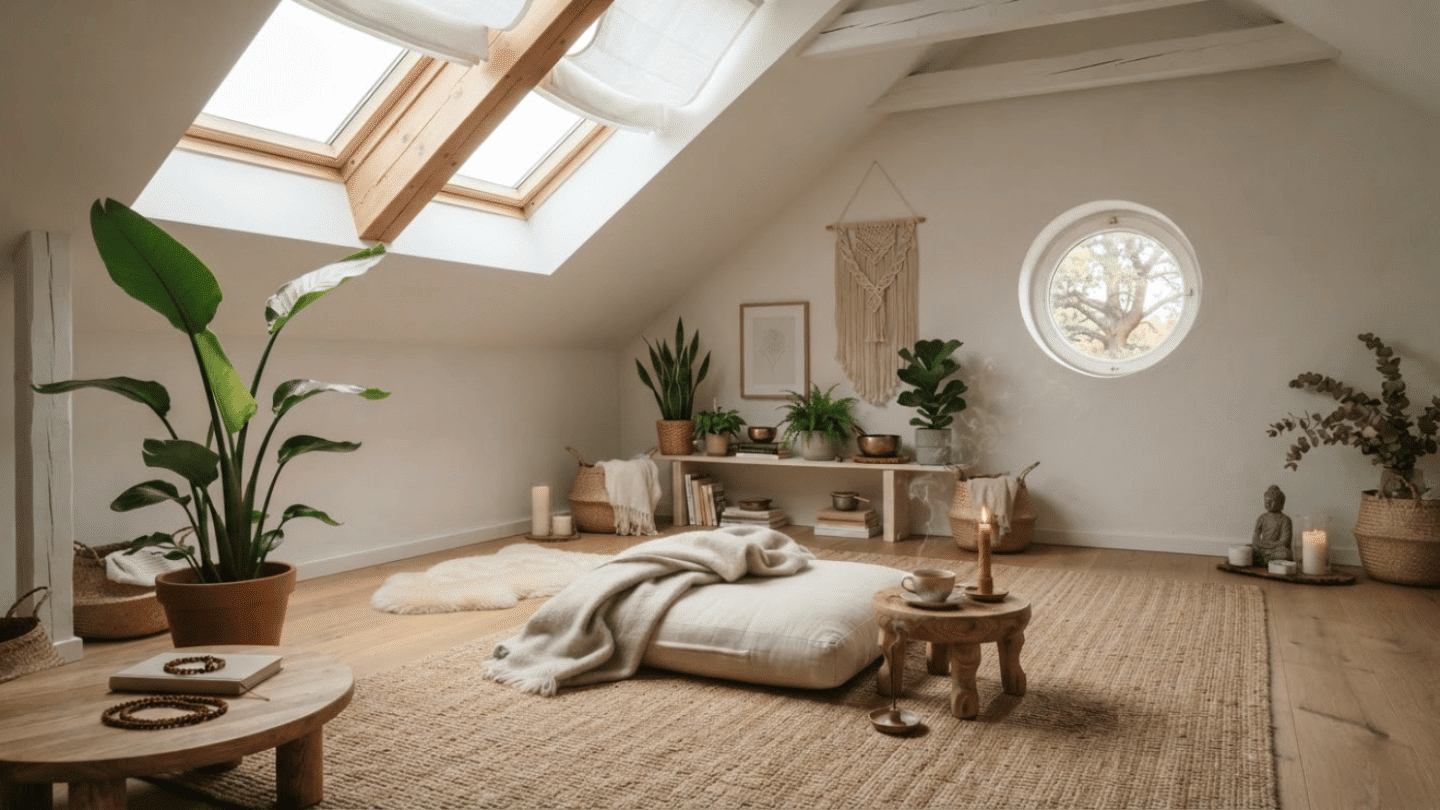
An attic meditation room creates a peaceful area dedicated to relaxation and mindfulness. Minimal furniture, calming colors, natural textures, and soft lighting help establish a comfortable atmosphere.
Plants, cushions, and simple décor can enhance the sense of calm without creating visual clutter. This type of attic conversion works well because the location naturally offers privacy.
Small Attic Room Ideas
Small attic rooms require thoughtful planning to use every corner. Smart furniture choices, creative storage solutions, and efficient layouts can transform limited spaces into comfortable, functional areas.
16. Low Ceiling Attic Design
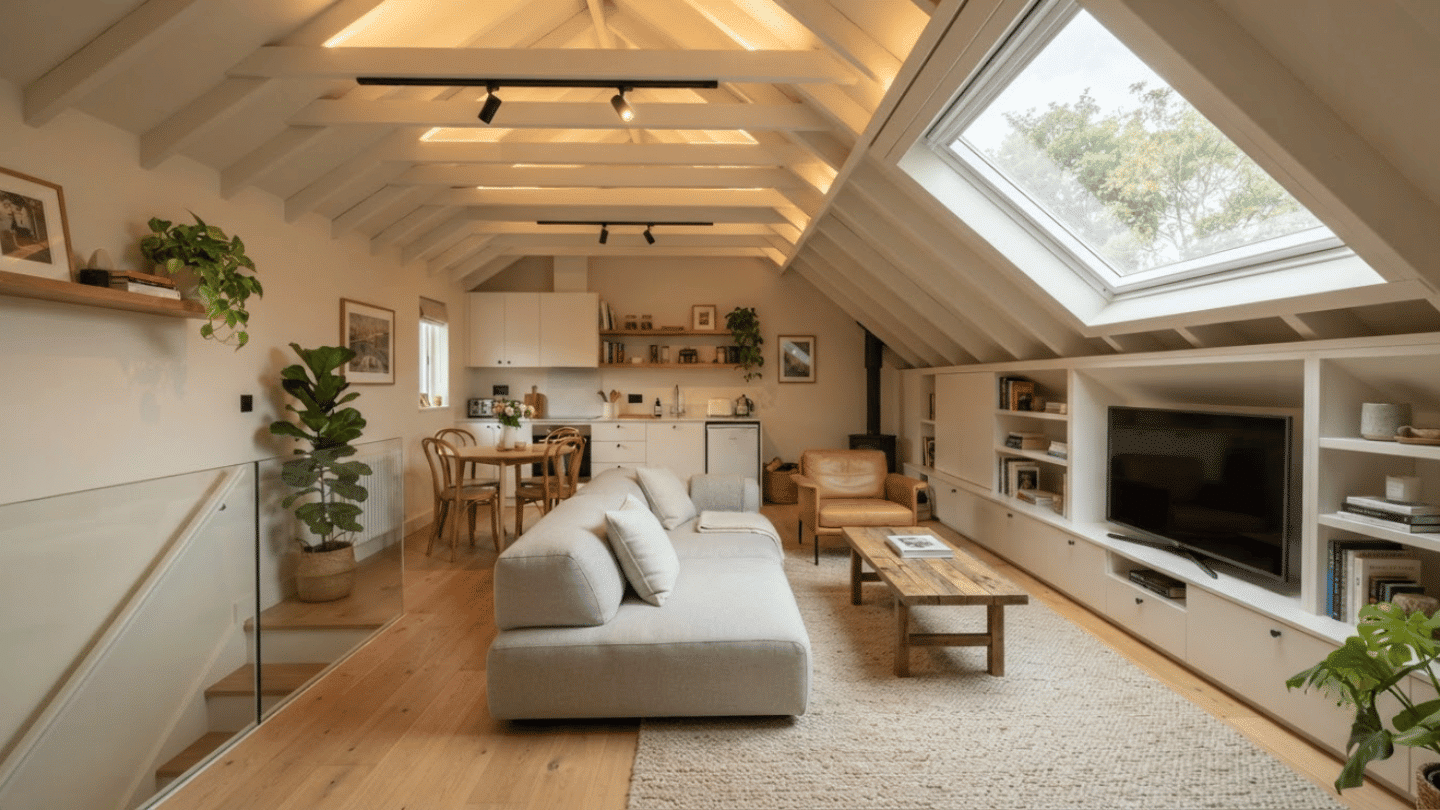
Low ceiling attic designs focus on making challenging spaces feel comfortable and practical. Choosing low-profile furniture, avoiding bulky pieces, and keeping the layout open can improve movement and visual space.
Built-in solutions work especially well under sloped ceilings because they use areas that are often difficult to decorate. Light colors and strategic lighting can also make the room appear brighter and more spacious.
Tip: Measure furniture height carefully before adding pieces to a low-ceiling attic.
17. Attic Room With Built-In Storage
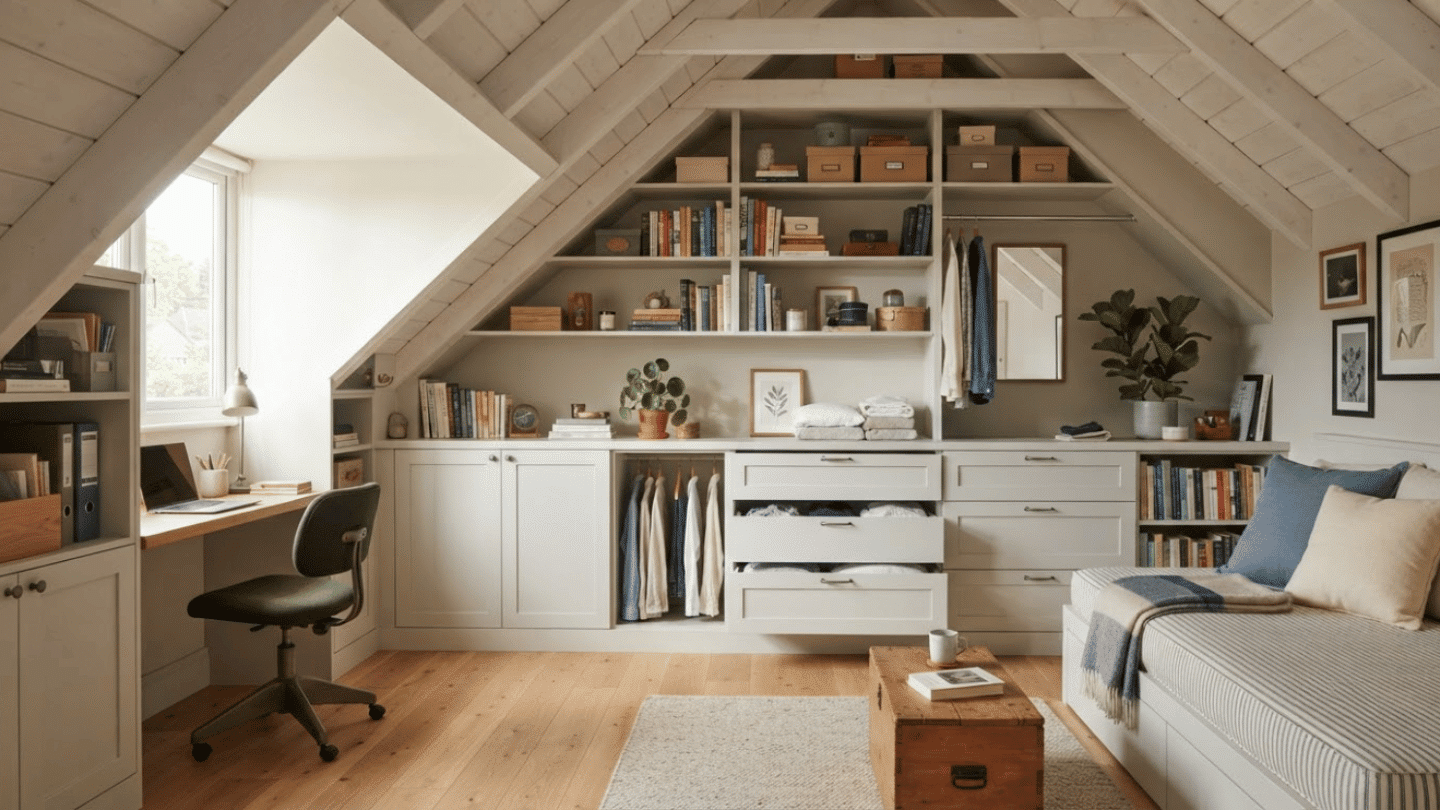
An attic room with built-in storage uses awkward corners and sloped walls. Custom cabinets, drawers, and shelving systems can provide practical storage without reducing available living space.
Built-in furniture creates a cleaner look than standalone storage units. It can also help homeowners organize clothing, books, office supplies, or everyday items more efficiently.
18. Attic Room With Window Seat
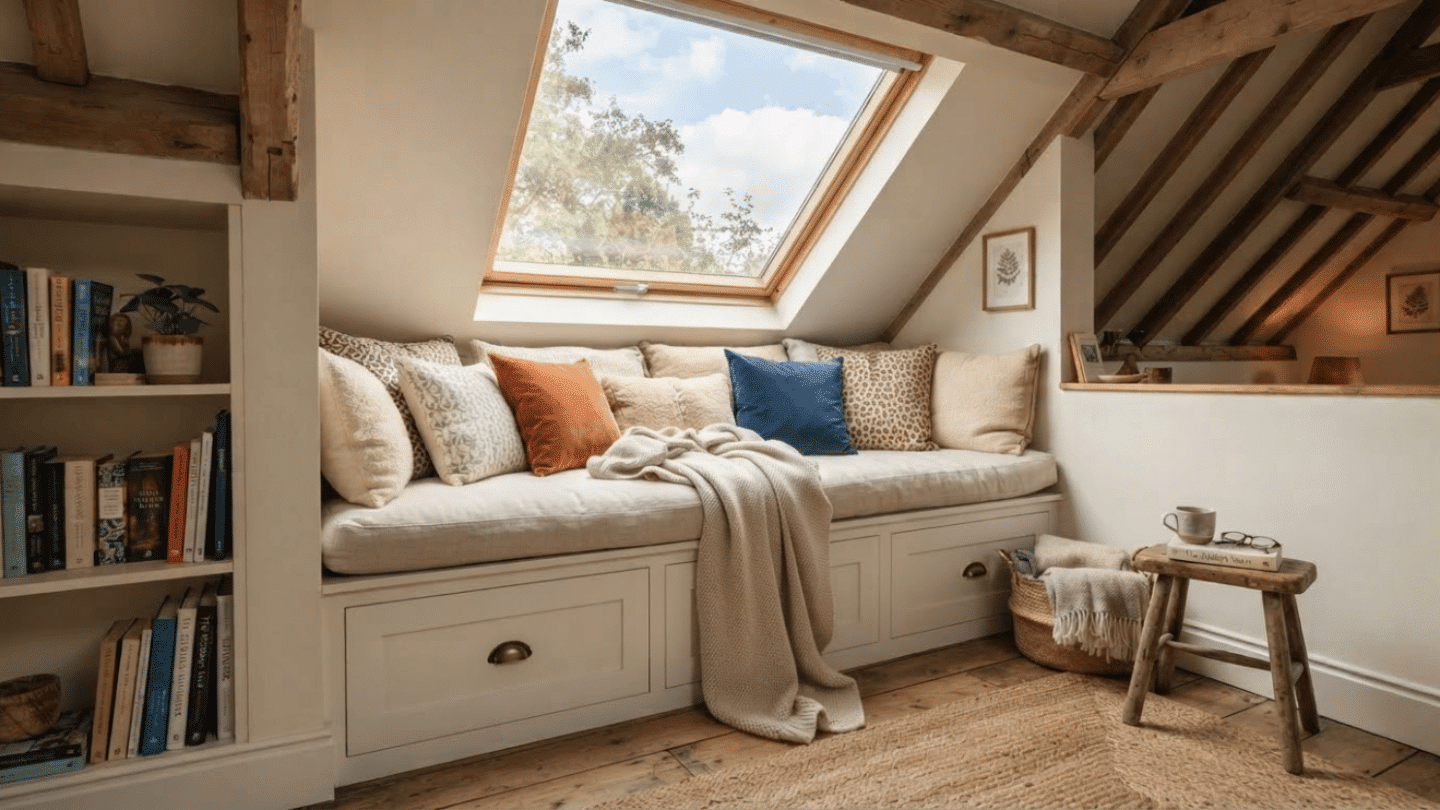
An attic room with a window seat combines comfort with smart space utilization. The area near a skylight or roof window can become a relaxing spot for reading, relaxing, or enjoying outdoor views.
Adding cushions, storage drawers, or soft fabrics can make the seating area more functional. This design feature adds character while helping unused corners serve a purpose.
Tip: Choose washable fabrics for window seats to make maintenance easier.
19. Budget-Friendly Attic Makeover
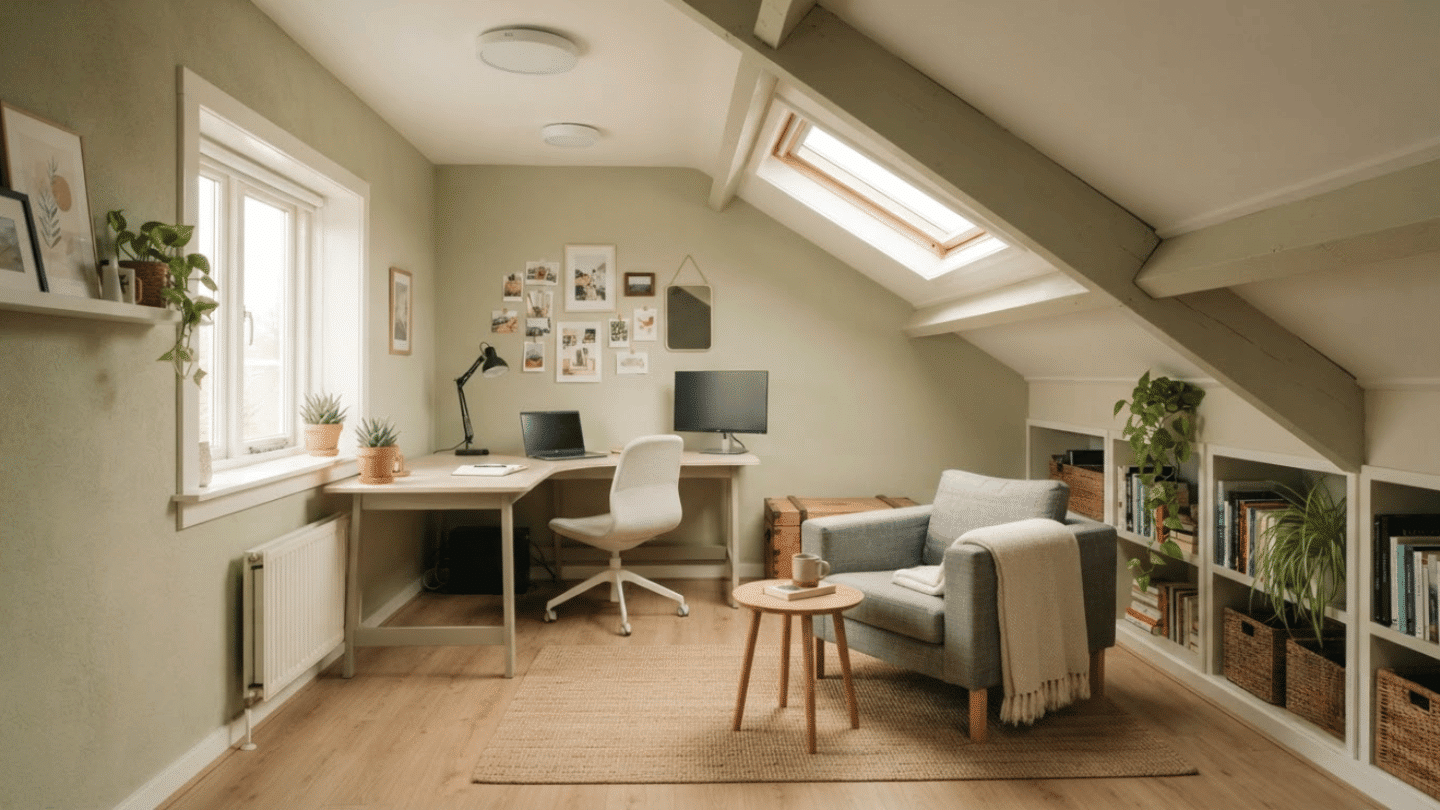
A budget-friendly attic makeover focuses on affordable changes that create a noticeable improvement. Fresh paint, updated lighting, simple furniture upgrades, and decorative touches can refresh the space without major expenses.
Prioritizing essential improvements like insulation and ventilation ensures long-term comfort. Small design updates can make an attic feel completely different while keeping renovation costs manageable.
20. Multi-Purpose Attic Room
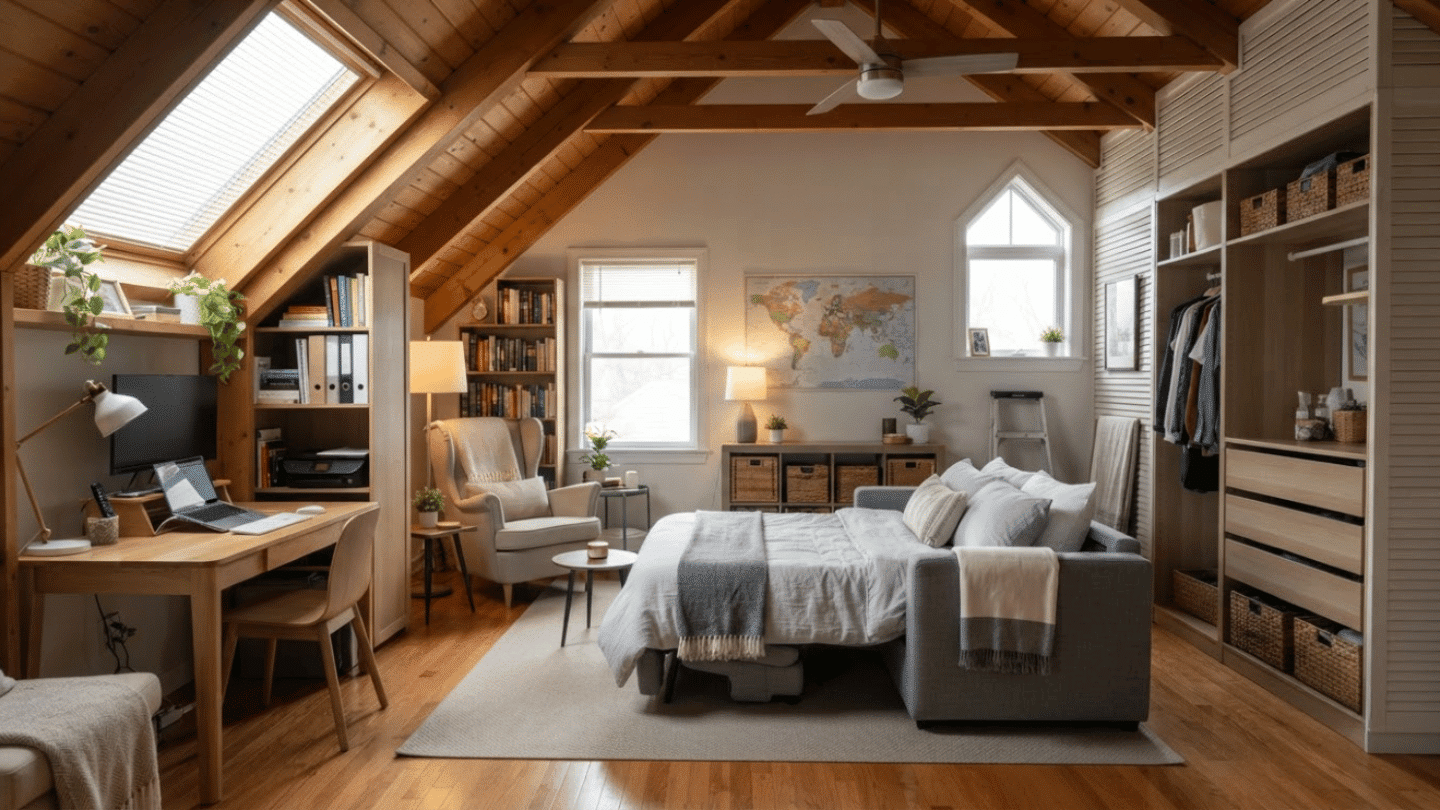
A multi-purpose attic room allows one space to support several activities. A flexible layout can combine a workspace, guest area, reading corner, or relaxation zone depending on household needs.
Multi-purpose furniture helps maintain organization. Foldable desks, sofa beds, and movable storage solutions allow the room to adapt easily over time.
21. Small Attic Guest Room
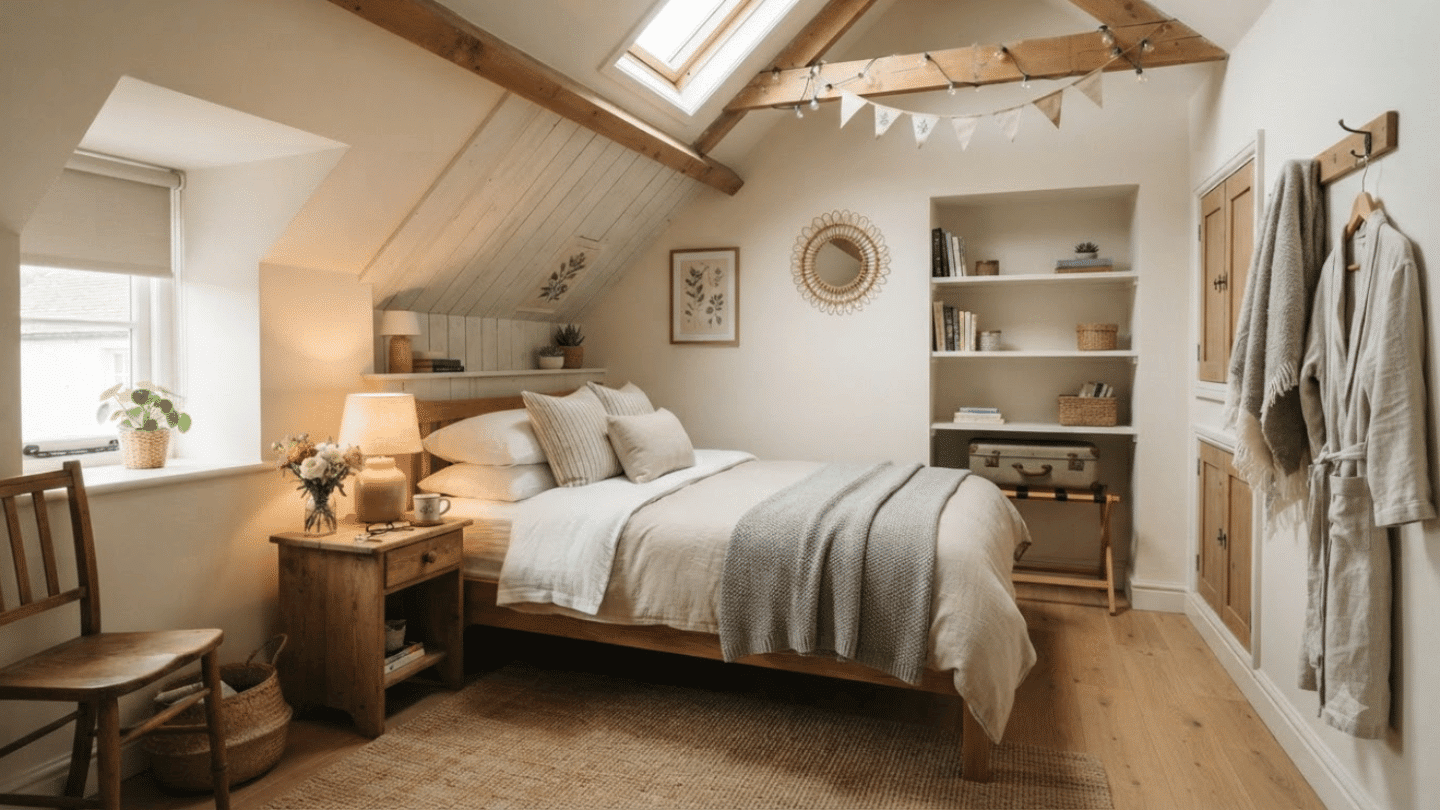
A small attic guest room creates a comfortable private area for visitors without requiring a large footprint. A compact bed, efficient storage, and simple décor can make the room feel welcoming.
Neutral colors and practical furniture help maximize available space. Adding quality bedding, proper lighting, and basic amenities can significantly improve the guest experience.
Modern And Stylish Attic Room Ideas
Modern attic rooms combine smart layouts with contemporary design elements. Clean lines, practical furniture, and creative finishes can turn unusual attic structures into stylish and comfortable living areas.
22. Minimalist Modern Attic Room
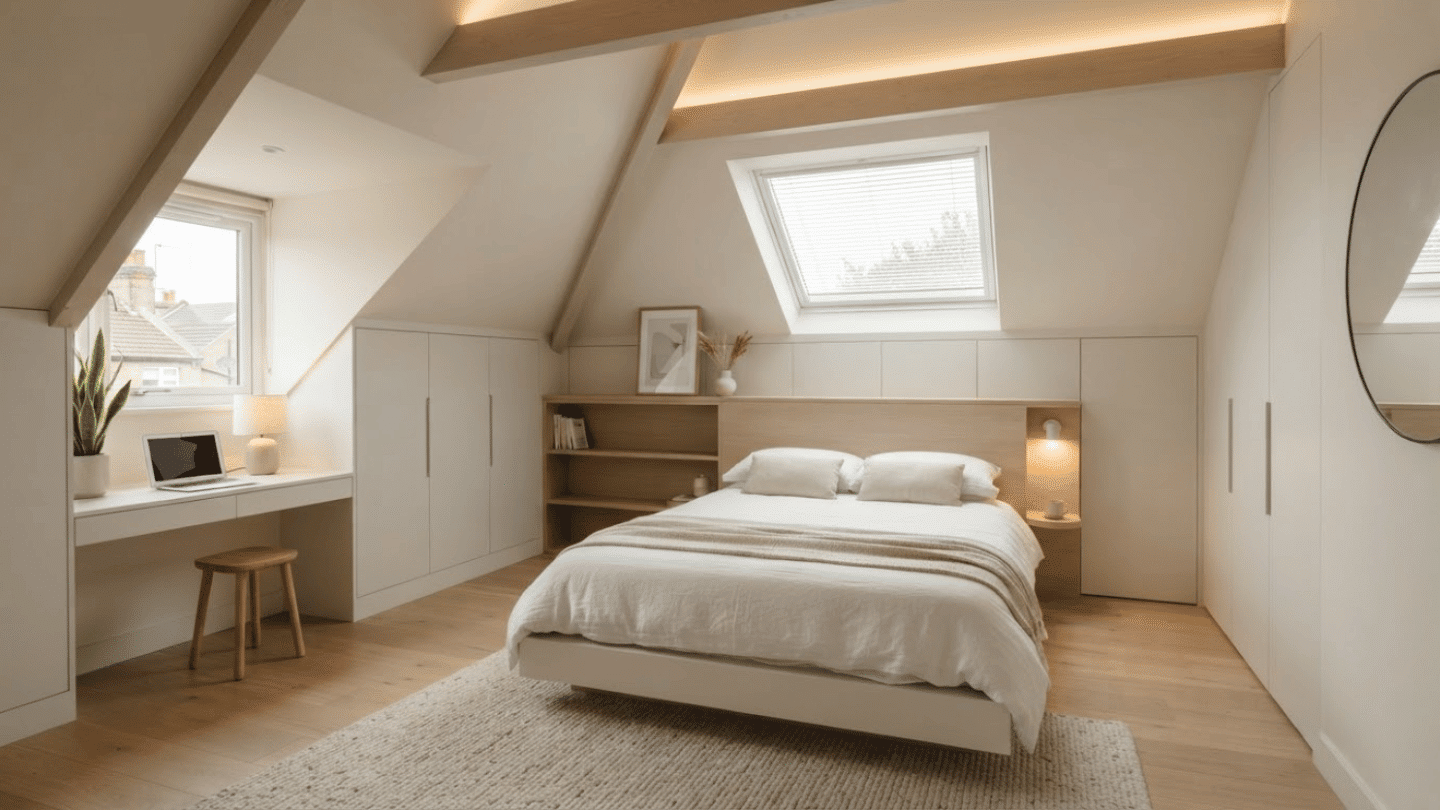
A minimalist modern attic room focuses on simplicity, functionality, and an uncluttered appearance. Neutral colors, streamlined furniture, and carefully selected décor create a calm, organized environment.
This design approach works especially well in smaller attics because fewer items make the room appear larger. Smart storage solutions maintain a clean look while keeping essential belongings accessible.
23. Modern Black And White Attic
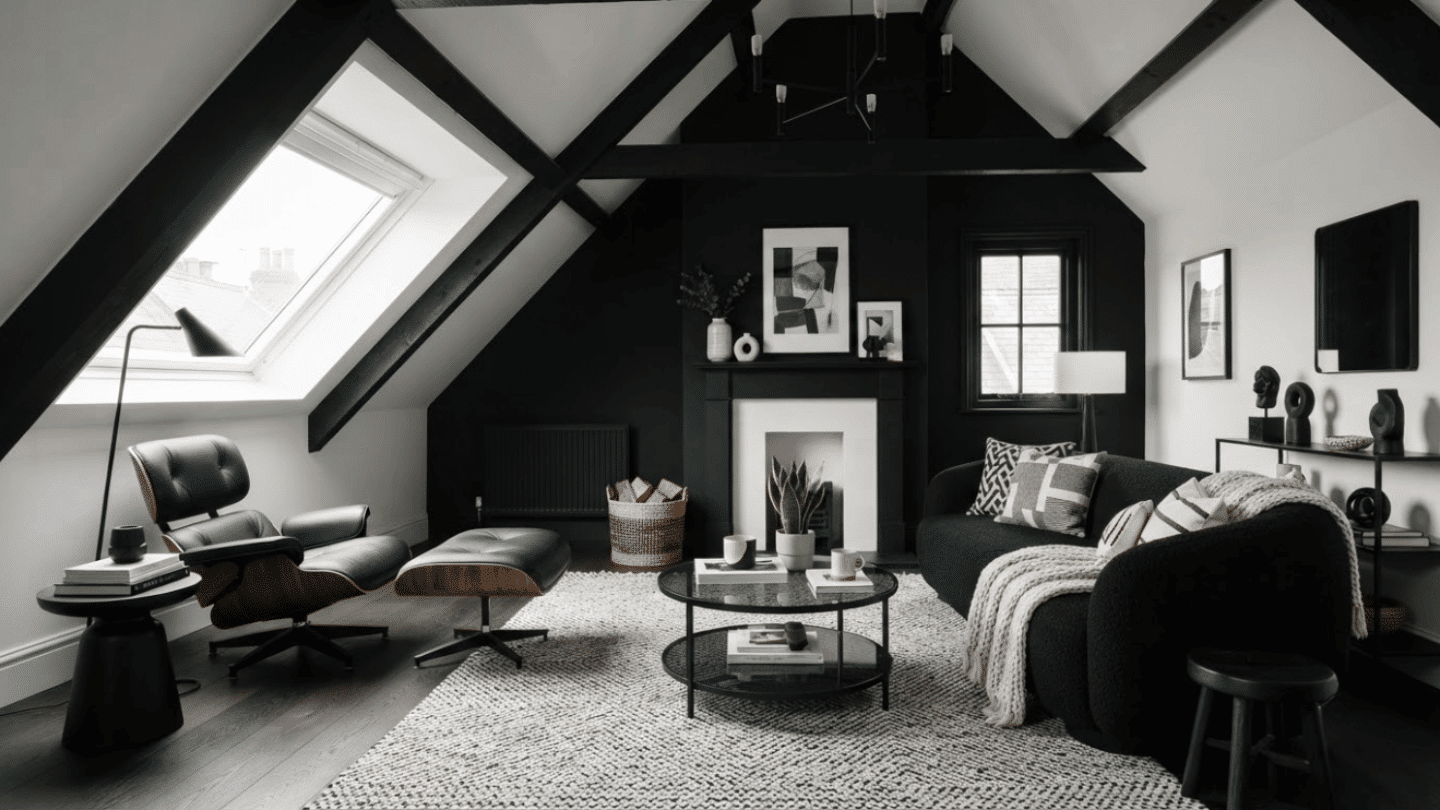
A modern black-and-white attic uses contrasting tones to create a bold, stylish look. Dark accents, light walls, and contemporary furniture can add depth without overwhelming the room.
Balanced lighting is important because darker elements can reduce brightness in smaller attic spaces. Adding textures through fabrics, rugs, and materials prevents the design from feeling too plain.
Tip: Use white as the dominant shade to keep the attic feeling open.
24. Industrial Style Attic Room
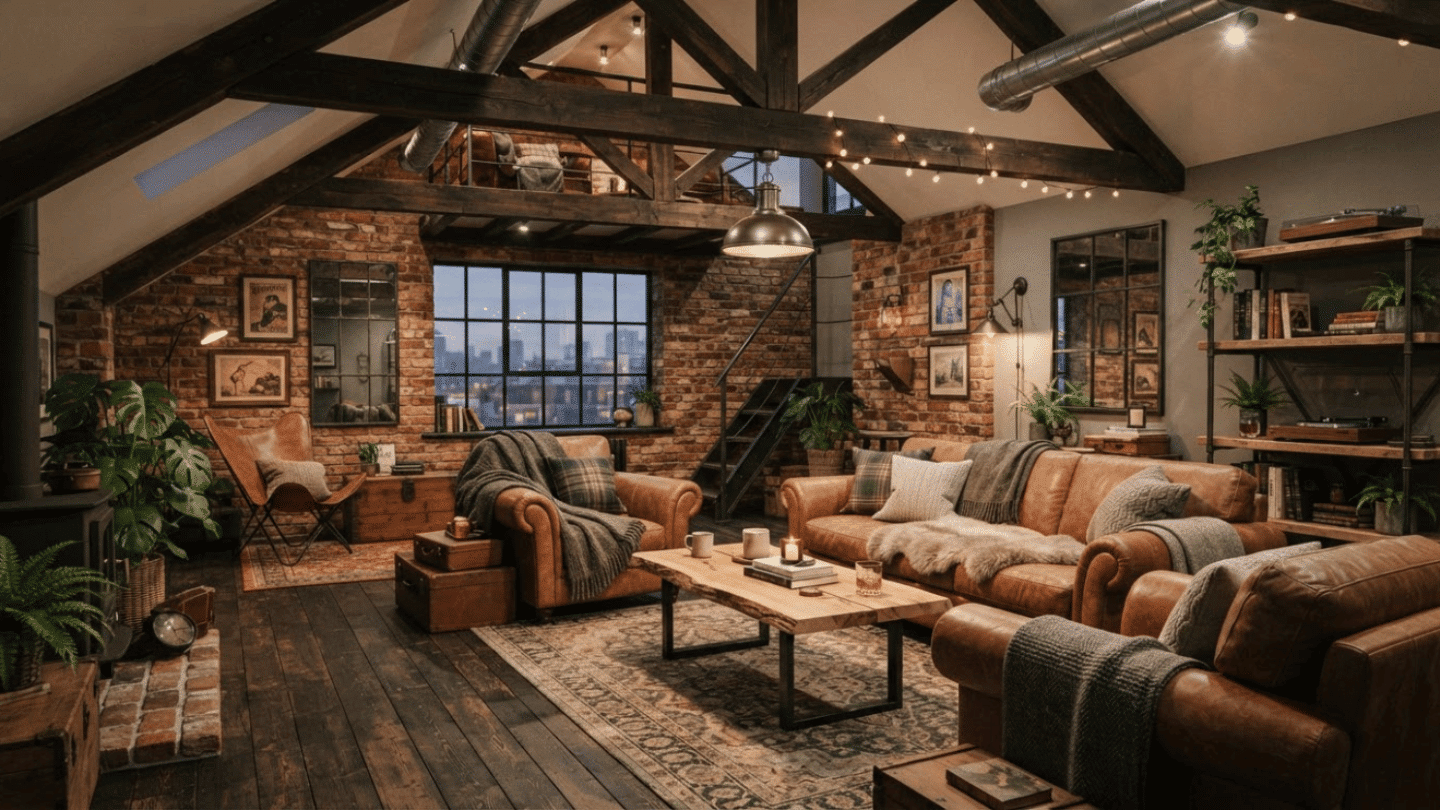
An industrial style attic room combines raw materials with modern comfort. Features like exposed beams, metal accents, brick textures, and simple furniture can create an urban-inspired atmosphere.
This design works well in attics with visible structural elements because those details add character. Soft furnishings, warm lighting, and comfortable seating help balance the harder industrial finishes.
25. Luxury Attic Lounge Space
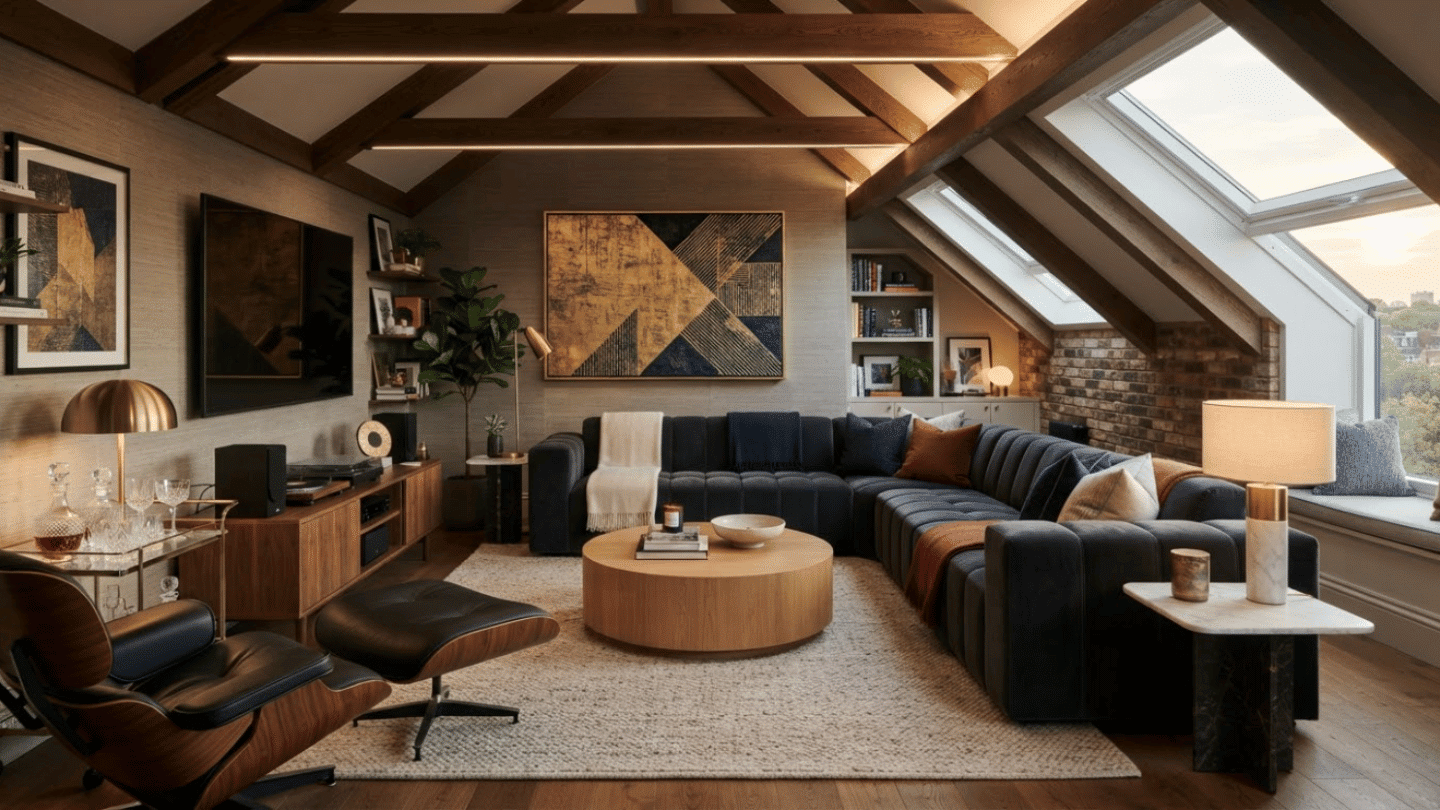
A luxury attic lounge space creates a private area for relaxation, entertainment, or social gatherings. Comfortable seating, premium fabrics, elegant lighting, and stylish décor can turn an unused attic into a sophisticated retreat.
Careful furniture placement helps maintain an open feel while providing enough space for everyday activities. Adding features like a small bar area, entertainment system, or statement artwork can enhance the overall experience.
26. Bohemian Attic Space
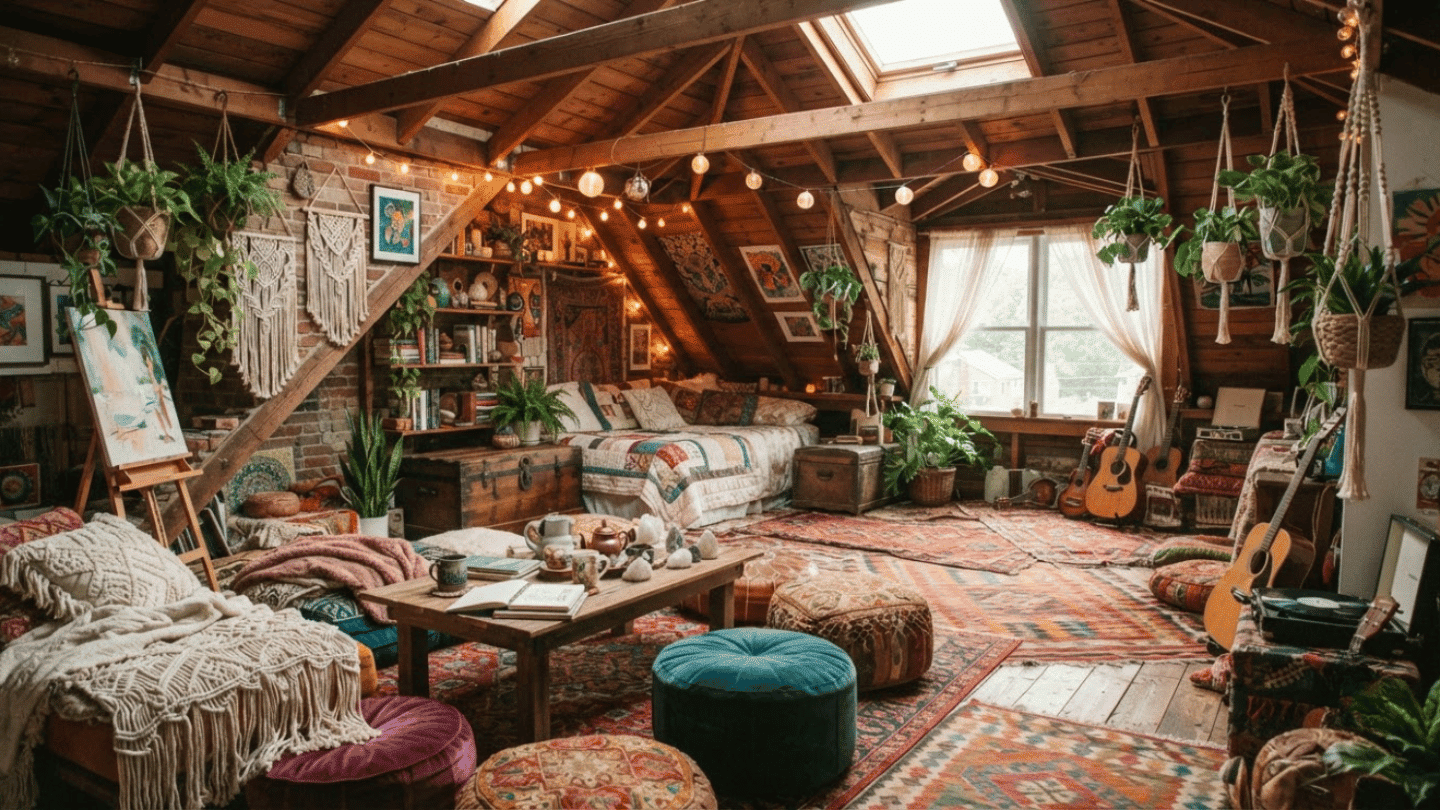
A bohemian attic space focuses on creativity, comfort, and personal expression. Layered textiles, patterned rugs, plants, handmade décor, and natural materials can create a relaxed and artistic atmosphere.
This style allows flexibility because different colors, textures, and collected pieces can work together. Comfortable seating areas and soft lighting make the attic feel warm and welcoming.
Tip: Mix different textures while keeping a consistent color palette to avoid visual clutter.
27. Nature-Inspired Attic Room
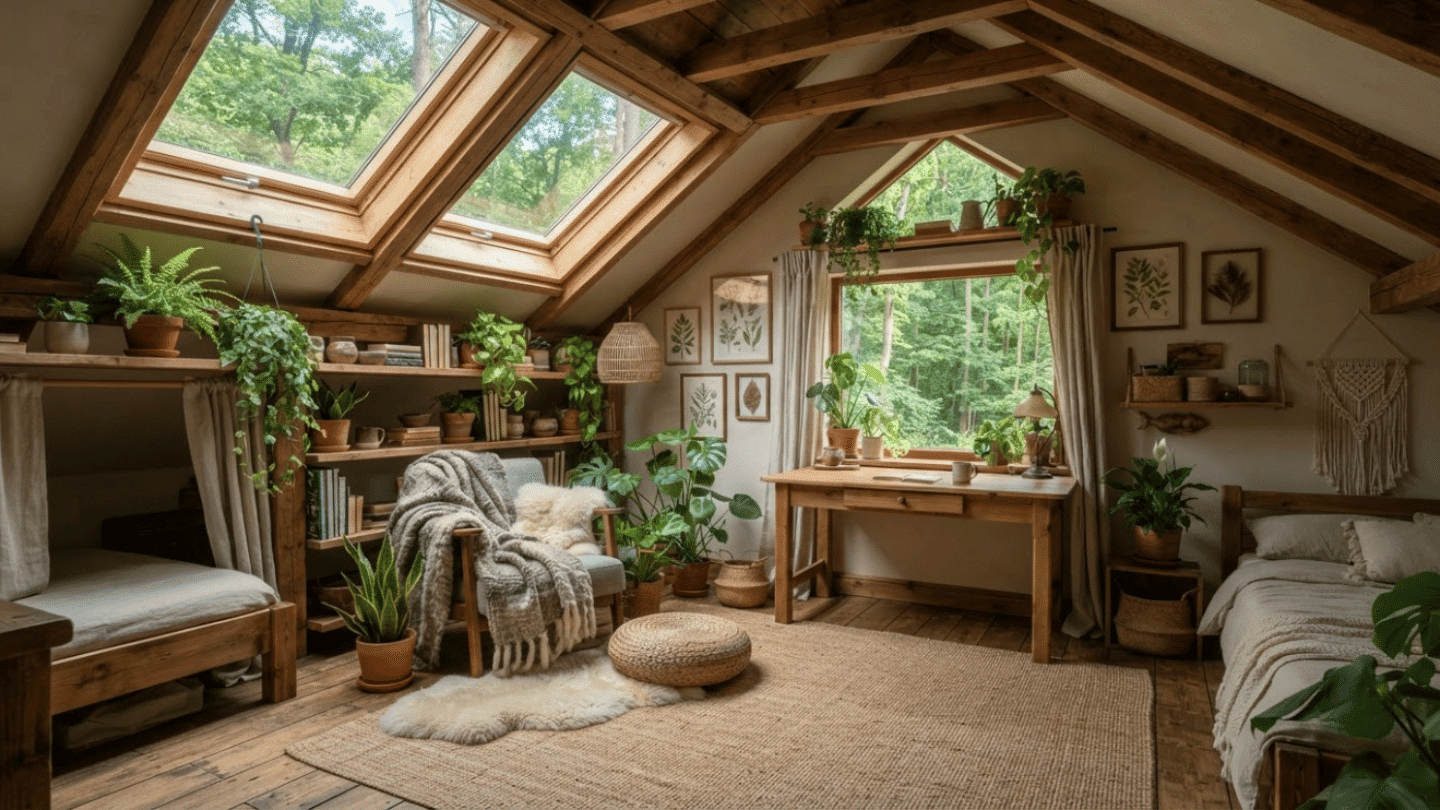
A nature-inspired attic room brings outdoor elements into the home through natural materials, earthy colors, and greenery. Wooden furniture, woven textures, and indoor plants can create a fresh and peaceful environment.
Large windows or skylights help connect the space with natural surroundings. Sustainable materials and simple décor choices can improve comfort while creating a relaxing atmosphere.
Creative Attic Conversion Ideas
Creative attic conversions allow homeowners to use their space in unique ways. These designs focus on personalization, flexibility, and making the most of every available area.
28. Attic Walk-In Closet
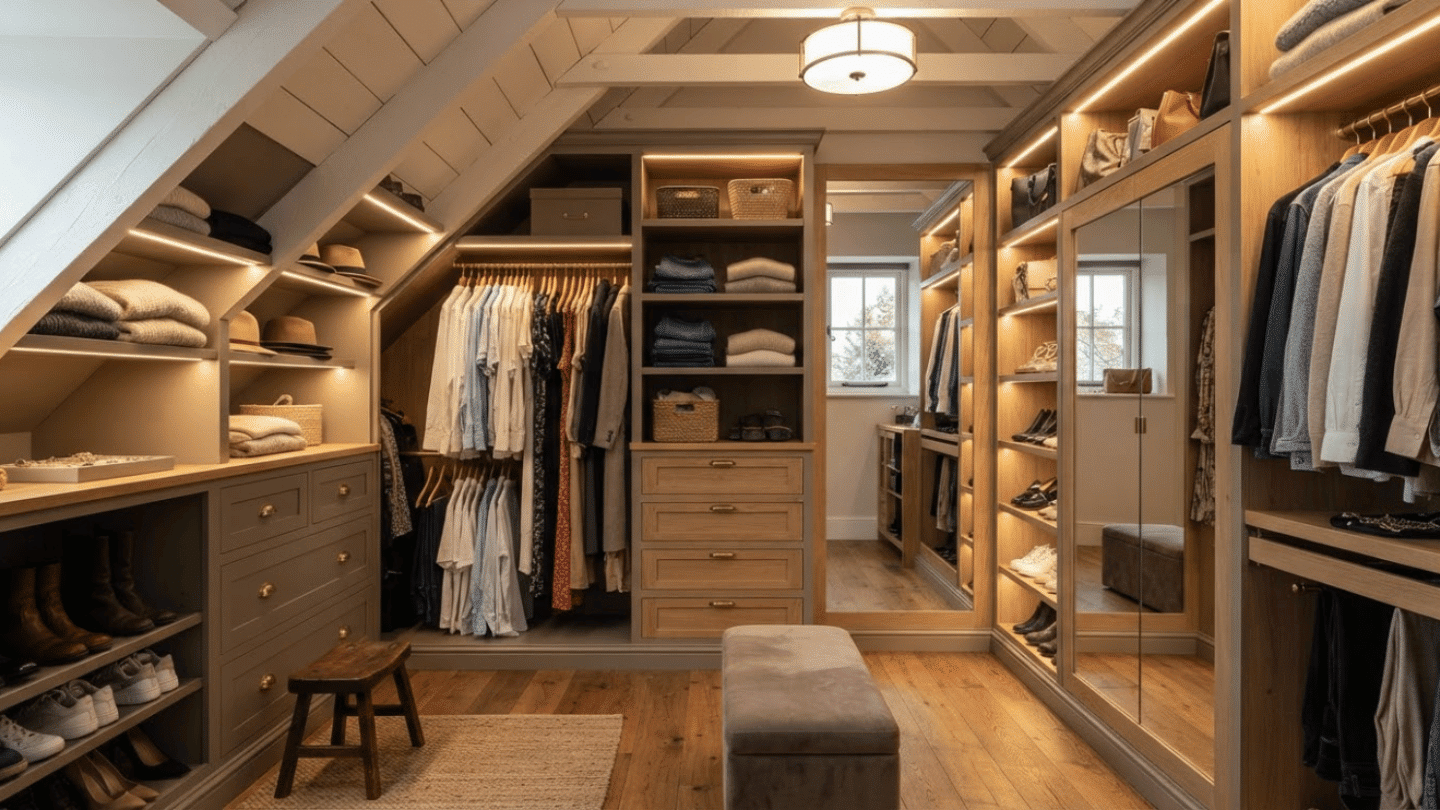
An attic walk-in closet transforms unused storage space into an organized clothing area. Custom wardrobes, shelves, drawers, and proper lighting can create a practical dressing solution.
Sloped ceilings can become an advantage when paired with customized storage designs. Using every corner efficiently helps create a functional closet without wasting valuable space.
29. Attic Dressing Room
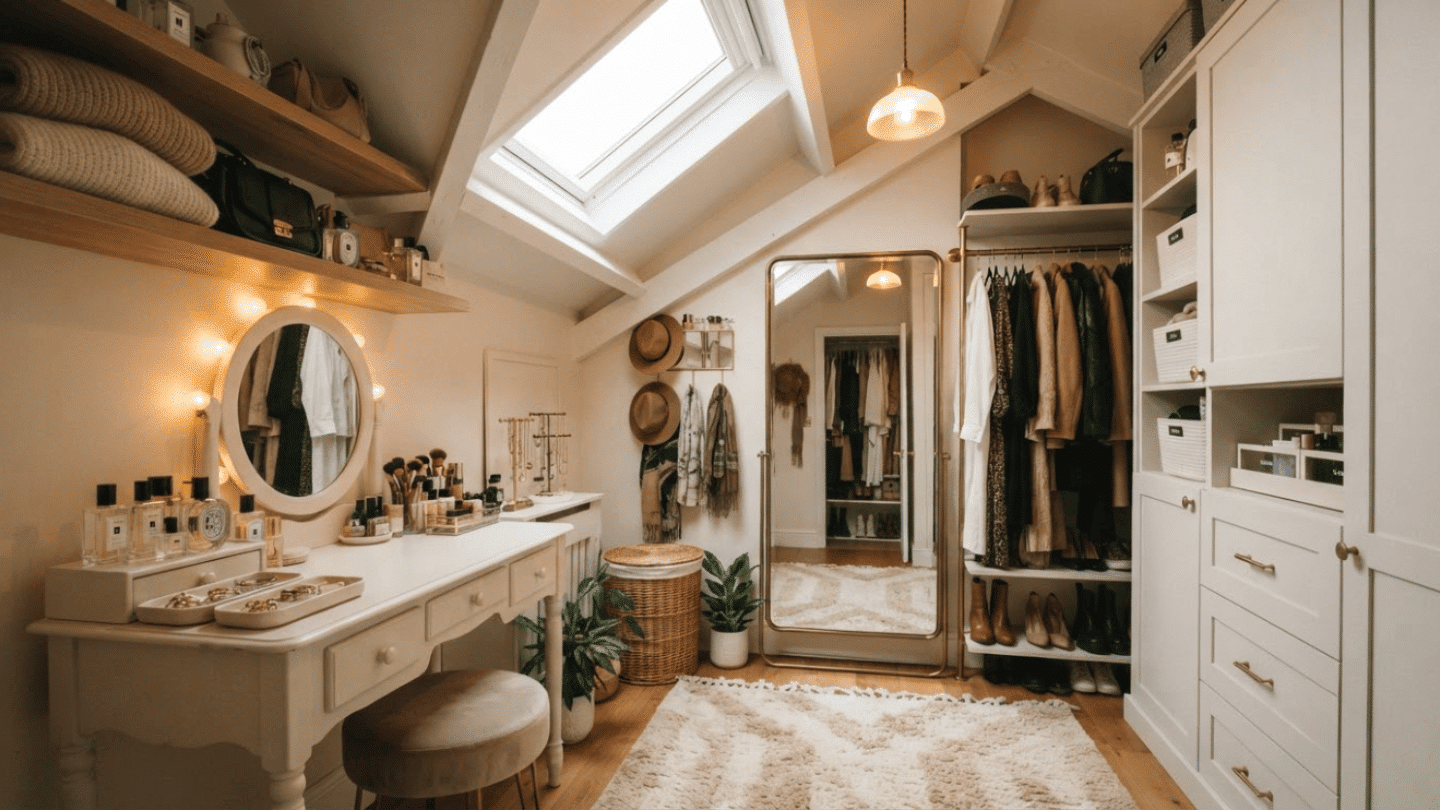
An attic dressing room provides a dedicated area for preparing, organizing clothes, and personal styling. A vanity, full-length mirror, storage cabinets, and comfortable lighting can improve functionality.
Smart layouts help prevent the room from feeling crowded. Built-in drawers and open shelving keep accessories, shoes, and clothing items organized while maintaining a neat appearance.
Tip: Install bright but soft lighting around mirrors for better visibility.
30. Attic Entertainment Room
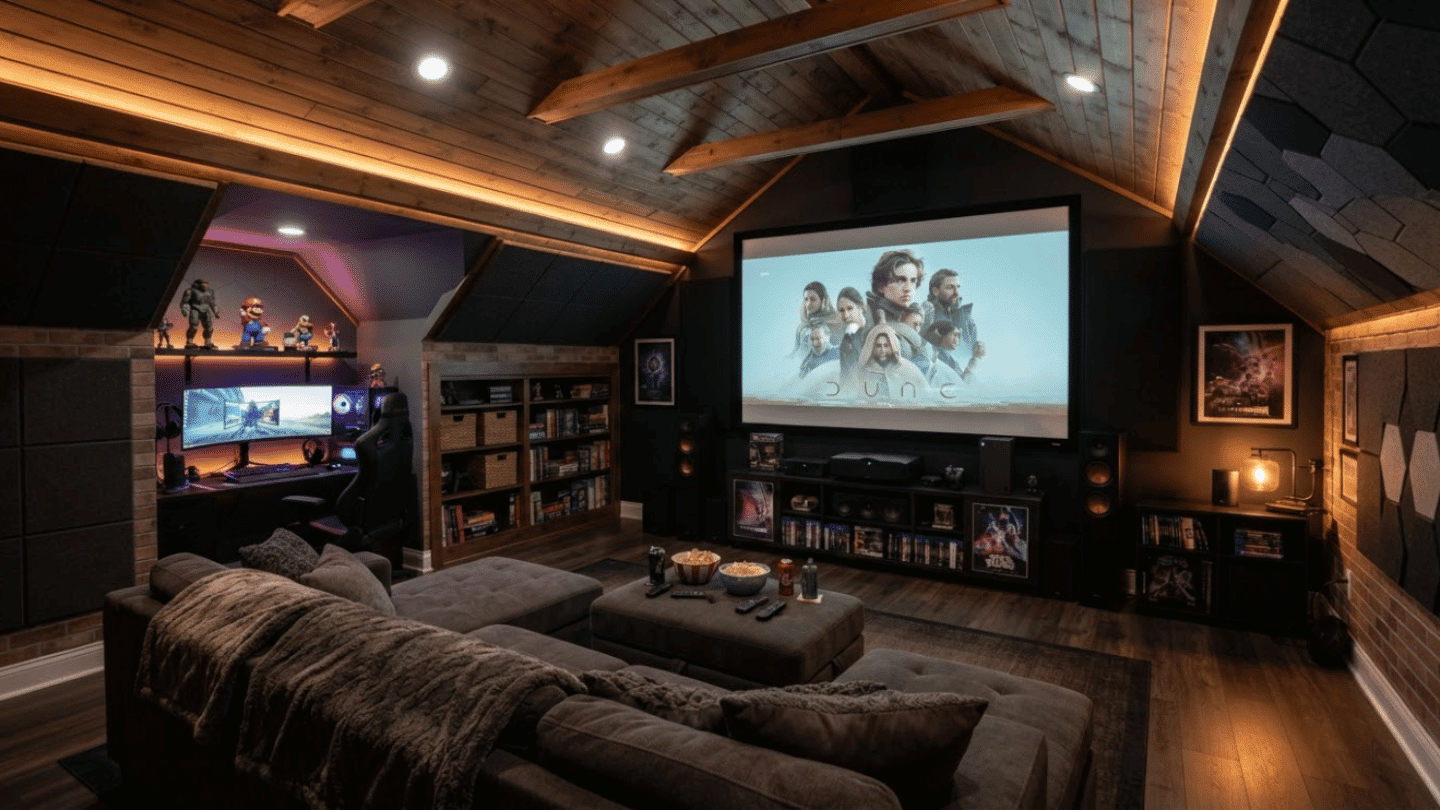
An attic entertainment room creates a private space for movies, gaming, or family activities. Comfortable seating, a suitable screen setup, and controlled lighting can improve the experience.
Sound management is important, especially in upper-level spaces. Adding acoustic materials, device storage, and flexible seating lets the room support different entertainment needs.
31. Attic Guest Apartment
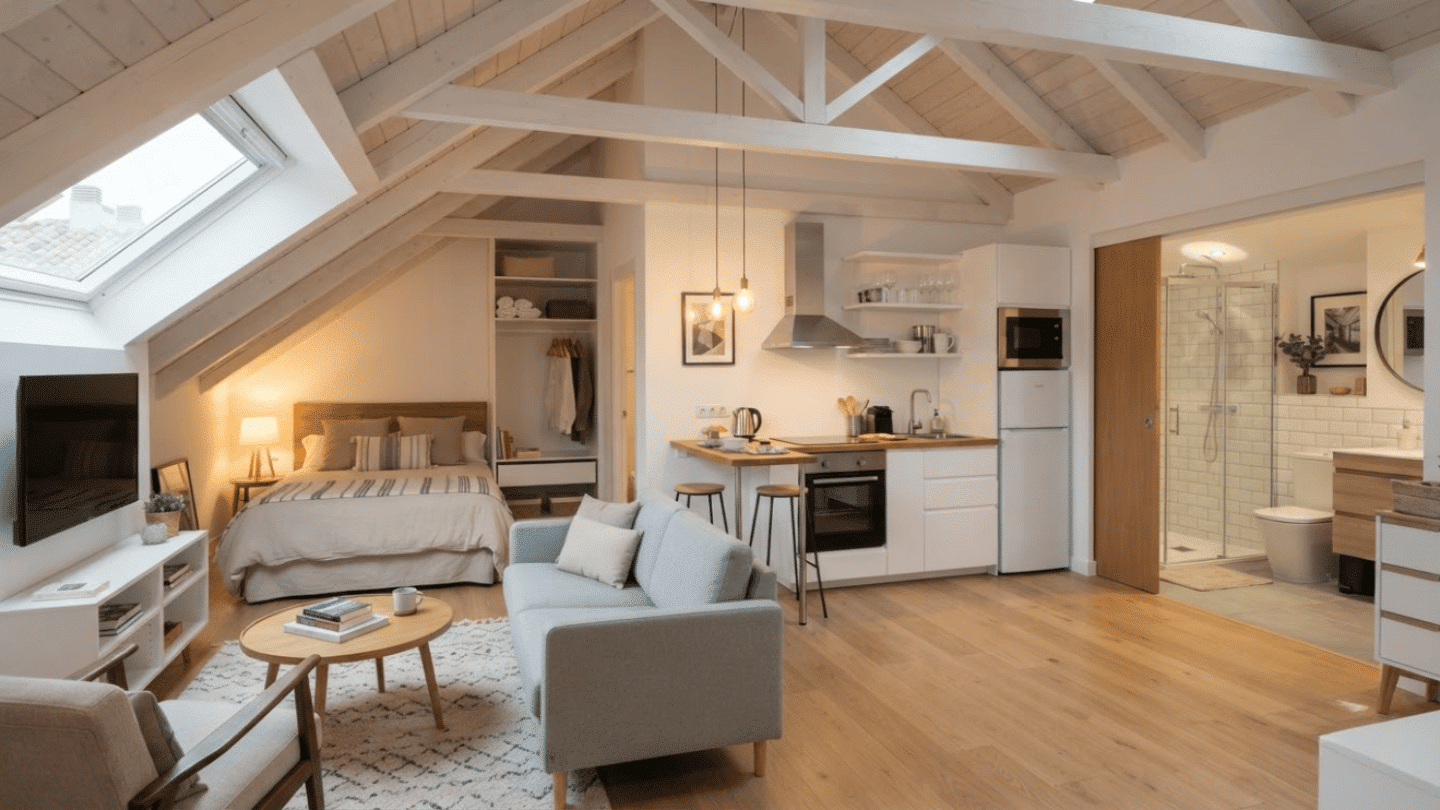
An attic guest apartment turns a larger attic into an independent living area. A bedroom zone, seating area, storage, and bathroom facilities can create a comfortable private space for guests or extended family.
Proper planning is essential for this type of conversion. Evaluate plumbing, electrical systems, insulation, and ventilation before starting the renovation.
32. Eco-Friendly Attic Room
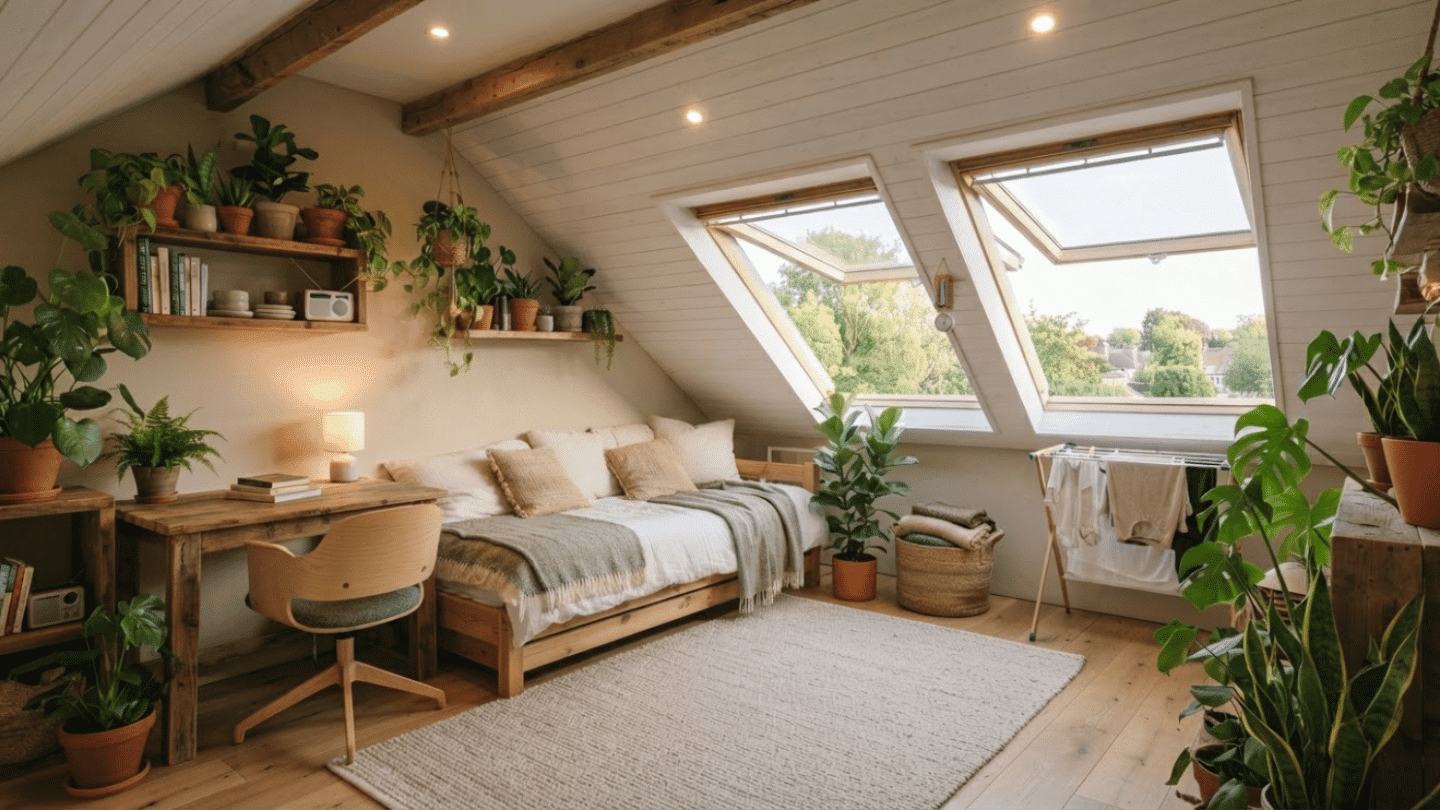
An eco-friendly attic room focuses on energy efficiency and responsible design choices. Sustainable materials, efficient windows, natural ventilation, and energy-saving lighting can reduce environmental impact.
Good insulation plays an important role in maintaining comfortable temperatures throughout the year. Adding plants and natural materials can also improve the indoor atmosphere while creating a healthier living environment.
Tip: Choose durable materials that require less replacement over time.
33. Attic Room With Skylights
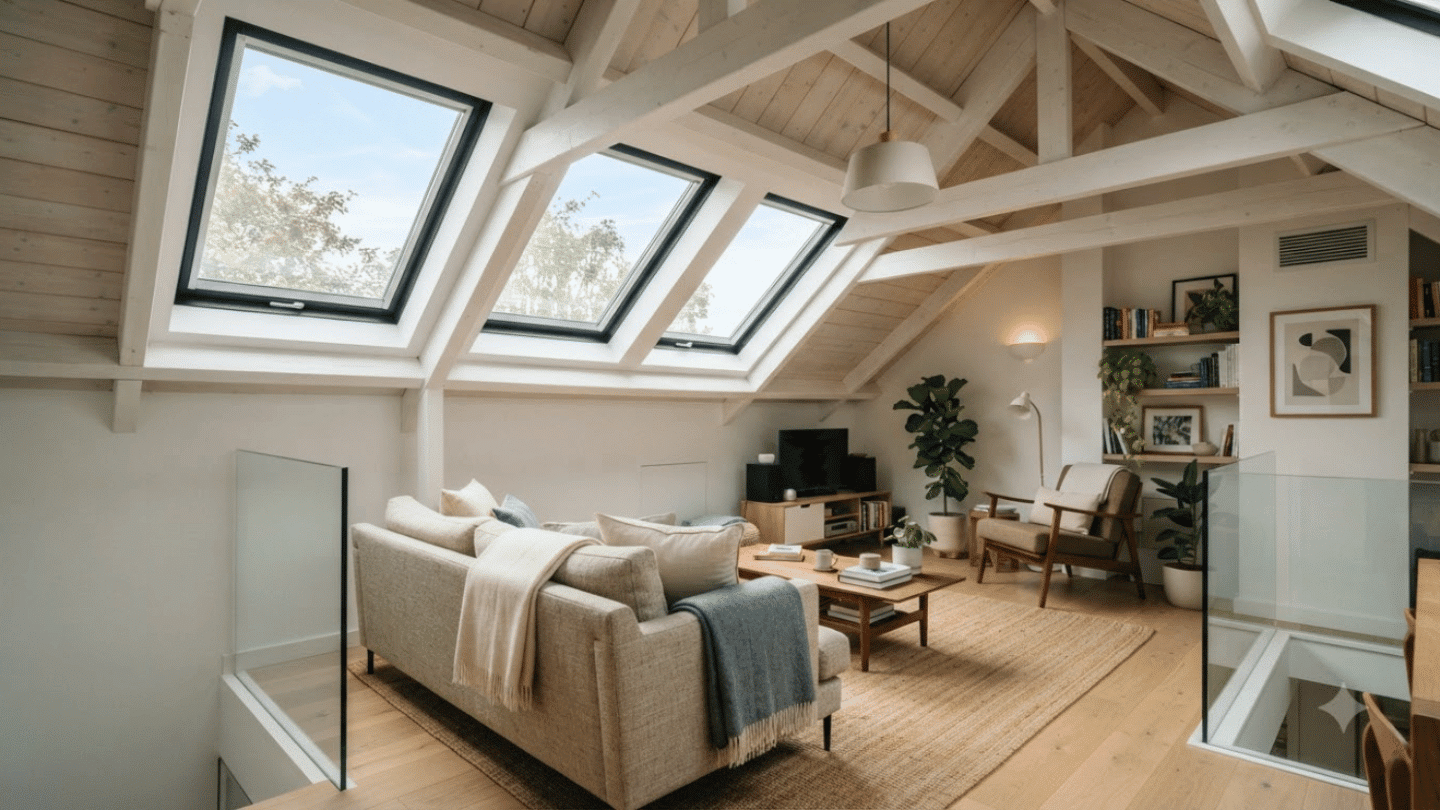
An attic room with skylights uses natural light to make the space feel brighter and more open. Roof windows can improve ventilation while creating a stronger connection with outdoor views.
Skylights work especially well in compact attic areas where wall windows may not be possible. Proper placement helps distribute daylight evenly and can reduce the need for artificial lighting during the day.
Attic Bedroom Conversion Cost Breakdown
Attic size, ceiling height, and access all shape the price of a bedroom conversion. A raw, unfinished attic room costs more than one that’s already floored and framed.
Cosmetic updates like painting and styling an attic bedroom are realistic DIY projects. Structural work, electrical wiring, and egress windows involve permits and codes, so these steps call for a licensed contractor.
A full attic-to-bedroom conversion typically runs $20,000 to $50,000, or $100 to $200 per square foot for a finished space with insulation, flooring, and HVAC included.
A basic finish-out without major structural changes can cost closer to $30 to $60 per square foot, making small updates a practical starting point for many homeowners.
Design Tips For Small Attic Rooms
Small attic rooms require thoughtful planning because limited floor space and sloped ceilings can affect layout and comfort. Smart design choices help create a functional, open, and inviting atmosphere.
- Use Light Colors: Make the attic feel larger with soft, bright shades.
- Choose Multi-Functional Furniture: Save space with pieces serving multiple practical purposes.
- Maximize Vertical Storage: Use walls efficiently with shelves, cabinets, and built-ins.
- Add Mirrors Strategically: Create depth and reflect natural light throughout the room.
- Keep Furniture Low: Fit under sloped ceilings with compact, lower-profile designs.
- Improve Natural Lighting: Add windows or skylights to brighten the space.
Small attic rooms can become comfortable spaces with the right design approach and careful organization. Balancing storage, lighting, and furniture choices creates a practical room without making it feel cramped.
Final Thoughts
An attic room can turn unused space into one of the most valuable areas in your home. With thoughtful planning, the right layout, and practical design choices, it can become a comfortable bedroom, office, retreat, or creative space.
Smart upgrades like proper insulation, efficient storage, and natural lighting improve both appearance and everyday comfort. A well-designed attic transformation also adds long-term value to your property.
Whether your space is large or compact, the right ideas can help you create a room that feels intentional and welcoming.
Ready to transform your unused attic? Start by checking your space, planning your layout, and choosing a design that fits your lifestyle.
Share your favorite attic room idea in the comments below.
Frequently Asked Questions
Can You Put Too Much Insulation in An Attic?
Yes, too much insulation can cause problems if it blocks ventilation. Proper airflow between insulation and the roof is essential to prevent moisture buildup, mold growth, and reduced energy efficiency.
Do I Need a Permit to Install an Attic Ladder?
It depends on local building regulations. Many areas do not require a permit for a simple attic ladder installation, but structural changes or creating living space may need approval.
What Furniture Works Best in An Attic Room?
Low-profile furniture works best in attic rooms because it fits under sloped ceilings. Choose compact beds, built-in storage, small desks, and multifunctional pieces to maximize available space.