
Most people encounter Baroque fashion through costume drama and assume it was simply the aesthetic of the excessively wealthy wearing more.
Baroque fashion was more structured than that: a legally enforced dress code in which specific fabrics, colors, and trims were restricted to particular social ranks. A velvet coat wasn’t a style choice; it was a declaration of position.
That said, the era varied significantly by country and decade; England loosened its restrictions earlier than France or Spain.
What follows covers the characteristics, the comparisons, and where the style still shows up today.
What Is Baroque Fashion Style? Its History and Origins
Baroque fashion is a European clothing style that developed between roughly 1620 and 1700, defined by heavy ornamentation, dramatic silhouettes, and the deliberate use of luxury materials.
Its roots lie in the early 17th-century European courts, where dress first became a tool of political display rather than personal taste.
The style peaked under Louis XIV at Versailles: Hyacinthe Rigaud’s 1701 portrait of the king shows his coronation robe embroidered with the royal fleur-de-lis, paired with signature Baroque markers like the cravat and red heels.
By the mid-1700s, the style had softened but not disappeared, as seen in Pompeo Batoni’s 1765 portraits of English gentlemen on the Grand Tour, painted just as Rococo elegance took hold.
Key Characteristics of Baroque Fashion/ What defines Baroque style?
Few elements defined how Baroque fashion looked and functioned: the fabrics worn, the silhouettes built, the ornamentation applied, and the colors chosen.
Each was deliberately shaped as much by law and social hierarchy as by aesthetic preference:
1. Fabrics and Materials
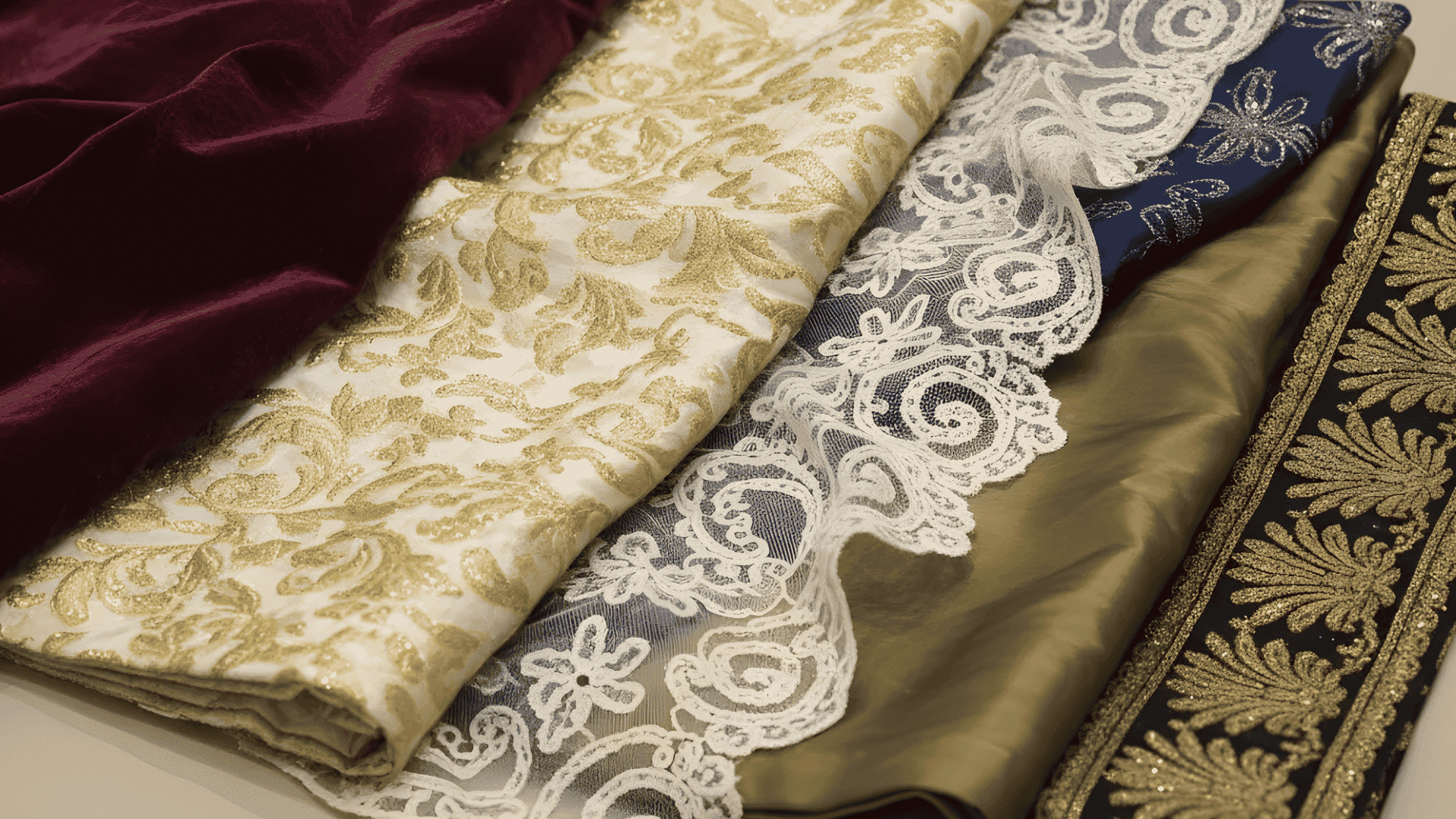
The materials used in Baroque fashion were expensive, imported, and often legally restricted. Fabric choice was one of the clearest ways rank was made visible at a glance.
- Silk: Smooth and lustrous, used for gowns, linings, and outerwear. Imported primarily from Asia.
- Velvet: Dense and heavy, it held embroidery exceptionally well, making it the preferred base for formal court dress.
- Brocade: Woven with raised gold or silver thread patterns. Its weight and shimmer read instantly as high-status material.
- Metallic thread: Gold and silver thread were legally restricted to the nobility and clergy under sumptuary laws.
- Lace: Handmade and slow to produce. By the late 1600s, fine lace at collars and cuffs often cost more per yard than cut gemstones.
Fun Fact: Lace was so valuable in 17th-century France that Louis XIV temporarily banned imported Flemish lace to protect French lacemakers only to reverse the decision when demand proved uncontrollable.
2. Silhouettes and Shapes
Baroque silhouettes were structured from the inside out, with layers of undergarments built to form the shape before a single outer garment was added.
- Volume: Wide skirts, flared coats, and puffed sleeves made the wearer take up more physical space.
- Definition: Fitted torsos, tailored waistlines, and shaped coats kept the dress structured, never loose.
- Height and length: Long trains and knee-length coats added vertical presence. Trailing lengths often required attendants, thereby reinforcing status through the need for assistance.
- Layering: Understructures built the shape. Stays, petticoats, and panniers for women; fitted waistcoats for men.
- Hair: Hairstyles followed the same logic of height and display, moving from soft curls framing the face to voluminous, wire-supported up-dos by the century’s end.
The silhouette was never accidental; every layer underneath determined what the outside communicated.
3. Decorative Details
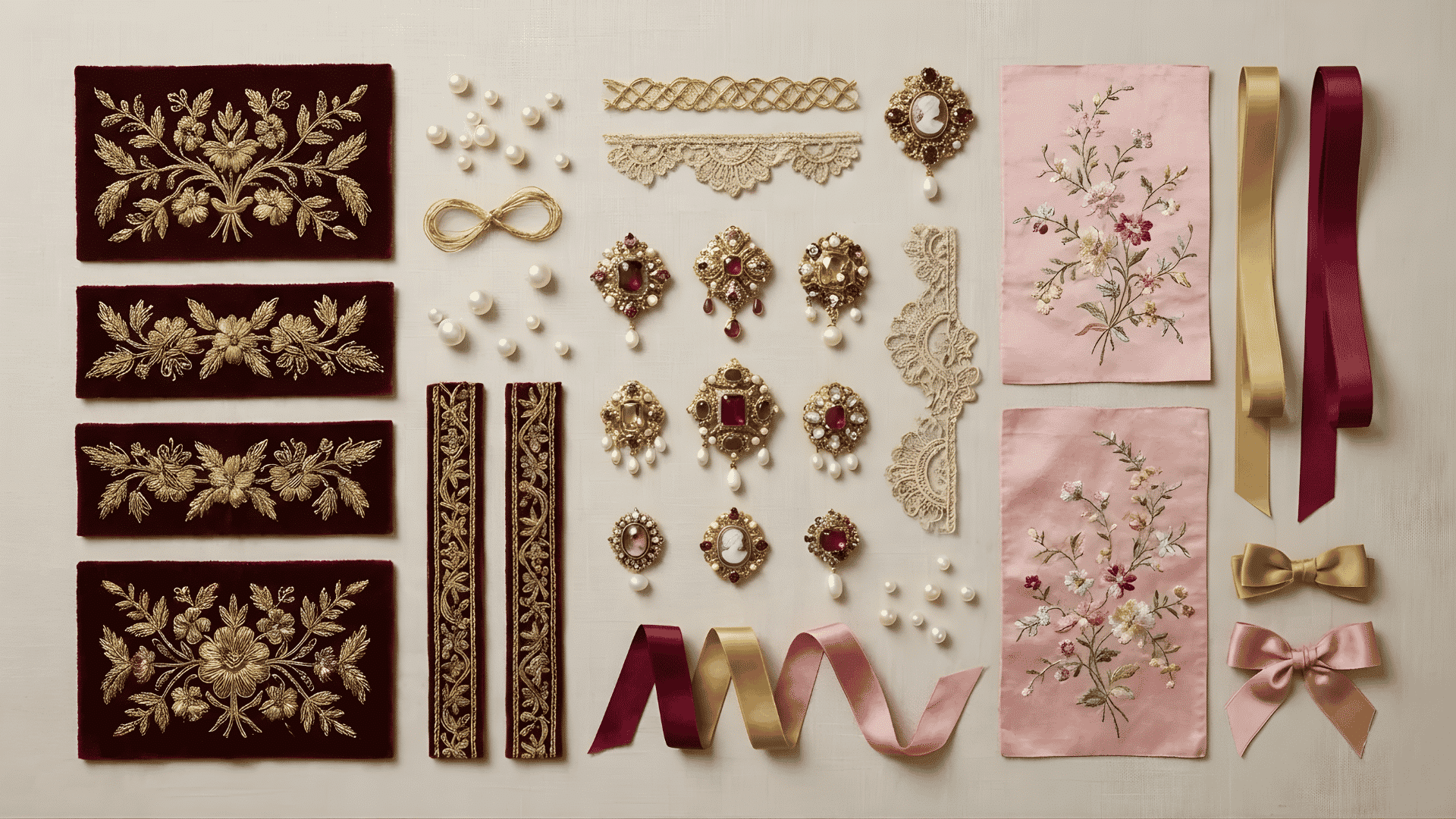
Ornamentation in Baroque fashion followed a clear hierarchy: the more detail a garment carried, and the finer the execution, the higher the rank of the wearer.
- Embroidery: Floral and scroll patterns worked directly onto fabric. Thread material silk, metallic, or wool signaled rank as clearly as the pattern itself.
- Jabots and lace ruffles: Lace gathered at the throat and cuffs. The fineness of the lace and how much appeared on one outfit reflected rank directly.
- Ribbons and bows: Used at sleeves, waistlines, and coat fastenings. Silk ribbon was a restricted luxury in some regions.
- Jewels and pearls: Worn on garments or as accessories. By mid-century, fine lace and embroidery had largely replaced gemstones as the primary status marker.
Pearls were often family heirlooms passed down through generations, and bodice ornaments known as devant de corsage, some set on hairsprings that caught the light with movement, became a signature status piece.
4. Color and Symbolism
Color in Baroque fashion carried specific social meaning, and in some courts, custom or law protected certain colors.
- Deep jewel tones: Burgundy, sapphire blue, emerald green, and royal purple. Expensive pigments to produce in saturated form, making them inherently elite.
- Gold and metallic hues: Among the most legally restricted materials in sumptuary codes, tied to divine power and royal authority.
- Rich color contrasts: Dark base fabrics paired with metallic embroidery or lighter decorative panels for visibility across large court halls.
- Black: The prestige color of the Spanish court under Philip IV. Its status came from the cost of achieving a consistently deep, true black dye
5. Accessories, Footwear, and Beauty
Rank did not stop at the garment. Accessories, shoes, and grooming carried the same coded signals of wealth and status.
- Accessories: Purses, belts, fans, fur muffs, and masks combined practical functions with fashionable display, especially during Venetian carnival celebrations.
- Footwear: Heeled, pointed shoes with buckles or ribbons signaled status, while pattens protected footwear and wooden clogs suited laborers.
- Beauty: Bathing was common among the wealthy, while ceruse and mouches appeared occasionally; heavily powdered faces became fashionable later.
These details completed a look built to be read at a glance, closing the gap between fabric and full presentation.
Baroque Fashion: Women vs. Men
While both men’s and women’s Baroque dress shared the same visual logic: volume, ornamentation, and legally coded materials, they expressed it through distinct dress styles and silhouettes.
| Element | Women | Men |
| Silhouette | Wide skirts, fitted pointed bodice, low rectangular neckline | Knee-length flared coat, fitted waistcoat, flared below the waist |
| Foundation Garments | Boned corset stays, layered petticoats, side panniers | Fitted linen shirt, no boning or structured undergarment |
| Key Garments | Virago sleeves, train-bearing outer skirt, decorative underskirt | Knee breeches, waistcoat, flared coat, cravat |
| Fabrics | Silk, velvet, brocade, layered and heavily ornamented | Wool broadcloth for coats; silk or velvet for formal court wear |
| Decoration | Lace jabots, embroidered bodice and skirt panels, ribbons | Embroidered coat cuffs, lace jabot, decorative buttons |
| Color | Deep jewel tones, gold accents, rich contrasts | Jewel tones at court; black favored in Spain; plainer in England |
| Accessories | Pearl jewelry, ribboned hair | Powdered wig, sword, decorated gloves |
| Status Marker | Lace quality and sleeve volume | Embroidery at cuffs, wig scale, jabot fineness |
Historical note: Around 1666, King Charles II adopted the “Persian Style” knee-length coat, waistcoat, and fitted breeches. This three-piece combination is the direct ancestor of the modern suit.
Are Baroque and Rococo the Same?
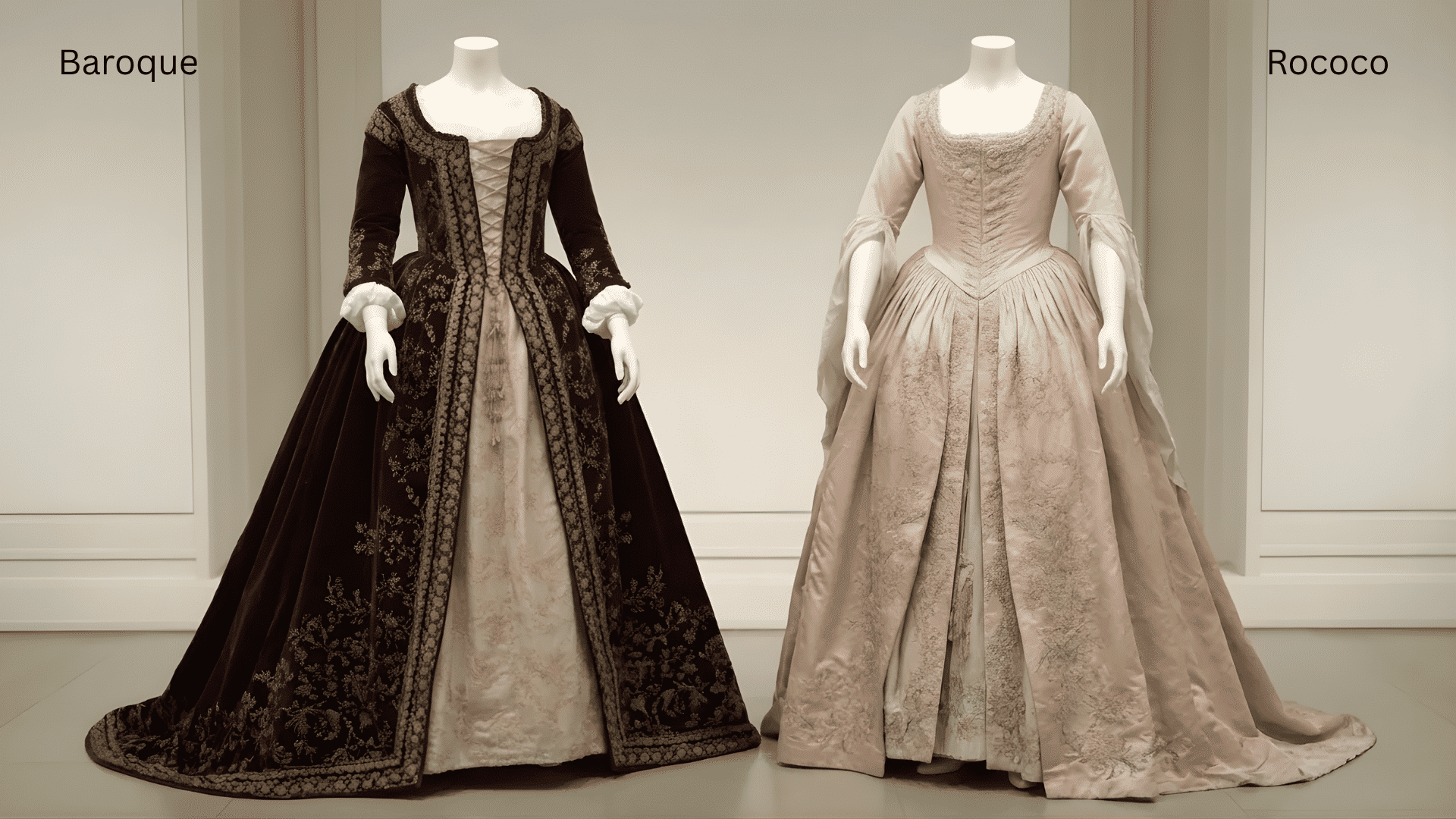
Baroque and Rococo are two distinct styles, separated by roughly half a century and very different social contexts.
Baroque (1620–1700) was built for court ceremony and power display; Rococo (early-to-mid 1700s) was built for private aristocratic leisure.
The shift had a clear trigger. When Louis XIV died in 1715, the centralized court system at Versailles that had enforced Baroque fashion norms collapsed.
| Element | Baroque | Rococo |
| Period | 1620–1700 | Early-to-mid 1700s |
| Color Palette | Deep jewel tones, black, gold | Pastels: blush, powder blue, mint |
| Silhouette | Structured, heavy, formal | Softer, lighter, more fluid |
| Ornamentation | Bold, weighty, status-coded | Delicate, whimsical, decorative |
| Mood | Power and authority | Elegance and leisure |
| Court Context | Versailles under Louis XIV | Post-Versailles aristocratic life |
Marie Antoinette (1755–1793) is often mistaken for a Baroque figure her reign at Versailles came decades after the Baroque era closed. Her towering wigs, pastel silks, and floral ornamentation are textbook Rococo.
Rococo itself gave way not long after to the Regency era, when court-bound formality relaxed into simpler, empire-waisted daily dress.
How Baroque Fashion Lives in Modern Style
Baroque fashion never fully left. It resurfaces consistently across runways, screen productions, and everyday styling.
On the Runway
Source: News10
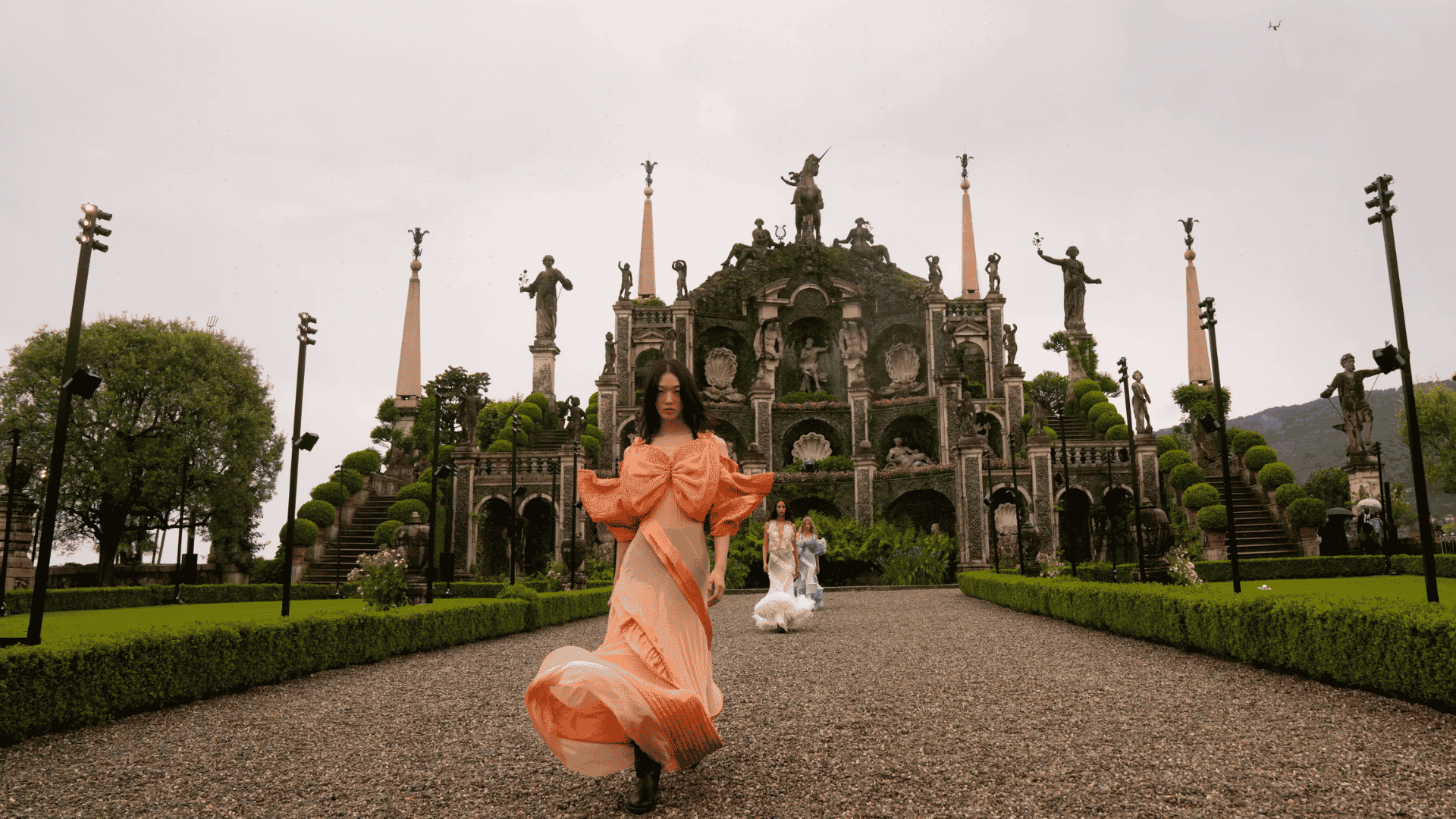
Modern designers return to Baroque references for the same reason the style endured: it commands attention.
- Versace: Their signature gold scroll and acanthus leaf prints are the clearest running references to Baroque in contemporary fashion.
- Louis Vuitton: The Cruise 2024 collection drew explicitly on Baroque references, featuring accordion collars and ornamented silhouettes pulled directly from 17th-century court dress.
- Embroidery and brocade: Regularly appear in high-fashion collections as surface decoration on structured coats and gowns.
- Corsetry: Bodices and corset-style tops drawn from Baroque stays appear across both luxury and mainstream collections.
- Maximalism: The broader return of heavily ornamented, layered dressing has brought Baroque references back into wider circulation.
Bold ornamentation and structured silhouettes translate directly into statement collections.
In Film and Television
Source: Daily Utah Chronicle
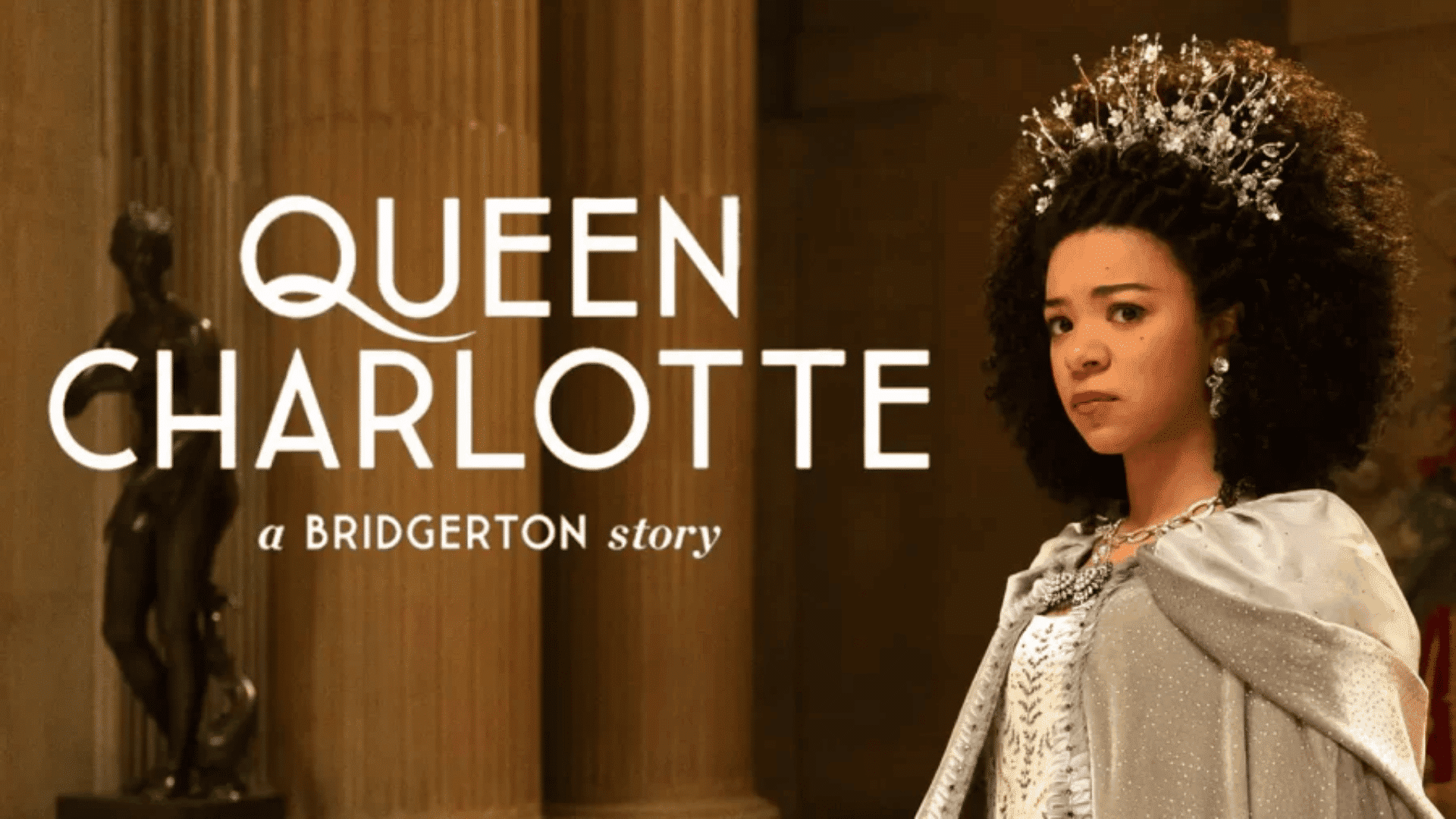
Period productions have kept Baroque dress visible to modern audiences, translating historical silhouettes and materials into costume design that also shapes contemporary style references.
- Marie Antoinette (2006): Lavish gowns and ornate accessories reflecting late Baroque and early Rococo court dress.
- Dangerous Liaisons (1988): Rich textiles, dramatic shapes, and refined embellishments of elite 17th-century fashion.
- Versailles (2015–2018): Louis XIV’s court was brought to the screen with richly decorated coats, gowns, and accessories.
- Queen Charlotte: A Bridgerton Story (2023): The most directly Baroque production in recent years. The queen’s wide panniers, heavily ornamented court gowns, and towering wigs sit firmly in late Baroque dress.
- Bridgerton (2020–present): Primarily Regency-inspired but draws on Baroque fabrics, embroidery, and jewel-toned palettes throughout.
- The Great (2020–2023): Exaggerated Baroque silhouettes and bold colors blended with modern styling.
Baroque dress translates well on screen because it was always designed to be seen from a distance.
How to Wear Baroque Fashion Today
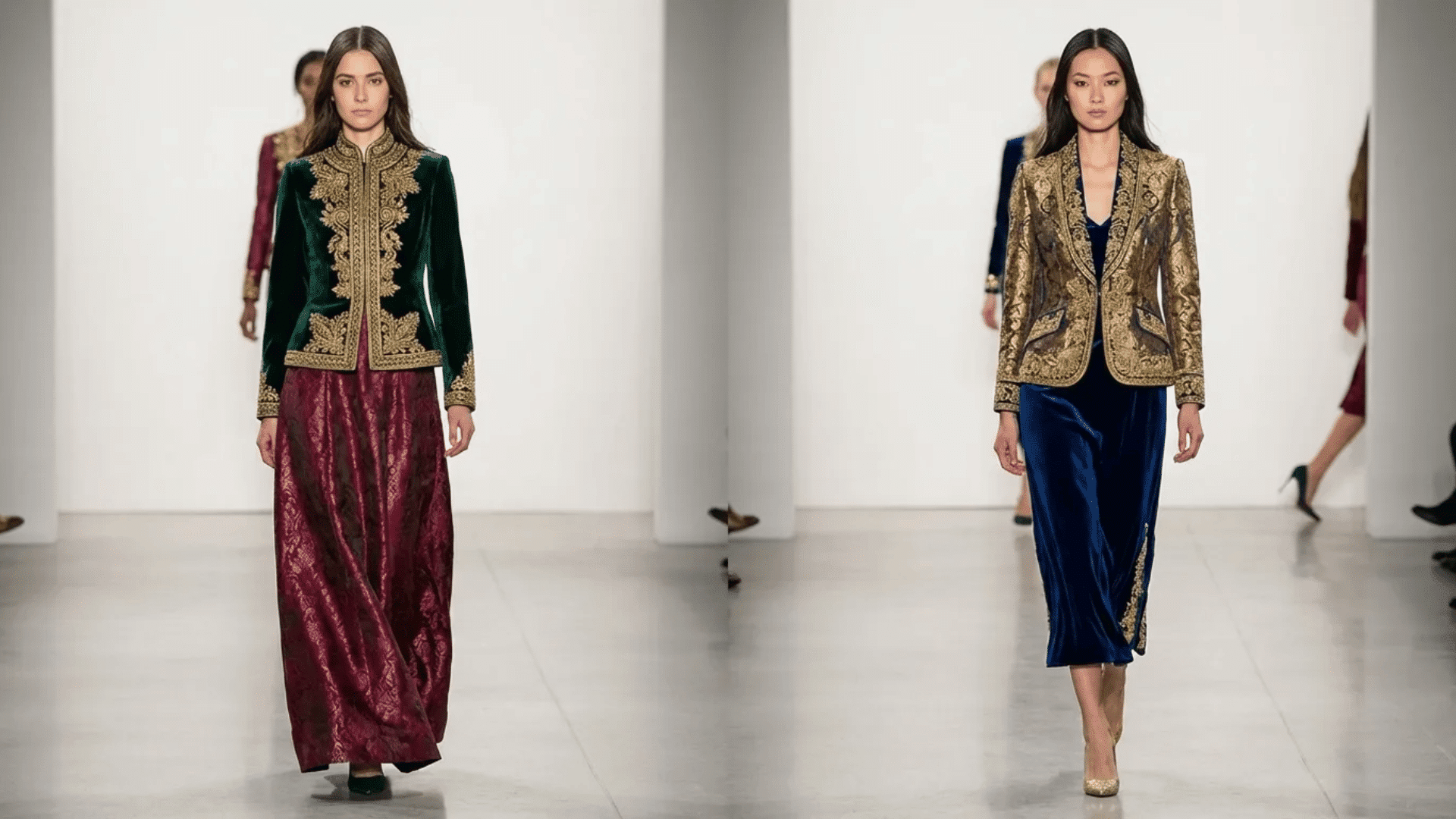
Baroque elements work in a modern wardrobe without a full period costume. A few well-chosen pieces carry the aesthetic cleanly.
- Fabrics: Velvet blazers, silk blouses, or brocade skirts for a refined base.
- Decoration: Embroidered collars, pearl jewelry, or jeweled brooches as focal points.
- Silhouette: A-line skirts, corset-style tops, or structured tailored coats.
- Color: Jewel-toned pieces anchored with gold accessories or trim.
Baroque fashion brands like Versace for gold scroll prints, Dolce & Gabbana for heavy brocade and ornamental detailing, Alexander McQueen for structured silhouettes with period embellishment.
Baroque fashion has lasted four centuries because it was built around a clear visual logic, and that logic still works.
Tip: Start with one element, wear it with intention, and the era speaks for itself.
Wrapping Up
Baroque fashion is often reduced to visually heavy fabrics, wide skirts, and gold trim.
What sits underneath it is a dress system built on legal hierarchy, political performance, and materials that carried enforceable meaning.
That context is what makes the style legible, both historically and in its modern appearances.
Its references keep surfacing on runways, in period productions, and in the return of structured silhouettes and ornamented dress because the visual logic behind it still holds.
Which Baroque element would you actually wear today? Drop it in the comments.
Frequently Asked Questions
Did Common People Wear Baroque Fashion?
Most common people wore simple wool or linen garments; they could not afford the fabrics elite dress required, and in many regions were legally barred from wearing them anyway.
What Shoes Were Worn During the Baroque Era?
Heeled shoes with square toes and ribbon fastenings were standard. Louis XIV wore red-heeled shoes as a mark of royal privilege.
Which Country Had the Strongest Influence on Baroque Fashion?
France. By the mid-1600s, the court of Louis XIV at Versailles set the standard that all other European courts followed.
How Long Did a Single Baroque Court Outfit Take to Make?
A fully ornamented court gown could take several months, with multiple specialist artisans working on embroidery, lace, and structure at the same time.