Picking out the perfect outfit feels hard enough today. Now imagine doing it without zippers, stretchy fabric, or strict social rules.
Regency era fashion was elegant, graceful, and surprisingly practical for its time. It gave the world the empire waist, the Spencer jacket, and some of the most beautiful silhouettes in history.
Bridgerton fans, Jane Austen lovers, and fashion history enthusiasts all find something truly captivating to love here.
Read on to learn what people wore, why styles changed, and how Regency fashion continues to shape the way we dress today.
When Was the Regency Era?
The Regency era officially lasted from 1811 to 1820. During these years, Prince George ruled England as Prince Regent because his father, King George III, was too ill to lead.
However, when we talk about Regency-era fashion, we usually mean a longer period.
Fashion historians include the years from about 1795 to 1825. This gives us a fuller picture of how styles changed and developed.
The fashion trends of this time actually started in the 1790s and continued beyond 1820.
By 1825, the classic Regency look had changed into something quite different. The high waistlines dropped back down, and skirts became wider and more decorated.
What is Regency Era Fashion?
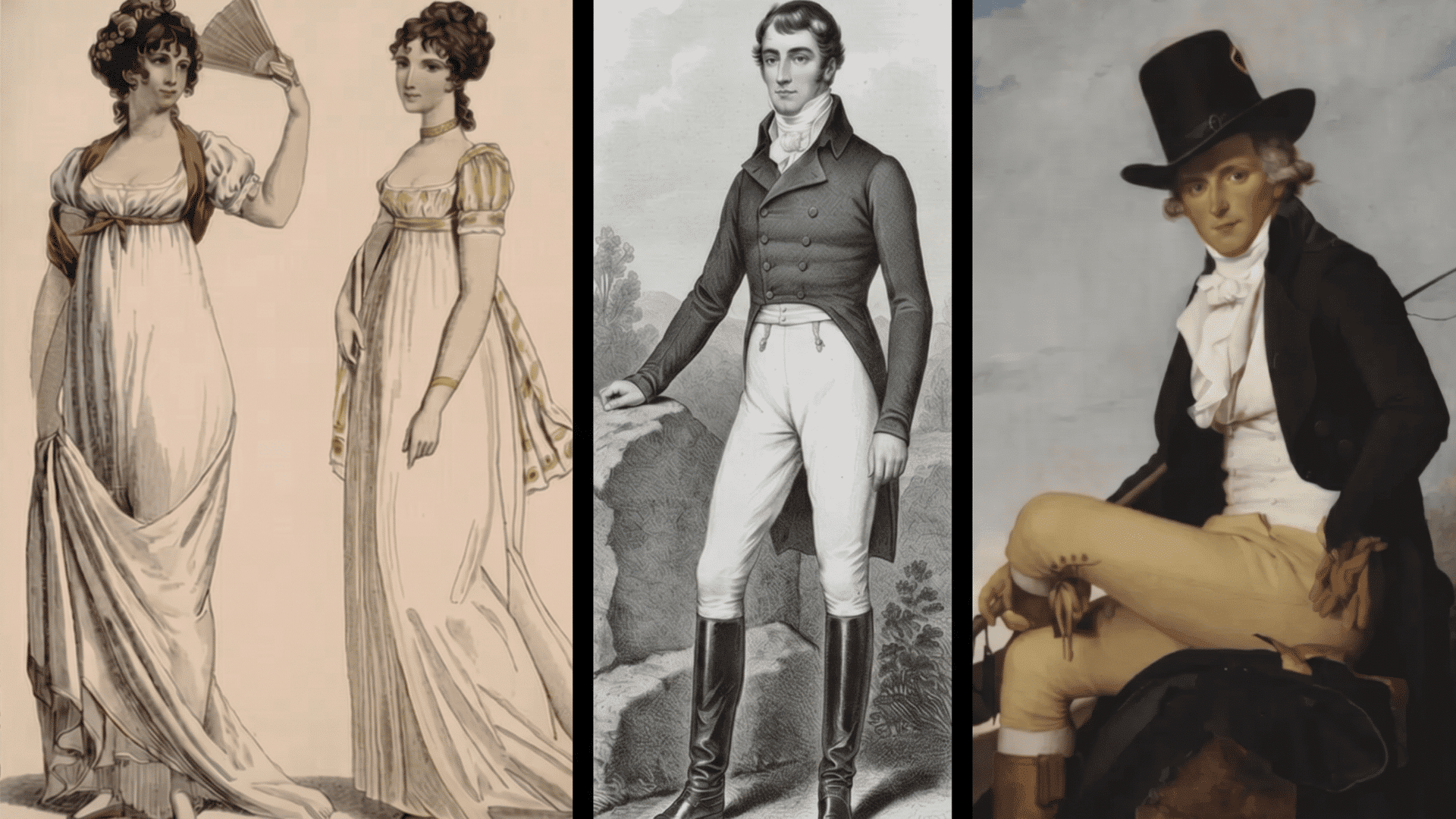
Regency era fashion marked a dramatic break from the past.
Before this time, women wore tight corsets and wide skirts held up by hoops. Their dresses used yards and yards of heavy fabric. Men wore bright colors, knee breeches, and wigs.
All of that changed during the Regency period. Women’s Regency era dresses became simple and flowing.
The waistline moved up right under the bust. Sleeves got shorter. Necklines dropped lower. Fabrics became lighter and softer.
Men’s clothing also changed significantly. Bright colors gave way to darker, more conservative tones. Long pants replaced knee breeches. The overall look became more fitted and streamlined.
How Culture Shaped the Regency Era’s Fashion
The French Revolution (1789-1799) sparked a rejection of aristocratic excess, directly reshaping Regency fashion toward simpler, lighter styles.
New styles were simpler and more democratic. Women stopped wearing wide panniers and tight corsets. Men gave up powdered wigs and fancy silk suits.
Napoleon Bonaparte became Emperor in 1804 and made France the fashion leader. His wife, Empress Josephine, became a major icon. Women across Europe copied her style.
Ancient Greek and Roman styles inspired high-waisted, flowing women’s dresses, while fashion magazines and icons like Beau Brummell promoted clean, well-fitted menswear.
The Revolutionary Influence: Empire Line Fashion
The empire line completely transformed Regency women’s fashion, replacing tight waists and heavy skirts with light, flowing dresses and a raised waistline just below the bust.
Below is what made the empire line fashion so special:
- The High Waist Revolution: The waistline reached its highest point around 1817, then gradually returned to its natural position by 1825.
- Flowing Fabrics and Soft Colors: Light muslins, silks, and fine cotton defined the look, with white as the dominant color and pastels favored for daytime.
- Covering Up in Style: A chemisette, a light fabric insert, filled in low necklines to maintain modesty in public without sacrificing fashion.
- Comfort Over Constriction: Regency stays lifted the bust and smoothed the silhouette without squeezing the waist, making them far more comfortable than earlier corsets.
The empire line remains one of fashion history’s most elegant silhouettes, blending graceful proportions with effortless lightness.
Regency Era Women’s Fashion Essentials
A Regency woman’s wardrobe was built around a few essential pieces, each designed to complement the era’s elegant, flowing silhouette.
Read the list below to explore each key garment:
1. Empire Line Dresses
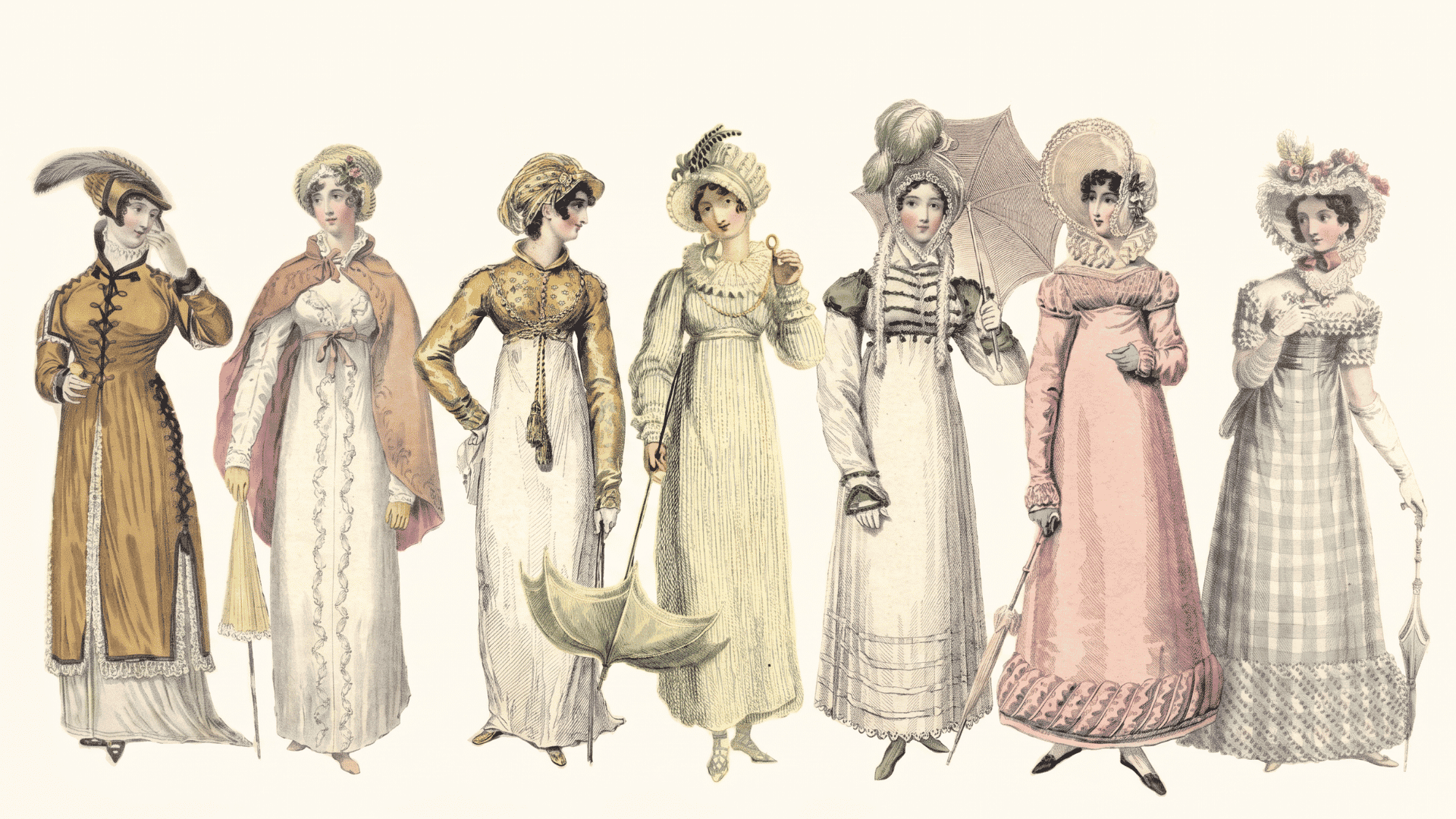
The basic dress was the foundation of every woman’s wardrobe, featuring the high empire waist, low neckline, and short sleeves with skirts falling straight and long.
Day dresses were made of cotton or linen, while evening gowns were made of silk. Embroidery decorated hems and necklines with Greek and Roman patterns.
2. The Pelisse Coat
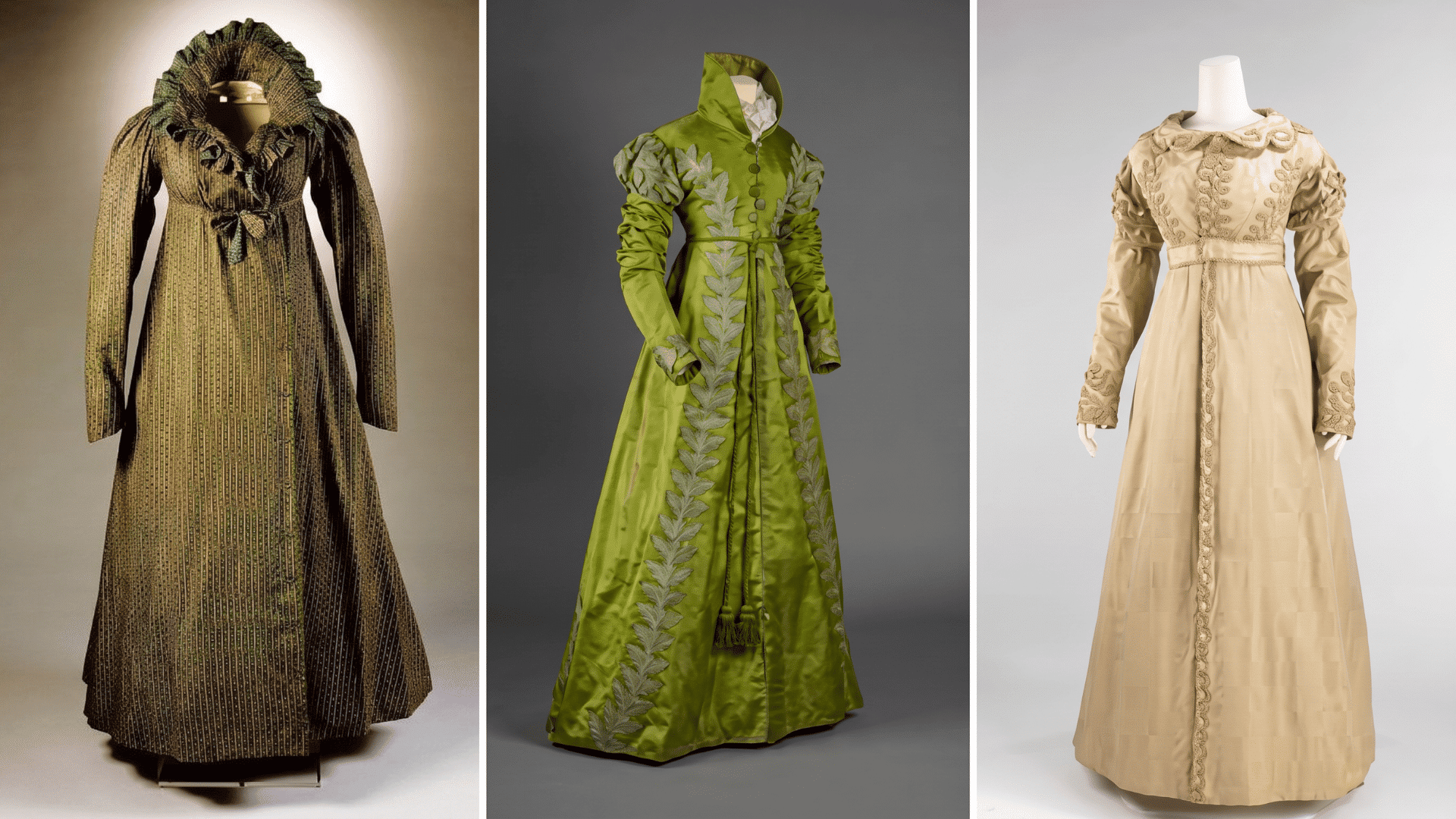
The pelisse was an outdoor coat that followed the dress line underneath. Early versions reached the hip or knee, but after 1810 became full-length.
They featured wide collars, military-style buttons and braid, and fur trim. Women wore pelisses in rich colors like dark green, navy blue, and golden brown.
3. The Spencer Jacket
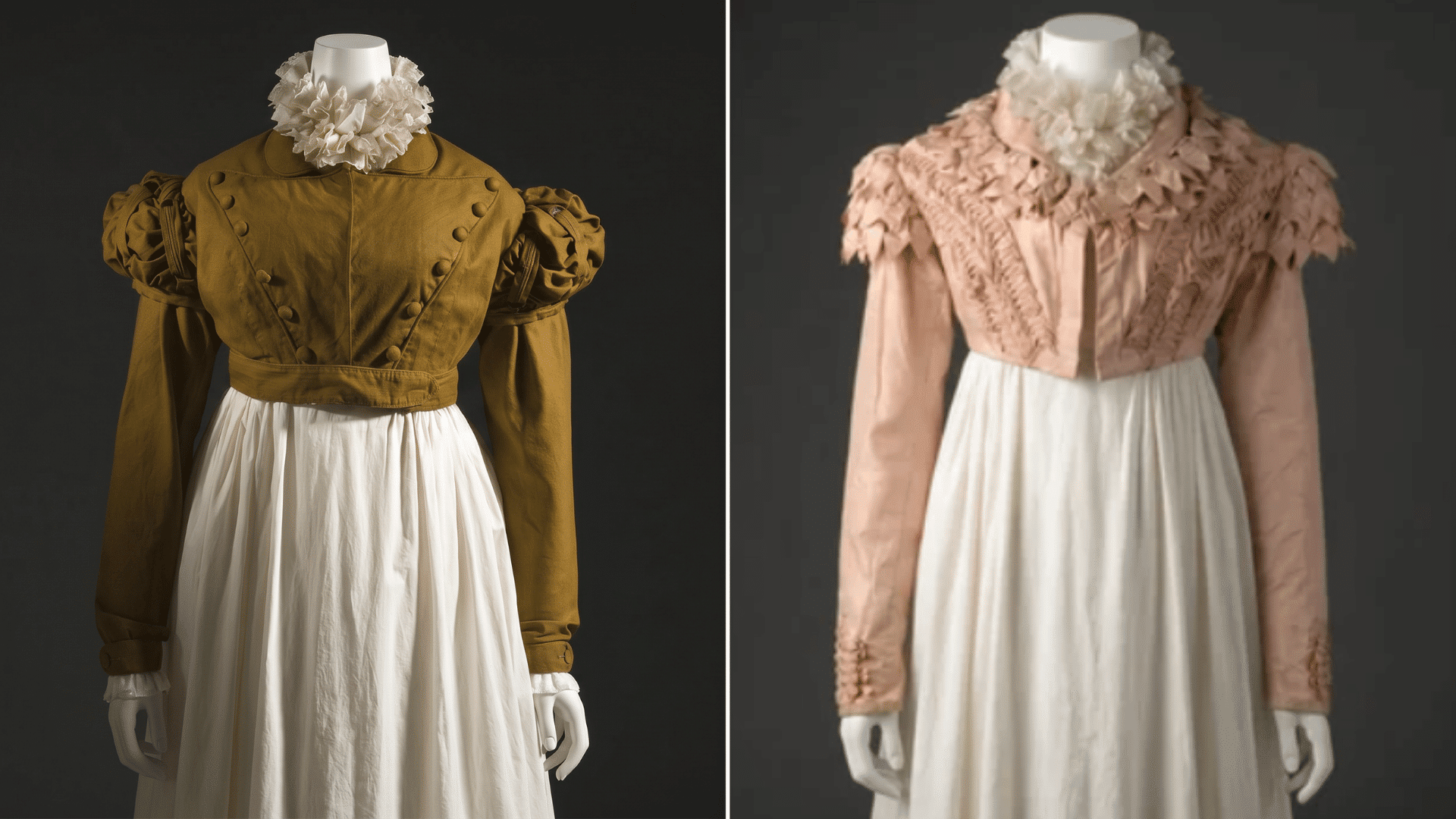
The Spencer jacket was short, ending just below the bust, and matched the empire line perfectly. Earl Spencer supposedly invented this style after burning his coat tails by a fire.
Made from silk, wool, or fine fabrics, Spencers were decorated with ribbons and embroidery, providing warmth without hiding dresses.
4. The Redingote
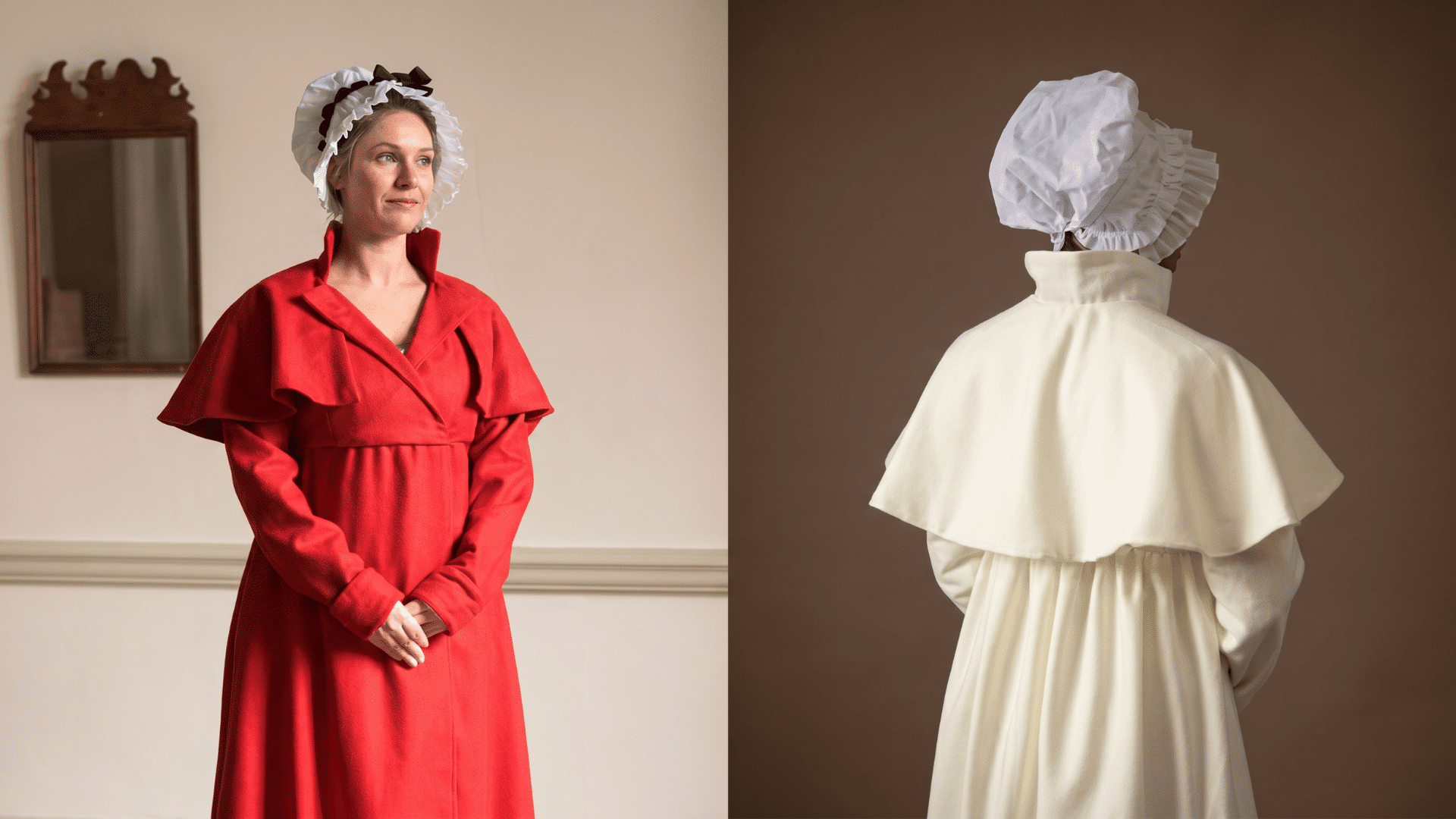
The redingote was a travel coat that started as a riding coat. Heavier than pelisses, redingotes often had shoulder capes and were practical for cold or rainy weather.
As dresses widened in the 1820s, redingotes became fuller too. They were made of heavy wool and trimmed with fur.
5. Undergarments
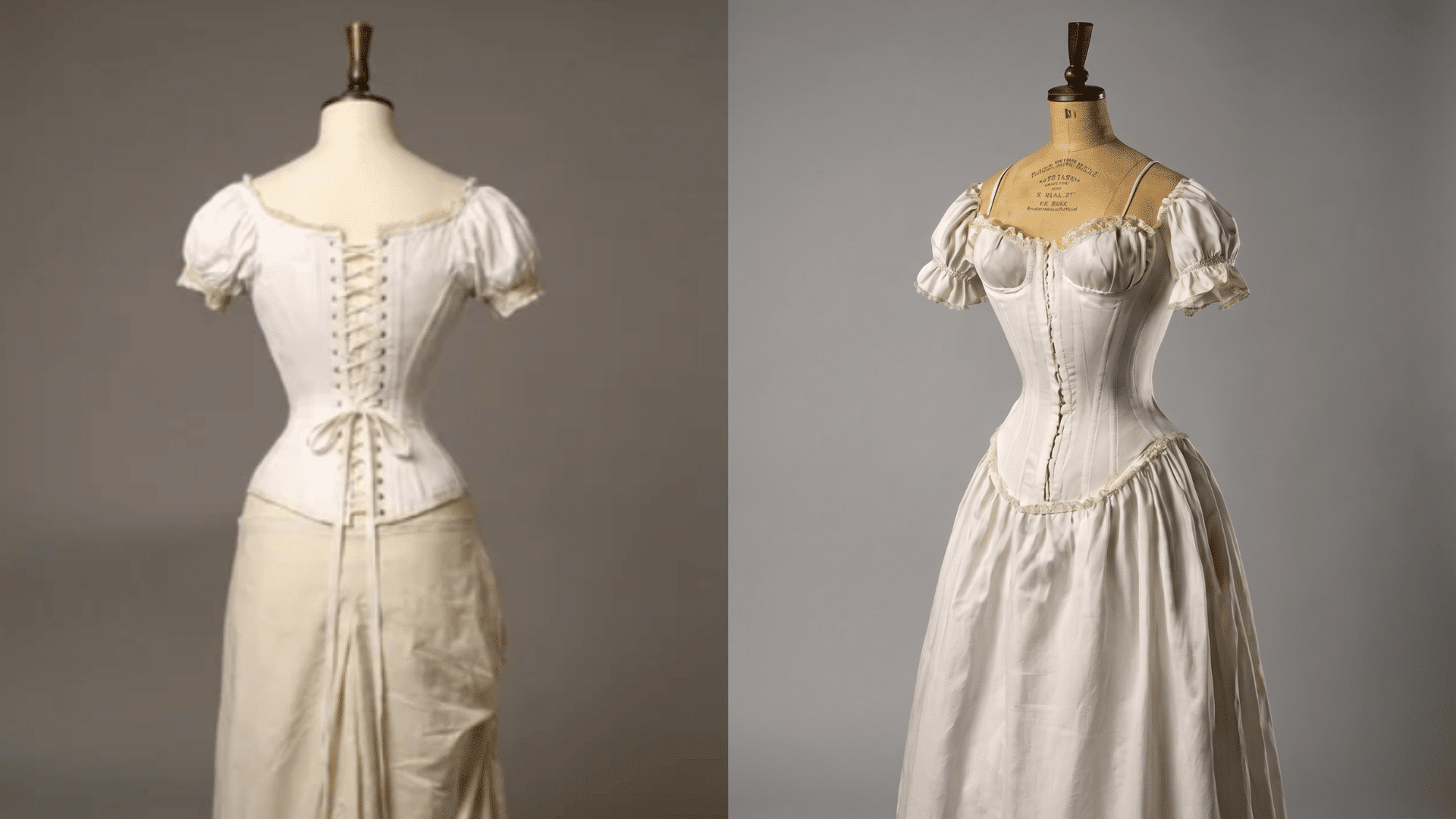
Under their dresses, women wore several layers, starting with a chemise, then stays. Pantaloons were a new addition; before Regency times, women didn’t wear pants.
Made of flesh-toned knit fabric, they provided warmth and modesty while remaining invisible under white dresses and reaching either the ankle or below the knee.
Regency Era Men’s Fashion Essentials
A Regency man’s clothing revolved around carefully chosen staples, each crafted to embody the era’s shift toward understated elegance and impeccable fit.
Browse through each essential piece in the list below:
1. Tailcoats
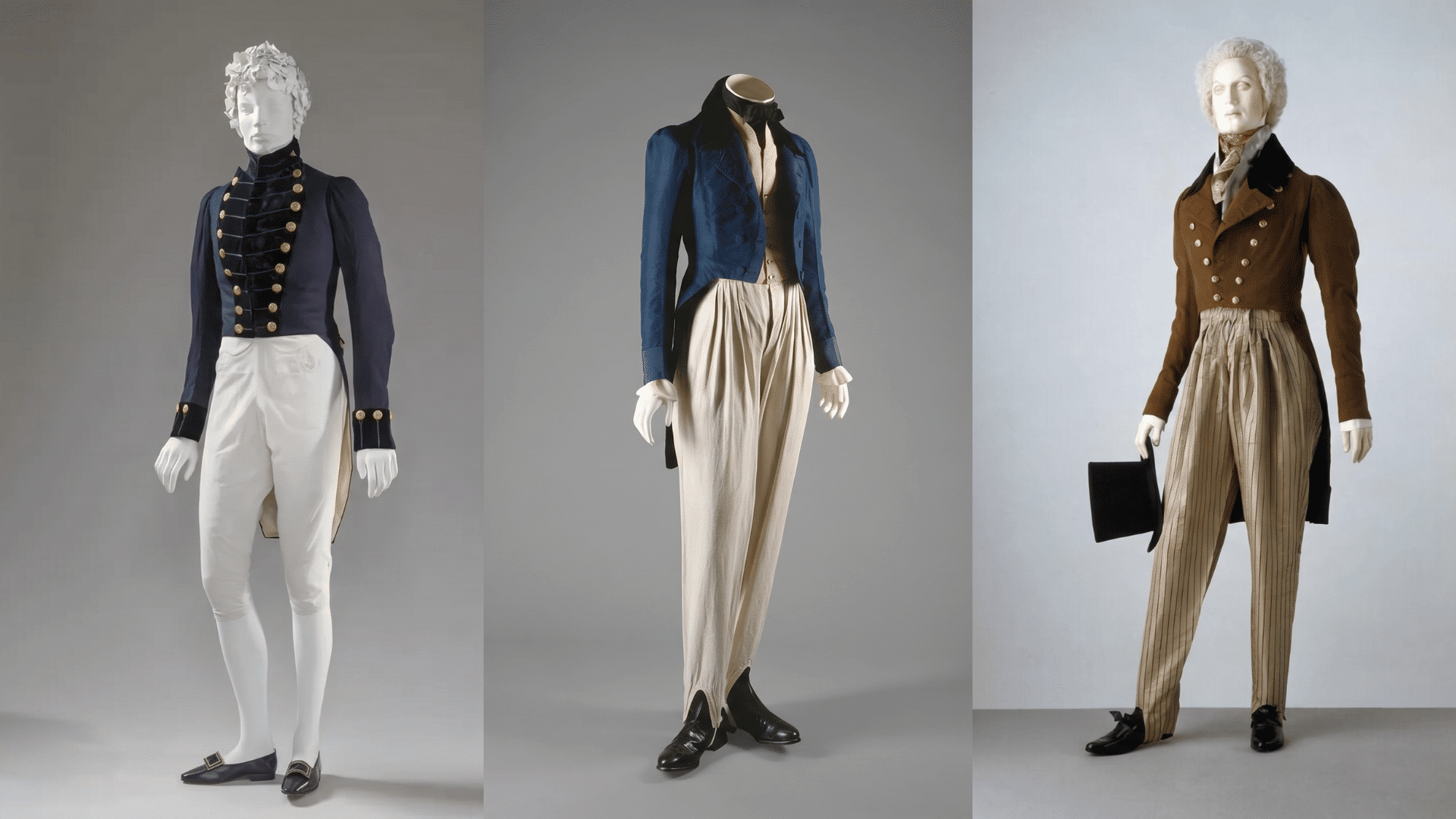
The tailcoat was the most important piece in a man’s wardrobe, featuring a high collar, close-fitted body, and long tails at the back.
The front was cut away to reveal the waistcoat beneath. Men wore various colors during the day but chose dark navy or black for evening wear.
2. Waistcoats
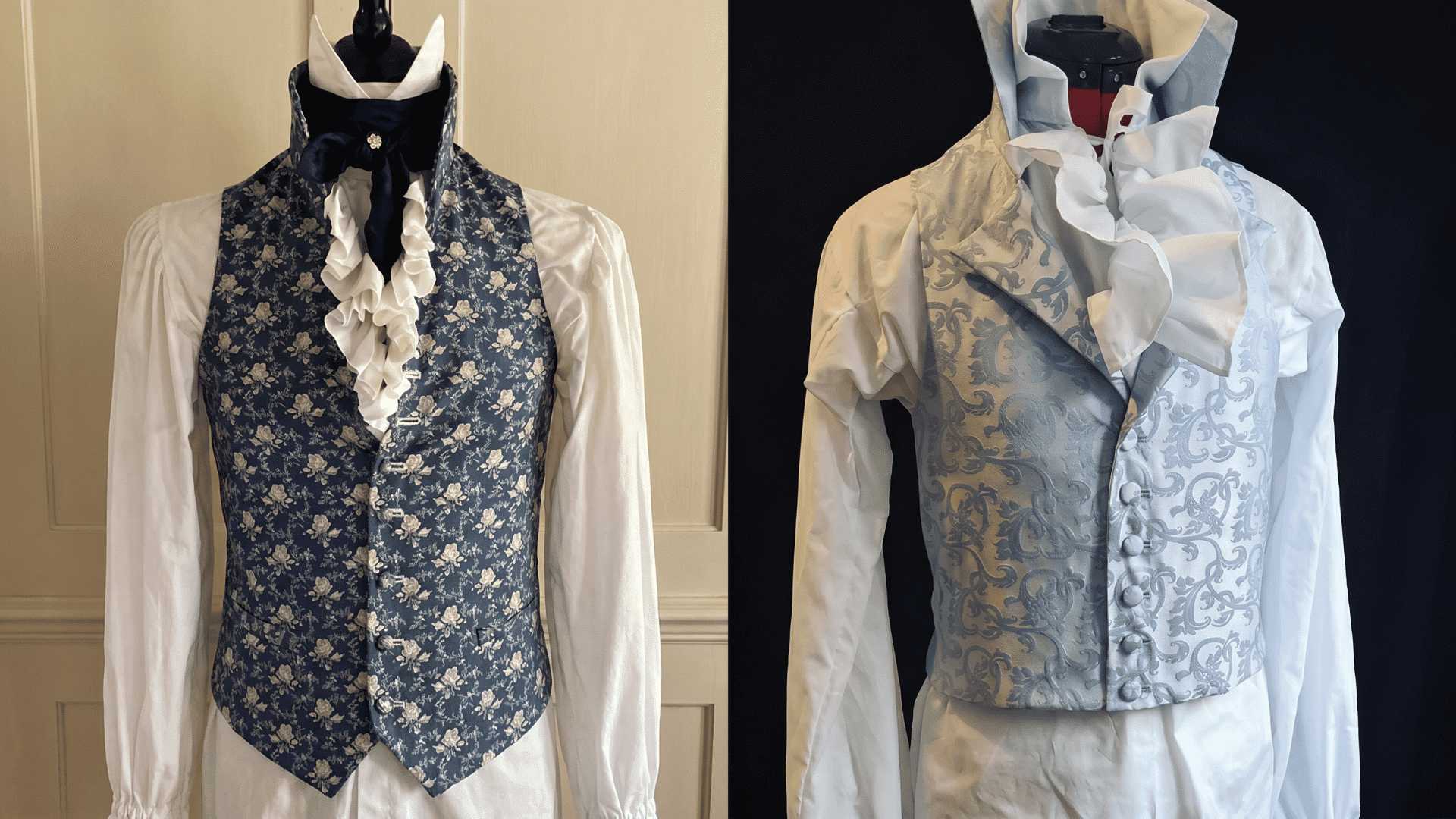
Men wore waistcoats under their tailcoats, and unlike the coat, waistcoats could be colorful and patterned with stripes, brocades, and other designs.
The waistcoat had a high collar and extended below where the coat cut away, covering the top of the trousers and adding a pop of color.
3. Shirts and Neckcloths
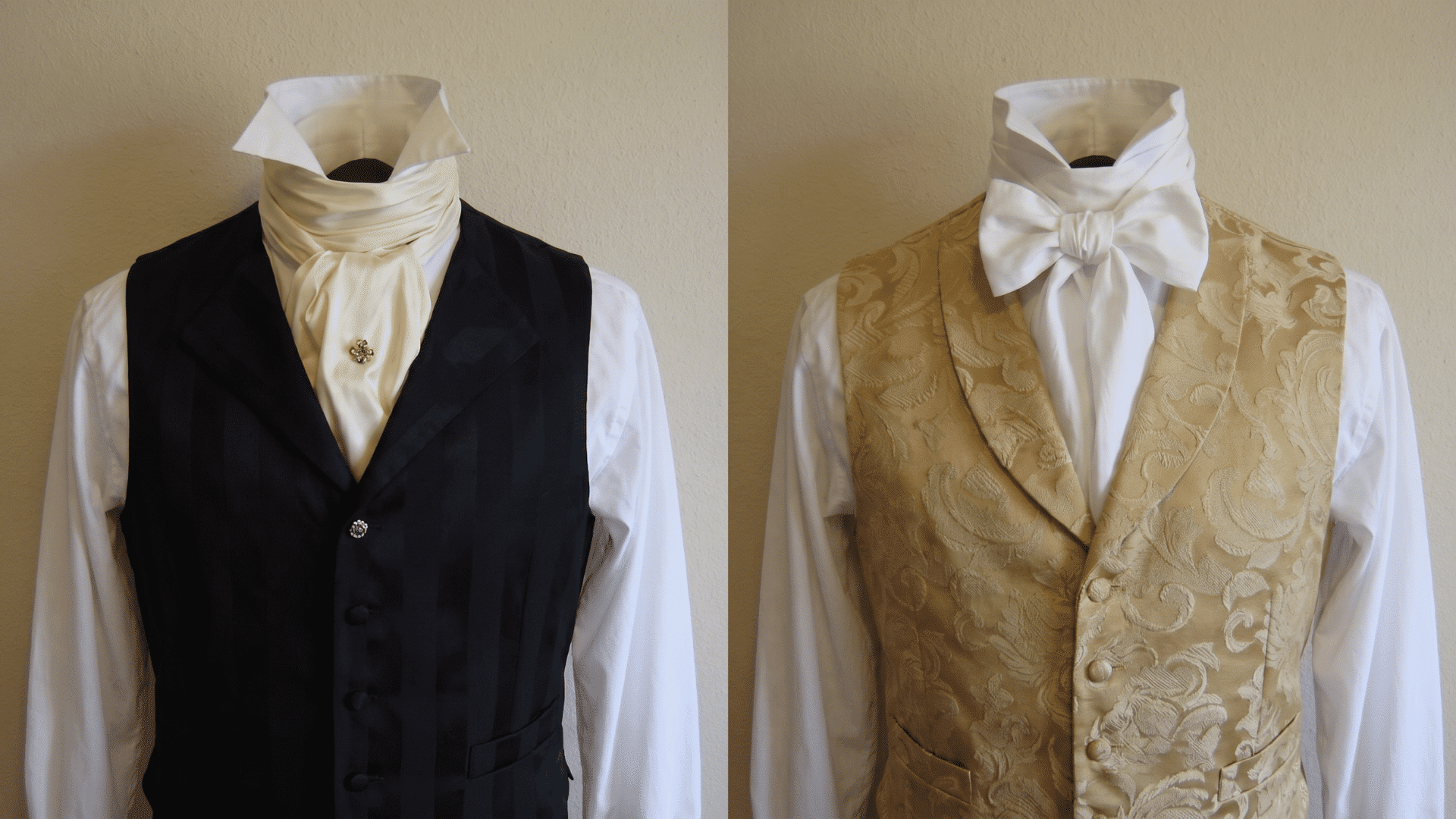
Shirts were made of white linen or cotton with very high standing collars that came up past the jaw, reaching to mid-thigh or knee, and pulled on over the head.
The neckcloth was a long strip of fabric wrapped around the neck and tied in front in various styles, serving as the era’s defining accessory.
4. Breeches, Pantaloons, and Trousers
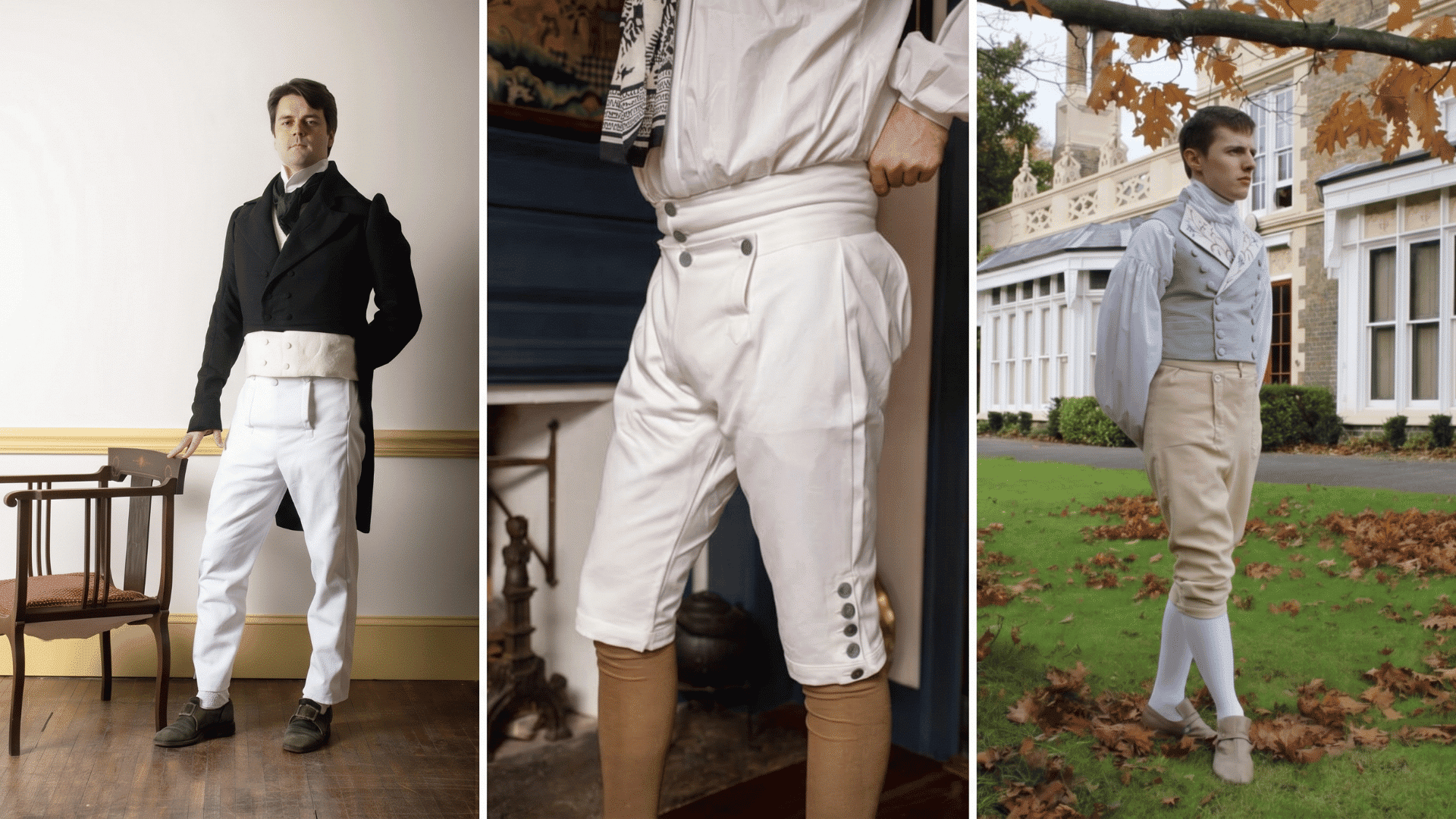
Men’s legwear changed dramatically during the Regency era, with knee-length breeches falling out of fashion entirely. Pantaloons fit very tightly and reach the ankle or mid-calf.
Trousers were looser, had a high waist, and were held up with braces. Initially worn only during the day, they eventually became acceptable for evening wear too.
5. Outerwear
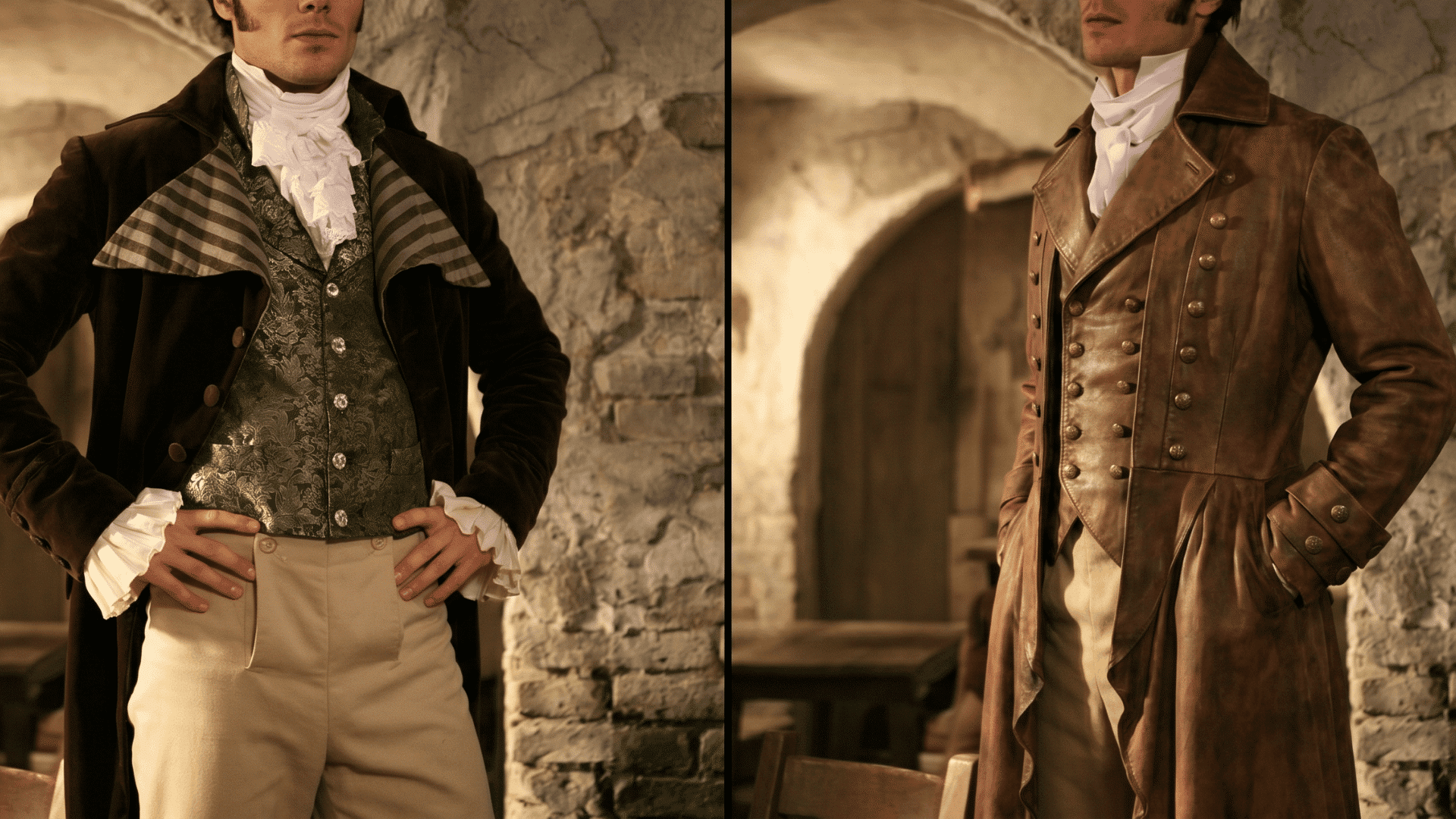
Men wore several types of coats over their tailcoats, all sharing the same high collars and fitted silhouette of the era.
Great coats were long and heavy for cold weather, while shorter coats suited milder temperatures. All outerwear followed the same structured, tailored style as the tailcoat beneath.
Accessories That Ruled the Regency Era
Accessories were essential to the Regency look, with every outfit completed by carefully chosen finishing touches that signaled both personal style and social standing.
For women
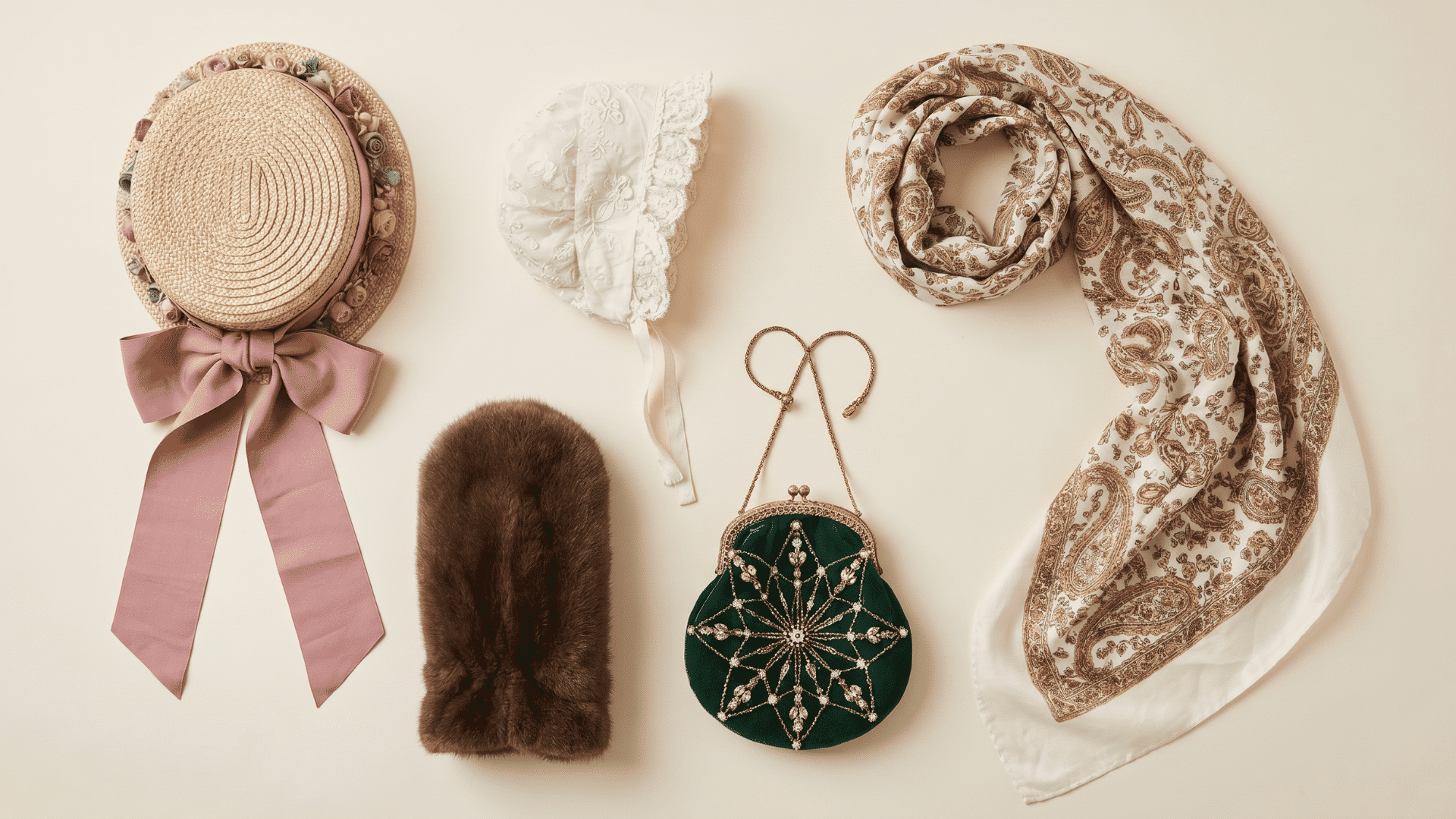
Regency women’s accessories were as practical as they were fashionable, with each piece reflecting personal style and social standing.
| Accessory | Key Features | Material | Purpose |
|---|---|---|---|
| Bonnets and Poke Bonnets | Forward-projecting brim, ribbon-tied | Straw, fabric | Sun protection, outdoor wear |
| Caps | Sat on the back of the head | Lace, fine cotton | Modesty, indoor wear |
| Reticules | Small wrist purse | Embroidered or beaded fabric | Substitute for pockets |
| Hand Muffs | Tube-shaped, larger was more fashionable | Fur or fabric | Hand warmth in cold weather |
| Shawls and Wraps | Kashmir shawls are especially prized | Silk, wool, cashmere | Extra warmth over light dresses |
For Men
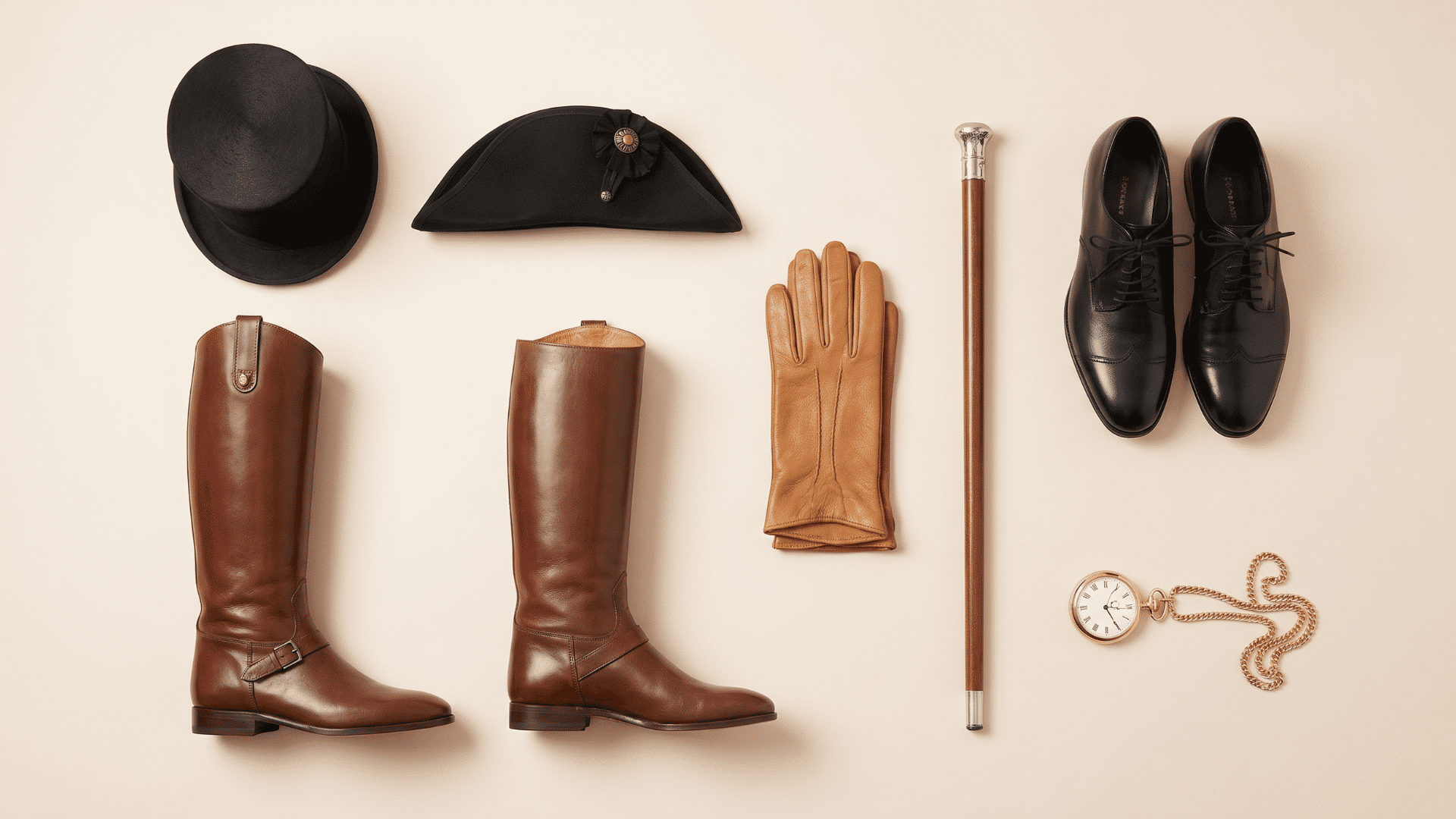
Regency men’s accessories were a mark of refinement, with each carefully chosen piece signaling taste, status, and social awareness.
| Accessory | Key Features | Material | Purpose |
|---|---|---|---|
| Top Hats and Bicorns | High crown, narrow brim; bicorn popularized by Napoleon | Felt, beaver fur | Standard headwear, status symbol |
| Boots and Shoes | Tall boots for casual, low shoes for formal | Black leather | Riding, everyday, and formal wear |
| Gloves and Canes | Leather gloves, canes, simple to ornate | Leather, wood | Sign of good taste and social standing |
| Pocket Watches | Carried on chains, a symbol of success | Metal, gold, silver | Timekeeping and status display |
The Changing Face of Regency Fashion: 1800 to 1825
Regency fashion evolved significantly over 25 years, shifting from pure classical simplicity to more decorated and structured looks.
- Classical Grecian Decoration (1800-1803): Geometric patterns and Greek key designs adorned hems and necklines, staying true to ancient Greek inspiration.
- Egyptian Ornament (1804-1807): Napoleon’s Egyptian campaigns introduced exotic patterns and elaborate borders to dresses and shawls.
- Military and European Influence (1808-1814): Napoleonic Wars brought braiding, frogging, and cord trim, with sleeves lengthening into the dramatic “à la mameluke” style.
- Gothic Revival Touches (1811 onwards): Medieval influences added structure, pointed Vandyke hems, and fuller sleeves as the classical line began to fade.
- The Rise and Fall of the Waistline (1815-1825): The empire waist peaked around 1816-1817, then dropped steadily until reaching its natural position by 1825.
Regency fashion remains a fascinating study in how political events, cultural movements, and artistic trends can shape the way people dress across an entire era.
How Regency Fashion Differs From Other Eras
Regency fashion stands apart from both the 18th century and the Victorian era due to clear differences in structure and design approach.
| Feature | 18th Century | Regency | Victorian |
|---|---|---|---|
| Silhouette | Wide, structured, heavy | High-waisted, vertical, light | Fitted waist, full skirts |
| Structure | Rigid panniers and corsets | Softer, reduced structure | Tight corsetry returns |
| Fabrics | Heavy, layered, ornate | Lightweight, flowing | Heavier with volume |
| Overall Look | Decorative and elaborate | Simple and natural | Structured and detailed |
Regency Fashion in Modern Times
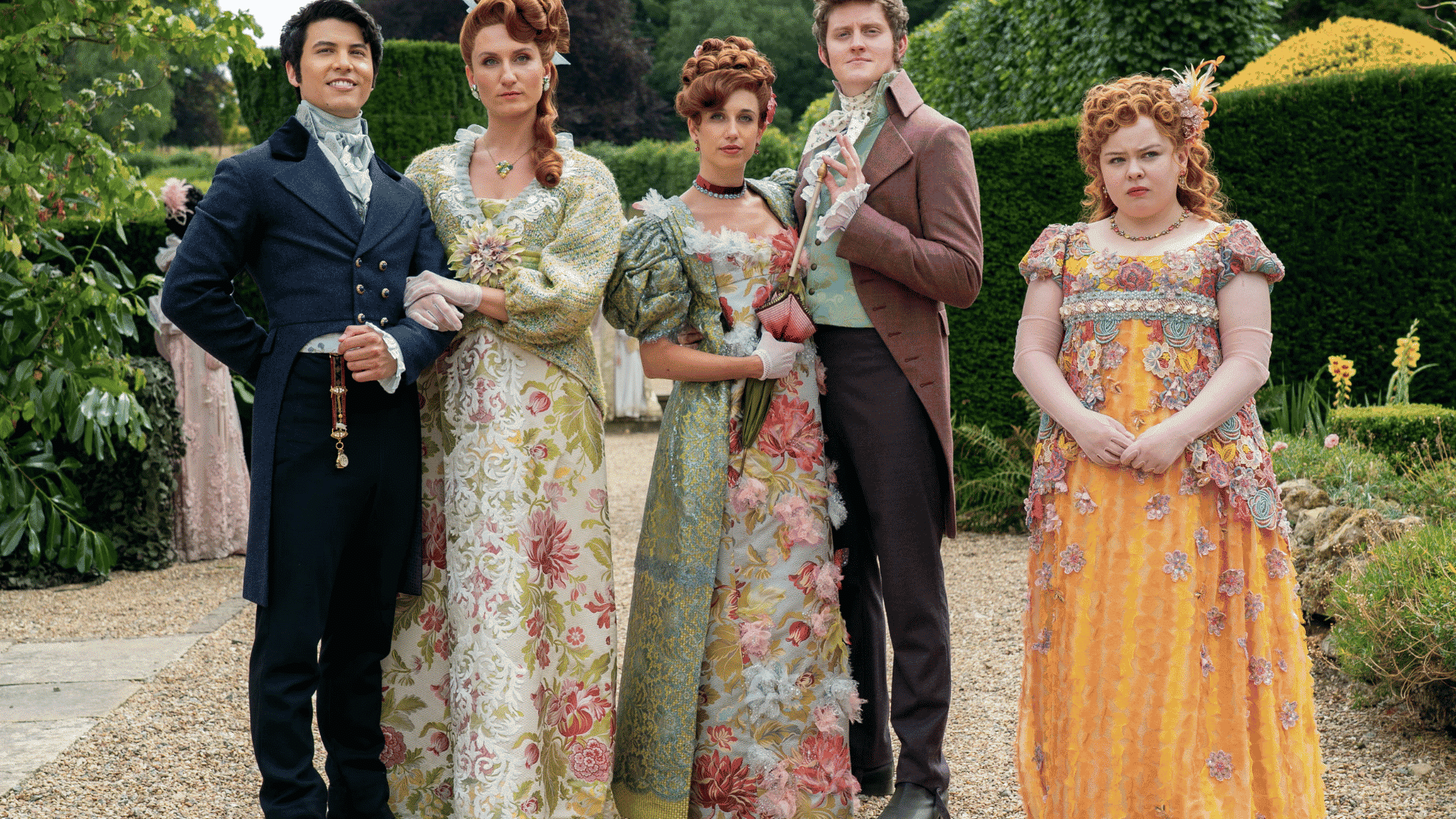
These differences come from changing social values over time. The mechanism was a shift in garment construction, moving from heavy structure to simplicity and then back to formality.
Regency fashion never really went away; it just waited for its moment to shine again. Bridgerton brought empire waists and gorgeous gowns back into the spotlight, introducing the era’s elegant aesthetic to millions of new fans worldwide.
Jane Austen’s novels have kept the Regency spirit alive for over two centuries, giving readers a vivid and intimate look at the fashion and social world of the time.
Dedicated fans take their love of the era further by attending Regency balls and historical events in full period-accurate dress, proving that some styles are simply too good to leave in the past.
The empire waist refuses to retire, reappearing every few decades in everything from formal gowns to maternity wear with the same timeless, romantic charm.
Conclusion
Regency era fashion proves that great style has always been about more than just clothing. It reflects the world people lived in, the values they held, and the changes happening around them.
From the empire waist to the perfectly tailored tailcoat, every piece told a story. The era showed that simplicity and elegance can be more powerful than excess and decoration.
The best part is that these lessons still apply today. Clean lines, quality fabric, and thoughtful accessories never go out of style.
Start exploring Regency-inspired pieces and bring a touch of timeless elegance to your wardrobe today.
Which Regency fashion piece do you love most? Drop your thoughts in the comments below.
Frequently Asked Questions
What Fabrics Were Considered the Most Luxurious in Regency Fashion?
Kashmir shawls, fine French silk, and delicate lace were the ultimate status symbols, instantly revealing social standing. Even muslin ranged from everyday cotton to extraordinarily fine grades.
Did Regency Fashion Differ Between the City and the Countryside?
London followed seasonal trends closely while rural areas lagged years behind, favoring practicality over fashion. Simpler cuts and heavier fabrics were standard outside the capital.
How Long Did It Actually Take to Get Dressed in the Regency Era?
Simple morning dress was manageable alone, but evening wear required a lady’s maid and up to two hours. Hair, undergarments, and gowns all demanded careful attention.