

Musicians are often associated with carefully constructed images, from stage clothes and hairstyles to instruments that become almost inseparable from the people who play them. Yet some of the most recognizable parts of a musician’s look were never created purely for fashion. They began as practical objects needed to travel, perform, protect equipment, or survive long days between venues. Over time, those objects became part of the visual language of music, showing how utility and personal style often develop side by side.
When Protection Becomes Part of the Look
Some music gear spends nearly as much time in public as the instrument itself. A working musician may carry a guitar case through airports, train stations, city streets, hotel lobbies, backstage entrances, and rehearsal spaces before the guitar ever reaches the stage. What begins as protection becomes part of the musician’s everyday visual identity. The case may not have been chosen as a fashion accessory, but it inevitably becomes part of the way the musician moves through the world.
That is especially true when gear begins to show signs of use. Stickers accumulate, handles wear down, fabric softens, and small marks record years of travel. Some musicians intentionally personalize their cases, while others simply allow time and use to do the work. Either way, practical gear gradually develops character.
Stage Style Has Always Included Functional Choices
Many iconic musician looks are remembered as fashion statements, but practicality often helped shape them. Boots need to survive hours onstage, jackets need to allow movement, and clothing has to function under hot lighting and physical performance. Even choices that look purely stylistic may have been influenced by the realities of touring. Music fashion has always had to work.
The same is true for the gear surrounding the performer. Guitar straps, instrument finishes, microphone stands, pedalboards, and cases can all become visually associated with a musician. Fans begin to recognize repeated details, especially when an artist uses the same equipment for years. Functional consistency gradually becomes aesthetic consistency.
Touring Turns Ordinary Objects Into Personal Artifacts
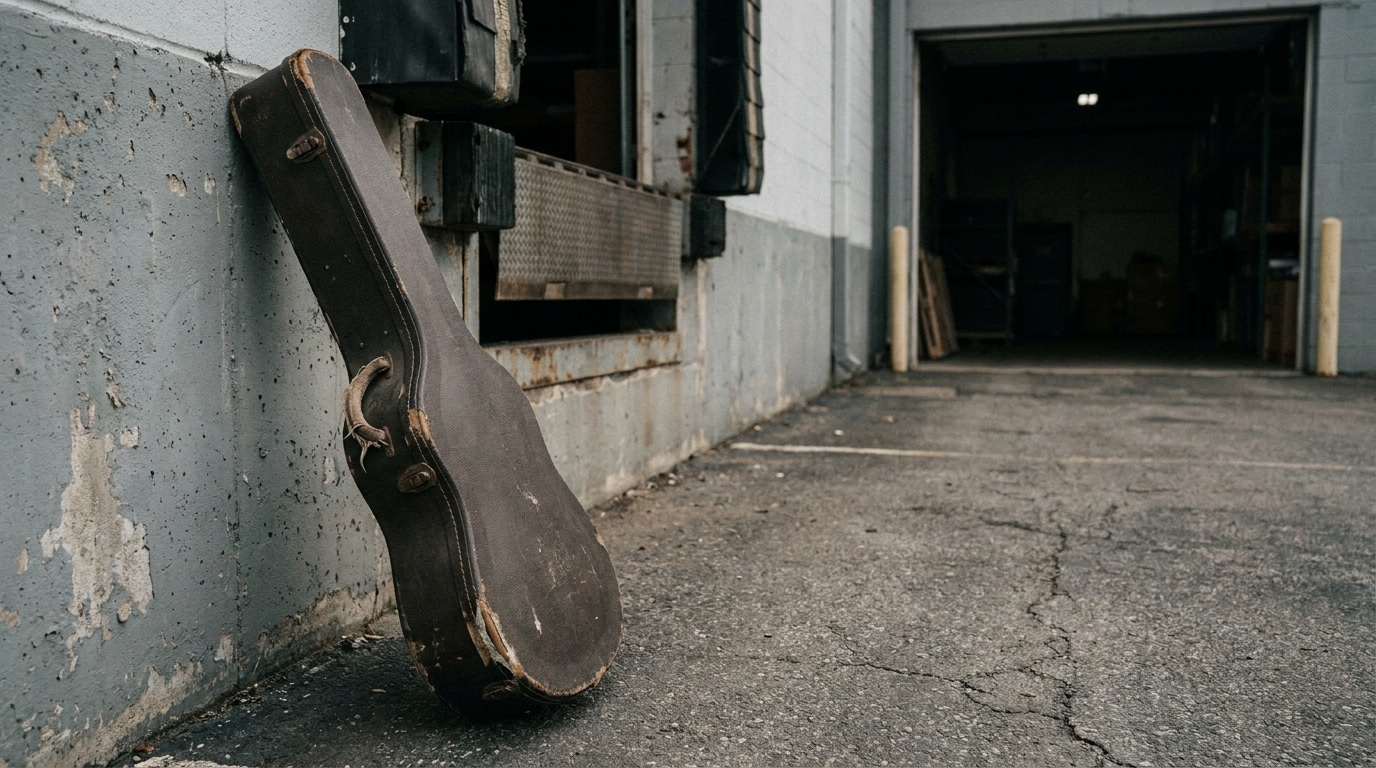
Touring creates a strange relationship between musicians and their belongings. The objects packed into a van, trailer, or flight case may travel thousands of miles in a year. They appear in dressing rooms, loading docks, hotels, studios, and venues that may otherwise blur together. Practical items become familiar anchors within a constantly changing environment.
That repeated use can give ordinary gear emotional significance. A case may have been present for a first major show, an important recording session, or an exhausting tour that later becomes a favorite story. Scratches and worn edges become reminders rather than flaws. The object’s value begins to extend beyond what it originally cost.
Customization Turns Utility Into Identity
Musicians have long personalized the objects around them. Stickers on cases, handwritten labels, custom straps, painted instruments, unusual picks, and carefully chosen accessories all allow practical gear to become expressive. This personalization often develops gradually rather than as part of a coordinated branding strategy. The result can feel more authentic precisely because it was never planned.
Customization can also serve practical purposes. Labels help identify equipment in a crowded venue, bright colors make items easier to spot, and distinctive markings reduce the chance of gear being confused with someone else’s. Function and personality overlap naturally. An object can become more useful and more personal at the same time.
Offstage Life Shapes Music Style Too
The public usually sees musicians onstage, in photographs, or in carefully edited videos. Working musicians spend far more time doing ordinary things. They load equipment, wait for soundcheck, travel between cities, find food late at night, sit in airports, rehearse, and pack everything up again after the show. Much of musician style evolves in those less glamorous hours.
Comfort therefore becomes an important part of the wardrobe. Jeans, boots, jackets, backpacks, hats, and other durable staples remain common partly because they can handle the demands of travel. A musician may need to move equipment in the afternoon and still look appropriate when meeting fans or industry contacts later. Clothing that works across several situations becomes valuable.
Authentic Style Usually Develops Instead of Being Designed
The most memorable musician aesthetics rarely come from choosing every detail at once. They develop through repetition. A favorite jacket appears at dozens of shows, one instrument becomes closely associated with a performer, and a certain type of boot becomes the obvious choice because it works night after night. Eventually, those repeated choices become recognizable.
That does not mean musicians never think deliberately about image. Visual identity can be an important part of performance, marketing, and storytelling. The difference is that lasting style usually has some connection to the person’s actual habits. An image that requires constant effort to maintain can be difficult to sustain through years of touring and creative work.