


Many people think herbal drinks work instantly, but most support the body over time through consistent habits, balanced routines, and realistic expectations rather than quick overnight changes.
Saffron tea benefits are often connected with mood, relaxation, antioxidant activity, and general wellness support, although research still continues in several important health-related areas.
Here you’ll find practical information about possible health effects, safety concerns, preparation methods, and realistic expectations before adding saffron tea to a regular wellness routine.
What Is Saffron Tea?
Saffron tea is made by steeping saffron threads in hot water for several minutes. It has a mild floral taste and comes from the Crocus sativus flower.
Saffron contains compounds like crocin, crocetin, safranal, and picrocrocin, which may support overall wellness. Since each flower produces very few threads, saffron is costly and highly concentrated.
Saffron tea differs from culinary saffron and concentrated saffron supplements used in research.
Drinking it occasionally may support general wellness, but it is not equal to therapeutic supplementation.
Saffron Tea Benefits That Actually Work
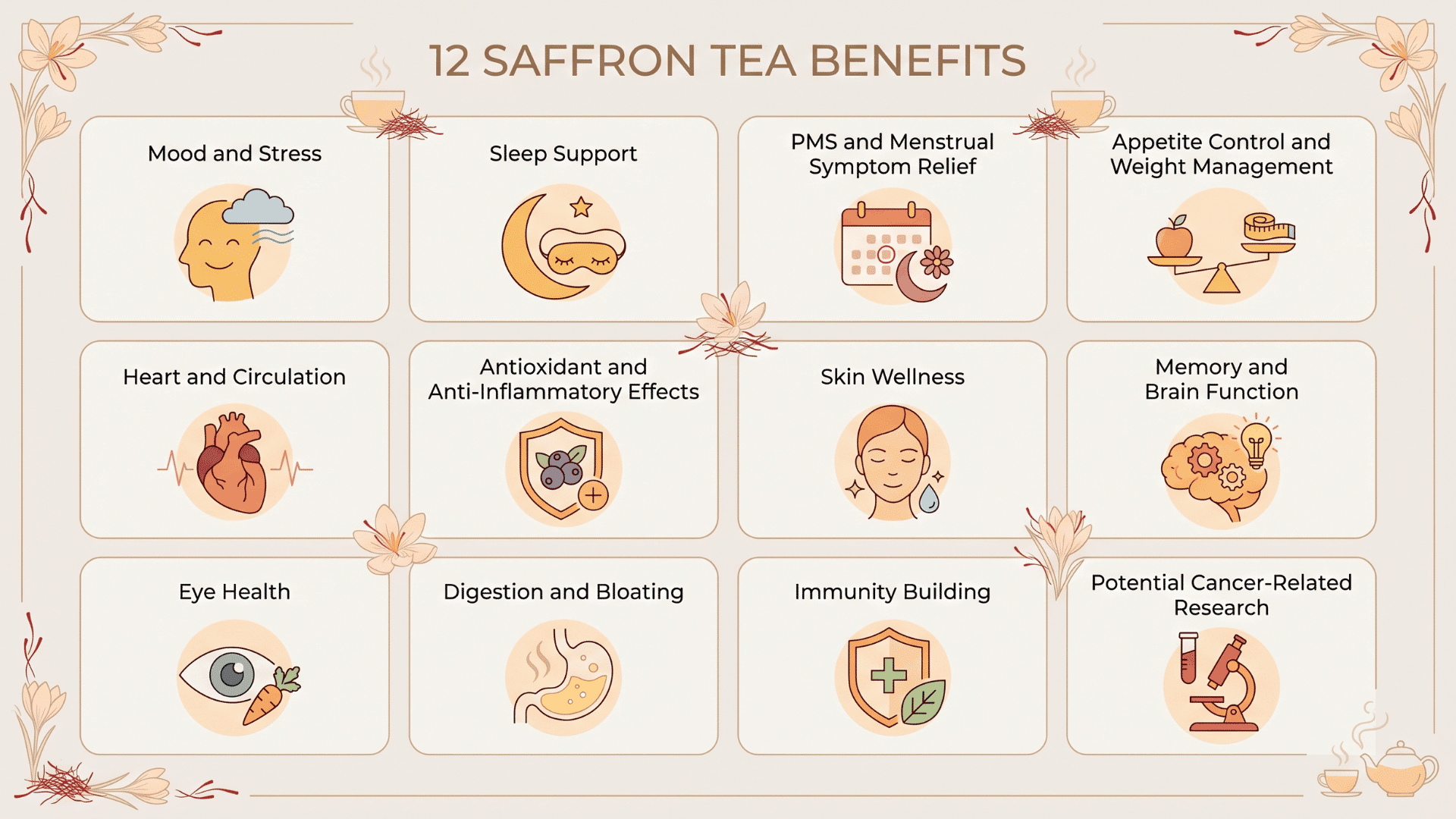
Saffron tea contains plant compounds linked with mood, relaxation, and overall wellness support.
Research is still developing, and most benefits are connected with regular, moderate consumption.
1. Mood and Stress Support
Saffron is sometimes called the “sunshine spice” because it may support mood and emotional balance.
Crocin and safranal may affect serotonin activity linked with stress responses. Antioxidant effects may also help lower oxidative stress connected with mood-related concerns.
A review published in the Journal of Integrative Medicine found saffron showed effects comparable to some antidepressants for mild to moderate depression in certain clinical studies.
Warning: Saffron tea may support relaxation gradually, but it is not equal to prescription medication or concentrated clinical extracts used in research.
2. Sleep Support
Saffron may help relaxation and sleep quality in some people, especially when consumed in the evening. Safranal may affect calming pathways linked with sleep regulation and nighttime relaxation.
Lower stress levels and balanced mood may also indirectly support better sleep patterns. Some people drink saffron tea at night because it may support melatonin-related processes.
Some people also pair saffron tea with calming nighttime habits like limiting screen time and reducing caffeine intake, which may help create a more consistent sleep routine over time.
Keep in mind: Long-term insomnia and severe sleep issues usually need proper medical evaluation. Saffron tea may support relaxation, but it is not a complete sleep treatment.
3. PMS and Menstrual Symptom Relief
PMS symptoms are often linked with hormone changes, inflammation, and neurotransmitter shifts that affect both emotional and physical health during menstrual cycles.
May help with:
- Irritability
- Mood swings
- Mild discomfort
- Stress-related symptoms
Some clinical studies found saffron may help lower PMS symptom severity, including mood-related discomfort in certain women. Severe pain, PMDD, irregular bleeding, and underlying conditions still require medical care.
4. Appetite Control and Weight Management
Saffron may help reduce emotional eating and unnecessary snacking, especially when cravings are linked with stress, mood changes, or irregular eating habits.
Possible reasons may include:
- Serotonin-related appetite regulation
- Lower stress eating
- Better mood balance
Saffron tea does not directly burn fat or create major weight loss. Results are usually modest and depend heavily on overall diet, sleep, and physical activity.
5. Heart and Circulation Support
Saffron contains antioxidants that may help lower oxidative stress linked with inflammation and arterial strain. Some research also connects saffron compounds with healthier cholesterol and blood pressure levels.
Its antioxidant and anti-inflammatory properties may support blood vessel function and overall circulation. These effects may help reduce stress placed on the heart over time.
Saffron tea may support heart health as part of a balanced lifestyle, but it should not replace prescribed medication or medical treatment for heart-related conditions.
6. Antioxidant and Anti-Inflammatory Effects
Crocin and crocetin are saffron compounds that may help fight free radical damage linked with aging and long-term cellular stress inside the body.
| What Antioxidants May Do | What They Do Not Do |
|---|---|
| Help protect cells from oxidative stress | “Detox” the body instantly |
| Support normal cell function | Remove toxins magically |
| Support overall wellness | Replace healthy habits |
Lower oxidative stress and inflammation may support overall wellness. Saffron tea mainly supports natural protective processes already present in the body.
7. Skin Support
Saffron tea contains antioxidants that may help protect skin cells from oxidative damage caused by pollution, stress, and environmental exposure over time.
What may help: Lower inflammation and reduced stress levels may also support clearer-looking skin, especially in people whose skin concerns are linked with cortisol and emotional stress.
Saffron tea alone will not treat acne, eczema, pigmentation disorders, or other skin conditions. Visible skin changes usually depend on skincare, diet, sleep, and overall health.
8. Memory and Brain Function Support
Research on crocin and crocetin suggests saffron may support learning, memory, and certain brain function pathways linked with long-term cognitive health.
Some studies also examine saffron’s possible neuroprotective effects. Lower oxidative stress may help support brain health because oxidative damage is often connected with age-related cognitive decline.
Caution: Current research on saffron and brain health is still developing, especially for tea compared with concentrated extracts.
9. Eye Health Support
Crocin may help protect retinal cells from oxidative stress, which can affect eye health over time as the body ages naturally.
| Possible Support | Important Limitation |
|---|---|
| Antioxidant protection for retinal cells | Research is still limited |
| Support for healthy circulation near the eyes | Not a treatment for eye diseases |
Some early studies connect saffron with support for age-related eye health, but stronger human research is still needed before clear conclusions can be made.
10. Digestive and Bloating Support
Warm herbal teas are often linked with relaxation and digestive comfort, especially after meals or during periods of stress and stomach discomfort.
Saffron’s anti-inflammatory properties may support digestion in some people. Some users also report lower bloating and improved stomach comfort after drinking saffron tea regularly.
Evidence for digestive support is less established compared with saffron’s mood-related research. Effects may vary depending on eating habits, stress levels, and overall digestive health.
11. Immune Support
Saffron contains antioxidants that may help protect immune cells from oxidative stress caused by daily environmental and metabolic processes inside the body.
Its anti-inflammatory properties may also support normal immune function and overall wellness when combined with healthy sleep, nutrition, and regular physical activity.
Some researchers are also studying how saffron compounds may support communication between immune cells involved in normal inflammatory and stress-related responses inside the body.
Key point: Saffron tea supports normal immune function but should not be viewed as an instant immunity solution or replacement for healthy lifestyle habits.
12. Potential Cancer-Related Research
Some laboratory studies examine saffron compounds and their possible effects on cancer-related pathways, including antioxidant activity and abnormal cell growth processes.
Researchers are still studying how crocin, crocetin, and other saffron compounds may interact with cells under controlled laboratory conditions and experimental models.
| What Research Shows | What It Does Not Mean |
|---|---|
| Early laboratory findings appear promising | Saffron tea is not a cancer treatment |
| Antioxidant activity is being studied | Results are not guaranteed in humans |
| Effects on abnormal cell growth are under study | It should not replace medical care |
Is Saffron Tea Safe for Everyone?
Most people usually consume 1 to 2 cups of saffron tea daily without major problems. However, excessive saffron intake may increase the risk of unwanted side effects and discomfort.
Use caution if you:
- Are pregnant
- Take blood thinners
- Use antidepressants
- Have bipolar disorder
- Take blood pressure medication
Possible side effects from excessive intake may include headache, nausea, dizziness, and drowsiness in some people. Reactions may vary depending on dosage, medications, and overall health conditions.
Pro Tip: More saffron does not automatically create stronger health benefits. Moderate intake is generally considered the safer and more practical approach.
Wrapping Up
Saffron tea benefits may include support for mood, relaxation, digestion, antioxidant activity, and overall wellness when consumed regularly alongside balanced lifestyle and nutrition habits.
Research around saffron continues growing in areas linked with sleep, emotional balance, cognitive support, and inflammation, although stronger evidence is still needed for several claims.
Now you know where saffron tea may help, where research remains limited, and why moderate intake matters more than exaggerated claims or unrealistic health expectations.
Have you tried saffron tea before? Share your personal experiences in the comments so readers can compare different real-life experiences and routines.
Frequently Asked Questions
Can you Drink Saffron Tea Every Day?
Most people can drink 1 to 2 cups daily in moderate amounts. excessive intake may increase the risk of side effects, especially for people taking certain medications.
What Is the Best Time to Drink Saffron Tea?
Many people prefer drinking saffron tea in the evening because it may support relaxation and sleep. some also drink it after meals for digestive comfort and stress support.
Does Saffron Tea Contain Caffeine?
Pure saffron tea is naturally caffeine-free because saffron threads do not contain caffeine. However, caffeine content may vary if saffron is mixed with black or green tea.