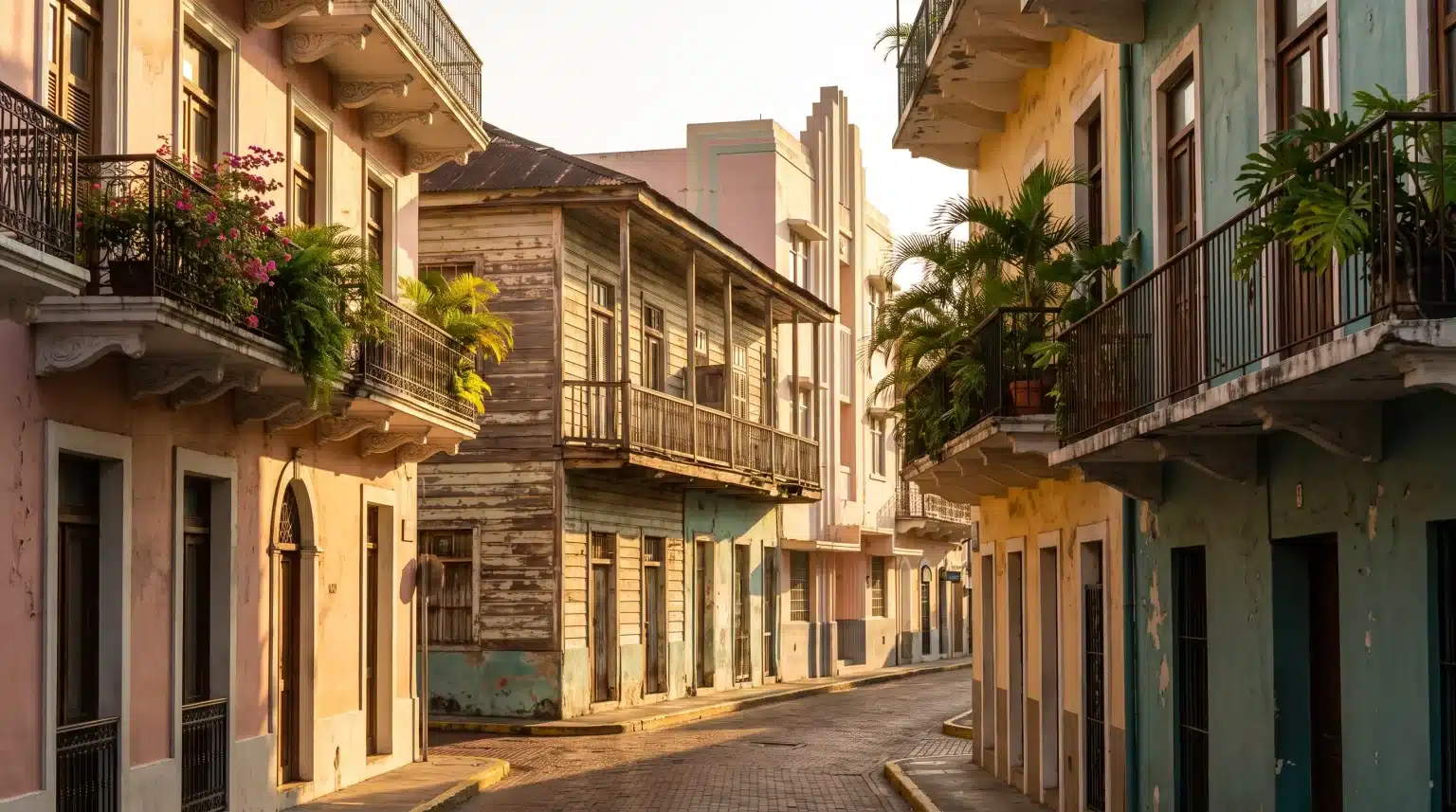
Say “Panama” to most people and they picture a canal, a hat that’s actually from Ecuador, and not much else. What they’re missing is fifteen minutes away from the canal’s Pacific entrance: a peninsula of pastel facades, wrought-iron balconies, and restored 1920s hotels that architecture writers have started comparing to Havana and Cartagena, except with half the crowds and a fraction of the Instagram traffic. It’s called Casco Viejo, and it’s had one of the more interesting design turnarounds in Latin America over the past decade — quietly, and mostly without the tourist board’s help.
A Neighborhood Built From Three Different Cities
Casco Viejo exists because the original Panama City got burned down. In 1671, the pirate Henry Morgan sacked the settlement now known as Panamá Viejo, and the survivors relocated to a more defensible peninsula and started over in 1673. That new city then went through its own string of fires over the following century, which means almost nothing standing today is actually colonial in the way people expect.
Instead, the neighborhood got rebuilt in layers: Spanish colonial bones, French-influenced facades added during the canal construction era, Caribbean and Afro-Antillean timber balconies brought by Caribbean laborers, and a wave of Art Deco and Republican-era buildings from the early 1900s. Most old colonial towns read as one era frozen in place. Casco Viejo reads more like three or four cities stacked on top of each other, which is exactly why it doesn’t look like anywhere else on the isthmus.
The Architecture Doesn’t Match, and That’s the Point
Walk two blocks in any direction and the style changes completely. Plaza Bolívar sits near ornate French-style ironwork; a few streets over, Plaza Herrera is ringed by buildings with the wide wooden balconies more typical of Caribbean port towns. Inside the ruins of the Santo Domingo convent, there’s a flattened brick archway known as the Arco Chato, built with no keystone and no visible support.
It stood for roughly 250 years, long enough that its stability was reportedly cited as evidence Panama was seismically safe when the canal route was being chosen over Nicaragua. It finally collapsed in 2003 and was rebuilt a few years later using salvaged brick from the original — a small, specific example of the same restore-rather-than-replace instinct that shaped the rest of the neighborhood.
Nearby, the Iglesia de San José holds its famous gold-leaf altar, which local lore claims survived Henry Morgan’s raid because a priest had it painted black to disguise it as worthless. None of it is coordinated. That’s what makes it worth the walk — this is a neighborhood that grew from necessity and rebuilding, not from a single planned aesthetic.
Where the Restoration Actually Worked
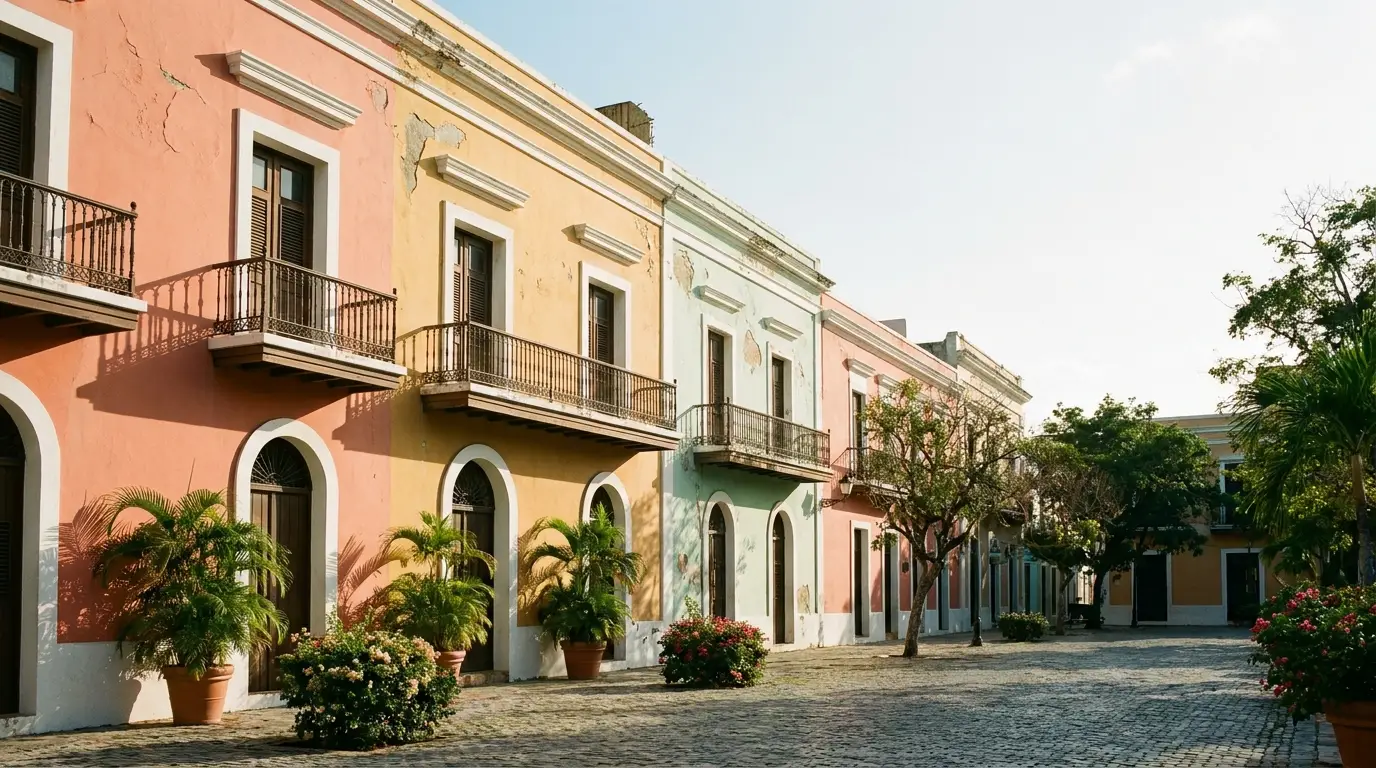
Casco Viejo spent decades as the kind of historic district everyone agreed was beautiful and nobody wanted to invest in — by the 1990s, plenty of its buildings were genuinely close to collapse. What changed it wasn’t one renovation, but a slow accumulation of smaller ones.
The American Trade Hotel, housed in a restored early-1900s building on Plaza Herrera, became something of an anchor point for the area’s design-conscious visitors, and it opened the door for smaller restoration projects around it, including buildings brought back by local firms working structure-by-structure rather than block-by-block.
Independent cafés, design studios, and jazz venues moved into ground floors that had been vacant for years. The pace has stayed slow enough that the neighborhood still feels lived-in rather than staged, which is rarer than it should be for a district that earned UNESCO World Heritage recognition back in 1997 — a listing that was expanded again as recently as 2025.
How to See It if You’re Only in Panama City for a Day
This is the part that makes Casco Viejo unusually convenient: it’s genuinely a half-day trip, not a full one. Panama City’s cruise port at Fuerte Amador docks ships directly, no tender required, and it sits close enough to the old town that a taxi ride covers the distance in well under half an hour. Anyone arriving during Panama Canal cruises has a rare window most travelers to Latin America’s colonial cities don’t get — a UNESCO-listed historic district reachable on a short shore excursion instead of a multi-hour transfer. Mornings are the better window before the afternoon heat sets in; a walk through the four main plazas, a stop at the Arco Chato, and a coffee at one of the ground-floor cafés is a realistic amount to cover without rushing.
“Best-kept secret” is a phrase travel writers overuse, but Casco Viejo has an actual expiration date on the label. Boutique hotels keep opening, more buildings get restored every year, and a neighborhood with this much design history rarely stays quiet once word gets out. Right now it’s still a place where a genuinely rebuilt convent arch sits a block from a jazz bar that used to be a ruin, and neither one feels like it’s performing for visitors. That balance is the whole appeal, and it’s the kind of thing that tends not to last.