

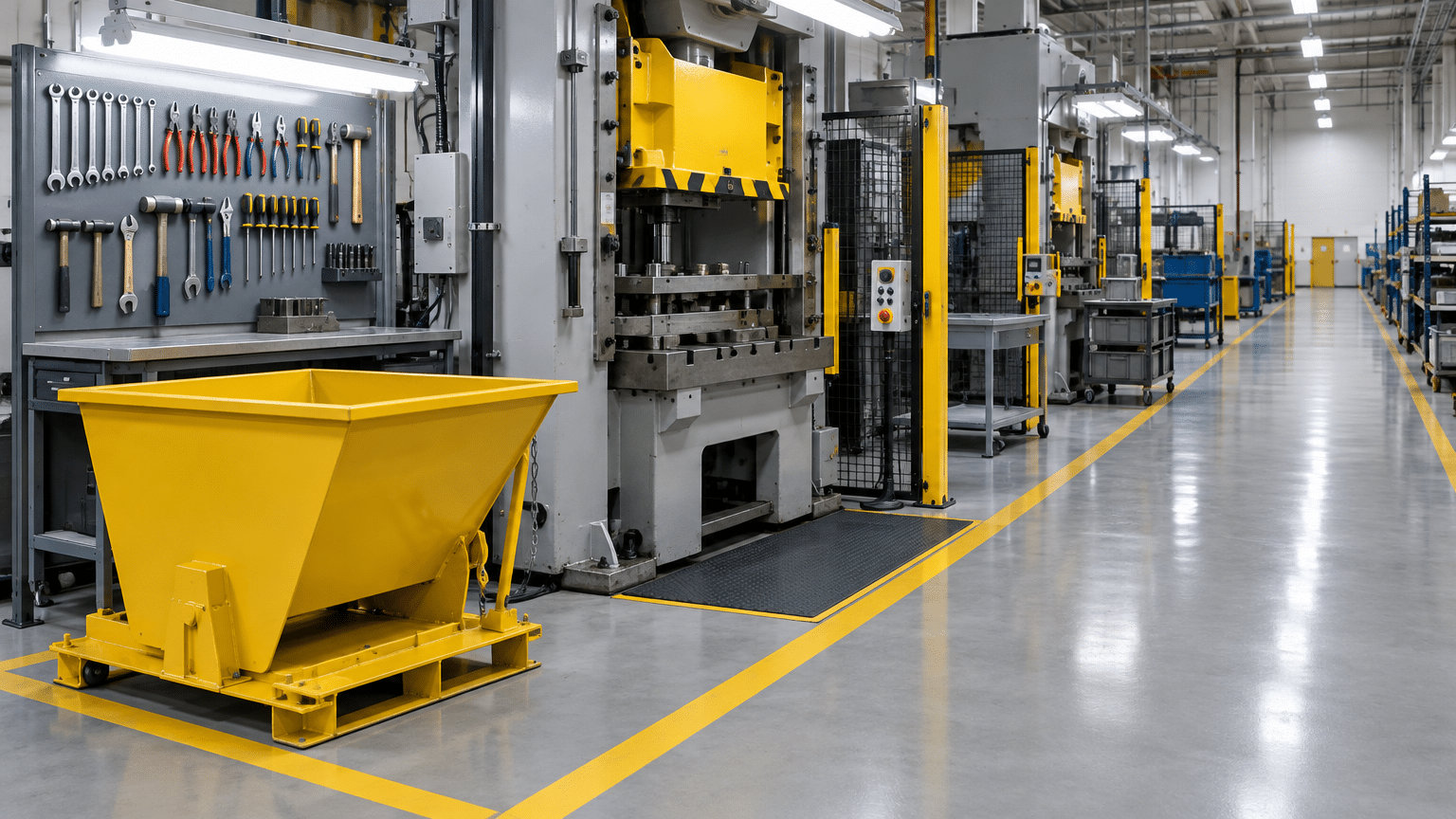
Enter any manufacturing operation that functions efficiently, and what you are likely to notice first is not the rate of the assembly line or its sophisticated technology. What you will notice first is the floor. Open transit paths, staging areas, and a lack of extraneous material are not aesthetic decisions made by accident. These are operational decisions made with the intent to preserve margins.
Today’s operations management debates center around expensive capital investments for things like automated guided vehicles, sensors, or cloud-based enterprise systems. Margin pressure is often the result of inefficiencies resulting from friction within the process, in the form of clutter, wasted motion, and disorganized work areas. While the 5S methodology (Sort, Set in Order, Shine, Standardize, Sustain) is all too often belittled as simply a list of janitorial tasks, an efficient facility recognizes this as a driver of efficiency.
The True Cost of Micro-Disruptions
Operational loss on the manufacturing floor is unlikely to take the form of an abrupt line stoppage. Rather, loss happens through small delays that frequently go unnoticed:
- The operator who takes thirty steps back and forth to find his misplaced hand tool
- The material handler who slows down every few steps to maneuver around congested pathways
- The technician who resets his workpieces since the bench is filled with too many tools
Each one of these short stops seems insignificant enough. In aggregate, for a workforce in its entirety and spread out across three shifts per day, they amount to hundreds of lost manufacturing hours every quarter. Besides the pure loss in terms of time, the state of disorganization also places a continual strain on cognitive functioning. The cluttered workbench requires constant sorting through, speeding up employee exhaustion, increasing assembly mistakes, and causing repetitive strain injuries.
Designing the Floor for Continuous Flow
Good lean housekeeping is not about rushing through a quick cleanup at the end of a shift. The layout should be designed in such a way that there is no accumulation of secondary material near the running machines. Bulk waste coming out of cutting, stamping, and milling lines should not interfere with the manufacturing process.
To prevent production cells from choking on their own byproducts, forward-planning plants position dedicated bulk-removal hardware directly along perimeter aisles. In operations handling high volumes of metal cut-offs or heavy packaging waste, staging balanced self-dumping hoppers adjacent to high-output cells allows forklift operators to capture, transport, and discharge massive loads into central collection bins without leaving the driver’s cab. Treating byproduct handling with dedicated mechanical transit preserves open lanes, eliminates manual double-handling, and keeps material handlers synchronized with the broader logistics loop.
The sorting of waste material at the production area offers a second, but important, financial benefit through the assessment of the value of raw scrap material. A mix of metals, mixed plastic materials, and offcuts covered in oil, for instance, receive far less waste credit than is possible. Through the use of special collection bins for individual alloys or packaging materials at the workstation, contamination is avoided even before it can happen.
Housekeeping as an Early Warning Indicator
Beyond keeping transit routes clear, a clean facility serves as an essential visual diagnostic tool. In a pristine production environment, mechanical anomalies register instantly:
- A hairline hydraulic leak under a stamping press stands out immediately on a clean, light-colored floor coating, whereas an oily surface conceals it until pressure drops completely.
- A sheared fastener, worn seal fragment, or metal shaving alerts technicians to premature component wear the moment it drops from an assembly head.
In this context, orderly maintenance is a fundamental component of Total Productive Maintenance (TPM). An environment that exposes machine degradation before it triggers a catastrophic failure directly shields gross margins against unscheduled downtime and expensive rush repairs. Combining visual inspections with preventive maintenance practices gives maintenance teams a better chance of identifying equipment problems before they develop into costly production interruptions.
There is also a profound regulatory and liability benefit to maintaining an inherently clean operation. The Occupational Safety and Health Administration (OSHA) walking-working surfaces standards mandate that all places of employment, passageways, and storerooms remain clean, orderly, and sanitary. During unexpected safety walkthroughs or environmental compliance inspections, an orderly shop floor signals institutional control and operational competence.
Facilities burdened with obstructed emergency pathways, slippery coolant residue, or precarious waste piles face elevated insurance premiums and severe non-compliance citations. Clear, documented housekeeping standards insulate the balance sheet against these avoidable regulatory costs long before an inspector ever steps across the threshold.
Sustaining the Habit
The primary reason 5S programs fail is that management often treats tidying as an unpaid tax levied at shift change rather than an integrated production standard. When maintaining order demands excessive manual effort, adherence inevitably drops under tight production deadlines.
Long-term success depends on reducing physical friction through intuitive workstation design:
- Shadow boards mounted within direct forearm reach so tools return to place automatically
- Fixed visual boundary markings that define precise storage footprints for raw stock and WIP carts
- Designated disposal points engineered to accept scrap at the exact point of generation
When keeping a work cell orderly requires less physical exertion than allowing it to decay into clutter, standard procedures sustain themselves. Margin expansion in manufacturing remains an accumulation of deliberate, minor advantages. Maintaining a disciplined workspace is not an aesthetic indulgence, but one of the most cost-effective methods to protect cycle time, operator safety, and equipment reliability.