
Does your forehead get oily while your cheeks feel dry, even after using the same skincare products? It can be confusing when different parts of your face need different care, making it hard to choose skincare products.
This is common with combination skin, but the signs aren’t always easy to recognize. The clues might be a shiny nose, tight cheeks, or moisturizer that feels heavy in places.
Even your skin’s reaction to a cleanser or moisturizer can clue you into what it needs. That’s why paying attention to how your skin feels throughout the day matters.
Once you know your skin type, it’s easier to choose what works for you and build that routine you’ve always wanted.
Key Takeaways
- Combination skin has an oily T-zone (forehead, nose, and chin) with cheeks that feel dry or normal.
- Common signs include facial shine, dry patches, visible pores, occasional breakouts, and uneven makeup wear.
- Simple at-home tests, such as the bare-face and blotting paper tests, can help identify combination skin.
- Genetics, hormones, weather, age, and skincare products can influence oil production and skin dryness.
- A balanced skincare routine should include gentle cleansing, lightweight moisturizing, daily SPF 30 or higher, and targeted treatments when needed.
- Avoid harsh scrubs and over-cleansing, as they can irritate dry areas and disrupt the skin’s moisture barrier.
What Is Combination Skin?
Combination skin is a skin type where different parts of your face have different needs. Some areas produce more natural oil (sebum), while others produce less. The T-zone usually has more active oil glands than the cheeks, which is why the two areas behave so differently.
This means your skin doesn’t fit completely into the oily or dry skin category.
Having this skin type can make skincare a little confusing. A product that feels comfortable on one part of your face may feel too heavy or not moisturizing enough on another.
It’s also completely normal for your skin to change with the weather or seasons.
The key is understanding that combination skin needs a balance of hydration and oil control, not the same treatment across your entire face.
Signs You Have Combination Skin
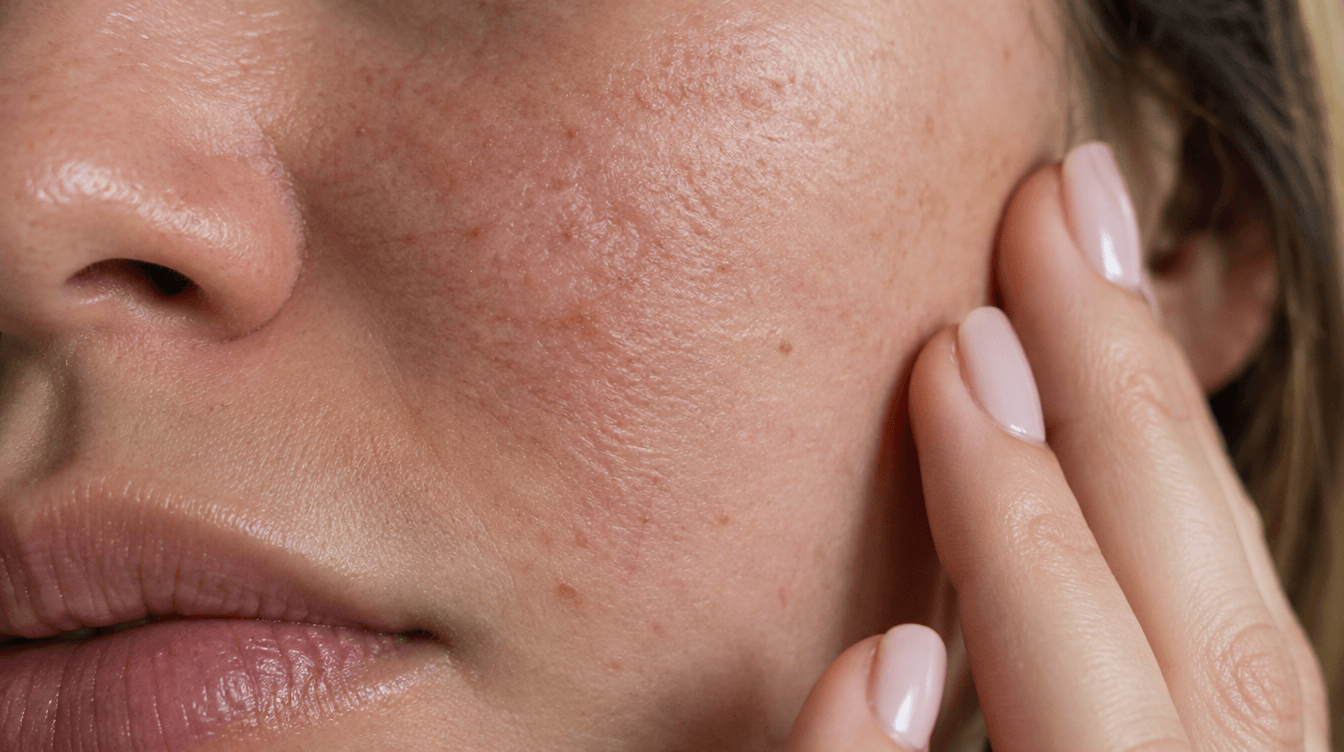
- Oily T-Zone: Your forehead, nose, and chin tend to produce more oil, so these areas can look shiny even a few hours after you wash your face.
- Dry or Tight Cheeks: While your T-zone feels oily, your cheeks may feel rough or tight, especially after cleansing or during colder weather.
- Visible Pores: You may notice larger-looking pores around your nose and forehead, where excess oil can make them more noticeable than on your cheeks.
- Occasional Blackheads and Breakouts: Blackheads or pimples may appear more often around your nose and chin because excess oil and dead skin cells can clog pores.
- Uneven Makeup Finish: Foundation might look patchy on drier areas and wear off faster on your nose, which is where matching your primer to your skin type really helps.
How to Test for Combination Skin at Home
You don’t need any special tools to understand your skin type. These two simple tests can help you see how different areas of your face behave.
The Bare-Face Test
Step 1: Wash your face with a gentle cleanser and pat it dry using a soft towel.
Step 2: Leave your skin bare for about 30 minutes without applying moisturizer, serum, or any other product.
Step 3: Check how your skin looks and feels. If your forehead, nose, and chin feel oily while your cheeks remain dry or normal, you likely have combination skin.
My suggestion is to repeat another day and compare; one check isn’t the final verdict.
The Blotting Paper Test
Step 1: Start with a clean face and wait about 30 minutes without applying skincare products.
Step 2: Take separate pieces of blotting paper and gently press them against your forehead, nose, chin, and cheeks.
Step 3: Hold each paper up to the light and check for oil marks.
If the papers from your T-zone show more oil than those from your cheeks, it may indicate combination skin. Treat the result as a helpful clue, and see a dermatologist if your skin also itches, flakes, or stays red.
What Causes Combination Skin?
Unequal oil production can have several influences, more than one might apply to your face.
- Genetics: Your genes influence how much oil different areas of your face naturally produce.
- Hormonal Changes: Hormonal fluctuations during puberty, periods, or pregnancy can affect your skin’s natural oil production.
- Weather Changes: Hot weather can increase oiliness, while cold weather may leave certain areas feeling dry.
- Skincare Products: Harsh cleansers and unsuitable products can strip moisture and leave you with a damaged skin barrier, making dry areas feel even drier.
- Age: Natural oil production often decreases with age, which can change how your skin feels.
Best Ingredients for Each Zone of Combination Skin
Matching ingredients to each zone keeps oily areas clear without drying out your cheeks. Use this table as a quick shopping reference.
| Zone | Main Goal | Ingredients to Look For | Best Texture |
|---|---|---|---|
| T-zone (forehead, nose, chin) | Control shine and clogged pores | Salicylic acid, niacinamide | Gel, gel-cream, or fluid |
| Cheeks | Restore moisture and comfort | Ceramides, glycerin, hyaluronic acid | Lotion or light cream |
| Whole face | Protect from UV and support the barrier | Broad-spectrum SPF 30+, ceramides | Lightweight and oil-free |
Among these ingredients, niacinamide may be particularly helpful for oily areas. A study in the Journal of Cosmetic and Laser Therapy found that a 2% niacinamide moisturizer significantly lowered sebum excretion in Japanese participants after two and four weeks of use.
Building a Skincare Routine for Combination Skin
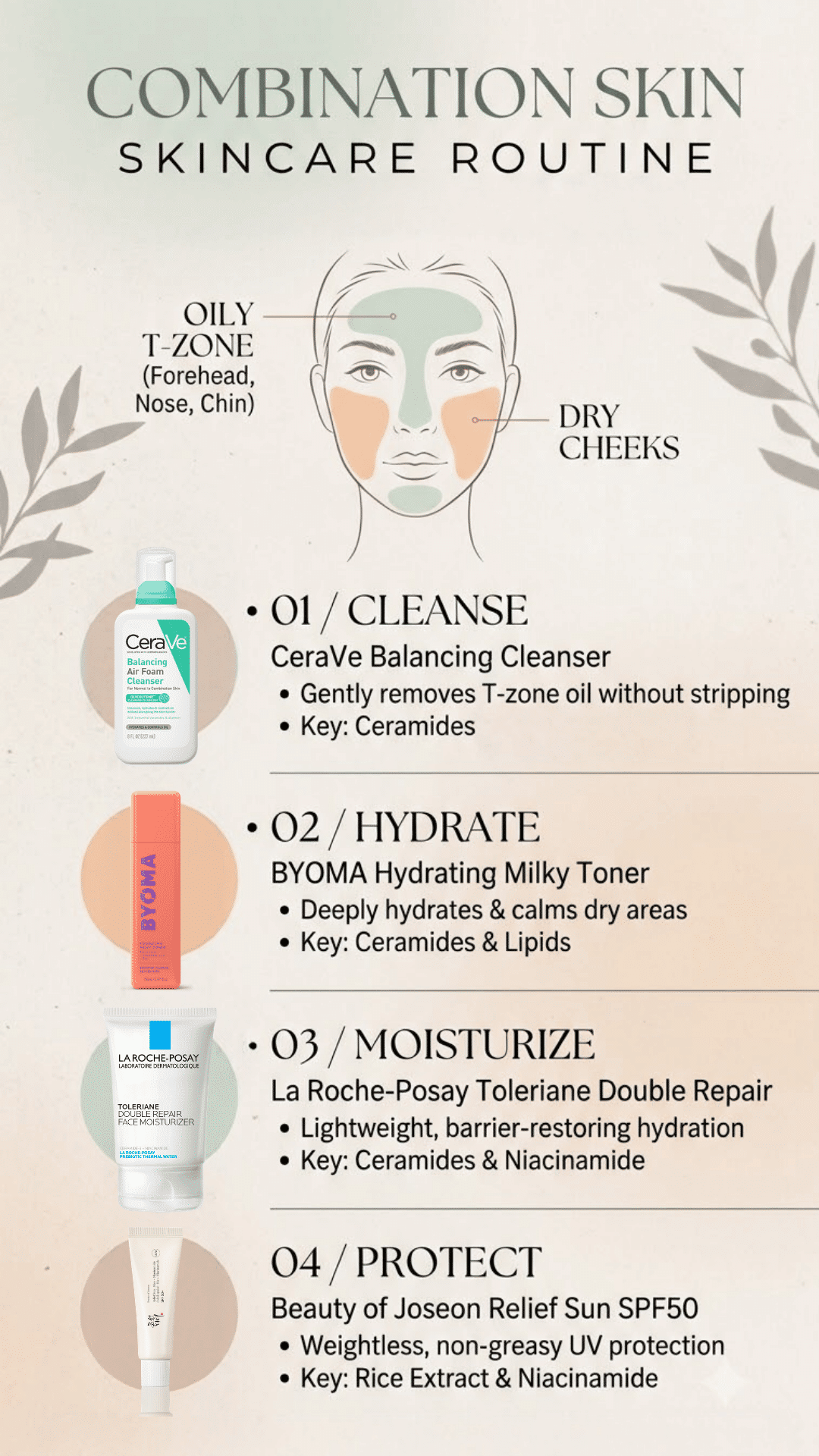
A good skincare routine for combination skin should control oily areas without leaving dry areas feeling tight. You don’t need too many products, just a few that work well for your skin.
Morning Skincare Routine
- Cleanse: Choose a mild gel or foam cleanser like CeraVe Balancing Air Foam Facial Cleanser that removes excess oil without stripping moisture from your drier areas.
- Hydrate: If your skin feels tight after cleansing, an alcohol-free toner can provide extra hydration. BYOMA Hydrating Milky Toner contains ceramides and hydrating ingredients that support your skin barrier.
- Moisturize: Use a moisturizer such as La Roche-Posay Toleriane Double Repair Face Moisturizer with hyaluronic acid or glycerin to hydrate dry areas without feeling too heavy on your T-zone.
- Finish With Sunscreen: Apply a broad-spectrum SPF 30 or higher sunscreen with a lightweight formula like Beauty of Joseon Relief Sun to protect your skin from UV damage.
Nighttime Skincare Routine
At night, focus on removing the day’s buildup and keeping your skin hydrated while you sleep.
- Remove Makeup and Sunscreen: Use micellar water or a gentle makeup remover to clear away makeup and sunscreen without irritating dry areas.
- Cleanse: Follow with a gentle cleanser to remove remaining dirt and excess oil while keeping your skin’s natural moisture barrier comfortable.
- Apply Targeted Treatments: If you have clogged pores or closed comedones, a salicylic acid product may help oily areas. Start slowly and avoid applying it to irritated or dry patches.
- Moisturize: Apply a moisturizer with ceramides or glycerin to support your skin barrier. You can use a little extra on areas that feel dry.
Weekly Extras: Exfoliation and Multi-Masking
Your T-zone may benefit from regular exfoliation, while your cheeks often need it less. The American Academy of Dermatology notes that stronger methods should be used less often and that over-exfoliating can leave skin red and irritated.
Start with a gentle chemical exfoliant once a week. Multi-masking also suits this skin type well.
Spread a clay mask on your forehead, nose, and chin, and a hydrating cream mask on your cheeks. Rinse both off once the time on the label is up.
Disclaimer: This is general skincare information, not medical advice. If you have persistent acne, irritation, or a skin condition, check with a board-certified dermatologist before starting active treatments.
How to Adjust Your Routine by Season
Combination skin often shifts with the weather, so your routine should shift with it. In summer, heat and humidity can make your T-zone oilier.
Swap a cream moisturizer for a gel-cream, keep blotting papers in your bag, and reapply sunscreen when you spend time outdoors. Winter brings the opposite problem. Cold air and indoor heating can leave your cheeks tight or flaky, so use a richer cream on those dry areas only.
The American Academy of Dermatology suggests applying moisturizer while skin is still damp and looking for ingredients like glycerin, hyaluronic acid, or shea butter. Your cleanser and sunscreen can usually stay the same all year.
Most people only need to change one or two steps, typically the moisturizer and how often they exfoliate. Give each change a few weeks before you judge the result.
Dos and Don’ts for Combination Skin
| Dos | Don’ts |
|---|---|
| Use lukewarm water to wash your face gently. | Avoid hot water as it can dry out your skin. |
| Use a soft towel and pat your skin dry. | Don’t rub your face roughly after washing. |
| Keep your makeup brushes clean to reduce product buildup. | Don’t sleep with makeup on, as it can clog pores. |
| Watch for skin changes across seasons. | Don’t stick to products that leave your skin uncomfortable. |
| Choose gentle exfoliation based on your skin’s needs. | Don’t scrub your face to remove excess oil. |
The American Academy of Dermatology advises testing new products on your inner arm twice daily for 7 to 10 days. Don’t start several new products in the same week.
Final Thoughts
Caring for combination skin doesn’t have to feel like a constant struggle between dryness and oiliness. Once you understand your skin type, choosing the right products becomes much easier.
For me, skincare isn’t about using every trending product or following a complicated routine. It’s about paying attention to how your skin responds and making small changes when needed.
Remember, your skin won’t always behave the same way, and that’s perfectly normal.
I’d love to hear about your experience with combination skin. What has worked best for you? Share your thoughts in the comments below!
Frequently Asked Questions
Which Skin Type Is Rare?
No skin type is scientifically confirmed as the rarest. Skin type prevalence varies by age, genetics, climate, and classification method.
What Ingredients Are Bad for Combination Skin?
High concentrations of denatured alcohol, harsh cleansers, and strong fragrances may worsen dryness or irritate sensitive areas.
How Often Should You Exfoliate Combination Skin?
Start once a week with a gentle chemical exfoliant. Increase slowly if your skin stays calm, and stop if you notice redness, stinging, or flaking.
What Skincare Should You Never Mix?
Avoid layering retinol with strong exfoliating acids like glycolic or salicylic acid in the same routine unless advised by a dermatologist, as irritation may increase.