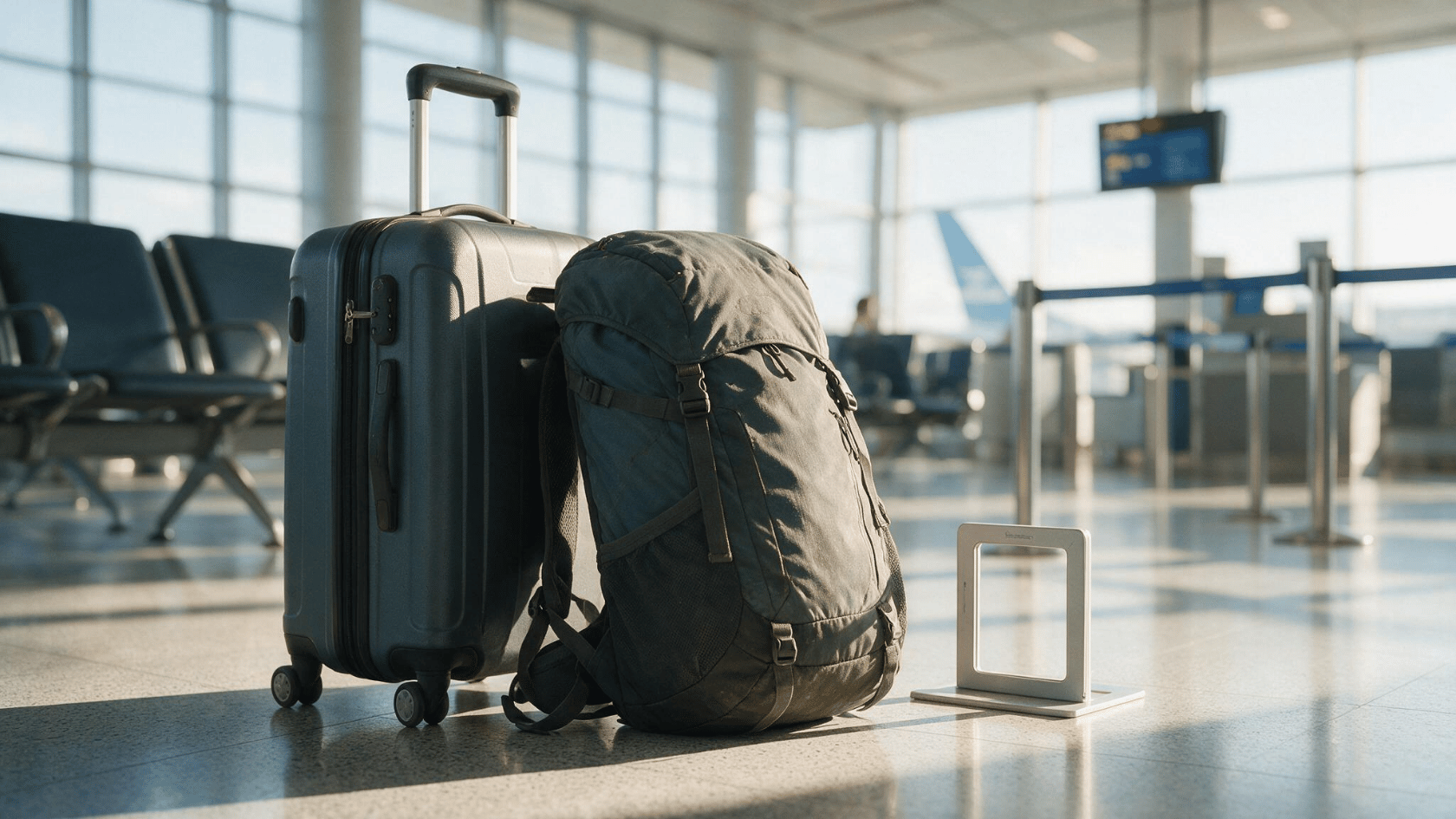

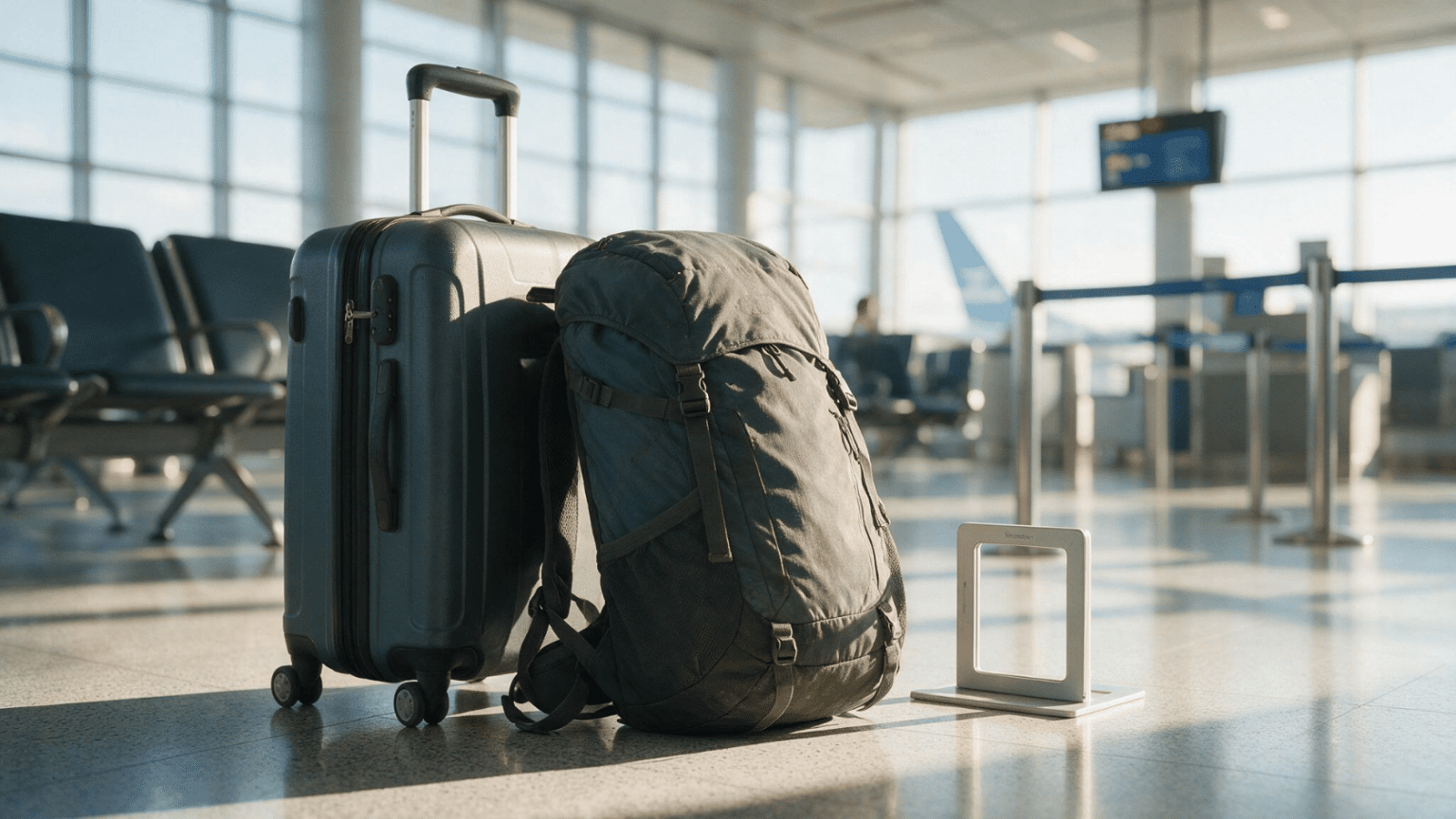
Standing at the check-in counter with your backpack, unsure if it will fly as cabin baggage? You are not the only one wondering this before a trip.
Does a backpack count as a carry on? The answer depends on its size, your airline, and whether it fits once you board the plane. Get this wrong, and you could face extra fees or a last-minute scramble to check your bag at the gate, delaying boarding.
Airlines set exact size limits, a clear line separates a carry-on from a personal item, and a few simple steps make packing smart much easier.
Does a Backpack Count as a Carry-On?
Yes, a backpack can count as a carry-on when it meets the airline’s size limits and fits in the overhead bin above your seat. Not every backpack qualifies, though.
The airline, fare type, bag size, and sometimes weight determine whether it lands in the carry-on or personal item category. Check your airline’s exact size chart before you fly, since rules vary between carriers.
Does a Backpack Count as a Personal Item?
Yes, a backpack can count as a personal item when it’s small enough to fit under the seat in front of you. Most daypacks, laptop bags, and school backpacks qualify this way.
Airlines classify by size, not brand or label. Confirm your airline’s under-seat dimensions before packing, since limits differ by carrier and fare type.
Can Your Backpack Fly as a Carry-On? Airline Rules Compared
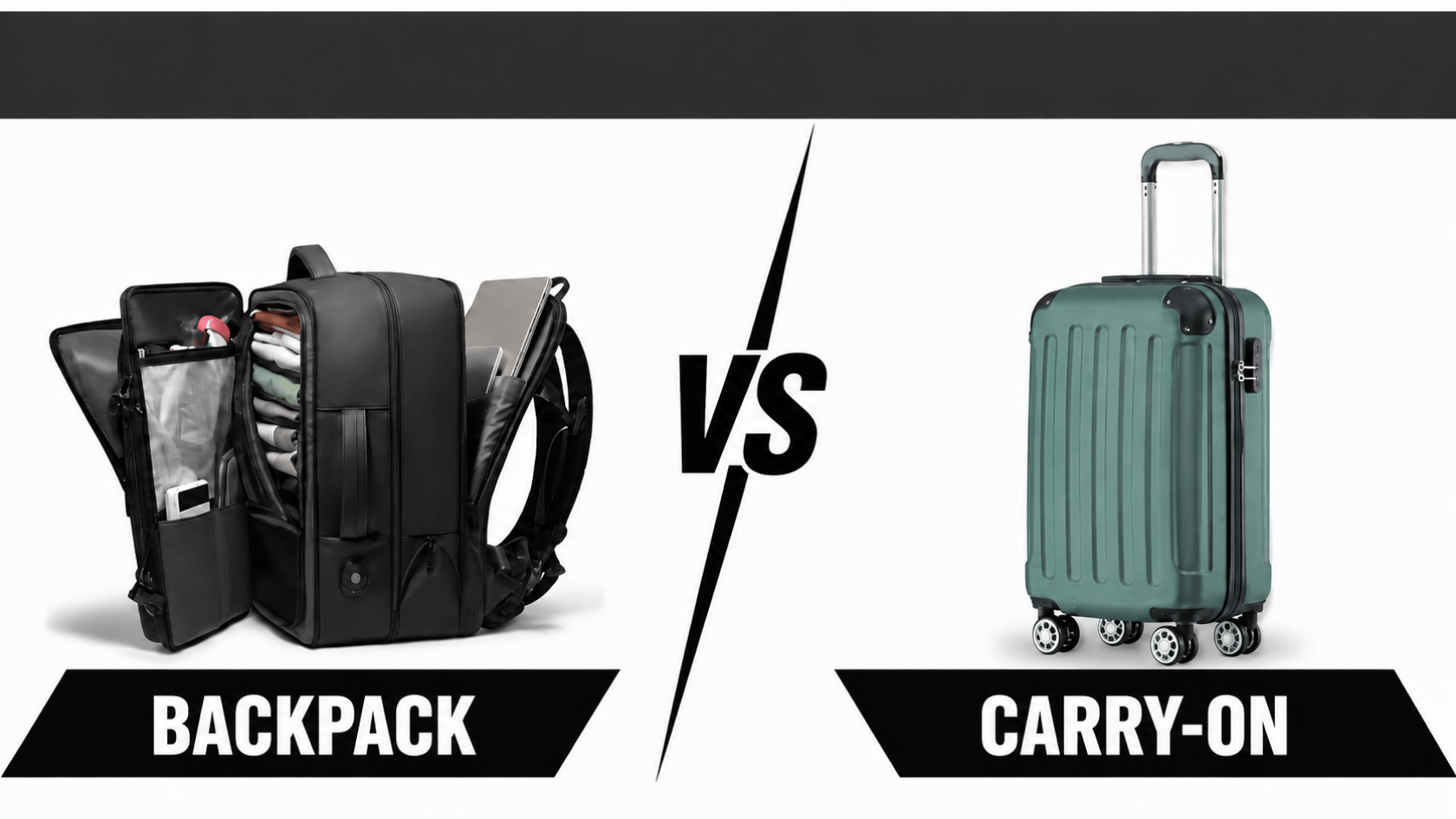
Whether your backpack counts as a carry-on or a personal item depends on which airline you’re flying, since each one sets its own size limits and under-seat space. Here’s how major U.S. carriers classify backpacks:
1. American Airlines
Can qualify? Yes, as a personal item or a carry-on, depending on size.
- Carry-on size: 22 x 14 x 9 in, must fit the gate sizer for overhead storage.
- Personal item: 18 x 14 x 8 in, must slide fully under the seat.
- Both are free on every fare, including Basic Economy.
- Verify current limits on American Airlines’s official baggage page.
American Eagle jets valet-tag oversized bags free; garment bags up to 51 in qualify; diaper bags and medical devices fly free.
2. Delta Air Lines
Can qualify? Yes, as a personal item or a carry-on.
- Carry-on size: 22 x 14 x 9 in, combined dimensions capped at 45 linear inches, stored overhead.
- Personal item: Delta does not publish exact dimensions, but recommends around 18 x 14 x 8 in to fit under the seat.
- Free on all fares, including Basic Economy.
- Verify current limits on Delta Air Lines’ official baggage page.
Delta Connection flights (50 seats or fewer) allow personal item only; some transatlantic Basic Economy fares drop the carry-on; medical items are exempt.
3. United Airlines
Can qualify? Yes, as a personal item or a carry-on, except on most Basic Economy fares.
- Carry-on size: 9 x 14 x 22 in, placed in the overhead bin.
- Personal item: 9 x 10 x 17 in, must fit under the seat.
- Basic Economy on domestic and short-haul routes allows only a personal item.
- Verify current limits on United Airlines’s official baggage page.
United Express jets valet-tag oversized bags free; domestic Basic Economy allows personal item only, waived with status or a co-branded card.
4. Frontier Airlines
Can qualify? Only a personal item is free; a larger backpack requires a paid carry-on add-on.
- Carry-on size: 24 x 16 x 10 in, up to 35 lb, placed in the overhead bin, not included in the base fare.
- Personal item: 18 x 14 x 8 in, up to 35 lb, fits under the seat and is free on every ticket.
- Verify current limits on Frontier Airlines’s official baggage page.
Frontier’s carry-on is always paid, cheapest at booking; both bags cap at 35 lb; gate sizer checks are strictly enforced.
Does TSA Consider a Backpack a Personal Item?
No, the Transportation Security Administration (TSA) does not regulate or define personal items or carry-on limits; your airline determines bag classifications.
The TSA’s role is limited to security screening, not size or category rules. It checks what’s inside your bag, not whether it qualifies as a personal item or a carry-on.
Airlines set their own dimensions, weight limits, and personal-item definitions, and these vary widely between carriers. Always check your airline’s baggage policy rather than assuming TSA guidelines apply.
That said, TSA rules do affect what you can pack, such as the 3-1-1 liquids rule, regardless of whether your bag is classified as a personal item or carry-on.
What Size Backpack Works Best for a Flight?
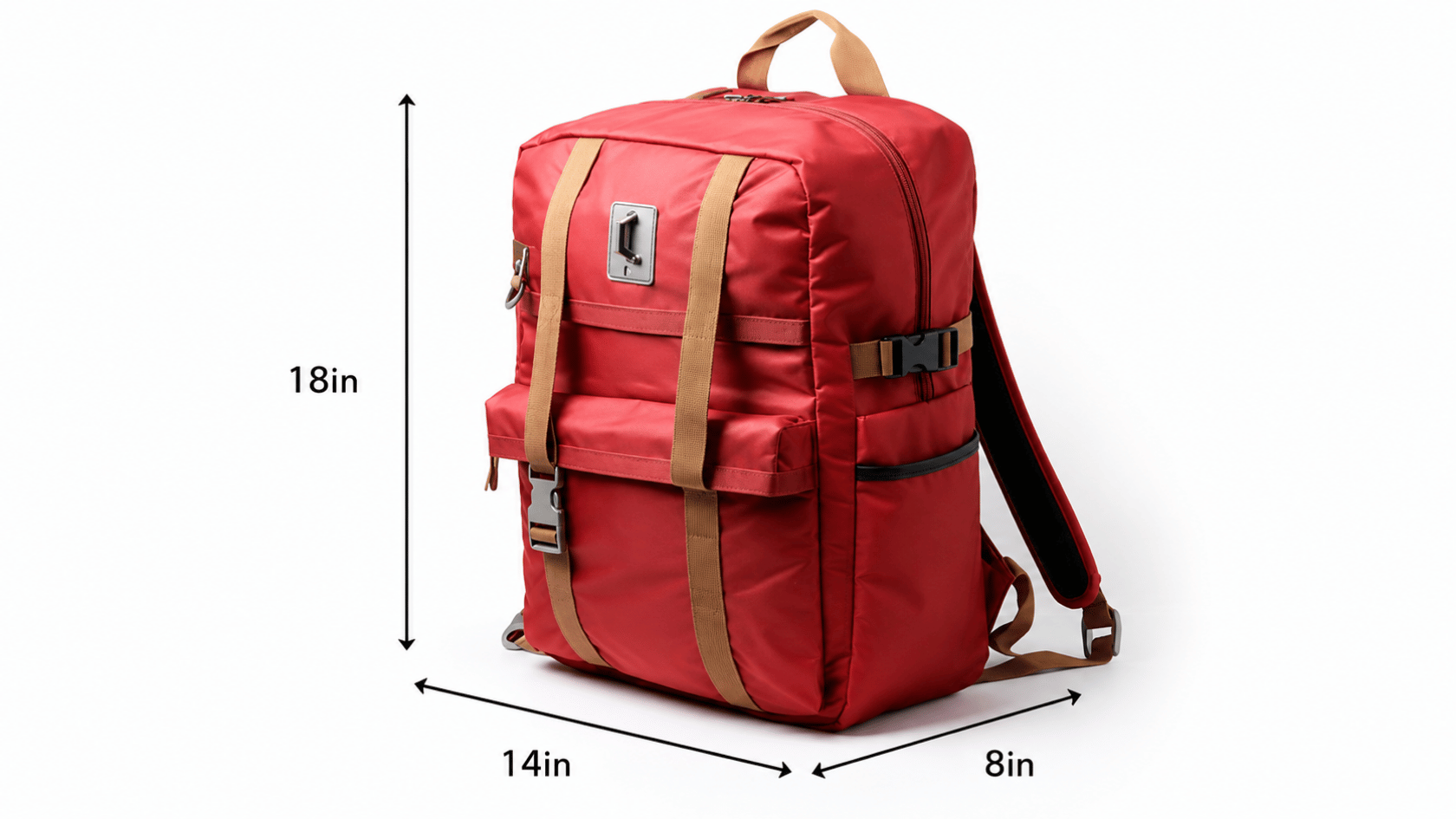
The right backpack size depends mostly on its liters and dimensions, since does a backpack count as a carry on is really a question of where it fits on the plane. Here’s how sizing breaks down:
- Under 20L: Fits easily under the seat, almost always qualifies as a personal item, and works well for laptops or short trips.
- 20L to 30L: Sits in a gray zone. Slim, soft-sided packs in this range often still work as a personal item, but bulkier ones may need to go overhead.
- 30L to 45L: Typically too large for under-seat space and counts as your carry-on rather than a checked bag, provided it fits within your airline’s overhead-bin dimensions
- 45L and above: Usually exceeds carry-on limits, especially with a rigid frame or hip belt, and often needs to be checked.
How to Check If Your Backpack Will Be Accepted
- First, confirm your airline and fare type.
- Look up the carry-on and personal-item dimensions for that airline.
- Measure the backpack after it is fully packed, not empty.
- Include stuffed exterior pockets in your measurement.
- Note any published weight limit for cabin bags.
- Make sure the personal item fits completely under the seat.
- Leave a little room so a soft backpack can compress into the airport sizer.
Travel Tip: Measure your backpack after packing it, the same way you’d approach packing a suitcase. A bag that fits empty may become too deep once clothing and exterior pockets are filled in.
When Does a Backpack Count as a Personal Item or a Carry-On?
Backpack size and structure decide which category it falls into. A slim, soft daypack usually slides under the seat, while a large or framed pack needs overhead bin space instead. Here’s how the two compare:
When it Counts as a Personal Item:
- A standard 20- to 30-liter backpack, such as a school bag, laptop bag, or daypack, counts as a personal item if it slides fully under the seat once packed.
- Overpacking is the main reason a personal-item backpack gets bumped up. Stuffed side pockets or a bulging main compartment can push it past the airline’s under-seat limit.
When it Counts as a Carry-On:
- A large travel backpack of 35 to 55 liters, including framed hiking packs, usually counts as a carry-on because its height or rigid structure is too bulky for under-seat space.
- Hip belts, external straps, and back panels add bulk that pushes framed packs past personal-item sizing, even when the front profile looks slim.
Final Thoughts
At the end, whether a backpack counts as a carry on comes down to two things: size and where it fits on the plane during your flight.
A larger backpack that meets overhead-bin dimensions works as your carry-on, while a smaller one that slides under the seat becomes your personal item instead.
Having studied Fashion Design at Central Saint Martins, the author brings a trained eye for structure and function, seeing every backpack as both a practical tool and a style choice.
Airlines differ on exact numbers, so a quick look at your carrier’s policy before packing saves time and stress at the gate.
Have a question about your specific airline or backpack size? Drop it in the comments below, and we’ll help you out.
Frequently Asked Questions
Does a Woman’s Handbag Count as Hand Luggage?
Yes, a handbag usually counts as your personal item or hand luggage, and it still needs to fit completely under the seat in front of you.
Does 7kg Carry-On Include Handbag?
No, most airlines allow a separate handbag alongside your 7kg carry-on limit, though this depends entirely on the specific airline and fare type you have booked.
What Happens if Your Backpack is Too Big?
If your backpack does not fit the airline’s sizer, staff may ask you to check it at the gate for a fee, or remove items until it fits under the seat.