Your desk feels off, but you can’t quite say why. Maybe it faces a blank wall, or your back sits toward the door.
A feng shui office layout fixes that by placing your desk with intention, balancing the room’s energy, and clearing open paths around it.
Small shifts in furniture, plants, and clutter change how calm and focused a workspace feels within days, not months. Even a cramped or shared office can work with a few adjustments instead of a full redesign.
From here, desk positioning, element balance, common layout mistakes, and a quick troubleshooting checklist walk through exactly how to fix your own room.
The Feng Shui Command Position: Where Should Your Desk Go?
The command position is the desk placement idea people ask about most, and it comes down to a handful of practical points.
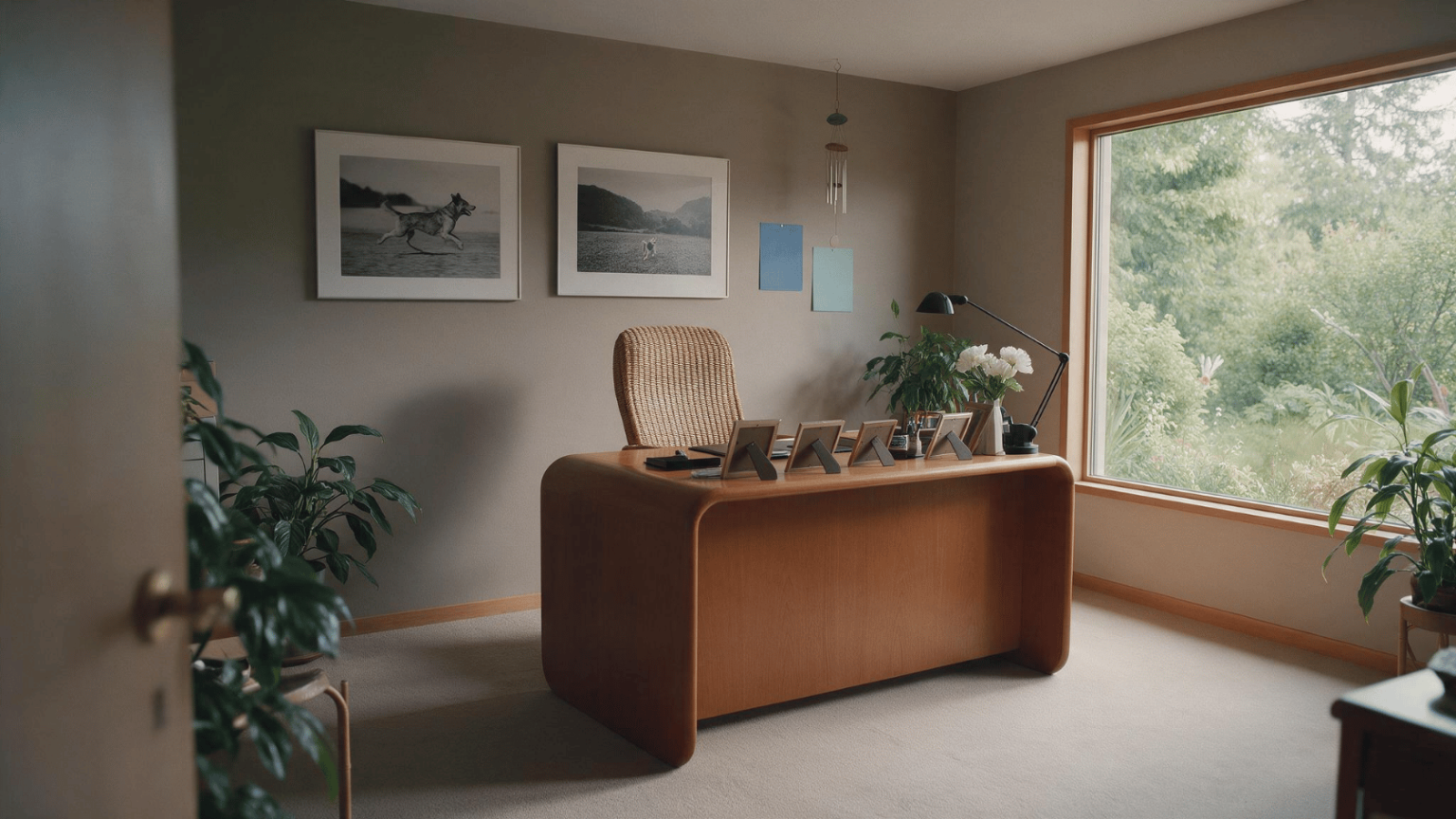
- The basics: sit diagonally from the entrance with the door visible, and keep a solid wall behind your chair rather than an open doorway, window, or walkway.
- If you cannot use this layout: add a mirror facing the entrance, place a tall bookshelf or high-backed chair behind you, or hang curtains behind an open wall.
None of these fixes need to be permanent, so it is worth testing one for a few days before committing to it.
Balance the Five Feng Shui Elements in Your Office Layout
Feng shui uses five elements, wood, fire, earth, metal, and water, to bring balance to a room based on your work style and the space you already have.
|
Element |
Meaning |
Best For |
Office Additions |
|---|---|---|---|
|
Wood |
Growth |
Creative or strategy work |
Plants, wooden furniture |
|
Fire |
Motivation |
Presenting or leading |
Lighting, warm accents |
|
Earth |
Stability |
A space that feels scattered |
Ceramic, stone décor |
|
Metal |
Focus |
Detail-heavy work |
Metal accessories, filing |
|
Water |
Flow |
Writing or research |
Artwork, blue tones |
Mixing in one or two elements at a time keeps a room balanced without turning it into a theme. Add more only once the space starts feeling flat again.
Feng Shui Office Layout Ideas for Better Focus and Energy
These layout ideas cover desk placement, lighting, storage, and small fixes that apply to almost any home or shared office setup.
1. Place Your Desk Diagonally From the Door
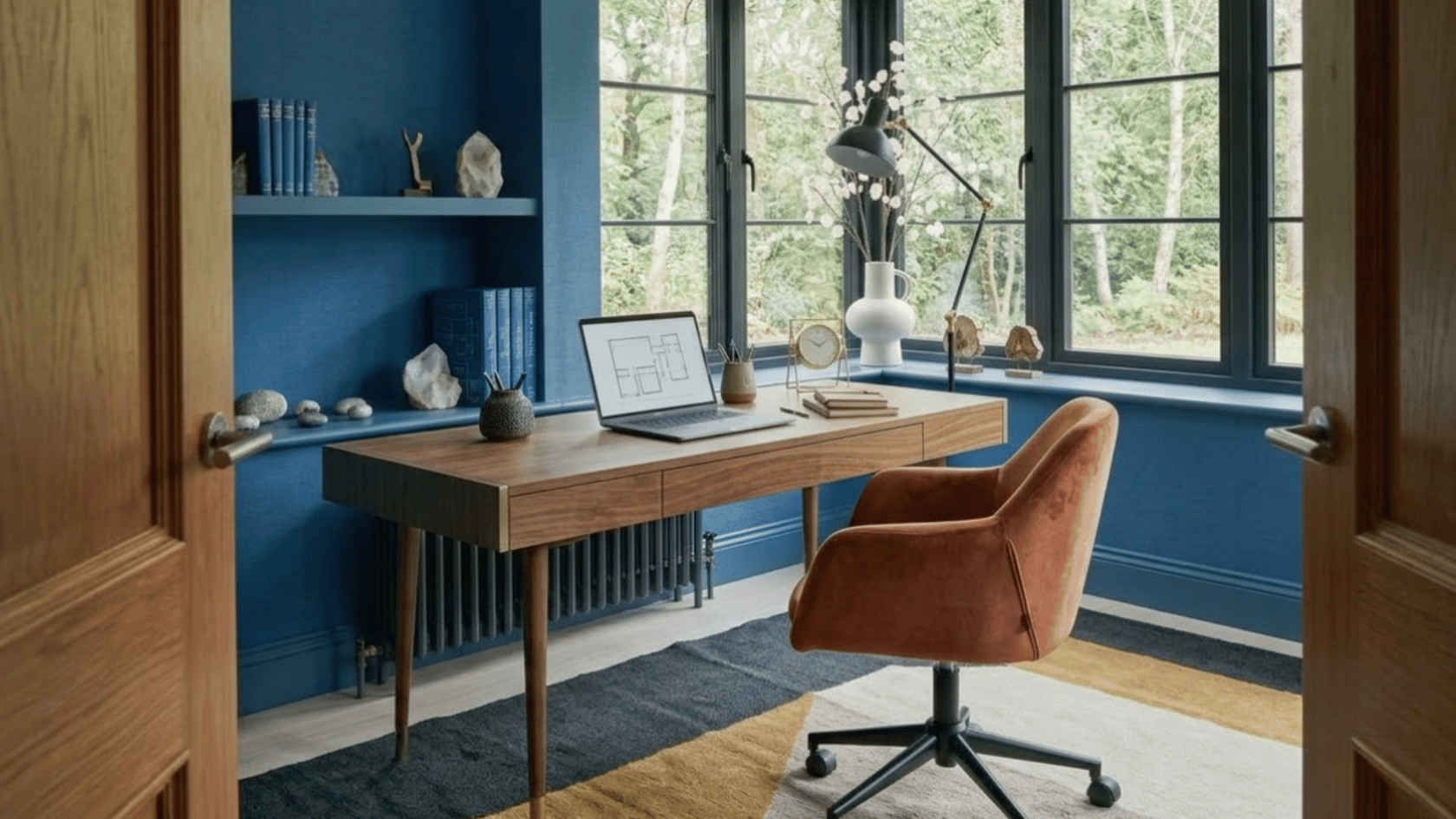
Most people set up a desk without thinking about the door, then question why the room feels unsettled.
Angling your chair so the entrance stays in view, without sitting directly across from it, removes that low hum of alertness. The shift in how relaxed you feel usually shows up by the end of the first day.
2. Keep a Solid Wall Behind Your Chair
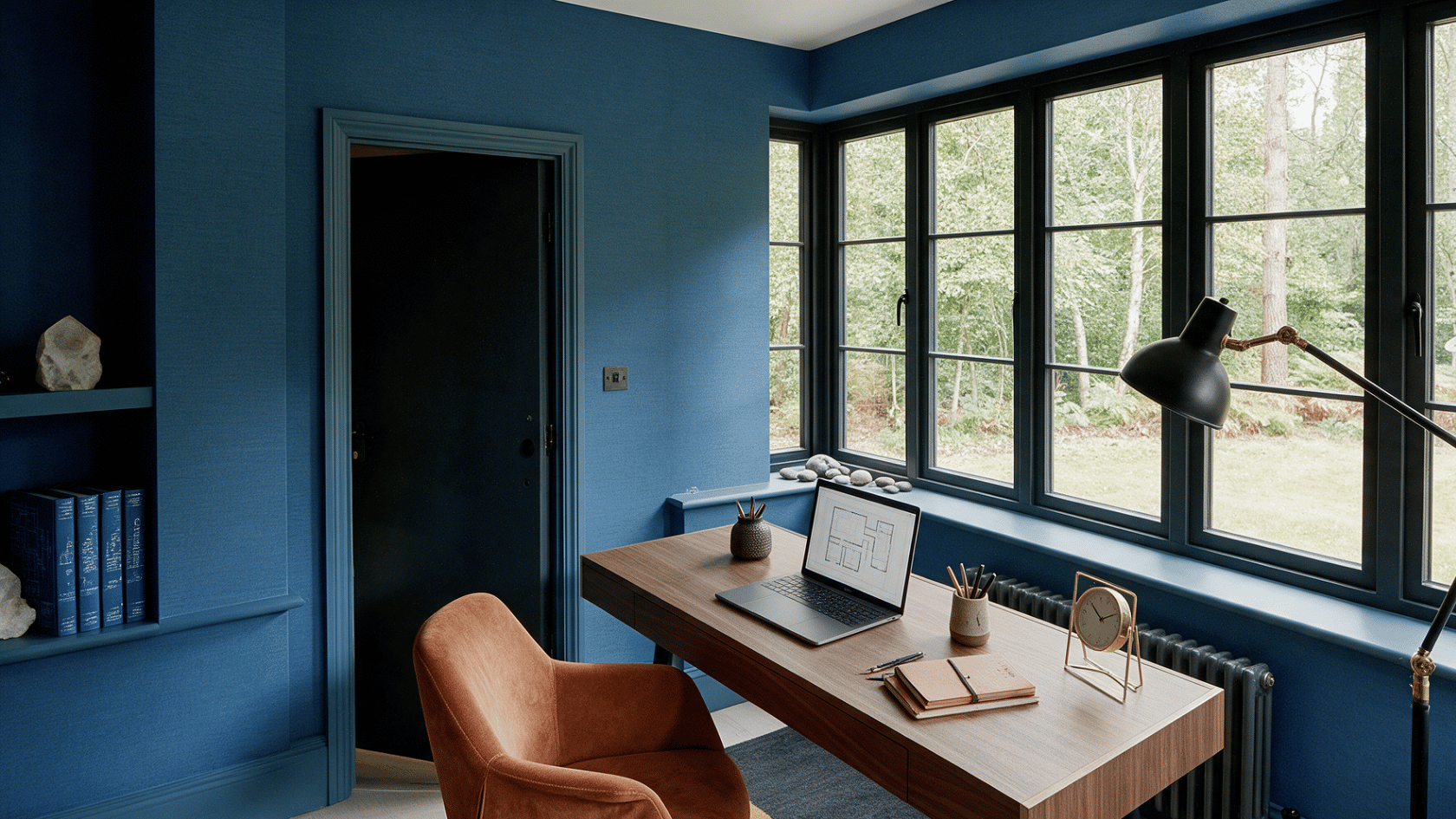
Your back needs something solid behind it, not open air. Chairs pushed against a window, a hallway, or an empty stretch of wall tend to leave people feeling unsettled by mid-afternoon.
A cabinet, a bookshelf, or even a tall plant can stand in for a wall when moving the desk itself is not an option.
3. Keep Your Door Visible From Your Desk
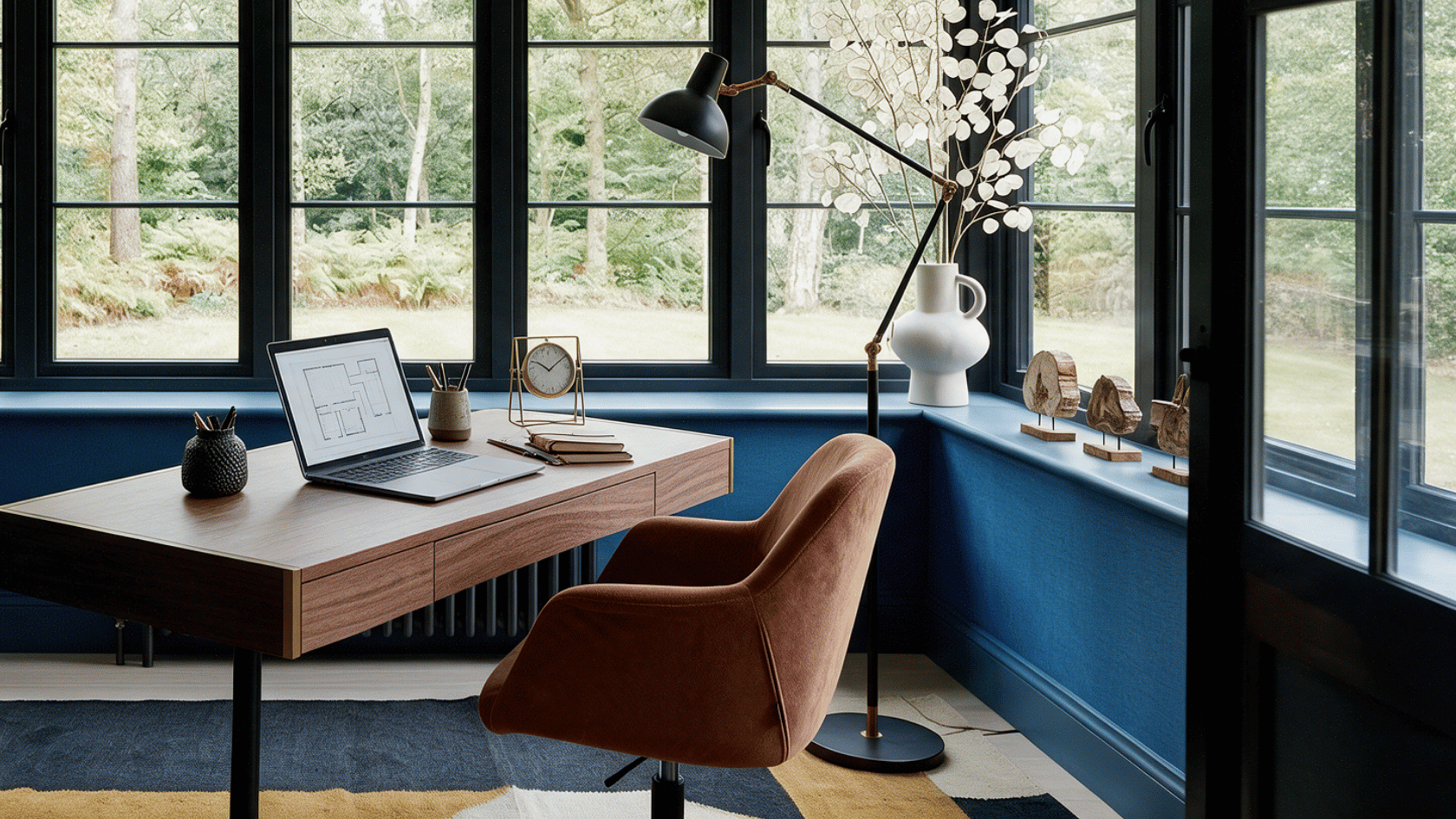
Ever notice how a sudden knock or footstep makes you jump when you’re deep in work? That reaction fades once your desk faces, or angles toward, the doorway.
Being able to catch movement out of the corner of your eye keeps your attention on the task instead of half-listening for whoever might walk in next.
4. Position Your Desk Away From Direct Door Alignment
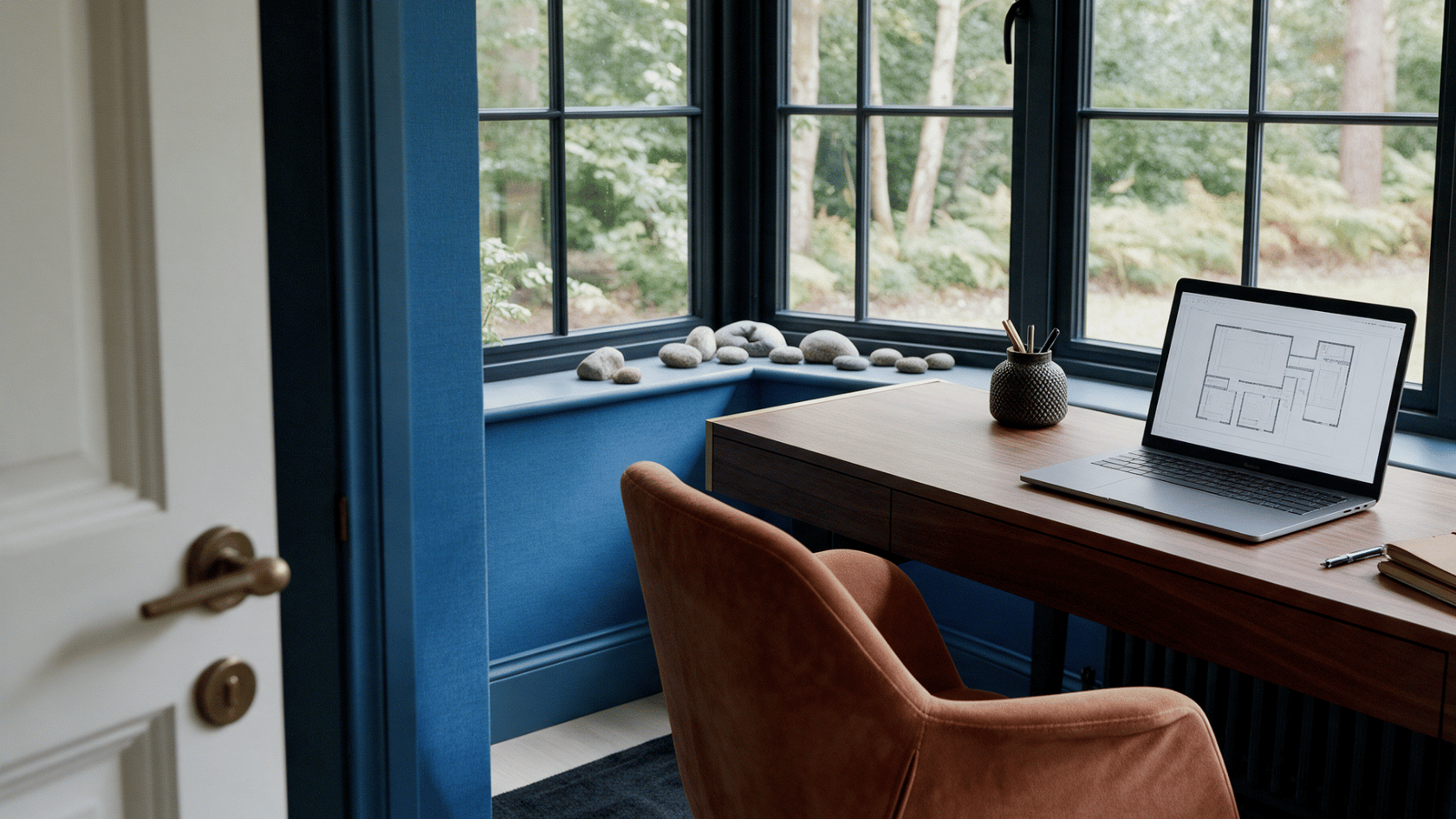
A desk lined up straight with the doorway sits in a busy current of foot traffic, drafts, and noise that never fully settles.
Shifting the desk a foot or two to either side keeps the door within view while pulling your chair out of that direct path, and most people notice the calmer feeling within a day or two.
5. Keep Windows Beside Your Desk Instead of Behind You
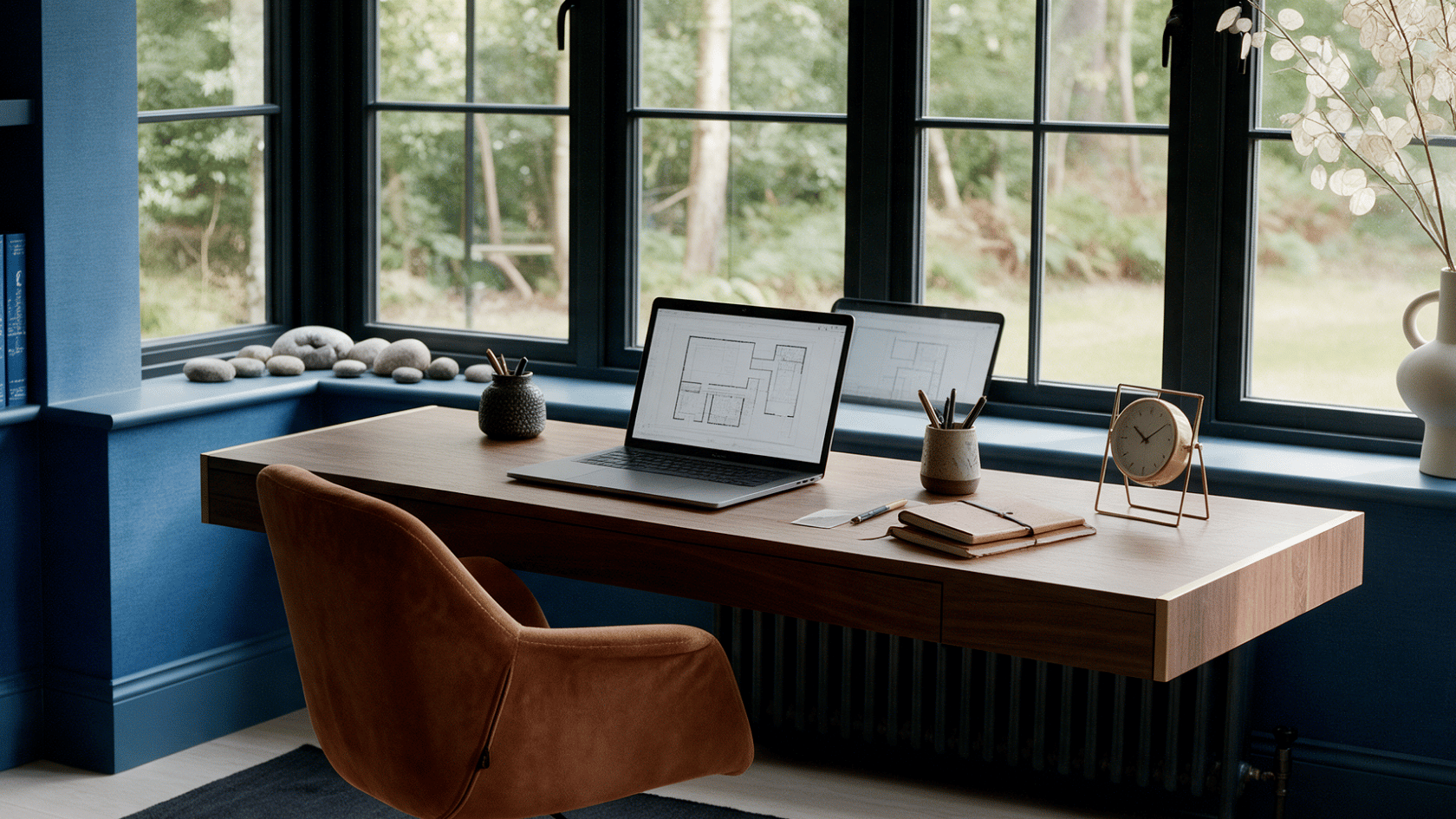
Natural light matters, but where it falls matters just as much. A window directly behind your monitor washes out video calls and forces your eyes to fight glare all afternoon, while the same window placed beside your desk lights the room evenly.
Shifting the desk slightly to the side solves both problems at once, without buying anything new.
6. Create Open Space in Front of Your Desk
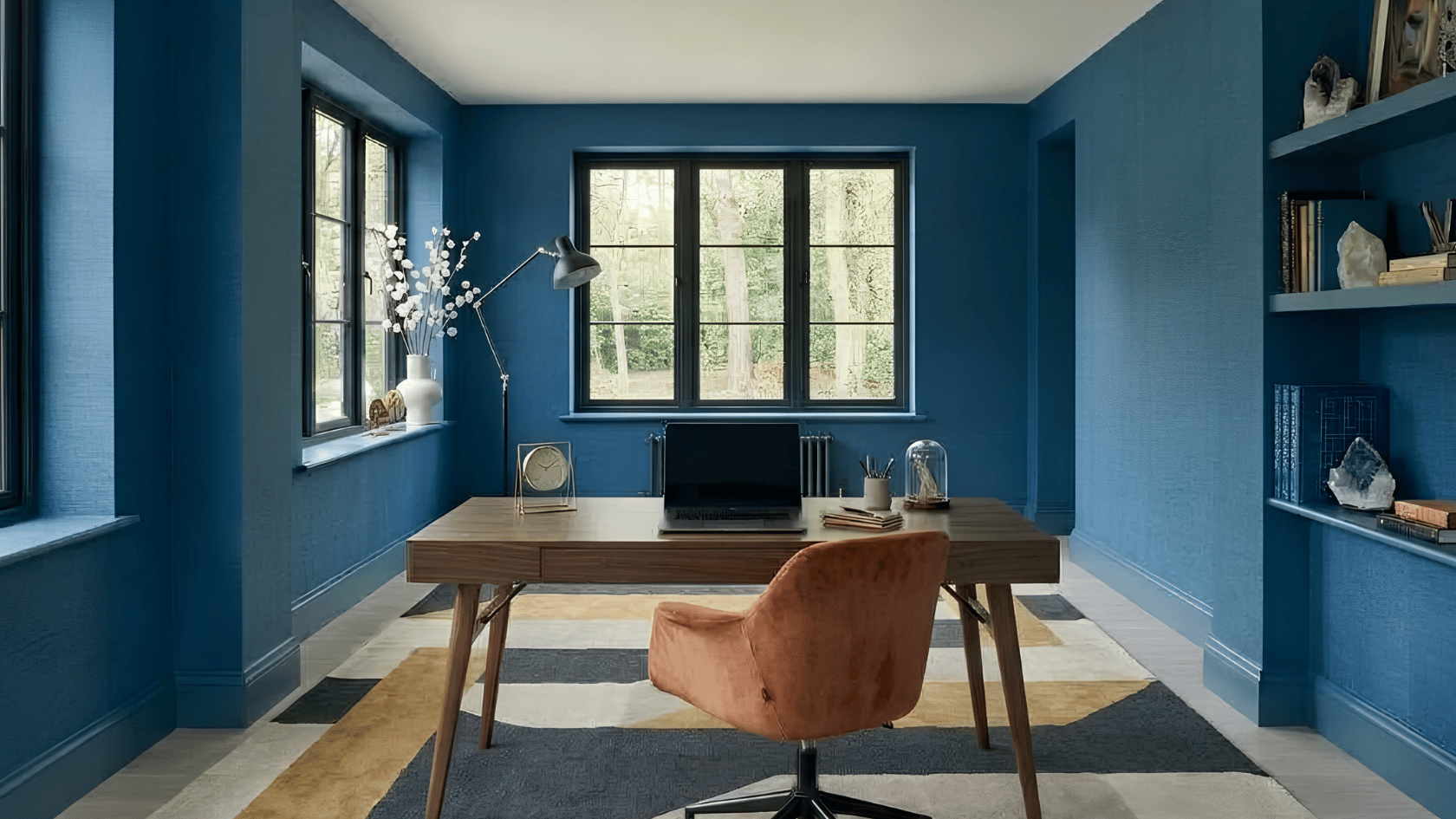
Nothing kills momentum faster than a wall or a stack of boxes sitting a foot from your knees.
Clearing the space in front of your desk gives the room somewhere to breathe and gives your eyes a place to land between tasks. Even a small office feels noticeably larger once that immediate sightline opens back up.
7. Add Plants Near Your Workspace
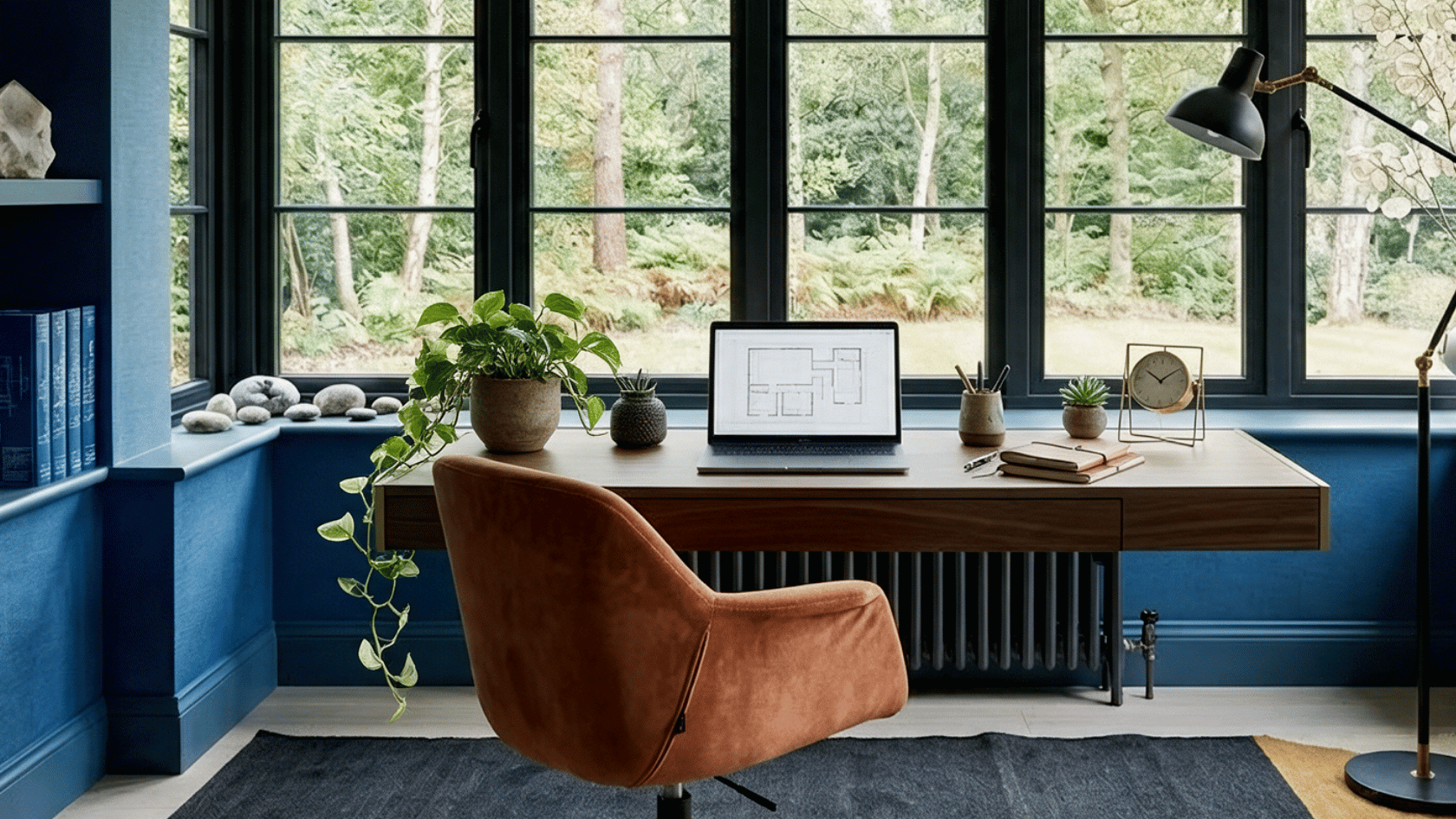
A workspace with zero greenery tends to feel flatter than people expect, even in an otherwise well-organized room.
One or two low-maintenance plants, like a pothos or a small succulent, bring in life without demanding much upkeep. Skip anything fussy, since a struggling, wilting plant on your desk undoes more calm than an empty corner ever would.
8. Use Lighting to Create Positive Energy
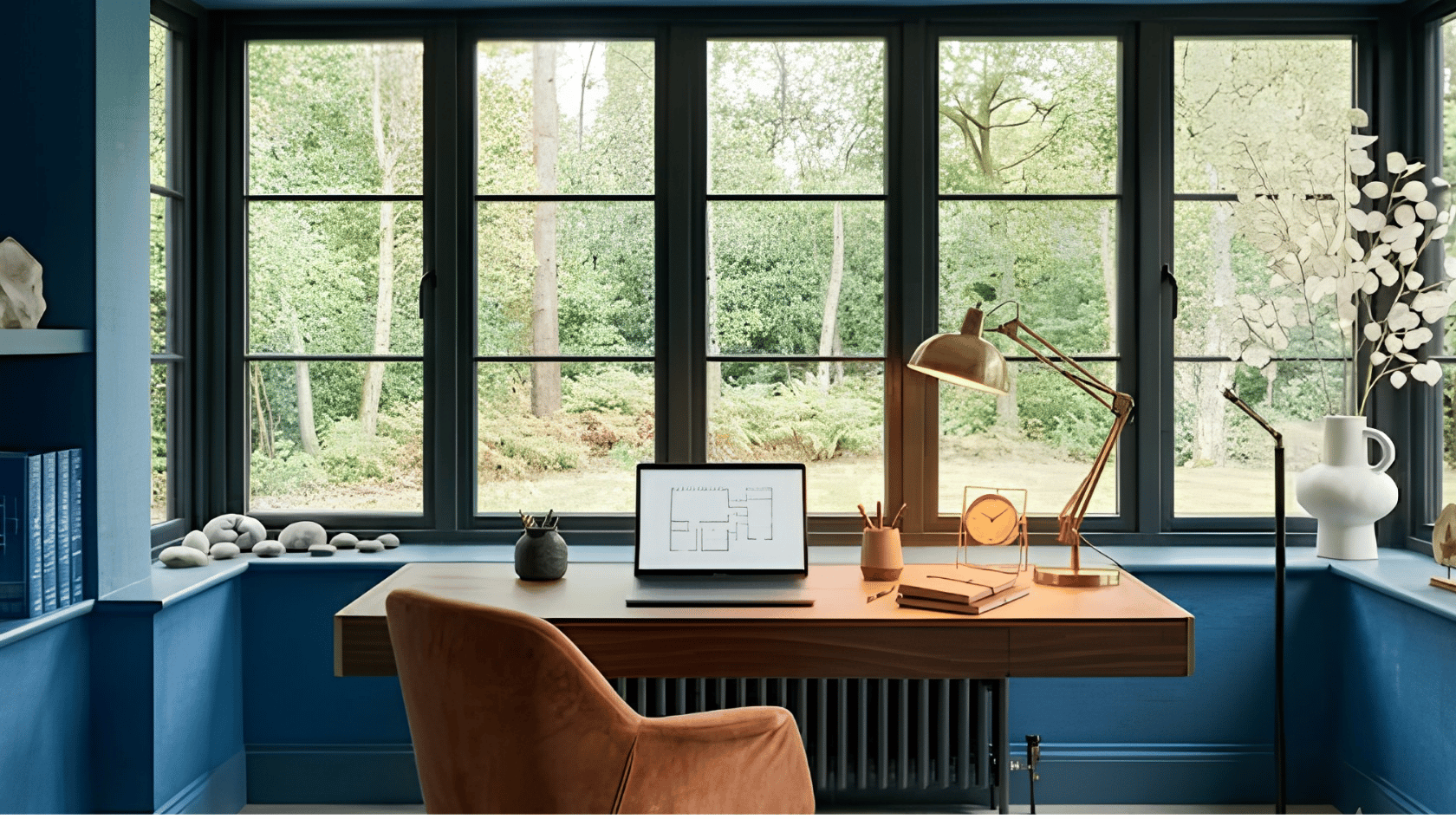
Overhead lighting alone tends to flatten a room and, by extension, flatten your mood while you work under it for hours.
Pair that ceiling light with a warm task lamp near your desk to give your eyes a break and keep the space feeling steady rather than sterile. Natural daylight during working hours does even more of that work for free.
9. Keep Your Desk Surface Clutter-Free
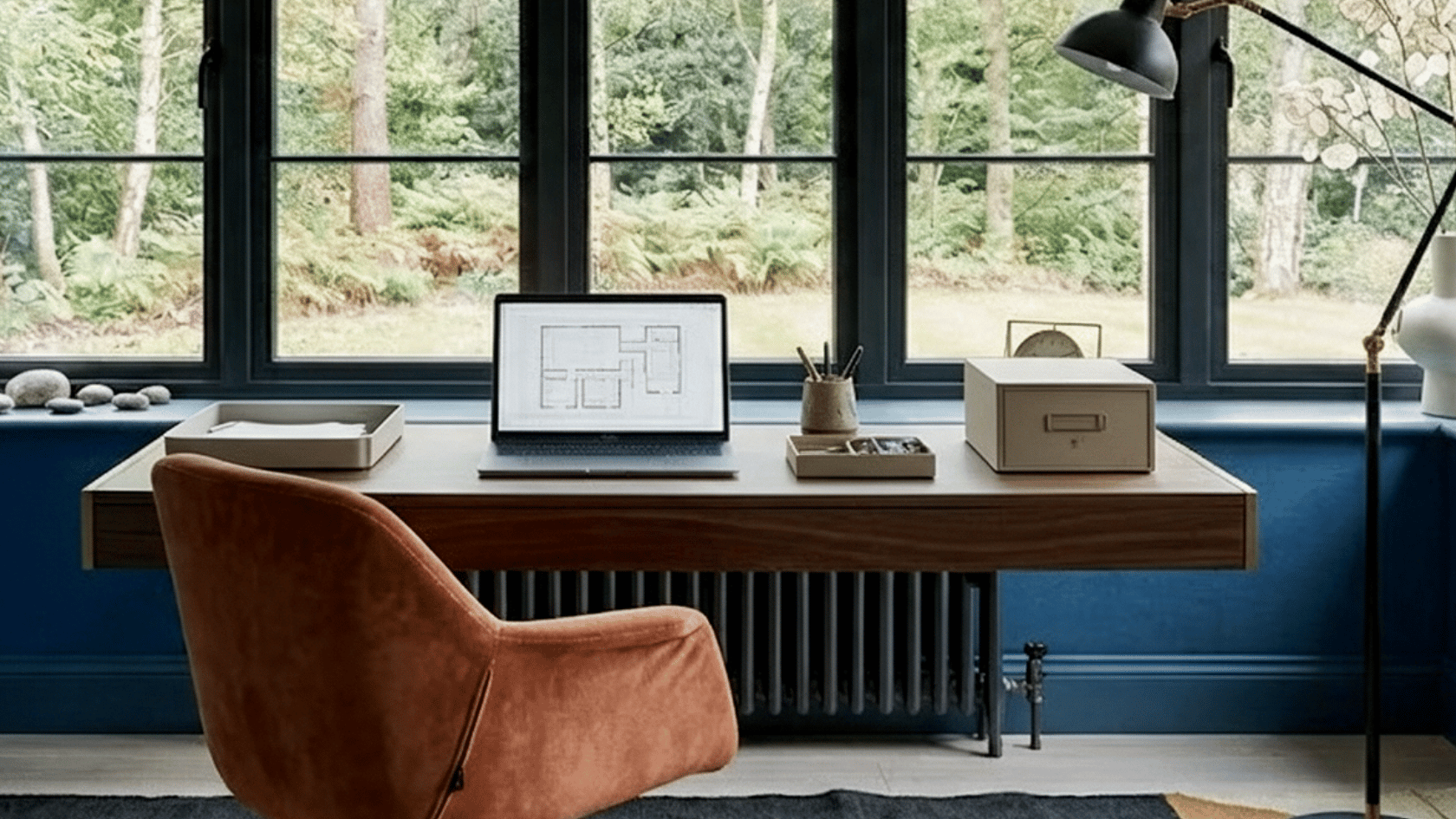
Clutter pulls at your attention even when you are not looking directly at it, which is part of why a messy desk makes focus so much harder to hold onto.
A tray for incoming papers, a drawer organizer, or a small filing box keeps surfaces clear without requiring a full reorganization of your entire office every week.
10. Add Inspiring Artwork Across From Your Desk
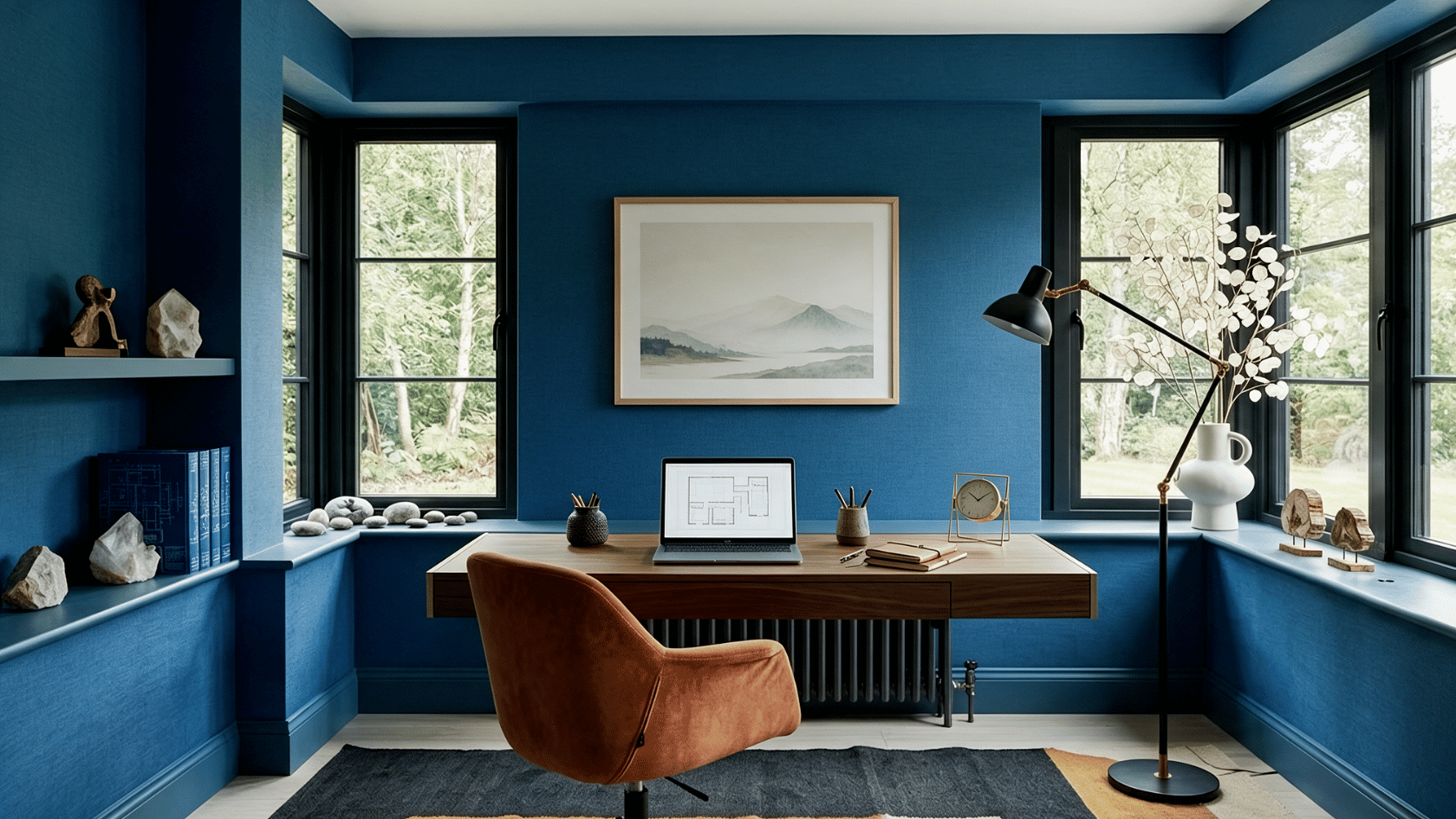
The wall or space directly across from your desk deserves more thought than most people give it.
A calming print, a landscape, or a piece that actually means something to you gives your eyes somewhere pleasant to rest during a break. Skip anything busy or chaotic here, since visual noise across from your seat adds to fatigue instead.
11. Use Bookshelves as Supportive Storage
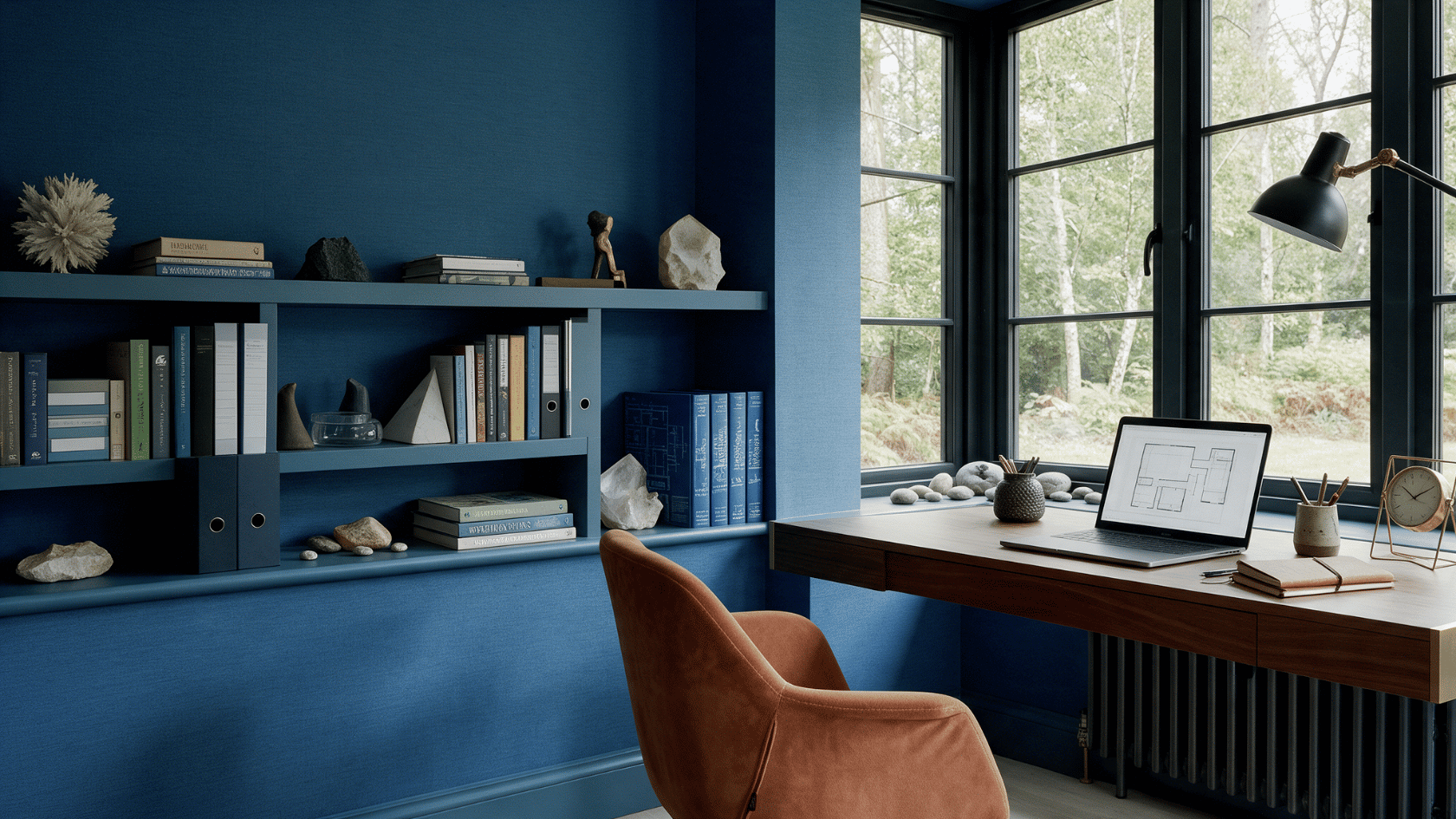
Bookshelves near a desk work best when they support you instead of crowding you. Keep the titles and files you reach for often within arm’s length, and resist the urge to pack every shelf edge to edge.
A few open gaps let your eyes rest and stop the shelving from reading as a wall of clutter behind your chair.
12. Create Separation in a Bedroom Office
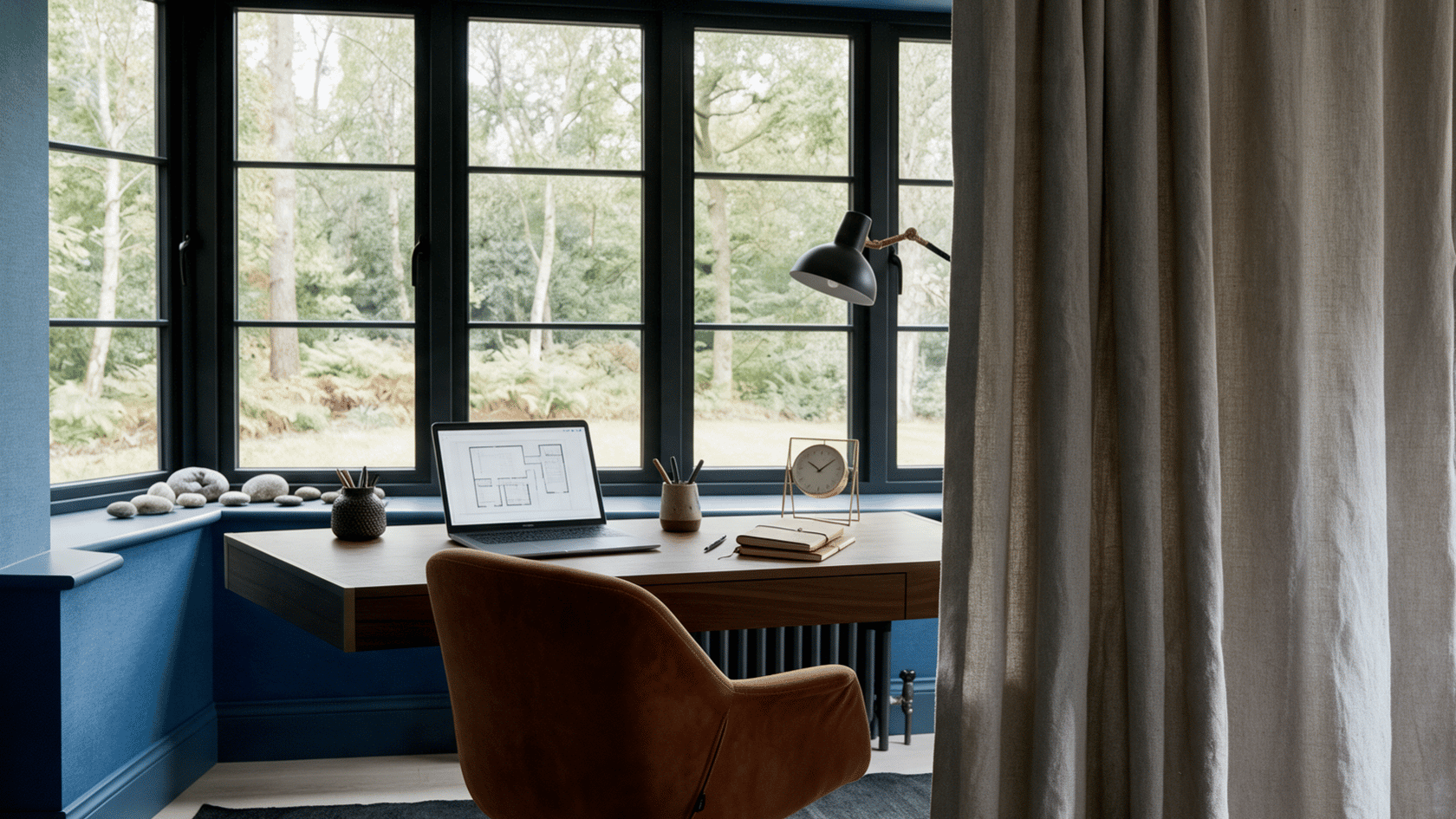
A desk crammed into the corner of a bedroom blurs the line between working hours and rest, which makes it harder to switch off at the end of the day.
A curtain, a folding screen, or even a repositioned bookshelf can separate the two zones enough that closing the laptop actually feels like leaving the office behind.
13. Use Rounded Shapes Where Possible
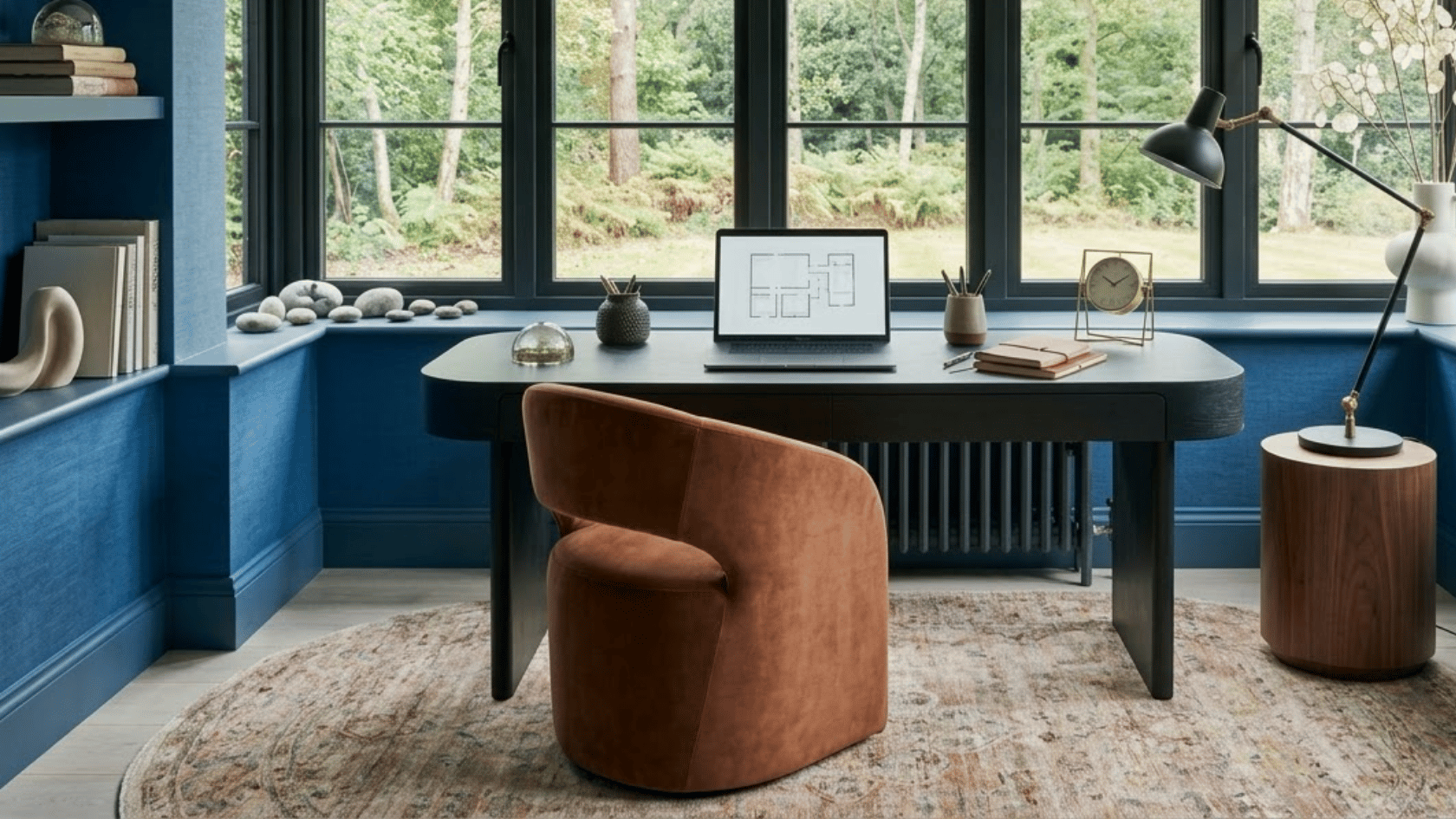
Sharp corners and hard angles add up in a small room, even if no single piece of furniture looks like a problem on its own.
A round side table, an oval rug, or a chair with softened edges near an otherwise rectangular desk dials down the harshness without changing the rest of the layout or the budget.
14. Create a Wealth Corner With Intentional Décor
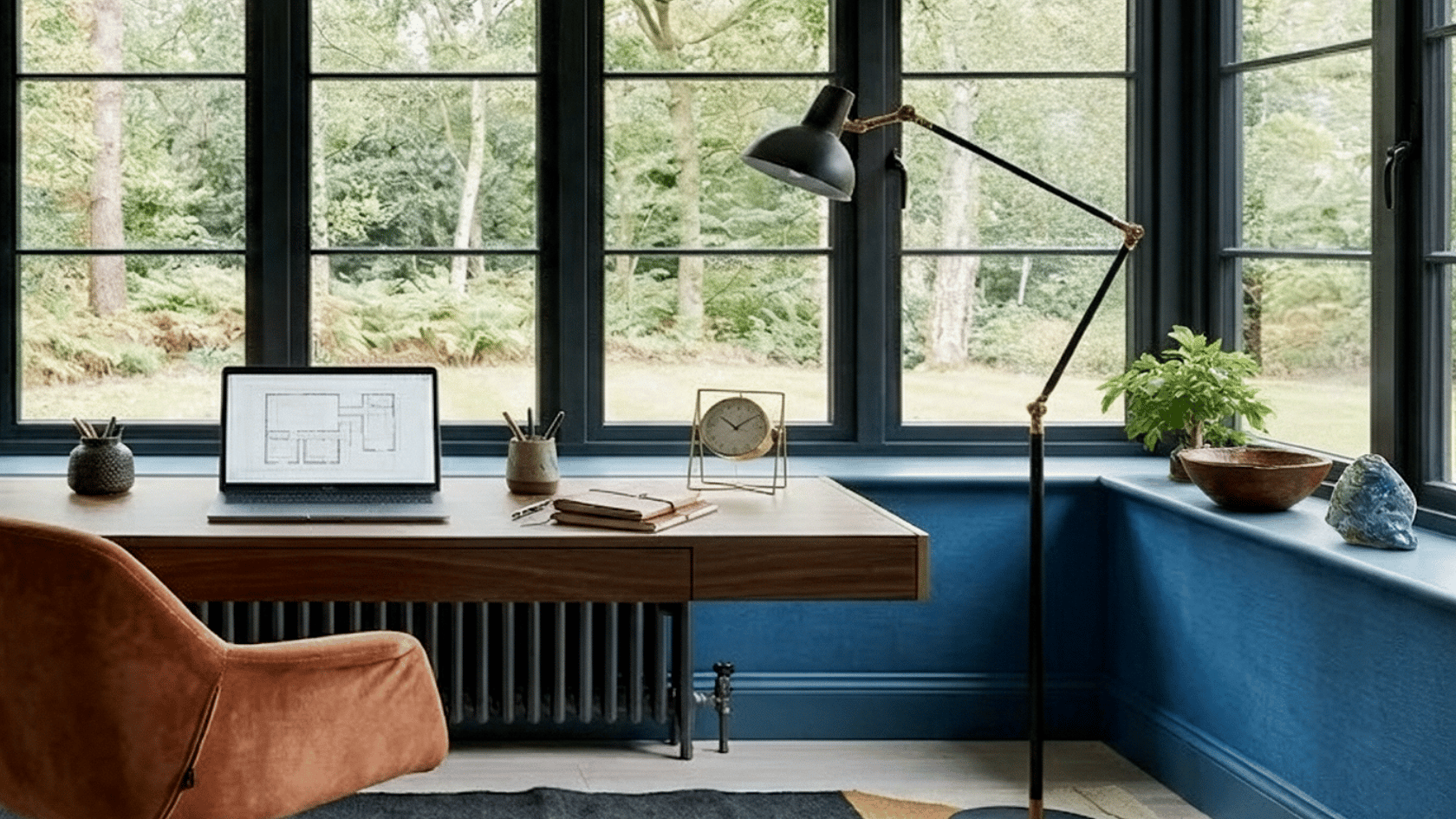
Every home office has a spot that gets ignored, usually the far corner from the door, and that corner works well as a dedicated wealth area.
A small plant, a wooden bowl, or a water-toned object placed there and kept free of clutter does more for the room’s energy than piling decor onto every other surface instead.
Best Desk Positions Based on Room Layout
The right adjustment depends less on rules and more on the shape and quirks of the room you actually have.
- Small office: prioritize door visibility and keep a clear path to walk through.
- Office with a window: keep the window beside the desk rather than behind it.
- Corner office: use the corner without trapping your chair against a wall.
- Bedroom office: separate the desk area from the bed as clearly as the room allows.
What Home Office Communities Say About Desks Near a Window
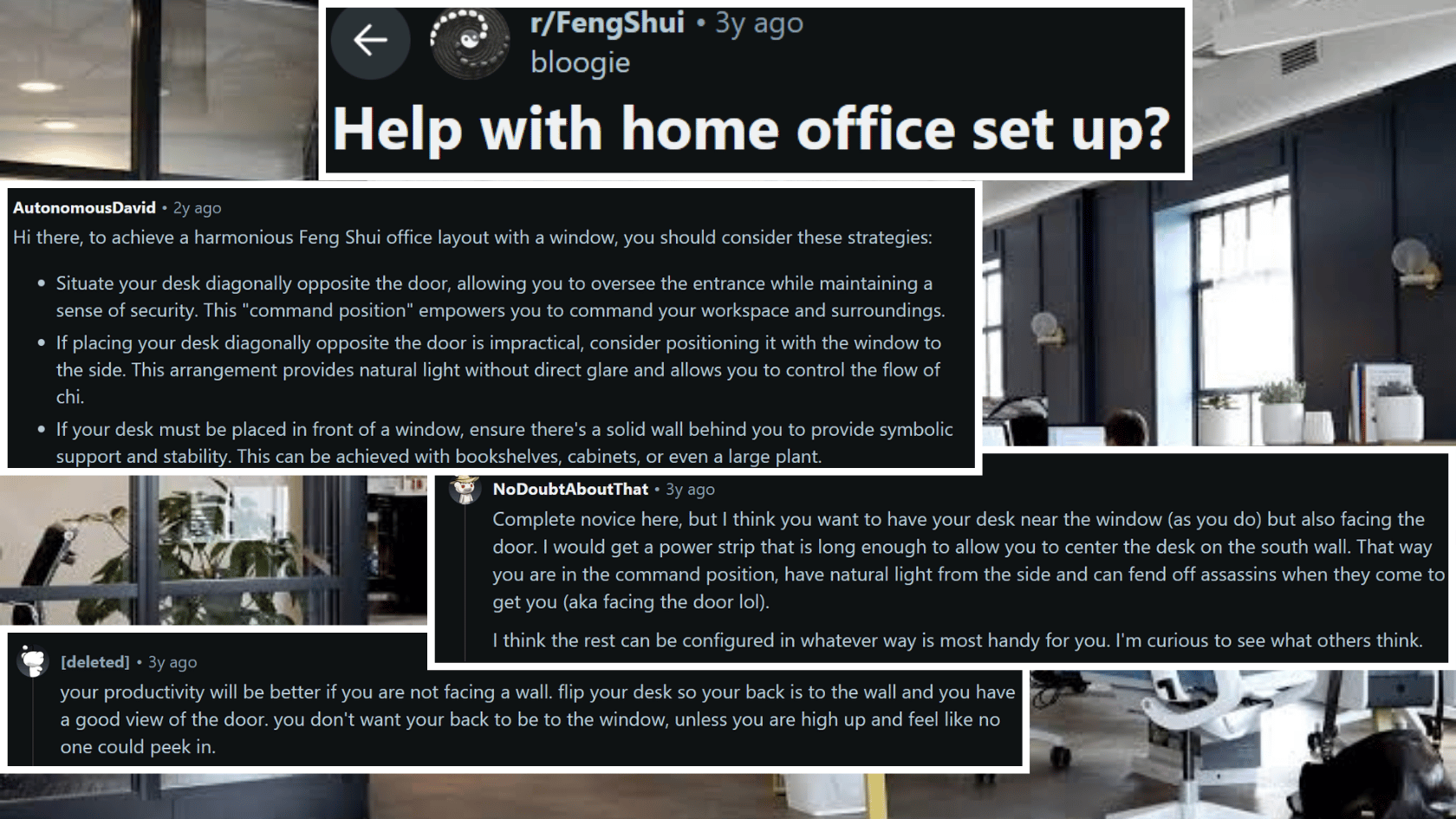
Source: Reddit
Home office forums fill up with questions about desks stuck near a window, and the advice tends to repeat across threads.
Centering the desk along a nearby wall, even with a longer power cord, keeps the window beside the chair instead of behind it.
When you can’t avoid a window behind the desk, commenters suggest backing the chair with a bookshelf, cabinet, or large plant, since something solid there matters more than the object you choose.
One point rarely mentioned elsewhere: facing a blank wall straight ahead can hurt focus almost as much as a weak position behind the chair, and a clear view of the door tends to outrank window light.
Troubleshoot Your Own Office Layout in 60 Seconds
Not sure if your own setup is working against you? Run through these six quick checks on your feng shui office layout before you change anything.
- Can you see the door while sitting? No: rotate your desk or add a mirror positioned toward the entrance.
- Is there solid support behind your chair? No: add a cabinet, bookshelf, screen, or a taller chair.
- Are you sitting directly in line with the doorway? Yes: shift the desk slightly to one side.
- Is your window behind you? Yes: add curtains or move the desk to the side of the window instead.
- Does your office feel crowded? Yes: remove an unused piece of furniture and improve the walking space.
- Are cables and papers scattered everywhere? Yes: add basic storage and clear the desk surface before your next work session.
Final Thoughts
A feng shui office layout works best when it fits the room you already have, not a rigid set of rules borrowed from elsewhere.
Balancing the five elements, supporting your chair, and keeping a clear view of the door create a workspace that feels steady instead of scattered.
None of this calls for a renovation, just a few deliberate shifts in what is already sitting in the room. Start with one change today, whether that means turning the desk, adding a plant, or clearing the surface in front of you, and notice how the room feels before changing anything else.
Pick one fix from this list and try it in your office today.What part of your office setup feels off right now? Drop a comment, and I will help you think through a fix.
Frequently Asked Questions
Does an L-Shaped Desk Work in A Feng Shui Office Layout?
An L-shaped desk works well as long as one wing lets you see the door clearly. Angle the corner away from a straight doorway line for the steadiest effect on daily focus.
Is There a Free Feng Shui Office Layout Generator Available?
No dedicated free generator exists, since feng shui depends on the room’s actual shape and the door’s location, not just measurements. A compass app and a tape measure get you further than any online tool.
Does Feng Shui Apply to A Standing Desk in A Home Office?
Standing desks follow the same core ideas: keep the door visible, avoid facing a blank wall, and support your back. The extra movement of standing does not cancel out placement rules.