
Most grooms spend months planning every detail of their wedding day, and then rush the tuxedo decision in two weeks. That’s a mistake. How you choose the right tuxedo for your wedding depends on far more than picking a color or a brand; it starts with understanding your wedding’s formality, your body, and how much you’re willing to invest in a garment you’ll actually remember wearing.
Understand Your Wedding Style and Formality Level
The formality of your event drives every other decision you’ll make about formalwear. Grooms who skip this step often end up overdressed or underdressed relative to their guests, and both situations are noticeable.
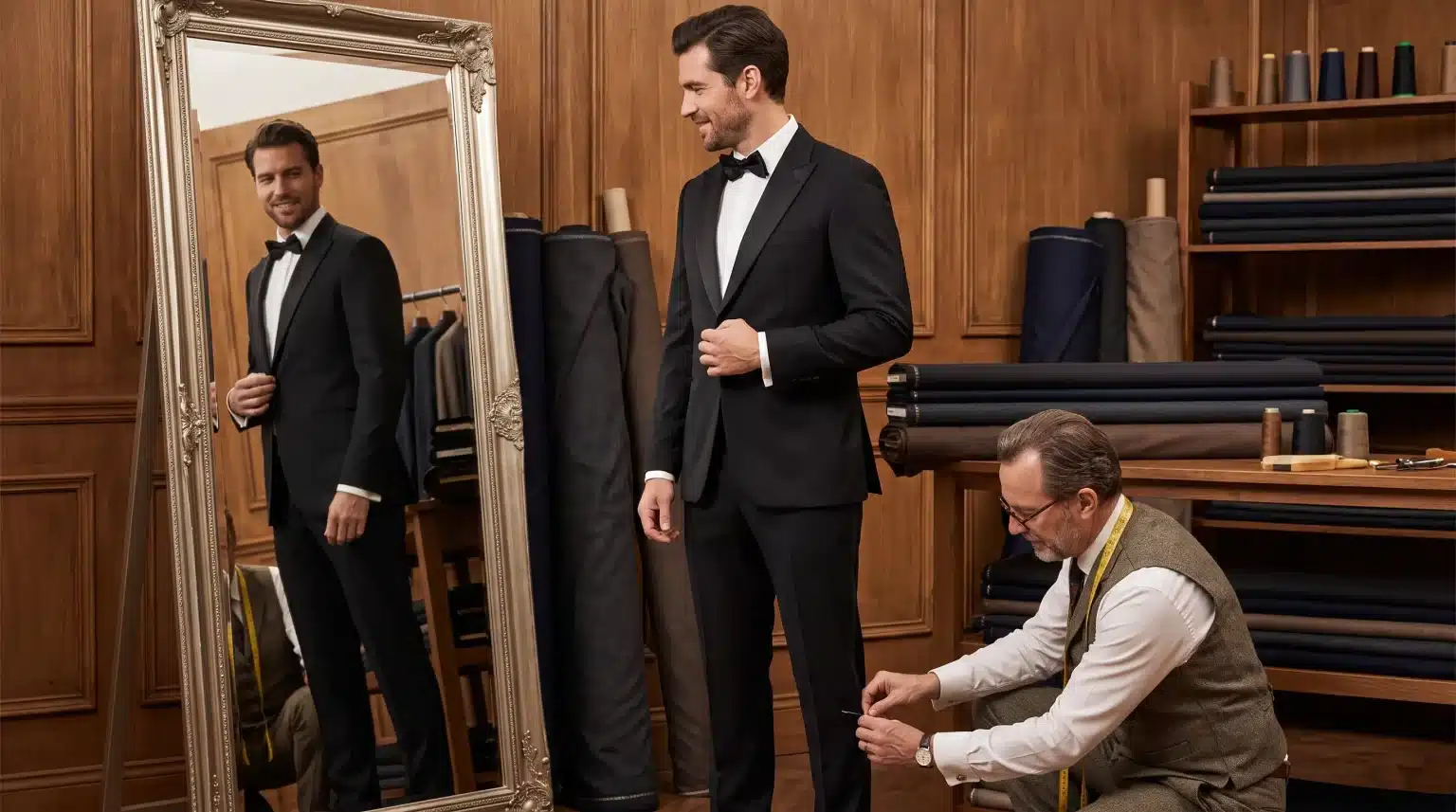
When you think about custom groom tuxedos in NYC, the first conversation a master tailor will have with you centers on exactly this: what kind of wedding are you having, and what does it ask of your outfit? Getting that foundation right is what makes every later choice, fabric, lapel shape, trouser break, fall into place naturally.
Black Tie Versus Black Tie Optional: What the Dress Code Actually Means
These two dress codes look similar on a printed invitation but signal very different expectations for the groom and the room. Below is a comparison based on standard US formalwear conventions.
|
Dimension |
Black Tie |
Black Tie Optional |
|
Required formalwear |
Tuxedo or dinner jacket |
Tuxedo or dark formal suit |
|
Shirt style |
Formal dress shirt, bib or pleated front |
Formal dress shirt or plain-front dress shirt |
|
Neckwear |
Bow tie (black or white) |
Bow tie or long necktie |
|
Shoes |
Patent leather or polished black Oxford |
Polished black Oxford or dark leather dress shoe |
|
Lapel |
Satin peak or shawl |
Peak, shawl, or notch |
|
Pocket square |
Expected |
Optional |
|
Guest expectation |
Tuxedo strongly expected |
Dark suit acceptable |
|
Groom expectation |
Tuxedo required |
Tuxedo strongly preferred |
|
Time of day |
Evening ceremonies most common |
Any time |
|
Trouser stripe |
Satin or grosgrain stripe expected |
Optional |
As the groom, even at a Black Tie Optional event, a tuxedo is the right call. You set the formality standard for the room.
Matching Your Tuxedo to the Wedding’s Time and Venue
Time of day and venue type are the two factors most grooms overlook. A morning or afternoon outdoor ceremony calls for different formalwear than a Saturday-night ballroom reception. Before noon, a morning coat is technically the most correct choice; after six in the evening, a classic black tuxedo with a satin lapel fits without question.
For venue, consider the setting’s architecture and atmosphere. A rustic barn or garden wedding allows more flexibility; a midnight navy tuxedo or even a white dinner jacket reads as intentional rather than out of place. A formal hotel ballroom or estate expects black or midnight navy, peak lapel, and no deviation from tradition.
Season matters too. Wool or wool-blend fabrics suit fall and winter ceremonies; lighter weights like tropical wool or mohair blends are the right call from late spring through early fall. Getting this detail right means your tuxedo looks like it belongs there, not like it was chosen from a catalog without context.
Get the Fit Right: Measurements and Tailoring
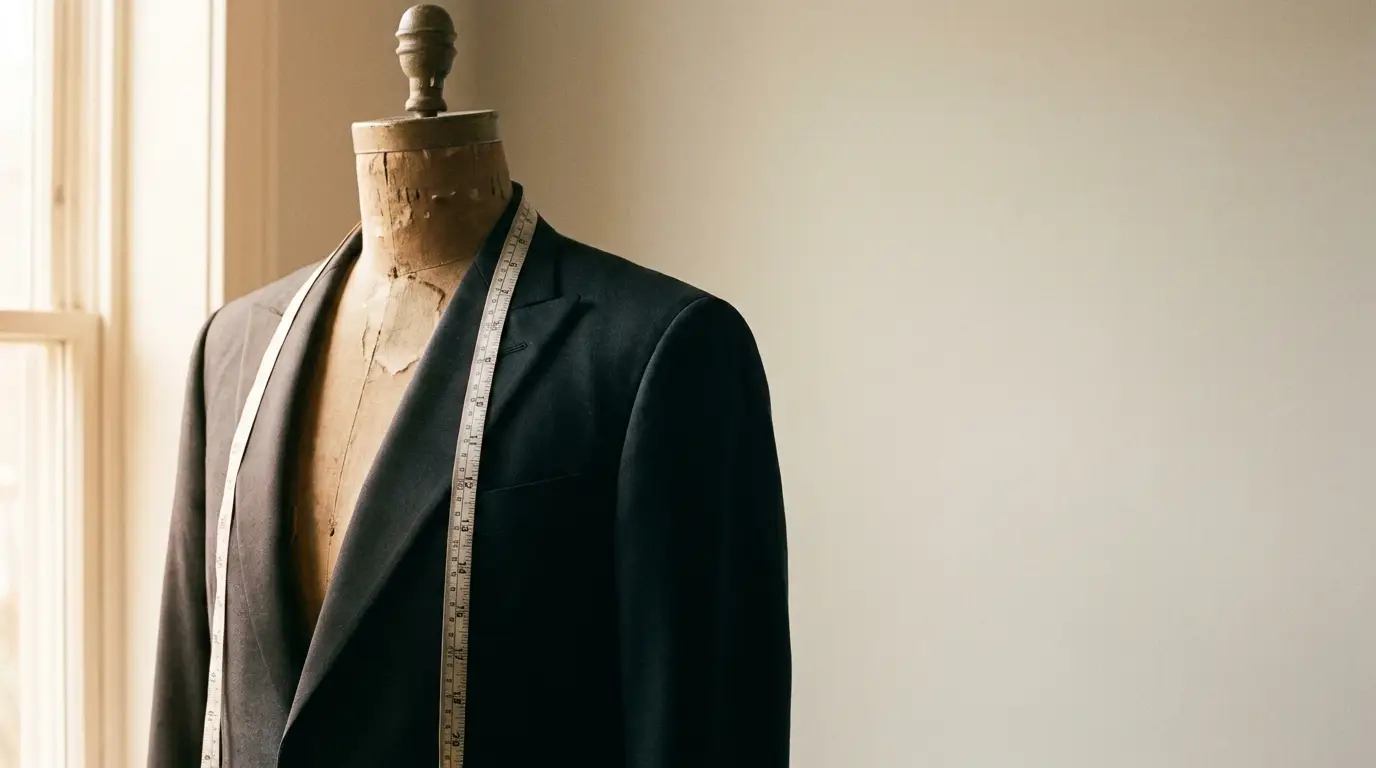
Fit is the single factor separating a tuxedo that looks expensive from one that actually is. A well-cut jacket in a mid-range fabric will beat a poorly fitted one in luxury cloth every single time. That’s not a subjective take; it’s a visible, photographic fact.
Finding Your Jacket and Pant Fit
Start with the jacket shoulder. The seam should sit exactly at the edge of your shoulder, not one centimeter over, not one centimeter back. Everything downstream of the shoulder, including how the sleeve hangs and how the chest lies flat, depends on this single point. From there, jacket length should allow your fingers to curl under the hem naturally when your arms hang at your sides.
The chest should button without pulling across the front. A tapered waist suppression, the inward curve of the jacket between chest and hip, signals structure and intention; a boxy jacket that hangs straight down ages a man regardless of his size. For trousers, the break at the shoe is a style preference, but the seat and thigh fit are not: both need to move with you without pulling or bunching. Try sitting down in any tuxedo before you commit to it. The way it behaves when you’re seated is exactly how it will behave at the reception table.
Why Alterations Matter More Than You Think
Off-the-rack tuxedos are cut to a size average, not to your body. A jacket that fits fine through the chest may still need shortened sleeves, a suppressed back, or a collar adjustment.
Budget for alterations, plan them early, and leave room for two fittings before the wedding. A skilled alteration tailor can handle most standard issues: sleeve length, trouser hem, waist suppression, button-stance adjustment. But limits exist. Wrong shoulders mean expensive, structurally complicated work. And some problems, a back that’s too wide or a chest that’s too narrow, can’t be fully fixed without rebuilding the garment.
That’s the real argument for custom: a garment drafted to your exact measurements doesn’t carry those structural compromises from the start. If alterations on a rental or off-the-rack tuxedo start pushing past $150 to $200, a conversation about custom stops being aspirational and starts being financially reasonable.
Choose Between Rental, Off-the-Rack, and Custom Options
Three routes exist for acquiring a wedding tuxedo: rental, off-the-rack purchase, and custom. Each serves a different situation, and the right one depends on your timeline, budget, and how many times you expect to wear formal attire in the next several years.
When to Rent Versus When to Buy
|
Dimension |
Rental |
Purchase (Off-the-Rack or Custom) |
|
Upfront cost |
$150 to $300 typically |
$400 to $1,395 and above |
|
Fit control |
Limited to available stock sizes |
Full (with alterations or custom) |
|
Fabric quality |
Polyester or poly-blend standard |
Wool, wool-blend, or luxury fabric |
|
Ownership after event |
None, returned |
Yours to keep and rewear |
|
Fitting appointments |
Usually one try-on |
One to four, depending on route |
|
Long-term value |
Zero residual value |
Rewearable for future events |
|
Rush availability |
Often available within days |
10 days (rush custom) to 4-5 weeks (standard custom) |
|
Risk of last-minute fit issues |
Higher, limited adjustment range |
Lower with custom; moderate with off-the-rack |
|
Best for |
Single-event need, tight budget |
Regular formal events or lasting investment |
Rental makes sense when you wear formal attire rarely and don’t anticipate needing it again. Purchase, whether off-the-rack with alterations or custom, makes sense when you expect to attend formal events in the coming years, or when fit is genuinely important to you.
The Custom Route: Building a Tuxedo That’s Truly Yours
Custom formalwear begins with a pattern drafted to your measurements – not a house size nudged to approximate your body. You pick the fabric, typically a wool or wool-mohair blend in black or midnight navy, the lapel style (peak, shawl, or notch), the button stance, the trouser stripe, and every construction detail shaping how the finished garment looks and moves.
A basted fitting, where the jacket’s assembled with temporary stitches before final construction, lets your tailor catch and correct fit problems before they’re locked in. Standard custom timelines run four to five weeks; rush options exist when schedules are tight. The investment starts at approximately $1,395 for a custom tuxedo, and first-time buyers often get a discount that brings the entry point down further.
For a wedding – where photographs capture every detail and the groom appears in nearly every frame, the case is straightforward. You get one shot at the day, and the garment should be built accordingly.
Conclusion
Picking the right wedding tuxedo means working through formality, fit, and acquisition in that order, not backward from price. Match your dress code and venue first, then focus on shoulder fit and trouser cut, then decide whether rental, off-the-rack, or custom best fits your situation. Treat it as a deliberate decision rather than a last-minute errand. Start early, get properly measured by a tailor, and the rest follows.