

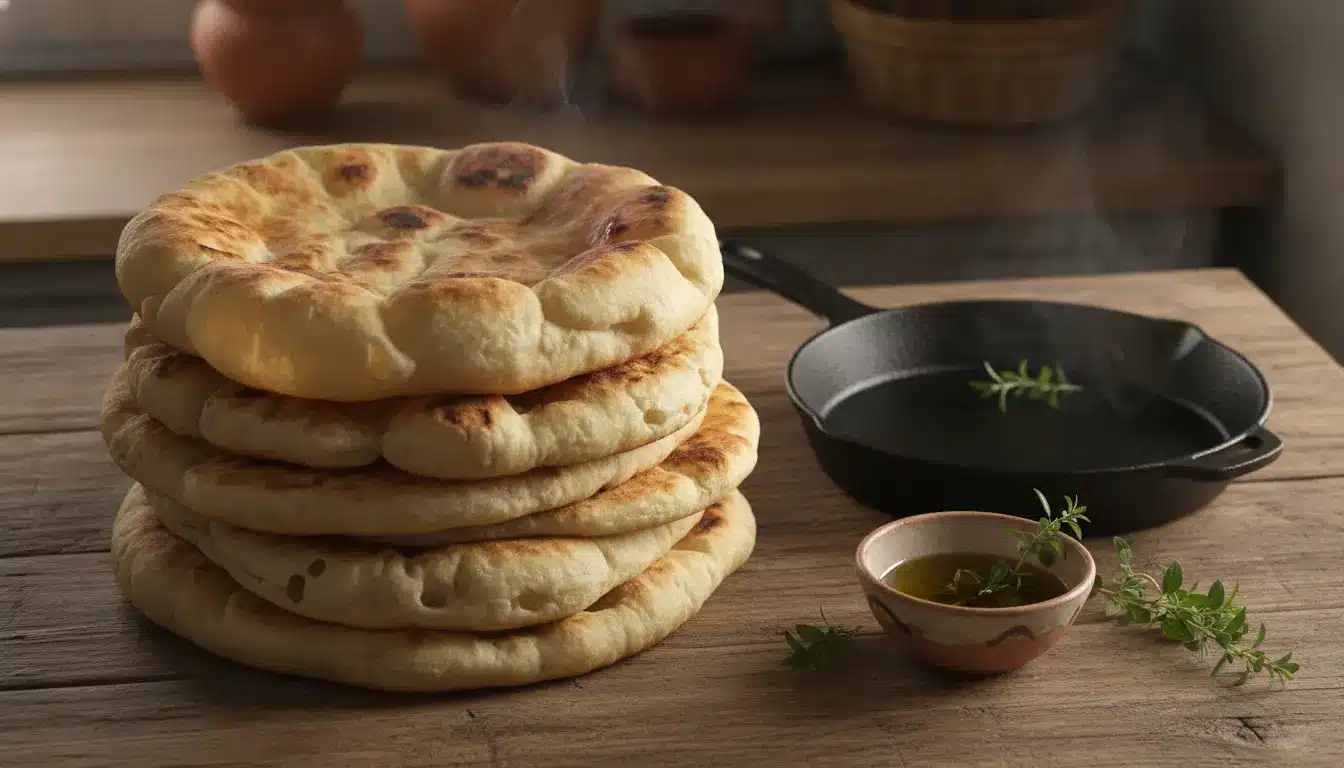
The texture, flavour and versatility of homemade flatbread will change the way you eat every day. You might think that to make light and pillowy bread, you need expensive baking equipment or long hours of labour.
But the secret to making the best bread at home is knowing how yeast reacts with your basic pantry ingredients. A bit of flour, some active yeast, and heat control create soft textures, even if you have no baking experience. This blog shows how classic ingredients and simple steps make flatbreads fluffy every time.
Select the Best Ingredients for Maximum Softness
For a really soft texture, you only need a few simple ingredients. Good plain or bread flour provides the structure to hold expanding air bubbles when cooking. Warm milk and olive oil add moisture and fat to the dough, which keeps it tender and flexible.
A Greek flatbread is made with active dry yeast and a few little drops of honey to promote rapid fermentation. If you let active yeast bloom in warm milk for five minutes, you have a lovely airy dough structure. Salt enhances the natural flavour profile and controls yeast activity, maintaining an even rate of rise over time.
Kneading and Proofing Your Dough for the Fluffiest Results
The secret to a pillowy texture that never gets dense, chewy or tough is dough development. Kneading creates the gluten network that holds the air pockets made by the fermenting yeast cells during proofing.
If you give your dough enough time to rise in a warm, draft-free place, you will get the best fluffiness on a skillet:
- Knead Thoroughly: Work your dough for 8 minutes until it is smooth, elastic, and non-sticky to the touch
- Proof Correctly: Give the dough ball enough time to double in size in a lightly greased bowl for about an hour
- Divide It Up: Use the risen dough and split it into equal parts so that all flatbreads cook evenly
Roll and Shape Your Flatbreads with Care
When you work with or shape your rested dough parts, the final flatbread turns out airy and light. Overworking or over-rolling dough flattens internal air pockets, resulting in tough, dense bread, not soft, fluffy discs. Dust your work surface with flour and roll each part out gently downward with gentle pressure.
Aim for a quarter-inch-thick dough, so that your core will still have enough bulk to form those tender layers while cooking. You’re going to let your rolled discs rest for 5 minutes before cooking so they don’t shrink back. This short pause helps flatbreads to keep their shape and puff up with them when they hit the flame.
Master the Stovetop Pan-Frying Technique
Cooking dough in a hot cast-iron skillet or heavy-bottomed frying pan is best for achieving the right rise and char. High heat vaporises internal moisture fast so that you can puff it up quickly and get golden-brown pockets and tender layers in the flatbread.
To make sure that your homemade flatbreads don’t dry out or burn, follow these simple stovetop cooking steps:
- Preheat the Pan: You want a dry cast-iron skillet that is hot over medium-high heat before you add dough discs
- Cook Quickly: Fry each side of the flatbread for about 2 minutes until big air bubbles build up on the top and golden spots appear
- Brush with Oil: Lightly coat your newly cooked side with olive oil or garlic butter to keep it moist
Store and Keep Your Warm Flatbreads Soft
After baking on a hot skillet, fresh flatbreads will soften quickly if left in the open. Steam is the easiest way to keep bread warm, pliable, and soft after cooking. When hot flatbreads leave the skillet to stack, cover them with a clean, dry kitchen towel. This gentle steaming of the crust softens the outer crust and keeps the interior tender throughout your family lunch or dinner.
You can store your leftovers in an airtight container at room temperature for up to two days. They can be quickly reheated in a warm pan for 30 seconds to restore that freshly baked softness and delightful aroma.
Begin Baking Your Homemade Greek Flatbreads Today
Making bakery-quality flatbreads that are fluffy right at home is an easy and satisfying job that will make your daily meal routine so much better. By mastering dough preparation, proofing times and high-heat skillet cooking, you will be able to enjoy fresh flatbread every time you make it.
Gather your family around with this warm, versatile bread to dip into dips, wrap around grilled meats or serve fresh off the pan. Get started with your basic pantry ingredients and get to know how fluffy flatbread is made from scratch.