
Choosing the right bike tyres improves your riding performance, comfort, and handling safety. Tyres are the only contact point between your bicycle and the ground, as they determine cornering grip. Worn or poorly fitting tyres make pedalling difficult, punctures are frequent, and control on wet roads is lost.
With a range of widths, rubber compounds, and casing options, it can be difficult to pick the right tyre. Knowing your riding style and rim dimensions helps you select tyres that will enhance your cycling experience. In this article, you will learn the guide to finding the right bicycle tyres for your daily rides.
1. Matching Tyre Style to Your Specific Riding Terrain
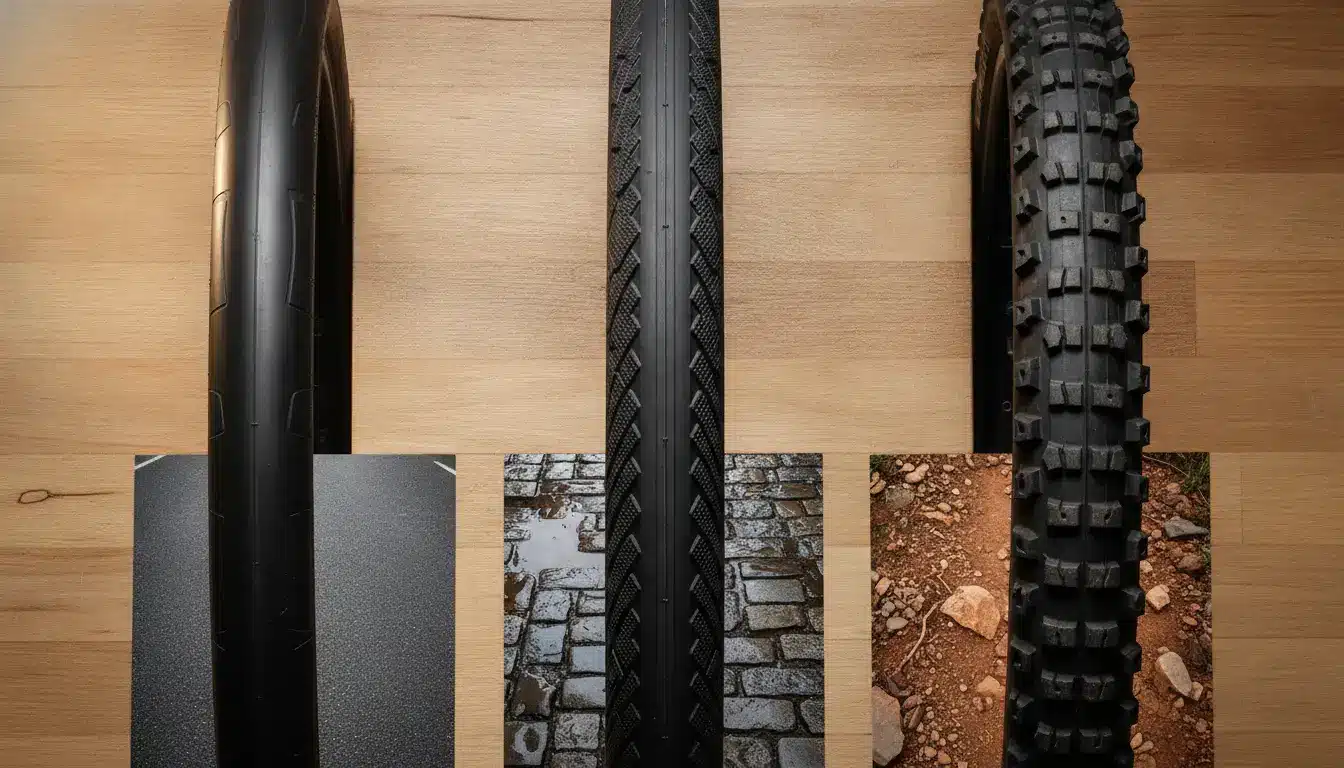
Always remember that the first step in choosing bicycle tyres is identifying the primary surface terrain you ride on every day. Road cycling, city commuting, gravel trails, and mountain biking demand completely different tread profiles and rubber compounds for optimal performance. Bike tyres engineered for your terrain ensure maximum traction, low rolling resistance, and long-lasting tread life.
Tyre profiles matched to riding disciplines:
- Slick Road Tyres: Feature smooth tread designs to minimise rolling resistance and maximise speed on paved roads
- Semi-Slick Commuter Tyres: Combines a fast-rolling centre tread with side shoulder grooves for reliable wet-weather grip
- Knobby Off-Road Tyres: Use deep, widely spaced rubber lugs to grip loose soil, mud, and rocky trails securely
2. Choosing the Ideal Tyre Width for Comfort and Speed
Bicycle tyre widths have evolved significantly, with modern cyclists preferring wider tyre profiles for improved comfort and control. Wider tyres hold higher air volumes, allowing you to ride at lower tyre pressures that absorb road vibrations and bumps effortlessly. While narrow tyres were once thought to be faster, wider tyres offer lower rolling resistance on rough roads while improving cornering grip.
Performance traits based on tyre width:
- Narrow Widths (23mm–25mm): Lightweight option best suited for smooth asphalt racing and track cycling environments
- Medium Widths (28mm–32mm): Ideal balance of speed, vibration absorption, and puncture resistance for road and city riding
- Wide Widths (35mm–50mm+): Provide maximum traction, stability, and comfort on gravel paths and rough off-road terrain
3. Evaluating Puncture Protection Layers and Rubber Durability
Puncture-resistant tyres incorporate specialised Kevlar or high-density nylon belts under the rubber tread to stop sharp glass and thorns. While heavy puncture protection belts add slight weight, the peace of mind and hassle-free riding they deliver is well worth it. Furthermore, softer rubber compounds offer superior wet grip but wear faster, while harder compounds offer exceptional mileage durability.
Puncture protection and rubber compound options:
- Integrated Sub-Tread Belts: Uses tough synthetic layers under the tread to block sharp debris from piercing inner tubes
- Dual-Compound Rubber: Combines hard centre rubber for long wear life with soft shoulder rubber for confident cornering grip
- Reinforced Sidewalls: Features extra woven fabric layers to protect against sidewall cuts from sharp rocks and curbs
4. Deciding Between Tubeless, Clincher, and Tubular Systems
Bicycle tyres utilise three main mounting systems: traditional inner-tube clinchers, modern tubeless setups, and specialised racing tubulars. Standard clincher tyres use separate inner tubes, making them affordable, widely available, and simple to repair during roadside flat tyres. Tubeless tyres eliminate inner tubes completely, using liquid sealant inside to seal small punctures automatically while riding.
5. Checking Rim Compatibility, TPI Casing, and Bead Types
Most adult road and hybrid bikes use 700c wheels, while mountain bikes typically use 27.5-inch or 29-inch wheel standards. Make sure that you evaluate the casing threads per inch (TPI) rating and bead style of prospective tyres. High TPI casings feel supple and absorb road bumps better, while folding Kevlar beads reduce total wheel weight compared to heavy rigid steel wire beads.
Upgrade Your Cycling Experience
Selecting the perfect bicycle tyres is a simple, cost-effective upgrade that improves your ride comfort, speed, and cornering confidence. Matching tread styles to your terrain, picking the right width and choosing your mounting system guarantees great performance. Moreover, quality tyres keep you rolling smoothly, allowing you to enjoy long rides without worrying about unexpected flat tyres or slipping.