
Vacuuming your rug regularly, but it still looks dull and feels dirty? The problem may be deep-set dirt, spills, and pet hair that a vacuum alone cannot remove.
Most rugs can be cleaned at home by vacuuming thoroughly, treating stains, using a cleaning method suited to the rug material, and drying the fibers completely.
Simple tools, a few dry days, and the right technique bring most rugs back to a clean, fresh state. In my opinion, different rug materials need different care, and skipping that step often causes more harm than good.
This step-by-step process shows how to clean rugs at home, deep-clean washable materials, wash machine-safe rugs, treat stains, and maintain different rug types without damaging the fibers.
How to Clean Different Types of Rugs?
Different rug materials react differently to water and cleaning chemicals. Choosing the right method protects fibers, prevents shrinkage, and avoids permanent dye damage before cleaning any rug.
|
Rug Material |
Safe Cleaning Method |
Main Warning |
|---|---|---|
|
Synthetic (nylon/polyester) |
Spot cleaning or wet extraction when label permits |
Test dyes and backing first |
|
Wool |
Low-moisture spot care or careful hand cleaning if permitted |
Avoid heat, over-wetting, and harsh detergent |
|
Jute/Sisal |
Dry or very low-moisture spot care |
Water may cause rings, shrinkage, or browning |
|
Silk/Vintage |
Professional cleaning |
Dyes and fibers may be highly sensitive |
Matching care to the rug helps preserve its appearance, feel, and value, especially when it is chosen to suit certain interior styles, while reducing the chance of costly damage over time.
Note: Before using any method, check the rug’s care label for washing, water-temperature, detergent, and drying restrictions. If the label prohibits wet cleaning or you can’t identify a rug’s material, use low-moisture care or professional cleaning.
How to Clean Rugs at Home: Different Methods
The best way to clean a rug depends on its care label, material, size, backing, and soil level.
Use spot cleaning for fixed or lightly stained rugs, machine washing only for rugs labeled washable, wet extraction for compatible synthetic rugs, and low-moisture care for moisture-sensitive fibers.
Method 1: Spot Cleaning Anchored Area Rugs
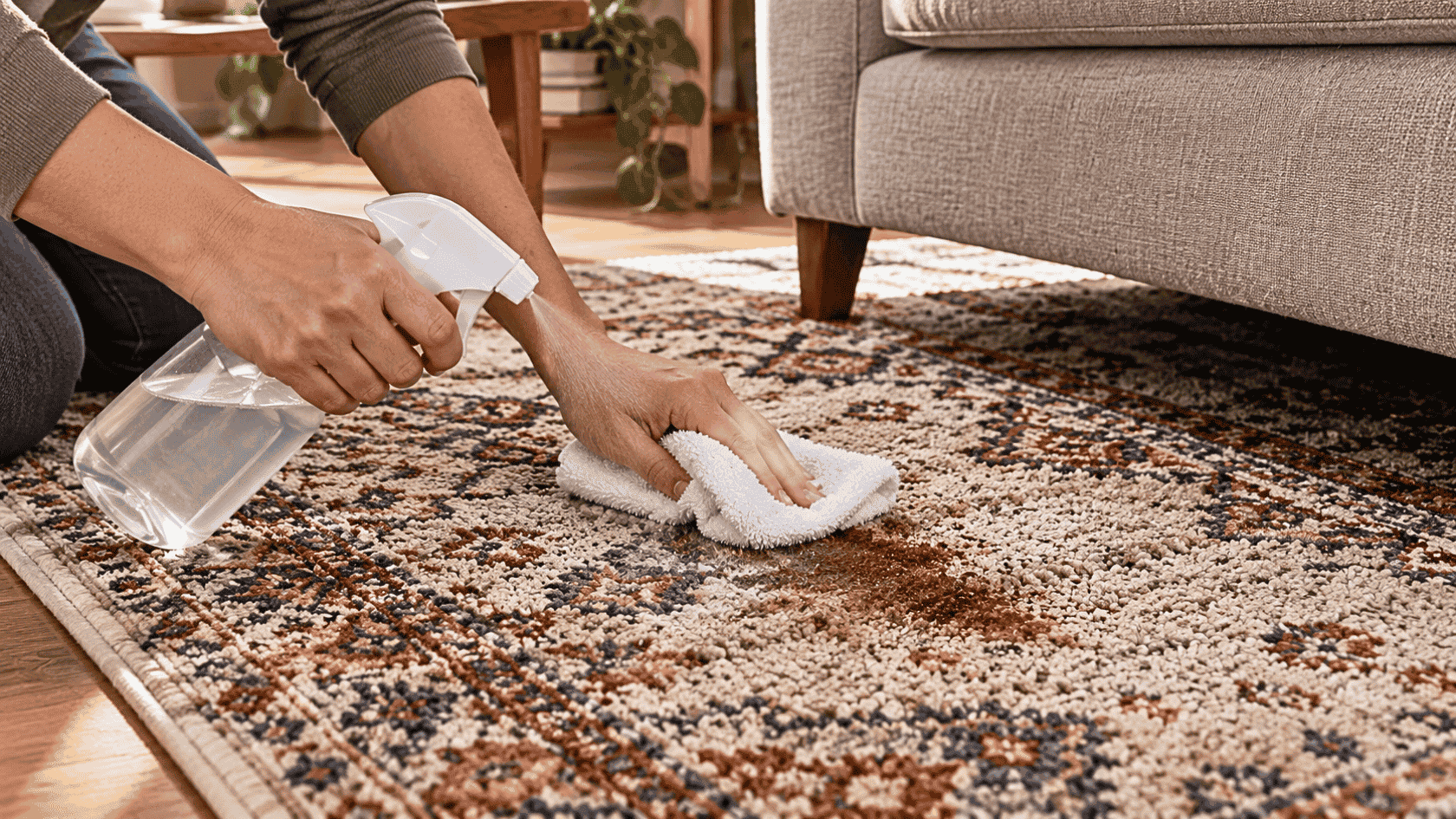
Tools needed:
-
Plastic tarps or garbage bags
-
Diluted low-moisture cleaner and spray bottle
-
White microfiber towels
-
Spot cleaner (optional)
-
Plastic risers or bowls
-
Floor fan
Steps:
-
Slide plastic tarps or garbage bags under the rug’s edges and corners to protect the subfloor.
-
Lightly mist a diluted cleaner onto the stained area, since soaking an anchored rug traps moisture underneath.
-
Press a white microfiber towel into the stain, or use minimal water and maximum suction with a spot cleaner to blot and extract it.
-
Elevate the damp corner with plastic risers or bowls, then run a floor fan until it’s fully dry.
Best for: Large area rugs anchored under heavy furniture.
Method 2: Washable Rug in the Washing Machine
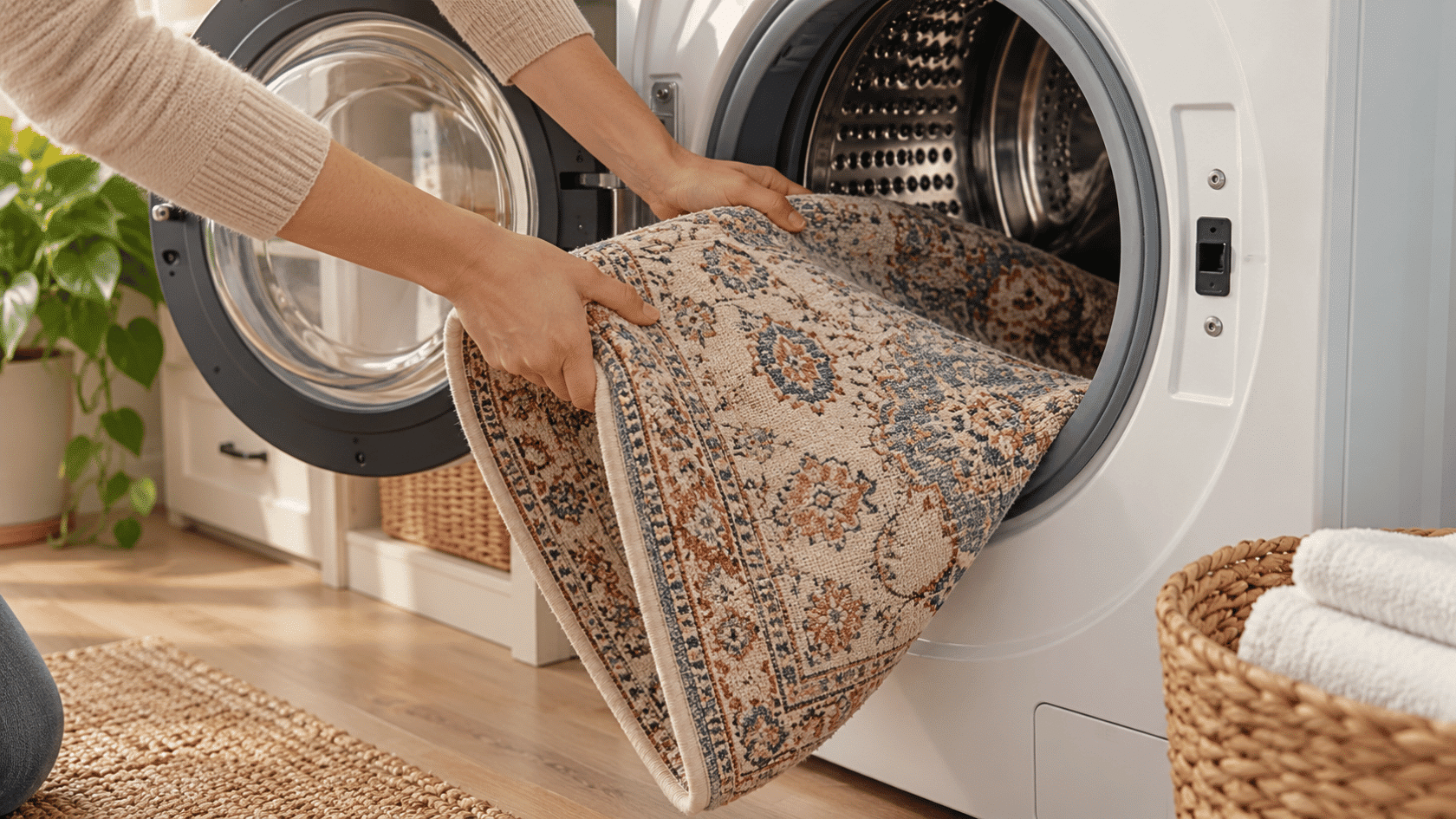
Materials needed:
-
Care label instructions
-
Mild liquid detergent (no powder)
-
Washing machine with a delicate cycle
-
Ventilated drying space or dryer with a low-heat setting
Steps:
-
Check the care label and drum fit first, since oversized or heavy rugs may need commercial or professional cleaning.
-
Run the rug on a cold, delicate cycle with mild liquid detergent, skipping powder detergent, which leaves residue in dense weaves.
-
Skip fabric softener and bleach, since these chemicals break down rubber backing and weaken synthetic fibers over time.
-
Follow the drying label by air-drying flat or in a ventilated area, tumble drying on low only if permitted, and always avoiding high heat.
Best for: Small, lightweight, flat-weave, or cotton and synthetic rugs labeled machine washable.
Tip: Even a small wool, jute, or silk rug should stay out of the washing machine, since these fibers shrink, bleed dye, or lose shape under agitation and water exposure.
Method 3: The Deep Clean Wash (Hand Scrub and Extractor)
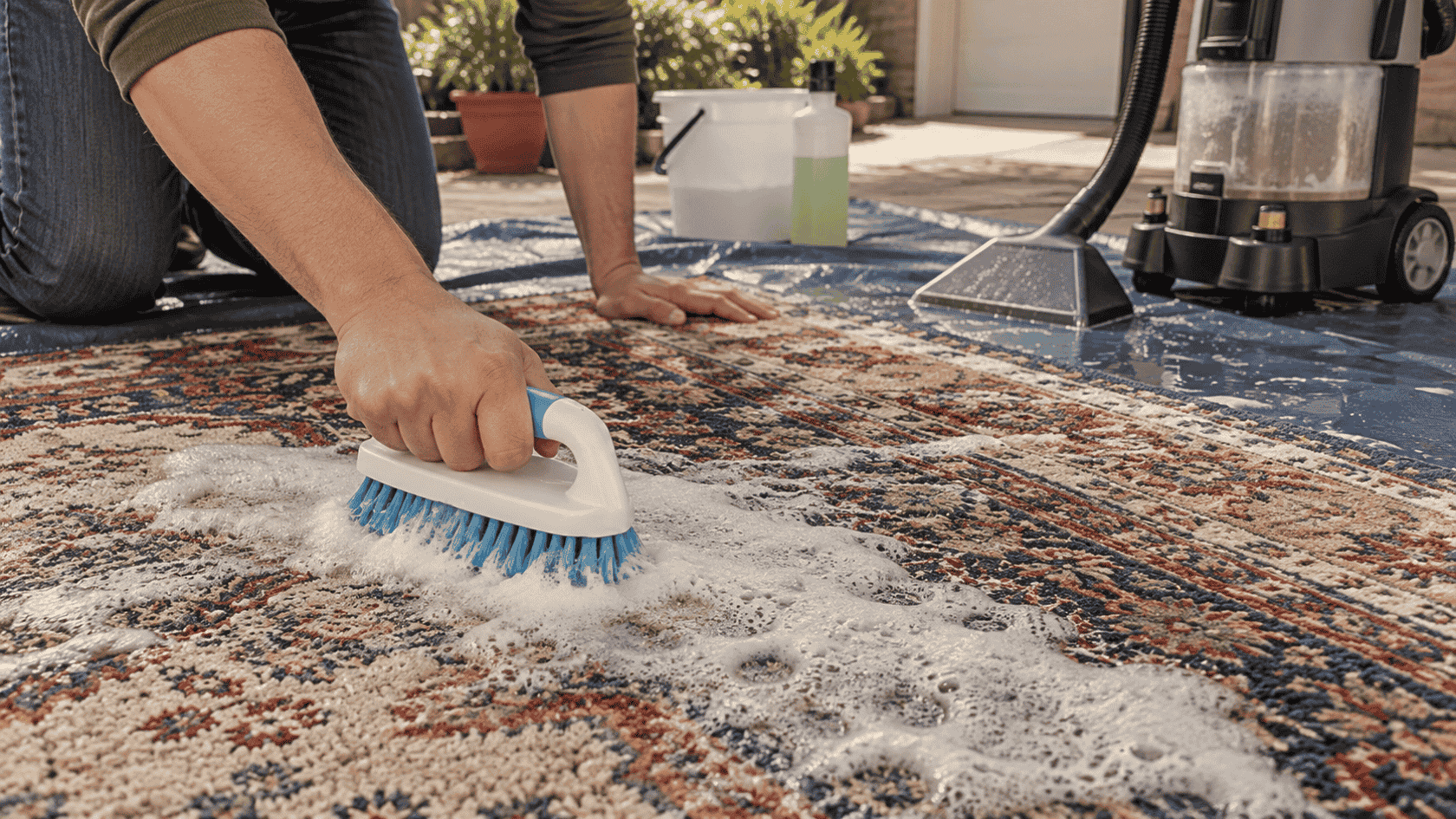
Materials needed:
-
Outdoor tarp
-
Vacuum cleaner
-
All-purpose rug cleaning solution and spray bottle
-
Scrub brush
-
Extraction machine
-
White towel
-
Fans
Steps:
-
Move the rug outdoors onto a tarp to prep the workspace.
-
Vacuum both sides of the rug thoroughly in a 360-degree pattern before adding any moisture.
-
Spray an all-purpose cleaning solution evenly across the fibers.
-
Scrub gently, then let the solution dwell briefly to apply the C.H.A.T. method.
-
Extract until the water runs clear, then blot with a white towel to rinse and test.
-
Use fans immediately to dry the rug rapidly and prevent lingering moisture and mold.
Best for: Synthetic, high-traffic, and heavily soiled area rugs.
In my experience, skipping rotation causes uneven wear and fading from concentrated foot traffic and sun exposure.
Method 4: Baking Soda Refresh (Waterless Cleaning)
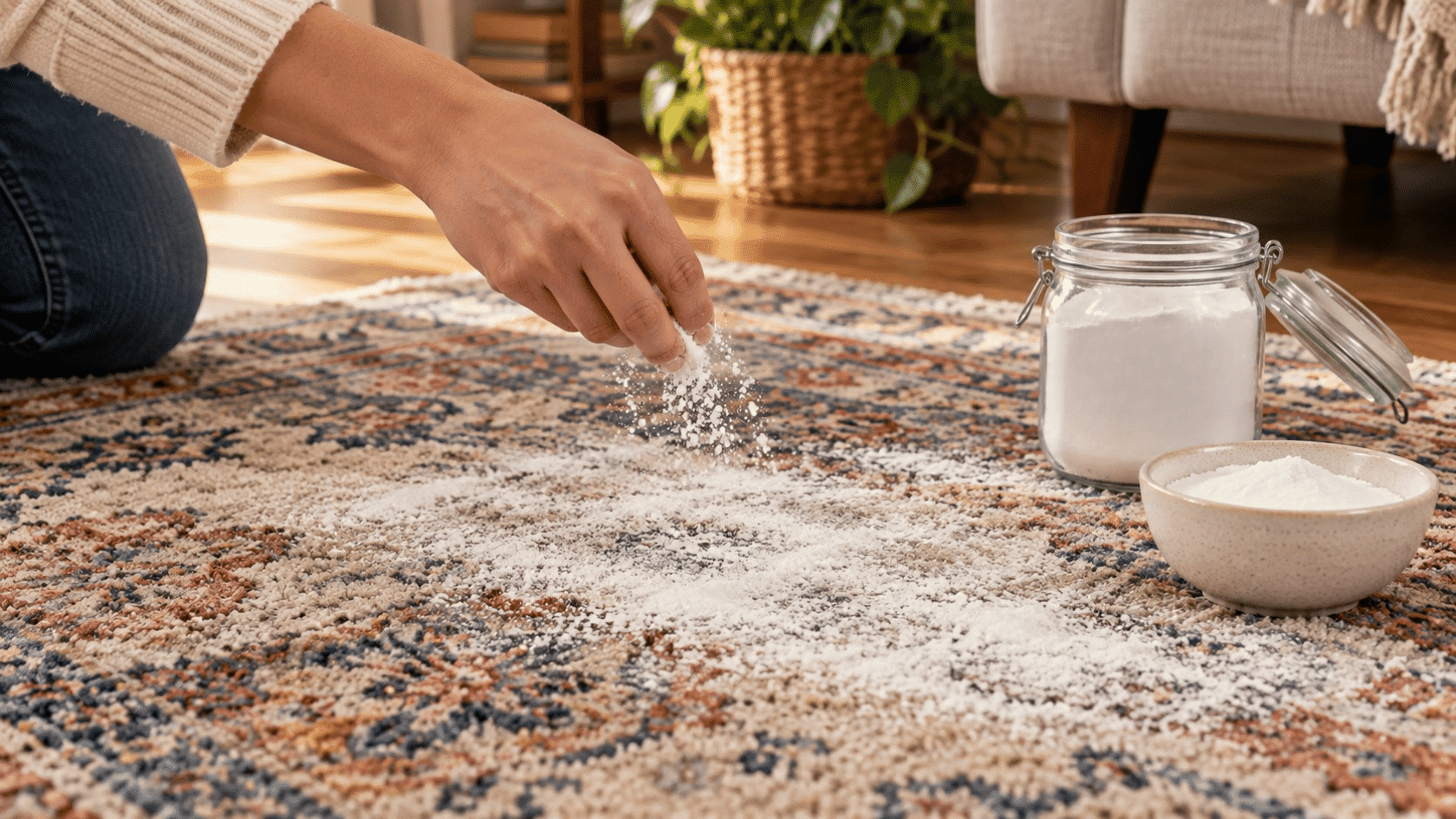
Materials needed:
-
Baking soda
-
Vacuum cleaner
-
Sealed container for storage
Steps:
-
Sprinkle a generous, even layer of baking soda across the dry fibers to apply the powder.
-
Let it sit for 30 to 60 minutes, or overnight for stubborn pet odors, to dwell and neutralize.
-
Clear all the powder using a slow, 360° vacuuming pattern.
Best for: Moisture-sensitive rugs, surface oils, and routine odor removal.
How to Keep Rugs Clean Between Deep Cleanings?
Routine maintenance reduces how often a rug needs deep cleaning and keeps dirt from embedding in the fibers.
-
Vacuum Regularly: Vacuum high-traffic rugs at least weekly and clean both sides periodically when the construction allows.
-
Rotate the Rug: Turn the rug every few months to distribute foot traffic and sunlight more evenly.
-
Blot Spills Quickly: Absorb spills with a clean white cloth instead of rubbing them deeper into the fibers.
-
Use Entry Mats: Reduce tracked-in soil by placing mats at exterior doors.
-
Dry Damp Areas Fully: Never leave rugs damp against hardwood or other moisture-sensitive flooring
Consistent upkeep extends a rug’s lifespan, preserves its texture, and helps it stay fresh and presentable between more intensive cleaning sessions.
How to Remove Common Stains and Pet Odors From Rugs?
Urine, oils, and food spills sink into rug fibers fast, and each type of mess needs a slightly different fix to lift both the stain and the smell for good.
-
Press dry paper towels firmly over fresh urine to soak up as much liquid as possible before treating it.
-
Saturate the spot with an enzyme-based pet cleaner, which breaks down the uric acid crystals that cause lingering smells.
-
Leave the enzyme solution on the fibers for 10 to 15 minutes, then lift it out with cold water and a clean cloth.
-
For leftover fur oils or grease marks, dab on a diluted vinegar-and-water mix and press dry.
-
On coffee, wine, or juice spills, work in cold water and a touch of dish soap right away, pressing rather than dragging the cloth.
-
Keep pressure straight down on every stain instead of scrubbing sideways, since sideways motion spreads tannins and frays the fibers.
I keep a small spray bottle of enzyme cleaner by the door where my dog naps, since catching an accident within minutes makes the difference between a quick fix and a stain that keeps coming back.
Final Thoughts
A clean rug comes down to matching the method to the material, whether that’s a gentle spot treatment, a full machine wash, or a low-moisture refresh.
I’ve learned that rushing this step costs more time than following the label ever does. Build vacuuming, quick stain treatment, and rotation into a regular routine, and deep cleaning becomes a rare chore instead of a constant battle.
When a rug is delicate, valuable, or mold-affected, call a professional rather than risk it.
What’s your go-to trick for keeping rugs looking fresh? Drop it in the comments below!
Frequently Asked Questions
How Often Should You Deep Clean a Rug?
Most rugs need deep cleaning every 6-12 months, though high-traffic areas may need attention every three to six months depending on soil buildup, pets, and daily household use.
Why Does My Carpet Look Dirtier After Cleaning?
This occurs due to wicking. Deep-set dirt trapped at the base of the backing moves up the fibers toward the tips as water evaporates during drying. To fix wicking, let the rug dry completely, then do a thorough dry vacuum pass.
What are the Common Rug Cleaning Mistakes?
Common rug cleaning mistakes include scrubbing stains instead of blotting, soaking the fibers with excess water, and using harsh cleaners that can permanently damage delicate rugs.