

Your small room isn’t actually small it’s just badly lit, poorly arranged, and fighting itself at every turn.
Here’s the strange part: the fix rarely has anything to do with square footage.
It’s the furniture pressed too tight against the wall, the shadows pooling in forgotten corners, the colors clashing instead of cooperating small, sneaky habits quietly working against you without your noticing.
Once you understand how to make a small space feel large, you start seeing your home differently.
A shifted couch, a mirror in the right spot, light pulled higher up the wall these tiny moves carry more weight than any renovation ever could. What follows might change the way you look at every room you own.
What Makes a Small Space Feel Larger?
Clear views across a room instantly make it feel bigger. Keep pathways open, avoid blocking windows or doorways, and arrange furniture so your eyes can move freely from one side to the other.
Room size isn’t the only factor at play. The size, spacing, and placement of your furniture matter too. Skip oversized pieces and avoid cluttering corners with too many small items.
Natural light, layered lighting, mirrors, and a consistent color palette all work together to reduce visual barriers. Fewer sharp breaks in color or light help the whole room feel connected.
Drawing the eye upward makes low ceilings feel taller. Try tall furniture, floor-length curtains, high shelving, and other vertical elements to stretch the room’s height and open things up.
Best Ways to Make a Small Space Feel Large
Small changes in layout, color, and lighting can make any room feel bigger without adding a single square foot.
1. Rearrange Furniture to Improve Flow
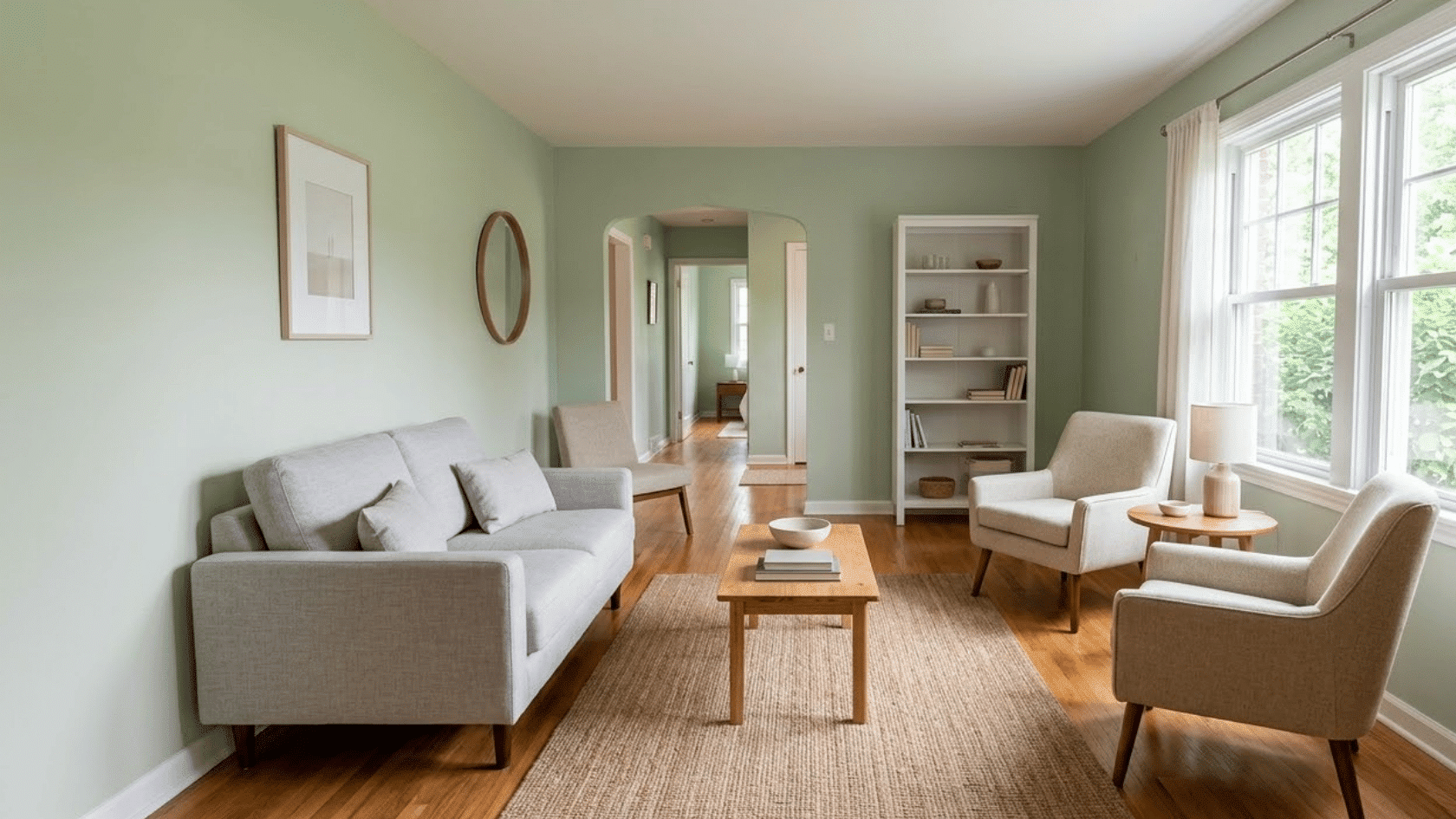
Layout should always come first when working with a small room. Skip the habit of pushing every piece against the wall since it often makes a room feel stiff and boxed in.
Leave comfortable paths to walk through and keep sightlines toward windows or connecting rooms open. Thoughtful placement makes a room feel planned, not crowded with random pieces.
2. Declutter and Create More Breathing Room
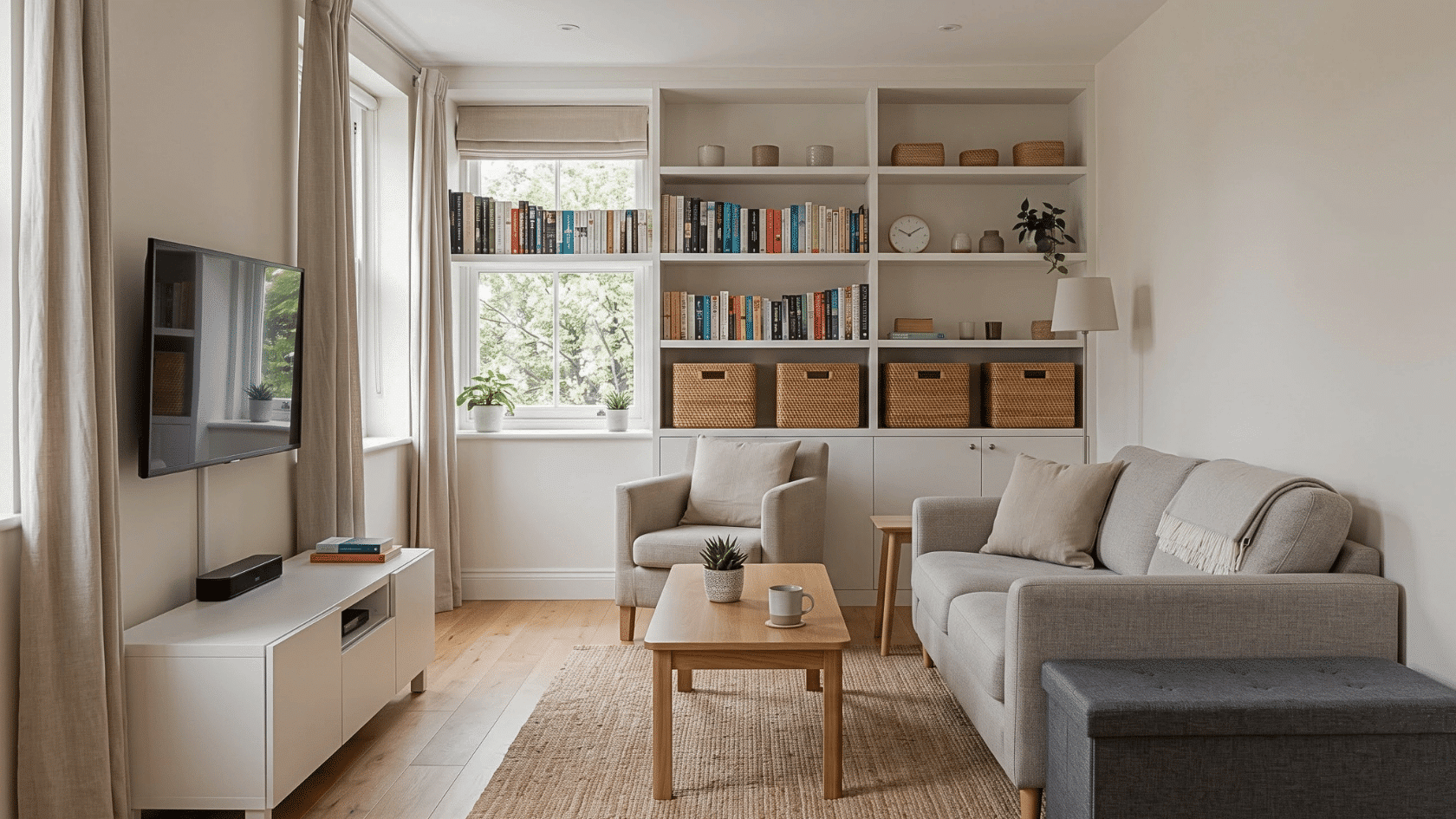
Too many items sitting around quietly shrink how open a room feels. Clearing floors, countertops, and other surfaces removes visual noise and gives the eye more room to rest.
Storage ottomans, multi-purpose furniture, and built-in shelving help hide everyday items out of sight. Fewer visible objects almost always lead to a calmer, more open room.
3. Choose Furniture With the Right Scale
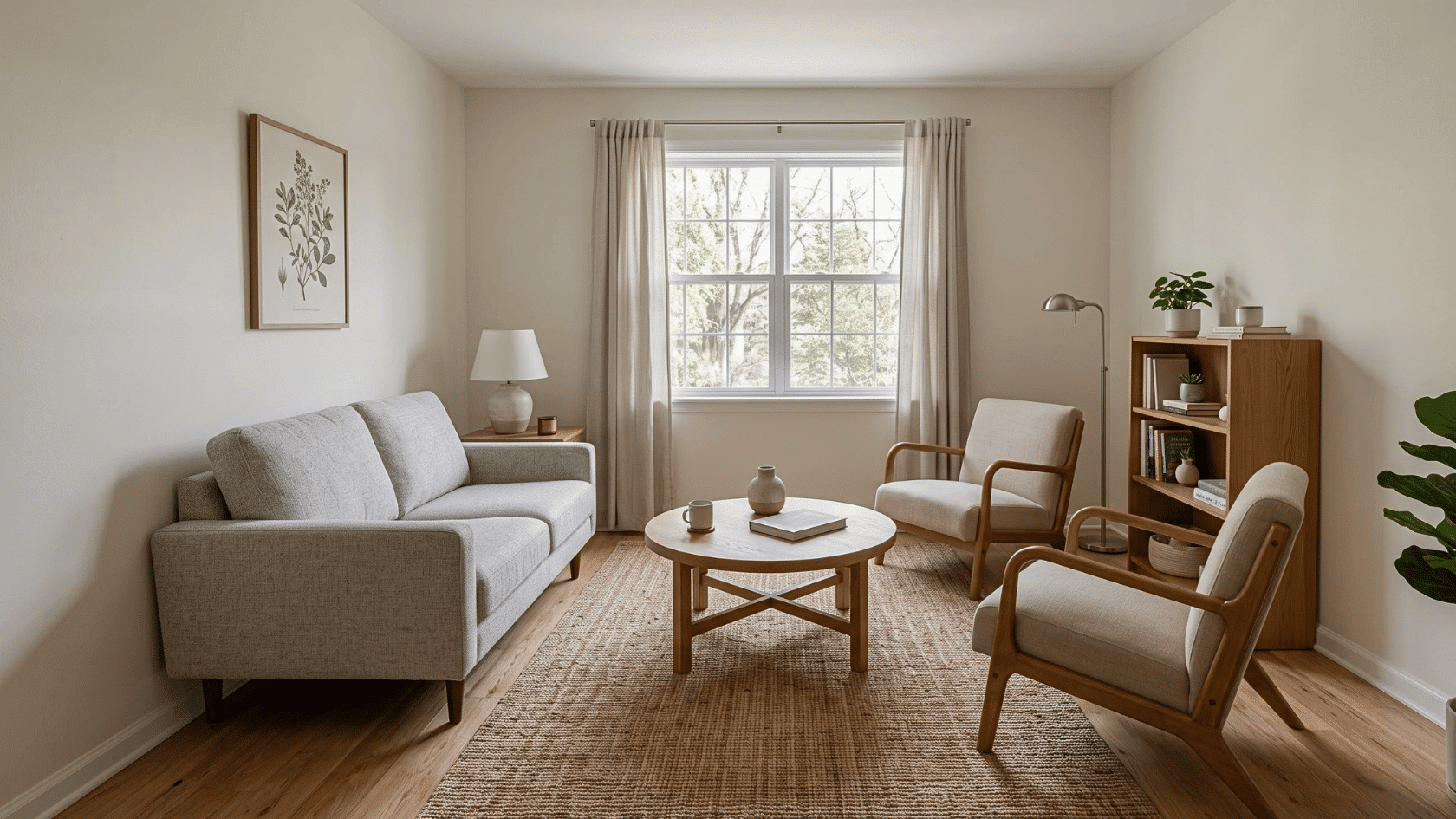
Small rooms do not automatically call for small furniture. A few well-proportioned pieces often work better than several tiny ones scattered around the room.
Oversized sofas and bulky pieces tend to dominate a room, making it feel tighter. Pick items based on proportion, and let fewer, well-chosen pieces do the work.
4. Use Furniture With an Open and Lightweight Appearance
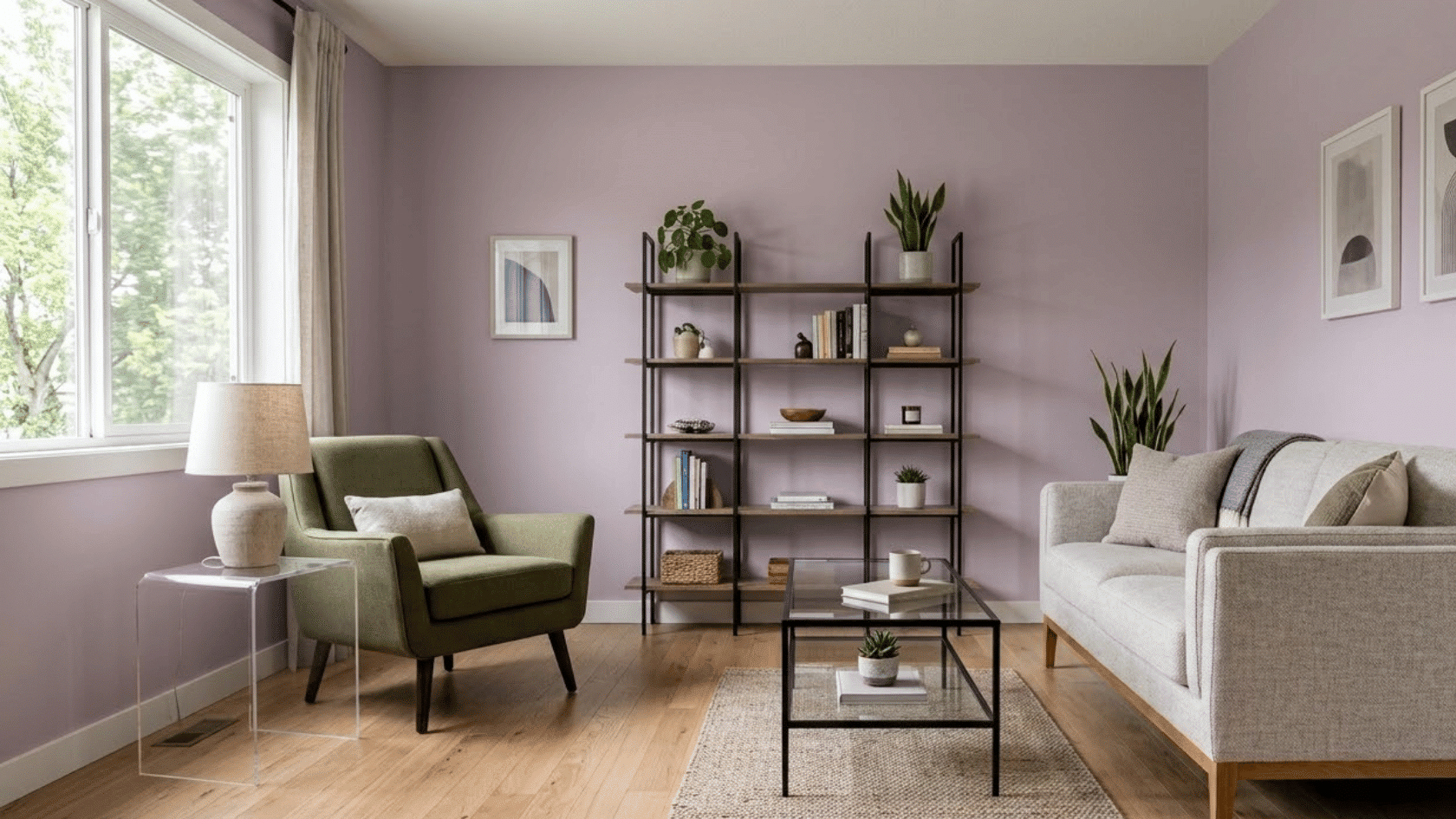
Visible floor space plays a bigger role in how large a room feels than most people realize. Furniture that lets light and sightlines pass underneath opens things up fast.
Sofas and chairs with exposed legs, glass coffee tables, acrylic pieces, and open-frame shelving all reduce visual weight. Less bulk on the eyes means more breathing room overall.
5. Make a Small Kitchen Feel More Open
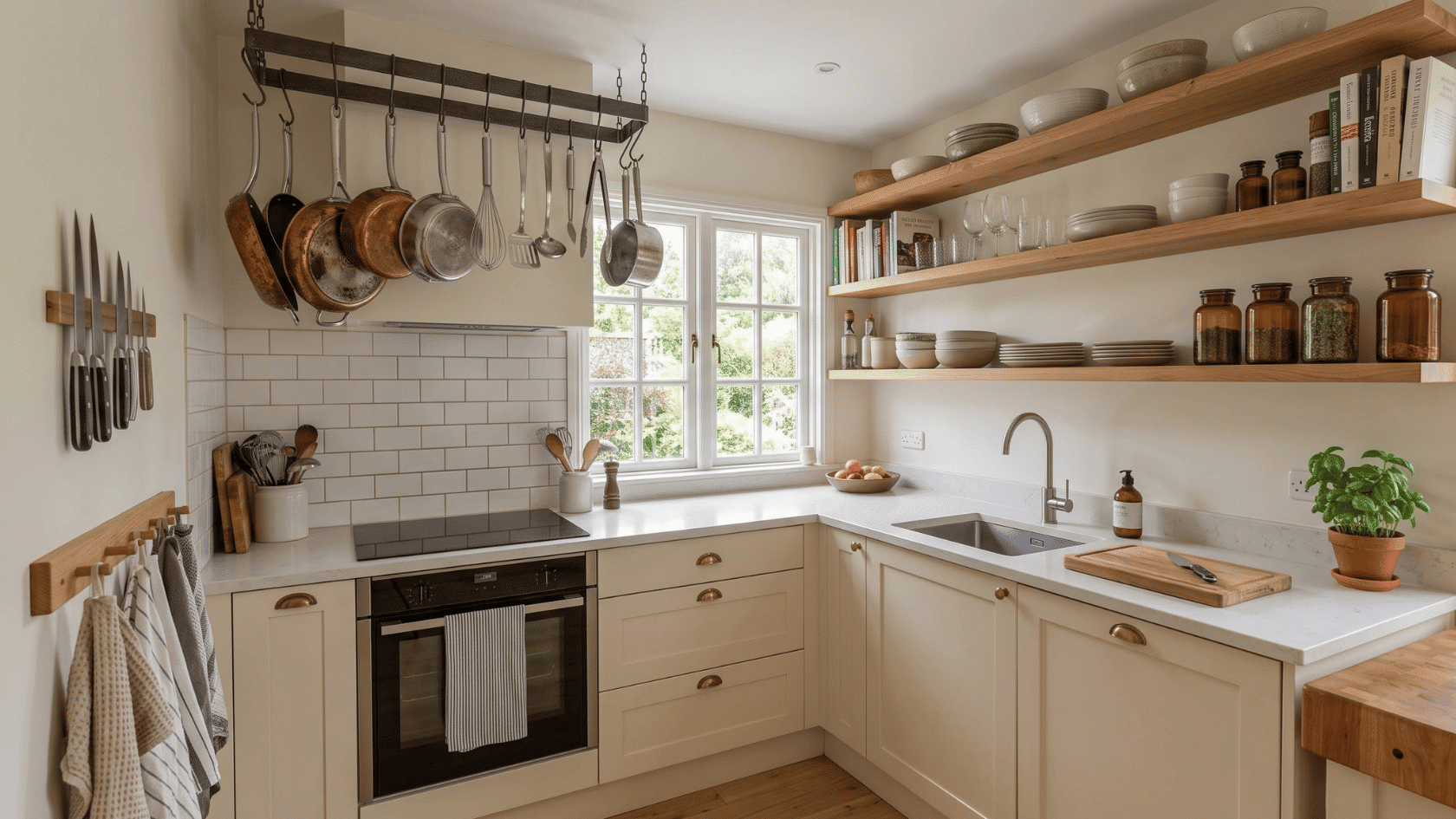
Open shelving instead of bulky upper cabinets keeps sightlines clear and makes a compact kitchen breathe. Light countertops and backsplashes add to that same airy feeling.
Hanging pots and utensils frees up counter space, while a small window above the sink brings in extra natural light. Both tricks work well together in tight kitchens.
6. Use Light Colors to Open Up the Space
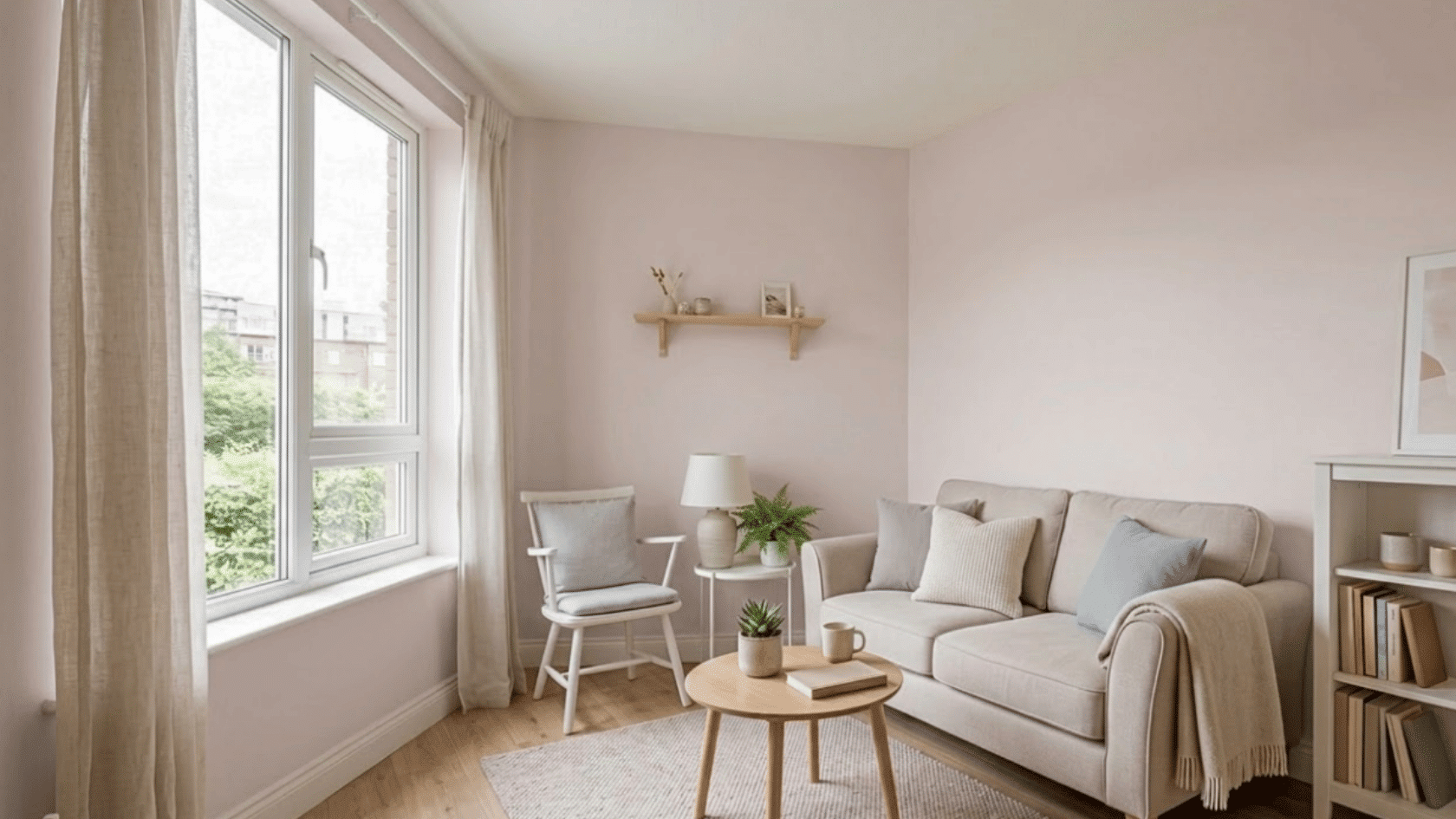
Lighter shades bounce light around a room and make walls feel farther apart than they actually are. White, cream, soft neutrals, and light pastels all work well here.
These shades work best in rooms that already lack strong natural light. A light palette gives even a small, dim room a brighter and more open feel.
7. Create a Seamless Look With a Monochromatic Color Scheme
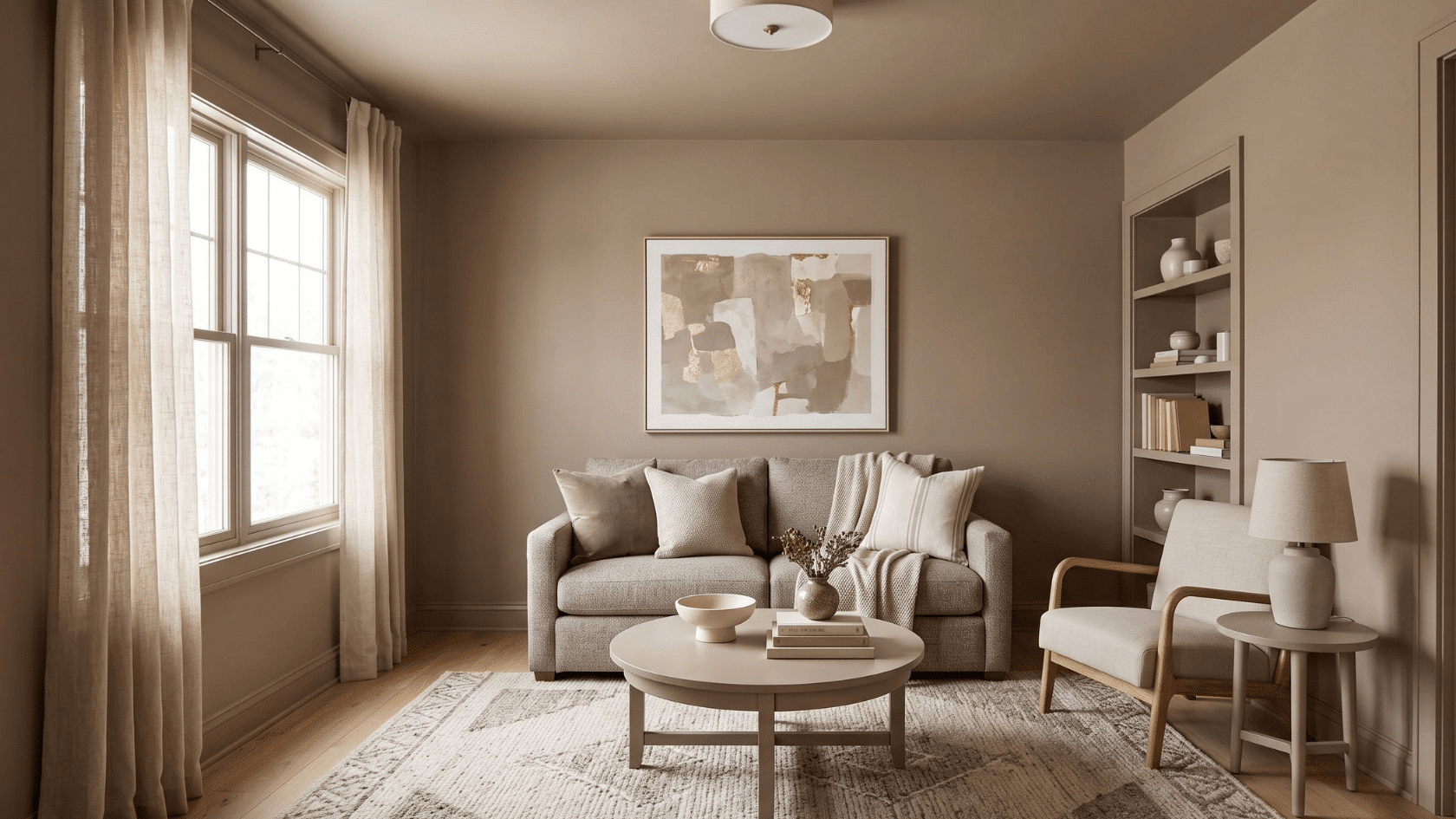
Sticking to different shades of one color keeps a room feeling connected rather than divided. Similar wall and trim colors are a simple place to start.
Coordinated furniture, textiles, and layered tones and textures build on that same idea. Cutting down on sharp color contrasts helps the whole room read as one space.
8. Use Vertical Design Tricks to Make Ceilings Feel Higher
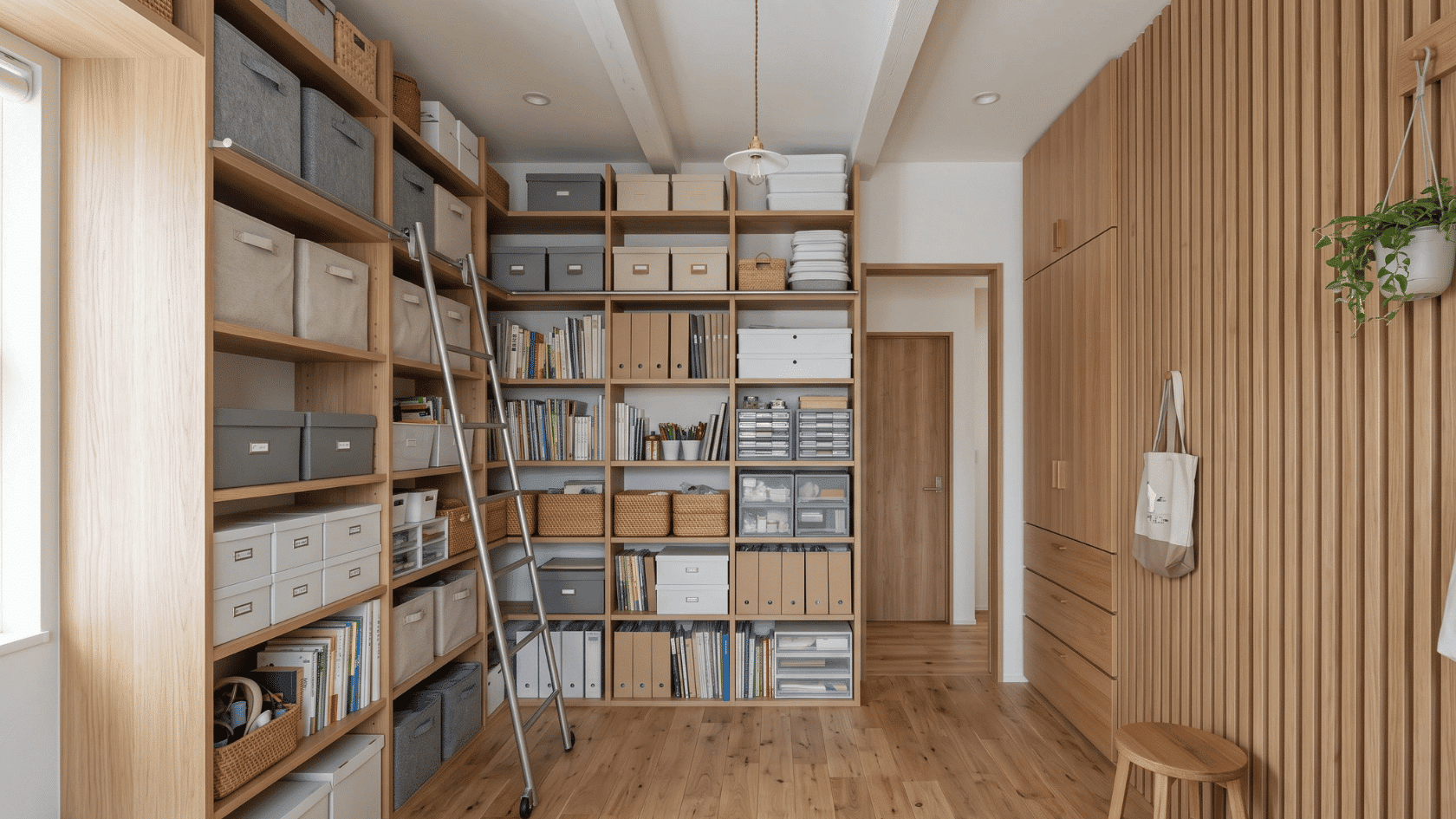
Drawing the eye upward is one of the fastest ways to make a low ceiling feel taller. Vertical lines naturally pull attention away from the floor.
Tall bookshelves, floor-to-ceiling storage, vertical artwork, and paneling or striped patterns all support this effect. Height changes how large a room feels almost instantly.
9. Use Smart Layout Tricks in a Small Bedroom
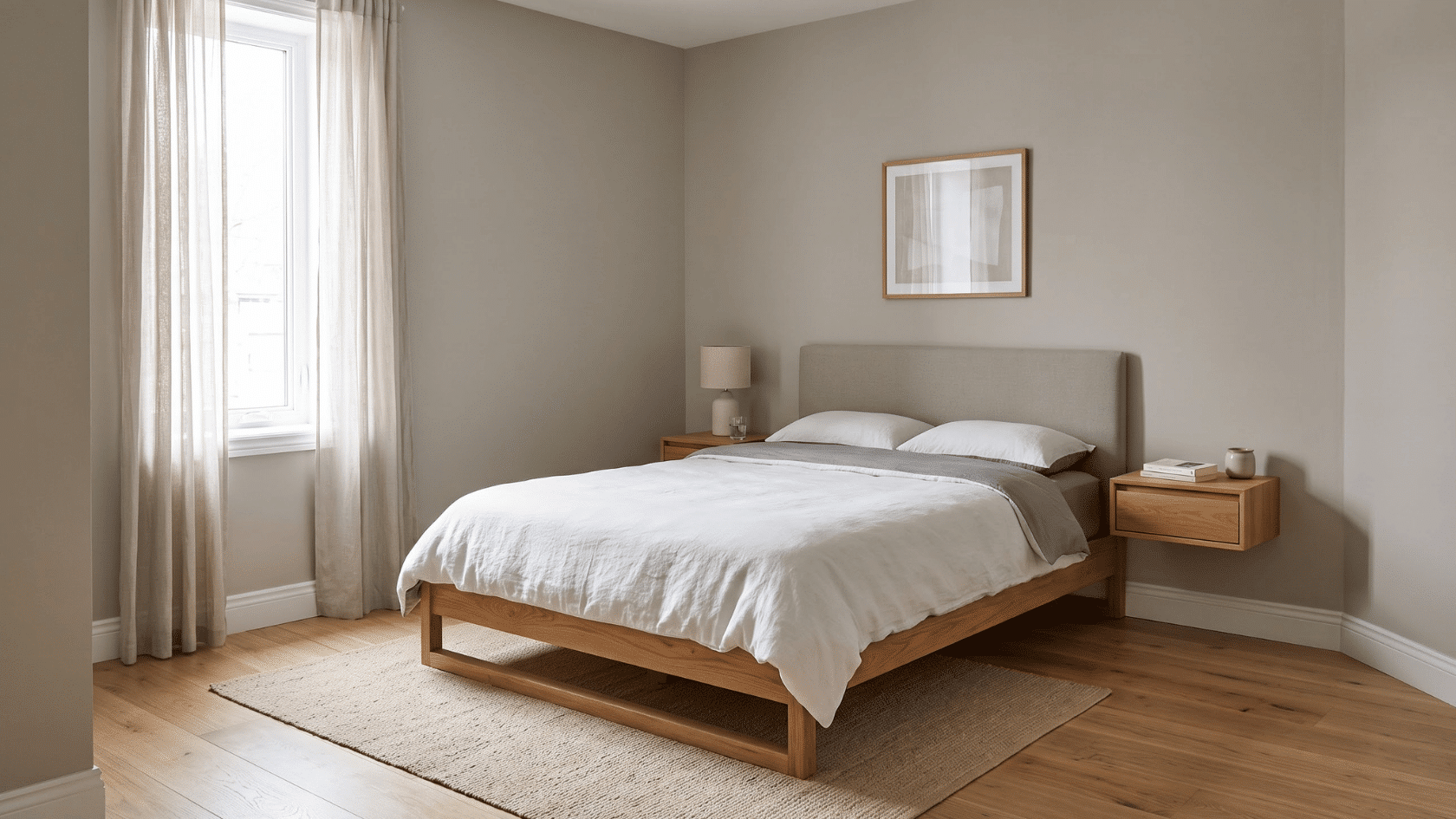
A low-profile bed frame keeps the room from feeling top-heavy and opens up more visible floor space. Floating nightstands add to that same lightweight look.
Keeping the color palette soft and consistent between walls and bedding helps the whole room feel calmer. Fewer bold patterns also reduce visual clutter in a tight bedroom.
10. Hang Curtains Higher and Wider
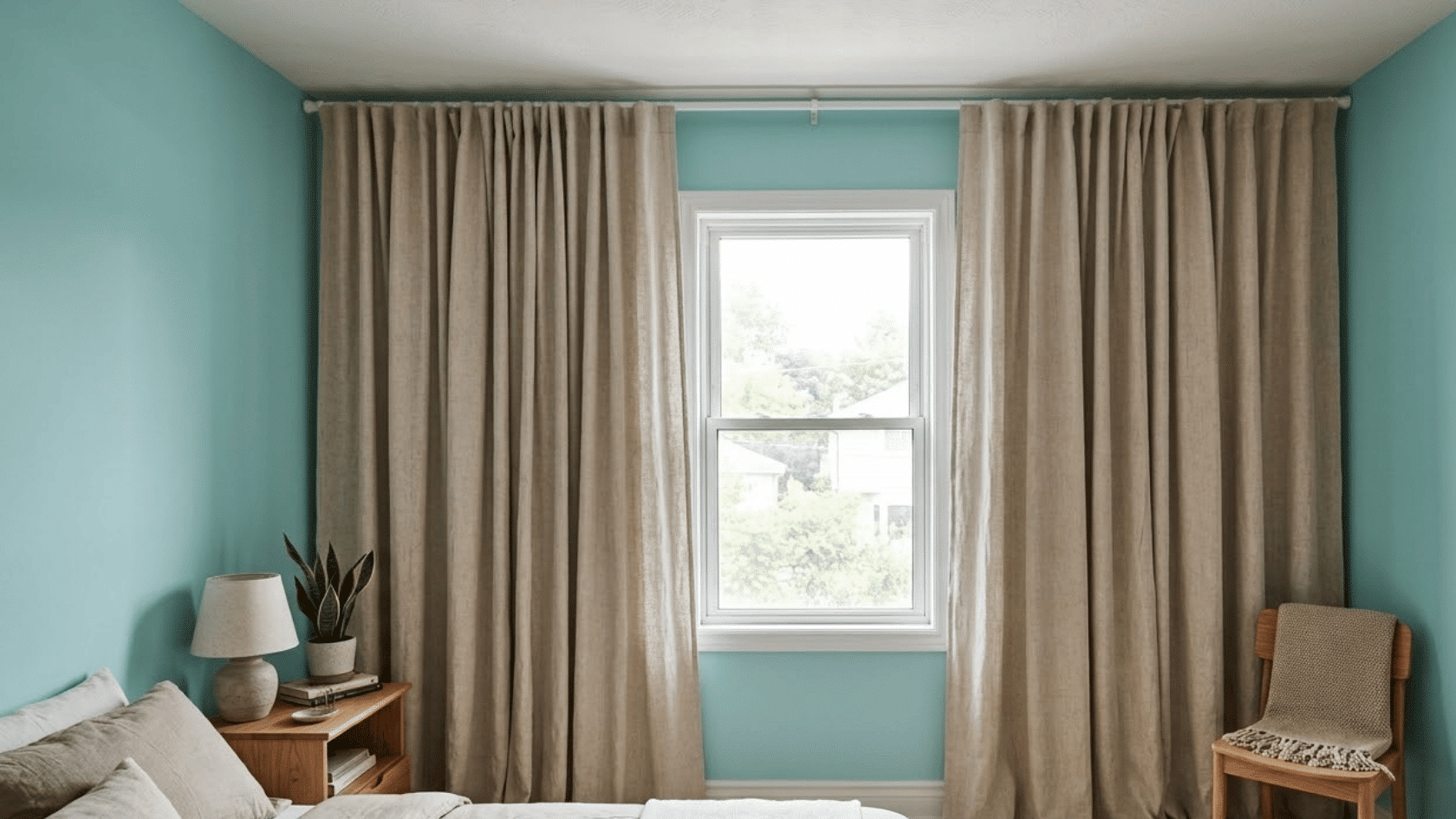
Window treatments influence room proportions more than people expect. Installing curtain rods closer to the ceiling instantly makes the whole wall feel taller.
Extending rods beyond the window frame and choosing full-length curtains adds to the effect. Windows appear larger, and the walls around them feel stretched upward.
11. Layer Lighting to Expand the Room Visually
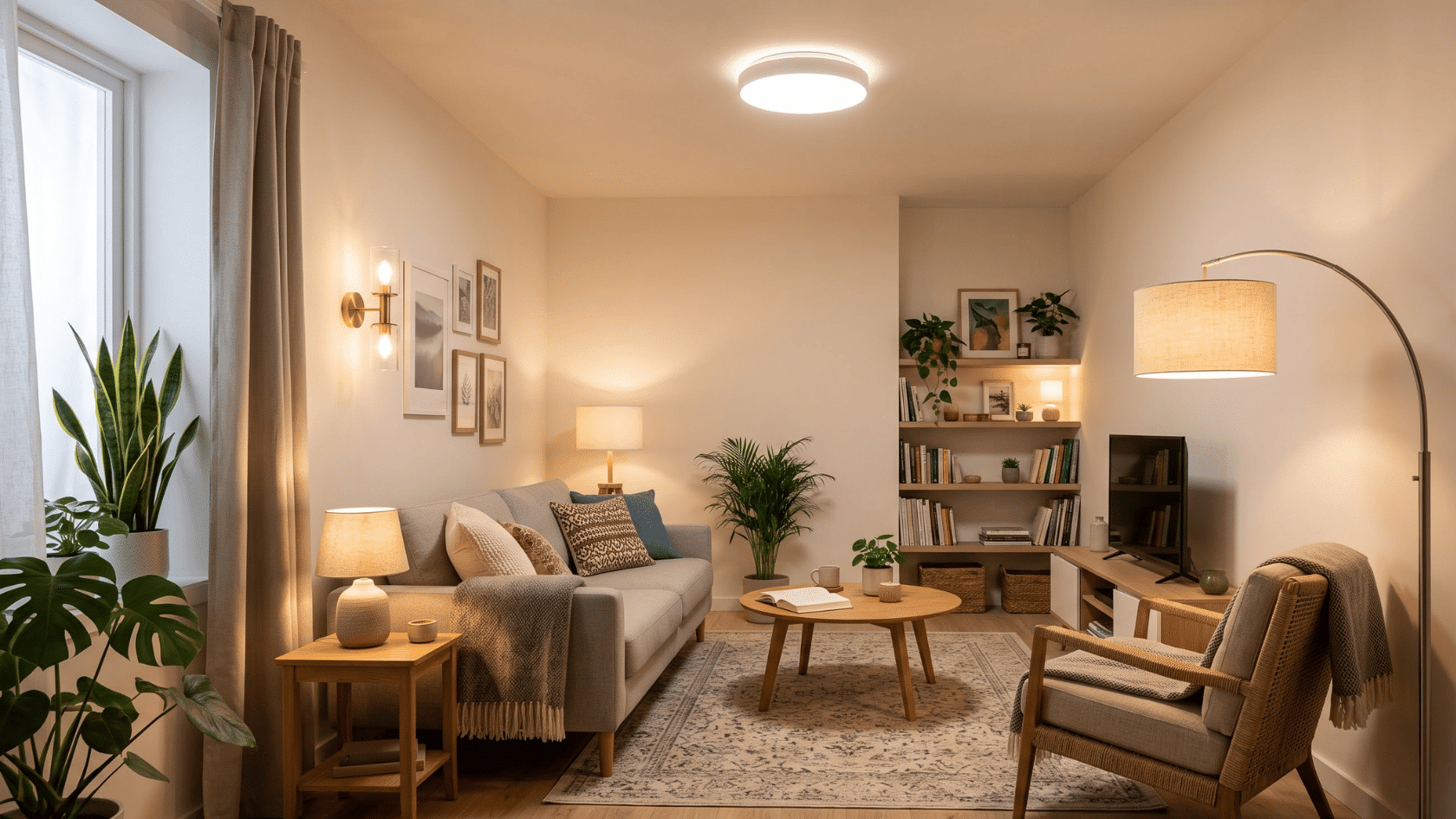
Poor lighting creates shadows that quietly make a room feel smaller than it is. Relying on just one light source is rarely enough for a small space.
Ceiling lights, floor lamps, table lamps, and wall sconces work together to spread light evenly. Lighting up dark corners opens the whole room and removes hidden gloom.
12. Add Mirrors and Reflective Surfaces
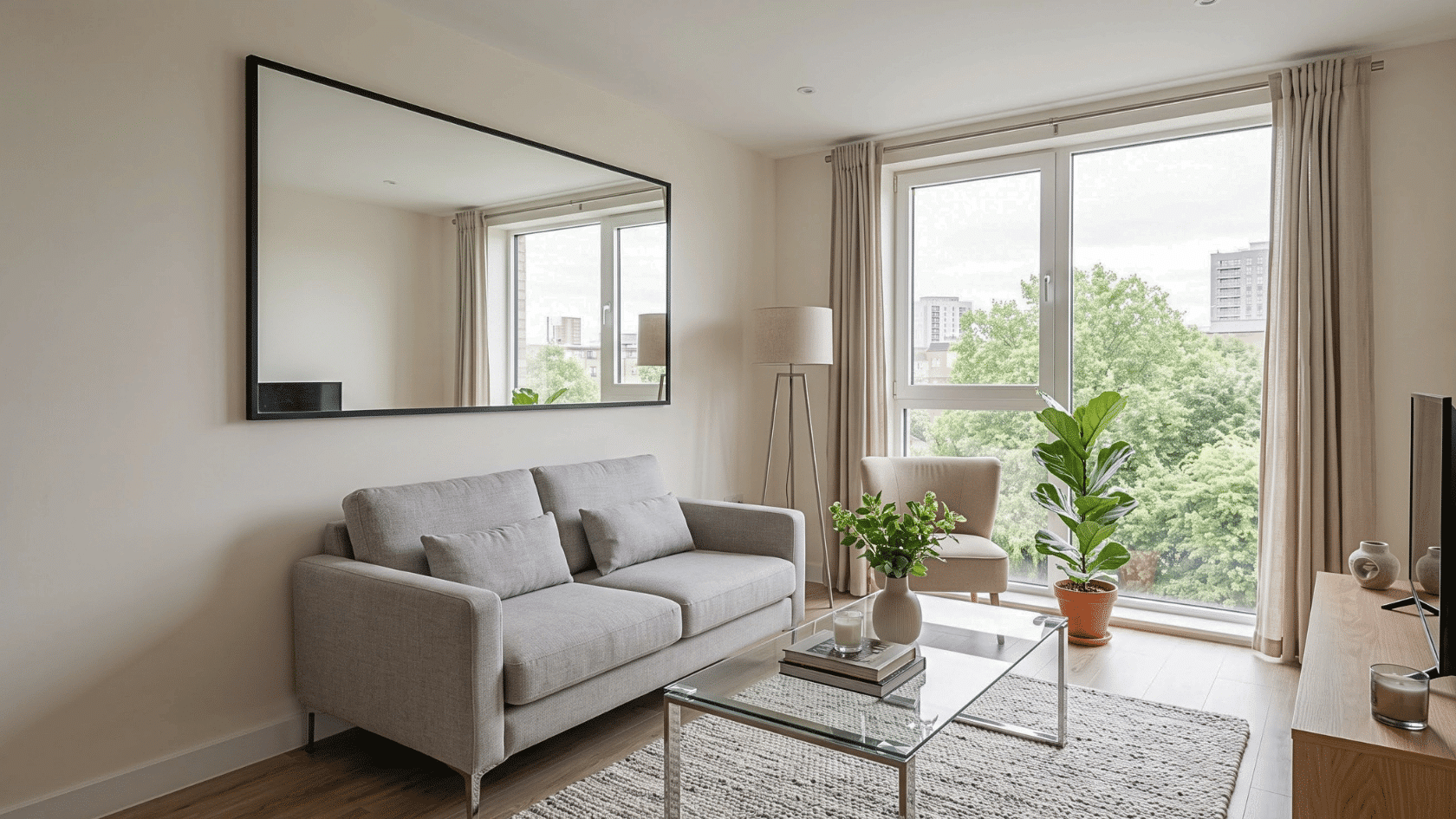
Mirrors bounce light around a room, creating the illusion of extra depth. Large wall mirrors, floor mirrors, and mirrors placed opposite windows work especially well.
Glass and metallic finishes add a similar reflective effect throughout the room. Just be careful that mirrors do not reflect clutter back into view.
13. Use Rugs and Artwork to Improve Scale
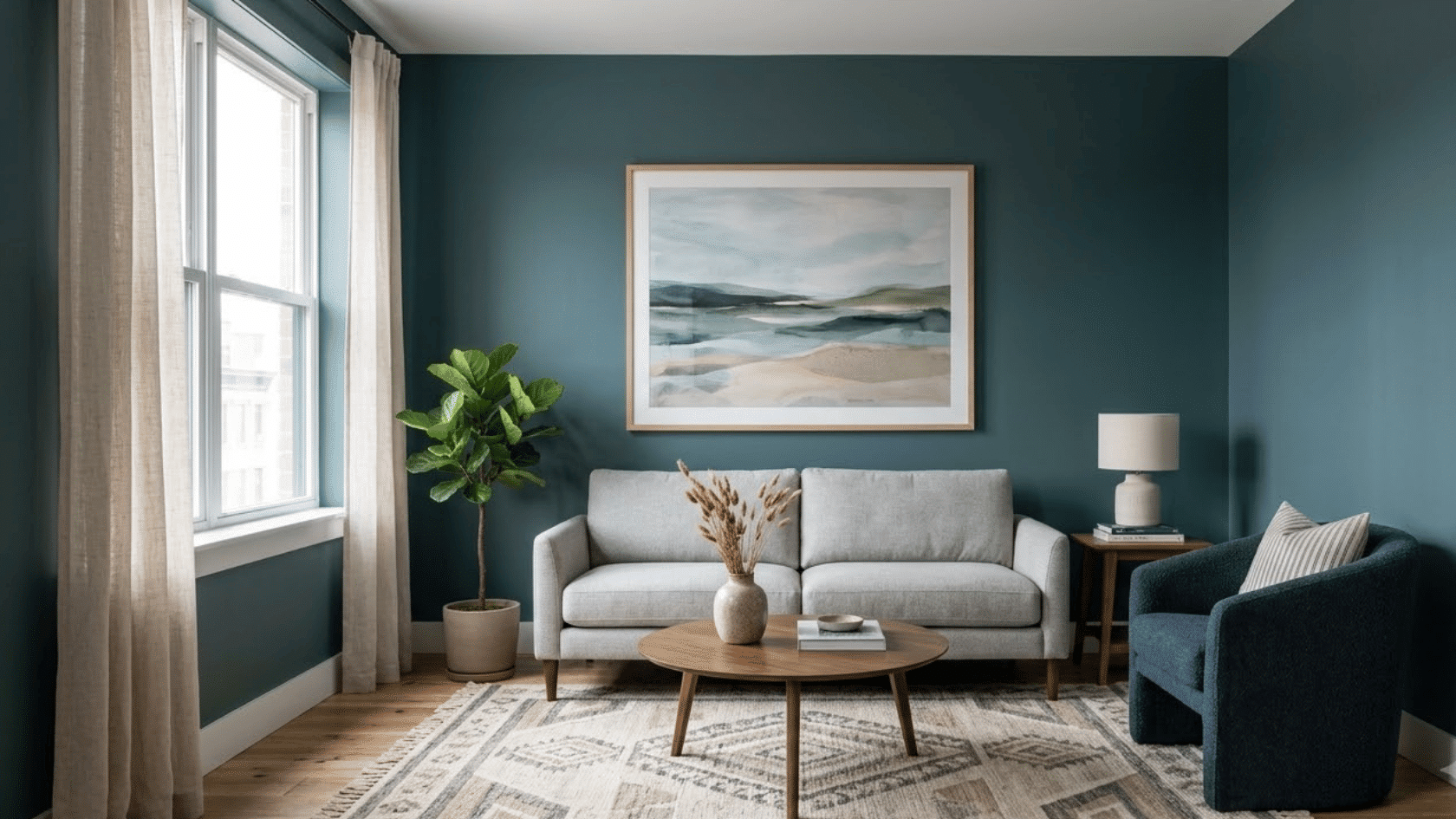
A rug that is too small can make furniture look scattered instead of connected. Choosing a rug sized to anchor the seating area ties the whole layout together.
One large piece of artwork usually reads better than a wall filled with several small ones. It creates a clear focal point without adding extra visual clutter.
14. Open Up a Small Bathroom Visually
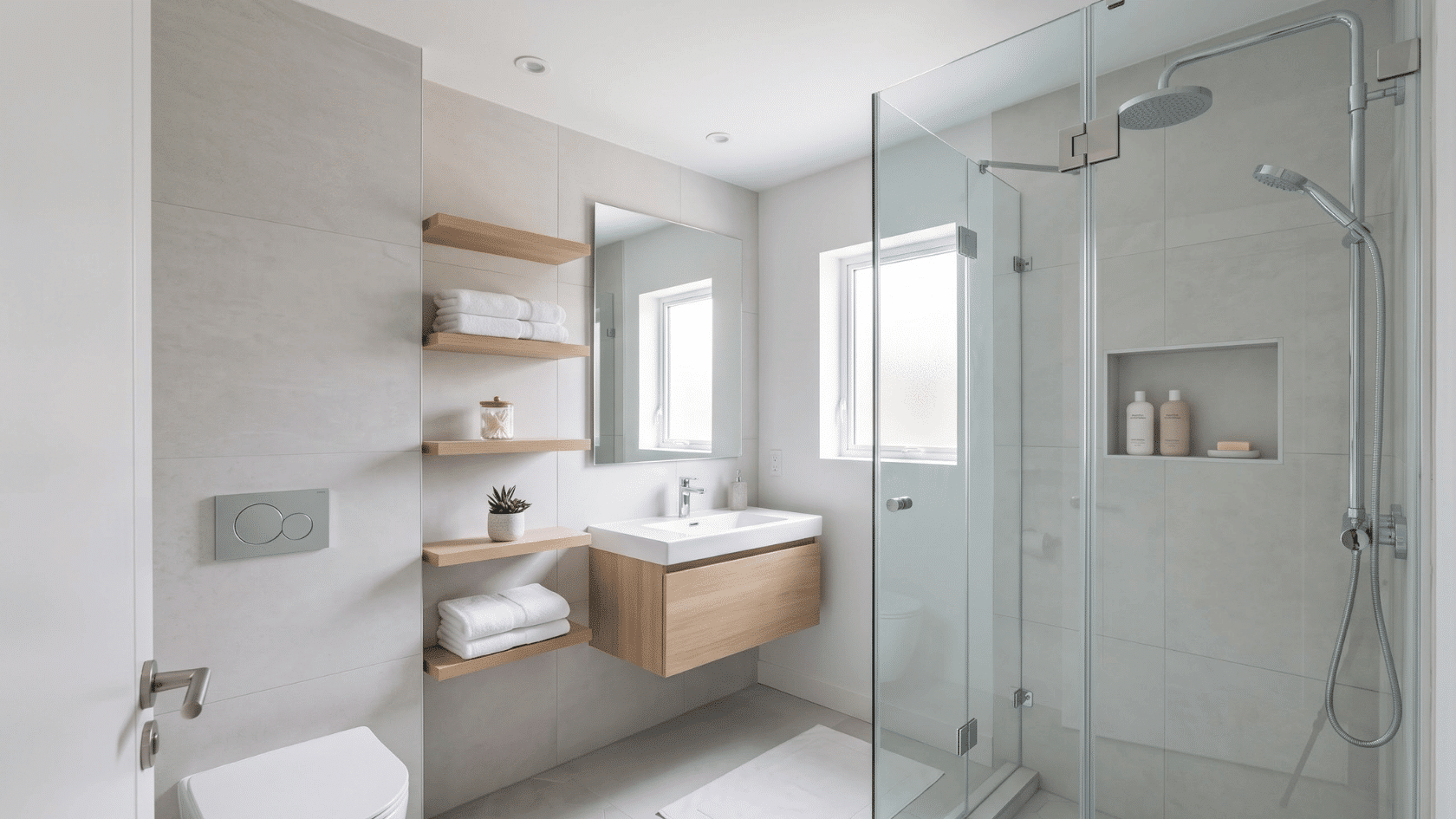
Frameless glass shower doors let light travel freely instead of blocking off part of the room. This one swap alone can make a bathroom feel noticeably larger.
Wall-mounted vanities and floating shelves keep the floor visible underneath, adding to the open feel. Light tile shades also help bounce light around a small bathroom.
15. Create One Focal Point and Reduce Visual Distractions
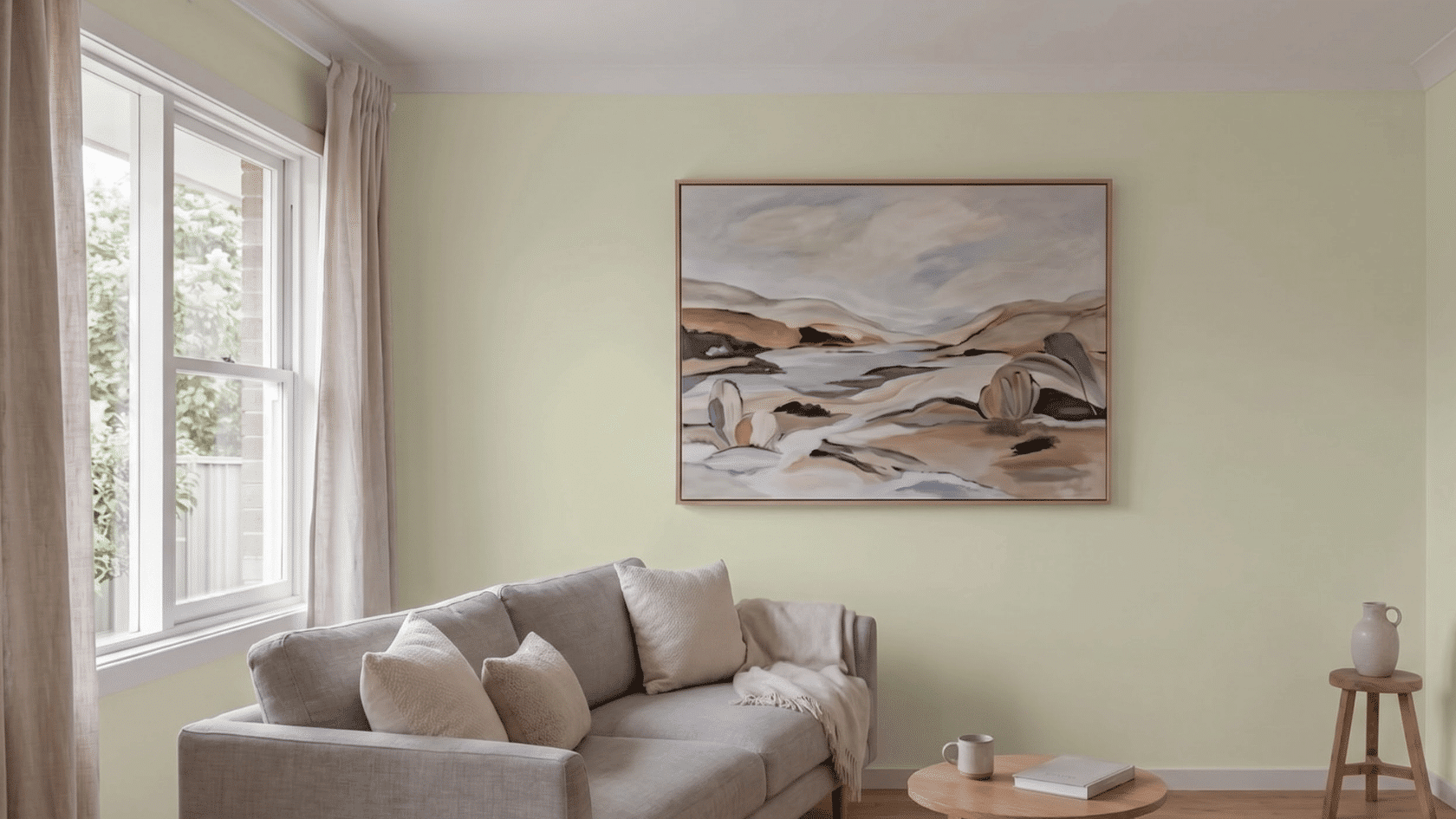
Too many competing elements make a small room feel busy and cramped fast. Picking one main visual anchor gives the eye a clear place to land.
Large artwork, a fireplace, an accent wall, or styled shelving all work well as that anchor. Keeping the rest of the room simple lets that one feature stand out.
16. Improve Flow in a Small Home Office
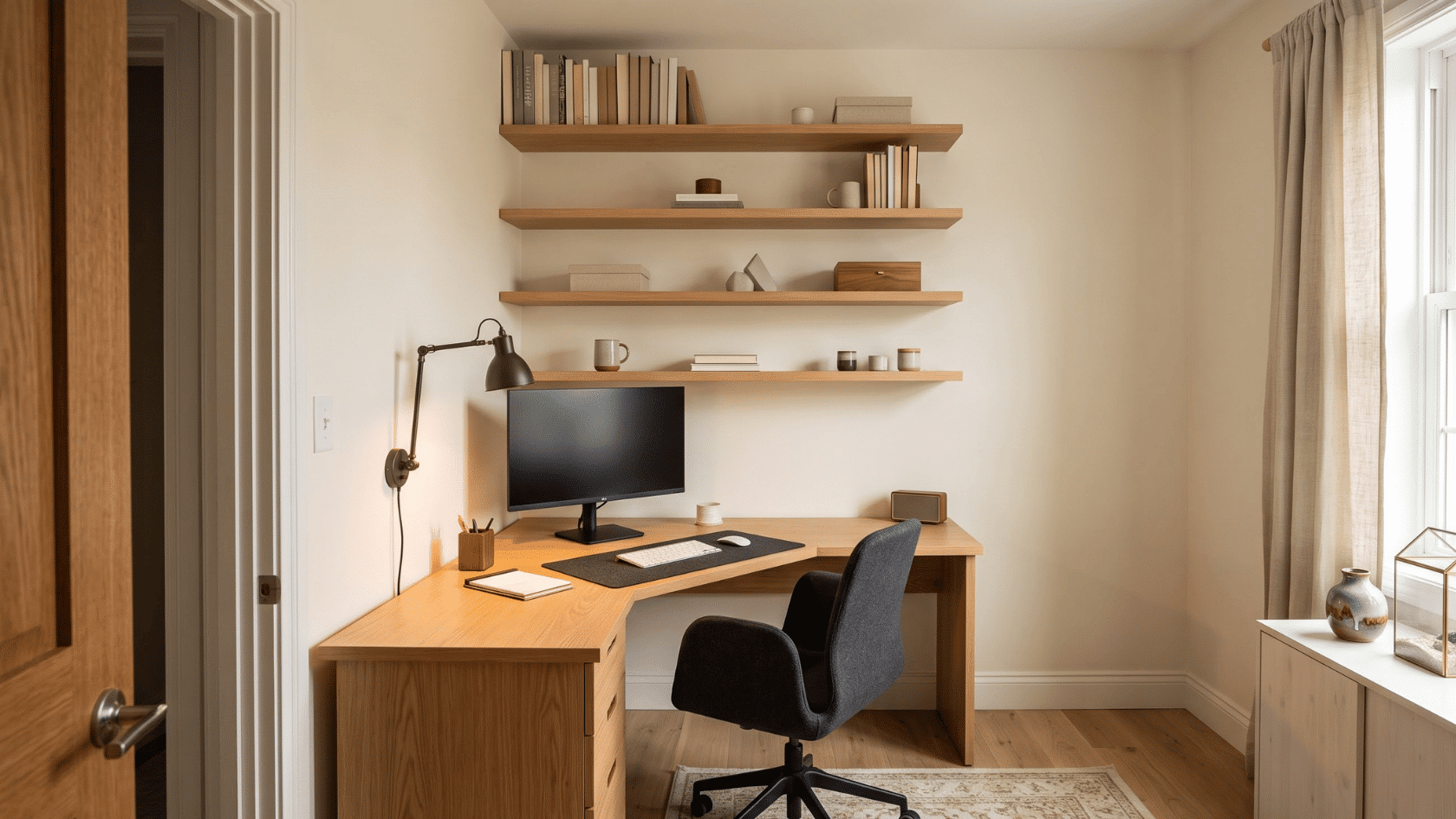
A corner desk setup uses awkward space efficiently while keeping the rest of the room open for movement. This works especially well in shared or multipurpose rooms.
Wall-mounted shelving instead of a bulky bookcase frees up floor space near the desk. Good task lighting also prevents the corner from feeling closed off or dark.
Budget-Friendly Ways to Make a Small Space Feel Large
You do not need a big budget to make a small room feel more open. A few affordable buys can create the same visual impact as pricier renovations.
| Item | Approx. Cost | Why It Works |
|---|---|---|
| Wall mirror | $25–$50 | Reflects light and instantly adds visual depth. |
| Sheer curtains | $15–$30 | Lets in more natural light while keeping privacy. |
| Removable wallpaper (accent wall) | $30–$60 | Adds a light or monochromatic accent affordably. |
| LED light strips | $10–$25 | Adds extra lighting without new wiring. |
| Storage bins or baskets | $10–$20 each | Hides clutter without buying new furniture. |
| Curtain rod extension set | $10–$20 | Makes windows and walls appear taller. |
| Sample-size light paint | $10–$15 | Brightens one wall without a full repaint. |
Small, low-cost buys can go a long way toward opening up a room. Start with one or two items from this list before investing in anything bigger.
What Reddit Says About Making Small Spaces Feel Bigger
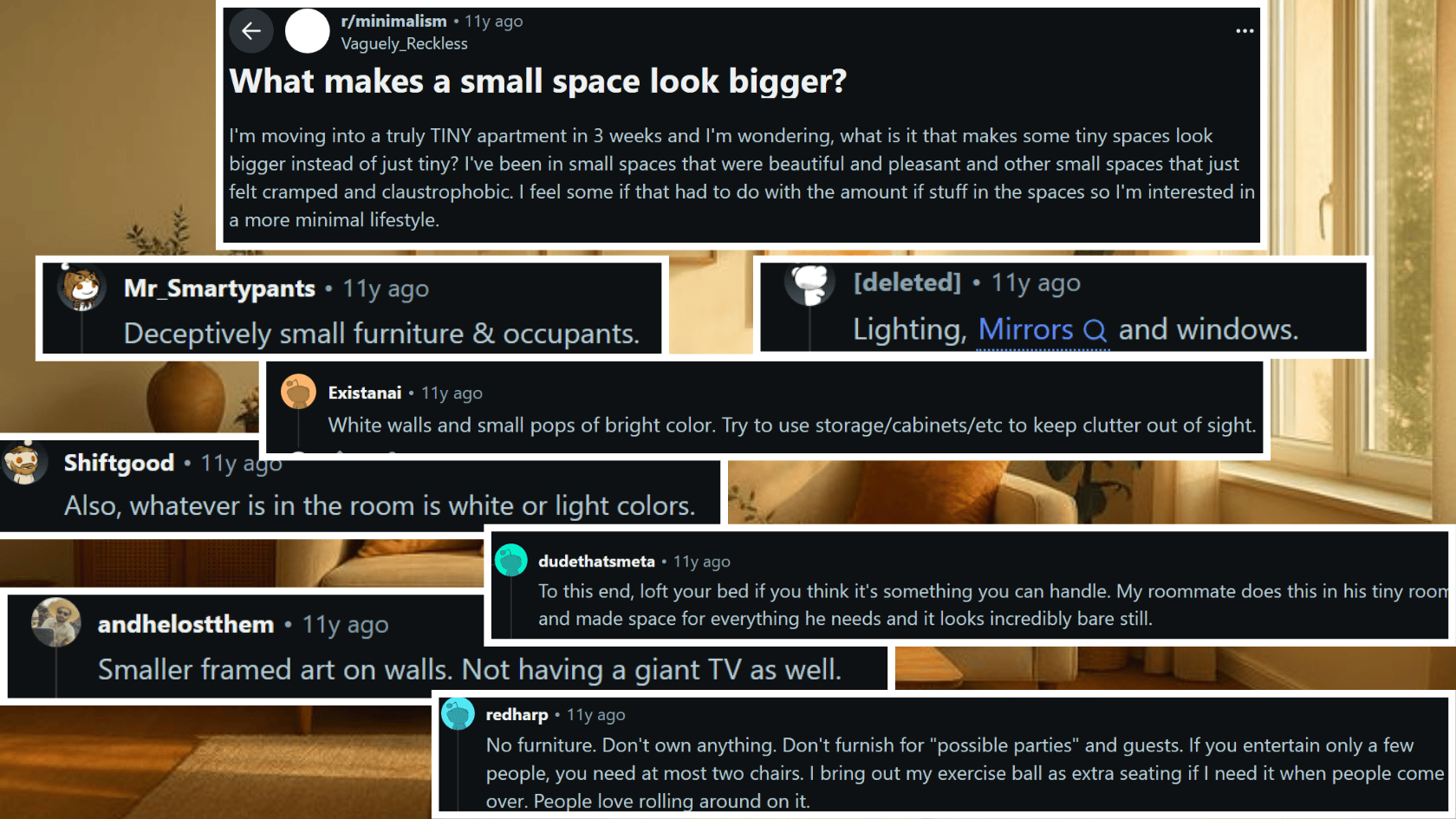
A Reddit thread asked users what makes a small space feel larger instead of tiny and cramped. The replies closely matched proven design basics.
Several users pointed to lighting, mirrors, and windows as the biggest factors. Others added that white walls paired with small pops of color keep a room feeling bright and open.
Smart storage came up often too, with commenters suggesting cabinets and closed storage to keep clutter out of sight. One user even recommended lofting the bed to free up usable floor space.
A few lighter suggestions included skipping oversized art and TVs in favor of smaller framed pieces. Overall, the thread reinforced that less visual clutter almost always feels more spacious.
Small Space Mistakes That Make Rooms Feel Smaller
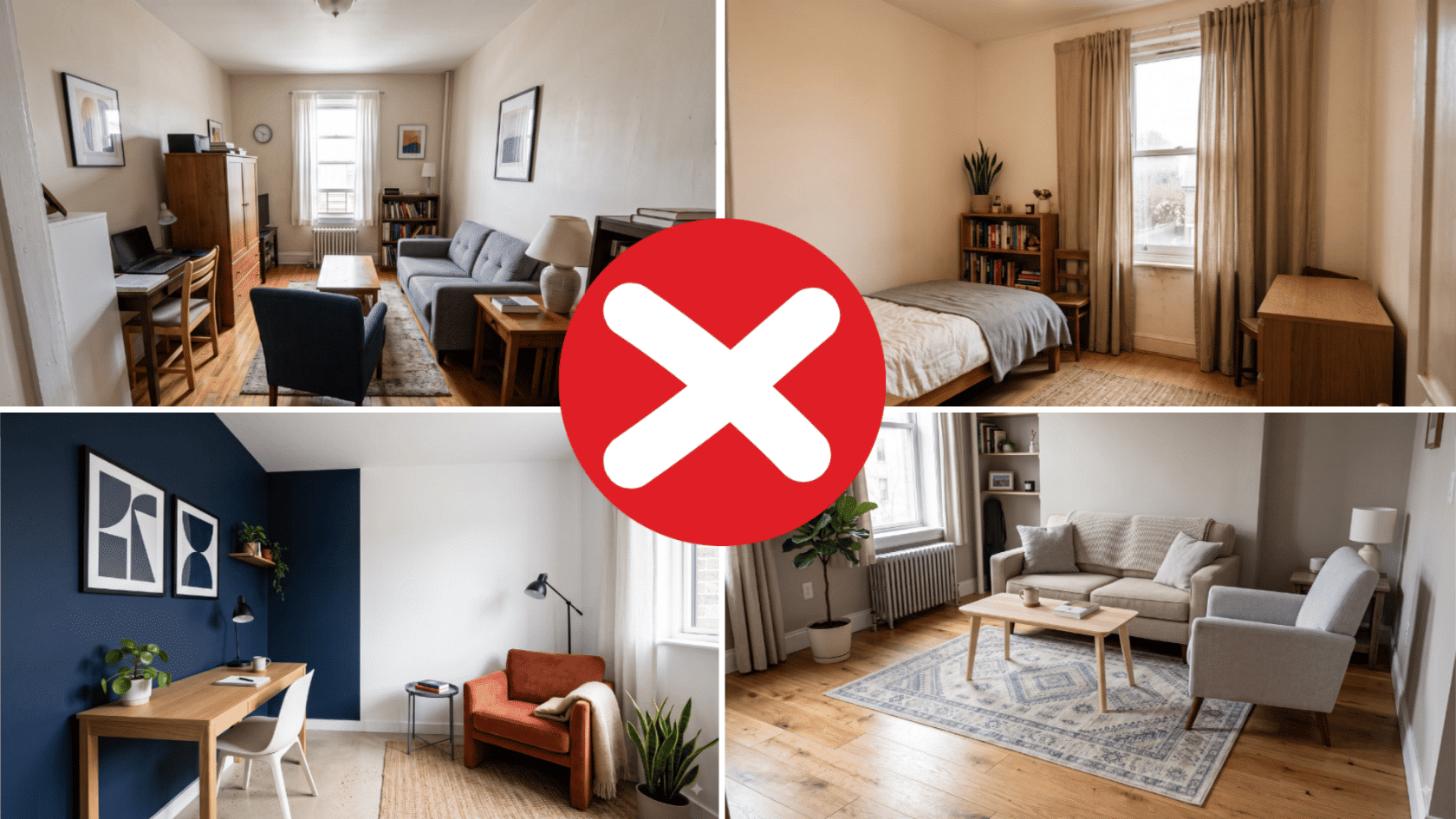
Even with the best intentions, a few common habits can quietly work against you, making a small room feel more cramped than it needs to be.
- Too Much Furniture: Filling every corner with pieces leaves no breathing room and makes the whole layout feel heavy and cluttered.
- Poorly Scaled Furniture: Oversized pieces dominate a room, while too many tiny items can make it feel scattered and disorganized.
- Blocked Windows and Natural Light: Furniture or curtains that block windows cut off light, making the room feel darker and smaller.
- Undersized Rugs: A rug that is too small leaves furniture looking disconnected instead of pulling the space together.
- Too Many Small Decor Items: Scattered trinkets and other small decorative pieces create visual noise and make surfaces feel cluttered.
- Strong Color Contrasts: Sharp, clashing colors break up a room visually and make it feel divided rather than open.
- Dark, Unlit Corners: Shadowy corners without any light source make a room feel smaller and less inviting.
Fixing these small missteps often makes a bigger difference than any single piece of decor ever could.
Final Thoughts
Making a room feel bigger really comes down to a handful of smart choices, not a full renovation. Layout, light, color, and scale all work together to open things up.
Once I started applying these ideas in my own space, the difference showed up almost overnight. That is really the heart of how to make a small space feel large: small, intentional changes with a big visual payoff.
Pick two or three tips from this list and try them in your most cramped room this week. Small shifts add up faster than you think.
Already tried one of these tricks? Share your results in the comments below.
Frequently Asked Questions
How Can I Arrange Furniture to Make a Small Room Look Bigger?
Float furniture slightly away from walls instead of pushing it flush against them. This creates natural breathing room, improves flow, and makes the whole layout feel far more open and intentional.
Does Removing a Rug Ever Make a Small Room Feel Larger?
Sometimes bare floors make a room feel more expansive, especially in already tight spaces. This trick works best when paired with light flooring, minimal furniture, and a clutter-free layout.
Can Plants Help a Small Room Feel More Open?
A few tall, narrow plants draw the eye upward without taking up much floor space. Avoid clustering several small plants together, as this often ends up crowding the room rather than opening it up.